.webp&w=2048&q=75)
Essential info at a glance
| Detail | At a glance |
|---|---|
| What it is | The famed Lete Hanuman temple by the Sangam, with the world's only great reclining idol of Hanuman. |
| Why it matters | The guardian of the Sangam; its darshan is held to complete the Sangam pilgrimage. |
| General hours | 5:00 AM to 2:00 PM and 4:30 PM to 9:30 PM. |
| Tuesdays and Saturdays | 5:00 AM to 2:00 PM and 4:30 PM to 10:30 PM (extended, heavy crowds). |
| Aartis | Mangal 4:30 to 5:00 AM; afternoon around 4:00 to 4:30 PM; Sandhya around 8:00 to 8:30 PM. |
| Entry fee | Completely free. There is no paid VIP darshan. |
| The wonder | Each monsoon the rising Ganga comes to bathe Hanuman's feet before receding. |
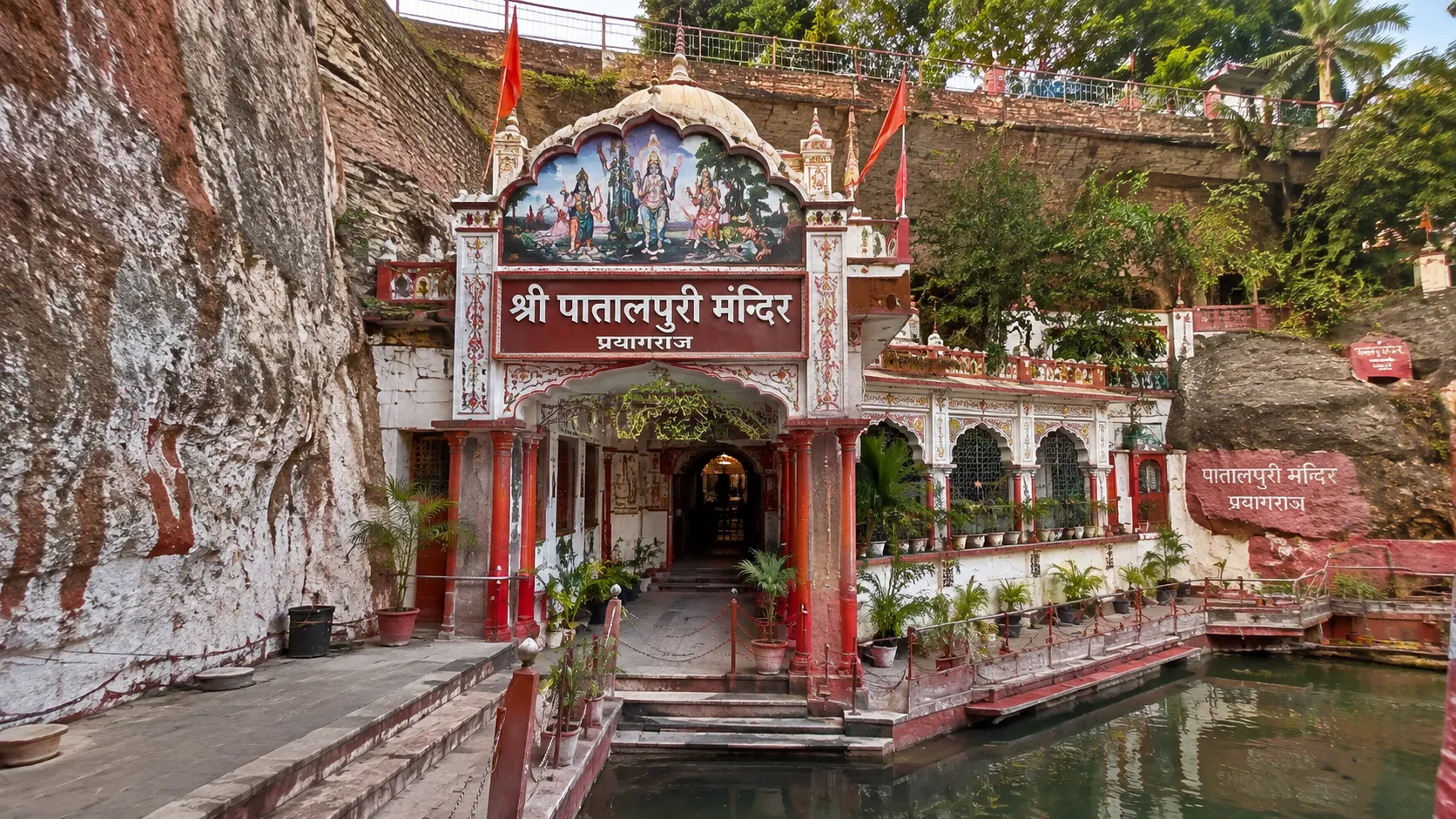
| Location | Near the Allahabad Fort, Kila Ghat, Daraganj, about 1 km from the Sangam. |
Bade Hanuman Mandir timings and aarti
The temple keeps a split day, open in the morning and again in the evening, and on Tuesdays and Saturdays, the great days of Hanuman, the evening hours are extended to handle the heavy crowds. Its aartis are its most devotional moments: the Mangal aarti at dawn, an afternoon aarti, and the Sandhya aarti in the evening. Entry is free, and on ordinary days the queues move swiftly; on the great Tuesdays, at festivals, and above all during the Kumbh and Magh Mela, the crowds are very large, so come early and allow time.
| Detail | When | Notes |
|---|---|---|
| General days | 5:00 AM to 2:00 PM, 4:30 to 9:30 PM | Two sessions; free. |
| Tuesdays and Saturdays | 5:00 AM to 2:00 PM, 4:30 to 10:30 PM | Extended evening; heavy crowds. |
| Mangal aarti (morning) | 4:30 to 5:00 AM | The dawn aarti. |
| Afternoon aarti | Around 4:00 to 4:30 PM | Varies. |
| Shringar / Sandhya aarti (evening) | Around 8:00 to 8:30 PM | Extended on Tuesdays and Saturdays. |
Shri Bade Hanuman Mandir: the reclining Hanuman
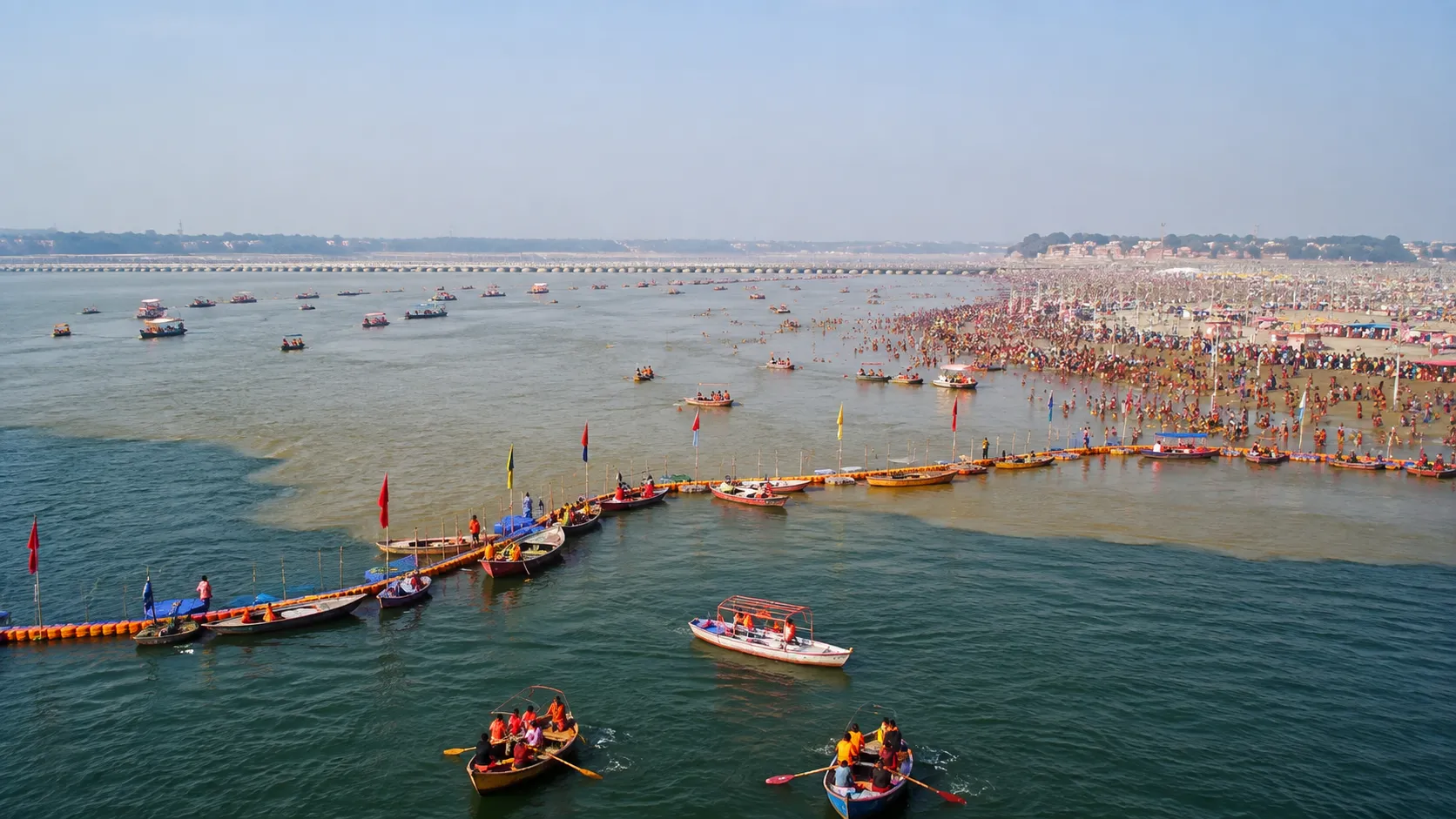
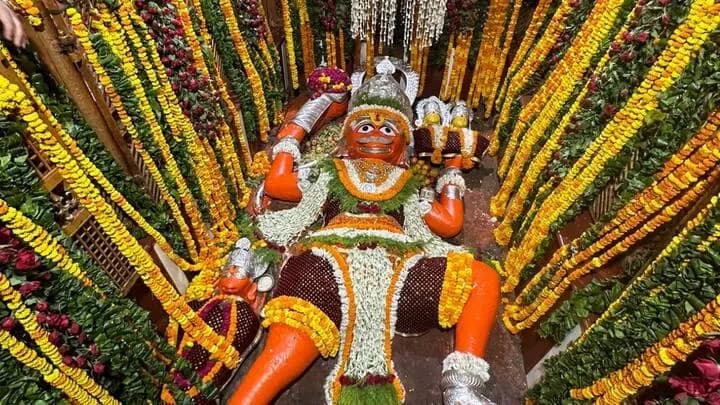
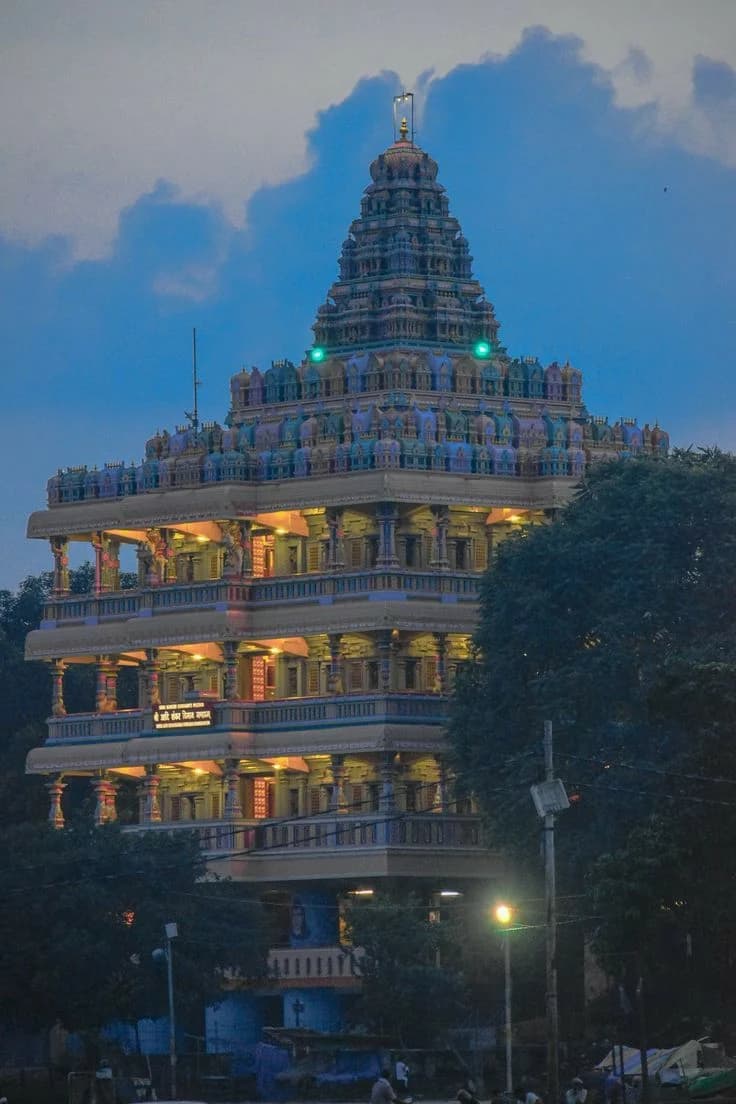
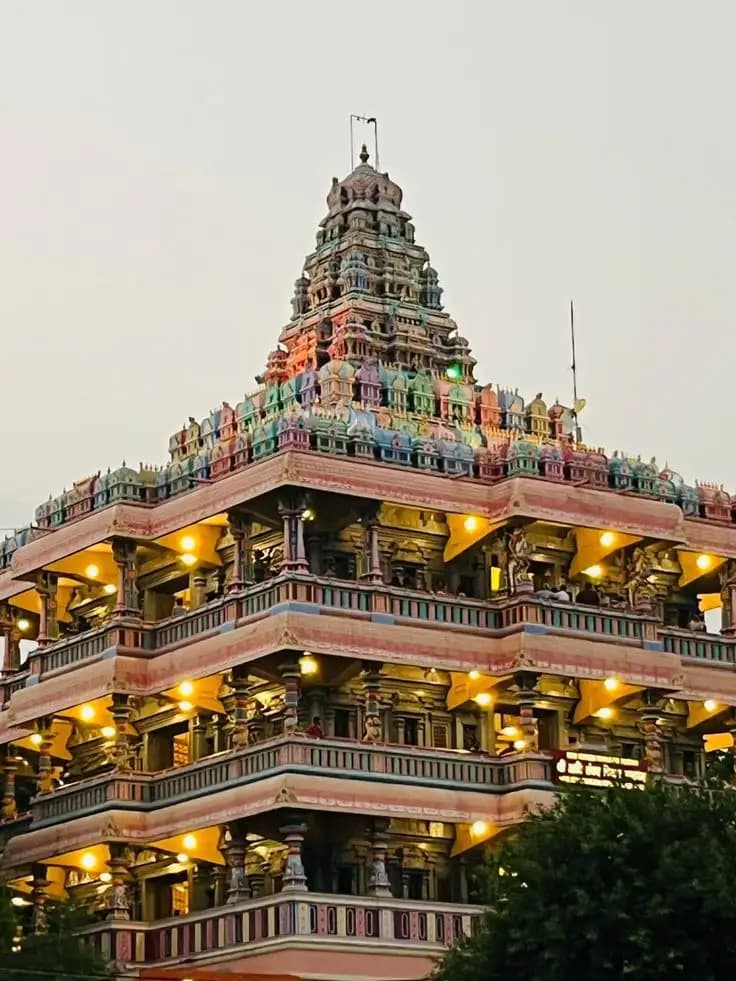
Welcome to Prayagraj, the holiest of the tirthas, the city of the Triveni Sangam where the Ganga, the Yamuna and the unseen Saraswati meet, and the home, every twelve years, of the great Kumbh Mela. And here, close by the Sangam and the old Fort, stands one of the most extraordinary and beloved temples in all of India: the Shri Bade Hanuman Ji Mandir, the temple of the great Hanuman, known and loved above all as Lete Hanuman, the reclining Hanuman. For within its sunken sanctum, below the level of the ground, lies a colossal idol of Lord Hanuman some twenty feet in length, reclining upon his side, the only great reclining image of Hanuman in all the world. It is a sight like no other, the mighty Bajrangbali at rest, and in his hands, tradition tells, he holds the images of Ram and Lakshman and of Garuda. Around this wondrous idol have gathered the deepest devotion and the most beautiful legends of Prayagraj.
The guardian of the Sangam: the darshan that completes the pilgrimage
Bade Hanuman is far more than a marvel; he is the great guardian of the Sangam, and holds a place at the very heart of the Prayagraj pilgrimage. For it is the firm and beautiful belief of Prayagraj that the darshan of Bade Hanuman completes the pilgrimage to the Sangam; that the full merit of the sacred bath at the Triveni Sangam, the great Sangam snan, is granted only to the pilgrim who, having bathed, also comes to take the darshan of Hanuman here. The tradition holds that Mata Sita herself declared that whoever bathes at the holy confluence shall receive the true fruit of that bath only when he has also beheld Hanuman; and so, for untold centuries, the pilgrim's way at Prayag has been to bathe at the Sangam and then to come to Bade Hanuman, offering sindoor to the Lord, that the pilgrimage may be whole. To visit the Sangam without the darshan of its guardian Hanuman is, in the eyes of Prayagraj, to leave the pilgrimage unfinished.
The legend and the immovable Lord
The story of how the reclining Hanuman came to the Sangam is one of the most cherished in Prayagraj. Long ago, the tradition tells, a wealthy merchant of Kannauj, blessed with every worldly thing but grieving that he had no son, resolved to win the grace of Lord Hanuman; and he had carved, from the stone of the Vindhyachal hills, a huge and magnificent idol of the Lord, so great that it could only be borne lying down. He set out to bathe this idol at the holy tirthas of the land; and when he came at last to the sacred Sangam at Prayag, Lord Hanuman appeared to him in a dream, and told him that if he would leave the idol here, at the holy confluence, his heart's desire would be fulfilled. The merchant left the great idol at the Sangam and returned to Kannauj, and in time was blessed with the son he had longed for.
In the years that followed, the mighty idol sank into the sands of the riverbank and lay hidden; until, long after, it was rediscovered by a holy saint, revered as Balgiri, and installed and worshipped where it was found, in the reclining posture in which it had lain. And here is the wonder that the people of Prayagraj hold dear: that the idol could never be moved from this spot, nor set upright, for Lord Hanuman had chosen to stay here, at the Sangam, to bless his devotees. So great was this that when the Mughal emperor Akbar raised his great fort nearby, he built its very wall to leave the temple undisturbed, and dedicated the ground to Hanuman; and later attempts to move the idol, the tradition tells, all failed, for the Lord would not be moved. He reclines at the Sangam to this day, exactly where he chose to stay.
The Ganga's yearly bath
The most beloved wonder of Bade Hanuman is one that Prayagraj witnesses afresh each year, and it is this. Every monsoon, when the rains swell the rivers and the Ganga rises in flood, her waters climb up and up until they reach the sunken sanctum and come to bathe the feet, and then the very body, of the reclining Hanuman. And the people of Prayagraj hold, and say they have seen it year upon year, that Ganga Maiya, the Mother Ganga, rises for the very purpose of coming to bathe her beloved Hanuman; and that only once she has bathed him do her waters begin to recede. The flood, they say, will not go down until the Mother has bathed the Lord. It is a sight that draws great crowds of devotees each year, this meeting of the river and the reclining Lord, a wonder taken as a token both of the Ganga's reverence for Hanuman and of Hanuman's own humility, that he lets the Mother bathe him where he lies. There are few sights in all of India so moving.
The guardian of the confluence, in my own words
By Rajeev Sharma, guide with Experience My India
Whenever I bring pilgrims to Prayagraj for the Sangam, I always tell them: your bath at the Sangam is not complete until you have taken the darshan of Bade Hanuman. That is our belief here, that Mother Sita herself said the fruit of the Sangam snan comes only with Hanuman's darshan. So after the holy dip at the confluence, I bring them straight to Lete Hanuman, and they are always amazed, for they have never seen such a thing, our mighty Hanuman lying down, twenty feet long, below the ground. There is no other like it in the world.
And I love to tell them the story, the merchant of Kannauj who left the idol here and got his son, and how the Lord could never be moved from this spot, so that even Akbar left his temple be. But the thing they love most is the Ganga's bath: I tell them how every monsoon the Ganga rises up to bathe Hanuman where he lies, and will not go down until she has bathed him. If they come in the flood season, I bring them to see it, and it moves them to tears. I also tell my guests, who have been with me to Sankat Mochan in Kashi and Hanuman Garhi in Ayodhya, that here is the third of the great Hanumans of our three holy cities, the guardian of the Sangam. I never let a pilgrim to Prayag miss him.
In more than forty years of guiding, this reclining guardian of the Sangam is among the most wondrous sights I share.
What to see and do
- Take the darshan of the great reclining Hanuman, the world's only such idol, in the sunken sanctum.
- Offer sindoor to Bajrangbali, as is the beloved custom here.
- Complete your Sangam pilgrimage with the darshan of its guardian Hanuman.
- Attend the Mangal aarti at dawn or the Sandhya aarti in the evening.
- If you come in the monsoon, see the Ganga rise to bathe the reclining Lord.
How to reach Bade Hanuman Mandir
The temple is at Kila Ghat in Daraganj, near the Allahabad Fort, about 500 metres north of it and about 1 km from the Triveni Sangam, easily reached by road.
| From | Distance | Notes |
|---|---|---|
| The Triveni Sangam | About 1 km | Bathe at the Sangam, then come for Hanuman's darshan. |
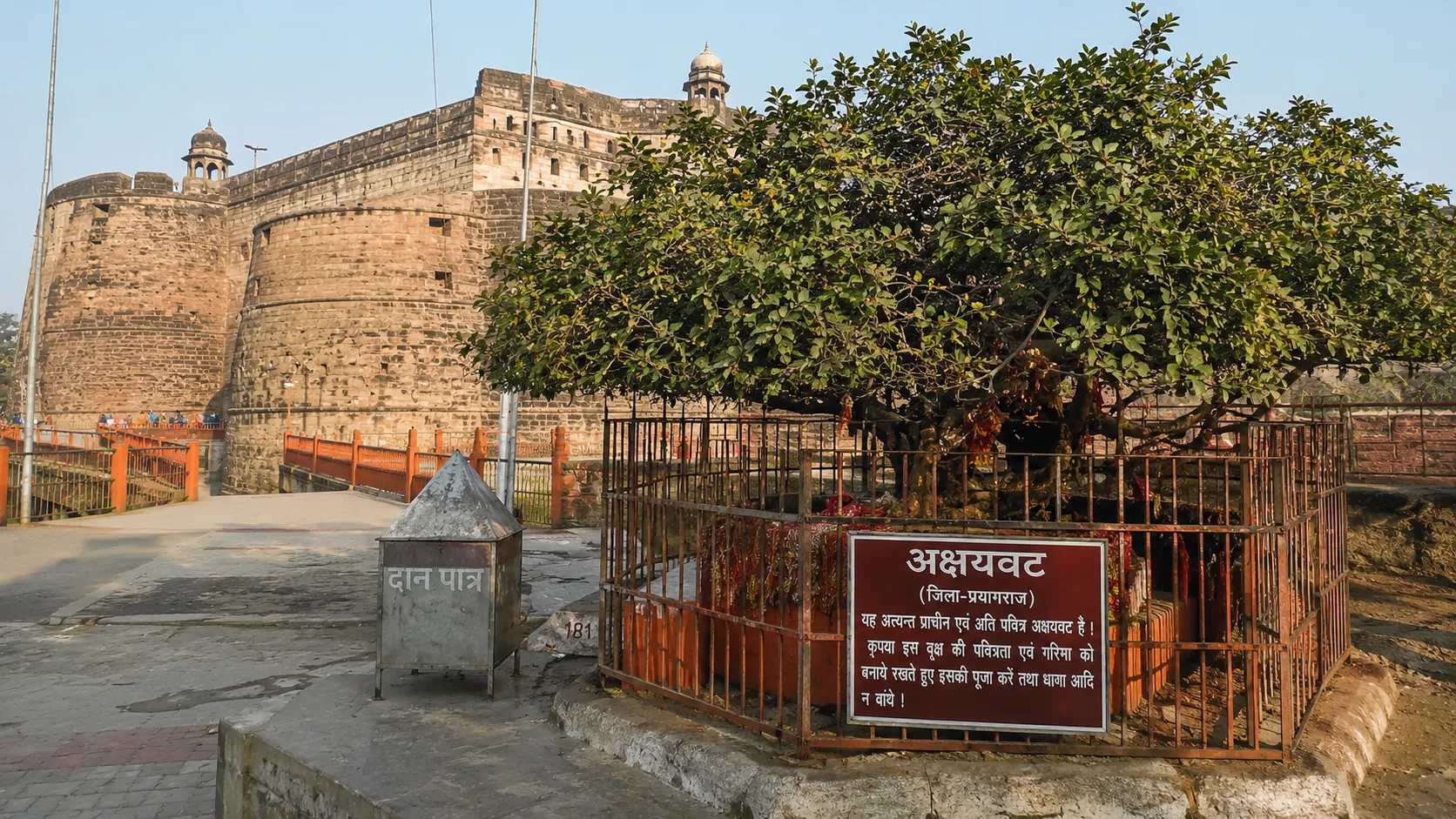
| The Allahabad Fort and Akshayavat | About 500 m | The old fort and the immortal banyan, nearby. |
| Prayagraj Junction (railway) | About 7 km | By auto, e-rickshaw or taxi. |
| Prayagraj (Bamrauli) Airport | About 15 to 17 km | The city airport; taxis to the temple. |
It is the natural companion to the Sangam darshan.
Best time to visit and how to plan it
| When | Why |
|---|---|
| Early morning, for the Mangal aarti | The dawn aarti and a calmer darshan before the crowds. |
| Tuesdays and Saturdays, and Bada Mangal | The great days of Hanuman, most auspicious, though very crowded. |
| Hanuman Jayanti | The birthday of Hanuman, a grand day at the temple. |
| The monsoon (Jul to Sep) | To see the Ganga rise and bathe the reclining Lord. |
| The Kumbh and Magh Mela (Jan to Mar) | With the great Sangam pilgrimage, though hugely crowded. |
- Pair it with the Sangam and the Fort for the core of the Prayagraj pilgrimage.
- Allow 30 to 45 minutes for the darshan; longer on the crowded days and in Mela season.
For Prayagraj, or a combined Kashi, Ayodhya and Prayagraj pilgrimage, planned end to end, see our tour packages.
Accessibility for elderly and mobility limited visitors
- The idol is in a sunken sanctum below ground level, reached by steps, so a helper is useful for the frail.
- Come early on a general day, when the queues are shortest, for a calmer, comfortable darshan.
- The temple administration may assist senior citizens at very busy times; ask locally or through us.
- We arrange transport and plan a gentle darshan within your Prayagraj day.
Etiquette for visiting
- Remove footwear before the temple and dress modestly; keep phones away in the sanctum.
- Offer sindoor to Hanuman if you wish, in the local custom, and take darshan with devotion.
- Keep to the queue and follow the attendants, especially on the crowded Tuesdays and in Mela season.
- Mind the steps down to the sunken sanctum, and keep children close in the crowd.
Our guided darshan and Prayagraj tours
We are a Varanasi, Ayodhya and Prayagraj based operator, a unit of Experience My India, with more than forty years of guiding pilgrims across all three holy cities, and our own local guide in Prayagraj. Darshan is free, so what we offer is the experience made smooth and meaningful: the Sangam snan and then the darshan of its guardian Bade Hanuman in the proper order, a guide who tells the wonders of the reclining Lord, and the whole Prayagraj pilgrimage, and, above all, the great three-city pilgrimage of Kashi, Ayodhya and Prayagraj, planned end to end.
| Service | Includes | Price |
|---|---|---|
| Sangam and Bade Hanuman darshan | The Sangam snan and the darshan of Bade Hanuman, in order, with a guide. | Contact us for pricing |
| Full Prayagraj darshan day | Bade Hanuman with the Sangam, the Fort and the city's sites, with a guide. | Contact us for pricing |
| Kumbh / Magh Mela pilgrimage | The Sangam snan and Bade Hanuman in the Mela season, with arrangements. | Contact us for pricing |
| Kashi, Ayodhya and Prayagraj pilgrimage | The three holy cities, with darshan, transfers and a guide. | Contact us for pricing |
Inclusions and exclusions are stated up front, with any taxes and conditions, and no charge appears later that was not named. Darshan is free; our charge is only for guiding, transport and services. See all our tour packages for the full range.
Experience My India is a travel operator, not the temple administration. Darshan is free; our charge is only for our guiding and services. Timings and rules are set by the temple and can change.
Nearby sacred sites
Bade Hanuman is the guardian of the Sangam, at the heart of the Prayagraj pilgrimage.
| Site | What it is | Internal link |
|---|---|---|
| Triveni Sangam | The sacred confluence of the Ganga, Yamuna and Saraswati; the heart of Prayagraj. | /temple/prayagraj/triveni-sangam |
| Allahabad Fort and Akshayavat | Akbar's fort and the immortal banyan tree, close by. | /temple/prayagraj/allahabad-fort-akshayavat |
| Sankat Mochan Temple (Varanasi) | The great Hanuman temple of Kashi; the first of the three Hanumans. | /temple/varanasi/sankat-mochan-hanuman-temple |
| Hanuman Garhi (Ayodhya) | The great Hanuman temple of Ayodhya; the second of the three Hanumans. | /temple/ayodhya/hanuman-garhi |
| Ganga Aarti, Dashashwamedh (Varanasi) | The great river aarti of Kashi, for the wider river pilgrimage. | /temple/varanasi/dashashwamedh-ghat-ganga-aarti |
For the Sangam snan and the confluence, see our Triveni Sangam guide.