.webp&w=2048&q=75)

Essential info at a glance
| Detail | At a glance |
|---|---|
| What it is | Akbar's greatest fort, by the Sangam, enclosing the immortal Akshayavat, the Patalpuri Temple, the Saraswati Koop and an Ashokan Pillar. |
| Visiting hours | 7:00 AM to 6:00 PM, all days. |
| Entry fee | Free (some restricted zones need prior permission). |
| Time needed | About 2 to 3 hours for the temple, the tree and the complex. |
| Open areas | Patalpuri Temple, the Akshayavat, and the Saraswati Koop (via public corridors). |
| Army rules | Active Army base; carry a valid government photo ID; security is strict. |
| The pillar | The Ashokan Pillar bears 2,000 years of history, from Ashoka to the Guptas to the Mughals. |
| Location | Kila Marg, on the Yamuna near the Sangam, Prayagraj. |
Allahabad Fort timings and entry
The fort's public areas are open from 7:00 AM to 6:00 PM on all days, and entry is free, though some restricted zones need prior permission. Allow about two to three hours to see the Patalpuri Temple, the Akshayavat and the Saraswati Koop and to take in the grandeur of the complex. Remember to carry a government photo ID, as the Army's security checks are strict; and if you come in the Mela season, more of the fort is usually opened for pilgrims.
| Detail | When | Notes |
|---|---|---|
| Visiting hours | 7:00 AM to 6:00 PM | All days; free. |
| Time needed | About 2 to 3 hours | For the temple, the tree and the complex. |
| ID | Always carry a photo ID | Aadhaar, Voter ID or Passport; strict security. |
| Mela season | More areas opened | The Army opens guided pilgrim access during the Kumbh and Magh Mela. |
Allahabad Fort: Akbar's greatest fort at the Sangam
Rising in mighty walls of red sandstone above the waters of the Yamuna, mere steps from the sacred Sangam, stands the Allahabad Fort, the greatest of all the forts built by the Mughal Emperor Akbar. He raised it in the year 1583, on this most strategic and most holy of grounds, at the confluence of the great rivers, and made it the key to his power in the region and the seat of a prosperous province; and it is his largest fort of all, unrivalled in its day for the grandeur of its design, its massive walls and high towers, its three great gateways and its interconnected courtyards. But what makes the Allahabad Fort truly extraordinary is this: that Akbar built his imperial Mughal fortress deliberately to enclose, and to protect, the ancient and holy sites that already stood upon this ground, sacred to the Hindus for ages before him. And so the fort is a rare and wonderful thing, a living sacred geography, where the imperial and the devotional, the Mughal and the Hindu, the sword and the prayer, have stood together within one set of walls for centuries. Since the days of the British it has been an Army fort, and remains an active base today, so that only its sacred core is open to the pilgrim; but that core is among the most precious in all of India.
The Akshayavat: the immortal banyan
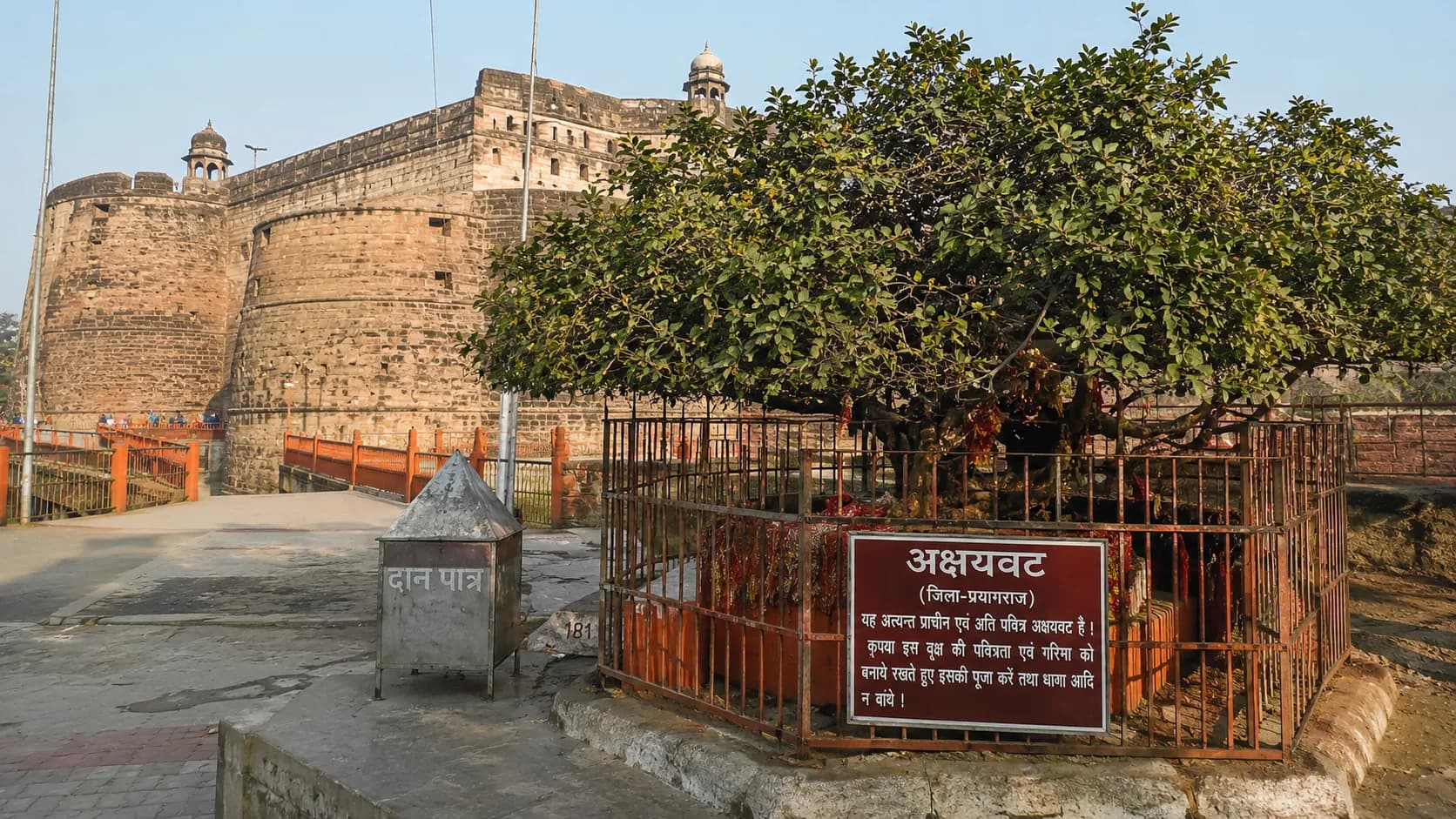
The holiest treasure that the fort enfolds is the Akshayavat, the imperishable, the undying banyan tree, one of the most sacred trees in all of Hinduism. Its name means the tree that never perishes, and by ancient belief it is truly immortal, indestructible, standing since before the ages of men; it is praised in the Vedas and the Puranas, and it is said that when the whole world is dissolved at the end of time, this one tree alone shall remain. Beneath its branches, the tradition tells, Lord Ram and Mata Sita rested in the days of their exile; and so great is its sanctity that it is held to grant eternal salvation, moksha, to the soul that worships beneath it. In ancient times so strong was this faith that pilgrims would leap from the tree, believing it would carry them straight to liberation, a practice long since ended. To stand before the immortal Akshayavat, the deathless tree of the Sangam, is to stand in the presence of one of the oldest and deepest of India's sacred wonders.
The Patalpuri Temple and the Saraswati Koop
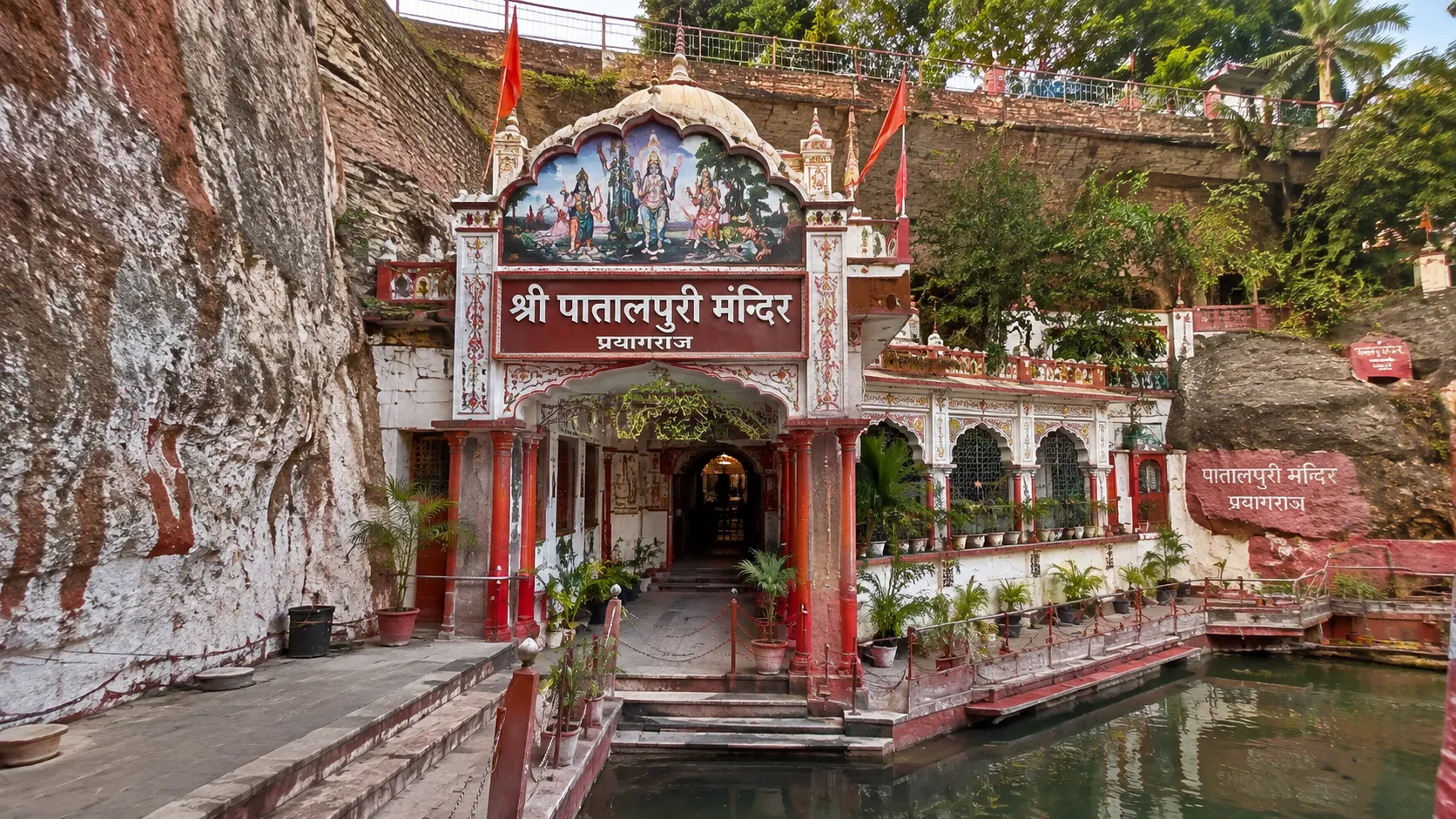
The immortal tree is bound up with the Patalpuri Temple, the ancient underground shrine within the fort, whose name means the City of the Netherworld. Descending its steps, the pilgrim enters a dim and mysterious subterranean sanctuary, crowded with a great many sacred idols, one of the oldest and most atmospheric temples in India; and here, within the temple, the very roots of the immortal Akshayavat may be seen, so that the deathless tree and the underground temple are one holy place. The tradition holds that Lord Ram himself visited this temple, and the Chinese pilgrim Hiuen Tsang, who came to India in the seventh century, described it in his travels. And close by is the Saraswati Koop, the well of the Saraswati, revered as the very source, or window, of the invisible third river of the Triveni, the hidden Saraswati that flows unseen to the Sangam; here, it is believed, one may come closest to the secret river of wisdom.
The Ashokan Pillar: two thousand years of history on one stone
For the lover of history, the fort holds a marvel unlike any other in India: the Ashokan Pillar, a tall and gleaming column of polished sandstone, raised by the great Emperor Ashoka in about the year 232 before the common era, one of the famous Pillars of Ashoka that carried his edicts of dharma, of compassion and righteous rule, across his vast empire. But this pillar is more wonderful still, for upon its surface, over the long centuries, three great ages of India have each set their word. There stand the ancient edicts of Ashoka the Maurya; and there, carved centuries later, the Prayag Prashasti, the great inscription of the Gupta emperor Samudragupta, composed by his court poet Harishena, the single most important record of the golden Gupta age; and there, later still, an inscription of the Mughal emperor Jahangir. On this one stone, then, are written more than two thousand years of the history of India, from the Mauryas through the Guptas to the Mughals, a single pillar that holds the memory of an entire civilisation. Few objects anywhere tell so long a story.
Where empire and prayer meet, in my own words
By Rajeev Sharma, guide with Experience My India
I love bringing my guests to the Allahabad Fort, because there is nowhere quite like it in all of India. I explain to them the wonderful thing about it: that Akbar built his greatest fort right here to enclose our ancient holy places, so that inside these Mughal walls you find the immortal Akshayavat, the tree the Vedas praise, and the underground Patalpuri temple where Lord Ram is said to have come. I take them down the steps into the Patalpuri, into that dim old cave-temple full of gods, and show them the roots of the deathless tree, and they feel the great age and mystery of it. I tell them of the well of the hidden Saraswati, our unseen river, close by.
And for those who love history, I show them the Ashoka pillar, and I tell them that on this one stone are the words of Ashoka, and of the great Gupta emperor Samudragupta, and of Jahangir, two thousand years of our history in one place, and they can hardly believe it. I always remind my guests to carry their ID, because it is an Army fort and the checks are strict, and I plan the visit with the Sangam, for the fort and the confluence are one holy ground. It is a place where empire and prayer, and age upon age, all meet, and I never let a visitor to Prayag miss it.
In more than forty years of guiding, this fort where the Mughal walls enclose our deathless tree is among the most wondrous places I share.
What to see and do
- Descend into the ancient underground Patalpuri Temple and its many idols.
- Worship at the immortal Akshayavat, the deathless banyan of salvation, and see its roots in the temple.
- Visit the Saraswati Koop, the well of the hidden third river of the Triveni.
- Behold the Ashokan Pillar, with two thousand years of history from Ashoka to the Guptas to the Mughals.
- Take in the grandeur of Akbar's Mughal architecture and the walls above the river, and pair it with the Sangam.
How to reach Allahabad Fort
The fort is on Kila Marg, on the bank of the Yamuna near the Sangam, easily reached by road, and a natural companion to the Sangam visit.
| From | Distance | Notes |
|---|---|---|
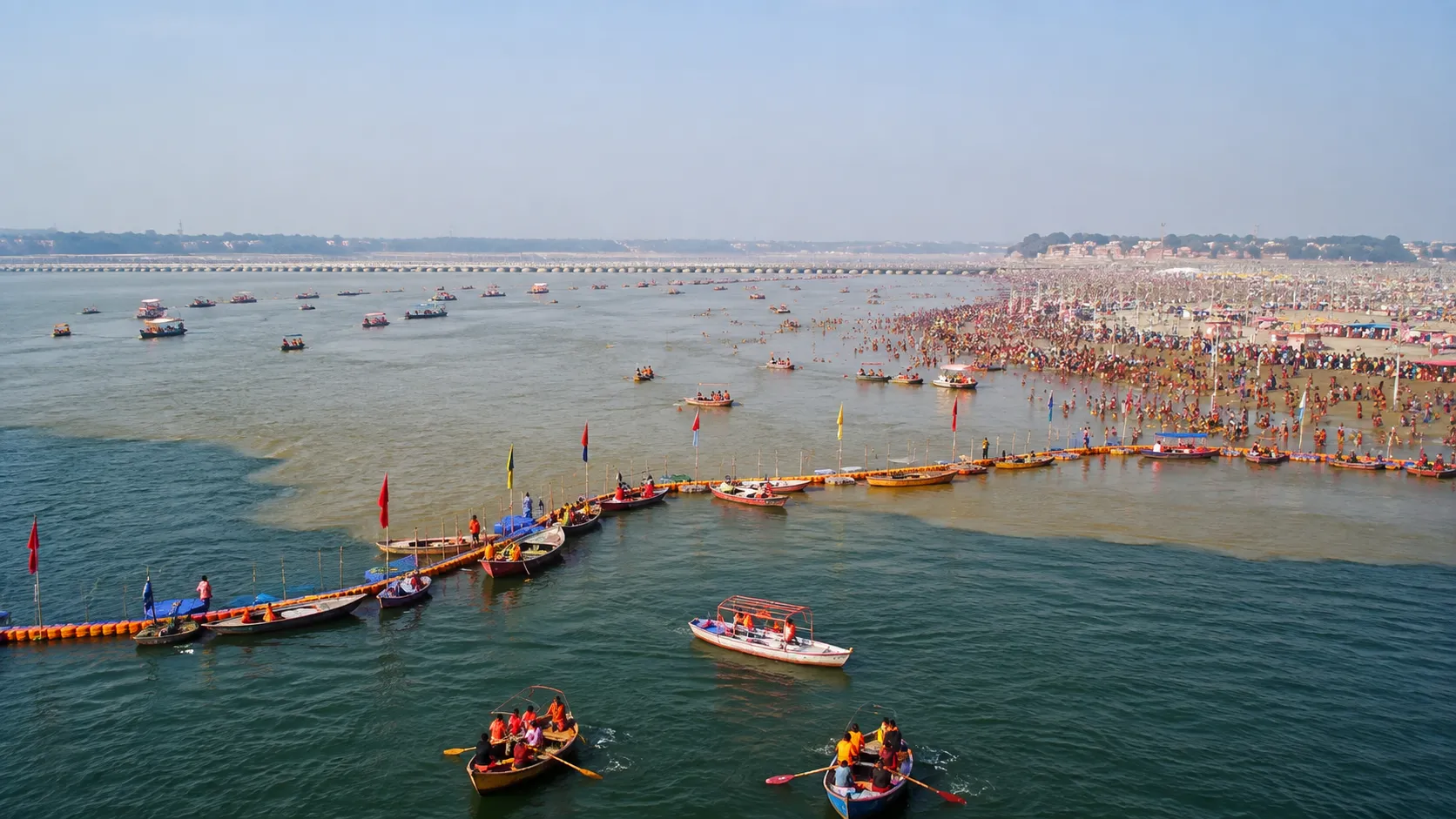
| The Triveni Sangam | Adjacent | The fort stands at the confluence; see the two together. |
| Bade Hanuman Mandir | About 500 m | The guardian Hanuman of the Sangam, nearby. |
| Prayagraj Junction (railway) | About 7 to 10 km | By auto, e-rickshaw or taxi. |
| Prayagraj (Bamrauli) Airport | About 15 to 18 km | The city airport; taxis to the fort. |
It is best seen together with the Sangam and Bade Hanuman.
Best time to visit and how to plan it
| When | Why |
|---|---|
| Morning, 7:00 AM onwards | A cooler, calmer time for the temple, the tree and the complex. |
| Winter (Nov to Feb) | The most pleasant season in Prayagraj. |
| The Kumbh and Magh Mela | When the Army opens more of the fort for guided pilgrim visits, though very crowded. |
| With the Sangam and Bade Hanuman | To see the whole sacred core of Prayagraj together. |
- Pair it with the Sangam snan and the darshan of Bade Hanuman.
- Allow 2 to 3 hours, and carry your photo ID for the Army checks.
For Prayagraj, or a combined Kashi, Ayodhya and Prayagraj pilgrimage, planned end to end, see our tour packages.
Practical notes for the Army fort
- Carry a valid government photo ID (Aadhaar, Voter ID or Passport); it is required and checked.
- Only the public corridors, to the Patalpuri, the Akshayavat and the Saraswati Koop, are usually open; the inner palaces are restricted.
- Follow the Army's rules on photography, which may be limited in parts of the fort; do not photograph any military areas.
- In the Mela season, more of the fort is usually opened for guided pilgrim visits; ask locally or through us.
Accessibility for elderly and mobility limited visitors
- The Patalpuri Temple is underground, reached by steps, so a helper is useful for the frail.
- The fort grounds involve some walking; come in the cool of the morning and pace the visit.
- The Akshayavat and the temple can be worshipped without long descents where alternatives exist; ask on site.
- We arrange transport, help with the ID and security, and plan a gentle visit within your Prayagraj day.
Etiquette for visiting
- Respect the Army's rules and security at all times; carry and show your ID.
- In the Patalpuri Temple, remove footwear and be reverent; it is a living, sacred shrine.
- Worship the Akshayavat and the temple with devotion, and do not damage the sacred tree.
- Follow any photography restrictions, and keep to the marked public corridors.
Our guided visits and Prayagraj tours
We are a Varanasi, Ayodhya and Prayagraj based operator, a unit of Experience My India, with more than forty years of guiding pilgrims across all three holy cities, and our own local guide in Prayagraj. Entry is free, so what we offer is the visit made smooth and meaningful: help with the ID and the Army security, a guide who tells the layered story of the fort, the immortal tree, the underground temple and the ancient pillar, and the whole Prayagraj pilgrimage, the Sangam, Bade Hanuman and the fort together, and the great three-city pilgrimage.
| Service | Includes | Price |
|---|---|---|
| Guided Allahabad Fort visit | The Patalpuri, the Akshayavat, the Saraswati Koop and the Ashokan Pillar, with a guide. | Contact us for pricing |
| Fort and Sangam day | The fort with the Sangam snan and Bade Hanuman, with a guide. | Contact us for pricing |
| Full Prayagraj darshan day | The fort within a wider Prayagraj visit, with a guide. | Contact us for pricing |
| Kashi, Ayodhya and Prayagraj pilgrimage | The three holy cities, with darshan, transfers and a guide. | Contact us for pricing |
Inclusions and exclusions are stated up front, with any taxes and conditions, and no charge appears later that was not named. Entry is free; our charge is only for guiding, transport and services. See all our tour packages for the full range.
Experience My India is a travel operator, not the Army or the temple administration. Entry is free; our charge is only for our guiding and services. Access, timings and rules are set by the Army and the authorities and can change.
Nearby sacred sites in Prayagraj
The fort stands at the sacred core of Prayagraj, by the Sangam.
| Site | What it is | Internal link |
|---|---|---|
| Triveni Sangam | The sacred confluence of the Ganga, Yamuna and Saraswati, at the fort's feet. | /temple/prayagraj/triveni-sangam |
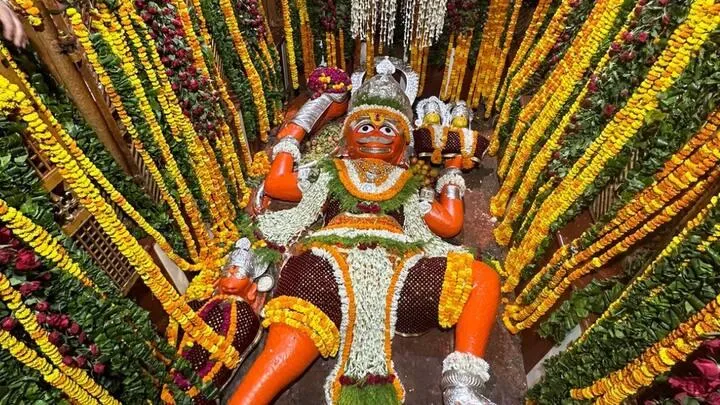
| Bade Hanuman Mandir | The reclining Hanuman, guardian of the Sangam, nearby. | /temple/prayagraj/bade-hanuman-mandir |
| Sarnath Archaeological Museum (Varanasi) | Home of the Ashoka Lion Capital, India's emblem; for the wider Ashokan heritage. | /temple/varanasi/sarnath-archaeological-museum |
| Ramnagar Fort (Varanasi) | The great riverside fort of Kashi, for more of the region's forts. | /temple/varanasi/ramnagar-fort |
| Ganga Aarti, Dashashwamedh (Varanasi) | The great river aarti of Kashi, for the wider river pilgrimage. | /temple/varanasi/dashashwamedh-ghat-ganga-aarti |
For the Sangam snan and the confluence, see our Triveni Sangam guide.