.webp&w=2048&q=75)
Essential info at a glance
| Detail | At a glance |
|---|---|
| What it is | An ancient underground temple within the Fort, the temple of the netherworld, home of the immortal Akshayavat. |
| General hours | 7:00 AM to 6:00 PM, all days (with the fort's access hours). |
| Morning aarti | 7:00 AM to 8:00 AM. |
| Evening aarti | 6:00 PM to 6:30 PM. |
| Entry fee | Free. No paid VIP darshan; standard fort security applies. |
| Presiding deity | Dedicated to Lord Vishnu, with a great many idols in the subterranean chambers. |
| Also here | The immortal Akshayavat, and the seat of the sage Markandeya's penance. |
| Access | Inside the Army fort; carry a government photo ID. |
Patalpuri Temple timings and aarti
The temple is open from 7:00 AM to 6:00 PM on all days, its hours running with the fort's access hours, and entry is free. Its aartis are its most devotional moments, the morning aarti from 7:00 to 8:00 AM and the evening aarti from 6:00 to 6:30 PM. As the temple is within the Army fort, come during these hours, carry your photo ID, and pass through the standard security at the fort gates.
| Detail | When | Notes |
|---|---|---|
| General hours | 7:00 AM to 6:00 PM | All days; with the fort's hours; free. |
| Morning aarti | 7:00 AM to 8:00 AM | The morning worship. |
| Evening aarti | 6:00 PM to 6:30 PM | The evening worship. |
| Access | Carry a photo ID | Inside the Army fort; standard security. |
Patalpuri Temple: the temple of the netherworld
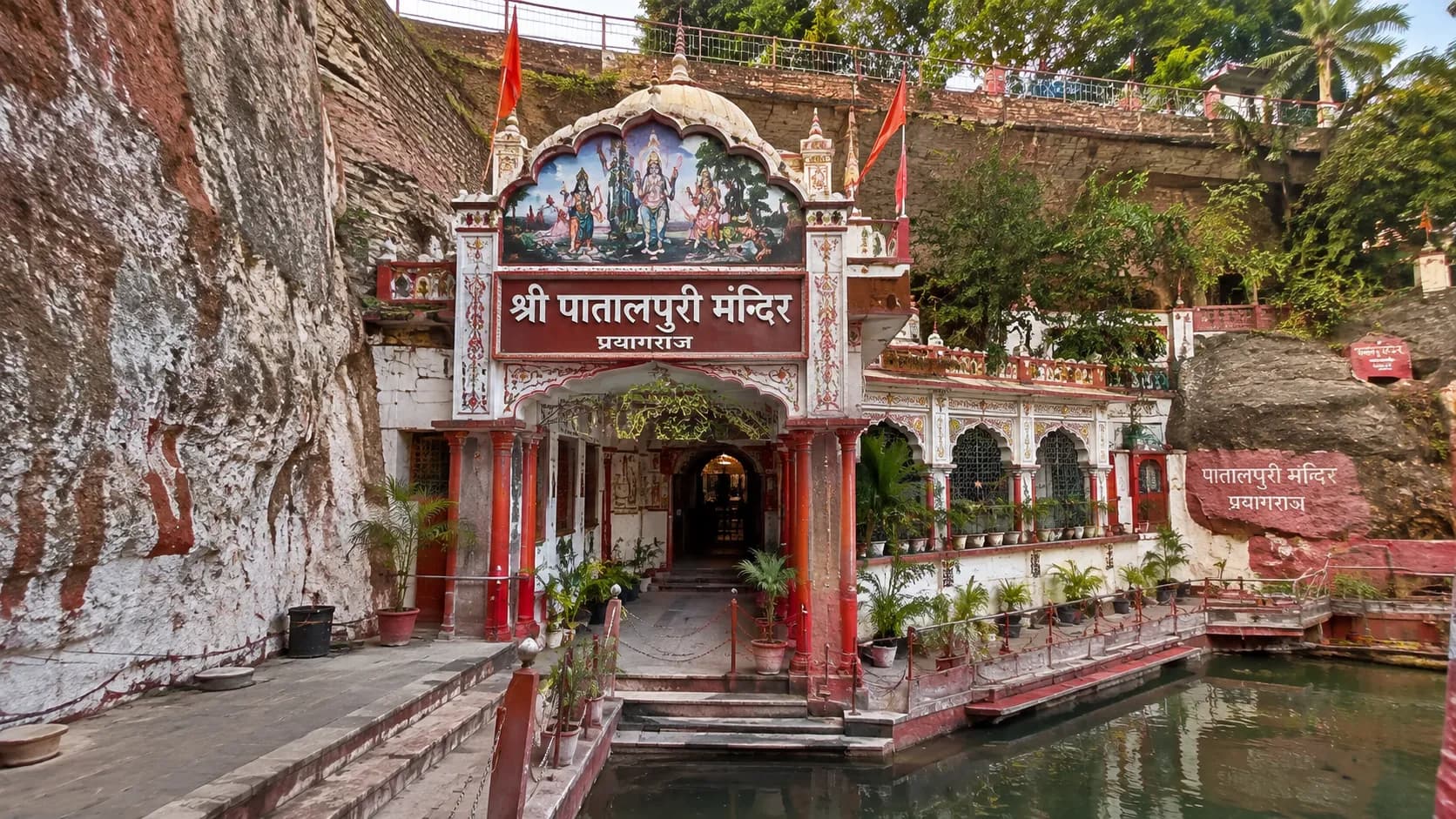
Deep beneath the ramparts of the great Fort of Prayagraj, reached by a flight of steps that leads down out of the daylight, lies one of the most ancient and mysterious temples in all of India: the Patalpuri Temple, the temple of the netherworld. Its name tells its nature, for Patal is the netherworld, the underworld realm of the three worlds, and Puri is the city; and the tradition holds that the underground chambers of this temple are a very doorway to the Patal, the entrance to the netherworld, from which the temple takes its name. It is said to have stood here since the Vedic age, among the very oldest of all our temples, and to be sacred above all to Lord Vishnu. To descend its steps, out of the sunlight and into the cool, dim, lamp-lit hush below the earth, is to step into a place of the deepest antiquity and mystery, a sanctuary older than memory.
The descent: the subterranean sanctuary and its many gods
The wonder of the Patalpuri is what awaits below. A small passage at the foot of the steps opens into the underground temple, and at its threshold, tradition tells, the pilgrim is met by a great guardian figure, Dharmaraja, the lord of dharma and of death himself, or, some say, the fierce and protecting Mother Kali, set to watch over the entrance to the netherworld. And within, in the dim subterranean chambers, is gathered a whole host of the gods, a great many idols of the deities, gods and goddesses without number, ranged through the underground sanctuary, so that the pilgrim moves from one divine presence to the next in the lamp-light beneath the earth. A single sacred lamp is kept burning here without ceasing, day and night, through all the hours, in token of the eternal, undying presence of the divine within this deathless place. The whole temple has an air of profound and ancient mystery found in few places on earth, a hidden underground city of the gods.
The sage Markandeya and the immortal tree
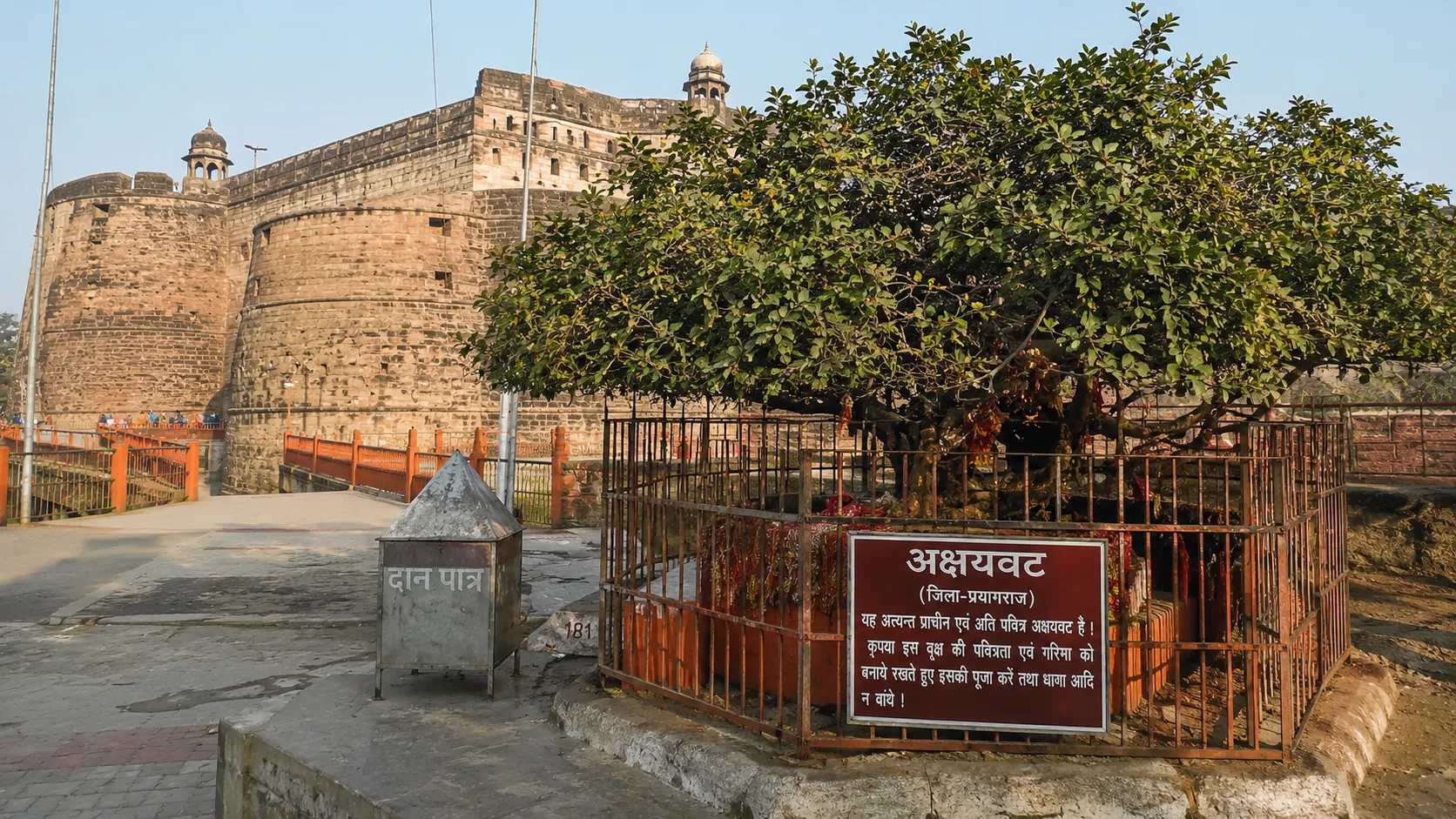
The Patalpuri is bound up with two of the deepest emblems of deathlessness in all our tradition. The first is the sage Markandeya, the immortal rishi, he who by his devotion to Lord Shiva conquered death itself and was granted eternal life; for the tradition holds that it was here, at the Patalpuri, that the great Markandeya performed his intense penance and won the blessing of Lord Vishnu, and that here, in this very place, he composed the sacred scriptures that bear his name. And the second is the immortal Akshayavat, the imperishable banyan tree, which stands within the temple's precincts, the deathless tree that never perishes; the very roots of the immortal tree may be seen within the underground temple, so that the tree and the temple are one. Lord Ram, with Lakshman and Sita, visited this holy place, the tradition tells, and Mata Sita herself worshipped the immortal tree. So the Patalpuri joins the immortal sage and the immortal tree, a sanctuary of deathlessness in the depths of the earth. For the fuller story of the Akshayavat, see our Fort guide.
A sanctuary of many faiths
There is a further and beautiful wonder to this place: that its deathless tree and its ancient sanctity are revered not by one faith alone but by three of the great traditions of India. To the Hindus it is the temple of Vishnu, the seat of Markandeya, the tree of Ram and Sita. To the Jains it is a supremely holy place, for their scriptures hold that it was here, beneath this eternal tree, that Bhagwan Rishabhanatha, Adinath, the very first of their Tirthankaras, attained kevala jnana, the perfect and omniscient enlightenment, after a penance of a thousand years; and it is from that eternal, never-fading knowledge, some say, that the tree takes its name, the Akshaya, the imperishable; a Jain shrine bearing the footprints of Rishabhanatha was raised at the spot. And to the Buddhists the place was known too, for the great Chinese pilgrim Hiuen Tsang, journeying through India in the seventh century, described the tree and its temple in his famous travels. Few places in all the land are held sacred by so many faiths at once.
The underground temple, in my own words
By Rajeev Sharma, guide with Experience My India
The Patalpuri is one of the most unforgettable places I take my guests, because there is nothing like descending those steps down into the earth, into that cool, dim, lamp-lit old temple, the temple of the netherworld, older than we can say. I show them Dharmaraja at the door, the lord of death guarding the way, and all the many gods gathered in the dark below, and the one lamp that never goes out. People fall very quiet down there; they feel the great age and mystery of it.
And I love to tell them the story of the immortal sage Markandeya, who conquered death, doing his penance right here and writing the holy scriptures; and how our immortal Akshayavat, the deathless tree, grows here, and Sita herself worshipped it. And the thing my guests find most beautiful is that this one tree is holy to us Hindus, and to the Jains, whose first Tirthankara Rishabhdev got his enlightenment here, and to the Buddhists whose Hiuen Tsang wrote of it. Three faiths at one tree. I always plan the Patalpuri with the Fort and the Sangam, and I remind everyone to bring their ID for the army gate. It is a place of the deepest mystery, and I never let a visitor to Prayag miss it.
In more than forty years of guiding, that descent into the deathless underground temple is among the most mysterious things I share.
What to see and do
- Descend the steps into the ancient underground temple of the netherworld.
- See Dharmaraja, or Maa Kali, guarding the entrance, and the many gods in the subterranean chambers.
- Behold the ever-burning eternal lamp and the roots of the immortal Akshayavat within.
- Hear the story of the immortal sage Markandeya, who did his penance and wrote the scriptures here.
- Reflect on the tree revered by Hindus, Jains and Buddhists alike, and pair it with the Fort and Sangam.
How to reach Patalpuri Temple
The temple is inside the Allahabad Fort on Kila Marg, near the Yamuna bank by the Sangam; enter through the fort's gates with your photo ID, and the temple is reached down the steps within.
| From | Distance | Notes |
|---|---|---|
| The Allahabad Fort gates | Inside the fort | Enter with ID; the temple is down the steps within. |
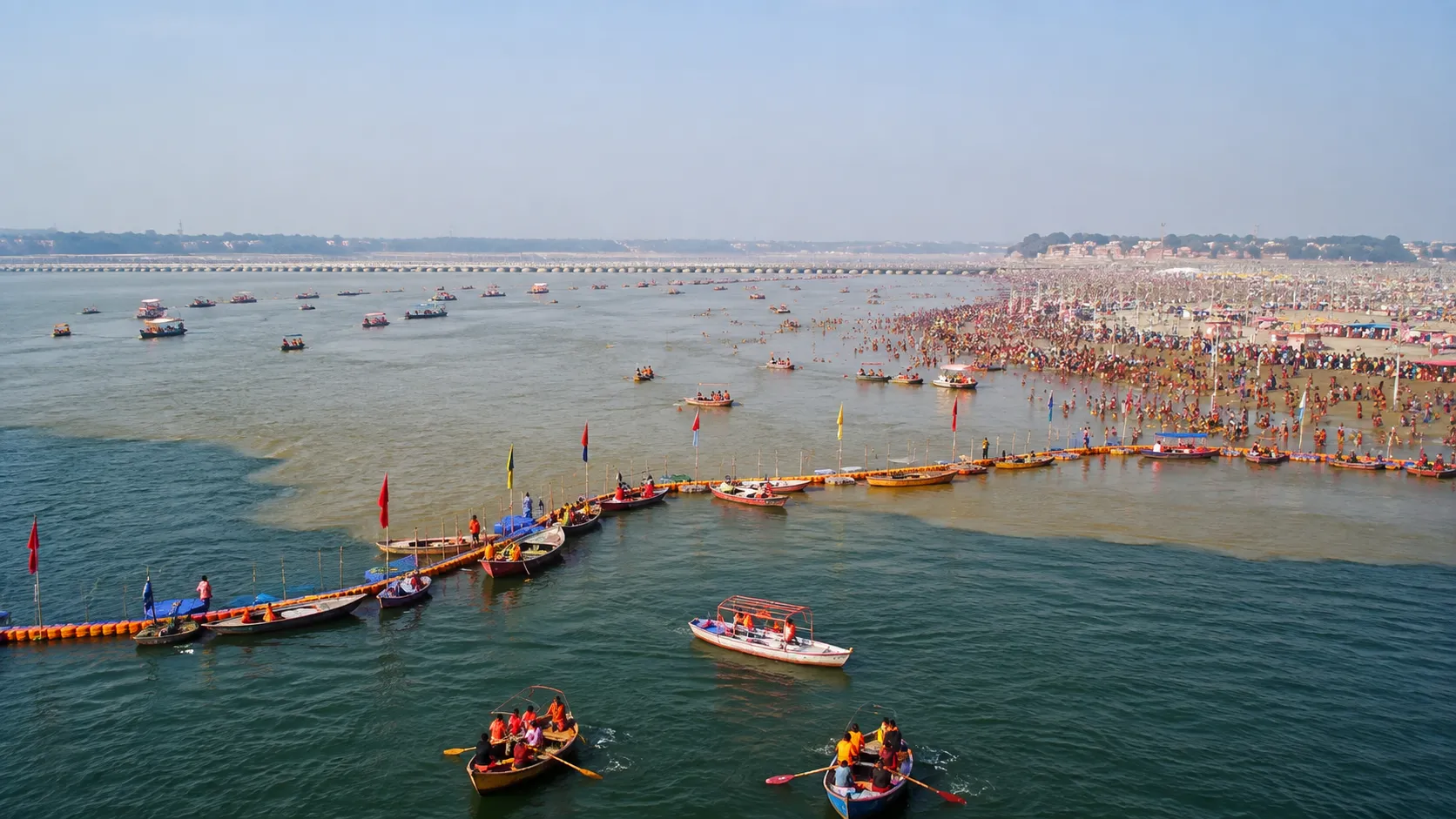
| The Triveni Sangam | Adjacent | The confluence at the fort's feet; see the two together. |
| Bade Hanuman Mandir | About 500 m | The guardian Hanuman of the Sangam, nearby. |
| Prayagraj Junction (railway) | About 7 to 10 km | By auto, e-rickshaw or taxi to the fort. |
| Prayagraj (Bamrauli) Airport | About 15 to 18 km | The city airport; taxis to the fort. |
It is seen within a visit to the Fort and the Sangam.
Best time to visit and how to plan it
| When | Why |
|---|---|
| Morning or evening, for the aartis | The 7 to 8 AM and 6 to 6:30 PM worship in the underground temple. |
| Winter (Nov to Feb) | The most pleasant season in Prayagraj. |
| The Kumbh and Magh Mela | When more of the fort is opened for pilgrims, though very crowded. |
| With the Fort and the Sangam | To see the whole sacred core of Prayagraj together. |
- Pair it with the Fort, the Akshayavat, the Ashokan Pillar and the Sangam.
- Allow time for the descent and the darshan, and carry your photo ID for the army gate.
For Prayagraj, or a combined Kashi, Ayodhya and Prayagraj pilgrimage, planned end to end, see our tour packages.
Accessibility for elderly and mobility limited visitors
- The temple is underground, reached by a flight of steps, so a helper is useful for the frail and those who cannot manage stairs.
- It is dim and can be crowded; come at a quieter hour and take the descent slowly.
- The fort's security involves some walking and waiting; pace the visit and come early.
- We arrange transport, help with the ID and security, and plan a gentle visit.
Etiquette for visiting
- Remove footwear and be reverent; it is a living, sacred, and very ancient shrine.
- Keep your voice low in the underground sanctuary, and follow the priests and the queue.
- Respect the Army's rules and security, and carry and show your ID.
- Follow any photography restrictions within the fort and the temple.
Our guided visits and Prayagraj tours
We are a Varanasi, Ayodhya and Prayagraj based operator, a unit of Experience My India, with more than forty years of guiding pilgrims across all three holy cities, and our own local guide in Prayagraj. Darshan is free, so what we offer is the visit made smooth and meaningful: help with the ID and the fort security, a guide who tells the mysteries of the underground temple, the immortal tree and the sage Markandeya, and the whole Prayagraj pilgrimage, the Sangam, Bade Hanuman and the Fort together, and the great three-city pilgrimage.
| Service | Includes | Price |
|---|---|---|
| Guided Fort and Patalpuri visit | The underground temple, the Akshayavat, the Saraswati Koop and the pillar, with a guide. | Contact us for pricing |
| Fort and Sangam day | The Patalpuri and Fort with the Sangam snan and Bade Hanuman, with a guide. | Contact us for pricing |
| Full Prayagraj darshan day | The temple within a wider Prayagraj visit, with a guide. | Contact us for pricing |
| Kashi, Ayodhya and Prayagraj pilgrimage | The three holy cities, with darshan, transfers and a guide. | Contact us for pricing |
Inclusions and exclusions are stated up front, with any taxes and conditions, and no charge appears later that was not named. Darshan is free; our charge is only for guiding, transport and services. See all our tour packages for the full range.
Experience My India is a travel operator, not the Army or the temple administration. Darshan is free; our charge is only for our guiding and services. Access, timings and rules are set by the Army and the authorities and can change.
Nearby sacred sites in Prayagraj
The Patalpuri is at the sacred core of Prayagraj, within the Fort by the Sangam.
| Site | What it is | Internal link |
|---|---|---|
| Allahabad Fort and Akshayavat | The great fort of Akbar around the temple; the fuller Akshayavat and pillar story. | /temple/prayagraj/allahabad-fort-akshayavat |
| Triveni Sangam | The sacred confluence of the Ganga, Yamuna and Saraswati, at the fort's feet. | /temple/prayagraj/triveni-sangam |
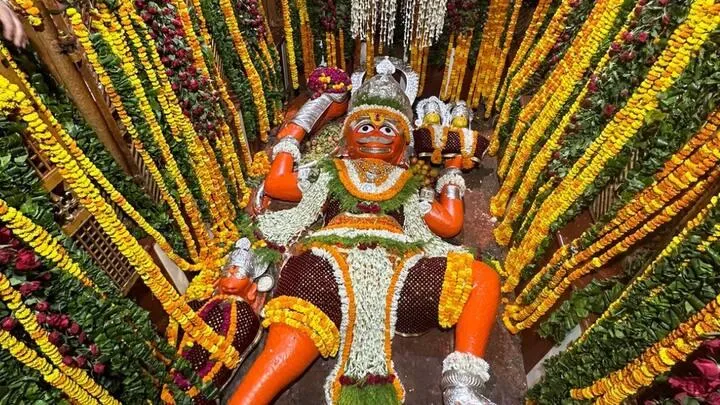
| Bade Hanuman Mandir | The reclining Hanuman, guardian of the Sangam, nearby. | /temple/prayagraj/bade-hanuman-mandir |
| Rishabhdev Jain Mandir (Ayodhya) | The birthplace temple of the Tirthankara whose enlightenment the Akshayavat marks. | /temple/ayodhya/rishabhdev-jain-mandir |
| Ganga Aarti, Dashashwamedh (Varanasi) | The great river aarti of Kashi, for the wider river pilgrimage. | /temple/varanasi/dashashwamedh-ghat-ganga-aarti |
For the fort, the Akshayavat and the Ashokan Pillar, see our Allahabad Fort guide.