
Essential info at a glance
| Detail | At a glance |
|---|---|
| What it is | A Ram temple on the Janmabhoomi Path, famous for its Ram Rasoi, a free kitchen that feeds thousands of pilgrims daily. |
| Opening hours | 6:00 AM to 8:00 PM, and up to 10:00 PM on festivals. |
| Entry fee | Completely free. |
| Ram Rasoi | Free, hygienic, sattvic meals for devotees, generally 11:30 AM to about 3:30 PM. |
| How to eat | Collect a free Prasad slip at the temple, then take your meal at the Ram Rasoi. |
| The deity | A beloved idol of Ram Lalla, the child Ram, overlooking the pilgrims on the Janmabhoomi Path. |
| Run by | The Ram Rasoi is run by the Mahavir Mandir Trust of Patna, as a service of feeding. |
| Location | Amawa Mandir Complex, Ramkot, Janmabhoomi Path, near Kanak Bhavan and the Ram Janmabhoomi. |
Amawa Ram Mandir timings and the Ram Rasoi
The temple is open from 6:00 AM to 8:00 PM, and later on festival days, and entry is free. Its famous free kitchen, the Ram Rasoi, serves meals to pilgrims through the middle of the day, generally from 11:30 AM to about 3:30 PM, so if you wish to eat here, plan your darshan of the core temples around that. To take a meal, you simply collect a free Prasad slip at the temple.
| Detail | When | Notes |
|---|---|---|
| Temple hours | 6:00 AM to 8:00 PM | Up to 10:00 PM on some festival days; free. |
| Ram Rasoi meals | About 11:30 AM to 3:30 PM | Free, sattvic meals; collect a Prasad slip at the temple. |
| Aartis | Morning and evening | With the daily worship in the Ramkot temple hours. |
| Entry fee | Free | For the temple and the meal alike. |
Amawa Ram Mandir: the temple on the Janmabhoomi Path
On the Janmabhoomi Path, the very way the pilgrims walk toward the birthplace of Lord Ram, and close to Kanak Bhavan, stands the Amawa Ram Mandir, a temple of a gentle and modern grace. It rises, tradition tells, on ground where a temple of the Raghu dynasty once stood, where the emperors of Ram's own clan, and Ram himself, are said to have worshipped, so its site is ancient and holy. The temple is a lovely modern one, notable as the first air-conditioned temple of Ayodhya, built with walls of clear toughened glass, and within it is enshrined a beautiful idol of Ram Lalla, the child Ram, installed in November 2019. Through the glass, the little Lord looks out upon the great river of pilgrims flowing past toward His birthplace, as if watching over each one on their way to His darshan; and devotees treasure a lovely coincidence, that the childhood Ram Lalla was installed here on the eve of the day the long dispute over the Ram Janmabhoomi was at last decided in favour of Ram Lalla. It is a warm, welcoming, well-loved temple, but it is known across the whole country above all for one thing: its Ram Rasoi.
The Ram Rasoi: the kitchen that feeds the pilgrims
The Ram Rasoi, the Kitchen of Ram, is one of the most beautiful things in all of Ayodhya, and one of the most useful for the traveller. It is a great free community kitchen, run at the Amawa Ram Mandir by the Mahavir Mandir Trust of Patna, the noble charitable trust, and every single day it serves a free, hot, hygienic meal to the pilgrims who come to see Ram Lalla, thousands upon thousands of them, ten thousand and more on an ordinary day, and vastly more at the festivals. The food is pure sattvic fare, cooked without onion or garlic in keeping with temple tradition: a simple, wholesome thali of rice and dal and vegetables, with kachori and puri, roti and chutney, light and comforting and easy on the stomach after a long morning of darshan, and cooked and served with the greatest care and cleanliness. And it is entirely free; you have only to collect a Prasad slip at the temple, and sit down among your fellow pilgrims to eat.
Annadaan: the sacred act of feeding
To eat at the Ram Rasoi is to receive far more than a meal; it is to share in one of the most sacred of all acts of devotion, the annadaan, the giving of food. In the Hindu tradition, to feed the hungry, to offer food as prasad, is among the highest of virtues, an act of pure seva, of service, that honours the divine in every guest; and here at the Ram Rasoi it is done on a magnificent scale, in the very spirit of Lord Ram, whose reign was famed for its care that none should want. There is something deeply moving in the sight of the great hall: pilgrims from every corner of India and beyond, of every language and every walk of life, rich and poor alike, sitting together in a row upon the floor, sharing the same simple, sacred meal, humbled and equal before the Lord, amid the soft sound of Jai Shri Ram. Many travellers say that this quiet, communal meal, offered freely in Ram's name, was among the most touching moments of their whole pilgrimage; and it echoes the feeding tradition kept elsewhere in Ayodhya, at Sita's own kitchen.
The meal that fed my pilgrims, in my own words
By Rajeev Sharma, guide with Experience My India
I always tell my guests about the Ram Rasoi at Amawa Mandir, because it is a real blessing on a pilgrim's day, in every sense. After the long morning at the temples, when everyone is tired and hungry, I take them here, and I say: come, Ram will feed you now. We collect the slip, and we sit down on the floor with pilgrims from all over India, and a simple, clean, sattvic meal is served, and it costs nothing. I watch my guests, and I see it move them, that a great free kitchen feeds ten thousand people every day in Ram's name, that everyone sits together as equals. People who have plenty and people who have little, all eating the same prasad. That is Ram Rajya, I tell them, that is the kingdom of Ram, where no one goes hungry.
I also show them the lovely little Amawa temple itself, the first glass, air-conditioned temple in Ayodhya, with the child Ram Lalla looking out through the glass at all the pilgrims walking to His birthplace. And I tell them the beautiful story, that this Ram Lalla was installed just before the court gave the Janmabhoomi back to the Lord. But it is the meal they remember. Practically, too, I tell every pilgrim: you do not need to worry about lunch near the Ram Mandir; Ram's own kitchen will feed you. It is one of the kindest, most useful, most moving things I can share.
In more than forty years of guiding, this is the meal that has most often brought tears of gratitude to the pilgrims I bring.
Darshan, the meal and how to get it
- Darshan is free; take darshan of the child Ram Lalla in the glass temple on the Janmabhoomi Path.
- For a meal at the Ram Rasoi, collect a free Prasad slip at the temple, then go to the dining hall.
- Meals are served through the middle of the day, generally 11:30 AM to about 3:30 PM; plan your darshan around it.
- The food is free, sattvic (no onion or garlic), simple and hygienic; sit with your fellow pilgrims and eat.
- Remove footwear, dress modestly, and give a donation to the kitchen only if you wish; the meal itself is free.
How to reach Amawa Ram Mandir
The temple is at the Amawa Mandir Complex in Ramkot, right on the Janmabhoomi Path, close to Kanak Bhavan and just outside the Ram Janmabhoomi, at the heart of old Ayodhya. It is on the very route the pilgrims walk to Ram Lalla, so it is very easily found.
| From | Distance | Notes |
|---|---|---|
| Ram Janmabhoomi Mandir | On the Janmabhoomi Path | Right on the pilgrims' route to Ram Lalla; a natural stop. |
| Kanak Bhavan | A few minutes' walk | In the core cluster; do them together. |
| Hanuman Garhi | Close by | The guardian temple, in the core cluster. |
| Ayodhya Dham Junction (railway) | About 2 km | By e-rickshaw, auto or taxi. |
| Maharishi Valmiki Airport, Ayodhya | About 10 km | The new airport; taxis and autos to the old city. |
Being right on the Janmabhoomi Path, it is the perfect place to pause for a free meal on your way to or from Ram Lalla.
Best time to visit and how to plan it
| When | Why |
|---|---|
| Around the Ram Rasoi meal, 11:30 AM to 3:30 PM | To share the free meal after your morning darshan. |
| On your way to or from the Ram Janmabhoomi | It is right on the pilgrims' path; a natural stop. |
| Morning or evening, for the temple darshan | For the child Ram Lalla and the daily worship. |
| Festival days | The kitchen and temple are at their busiest and most joyful. |
- Plan your core-cluster darshan to reach the Ram Rasoi around the midday meal.
- Allow 30 to 45 minutes for the darshan and the meal together.
For Ayodhya, or a combined Kashi and Ayodhya pilgrimage, planned end to end, see our tour packages.
Accessibility for elderly and mobility limited visitors
- The Ram temple is on an upper floor of the complex; check on lift access, or view and worship as able.
- The dining hall is often floor seating; ask the staff for any chair or table seating for elderly guests.
- Being air-conditioned, the temple is a cool, comfortable rest on a hot day.
- We plan the timing so an elderly pilgrim can darshan and eat comfortably on the core-cluster route.
Our guided darshan and Ayodhya tours
We are a Varanasi and Ayodhya based operator, a unit of Experience My India, with more than forty years of guiding pilgrims across Kashi, Ayodhya, and Prayagraj, and we have our own local guide and pandit in Ayodhya. Entry, darshan and the Ram Rasoi meal are all free, so what we arrange is the visit around them: a guide who tells the story of the temple and the seva of the Ram Rasoi, times your core-cluster darshan so you can share the free meal, and helps with the Prasad slip and the seating, so that Ram's own kitchen feeds you on your pilgrimage.
| Service | Includes | Price |
|---|---|---|
| Guided core Ayodhya darshan with Ram Rasoi | The core temples timed so you share the free Ram Rasoi meal, with a guide. | Contact us for pricing |
| Full Ayodhya darshan day | Amawa Ram Mandir and the Ram Rasoi within a wider Ayodhya pilgrimage. | Contact us for pricing |
| Assisted darshan and meal | A comfortable, assisted darshan and meal for elderly or differently-abled pilgrims. | Contact us for pricing |
| Kashi and Ayodhya pilgrimage | Varanasi and Ayodhya combined, with darshan, transfers and a guide. | Contact us for pricing |
Inclusions and exclusions are stated up front, with any taxes and conditions, and no charge appears later that was not named. Darshan and the Ram Rasoi meal are free; our charge is only for guiding and services. See all our tour packages for the full range.
Experience My India is a travel operator, not the temple or the Ram Rasoi administration. Darshan and the meal are free; our charge is only for our guiding and services. Timings are set by the temple and the trust and can change.
Nearby sacred sites in Ayodhya
Amawa Ram Mandir is on the Janmabhoomi Path, in the core cluster of Ayodhya.
| Site | What it is | Internal link |
|---|---|---|
| Shri Ram Janmabhoomi Mandir | The grand temple of Lord Ram, on whose path Amawa Mandir stands. | /temple/ayodhya/ram-janmabhoomi-mandir |
| Kanak Bhavan | The Golden Palace of Ram and Sita, a few minutes' walk. | /temple/ayodhya/kanak-bhavan |
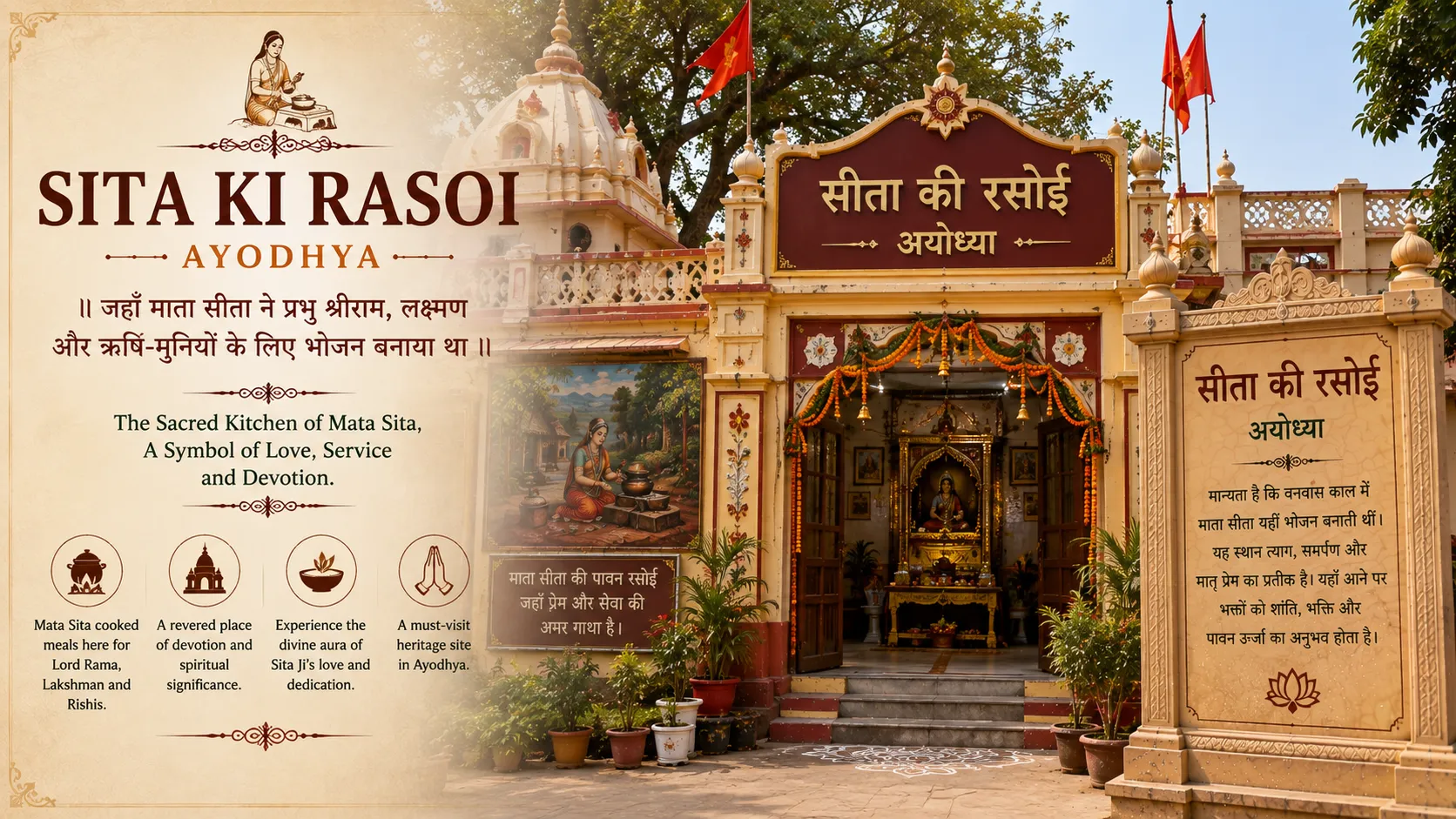
| Sita Ki Rasoi | The sacred kitchen of Sita, and its Annakshetra, the other feeding tradition. | /temple/ayodhya/sita-ki-rasoi |
| Hanuman Garhi | The guardian temple of Hanuman, visited first. | /temple/ayodhya/hanuman-garhi |
| Dashrath Mahal | The palace of King Dashrath, Ram's childhood home. | /temple/ayodhya/dashrath-mahal |
For the Ram Mandir darshan and its free Sugam booking, see our Ram Janmabhoomi Mandir guide.