Essential info at a glance
| Detail | At a glance |
|---|---|
| What it is | The palace of King Dashrath, Ram's father, the childhood home of Lord Ram and his brothers; also called Bada Asthan. |
| Morning session | 8:00 AM to 12:00 PM. |
| Evening session | 4:00 PM to 10:00 PM; closed midday for the Bhog break. |
| Entry fee | Completely free. There is no VIP or paid darshan. |
| The shrine | A Ram family shrine, with Ram, Sita, Lakshman and the brothers. |
| The atmosphere | A living, joyful centre of Ram-naam kirtan, with saffron-clad sadhus and continuous devotion. |
| A cherished belief | Darshan here is said to bless father-son bonds and family harmony. |
| Location | Ramkot, about 500 m from the Ram Janmabhoomi Mandir, between it and Hanuman Garhi. |
Dashrath Mahal timings and aarti
The temple keeps a split day, open in the morning and again from late afternoon into the night, closing for the midday bhog break, and entry is free. Its special glory is its ceaseless devotional singing, and the evenings, when the kirtan reaches its peak, are the most beautiful time to come. The general queues move smoothly, far more easily than at the Ram Mandir, except on the great festival days.
| Session or ritual | Timing | Notes |
|---|---|---|
| Morning session | 8:00 AM to 12:00 PM | The morning aarti is around 5:00 to 6:30 AM. |
| Afternoon aarti and bhog break | 12:00 PM | The temple then closes for the deity's rest. |
| Evening session | 4:00 PM to 10:00 PM | The public evening window. |
| Sandhya (evening) aarti | About 6:00 to 7:30 PM | The evening worship. |
| Kirtan | Continuous through the day | The devotional singing peaks between about 6:00 and 8:00 PM. |
*Entry is free and there is no VIP darshan.
Dashrath Mahal: King Dashrath's palace and Ram's childhood home
Of all the places in Ayodhya, few are as quietly moving as Dashrath Mahal, for this is believed to be the very palace of King Dashrath, the father of Lord Ram, the king of Kosala of the ancient Ikshvaku dynasty, whose capital was Ayodhya. And more than that: this was the home of Ram's childhood. Here, tradition tells, Lord Ram grew up with his three beloved brothers, Lakshman, Bharat and Shatrughna, and with their mothers, the queens Kaushalya, Sumitra and Kaikeyi; here Ram passed his boyhood and his youth, before the great events of the Ramayana, his exile and his triumph, carried him out into the world. To stand here is to stand at the roots of Ram's story, in the family home of the ideal son and the devoted father, and for devotees it is a deeply emotional, tender place, a glimpse of Ram not as king or god but as a beloved child in his father's house.
The Ramayana tells of the great and terrible love between Dashrath and Ram, the father who could not bear his son's exile and died of grief for him, and something of that love lingers here. Devotees hold that darshan at Dashrath Mahal blesses the bond between fathers and sons and brings harmony to the family, and many come precisely to pray for their families before the home of the most famous family of all.
Bada Asthan: the great seat
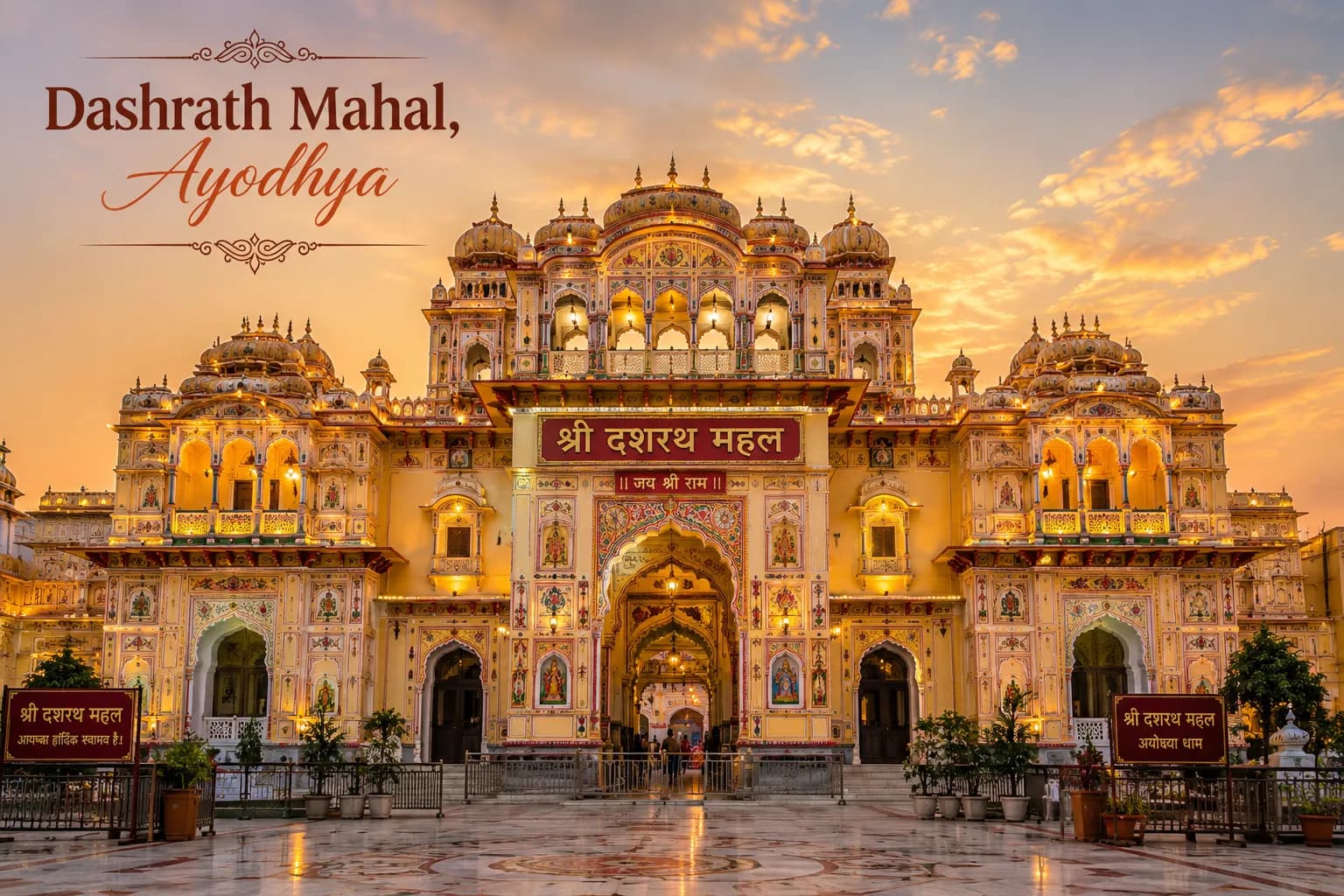
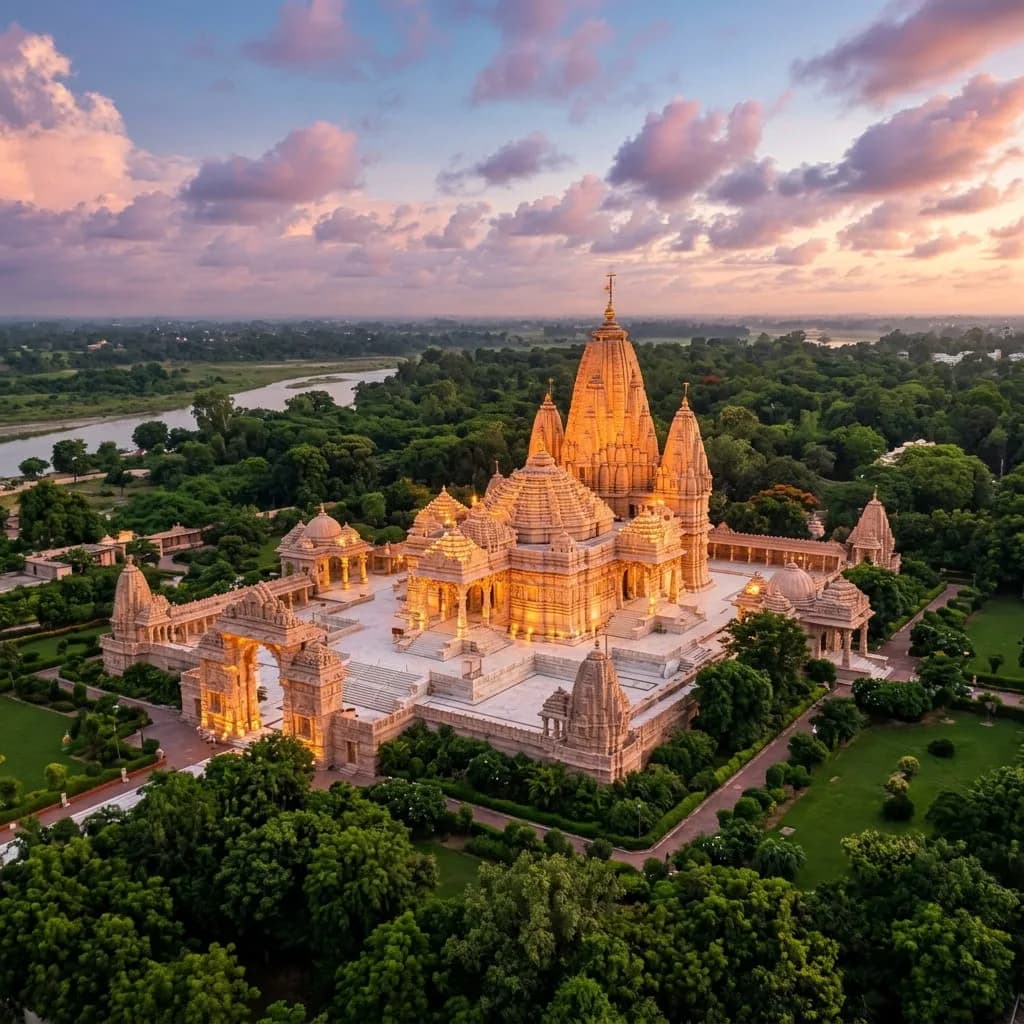
The palace is known by several loving names: Dashrath Bhavan, the house of Dashrath; and, in the everyday speech of Ayodhya, Bada Asthan and Badi Jagah, both of which mean simply the great place, or the great seat, a mark of the deep reverence this site has held for centuries in the pilgrimage tradition of the city. Over the ages the royal residence became a temple and a religious seat, and today it is a living, cherished centre of Ram devotion, cared for by its sadhus. Its entrance is a delight, a broad and ornate archway, brightly painted and decorated with murals and flowers, so that you step from the busy lane into a world of colour and devotion; the architecture may not be grand or vast, but its warmth and its spiritual atmosphere are immense, and visitors again and again call it one of the most peaceful and moving places in Ayodhya.
The Ram family shrine
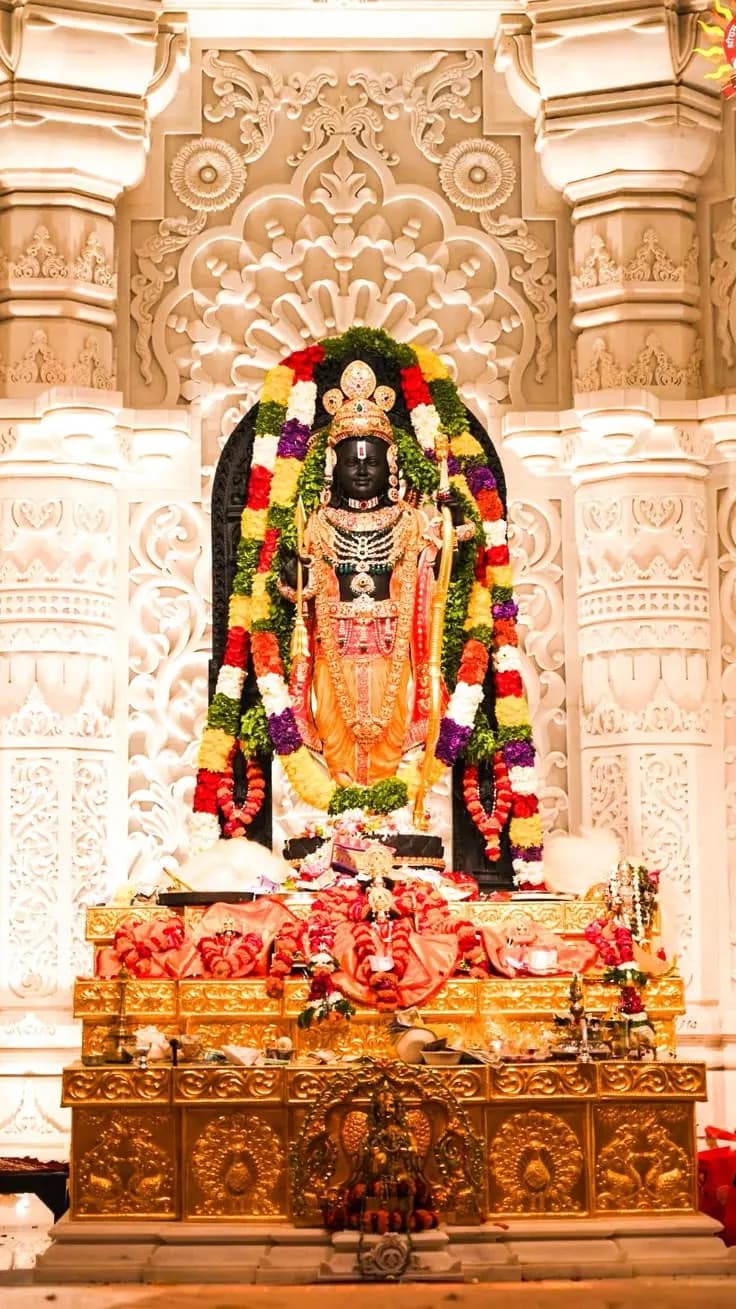
Within the palace-temple is enshrined the family of Ram: the idols of Lord Ram with his consort Sita and his devoted brother Lakshman, and the brothers of the royal house, beautifully adorned, so that the home of Dashrath once again holds his sons. To take darshan here is to honour not only Ram but the whole loving family of the Ramayana, in the very place that tradition holds to be their home. The walls around are bright with paintings and scenes, and the air is filled with flowers and incense and song.
The living heart of devotion: the courtyard and the kirtan
What truly sets Dashrath Mahal apart is its ceaseless, immersive devotion. At the heart of the palace is a courtyard, and here, at most hours of the day, saffron-clad sadhus and devotees gather to recite the dohas and chaupais of Tulsidas's Ramcharitmanas and of the Valmiki Ramayana, and to sing the name of Ram. As evening comes, the courtyard truly comes alive, with bhajan and kirtan sessions, and sometimes classical devotional music, the singing swelling to its peak between about six and eight o'clock, until the whole palace reverberates with the name of Ram and the air is thick with incense and the scent of flowers.
It is a genuinely spellbinding atmosphere, and it is the reason to linger here rather than merely pass through. Sit for a while in the courtyard, let the Ram-naam wash over you, and you will feel, as so many pilgrims do, a deep and unexpected peace, the busy lanes of Ayodhya forgotten, only the singing and the presence of Ram remaining. Many say it is the most immersive devotional experience of their whole visit.
The home of Ram's childhood, in my own words
By Rajeev Sharma, guide with Experience My India
I always bring my guests to Dashrath Mahal on the way to the Ram Mandir, and I tell them, gently, what this place is: the palace of Ram's father, the home where Ram grew up as a child with his brothers. I have watched that land on people, especially fathers with their sons, because suddenly Ram is not only the great god of the huge temple but a boy who grew up in a family home, loved by his father. I tell them the old belief, that a darshan here is good for the bond between father and son, and I have seen fathers and sons stand together before the shrine with tears in their eyes.
And then I tell them to just sit in the courtyard and listen. Because this is not a place to rush; it is a place to feel. The sadhus are singing the Ramayana, the kirtan is going, the incense is drifting, and if you sit quietly for even ten minutes, something in you settles. In the evening, when the singing peaks, it is one of the most beautiful hours in all of Ayodhya. Darshan here is free, and the queue is easy, so I never rush my guests through. This is where Ayodhya feels most like a family home, and I love it for that.
In more than forty years of guiding, this is the place where I most often see a traveller simply sit down and stay.
Darshan and offerings
- Darshan is free and by a smooth general queue; there is no VIP or paid line.
- Remove your footwear at the entrance, where shoe counters are available; leather items are not allowed.
- Modest, traditional attire is preferred; dress respectfully.
- Sit in the courtyard for the kirtan; it is the heart of the experience, best in the evening.
- Carry a little cash for offerings; simple offerings of flowers and sweets are made to the family of Ram.
How to reach Dashrath Mahal
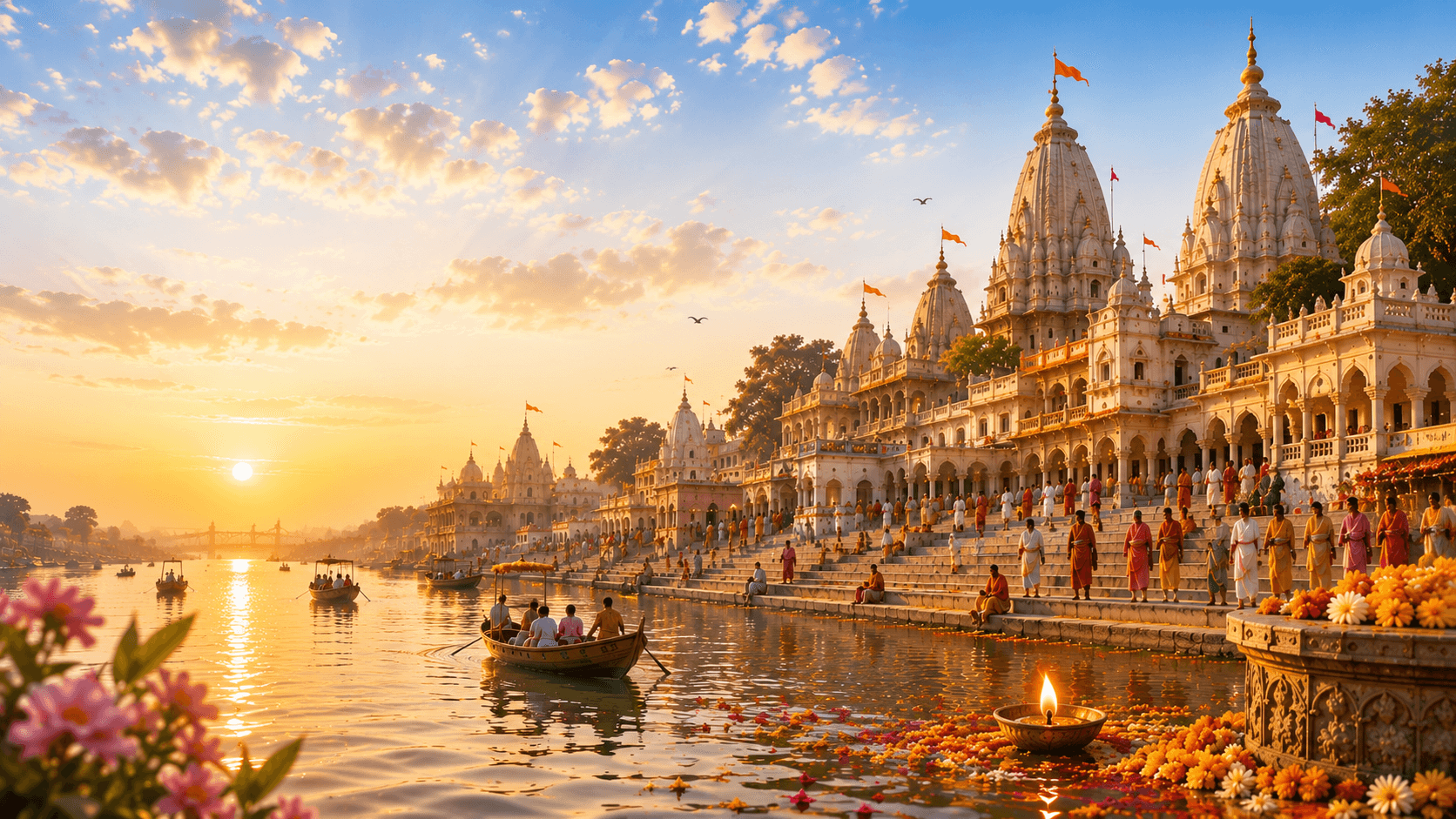
The temple is in Ramkot, in the heart of old Ayodhya, only about 500 metres from the Ram Janmabhoomi Mandir and right between it and Hanuman Garhi, and close to Kanak Bhavan, so it is a natural stop as you move among the core temples. You reach it on foot or by e-rickshaw through the lanes.
| From | Distance | Notes |
|---|---|---|
| Ram Janmabhoomi Mandir | About 500 m | On the way; a natural stop en route to Ram darshan. |
| Hanuman Garhi and Kanak Bhavan | A few minutes' walk | All in the core Ramkot cluster; do them together. |
| Ayodhya Dham Junction (railway) | About 6 to 8 km | By e-rickshaw, auto or taxi. |
| Maharishi Valmiki Airport, Ayodhya | About 10 km | The new airport; taxis and autos to the old city. |
A guided visit lets you do the whole core of Ayodhya, and hear the story of each place, in one well-ordered morning or evening.
Best time to visit and how to plan it
| When | Why |
|---|---|
| Evening, about 6 to 8 PM | The kirtan at its peak and the Sandhya aarti; the most beautiful and immersive time. |
| Morning | A calmer darshan of the Ram family shrine. |
| Ram Navami and Ram Vivah | Great celebrations of Ram's birth and the divine marriage, joyfully kept here. |
| Diwali (Deepotsav), Shravan Mela and the fairs | Ayodhya's festivals, when the palace is at its most vibrant, and most crowded. |
- Pair it with the Ram Janmabhoomi Mandir, Hanuman Garhi and Kanak Bhavan in one core-Ayodhya visit.
- Allow 30 to 45 minutes, longer to sit with the kirtan in the evening.
For Ayodhya, or a combined Kashi and Ayodhya pilgrimage, planned end to end, see our tour packages.
Accessibility for elderly and mobility limited visitors
- The temple is at lane level, easier than a hilltop temple, though there are a few steps at the entrance.
- The courtyard has room to sit, which suits a gentle, seated, restful visit with the kirtan.
- Come at a non-peak hour for the easiest darshan; the general queue is usually smooth.
- We plan the order of the core temples so an elderly pilgrim is comfortable across the whole visit.
Nearby sacred sites in Ayodhya
Dashrath Mahal sits at the heart of the old city, in the core cluster of Ayodhya's great sites.
| Site | What it is | Internal link |
|---|---|---|
| Shri Ram Janmabhoomi Mandir | The grand temple of Lord Ram, about 500 m away. | /temple/ayodhya/ram-janmabhoomi-mandir |
| Hanuman Garhi | The guardian temple of Hanuman, visited first, close by. | /temple/ayodhya/hanuman-garhi |
| Kanak Bhavan | The Golden Palace of Ram and Sita, nearby. | /temple/ayodhya/kanak-bhavan |
| Saryu Ghats and the aarti | The sacred river of Ayodhya, with its evening aarti at Ram ki Paidi. | /temple/ayodhya/saryu-ghat-aarti |
| Nageshwarnath Temple | The ancient Shiva temple said to be founded by Ram's son Kush. | /temple/ayodhya/nageshwarnath-temple |
For the Ram Mandir darshan and its free Sugam booking, see our Ram Janmabhoomi Mandir guide.
Our guided darshan and Ayodhya tours
We are a Varanasi and Ayodhya based operator, a unit of Experience My India, with more than forty years of guiding pilgrims across Kashi, Ayodhya, and Prayagraj, and we have our own local guide and pandit in Ayodhya. Entry and darshan at Dashrath Mahal are free, so what we arrange is the visit around it: a guide who tells the tender story of Ram's family home, a well-ordered darshan of the core of Ayodhya, and time to sit with the kirtan, with a puja by a pandit if you wish.
| Service | Includes | Price |
|---|---|---|
| Guided core Ayodhya darshan | Hanuman Garhi, the Ram Mandir, Dashrath Mahal and Kanak Bhavan together, with a guide. | Contact us for pricing |
| Puja at Dashrath Mahal | A puja before the family of Ram with a pandit, and the prasad. | Contact us for pricing |
| Full Ayodhya darshan day | Dashrath Mahal with the Ram Mandir, Hanuman Garhi, Kanak Bhavan and the wider sites. | Contact us for pricing |
| Kashi and Ayodhya pilgrimage | Varanasi and Ayodhya combined, with darshan, transfers and a guide. | Contact us for pricing |
Inclusions and exclusions are stated up front, with any taxes and conditions, and no charge appears later that was not named. Darshan itself is free; our charge is only for guiding and services. See all our tour packages for the full range.
Experience My India is a travel operator, not the temple administration. Darshan is free; our charge is only for our guiding and services. Temple timings and rules are set by the temple and can change.