Please note: Bada Devkali and Chhoti Devkali
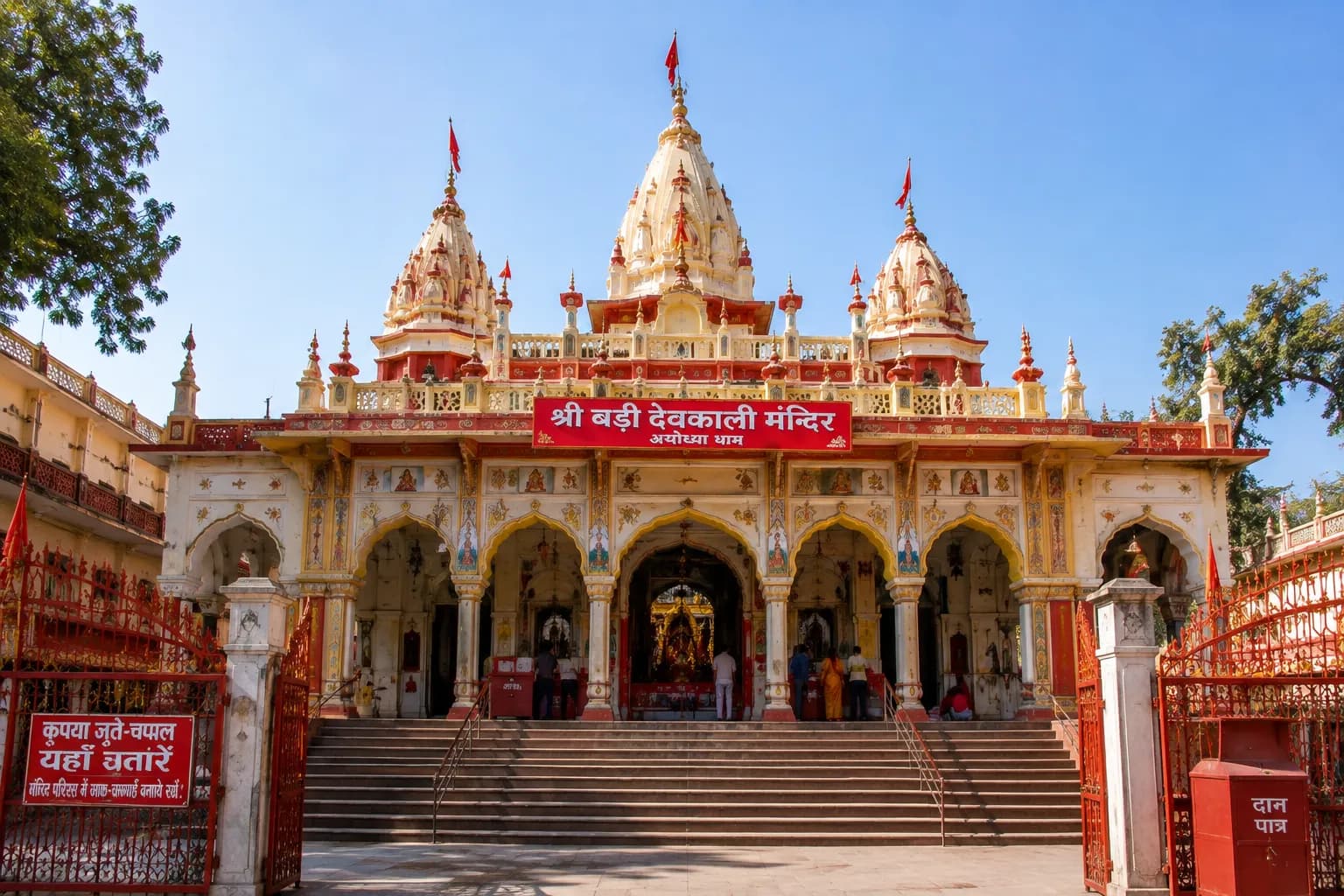
This page is about the Bada Devkali, or Badi Devkali, the larger Devkali temple, at Deokali in Faizabad, about 5 km from the Ram Janmabhoomi, revered as the family goddess of Lord Ram and his Suryavanshi line. It is a different temple from the smaller Chhoti Devkali, near Naya Ghat, which is the family goddess of Mata Sita, brought from Mithila. The two are a beautiful pair, the goddesses of the divine couple's two families; this guide is for the Bada Devkali. See our guide to Chhoti Devkali Mandir.
Essential info at a glance
| Detail | At a glance |
|---|---|
| What it is | The great temple of Maa Devkali, the Kuldevi, the family goddess, of Lord Ram and the Suryavanshi dynasty. |
| Opening hours | 4:00 AM to 9:00 PM daily; some schedules split into 6:00 AM to 1:00 PM and 4:00 to 9:00 PM. |
| Entry fee | Free for all devotees. There is no VIP darshan. |
| Aartis | Morning around 7:30 to 8:00 AM, and evening around 7:30 to 9:00 PM. |
| Time needed | About 30 to 60 minutes; longer during Navratri. |
| The rare idol | Mahakali, Mahalakshmi and Mahasaraswati worshipped together in a single sacred idol. |
| The story | Queen Kaushalya brought the newborn Ram here to the family goddess. |
| Location | Deokali, Faizabad, about 5 km from the Ram Janmabhoomi. |
Bada Devkali timings and aarti
The temple is open every day, generally from 4:00 AM to 9:00 PM, with a rest window in the middle of the day in some schedules, and entry is free. Its morning and evening aartis are its most powerful moments, and a darshan takes half an hour to an hour, longer in the great crowds of Navratri. The early morning and the late afternoon are the most peaceful times.
| Ritual or session | Timing | Notes |
|---|---|---|
| General darshan | 4:00 AM to 9:00 PM | Some schedules split into 6 AM to 1 PM and 4 to 9 PM. |
| Morning aarti | Around 7:30 to 8:00 AM | The dawn worship of the Goddess. |
| Evening aarti | Around 7:30 to 9:00 PM | The evening worship. |
| Time needed | About 30 to 60 minutes | Longer during Navratri. |
*Entry is free and there is no VIP darshan.
Bada Devkali: the Kuldevi of Lord Ram and the Suryavanshi line
Among the most revered and ancient temples of Ayodhya is the Bada Devkali, the great temple of the Goddess Devkali, honoured as the Kuldevi, the family goddess, of Lord Ram himself and of his whole illustrious line, the Suryavanshi, the Solar Dynasty of the Raghuvanshi kings. It is older even than the story of Ram, established, tradition tells, in the age of the Treta Yuga by Ram's own Suryavanshi ancestors, and it has been the family shrine of the royal house of Ayodhya for uncounted generations, worshipped by Ram and by his forefathers before him. To visit it is to stand in the ancestral heart of Ram's family devotion, before the Divine Mother who has watched over his dynasty since the dawn of ages. It lies at Deokali, a little apart from the city core, about five kilometres from the Ram Janmabhoomi.
The rare trinity: Mahakali, Mahalakshmi and Mahasaraswati
What makes Bada Devkali truly extraordinary, and unlike almost any other temple in India, is the form of its Goddess. For here the Divine Mother is worshipped not singly but as a trinity: Maa Mahakali, Maa Mahalakshmi and Maa Mahasaraswati, the three great forms of the Goddess, of power, of wealth and abundance, and of wisdom and learning, are believed to reside together in one single sacred idol. This is a most rare and precious thing; it is said that there are only two temples in all of India where the three great goddesses are worshipped together in a single image, the famed Vaishno Devi and this, the Bada Devkali of Ayodhya. To take darshan here, then, is to receive the blessing of all three Mothers at once, of strength, prosperity and knowledge together, and devotees hold that worship here fulfils every wish and grants protection, liberation and the destruction of the ego.
The goddess of Ram's family: Raghu's victory and Kaushalya's baby Ram
Two beloved stories bind this temple to the family of Ram. The first reaches back to King Raghu, the great ancestor from whom Ram's line takes the name Raghuvanshi. Tradition tells that the three goddesses appeared to Raghu in a dream, bidding him perform a sacred yagya to win victory in battle; heeding the divine command, the king triumphed, and in gratitude he consecrated the idol of Badi Devkali, enshrining the Goddess's blessing upon his house forever. From that day, she was the protector of the dynasty's fortunes.
The second story is tender beyond words. When Lord Ram was born, his mother, Queen Kaushalya, brought the newborn child here to the family goddess, to place him at her feet and seek her blessing for her son, worshipping all three forms of the Kuldevi with the infant Ram in her arms; and to this day, in memory of that, an idol of Ram Lalla lies in a cradle within the temple, and mothers who have been blessed with a son bring the child here, as Kaushalya once brought Ram, to the Divine Mother. It is a place, above all, of the love between mothers and children, human and divine, and there are few sweeter thoughts in all of Ayodhya than that of Kaushalya carrying the baby Ram to this very shrine.
The marble temple, the kund and Navratri
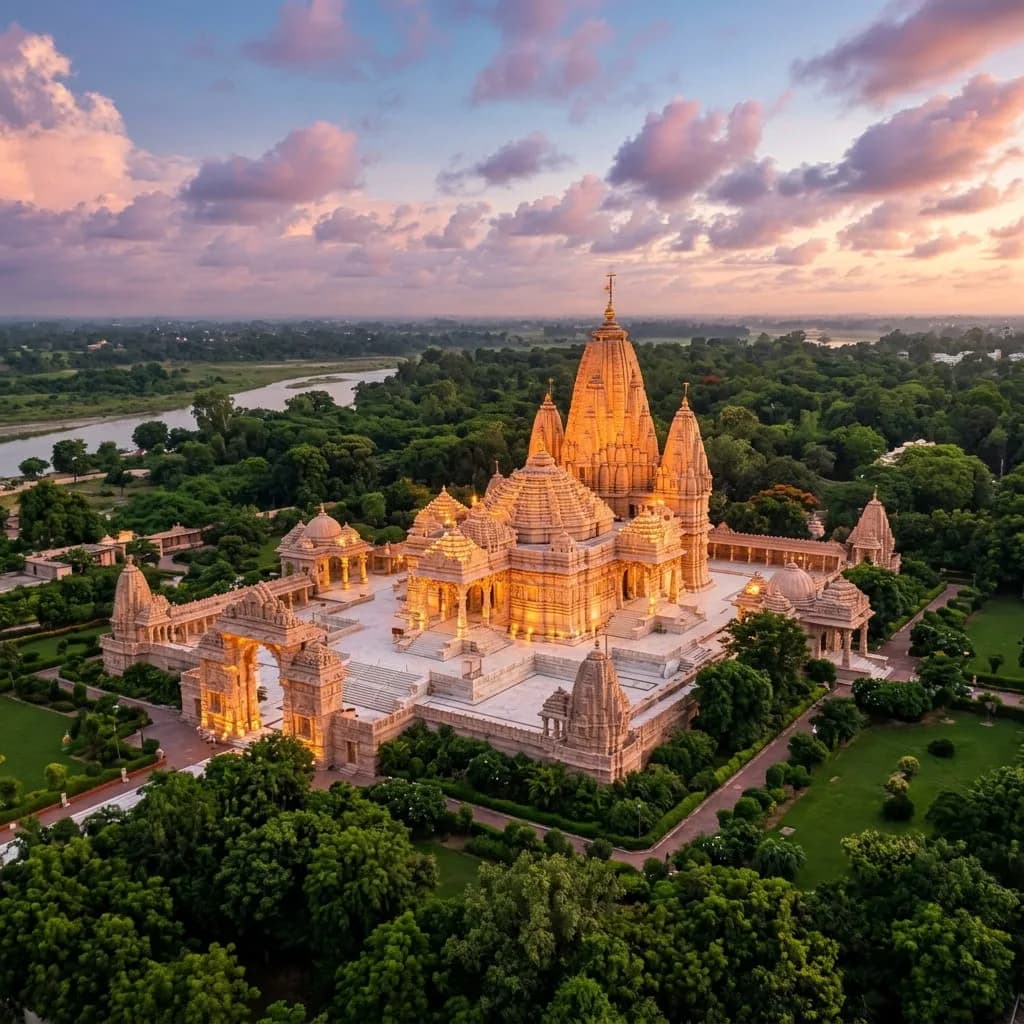
Bada Devkali is a beautiful temple of white marble, with intricate carving and traditional design, crowned by a dome flying the red flag of the Mother Goddess, and guarded at its gate by two carved lions and a great heavy brass bell that pilgrims sound as they enter. Within the complex lies a large pond, a kund, whose waters devotees hold to have healing power, and the whole place has a peaceful, deeply devotional air. Its greatest days are the nine nights of Navratri, when the temple overflows with worshippers of the Goddess, and it is cherished too by the followers of the Suryavansha, Ram's own solar line, whose ancestral Mother she is. As at many Ayodhya temples, monkeys are about, sacred but playful, so keep your belongings secure.
The healing believed of the kund's waters is a matter of devotion and faith; we note gently that it is a prayer, not a medicine, and that anyone with a health concern should also see a good doctor.
The family goddess of Ram, in my own words
By Rajeev Sharma, guide with Experience My India
I love to bring my guests to Bada Devkali, and I always tell them two things that surprise and move them. First, that this is the Kuldevi, the family goddess, of Lord Ram himself and his whole Suryavanshi line, worshipped by his ancestors since the Treta Yuga, older than Ram's own story. And second, the wonderful thing, that here the Mother is worshipped as three goddesses in one idol, Mahakali, Mahalakshmi and Mahasaraswati together, which happens in only one other temple in all of India, Vaishno Devi. So a darshan here, I tell them, gives you the blessing of all three Mothers at once. People are amazed.
But the story that touches them most is Kaushalya's. I show them the little Ram Lalla in the cradle, and I tell them how mother Kaushalya carried the newborn Ram here to show him to the family goddess, and how mothers still bring their baby sons here in memory of that. I have seen mothers and grandmothers weep with tenderness at it. I like to pair this Bada Devkali, Ram's family goddess, with the Chhoti Devkali, Sita's family goddess, so my guests see the goddesses of both families of the divine couple. It is the deep, motherly, ancestral heart of Ayodhya's devotion, and I never let a thoughtful pilgrim miss it.
In more than forty years of guiding, this is the Devi temple whose story of baby Ram and his mother most melts the hearts of the pilgrims I bring.
Darshan and offerings
- Darshan is free and by a regular queue; there is no VIP or paid line.
- Sound the great brass bell at the gate as you enter, and take darshan of the trinity Goddess.
- Traditional offerings are a chunri, flowers, sindoor and sweets; carry a little cash.
- See the Ram Lalla in the cradle; mothers bring their newborn sons here to the family goddess.
- Come for an aarti or at Navratri for the most powerful worship; cover shoulders and knees, and secure your belongings from the monkeys.
How to reach Bada Devkali
The temple is at Deokali, on the Deokali Beniganj Road in Adarsh Nagar, Faizabad, about 5 km from the Ram Janmabhoomi, within the parikrama of Ayodhya. It is easily reached by road, with parking available.
| From | Distance | Notes |
|---|---|---|
| Ram Janmabhoomi Mandir | About 5 km | By auto, e-rickshaw or taxi. |
| Chhoti Devkali (Naya Ghat) | A short drive | The companion Devkali temple; see the two together. |
| The core temples (Hanuman Garhi, Kanak Bhavan) | A short drive | By e-rickshaw or auto. |
| Ayodhya Dham Junction (railway) | A few km | By e-rickshaw, auto or taxi. |
| Maharishi Valmiki Airport, Ayodhya | About 12 to 15 km | The new airport; taxis and autos to the city. |
It pairs beautifully with the Chhoti Devkali Mandir for a Devi darshan of both families of the divine couple.
Best time to visit and how to plan it
| When | Why |
|---|---|
| Early morning or late afternoon | The most peaceful darshan, and lovely light on the marble temple. |
| Navratri (spring and autumn) | The nine nights of the Goddess; the temple at its most glorious, and busiest. |
| Around the aartis | The morning and evening aartis, when the trinity Goddess is worshipped with lamps. |
| With the Chhoti Devkali | To see the family goddesses of both Ram and Sita, a Devi darshan of the divine couple's houses. |
- Pair it with the Chhoti Devkali Mandir, and with Surajkund for the wider Suryavanshi solar-dynasty story.
- Allow 30 to 60 minutes; more during Navratri.
For Ayodhya, or a combined Kashi and Ayodhya pilgrimage, planned end to end, see our tour packages.
Accessibility for elderly and mobility limited visitors
- The marble temple is reachable by road with parking, and is largely at ground level, easier than the old-city temples, though there are some steps.
- It is a comfortable half-hour darshan at a gentle pace; Navratri is very crowded, so off-peak days are calmer.
- Mind the playful monkeys and any steps to the pond; a helper is useful for a frail guest.
- We arrange transport and plan a gentle Devi darshan within your Ayodhya day.
Nearby sacred sites in Ayodhya
Bada Devkali is at Deokali, connected to the family and the dynasty of Ram.
| Site | What it is | Internal link |
|---|---|---|
| Chhoti Devkali Mandir | The family goddess of Sita, near Naya Ghat, the companion Devkali temple. | /temple/ayodhya/chhoti-devkali-mandir |
| Shri Ram Janmabhoomi Mandir | The grand temple of Lord Ram, whose family goddess this is. | /temple/ayodhya/ram-janmabhoomi-mandir |
| Surajkund | The Sun pond of Ram's Suryavanshi, the Solar Dynasty whose Kuldevi she is. | /temple/ayodhya/surajkund |
| Kanak Bhavan | The Golden Palace of Ram and Sita. | /temple/ayodhya/kanak-bhavan |
| Durga Kund (Varanasi) | The great Devi temple of Kashi, for the wider Shakti devotion. | /temple/varanasi/durga-kund-mandir |
For the Ram Mandir darshan and its free Sugam booking, see our Ram Janmabhoomi Mandir guide.
Our guided darshan and Ayodhya tours
We are a Varanasi and Ayodhya based operator, a unit of Experience My India, with more than forty years of guiding pilgrims across Kashi, Ayodhya, and Prayagraj, and we have our own local guide and pandit in Ayodhya. Entry and darshan are free, so what we arrange is the visit around it: a guide who tells the story of Ram's family goddess, the rare trinity and baby Ram, and a Devi darshan pairing the Bada and Chhoti Devkali, with a puja by a pandit if you wish.
| Service | Includes | Price |
|---|---|---|
| Guided Devi darshan (both Devkalis) | The Bada and Chhoti Devkali, the goddesses of Ram and Sita, with a guide. | Contact us for pricing |
| Puja at Bada Devkali | A puja before the trinity Goddess with a pandit, and the prasad. | Contact us for pricing |
| Full Ayodhya darshan day | Bada Devkali within a wider Ayodhya pilgrimage, with a guide. | Contact us for pricing |
| Kashi and Ayodhya pilgrimage | Varanasi and Ayodhya combined, with darshan, transfers and a guide. | Contact us for pricing |
Inclusions and exclusions are stated up front, with any taxes and conditions, and no charge appears later that was not named. Darshan is free; our charge is only for guiding and services. See all our tour packages for the full range.
Experience My India is a travel operator, not the temple administration. Darshan is free; our charge is only for our guiding and services. Temple timings and rules are set by the temple and can change.