Essential info at a glance
| Detail | At a glance |
|---|---|
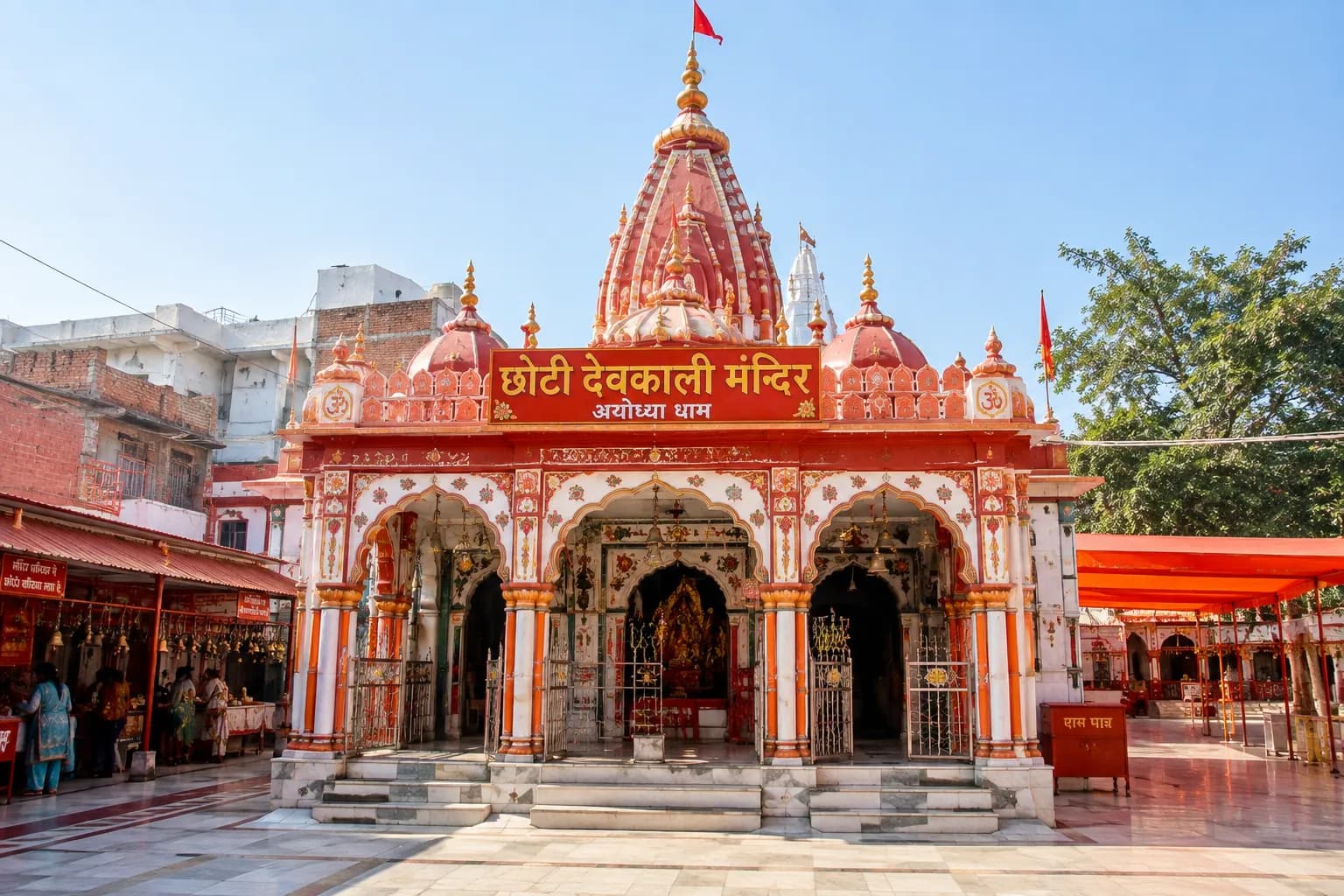
| What it is | A revered Devi shrine, a Siddha Shakti Peeth, of Goddess Girija, or Devkali, the family goddess of Mata Sita. |
| Opening hours | Typically 6:00 AM to 8:00 PM, with an afternoon closing window in some schedules. |
| Entry fee | Free. There is no VIP darshan. |
| Aartis | Mangala around 6:00 AM, Bhog around 11:00 AM, Sandhya in the evening, and Shayan around 8:00 PM. |
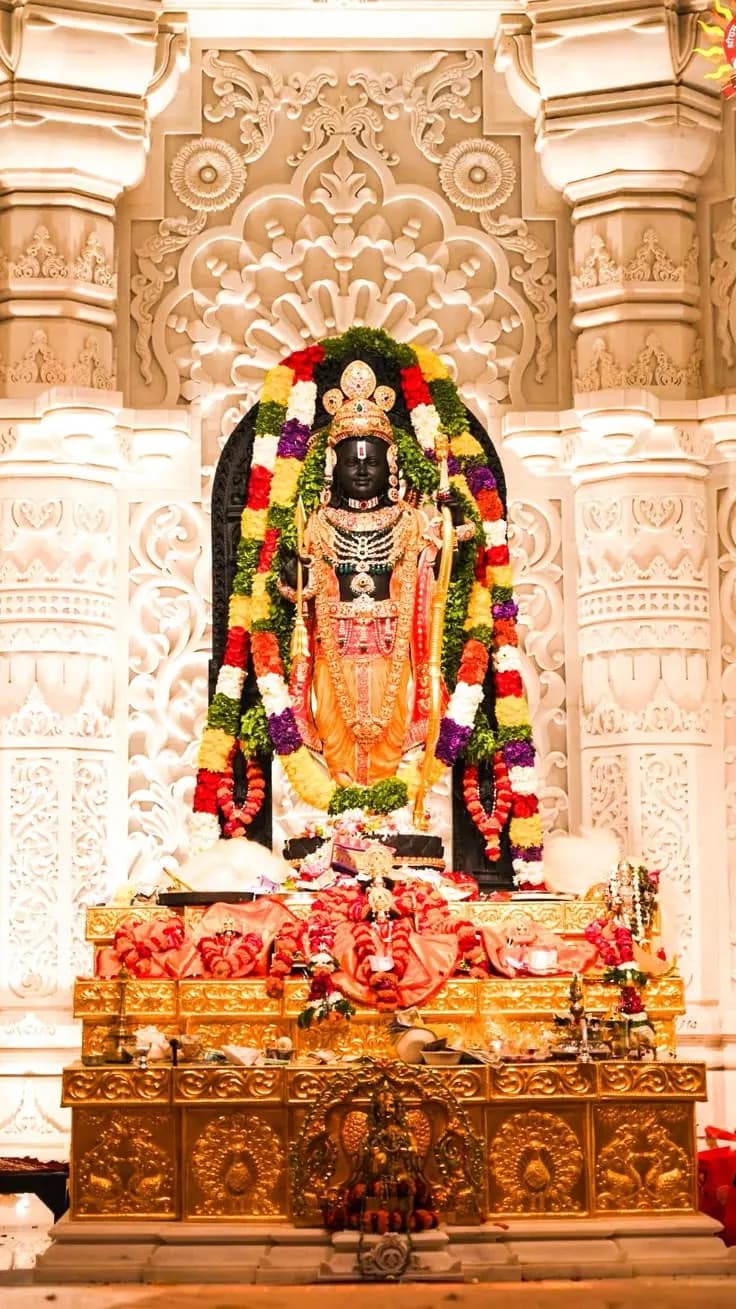
| The deity | Goddess Devkali, a form of Parvati (Gauri), worshipped as Sarvamangala, the all-auspicious. |
| The story | Sita brought her family goddess Girija from Mithila, and King Dashrath built this temple for her worship. |
| Greatest festival | Navratri, when the temple is at its most vibrant. |
| Location | Near Naya Ghat, Ayodhya. |
Chhoti Devkali Mandir timings and aarti
The temple is generally open from around 6:00 AM to 8:00 PM, with an afternoon rest window in some schedules, and entry is free. Its aartis punctuate the day, from the dawn Mangala aarti to the night Shayan aarti, and the early morning and the late afternoon are the most peaceful and beautiful times to come. It is at its most glorious during Navratri, the nine nights of the Goddess.
| Ritual or session | Timing | Notes |
|---|---|---|
| Mangala aarti | Around 6:00 AM | The dawn worship of the Goddess. |
| Bhog aarti | Around 11:00 AM | The midday offering. |
| Sandhya aarti | Evening, about 4:00 to 6:30 or 7:30 PM | Varies a little by season. |
| Shayan aarti | Around 8:00 PM | The night aarti before the temple closes. |
*Entry is free and there is no VIP darshan.
Chhoti Devkali: the goddess worshipped by Sita
Ayodhya is the city of Lord Ram, and yet, beautifully, one of its most revered shrines is a temple of the Goddess, kept and cherished because it was beloved of Sita herself. Chhoti Devkali Mandir, a Siddha Shakti Peeth near Naya Ghat, enshrines Goddess Devkali, a form of the Mother Goddess Parvati, and the story of how it came to be is one of the tenderest in all of Ayodhya. For Girija, another name of Parvati, was the Kuldevi, the family goddess, of Mata Sita, worshipped by her father King Janak's house in Mithila, in distant Janakpur. And when Sita married Lord Ram and left her childhood home to come to Ayodhya, she carried with her, among all her treasures, the idol of her beloved family goddess, so that she need never be parted from her. Moved by the new bride's devotion, King Dashrath, Ram's father, had a beautiful temple built to house the sacred image, and here Sita, with the other royal queens of Ayodhya, came to worship the Devi day by day.
So this is a temple born of love and devotion, the shrine where the Goddess Sita herself worshipped the Goddess, and to take darshan here is to stand where Sita stood, before the very form of the Divine Mother she held dearest. Devotees hold that the Goddess here grants every heartfelt wish and showers her protection and blessing upon all who come, and the temple has been cherished, damaged and lovingly restored across the long centuries, a living witness to unbroken faith.
Girija, the Mother Goddess
The goddess worshipped here, Girija, is a form of Parvati, the great Mother Goddess, the consort of Lord Shiva. Her name Girija means the daughter of the mountain, for she is the child of Himalaya, the king of the peaks; and she is worshipped in her gentle, auspicious aspect as Gauri, the fair one, and as Sarvamangala, she who brings all blessings, all that is auspicious. As Devkali she is the protector and the fulfiller of wishes, the divine feminine power, the Shakti, honoured in the heart of Ram's city. To worship her is to honour the Mother, the source of strength, devotion and grace, and pilgrims come to her with their deepest prayers, above all for the wellbeing of the family, for marriage and children, and for protection, as the queens of Ayodhya once did.
Sita and her goddess: from Mithila to Ayodhya
There is a lovely thread that joins this temple to the very beginning of the great love story of the Ramayana. For Sita's devotion to Girija began not in Ayodhya but in Mithila, her homeland, where she went daily as a girl to worship the Goddess at the Girija shrine; and it was there, tradition tells, in the flower garden by the temple as Sita came to worship her goddess, that Ram and Sita first set eyes upon one another, the first glance of the most beloved of all divine couples. And so, when Sita brought Girija's worship to Ayodhya, she brought with it the memory of that first meeting, of her girlhood, of Mithila; the goddess who had blessed her love now watched over her new home. To know this is to feel the whole tender arc of Sita's life gathered in this small, sweet temple, and it makes a darshan here quietly moving.
Chhoti Devkali and Badi Devkali
It helps to know that Ayodhya has two beloved Devkali temples. This one, the Chhoti Devkali, the smaller, near Naya Ghat, is the shrine of Sita's family goddess Girija, brought from Mithila. There is also the Badi Devkali, the larger, elsewhere in the city, cherished as a family goddess of Lord Ram's own line, associated with his ancestors and, it is said, with the blessings that brought Ram victory and with Queen Kaushalya's prayers. Both are dear to the people of Ayodhya, and if you have the time, the two make a lovely pair; but this page is your guide to the Chhoti Devkali, Sita's own goddess.
The goddess of the Goddess, in my own words
By Rajeev Sharma, guide with Experience My India
I love bringing my guests to Chhoti Devkali, especially the ladies and the families, because of its beautiful story. I tell them: in the city of Ram, here is a temple of the Goddess, and it is here because Sita herself worshipped here. I explain how Girija was Sita's family goddess in Mithila, how Sita loved her so much that she carried her idol all the way to Ayodhya when she married, and how her father-in-law Dashrath built this temple so she could keep worshipping her. People are so moved that Sita, whom we worship as a goddess, herself came here every day to worship the Mother. It gives the little temple a very tender feeling.
And I tell them the loveliest part, that Sita worshipped this same Girija back in Mithila, and that it was while going to the goddess that she and Ram first saw each other. So this temple holds the very beginning of their love. I take my guests to see the Devi, and I explain that she is Parvati, Sarvamangala, who gives all that is auspicious, and that people pray here for their families, their marriages, their children. I always fit it together with Kanak Bhavan, Sita's palace, and Sita Ki Rasoi, her kitchen, so my guests can follow Sita all through Ayodhya. It is a gentle, feminine, loving side of the holy city that many visitors miss, and I never let them.
In more than forty years of guiding, this is the Devi temple whose Sita story most moves the pilgrims I bring.
Darshan and offerings
- Darshan is free and by a regular queue; there is no VIP or paid line.
- Traditional offerings to the Goddess are a chunri (a sacred cloth), flowers, sindoor and sweets; carry a little cash.
- Come for an aarti if you can, when the Devi is worshipped with lamps and song.
- Navratri is the most powerful and beautiful time, though the temple is busiest then.
- Remove footwear before the sanctum, dress modestly, and keep a reverent quiet.
How to reach Chhoti Devkali Mandir
The temple is near Naya Ghat, in the heart of old Ayodhya, close to the river and the core temples, easily reached on foot or by e-rickshaw.
| From | Distance | Notes |
|---|---|---|
| Naya Ghat and the Saryu ghats | A short walk | Near the riverfront; combine with the ghats. |
| The core temples (Ram Mandir, Hanuman Garhi) | A short ride | By e-rickshaw or auto through the town. |
| Kanak Bhavan and Sita Ki Rasoi | Nearby | The other Sita shrines; do the Sita trail together. |
| Ayodhya Dham Junction (railway) | A few km | By e-rickshaw, auto or taxi. |
It sits naturally on a Sita trail with Kanak Bhavan and Sita Ki Rasoi, and near the ghats.
Best time to visit and how to plan it
| When | Why |
|---|---|
| Early morning (6 to 8 AM) or late afternoon | The most peaceful darshan, and lovely light. |
| Navratri (spring and autumn) | The nine nights of the Goddess; the temple at its most glorious, and busiest. |
| Around the aartis | The morning Mangala and evening aartis, when the Devi is worshipped with lamps. |
| With the Sita trail | Together with Kanak Bhavan and Sita Ki Rasoi, following Sita through Ayodhya. |
- Pair it with Kanak Bhavan and Sita Ki Rasoi for a Sita trail, and with the core temples.
- Allow 20 to 30 minutes; it is a small but deeply meaningful shrine.
For Ayodhya, or a combined Kashi and Ayodhya pilgrimage, planned end to end, see our tour packages.
Accessibility for elderly and mobility limited visitors
- The temple is small and at lane level, easier than a hilltop temple, though there may be a step or two.
- It is a short, gentle darshan; come at a non-peak hour for the easiest visit.
- Navratri is very crowded; off-peak days are calmer for elderly pilgrims.
- We plan the order of the Sita shrines so an elderly pilgrim is comfortable.
Nearby sacred sites in Ayodhya
Chhoti Devkali sits near Naya Ghat, among the Sita shrines and the core sites.
| Site | What it is | Internal link |
|---|---|---|
| Kanak Bhavan | The Golden Palace of Ram and Sita, on the Sita trail. | /temples/ayodhya/kanak-bhavan |
| Sita Ki Rasoi | The sacred kitchen of Sita, on the Sita trail. | /temples/ayodhya/sita-ki-rasoi |
| Shri Ram Janmabhoomi Mandir | The grand temple of Lord Ram. | /temples/ayodhya/ram-janmabhoomi-mandir |
| Hanuman Garhi | The guardian temple of Hanuman, visited first. | /temples/ayodhya/hanuman-garhi |
| Vishalakshi Temple (Varanasi) | The Shakti Peeth of the Goddess in Kashi, for the wider Devi devotion. | /temples/varanasi/vishalakshi-temple |
For the Ram Mandir darshan and its free Sugam booking, see our Ram Janmabhoomi Mandir guide.
Our guided darshan and Ayodhya tours
We are a Varanasi and Ayodhya based operator, a unit of Experience My India, with more than forty years of guiding pilgrims across Kashi, Ayodhya, and Prayagraj, and we have our own local guide and pandit in Ayodhya. Entry and darshan are free, so what we arrange is the visit around it: a guide who tells the beautiful story of Sita and her goddess, and a Sita trail through Ayodhya, Kanak Bhavan, Sita Ki Rasoi and Chhoti Devkali together, with a puja by a pandit if you wish.
| Service | Includes | Price |
|---|---|---|
| Guided Sita trail darshan | Chhoti Devkali, Kanak Bhavan and Sita Ki Rasoi, following Sita, with a guide. | Contact us for pricing |
| Puja at Chhoti Devkali | A puja before the Goddess with a pandit, and the prasad. | Contact us for pricing |
| Full Ayodhya darshan day | Chhoti Devkali within a wider Ayodhya pilgrimage, with a guide. | Contact us for pricing |
| Kashi and Ayodhya pilgrimage | Varanasi and Ayodhya combined, with darshan, transfers and a guide. | Contact us for pricing |
Inclusions and exclusions are stated up front, with any taxes and conditions, and no charge appears later that was not named. Darshan is free; our charge is only for guiding and services. See all our tour packages for the full range.
Experience My India is a travel operator, not the temple administration. Darshan is free; our charge is only for our guiding and services. Temple timings and rules are set by the temple and can change.