.webp&w=2048&q=75)
.webp&w=2048&q=75)
Essential info at a glance
| Detail | At a glance |
|---|---|
| What it is | The Shri Samrajeswar Pashupatinath Mahadev Mandir, a wooden Nepali pagoda temple, a replica of Kathmandu's Pashupatinath, at Lalita Ghat. |
| Opening hours | Daily 4:00 AM to 12:00 PM and 3:00 PM to 9:00 PM, closed from 12:00 to 3:00 PM. |
| Dedicated to | Lord Shiva, worshipped here as Pashupatinath, with a shivling in the sanctum. |
| Entry fee | Free for all visitors. There is no VIP darshan or ticket. |
| Also called | The Kathwala or Kanthwala Temple, the wooden temple, and Mini Khajuraho for its carvings. |
| Built | In the 19th century by a king of Nepal, in termite proof Nepali wood, terracotta and stone. |
| Photography | Strictly not permitted inside the temple, and actively enforced. |
| Location | Lalita Ghat, about 100 metres from Manikarnika Ghat, near the Kashi Vishwanath corridor. |
Nepali Temple timings and entry
The temple opens before dawn and again in the late afternoon, with a closed period through the middle of the day. It is small and rarely crowded, so a visit is quick and calm, unlike the great temples nearby. Allow 30 minutes to an hour to take in the woodwork properly.
| Session | Timing | Notes |
|---|---|---|
| Morning | 4:00 AM to 12:00 PM | Calm and uncrowded; the best time for the carvings and the river light. |
| Afternoon break | 12:00 PM to 3:00 PM | The temple is closed; plan around this gap. |
| Evening | 3:00 PM to 9:00 PM | Pairs beautifully with the river views at Lalita Ghat. |
*There are standard daily rituals morning and evening in step with the temple hours; there is no grand public river aarti here as at Dashashwamedh. Entry is free, with no VIP darshan.
A piece of Nepal in Kashi
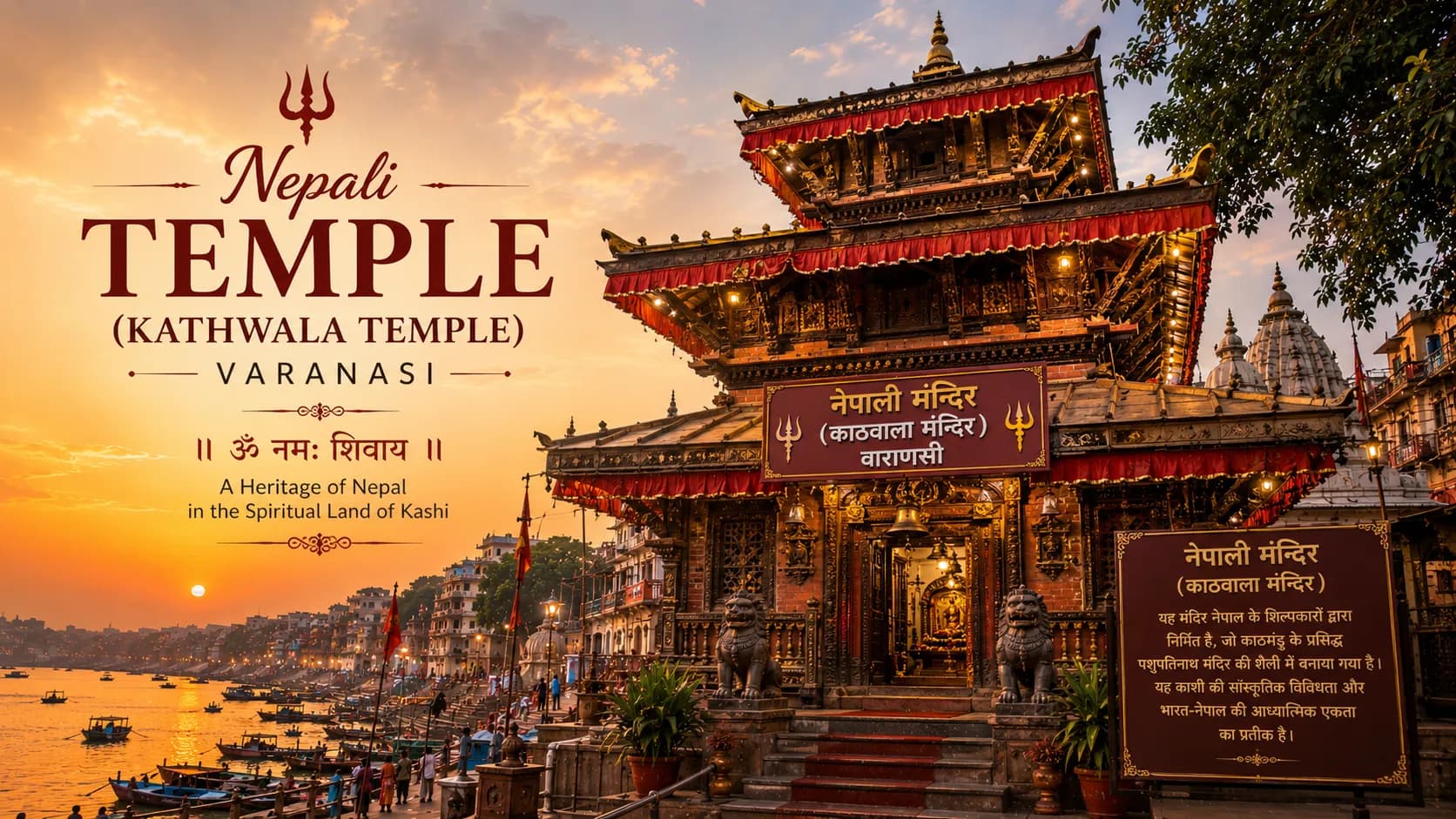
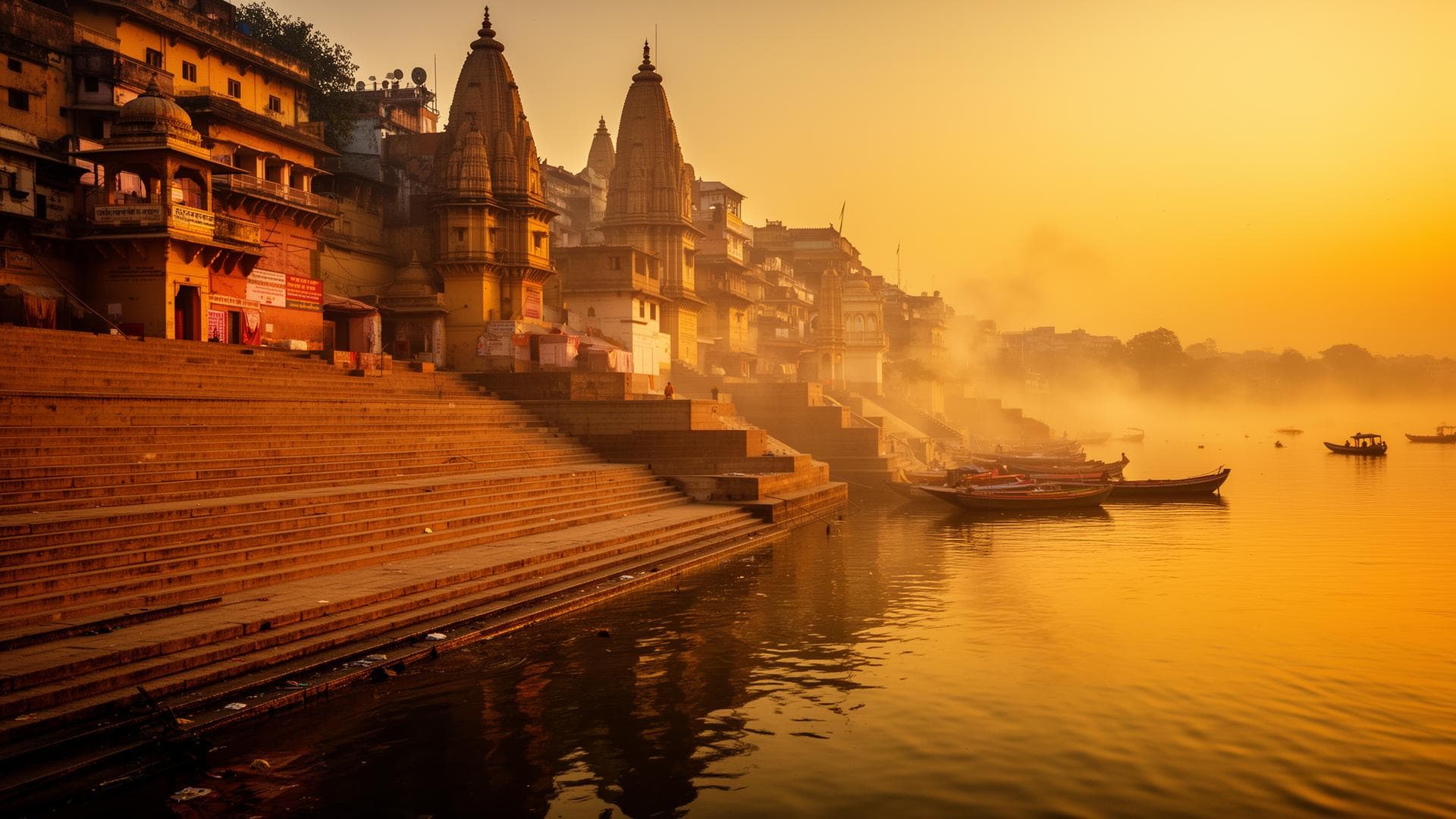
Among the thousands of temples in Varanasi, this one stands apart the moment you see it, because it does not look Indian at all. It is a Nepali pagoda, three tiered and painted red, its roofs carried on carved wooden struts, standing among tamarind and peepal trees by the river. It is a faithful replica of the great Pashupatinath Temple of Kathmandu, and it is, in effect, a piece of Nepal set down on the bank of the Ganga.
The likeness is deliberate and complete. Just as the Kathmandu Pashupatinath stands beside the Bagmati at a holy cremation site, so this temple stands at Lalita Ghat about a hundred metres from Manikarnika Ghat, Kashi's holiest cremation ground. In the sanctum is a shivling in the form of Pashupatinath, and it is believed that darshan here brings the same merit as a pilgrimage to the Pashupatinath of Nepal. The temple, the ghat and the dharamshala beside it are owned and cared for to this day by the Government of Nepal.
| At a glance | Detail |
|---|---|
| Full name | Shri Samrajeswar Pashupatinath Mahadev Mandir; also the Nepali Mandir and Kathwala Temple. |
| Style | Traditional Nepali pagoda, three tiered, in wood, terracotta and stone. |
| The deity | Lord Shiva as Pashupatinath, with a shivling in the sanctum. |
| The belief | Darshan here is said to carry the merit of visiting the Pashupatinath of Kathmandu. |
| Owned by | The Government of Nepal, which maintains the temple, Lalita Ghat and the dharamshala. |
| Festivals | Mahashivratri and Nag Panchami are marked here. |
The woodwork and the Mini Khajuraho carvings
The glory of the temple is its woodwork. It is built largely of a special termite proof wood brought from Nepal, which is why it is called the Kathwala or Kanthwala Temple, the wooden temple, and every beam, strut and panel is covered in fine carving. The craftsmanship blends the traditions of Kathmandu, Kashi and Khajuraho, with deities, mythological scenes and floral work worked into the timber and the terracotta.
Some of these carvings are erotic, in the same artistic tradition as the famous sculptures of Khajuraho, which is why the temple is nicknamed the Mini Khajuraho. As at Khajuraho, these figures are a recognised and accepted part of the temple art, understood in terms of fertility, auspiciousness and the fullness of life, and they form only a small part of a much larger decorative scheme. It is worth knowing about them before you visit so they are not a surprise, and worth treating, like the whole temple, with respect. Photography inside is strictly forbidden, which is one reason the carvings are best simply seen in person rather than sought out online.
History: an exiled king and a thirty year build
The story behind the temple is as remarkable as the building. Its founder was Rana Bahadur Shah, a king of Nepal who, after a turbulent reign, came to Varanasi in exile between 1800 and 1804 and lived here as an ascetic under the name Swami Nirgunananda. During his years in Kashi he resolved to build a replica of Nepal's holiest shrine, the Pashupatinath, on the banks of the Ganga, and the work was begun.
He did not live to see it. Rana Bahadur Shah returned to Nepal, and in 1806 he was assassinated by his own stepbrother. The project passed to his son, King Girvan Yuddha Bikram Shah, and the temple was finally completed around 1843, roughly three decades after it was begun. That long, interrupted building is part of why the temple feels so singular, a labour of devotion carried across a generation and a border.
| History at a glance | Detail |
|---|---|
| Founder | Rana Bahadur Shah, a king of Nepal, in exile in Varanasi from 1800 to 1804 as Swami Nirgunananda. |
| Begun | During and after his exile, in the early 19th century. |
| Completed | Around 1843 by his son, King Girvan Yuddha Bikram Shah, after Rana Bahadur Shah's death in 1806. |
| Time to build | About three decades in all. |
| Materials | Termite proof wood from Nepal, terracotta and stone. |
| Ownership | The Government of Nepal, to this day. |
Rules and etiquette
Two rules matter especially here, and the first is enforced strictly.
- Photography and videography are strictly not permitted inside the temple, and this is actively enforced. Put your phone and camera away before you enter; you may photograph the exterior.
- Remove your footwear outside the temple compound, not just at the sanctum door.
- Dress modestly and keep your voice low; it is a working temple and a quiet one.
- The temple sits about a hundred metres from the Manikarnika Ghat cremation ghat, so move through that stretch of the riverfront with respect.
If you wish to make an offering, water, milk, bilva leaves and flowers are offered to the shivling, as at any Shiva temple.
A slice of Kathmandu by the Ganga, in my own words
By Rajeev Sharma, Varanasi local
I love the moment a guest turns off the busy riverfront and comes upon this little red pagoda among the trees, because it looks like nothing else in Kashi. I tell them it is a copy of the great Pashupatinath of Kathmandu, built by a king of Nepal who lived here in exile as a sadhu, and that the Nepal government still looks after it. Then I ask them to put their phones away, because inside, photography is truly not allowed, and the guards mean it.
Once we are in, I let them take in the woodwork, every timber carved, the whole thing brought from Nepal and fitted here by the river. I mention, quietly and before we go in, that some of the carvings are in the Khajuraho tradition, so nobody is startled, and then we simply admire the craft. It is a small temple and a short visit, but standing in a piece of Nepal a hundred metres from the burning ghat, with the Ganga just below, is one of those only in Varanasi experiences that people never forget.
In more than forty years of guiding, this is the hidden gem that makes travellers feel they have seen the real, layered Kashi, not just the postcard.
[No photographs are taken inside the temple, as photography is prohibited.]
How to reach the Nepali Temple
The temple is at Lalita Ghat on the riverfront, about a hundred metres from Manikarnika Ghat and close to the entrance of the Kashi Vishwanath Temple corridor. As with the other riverfront sites, you reach it on foot through the lanes or by boat.
| From | Distance | Notes |
|---|---|---|
| Manikarnika Ghat | About 100 metres | Just along the riverfront; visit the cremation ghat with respect. |
| Kashi Vishwanath | A short walk | Near the corridor entrance; easy to combine. |
| Dashashwamedh Ghat | A short walk or boat ride | South along the riverfront to the grand evening aarti. |
| Varanasi Junction (Cantt) | About 5 km | Autos and cabs to the edge of the old city, then on foot or by boat. |
| Airport | About 25 km | Lal Bahadur Shastri International Airport, roughly an hour by road. |
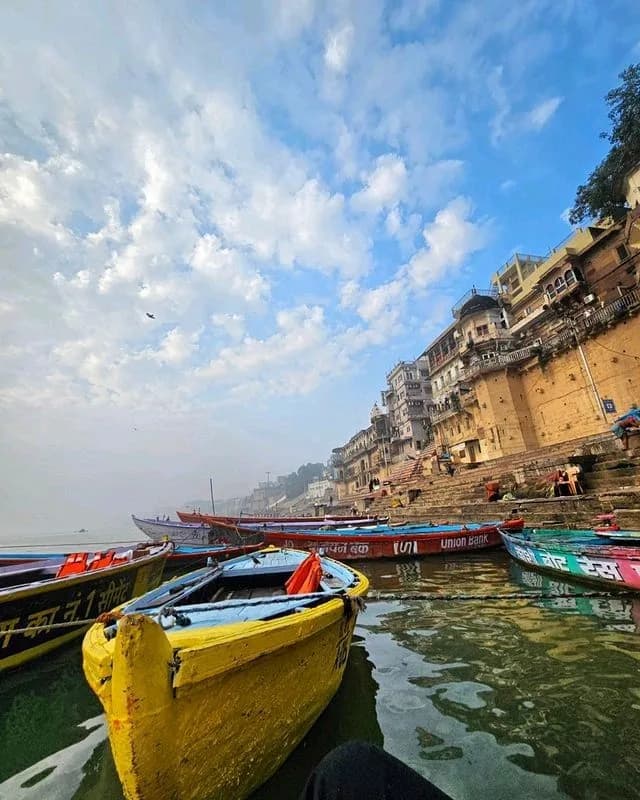
Arriving by boat is a lovely way to see the temple in its riverfront setting, and it links naturally with the ghats. We arrange the boat, the drop point and a guide who knows the lanes.
Best time to visit and how to plan it
| When | Why |
|---|---|
| Early morning | The calmest visit, with soft light on the woodwork and the river. |
| Sunrise or sunset from the ghat | Beautiful light at Lalita Ghat; pair the temple with a boat ride. |
| Mahashivratri | The great night of Shiva, when the temple is at its most alive. |
| Avoid 12:00 to 3:00 PM | The temple is closed for the afternoon break. |
- Pair it with a boat ride and the nearby ghats, and with Kashi Vishwanath Temple just inland.
- Allow 30 minutes to an hour to enjoy the carvings without rushing.
For the riverfront and the old city planned as one trip, see our Varanasi tour packages.
Accessibility for elderly and mobility limited visitors
- The temple is reached through the old city lanes and steps near the ghats, which can be hard for those with limited mobility.
- Arriving by boat to Lalita Ghat can be gentler than walking the lanes, though there are still steps up from the river.
- Come early morning for the calmest, least crowded visit.
- We arrange the boat and the drop points so a senior visitor is comfortable.
Nearby ghats and temples to combine
The Nepali Temple sits in the heart of the riverfront, so it combines naturally with the great ghats and temples on a boat journey or an old city walk.
| Site | What it is | Internal link |
|---|---|---|
| Manikarnika Ghat | The great cremation ground next door; visit with respect and no photography. | /temple/varanasi/manikarnika-ghat |
| Kashi Vishwanath Temple | The Jyotirlinga at the heart of Kashi, near the corridor entrance. | /temple/varanasi/kashi-vishwanath-temple |
| Dashashwamedh Ghat | Home of the grand evening Ganga aarti, a short way south; our Ganga aarti experience. | /temple/varanasi/dashashwamedh-ghat |
| Scindia Ghat and the leaning temple | The quiet ghat and the half submerged Ratneshwar temple, along the northern riverfront. | /temple/varanasi/scindia-ghat |
To add the river to your day, see our evening Ganga aarti experience.
Practical tips
| Good to know | Detail |
|---|---|
| Photography is banned inside, and enforced. | Keep your phone away inside; photograph only the exterior. |
| Footwear off outside the compound. | Remove your shoes before entering the temple compound, not just the sanctum. |
| The carvings. | Some are in the Khajuraho tradition; know this before you go in, and treat the temple with respect. |
| Respect near Manikarnika. | The cremation ghat is a hundred metres away; move through that stretch quietly and do not photograph the cremations. |
Our guided riverfront visits including the Nepali Temple
We are a Varanasi based operator, a unit of Experience My India, with more than forty years of guiding pilgrims across Kashi, Ayodhya, and Prayagraj. Entry to the Nepali Temple is free, so what we arrange is the visit around it: a boat or a guide through the lanes, and a route that pairs this hidden gem with the ghats and the old city temples.
| Package | Includes | Price |
|---|---|---|
| Riverfront hidden gems boat | A boat taking in the Nepali Temple, Lalita Ghat and the riverfront, with a guide. | Contact us for pricing |
| Old city temples and the Nepali Temple | Kashi Vishwanath, the Nepali Temple and the nearby ghats with a guide. | Contact us for pricing |
| Full Kashi day with the aarti | The old city and riverfront by day and the evening Ganga aarti. | Contact us for pricing |
Inclusions and exclusions are stated up front, with any taxes and conditions, and no charge appears later that was not named. See all our Varanasi tour packages for the full range.
Experience My India is a travel operator, not the temple administration, which is the Government of Nepal. Prices are ours. Temple timings and rules are set by the temple and can change.