.webp&w=2048&q=75)
.webp&w=2048&q=75)
Please read first: how to visit with respect
Manikarnika is not a sightseeing attraction. It is an active cremation ground where real families are grieving real losses, day and night. It can be visited, and it is one of the most profound places in India, but only with quiet respect. Before anything else, please keep these in mind.
- Do not take photographs or videos. It is strictly prohibited, out of respect for the departed and the grieving families. Put your phone away.
- Keep silence, or speak very softly. This is not a place for chatter, laughter or selfies.
- Keep a respectful distance. Do not walk in among the pyres or crowd the families; observe quietly from the edge or from a boat.
- Dress modestly and behave with dignity, as you would at any funeral.
- Do not give money to anyone who pressures you for a wood or cremation donation; this is a well known scam, covered below.
Essential info at a glance
| Detail | At a glance |
|---|---|
| What it is | The Mahashamshan, the great cremation ground of Varanasi, where Hindus believe cremation grants moksha, liberation from the cycle of rebirth. |
| Open | Continuously, 24 hours a day, every day. Cremation rites go on day and night. |
| Entry fee | None. It is an open public cremation site, not a ticketed temple, and there is no VIP darshan. |
| Photography | Strictly prohibited, out of respect for the grieving families and the departed. |
| Ganga Aarti | There is no grand tourist aarti here; the famous evening aarti is at Dashashwamedh Ghat nearby. |
| The eternal flame | The Akhand Agni, a sacred fire said to have burned for centuries, tended by the Dom community. |
| Location | On the riverfront in the old city, midway between Dashashwamedh and Scindia Ghat. |
| Best time | Early morning or late evening, ideally from a boat at a respectful distance. |
Why there is no Ganga Aarti here, and where to see it
Visitors sometimes arrive at Manikarnika expecting the grand lamp ceremony they have seen in photographs. There is no large tourist Ganga Aarti here, and there should not be, because this ghat is dedicated strictly to cremation rites and to moksha, not to spectacle. What happens here are the continuous sacred fire rituals of cremation and quieter prayers, around the clock.
The famous grand Ganga Aarti takes place nearby at Dashashwamedh Ghat, every evening around 6:00 to 7:00 PM, and many visitors see it from a boat that passes along this stretch of the river. If the aarti is what you are looking for, read our full guide to the Dashashwamedh Ghat Ganga Aarti.
What Manikarnika is: the place of moksha
For Hindus, Manikarnika is the holiest place in the world to be cremated. The belief runs deep: to be cremated here, on the bank of the Ganga in Kashi, is to be granted moksha, release from the endless cycle of birth, death and rebirth. It is said that Lord Shiva himself whispers the Taraka mantra into the ear of those who die in Kashi, ensuring their liberation regardless of their past. This is why families carry their loved ones here from across India, and why the ghat is called the Mahashamshan, the great cremation ground.
To stand quietly at the edge of Manikarnika is to see something most modern life hides away: death treated not as a horror to be concealed, but as a sacred crossing, openly, continuously, with ritual and fire and the river carrying the ashes onward. Travellers who come here with the right spirit often describe it as one of the most moving experiences of their lives. It is also, fittingly, close to the Kashi Vishwanath Temple, the heart of the city whose promise of liberation gives this ghat its meaning.
The legend, the kund, and the eternal flame
The name Manikarnika comes from mani, jewel, and karnika, earring. The oldest layer of the story belongs to Lord Vishnu, who is said to have performed austerities here for thousands of years, long before the Ganga descended to earth, and to have dug a sacred pool, the Manikarnika Kund, with his discus. When Shiva and Parvati came, an earring, in some tellings Parvati's, in others Sati's, fell into the pool, and the spot was sanctified forever. Because Sati's earring is said to have fallen here, the ghat is also counted among the Shakti Peethas.
| At a glance | Detail |
|---|---|
| The name | Manikarnika, from mani, jewel, and karnika, earring. |
| The kund | The Manikarnika Kund, a sacred well beside the ghat, said to have been dug by Vishnu before the Ganga came to earth. |
| Charan Paduka | A slab bearing Vishnu's footprints near the kund, quietly revered, and usually calmer than the ghat itself. |
| The eternal flame | The Akhand Agni, a sacred fire said to have burned continuously for centuries, from which the pyres are lit. |
| A Shakti Peetha | Counted among the sacred sites where a part of Goddess Sati is believed to have fallen. |
| Moksha | The belief that cremation here grants liberation from the cycle of rebirth. |
The Manikarnika Kund and the Charan Paduka, set slightly back from the cremation area, are often quiet, and offer a place for reflection away from the immediate rites.
The eternal flame and the Dom community
At the heart of Manikarnika is a fire that, by tradition, has never gone out. The Akhand Agni is said to have been burning for centuries, and every pyre at the ghat is lit from it. That flame, and the cremation rites themselves, are the responsibility of the Dom community, whose families have served here for generations as the custodians of the sacred fire. Their head, known as the Dom Raja, holds a unique and honoured place in the life of the city; it is said that Kashi has two kings, Shiva and the Dom Raja, and that no cremation can begin without fire from his source.
It is worth understanding this before you visit, because it reframes what you are seeing: not a grim spectacle, but an ancient, dignified duty carried out with care by people who make moksha possible for others. Treat the Doms, the priests and the families with the respect that role deserves.
How to visit Manikarnika with respect
The right way to experience Manikarnika is quietly and briefly, without intruding. Here is how we guide our travellers.
-
Go early morning or in the evening, when the light is gentle and the ghat is at its most contemplative.
-
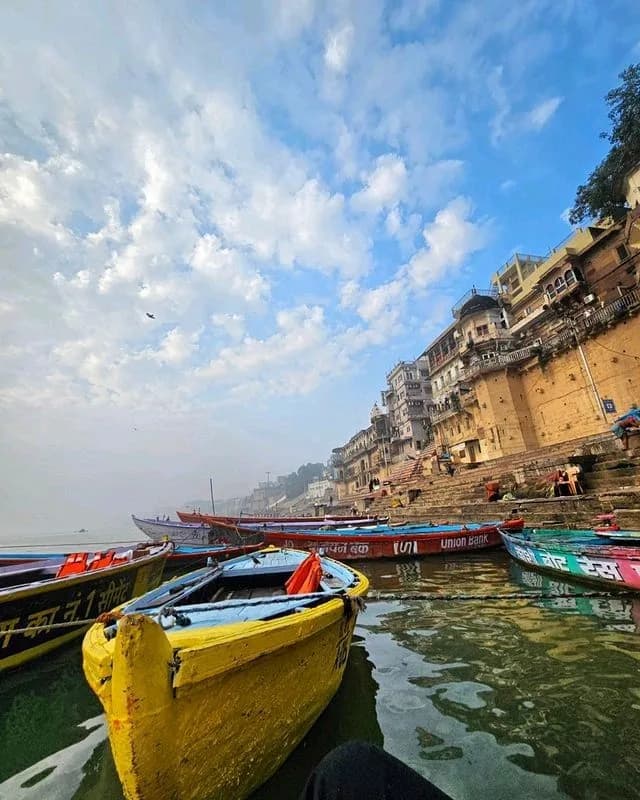
View from a boat on the river, at a respectful distance, which is both the most dignified vantage and the calmest. Ask us to include it in a sunrise or evening boat.
-
If you walk to the ghat, stay at the edge with a knowledgeable guide, keep your phone away, and do not approach the pyres or the families.
-
Take a few quiet minutes at the Manikarnika Kund or the Charan Paduka, away from the immediate rites, for reflection.
-
Leave when you have paid your silent respects. This is not a place to linger and stare.
A local guide who understands the rituals makes the difference between an experience that feels intrusive and one that feels profound and respectful.
A quiet visit, in my own words
By Rajeev Sharma, Varanasi local
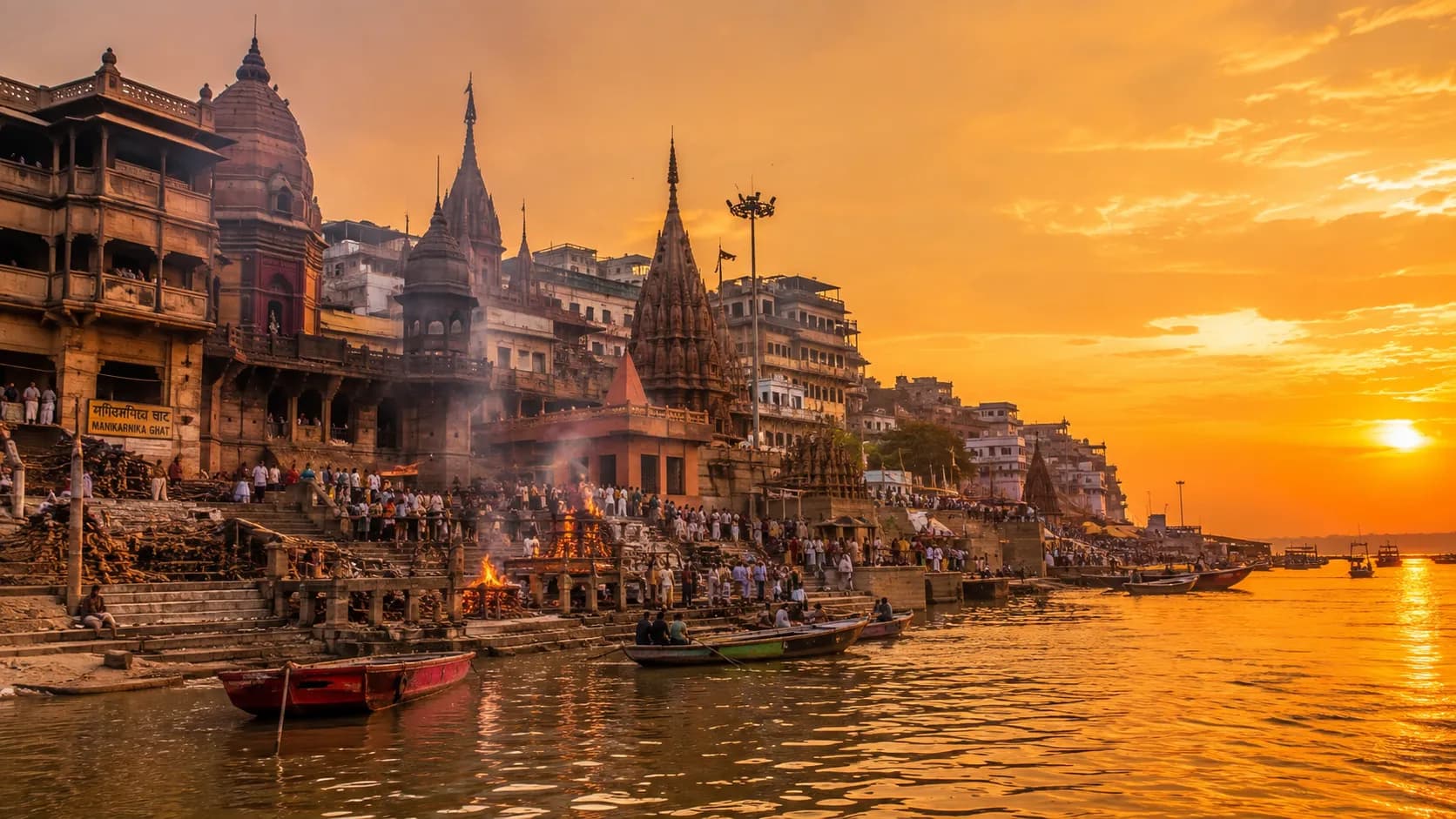
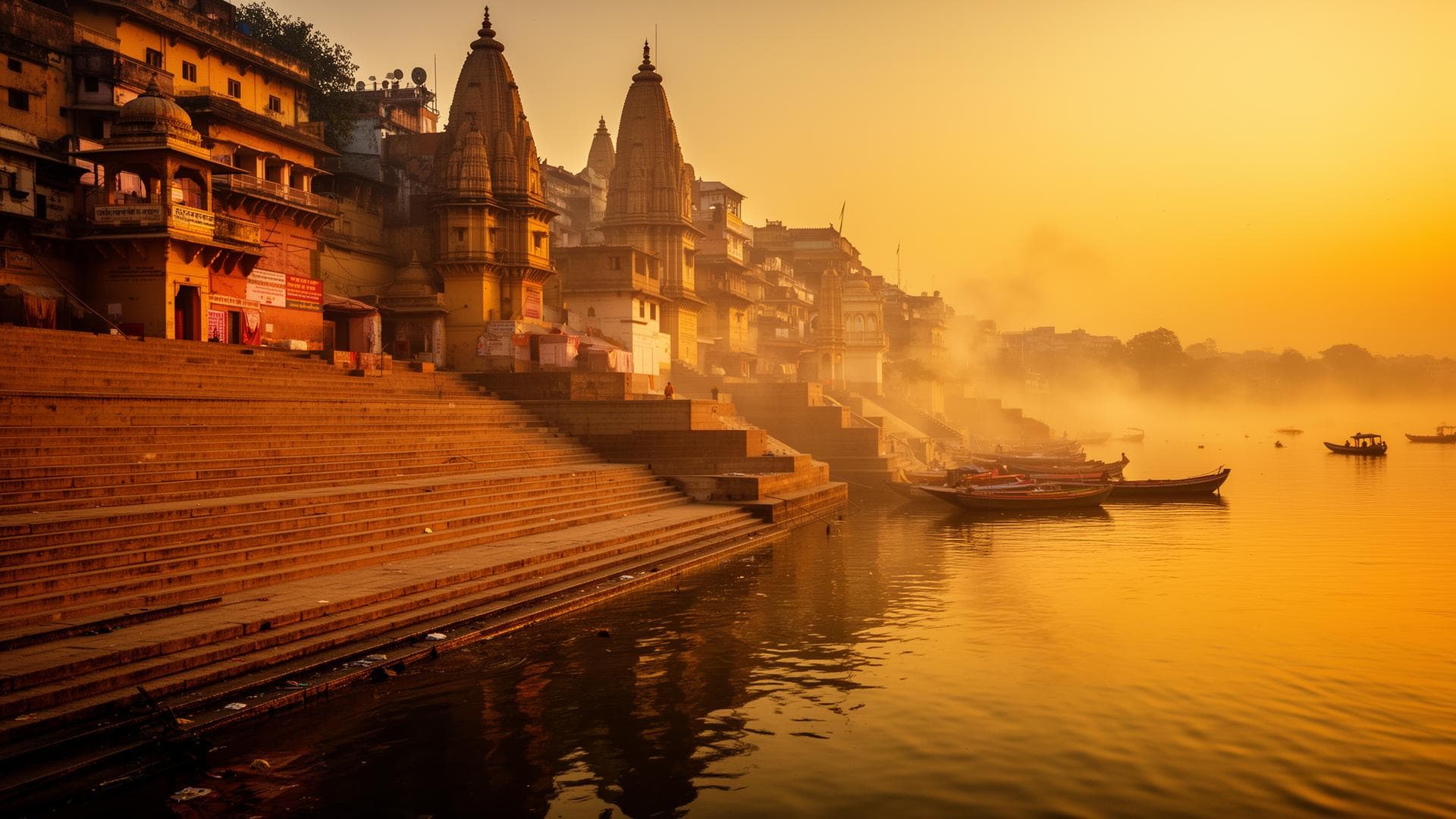
I take my guests to Manikarnika gently, and I prepare them first, because it is not like anywhere else I show them. Usually we go by boat, in the early morning, and we hold the boat a little way off, so we are not among the families. From the water you see the old buildings above the ghat, the smoke rising, the fires that never go out, and the ashes going into the river, and it is very quiet on the boat. I ask everyone to put their phones away, and nobody argues once they understand where they are.
I tell them what the place means, that people believe those cremated here are set free, that Shiva himself is said to whisper liberation into their ear, and that the fire has burned for as long as anyone remembers, kept by families who have done this sacred work for generations. Travellers who arrive nervous almost always leave calmer than they came. Kashi does not hide death, and there is a strange peace in that.
In more than forty years of guiding, I have learned to bring people here softly and briefly, and to let the place speak. It asks for respect, and it gives something back that is hard to put into words.
[No photographs are taken at the ghat, out of respect.]
How to reach Manikarnika Ghat
The ghat is on the riverfront in the old city, midway between Dashashwamedh and Scindia Ghat. As with the other old city ghats, vehicles cannot reach it; you arrive on foot through the lanes or, best of all, by boat.
| From | Distance | Notes |
|---|---|---|
| Dashashwamedh Ghat | A short walk or boat ride | Along the riverfront to the north; the two are easily linked by boat. |
| Scindia Ghat | Adjacent | The neighbouring ghat, known for its partly submerged leaning temple. |
| Kashi Vishwanath | A short walk | Through the old city lanes; the temple whose promise gives the ghat its meaning. |
| Varanasi Junction (Cantt) | About 5 km | Autos and cabs to the edge of the old city, then on foot or by boat. |
| Airport | About 25 km | Lal Bahadur Shastri International Airport, roughly an hour by road. |
By boat is both the most respectful and the easiest way to see Manikarnika, and it links naturally with the ghats to the north and south.
Best time to visit
| When | Why |
|---|---|
| Early morning | Gentle light, fewer onlookers, and the calmest, most contemplative atmosphere, ideally from a boat. |
| Late evening | The fires against the dark are deeply moving; view quietly from the water. |
| Any time | The ghat is active day and night, so there is no wrong hour, only a right manner. |
- Pair a respectful passing view of Manikarnika with a sunrise boat, or with the evening aarti at Dashashwamedh.
- Keep the visit short and quiet; this is a place to witness and reflect, not to tour at length.
Safety and the donation scam you must know about
Manikarnika is safe to visit, but it attracts a specific and persistent scam that catches many well meaning tourists, so please read this carefully. Being warned is the best protection.
| Watch out for | How to handle it |
|---|---|
| Strangers offering to show you a special viewing balcony or a dying home, then demanding a large donation. | Politely decline and walk away. You do not need a paid escort to pay your respects. |
| Aggressive requests for a wood or cremation donation for the poor, with inflated sums. | This is the classic Manikarnika scam. Do not hand over money at the ghat, however emotional the appeal. |
| Self appointed guides and priests attaching themselves to you. | Use a booked, reputable guide, and agree nothing on the spot. |
| Pressure to photograph or to get closer for a better view. | Refuse; photography is prohibited and closeness is disrespectful. |
If you genuinely wish to help the destitute who cannot afford cremation, do so through a recognised charity, not through a stranger at the ghat. A trusted local guide shields you from all of this so your visit stays respectful and calm.
Accessibility for elderly and mobility limited visitors
- The ghat is reached through steep old city lanes and steps, which are difficult for anyone with limited mobility.
- A boat is by far the gentler and more respectful option, letting you witness the ghat from the water without navigating the lanes.
- We arrange the boat and the drop points so a senior visitor can pay their respects in comfort.
Nearby ghats and sites
Manikarnika sits at the centre of the riverfront, so it is naturally part of a quiet boat journey along the ghats.
| Site | What it is | Internal link |
|---|---|---|
| Dashashwamedh Ghat | Home of the grand evening Ganga aarti, a short way north; our Ganga aarti experience. | /varanasi/dashashwamedh-ghat |
| Kashi Vishwanath Temple | The Jyotirlinga at the heart of Kashi, a short walk through the lanes. | /varanasi/kashi-vishwanath-temple |
| Assi Ghat | The southern ghat, famous for the sunrise Subah-e-Banaras aarti. | /varanasi/assi-ghat |
| Scindia Ghat | The adjacent ghat, known for its partly submerged, leaning Shiva temple. | /varanasi/scindia-ghat |
For a respectful boat journey that takes in the ghats along with the temples and the evening aarti, see our Varanasi tour packages.
How we help you visit respectfully
We are a Varanasi based operator, a unit of Experience My India, with more than forty years of guiding pilgrims across Kashi, Ayodhya, and Prayagraj. There is nothing to book at Manikarnika itself, and we would never sell the ghat as a spectacle. What we offer is simply a respectful way to experience it: a boat that holds a dignified distance, and a local guide who quietly explains what you are seeing, shields you from the touts and the donation scams, and makes sure your visit honours the place. It sits naturally within a wider day on the river and in the old city.
If you would like that, we are glad to arrange it as part of a sunrise boat, an evening on the river, or a full Kashi day. See our Varanasi tour packages, or simply message us.
Experience My India is a travel operator, not connected to the cremation rites or the Dom community. We arrange only a respectful visit and a guide; we do not collect any donation or fee on their behalf.