.webp&w=2048&q=75)
.webp&w=2048&q=75)
Please note: which Trilochan temple this is
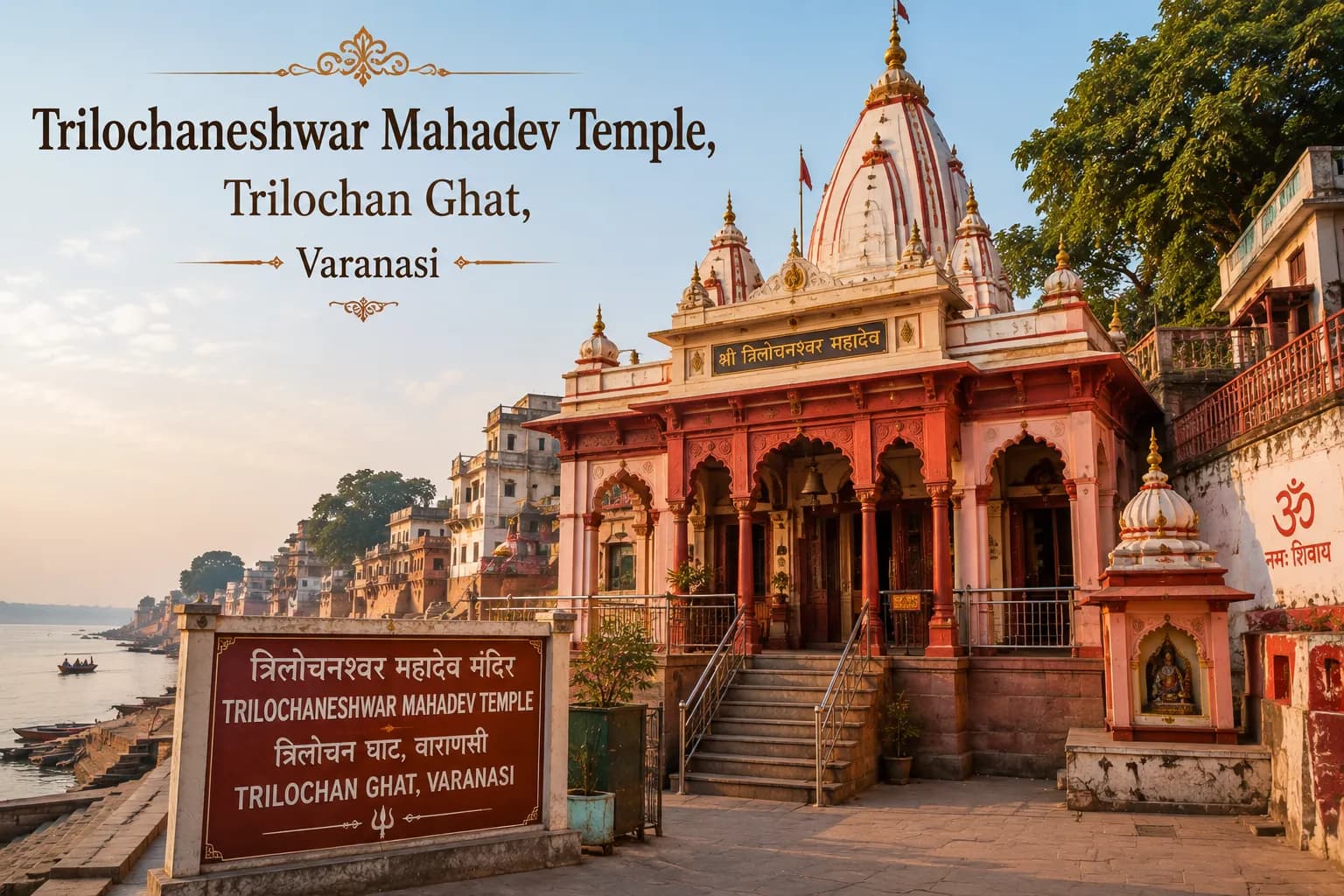
This page is about the Trilochaneshwar Mahadev Temple at Trilochan Ghat, in the old city of Varanasi on the banks of the Ganga. It is a different temple from the Trilochan Mahadev Dham at Rehti village in Jaunpur district, some 36 km away, which is also a three-eyed Shiva shrine and is easily confused with this one. If you are looking for the Jaunpur dham near the airport, see our separate guide to Trilochan Mahadev Dham. This guide is for the ancient Trilochan Ghat temple in Kashi itself.
Essential info at a glance
| Detail | At a glance |
|---|---|
| What it is | The Trilochaneshwar Mahadev temple, the three-eyed Shiva, one of the oldest and most revered lingas of Kashi, at Trilochan Ghat. |
| Morning hours | 5:30 AM to 12:00 PM, with the Mangala aarti at 5:30 AM. |
| Evening hours | 5:00 PM to 11:00 PM, with the Shayan aarti at 11:00 PM. |
| Afternoon close | 12:00 PM to 5:00 PM, when the temple is closed. |
| Entry fee | Free. There is no VIP darshan or paid pass; it is a community heritage shrine. |
| The tirtha | The sacred Pilpila tirtha at the ghat, between the two towers, a bathing place of great merit. |
| Scriptural glory | The Kashi Khand praises the power of Trilochana as uniquely great. |
| Location | Trilochan Ghat, near Gaighat and Machhodari, in the north of the old city on the river. |
Trilochaneshwar temple timings and aarti
The temple keeps a split day, open in the morning and again in the evening, with a long afternoon close. It is a quiet, local, community shrine rather than a great crowded temple, so darshan is usually calm and unhurried, the great exceptions being Mahashivratri and Akshay Tritiya.
| Detail | Timing | Notes |
|---|---|---|
| Morning hours | 5:30 AM to 12:00 PM | The Mangala aarti is at 5:30 AM. |
| Afternoon close | 12:00 PM to 5:00 PM | The temple is closed; plan around this gap. |
| Evening hours | 5:00 PM to 11:00 PM | The Shayan aarti is at 11:00 PM. |
| Busy days | Mahashivratri and Akshay Tritiya | Otherwise queues are short and manageable. |
*Entry is free and there is no VIP darshan.
Trilochaneshwar: the three-eyed Shiva of Kashi
Trilochan means the three-eyed one, a name of Lord Shiva, and Trilochaneshwar is among the very oldest and most powerful of all the shivalingas of Kashi, revered by locals yet known to few visitors, ancient and still. It is a swayambhu, self-manifest, linga, mentioned in the Kashi Khand of the Skanda Purana and in inscriptions from the Gahadavala kings of nearly a thousand years ago, and its scriptural glory is extraordinary. The Kashi Khand declares that while the eighteen lingas forming the body of Vishweshwar have ample power to destroy sins, the power of Trilochana is something uniquely great, and that its darshan is to be prized above even that of Omkareshwar.
The legend of its name is beautiful. It is told that when Shiva was absorbed in deep meditation, this great linga rose up from beneath the earth, piercing through the seven nether worlds, and issued forth before him; and that Shiva then gave the goddess Gauri three eyes, so that she might behold its splendour. From that, the linga is praised as Trilochana, the bestower of the inner eye, the vision of knowledge, and it is said that the devotees of Trilochana become themselves three-eyed, the attendants of Shiva, liberated even while living. So revered is it that, tradition holds, even to utter the word Trilochan cleanses the sins of the speaker.
The Pilpila tirtha and the two towers
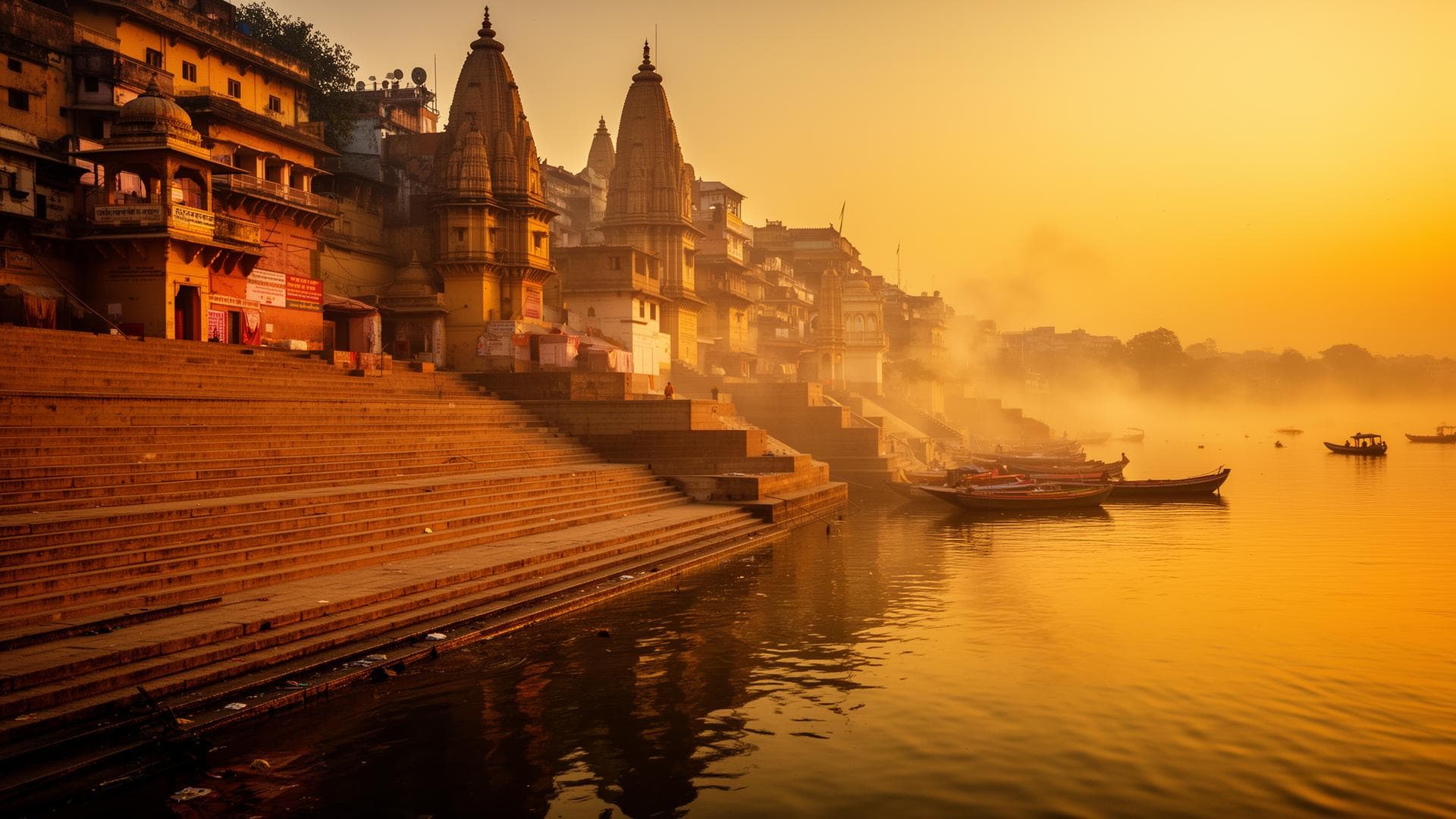
Trilochan Ghat is famous for its two tall stone towers at the water's edge, and for the sacred spot between them. Here, tradition says, is the Pilpila tirtha, where a hidden, invisible confluence of holy rivers, the Ganga with the Yamuna, the Saraswati and the Narmada, takes place, so that the very rivers are believed to have bathed and anointed the Trilochan linga. To bathe in the Pilpila tirtha and then take darshan of Trilochaneshwar is held to be of the greatest merit of all, granting release from the endless round of birth and death; the day of Akshay Tritiya is especially sacred for this, and many undertake the ritual then.
Within the temple precincts is also the ancient Padodaka well, the Padodak Koop, whose water the scriptures praise as washing away every kind of sin. These are matters of deep spiritual belief, about the cleansing of the soul and the hope of liberation, held sacred for many centuries. The temple also enshrines the goddess Varanasi herself, the very deity of the city, named in the Kashi Khand, which adds still more to the sanctity of this quiet, ancient place.
The ghat and its heritage
Trilochan Ghat is one of the oldest ghats of Kashi, named for the temple, a renowned site of sacred bathing and ritual since at least the twelfth century, set on the northern stretch of the old city riverfront. Like so many of the ancient temples of Kashi, Trilochaneshwar suffered in the destruction of the medieval centuries and has been renovated many times since, yet its worship has never ceased. Above the ghat run the narrow, atmospheric lanes of old Banaras, with a traditional akhara, a wrestlers' gymnasium, near the water, and in the mornings the ghat has a quiet, local, timeless life of its own, far from the tourist crowds. It is a place for those who wish to touch the deep, old heart of Kashi.
A deep and quiet darshan, in my own words
By Rajeev Sharma, Varanasi local
Trilochan Ghat is one of my favourite places to bring the traveller who wants the real, old, quiet Kashi. I always explain first, so there is no confusion, that this is the ancient Trilochan temple here on the river in the old city, and not the Trilochan dham out in Jaunpur, which many people mix up. Then I tell them what our scriptures say, that this three-eyed Shiva is one of the oldest and most powerful lingas in all of Kashi, praised above almost every other, and that it is said to have risen from the seven netherworlds before Shiva himself.
I show them the two great towers of the ghat and tell them about the hidden meeting of the rivers between them, the Pilpila tirtha, where a bath is believed to free the soul from rebirth. It is a calm, local place, with the wrestlers at their akhara and the old lanes above, and hardly a tourist in sight, which is exactly its beauty. When a family wants it, I arrange a Rudrabhishek with the temple priests, which is a wonderful thing in so ancient and so quiet a shrine. This is the Kashi that stays with people.
In more than forty years of guiding, this is one of the temples I am proudest to reveal, because so few visitors ever find it.
Rituals at Trilochaneshwar
As one of the oldest and most revered Shiva lingas of Kashi, and a calm, uncrowded one, Trilochaneshwar is a beautiful place for the sacred rituals, which can be performed here with care. There is no line-skipping pass; private rituals are arranged with the temple priests, which is what we help with.
| Ritual | What it is and why it is done |
|---|---|
| Rudrabhishek | The sacred bathing and worship of the linga with milk, honey, water and offerings, amid Vedic chanting, for wellbeing and the removal of obstacles. |
| Jalabhishek | The simple, beloved offering of sacred water over the linga. |
| Special puja and havan | Worship and a fire offering, arranged with the priests for a particular intention. |
We arrange these with the temple priests, on the day and in the name you choose, with the prasad sent to you. You can also arrange a Rudrabhishek at the main Jyotirlinga; see our Kashi Vishwanath Temple guide.
Entry, rules, and what to know
- Entry is free. There is no VIP darshan; private rituals can be booked with the priests, which we arrange.
- Dress modestly, remove footwear before entry, and keep your voice low near the sanctum.
- A bath in the Pilpila tirtha before darshan is traditional; carry a change of clothes if you wish to bathe.
- Carry a little cash for offerings, and for a ritual if you book one on the day.
- Mind the afternoon close, from 12:00 to 5:00 PM.
How to reach the temple
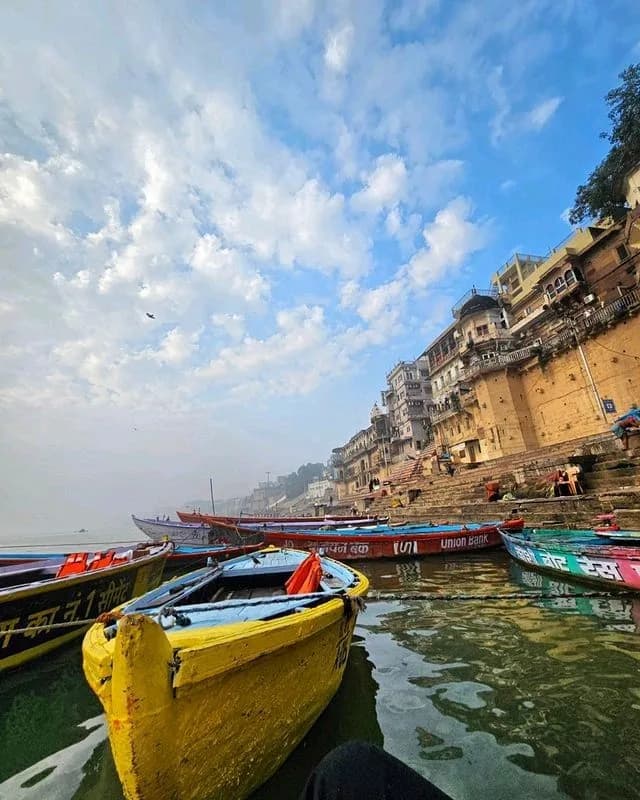
The temple is at Trilochan Ghat, address A-2/80, near Gaighat and Machhodari, in the north of the old city. You come by road to Machhodari and walk in through the lanes, or, best of all, by boat to the ghat and up the steps.
| Route | How | Notes |
|---|---|---|
| By road | Auto or cycle rickshaw to Machhodari, near Birla Hospital | Then walk through the local lanes to the ghat and temple. |
| Shared auto | From Maidagin Chowk | Shared autos run toward the area. |
| By boat | A boat ride to Trilochan Ghat | Then climb the stone steps to the shrine; a beautiful approach. |
| Varanasi Junction (Cantt) | About 5 to 6 km | By taxi or auto to Machhodari or Maidagin, then on foot. |
| Airport | About 25 km | Lal Bahadur Shastri International Airport, roughly an hour by road. |
The lanes here are a maze, so a guide who knows the way helps, and the boat approach is lovely. We arrange the boat, the timing and a guide.
Best time to visit and how to plan it
| When | Why |
|---|---|
| Early morning | The calmest darshan, around the 5:30 AM Mangala aarti, with the local life of the ghat. |
| Akshay Tritiya | The most sacred day for the Pilpila tirtha bath and Trilochan darshan; atmospheric and busy. |
| Mahashivratri and Shrawan | The great Shiva days; powerful but crowded. |
| By boat at sunrise | The loveliest approach, up to the two towers of the ghat from the water. |
- Pair it with Panchganga Ghat, Bindu Madhav Temple and Adi Keshava Temple.
- Allow 20 to 40 minutes for darshan, longer for a bath or a ritual.
For the old city and the northern riverfront planned as one route, see our Varanasi tour packages.
Accessibility for elderly and mobility limited visitors
- The temple is in the old city lanes and above the ghat steps, which can be hard for those with limited mobility.
- Coming by boat still means climbing the ghat steps; plan a slow, careful pace.
- Come early morning for the calmest, least crowded visit; avoid the Akshay Tritiya and Mahashivratri peaks if a queue is difficult.
- We arrange a car to the nearest drop point and a guide to help through the lanes, or a ritual in your name if a visit is not possible.
Nearby sites to combine with your darshan
Trilochan Ghat is on the northern riverfront, near the other sacred northern sites.
| Site | What it is | Internal link |
|---|---|---|
| Panchganga Ghat | The ghat of five rivers and the Kartik lamps, along the riverfront. | /temple/varanasi/panchganga-ghat |
| Bindu Madhav Temple | The great Vishnu shrine above Panchganga Ghat. | /temple/varanasi/bindu-madhav-temple |
| Adi Keshava Temple | The first Vishnu of Kashi, at the Varuna confluence to the north. | /temple/varanasi/adi-keshava-temple |
| Manikarnika Ghat | The great cremation ghat, to the south along the river. | /temple/varanasi/manikarnika-ghat |
| Trilochan Mahadev Dham (Jaunpur) | The separate three-eyed Shiva dham near the airport, not to be confused with this one. | /temple/varanasi/trilochan-mahadev-dham |
For the grand evening aarti and a boat ride, see our Varanasi tour packages.
Our guided darshan and ritual bookings
We are a Varanasi based operator, a unit of Experience My India, with more than forty years of guiding pilgrims across Kashi, Ayodhya, and Prayagraj. Entry is free, so what we arrange is the visit and the ritual around it: a guide through the lanes and the deep history of this ancient shrine, a boat up to the ghat, and, if you wish, a Rudrabhishek or puja performed by the temple priests, in your name, with the prasad sent to you.
| Service | Includes | Price |
|---|---|---|
| Trilochaneshwar darshan and boat | A guide, a boat to Trilochan Ghat, and the darshan. | Contact us for pricing |
| Rudrabhishek at Trilochaneshwar | The abhishek performed by the temple priests, with prasad. | Contact us for pricing |
| Northern ghats darshan | Trilochan Ghat with Panchganga, Bindu Madhav and Adi Keshava, with a guide. | Contact us for pricing |
Inclusions and exclusions are stated up front, with any taxes and conditions, and no charge appears later that was not named. See all our Varanasi tour packages for the full range.
Experience My India is a travel operator, not the temple administration. Ritual and tour prices are ours; the puja is performed by the temple's own priests. Temple timings and rules are set by the temple and can change.