.webp&w=2048&q=75)
.webp&w=2048&q=75)
Essential info at a glance
| Detail | At a glance |
|---|---|
| What it is | One of the most sacred ghats of Kashi, the meeting point of five holy rivers, and the birthplace of Dev Deepawali. |
| Timings | Open 24 hours, as a public riverfront. |
| Entry fee | Free. No ticket is needed to walk or sit on the ghat. |
| Best season | October to March, and above all the Kartik month for the lamps. |
| The five rivers | Ganga, Yamuna, Saraswati, Dhutpapa and Kirana; only the Ganga is visible today. |
| Famous for | The Kartik sky lamps, the akash deep, and Dev Deepawali, which began here. |
| Its saints | Ramananda, Kabir, Guru Nanak, Tulsidas and Trailanga Swami are all linked to this ghat. |
| Best experienced | By boat at sunrise, and at Dev Deepawali in the lamplight. |
Panchganga Ghat timings and the best time to visit
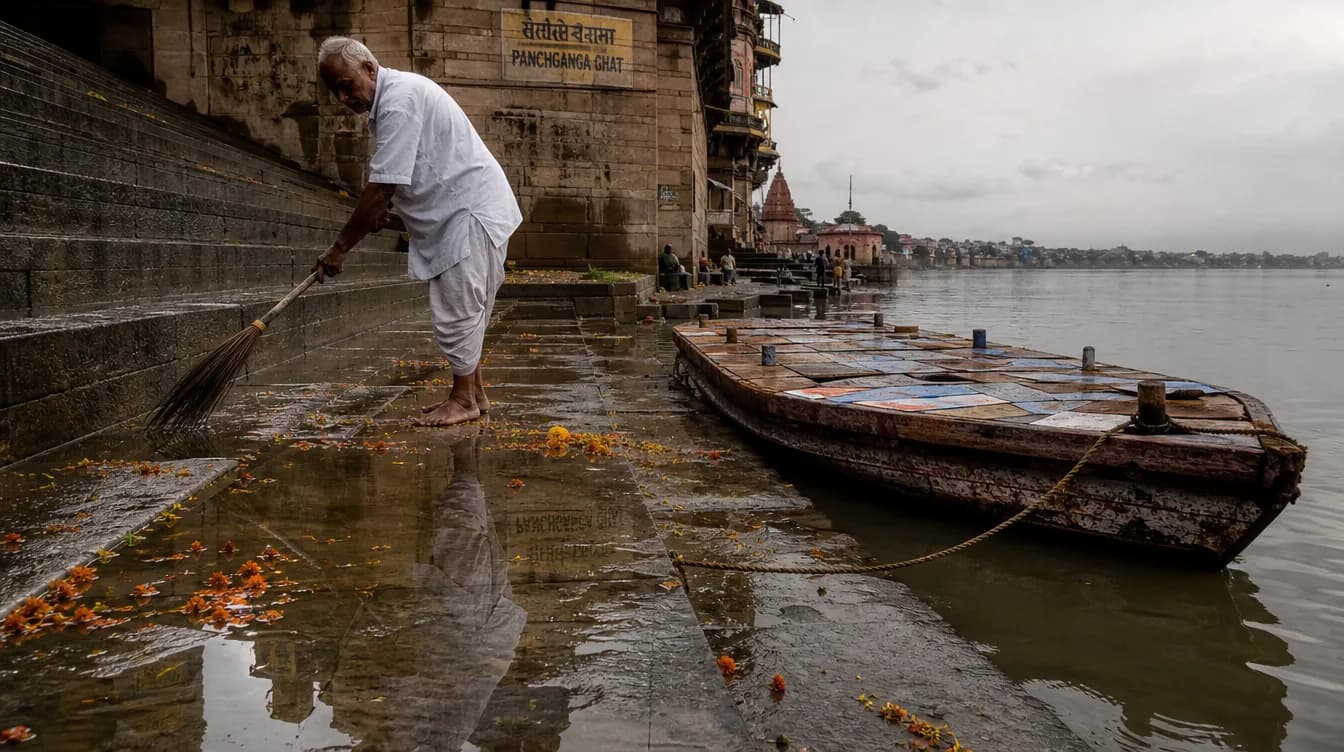
As a public riverfront, the ghat is open around the clock, and there is no entry fee. It is one of the calmer, cleaner and more reflective of the great ghats, a quieter alternative to the crowds of Dashashwamedh. The best season is the cool, clear stretch from October to March, and the single most magical time is the month of Kartik, culminating in Dev Deepawali.
| Detail | When | Notes |
|---|---|---|
| Opening | 24 hours | A public ghat; come at any hour. |
| Best season | October to March | Cool and clear; the pleasantest months on the river. |
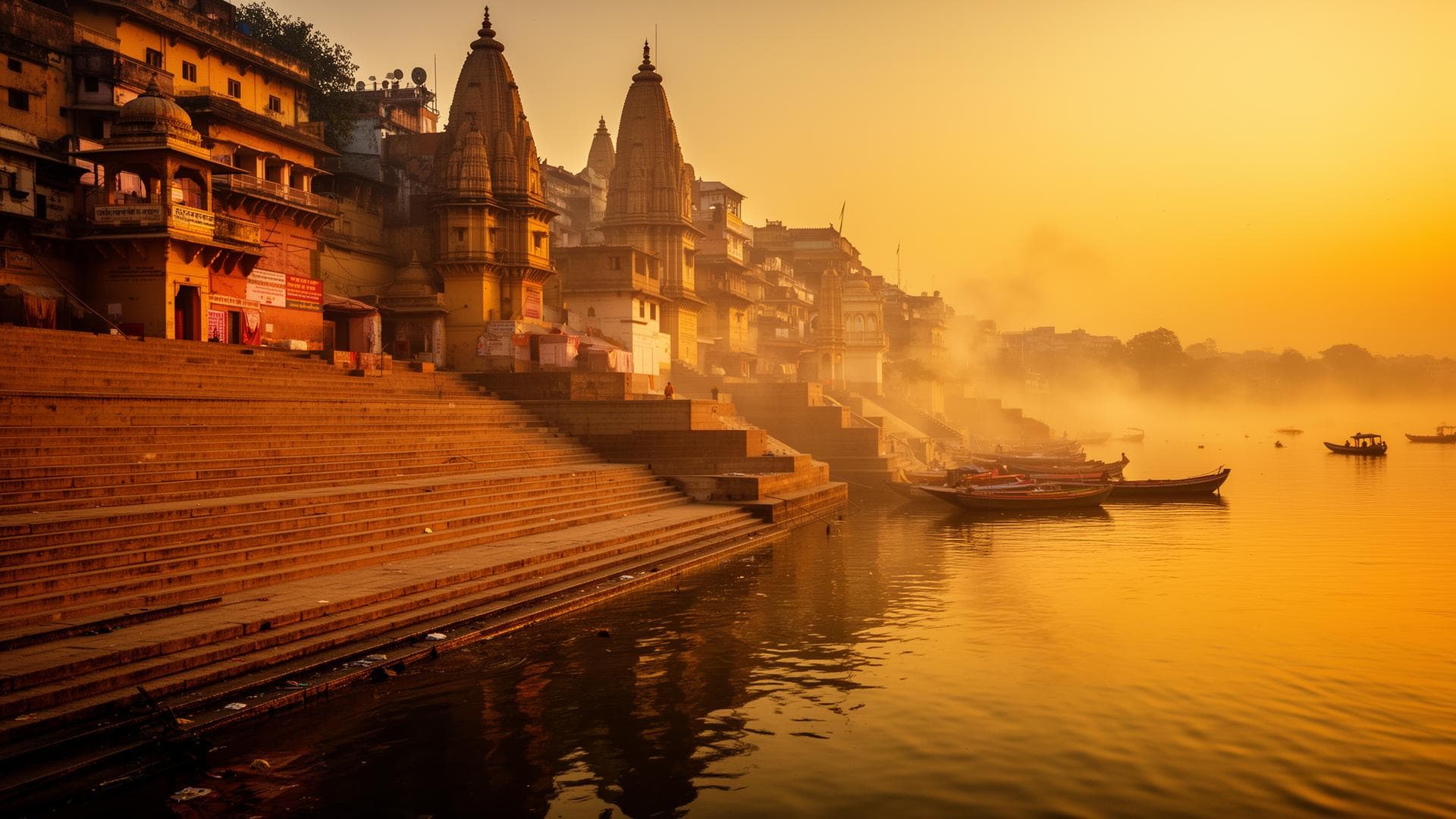
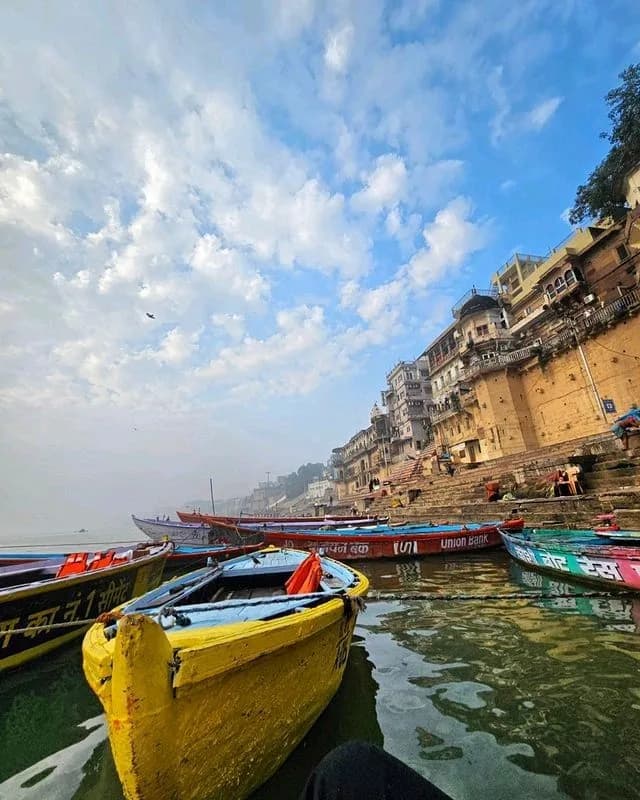
| Sunrise | Dawn | The golden light on the great stone steps is breathtaking; ideal by boat. |
| Kartik and Dev Deepawali | October to November | The lamps of the ghat at their most spectacular; the highlight of the year. |
*The grand evening Ganga aarti is held nearby at Dashashwamedh, around 6:00 PM in winter and 7:00 PM in summer, while Panchganga keeps its own quieter morning and evening prayers.
The ghat of five rivers
Panchganga means five Gangas, and the ghat takes its name from the belief that five holy rivers meet here: the Ganga, the Yamuna, the Saraswati, the Dhutpapa and the Kirana. Today only the Ganga is visible on the surface; the others, tradition says, have merged into the earth, flowing on unseen. As one lovely local saying has it, at Panchganga you may see only one river, but you feel many. It is this hidden confluence that makes the ghat one of the holiest bathing places in all of Kashi, and a dip here, especially in the sacred month of Kartik, is believed to carry great merit.
The ghat is ancient and revered. The Kashi Khand names it as the second most important ghat after Dashashwamedh, and in the time of the Gahadavala kings the royal families favoured it above all others. It is one of the five tirthas of the Panchatirthi Yatra, the sacred circuit of Kashi, and in the old image of the city as a living body it is counted among its holiest parts. Above the ghat stands the Bindu Madhav Temple, the great Vishnu shrine of Kashi, for which the ghat was once known as Bindu Madhav Ghat.
The Kartik lamps and the birthplace of Dev Deepawali
If there is one thing every Banarasi will tell you about Panchganga, it is the lamps. Through the whole month of Kartik, devotees, and especially women, light the akash deep, sky lamps set in little baskets and hoisted on tall bamboo poles, offered for their ancestors and for the fulfilment of their wishes, so that the ghat is strung with points of flame against the evening sky. Above the steps stands a stone pillar with a hundred and eight lamp niches, built by the great queen Ahilyabai Holkar, a monument to this age-old tradition of deep-daan, the giving of light.
Above all, Panchganga is the birthplace of Dev Deepawali, the Diwali of the Gods. It was here, in 1985, that the modern tradition of lighting the ghats for Dev Deepawali began, before it spread to become the citywide festival of a million lamps that Varanasi is now famous for. On the full moon night of Kartik Purnima, the massive stone steps of Panchganga are covered with countless earthen lamps, their reflections trembling on the water, and because this is where it all began, the mood here is more solemn and devotional than at the great public ghats, an intimate and profound experience of the festival of light. It is one of the most beautiful sights in all of India, and the finest way to see it is from a boat on the river.
The ghat of saints
Few places in Kashi have drawn so many of India's great spiritual figures, and to sit on these steps is to sit where they sat.
| Saint | Connection to the ghat |
|---|---|
| Ramananda | The great Vedanta teacher lived and taught here, and his monastery keeps his lineage alive by the ghat to this day. |
| Kabir | The mystic poet, a disciple of Ramananda; folklore tells that he received his initiation on the steps of this very ghat. |
| Guru Nanak | The founder of Sikhism is said to have visited and meditated here; a gurudwara marks this meeting of Hindu and Sikh traditions. |
| Tulsidas | The poet of the Ramcharitmanas spent years nearby and composed the Vinaya Patrika, in praise of Bindu Madhav. |
| Trailanga Swami | The famed ascetic was often seen meditating on these steps, blessing those who came, vanishing and returning as he willed. |
This extraordinary gathering of saints, Hindu and Sikh, of devotion and reform, gives Panchganga a depth of spiritual heritage matched by few ghats, and it is part of what makes a quiet hour here so moving.
Bindu Madhav and the mosque above
Rising above the ghat are the two structures that tell its layered history. Here once stood a magnificent temple of Bindu Madhav, the great Vishnu of Kashi, rebuilt by Raja Man Singh in the sixteenth century; it was destroyed in 1673 during the reign of Aurangzeb, and the Alamgir Mosque was raised on the site, where it still stands. The deity of Bindu Madhav is worshipped to this day in a smaller temple nearby. It is a place to be mindful of the long, layered story of Kashi, and to be respectful of the mosque above, which is a living place of worship. For the full story, see our guide to the Bindu Madhav Temple.
The quieter ghat, in my own words
By Rajeev Sharma, Varanasi local
I bring people to Panchganga when they want to feel the deep, quiet soul of Kashi, away from the crowds of Dashashwamedh. I tell them the beautiful idea that five rivers meet here though you see only one, so you feel many. I show them the tall bamboo poles for the sky lamps and Ahilyabai's pillar with its hundred and eight little lamp niches, and I explain, with real pride, that Dev Deepawali, the festival of a million lamps that the whole world now comes to see, actually began right here in 1985.
And I love telling the stories of the saints, that Kabir took his initiation on these very steps, that Guru Nanak sat here, that Trailanga Swami used to appear and disappear on this ghat. If it is Kartik, I take my guests out by boat in the evening to see Panchganga lit with lamps, and it is quieter and more devotional than the big ghats, which many people prefer. A dawn boat here at any time of year, with the light on the great steps, is one of the loveliest things I can give a traveller.
In more than forty years of guiding, this is the ghat I send people to when they want to feel Kashi rather than just photograph it.
What to see and do at Panchganga Ghat
- Come by boat at sunrise for the golden light on the great stone steps, the finest way to see the ghat.
- Watch the quieter morning and evening Ganga prayers, a calm alternative to the grand Dashashwamedh aarti.
- In Kartik, see the akash deep, the sky lamps on tall bamboo poles, and Ahilyabai's 108-lamp pillar.
- Visit at Dev Deepawali for the steps ablaze with lamps, at the very ghat where the festival began.
- Take darshan at the Bindu Madhav temple above, and sit awhile where the great saints sat.
How to reach Panchganga Ghat
The ghat is at Bangali Tola in the old city, on the riverfront north of the central ghats. You can come down through the old city lanes on foot, or, best of all, by boat along the river.
| From | Distance | Notes |
|---|---|---|
| By boat | Along the river | The loveliest approach; row up from the central ghats. |
| Manikarnika Ghat | About a 5-minute walk | Just to the south along the riverfront. |
| Godowlia and Dashashwamedh | A short walk or boat | Reach the old city by auto, then walk in or take a boat. |
| Kashi Vishwanath | About 15 minutes | Through the old city lanes. |
| Varanasi Junction (Cantt) | About 7 km | By taxi or auto to the old city edge, then on foot or by boat. |
The nicest way is by boat, especially at sunrise or for the Dev Deepawali lamps. We arrange the boat, the timing and a guide.
Best time to visit and how to plan it
| When | Why |
|---|---|
| Sunrise, by boat | The golden light on the steps and the calm of the early river. |
| October to March | The cool, clear season, the pleasantest time on the ghats. |
| Kartik month | The sky lamps and the deep-daan tradition at their most beautiful. |
| Dev Deepawali (Kartik Purnima) | The steps ablaze with lamps at the birthplace of the festival; book well ahead. |
- Pair it with Bindu Madhav above, and with Manikarnika and Scindia along the riverfront.
- Allow 30 to 60 minutes, longer for a boat ride or the Dev Deepawali evening.
For the ghats and the river planned as one experience, see our Varanasi tour packages.
Accessibility for elderly and mobility limited visitors
- Panchganga has steep, high stone steps, which can be challenging for those with limited mobility.
- A boat lets you enjoy the ghat from the water without the full climb, though boarding still needs care.
- Come at a quieter hour, and avoid the dense Dev Deepawali crowds if steps and crowds are difficult.
- We arrange a boat, the timing and a helper or guide to make the visit comfortable.
Etiquette and tips
| Good to know | Detail |
|---|---|
| Dress modestly. | Cover shoulders and knees, out of respect for the rituals and the bathers. |
| Respect the shared site. | The Alamgir Mosque above is a living place of worship; be quiet and respectful. |
| Photograph with care. | Do not photograph bathers or people at prayer without asking. |
| Plan ahead for Dev Deepawali. | It is very crowded; boats and seats book out, so arrange them early. |
Nearby sites to combine with your visit
Panchganga sits on the riverfront among the holiest ghats and temples of the old city.
| Site | What it is | Internal link |
|---|---|---|
| Bindu Madhav Temple | The great Vishnu shrine of Kashi, directly above the ghat. | /temple/varanasi/bindu-madhav-temple |
| Manikarnika Ghat | The great cremation ghat, about a five-minute walk south. | /temple/varanasi/manikarnika-ghat |
| Scindia Ghat | The quiet ghat with the leaning Ratneshwar Mahadev temple. | /temple/varanasi/scindia-ghat |
| Dashashwamedh Ghat | Home of the grand evening Ganga aarti. | /temple/varanasi/dashashwamedh-ghat |
| Adi Keshava Temple | The first Vishnu of Kashi, further north on the Panchatirthi. | /temple/varanasi/adi-keshava-temple |
For the grand evening aarti and a boat ride, see our Varanasi tour packages.
Our boat rides and Dev Deepawali experiences
We are a Varanasi based operator, a unit of Experience My India, with more than forty years of guiding travellers across Kashi, Ayodhya, and Prayagraj. The ghat is free, so what we arrange is the experience on the water: a sunrise boat, a guided heritage walk of the ghat and its saints and temples, and, above all, a boat or a reserved seat for the lamps of Dev Deepawali, the finest way to see the festival at the ghat where it began.
| Experience | Includes | Price |
|---|---|---|
| Sunrise boat and heritage walk | A dawn boat and a guided walk of Panchganga and Bindu Madhav. | Contact us for pricing |
| Dev Deepawali boat | A boat on the river for the Dev Deepawali lamps; book well ahead. | Contact us for pricing |
| Panchatirthi and riverfront | Panchganga with the sacred ghats and temples by boat, with a guide. | Contact us for pricing |
| Evening lamps and aarti | The Kartik lamps here and the grand aarti at Dashashwamedh. | Contact us for pricing |
Inclusions and exclusions are stated up front, with any taxes and conditions, and no charge appears later that was not named. See all our Varanasi tour packages for the full range.
Experience My India is a travel operator, not a temple or government body. Prices are ours. Ghat access is free and public; rituals and timings are set by the temples and priests and can change.