
Essential info at a glance
| Detail | At a glance |
|---|---|
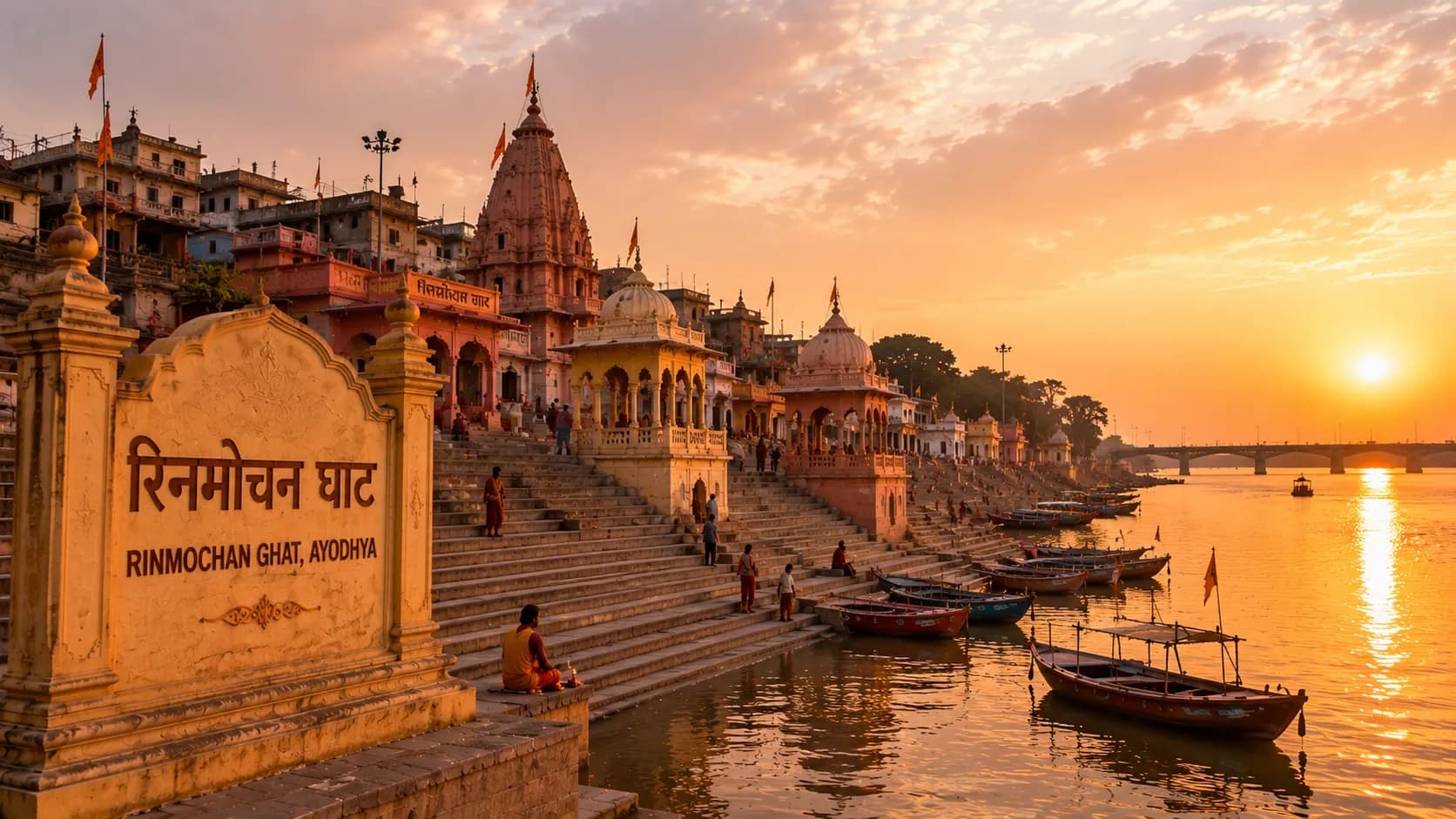
| What it is | A sacred Saryu bathing ghat whose name means the release from debts. |
| Significance | Where the sage Lomasha was freed of his debts; devotees bathe to be free of the three debts of life. |
| Ghat access | Open 24 hours; an open riverbank. Ideal for visits from 5:00 AM to 8:00 PM. |
| Ritual bathing (snan) | Best in the early morning, at dawn. |
| Ancestral rites | Tarpan and shraddha for the ancestors, discharging the debt to the forefathers, are performed here. |
| Saryu aarti | Held nearby at the main riverfront, around 7:00 PM in summer and 6:00 PM in winter. |
| Its companion | Papmochan Ghat, of release from sins; together, the mochan ghats. |
| Location | Near Kandharpur / Ram Ghat, on the Saryu, Ayodhya. |
Rinmochan Ghat timings and the snan
Rinmochan Ghat is an open riverbank, accessible around the clock, and free, though the ideal hours for a visit are from about 5:00 AM to 8:00 PM. Like all the Saryu ghats, it is above all a place of the ritual bath, the snan, best taken in the quiet of the early morning; and it is a place of the tarpan, the offering of water to the ancestors. The grand evening Saryu aarti is performed nearby at the main riverfront, around 7:00 PM in the summer and 6:00 PM in the winter, following the sunset. For the full guide to the Saryu aarti, see our Saryu aarti and Ram ki Paidi page.
| Detail | When | Notes |
|---|---|---|
| Ghat access | 24 hours; ideal 5:00 AM to 8:00 PM | An open riverbank; free. |
| Ritual snan | Best at dawn | The morning hours, for the debt-releasing dip. |
| Tarpan for the ancestors | Morning, especially in Pitru Paksha | The offering of water to the forefathers. |
| Saryu aarti (nearby) | Around 7 PM summer, 6 PM winter | At the main riverfront; see the full aarti guide. |
Rinmochan Ghat: the ghat of release from debts
Rinmochan Ghat is one of the most meaningfully named of all the ghats of Ayodhya, for its very name declares its power: Rinmochan, the release from debts, from rin, debt, and mochan, release. It is a sacred bathing ghat on the Saryu, near the Ram Ghat quarter of the holy city, revered above all for freeing the soul from its debts; and the old accounts of Ayodhya tell that it was here that the great sage Lomasha himself, by bathing in this sacred spot, became free of all his debts. To this day, the devotee comes to Rinmochan Ghat to take the holy dip and be released from the debts of life, both the worldly debts that bind and burden a person, and the deep, sacred debts that every soul is born owing.
The three debts and the release
The meaning of Rinmochan rests on one of the profoundest ideas of our tradition, the concept of the three debts, the Rina Traya, described in the Brahma Purana and the Padma Purana: the teaching that every human being is born already owing three great debts. There is the Dev-rin, the debt to the gods, who give us rain and grain, light and the very order of the cosmos, repaid through worship and offering. There is the Rishi-rin, the debt to the sages and seers, who composed the Vedas and handed down all sacred knowledge, repaid through study and its passing on. And there is the Pitru-rin, the debt to the ancestors, whose lives and labour and very bodies made our own existence possible, repaid through the tarpan and the rites for the departed. To bathe at Rinmochan Ghat, with faith and the proper observance, is held to free the soul from these debts, and from the burdens of worldly and karmic debt as well; it is the ghat of the great release from all that one owes.
The mochan ghats: unburdening the soul
Rinmochan Ghat has a beautiful companion along the Saryu, the Papmochan Ghat, the ghat of the release from sins, where, tradition tells, the Brahmin Narahari was freed of his sins as the sage Lomasha was freed here of his debts. Together the two make the mochan ghats, the ghats of liberation: for as Papmochan frees the soul from the burden of its sins, so Rinmochan frees it from the burden of its debts; and to bathe at both, laying down at the sacred river both one's sins and one's debts, is to be truly unburdened before the Lord. This great unburdening, the shedding of the soul's every weight and bond in the holy water, lies at the very heart of what a pilgrimage to the Saryu of Ayodhya means.
The snan, the tarpan and the ancestral rites
Because the debt to the ancestors, the Pitru-rin, is discharged through the rites for the departed, Rinmochan Ghat and the Saryu are a great place for the tarpan and the shraddha, the sacred offerings of water and prayer by which one honours one's forefathers and gives peace to their souls. The Saryu, the river that received Lord Ram himself, is held to be especially powerful for these ancestral rites; and many pilgrims plan their visit for Pitru Paksha, the fortnight of the ancestors, to perform the tarpan here. The ritual bath, the snan, is taken at dawn with a sankalp, a solemn prayer and resolve; and the tarpan is performed with the priests of the ghat, according to the tradition. In this way the devotee both bathes away the debts of life and repays, with love, the debt to those who came before. Our pandit can guide you through the snan and the tarpan if you wish.
The great release, in my own words
By Rajeev Sharma, guide with Experience My India
Rinmochan Ghat is a ghat I love to explain to my pilgrims, because its meaning is so deep. I tell them: Rinmochan, the release from debts, and I tell them the old story, that the great sage Lomasha himself became free of his debts by bathing right here. And then I explain our beautiful idea of the three debts, the ones every person is born owing, to the gods, to the sages, and to our ancestors, and that a dip here, with faith, frees the soul from these burdens, and from worldly debts too. People find it a very moving idea, that one can lay down what one owes at the holy river.
I always take my guests to both the mochan ghats together, Papmochan for the sins and Rinmochan for the debts, so they can lay down both their burdens by the Saryu. And for those who wish to honour their forefathers, especially in Pitru Paksha, I arrange the tarpan here with a good pandit, so they can repay, with love, the debt to their ancestors; that is a beautiful and healing thing for a family to do. To watch a pilgrim rise from this water, unburdened of debts and sins alike, ready to stand before Ram, is one of the deepest joys of my work. This ghat of the great release is a place I always bring the pilgrims I care for.
In more than forty years on the ghats, guiding a family through the release of its debts and the honouring of its ancestors here is among the most meaningful things I do.
What to see and do
- Take the debt-releasing holy dip, the snan, at dawn, with a sankalp.
- Reflect on the three debts, to the gods, the sages and the ancestors, and the release from them.
- Perform the tarpan for your ancestors with the priests, especially in Pitru Paksha.
- Bathe at both the mochan ghats, Papmochan for sins and Rinmochan for debts, to be fully unburdened.
- See the nearby Saryu aarti in the evening at the main riverfront.
How to reach Rinmochan Ghat
Rinmochan Ghat is on the banks of the Saryu near the Kandharpur and Ram Ghat quarter of Ayodhya, easily reached on foot or by e-rickshaw, and close to the companion Papmochan Ghat and the main riverfront.
| From | Distance | Notes |
|---|---|---|
| Papmochan Ghat | Nearby, along the riverfront | The companion mochan ghat; do the two together. |
| Ram Ghat (Swarg Dwar) | Near, in the Ram Ghat quarter | The ancient ghat and ancestral-rites ground. |
| Ram ki Paidi and the Saryu aarti | On the riverfront | The main aarti ghats; a short way. |
| Ayodhya Dham Junction (railway) | A few km | By e-rickshaw, auto or taxi. |
| Maharishi Valmiki Airport, Ayodhya | About 12 km | The new airport; taxis and autos to the ghat. |
It pairs naturally with Papmochan Ghat and the riverfront.
Best time to visit and how to plan it
| When | Why |
|---|---|
| Dawn, for the snan | The finest time for the debt-releasing ritual bath. |
| Pitru Paksha (Sep or Oct) | The fortnight of the ancestors, the great time for the tarpan and the pitru-rin. |
| The sacred tithis and Amavasya | Auspicious days for the release from debts and the ancestral rites. |
| With Papmochan Ghat | To bathe at both the mochan ghats and lay down sins and debts together. |
- Pair it with Papmochan Ghat, Ram Ghat and the Saryu aarti.
- Allow time for an unhurried snan, and longer if you perform the tarpan; do not rush the rites.
For Ayodhya, or a combined Kashi and Ayodhya pilgrimage, planned end to end, see our tour packages.
Accessibility for elderly and mobility limited visitors
- Rinmochan Ghat is a riverbank ghat with steps; the upper areas are easier, and dawn is calmer for the frail.
- For the holy dip, the steps need care; a helping hand is wise, and we assist elderly pilgrims.
- Our pandit can perform the tarpan and the snan sankalp comfortably, seated as needed.
- We arrange transport and plan a gentle riverside visit within your Ayodhya day.
Etiquette at the ghat
- The snan and the tarpan are sacred acts; do them with faith, respect and a sincere heart.
- Dress modestly, especially for the holy dip; changing spots are available at the ghats.
- Do not litter or put plastic in the river; offer only the leaf-boat lamps sold for the purpose.
- Be respectful of others at their prayers and rites, and mind the steps near the water.
Our guided riverside experiences and Ayodhya tours
We are a Varanasi and Ayodhya based operator, a unit of Experience My India, with more than forty years on the river ghats of Kashi and Ayodhya, and our own local guide and pandit in Ayodhya. The ghat and the dip are free, so what we offer is the experience made meaningful: a pandit to guide your snan and, if you wish, the tarpan for your ancestors, a guide who tells you the meaning of Rinmochan and the three debts, and the whole unburdening riverside pilgrimage, both the mochan ghats and the rites, planned and cared for.
| Service | Includes | Price |
|---|---|---|
| Guided Saryu snan and tarpan | The ritual snan and the tarpan for the ancestors with a pandit, with a guide. | Contact us for pricing |
| The mochan ghats pilgrimage | Rinmochan and Papmochan Ghats, the release from debts and sins, with a guide. | Contact us for pricing |
| Full Ayodhya darshan with aarti | The riverside within a wider Ayodhya visit, with a guide. | Contact us for pricing |
| Kashi and Ayodhya pilgrimage | Varanasi and Ayodhya, with the river ghats and aartis, darshan and transfers. | Contact us for pricing |
Inclusions and exclusions are stated up front, with any taxes and conditions, and no charge appears later that was not named. The ghat, dip and aarti are free; our charge is only for guiding and the pandit's services. See all our tour packages for the full range.
Experience My India is a travel operator, not a temple or government body. The ghat, the holy dip and the aarti are free; the tarpan is performed by the ghat priests, and our charge is only for our guiding and the pandit's services. Timings are set by the authorities and can change.
Nearby sacred sites in Ayodhya
Rinmochan Ghat is on the Saryu riverfront, among the ghats of Ayodhya.
| Site | What it is | Internal link |
|---|---|---|
| Papmochan Ghat | The ghat of release from sins; the companion mochan ghat. | /temple/ayodhya/papmochan-ghat |
| Ram Ghat (Swarg Dwar) | The ancient Gateway to Heaven ghat and ancestral-rites ground. | /temple/ayodhya/ram-ghat |
| Saryu Aarti and Ram ki Paidi | The grand Saryu aarti and the sacred riverfront, nearby. | /temple/ayodhya/saryu-ghat-aarti |
| Guptar Ghat | The departure ghat of Lord Ram, downstream. | /temple/ayodhya/guptar-ghat |
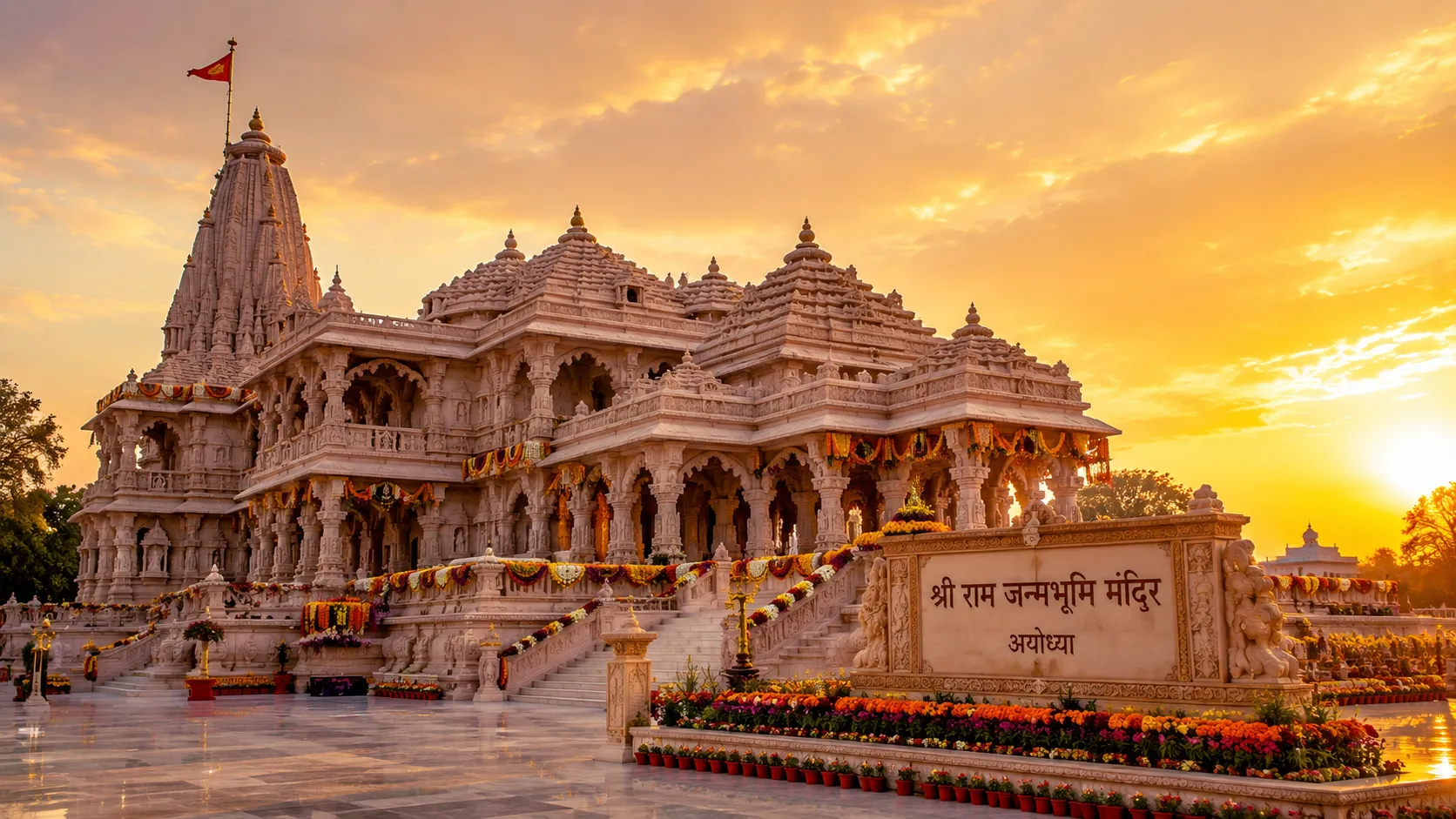
| Shri Ram Janmabhoomi Mandir | The grand temple of Lord Ram, in the core. | /temple/ayodhya/ram-janmabhoomi-mandir |
For the Ram Mandir darshan and its free Sugam booking, see our Ram Janmabhoomi Mandir guide.