
Essential info at a glance
| Detail | At a glance |
|---|---|
| What it is | The revered spot where Goswami Tulsidas began composing the Ramcharitmanas, now a memorial, garden and temple. |
| Opening hours | 7:00 AM to 12:00 PM and 4:00 PM to 9:00 PM; the museum section usually 10:00 AM to 9:00 PM. |
| Entry fee | Free and open to all. There is no VIP darshan. |
| Aartis | Morning around 7:30 AM and evening around 7:00 PM. |
| The great fact | Tulsidas began the Ramcharitmanas here in Ayodhya, on Ram Navami in 1574. |
| The story | Shiva of Kashi is said to have sent Tulsidas to Ayodhya to write the epic in the people's Awadhi. |
| On the trail | Part of the Tulsidas trail across Ayodhya and Kashi. |
| Location | Tulsi Nagar, Rani Bazar, on Ram Path, south of Laxman Ghat. |
Tulsi Chaura timings and aarti
The site is open in the morning and again in the evening, and entry is free; the museum section within usually keeps longer daytime hours. Its aartis, morning and evening, are its most devotional moments, and the early morning and the late afternoon, for a serene walk or to view the exhibits, are the loveliest times. It is a peaceful memorial garden, not a thronged shrine, so it is calm at almost any hour.
| Detail | When | Notes |
|---|---|---|
| Opening hours | 7:00 AM to 12:00 PM and 4:00 PM to 9:00 PM | The museum section usually 10:00 AM to 9:00 PM. |
| Morning aarti | Around 7:30 AM | The morning worship. |
| Evening aarti | Around 7:00 PM | Around sunset. |
| Entry fee | Free | Open to all; no VIP or tickets. |
Tulsi Chaura: where the Ramcharitmanas was begun
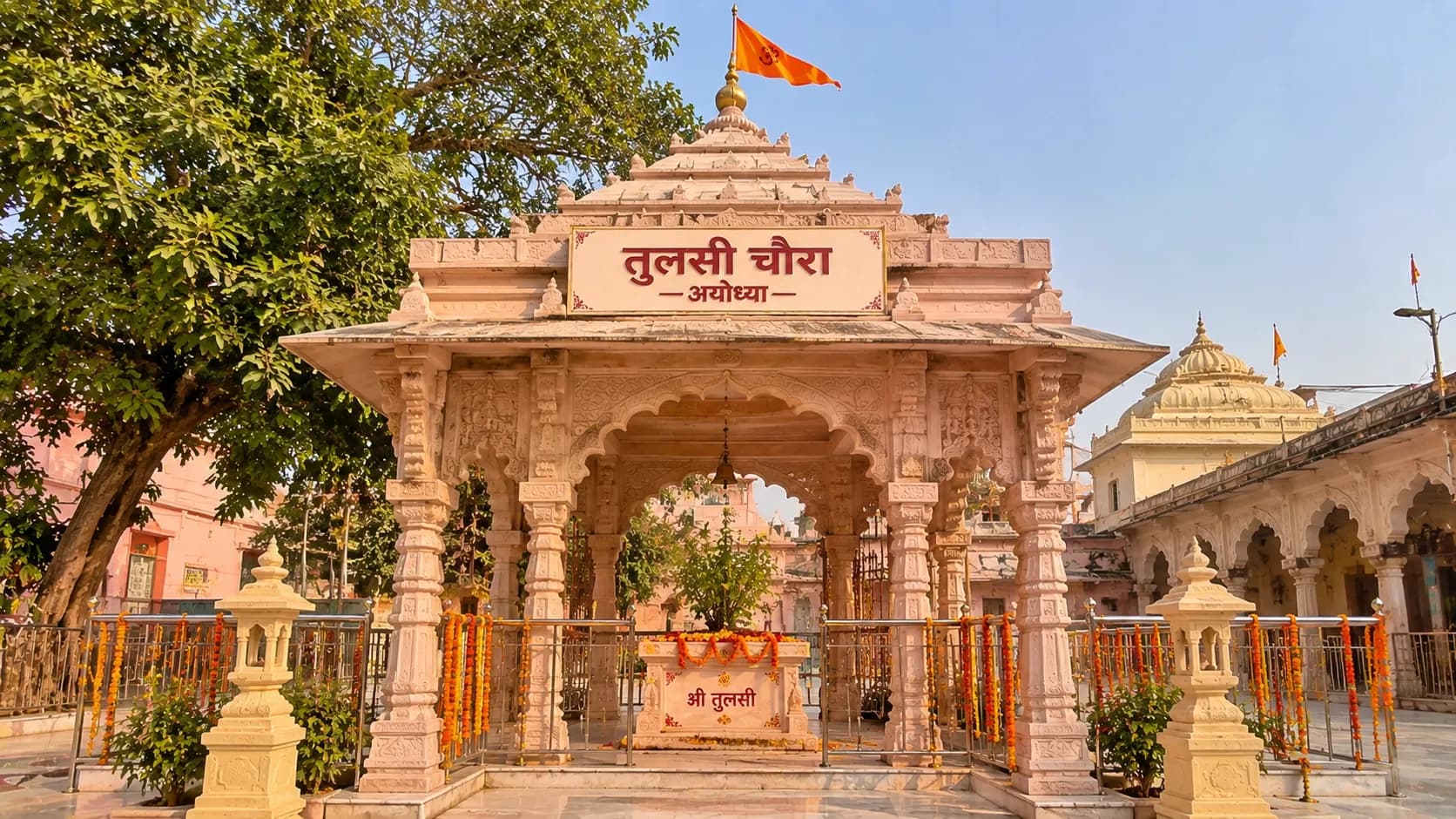
There are places in this world where something happened that changed the spiritual life of a whole people, and Tulsi Chaura is one of them. For it was here, at this very spot in Ayodhya, that Goswami Tulsidas, the great poet-saint, sat down and began to write the Ramcharitmanas, the beloved Awadhi retelling of the story of Lord Ram that would become the single most cherished and most recited scripture in all of North India. The word chaura means a raised platform or seat, and this is the platform of Tulsi, the spot where he took up his pen; and the day he began is known with rare precision, for it is written within the poem itself: it was Ram Navami, the birthday of Lord Ram, in the year 1574. To stand at Tulsi Chaura is to stand at the very birthplace of the Ramcharitmanas, the ground where the greatest song of Ram was first given to the world, and for anyone who loves that epic, and that is nearly everyone in North India, it is a place of the deepest reverence.
Ordained by Shiva: from Kashi to Ayodhya
How Tulsidas came to write his epic here, in Ram's own city, is one of the most beautiful stories in the devotion of India, and it binds Ayodhya to Kashi in the loveliest way. For Tulsidas first tried to compose his poetry in Sanskrit, at Varanasi, on the bank of the Ganga; but a strange thing befell him, for every verse he wrote by day was found vanished by the morning, gone in the night, for eight nights together. And on the eighth night, Lord Shiva himself, whose great temple of Kashi Vishwanath stands in Varanasi, appeared to Tulsidas in a dream and commanded him: do not write in the Sanskrit of the scholars, but in the vernacular, the Awadhi of the common people, so that all may understand; and go to Ayodhya, and there compose the story of Ram. And Shiva blessed him, and foretold that his poetry would fructify and spread like the Sama Veda. So Tulsidas, sent by the Lord of Kashi himself, came here to Ayodhya, and, on Ram Navami, began the Ramcharitmanas at this very Chaura, in the language of the people. And there is a perfect completion to the tale, for having begun the epic here at Shiva's command, Tulsidas went on to complete it in Kashi, and delivered the finished Ramcharitmanas at the feet of Shiva and Parvati at the Kashi Vishwanath temple. Thus the great epic was begun in Ram's Ayodhya and finished in Shiva's Kashi, the two holiest cities joined forever in its making.
Goswami Tulsidas and the Ramcharitmanas
The poet honoured here is Goswami Tulsidas, one of the greatest saints and poets in all of India's history, so great that he is called the Valmiki of Hindi. Ayodhya was dear to him from the first, for it was here, tradition tells, that his sacred-thread rite was performed and his first learning begun as a boy. And in the Ramcharitmanas he gave the world a treasure: he took the ancient Sanskrit Ramayana, once the preserve of the learned, and retold it in Awadhi, the tongue of the farmers and the grandmothers, so that the story of Ram poured out of the temples and into every home and heart, sung in every village. He called it the Ramcharitmanas, the holy lake of the deeds of Ram, its seven books like seven steps down into a sacred lake that cleanses the soul. The pandits of his day objected to his using the common speech; history answered them, for the Ramcharitmanas became the most beloved scripture of the north. From the same great devotion he also gave us the Hanuman Chalisa, recited by millions to this day.
The memorial, the garden and the Tulsidas trail
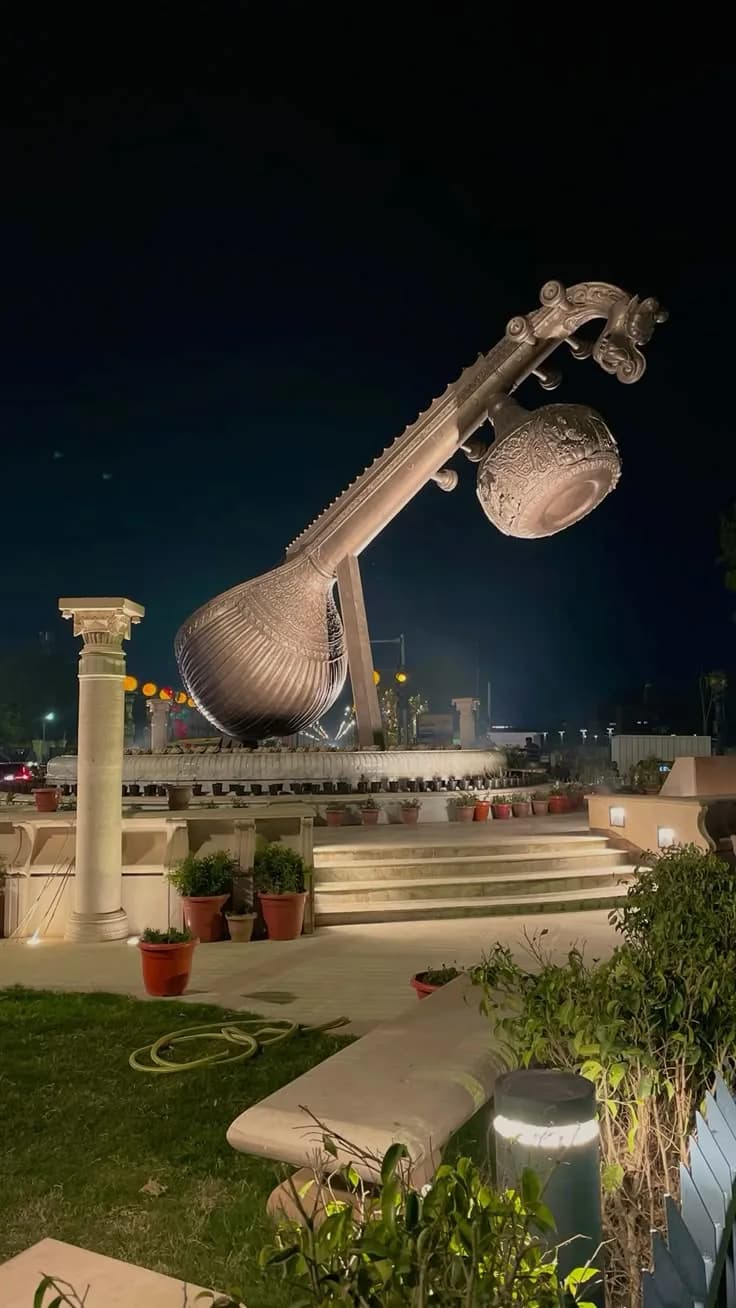
Today Tulsi Chaura is a peaceful memorial to the poet and his epic, a garden and temple complex, sometimes called the Tulsi Udyan, near Laxman Ghat and the Ram Path, with a shrine and quiet walks and, in the associated buildings, exhibits on Tulsidas and the Ramcharitmanas. It is a lovely, gentle, contemplative place, away from the crowds, where a lover of the epic can sit and feel close to its beginning.
And it is a jewel of the Tulsidas trail, the gathering of places touched by the poet across the two holy cities, which is one of the loveliest devotions our pilgrims make. In Ayodhya there is this Tulsi Chaura, where the epic was begun, and the Tulsi Smarak Bhawan, the great memorial with its daily Ramleela; and in Kashi there is the Tulsi Ghat, where he lived and composed on the Ganga, the Sankat Mochan Hanuman temple that he founded, and the Tulsi Manas Mandir, where the whole Ramcharitmanas is written upon the walls. To follow Tulsidas from the Chaura where he began his epic in Ayodhya to the Ganga where he finished it in Kashi is to trace the golden thread of the greatest song of Ram.
Where the song of Ram was born, in my own words
By Rajeev Sharma, guide with Experience My India
Tulsi Chaura is a place I bring pilgrims to with real love, because it is where our Ramcharitmanas was born. I tell them: right here, on Ram Navami, Tulsidas sat and began to write the Ramayana in our own language, the book that every grandmother in the north can sing from. People are moved to be at the very spot. And then I tell them my favourite story, because I am a Kashi man: that Tulsidas first tried to write in Sanskrit in my Varanasi, and the words kept vanishing, until Lord Shiva Himself came in a dream and told him, write in the people's language, and go to Ayodhya. So Shiva of Kashi sent Tulsidas to Ayodhya to write it. And when he finished, in Kashi, he laid it at Shiva's feet. Begun in Ram's city, finished in Shiva's city; my two cities, joined in this one book.
I use Tulsi Chaura to open the whole Tulsidas trail for my guests, the memorial here, and then in my Kashi the Tulsi Ghat where he lived, the Sankat Mochan he built, the Tulsi Manas temple with the Ramcharitmanas on its walls. It is a beautiful thread to follow across both pilgrimages. And this garden is so quiet and peaceful, a lovely place to sit after the busy temples, and to think of the poet-saint who gave the story of Ram to us all. I never let a lover of the Ramayana miss the place where it began.
In more than forty years of guiding, this is the quiet spot where the story of the Ramcharitmanas most moves the pilgrims I bring.
What to see and do
- Stand at the Chaura, the very platform where Tulsidas began writing the Ramcharitmanas on Ram Navami.
- Take darshan at the Tulsidas shrine and hear the story of the epic's beginning.
- View the exhibits on Tulsidas and the Ramcharitmanas in the memorial section.
- Walk the peaceful garden and attend a morning or evening aarti.
- Follow the Tulsidas trail, with the Tulsi Smarak Bhawan here and the Tulsidas sites of Kashi.
How to reach Tulsi Chaura
Tulsi Chaura is at Tulsi Nagar, Rani Bazar, on the Ram Path (Shaheed Marg), just south of Laxman Ghat, near the main temple routes and the Saryu riverfront. It is easily reached on foot or by e-rickshaw.
| From | Distance | Notes |
|---|---|---|
| Laxman Ghat and the Saryu ghats | Just to the south | Near the riverfront; combine with the ghats. |
| The core temples (Ram Mandir, Hanuman Garhi) | A short walk or ride | On the Ram Path; by foot or e-rickshaw. |
| Tulsi Smarak Bhawan | A short drive | The other Tulsidas memorial; do them together. |
| Ayodhya Dham Junction (railway) | A few km | By e-rickshaw, auto or taxi. |
| Maharishi Valmiki Airport, Ayodhya | About 10 to 12 km | The new airport; taxis and autos to the town. |
Its position on the Ram Path near Laxman Ghat makes it an easy, meaningful stop.
Best time to visit and how to plan it
| When | Why |
|---|---|
| Early morning or late afternoon | Serene walks in the garden, or to view the exhibits, and the aartis. |
| Ram Navami (March or April) | The very day, and Ram's birthday, on which Tulsidas began the epic here. |
| Tulsi Jayanti | The birth anniversary of Tulsidas, cherished at his memorials. |
| With the Tulsidas trail | Together with the Tulsi Smarak Bhawan, and the Tulsidas sites of Kashi. |
- Pair it with Laxman Ghat, the Tulsi Smarak Bhawan and the core temples.
- Allow 20 to 30 minutes for the Chaura, the shrine and the garden.
For Ayodhya, or a combined Kashi and Ayodhya pilgrimage, planned end to end, see our tour packages.
Accessibility for elderly and mobility limited visitors
- The memorial and garden are largely at ground level, reachable by road, gentler than the old-city temples.
- It is calm and uncrowded, ideal for a slow, restful, contemplative visit, with places to sit.
- The exhibits and shrine are easy to view at a gentle pace.
- We arrange transport and plan a gentle visit within your Ayodhya day.
Our guided visits and the Tulsidas trail
We are a Varanasi and Ayodhya based operator, a unit of Experience My India, with more than forty years of guiding pilgrims across Kashi, Ayodhya, and Prayagraj, and we have our own local guide and pandit in Ayodhya. Entry is free, so what we arrange is the visit around it: a guide who tells the beautiful story of how Shiva of Kashi sent Tulsidas to Ayodhya, and how the Ramcharitmanas was begun here, and, above all, the whole Tulsidas trail across both holy cities, the golden thread of the poet-saint from Ayodhya to Kashi.
| Service | Includes | Price |
|---|---|---|
| Guided Tulsi Chaura visit | The Chaura, the shrine, the exhibits and the story, with a guide. | Contact us for pricing |
| Ayodhya Tulsidas trail | Tulsi Chaura with the Tulsi Smarak Bhawan and the Ramayana sites of Ayodhya. | Contact us for pricing |
| Kashi and Ayodhya Tulsidas trail | The Tulsidas sites of both cities, from where the epic began to where it was finished. | Contact us for pricing |
| Full Ayodhya darshan day | Tulsi Chaura within a wider Ayodhya pilgrimage, with a guide. | Contact us for pricing |
Inclusions and exclusions are stated up front, with any taxes and conditions, and no charge appears later that was not named. Entry is free; our charge is only for guiding and services. See all our tour packages for the full range.
Experience My India is a travel operator, not the memorial administration. Entry is free; our charge is only for our guiding and services. Timings are set by the memorial and can change.
Nearby sacred sites in Ayodhya
Tulsi Chaura is on the Ram Path near Laxman Ghat, among the Ramayana and Tulsidas sites.
| Site | What it is | Internal link |
|---|---|---|
| Tulsi Smarak Bhawan | The great Tulsidas memorial with its daily Ramleela, the other Ayodhya Tulsidas site. | /temple/ayodhya/tulsi-smarak-bhawan |
| Saryu Ghats and Laxman Ghat | The sacred river ghats and the evening Saryu aarti, just to the north. | /temple/ayodhya/saryu-ghat-aarti |
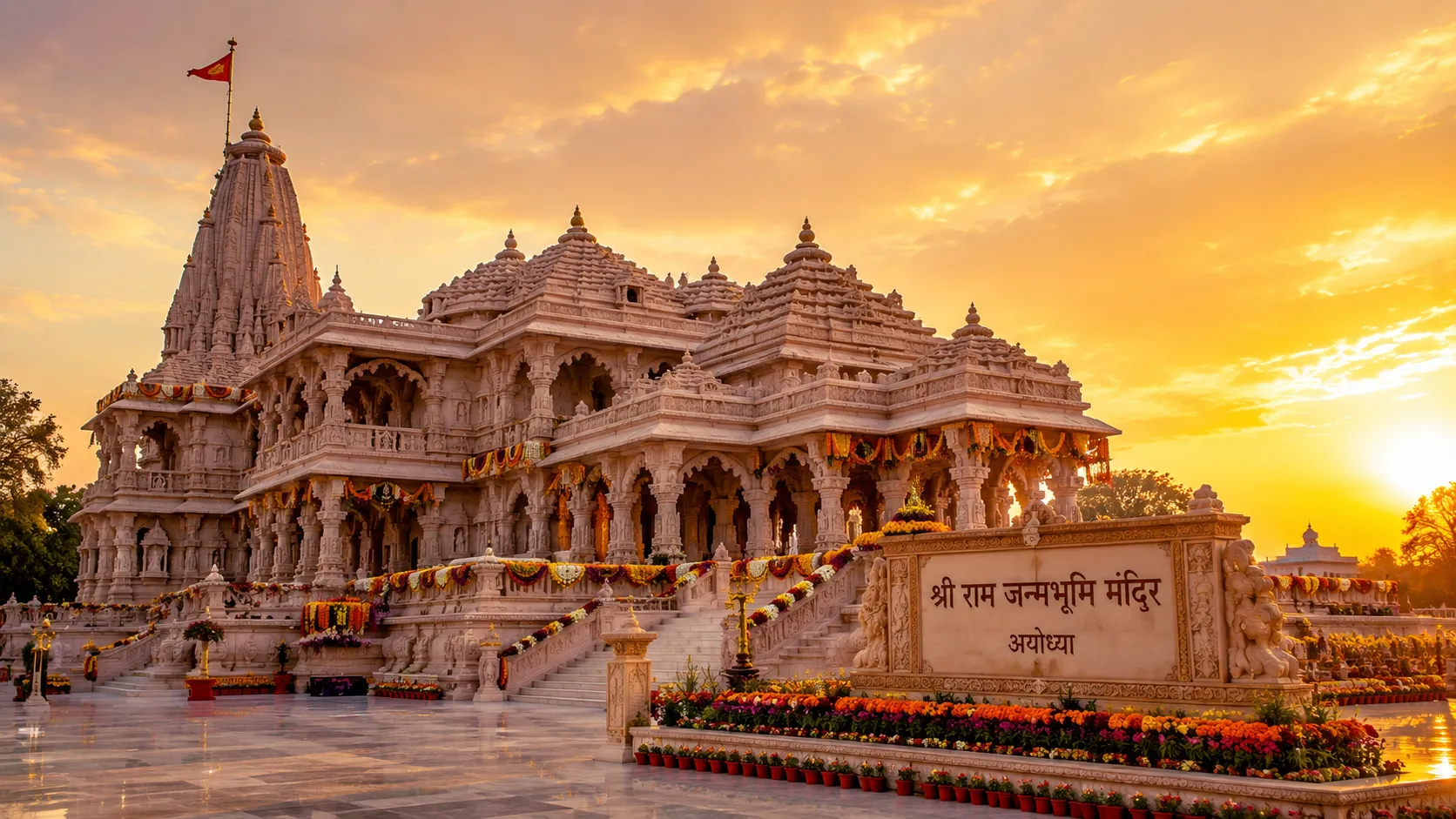
| Shri Ram Janmabhoomi Mandir | The grand temple of Lord Ram, on the Ram Path. | /temple/ayodhya/ram-janmabhoomi-mandir |
| Tulsi Manas Mandir (Varanasi) | The temple in Kashi with the whole Ramcharitmanas on its walls. | /temple/varanasi/tulsi-manas-mandir |
| Tulsi Ghat (Varanasi) | The Ganga ghat in Kashi where Tulsidas lived and completed the epic. | /temple/varanasi/tulsi-ghat |
For the Ram Mandir darshan and its free Sugam booking, see our Ram Janmabhoomi Mandir guide.