.webp&w=2048&q=75)
.webp&w=2048&q=75)
Essential info at a glance
| Detail | At a glance |
|---|---|
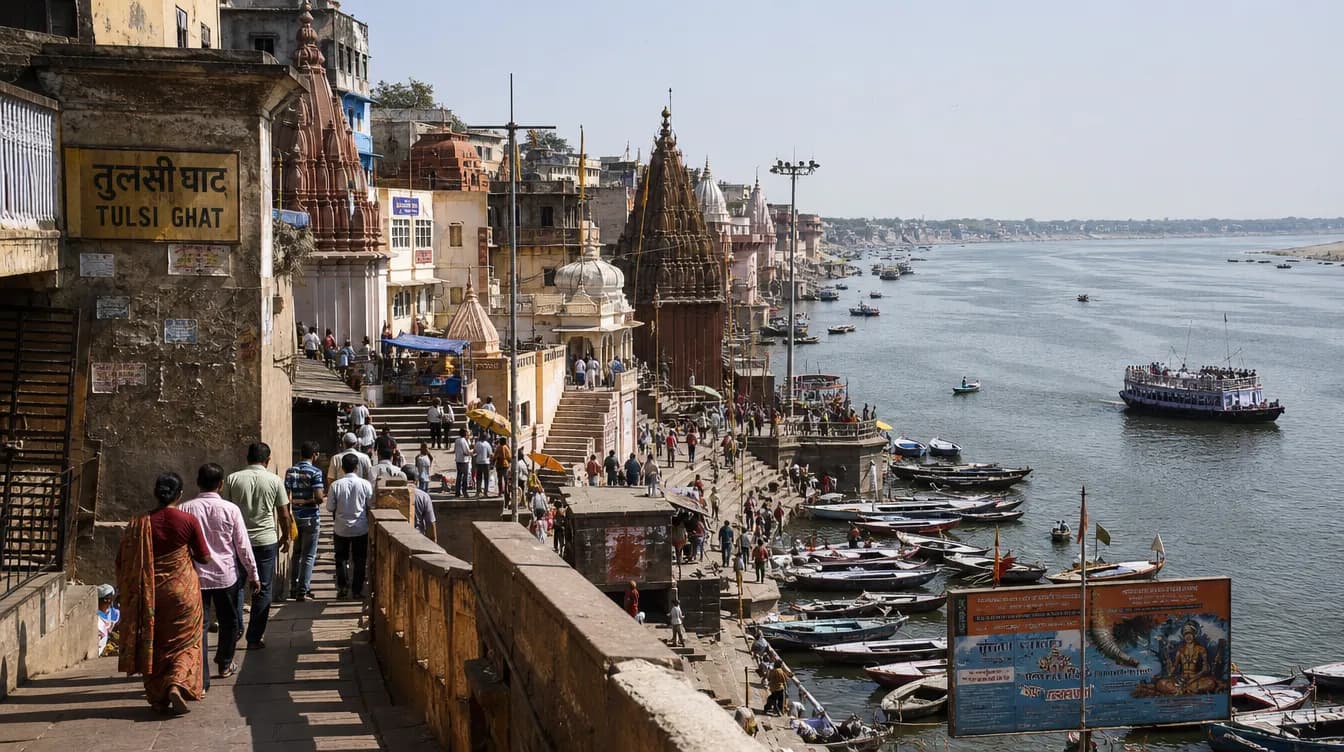
| What it is | The quiet, culturally rich ghat where Goswami Tulsidas lived and wrote the Ramcharitmanas. |
| Timings | Open 24 hours, a public riverfront. |
| Entry fee | Free. No ticket is needed to walk or sit on the ghat. |
| Aarti | No grand daily aarti here; local evening prayers and music. The prominent aarti is nearby at Assi Ghat. |
| Highlights | Tulsidas's preserved house and relics, and the ancient Lolark Kund sun-tank. |
| Festivals | The Nag Nathaiya Krishna Leela in Kartik, the Dhrupad music festival, and Lolark Shashthi. |
| Character | Calm and reflective, a cultural and literary heart of Varanasi away from the crowds. |
| Location | Bhadaini, between Assi and Chet Singh Ghats, about 8 km from Varanasi Junction. |
Tulsi Ghat timings and the best time to visit
As a public riverfront the ghat is open around the clock, and there is no fee. It is one of the calmer and more contemplative ghats, prized for its heritage rather than for spectacle. There is no grand daily Ganga aarti here, though local evening prayers and music happen; the great nightly aarti is a short walk away at Assi Ghat, around 5:30 PM in summer and 6:30 PM in winter.
| Detail | When | Notes |
|---|---|---|
| Opening | 24 hours | A public ghat; come at any hour. |
| Best times | Sunrise and evening | Quiet, beautiful light on the river; sunrise pairs with the Assi aarti nearby. |
| Assi Ghat aarti (nearby) | 5:30 PM summer, 6:30 PM winter | The prominent evening aarti, a short walk away. |
| Festival seasons | Kartik and spring | The Nag Nathaiya Leela and the Dhrupad festival; atmospheric and busy. |
Tulsi Ghat and Goswami Tulsidas
This quiet ghat carries one of the greatest names in all of Indian literature and devotion. It was here that Goswami Tulsidas, the poet-saint of the sixteenth century, lived the last years of his life, and here, on the banks of the Ganga, that he wrote his masterpiece, the Ramcharitmanas. By retelling the story of Lord Rama in Awadhi, the language of the people, rather than in Sanskrit, Tulsidas brought God out of the scriptures and into the songs, homes and hearts of ordinary people across northern India, and the Ramcharitmanas remains one of the most beloved books ever written. The ghat, once called Lolark Ghat after the ancient sun-tank beside it, was renamed Tulsi Ghat in his honour.
A famous story is told here: that when a page of Tulsidas's manuscript once fell into the Ganga, it did not sink but floated upon the water, as if the river herself would not let his words be lost. To sit on these steps, where such a work was composed, is to be close to the very source of a living tradition.
Tulsidas's house and relics
The house in which Tulsidas lived and died still stands on the ghat, preserved, simple and deeply peaceful, and it is now a place of worship. Within it are kept the relics of the saint, treasured for four centuries: his wooden clogs, the khadau; his pillow; a manuscript of the Ramcharitmanas; and, most beloved of all, the idol of Hanuman that Tulsidas himself worshipped, along with his samadhi. To step inside is to feel the quiet presence of a man whose words are still sung every day across India, and for many pilgrims it is the most moving part of a visit to the ghat.
The Hanuman and Ramlila legacy
Tulsidas was, above all, a great devotee of Hanuman, and his devotion left a deep mark on this corner of Kashi. It was Tulsidas who founded a Hanuman temple with an akhara here at the ghat, and, moved by the same devotion, the famous Sankat Mochan Hanuman Temple across the city. He is also credited with initiating the Ramlila, the dramatic re-enactment of the life of Rama, which is said to have first been staged here at Tulsi Ghat, and a temple of Rama on the ghat commemorates it. For a company that also guides pilgrims in Ayodhya, the city of Rama, this ghat, where the greatest retelling of Rama's story was written, is especially dear.
See our guides to the Sankat Mochan Hanuman Temple and the Tulsi Manas Mandir, both bound to Tulsidas and his Ramcharitmanas.
Lolark Kund: the ancient sun-tirtha
Beside the ghat lies one of the oldest and holiest sites in all of Varanasi, older even than much of the city around it: the Lolark Kund, a deep, ancient stepped tank that is the primary seat of the Sun God, Lolark, the trembling sun, in Kashi. Its water, remarkably, is said to stay clear through the whole year, even in the floods. It is from this kund that the ghat took its older name.
The kund comes gloriously alive at the festival of Lolark Shashthi, on the sixth day of the bright half of the month of Bhadrapada, around September, when thousands of devotees, and especially couples longing for a child, come to bathe in its sacred water, seeking the blessing of a child. Tradition also holds that bathing here relieves skin ailments. These are matters of faith and devotion, cherished for generations, and they are best received in that spirit; they are not a substitute for medical care, and anyone with a health concern should also see a doctor.
The living culture of the ghat
Tulsi Ghat is not a museum piece; it is a living cultural landmark, and its calm is broken through the year by some of the most cherished traditions of Banaras.
| Tradition | What it is |
|---|---|
| Nag Nathaiya Leela | In the month of Kartik, the dramatic enactment on the river of Krishna subduing the serpent Kaliya, part of a Krishna Leela that draws great crowds. |
| The Dhrupad festival | A revered festival of dhrupad, the oldest form of Indian classical vocal music, held on the ghat over several days. |
| Ramcharitmanas discourses | Recitations and discourses on Tulsidas's great work, fitting for the place it was written. |
| The akhara tradition | The old wrestling akhara founded in Tulsidas's devotion to Hanuman, part of the ghat's living heritage. |
If you can time your visit to the Nag Nathaiya in Kartik or the Dhrupad festival, you will see this quiet ghat transformed into a stage for traditions centuries old.
A ghat of poetry and calm, in my own words
By Rajeev Sharma, Varanasi local
Tulsi Ghat is one of my favourite quiet corners of Kashi, and I bring people here who want to feel the soul of the city rather than its crowds. I tell them that this is where Tulsidas lived and wrote the Ramcharitmanas, the book that is sung in millions of homes, and I take them to his little house to see his wooden clogs and the Hanuman he worshipped. People who love poetry and devotion are often deeply moved to stand there.
I show them the Lolark Kund, the ancient sun-well, and tell them how couples come from far away at the festival to pray for a child, and I explain that it is a matter of faith. If it is Kartik, I bring them for the Nag Nathaiya, when Krishna and the serpent are enacted right on the river, which is a wonderful, old Banarasi spectacle. And I always connect the dots for them, that the same Tulsidas founded Sankat Mochan and inspired Tulsi Manas Mandir, so they see how this one quiet ghat sends threads all across Kashi and on to Ayodhya. It is a place people are so glad I did not let them miss.
In more than forty years of guiding, this is the ghat where I most often see a traveller fall quiet, and stay quiet, in a good way.
What to see and do at Tulsi Ghat
- Visit Tulsidas's preserved house and see his relics, the clogs, the manuscript and the Hanuman idol.
- See the ancient Lolark Kund, the sun-tank, one of the oldest sacred sites in Varanasi.
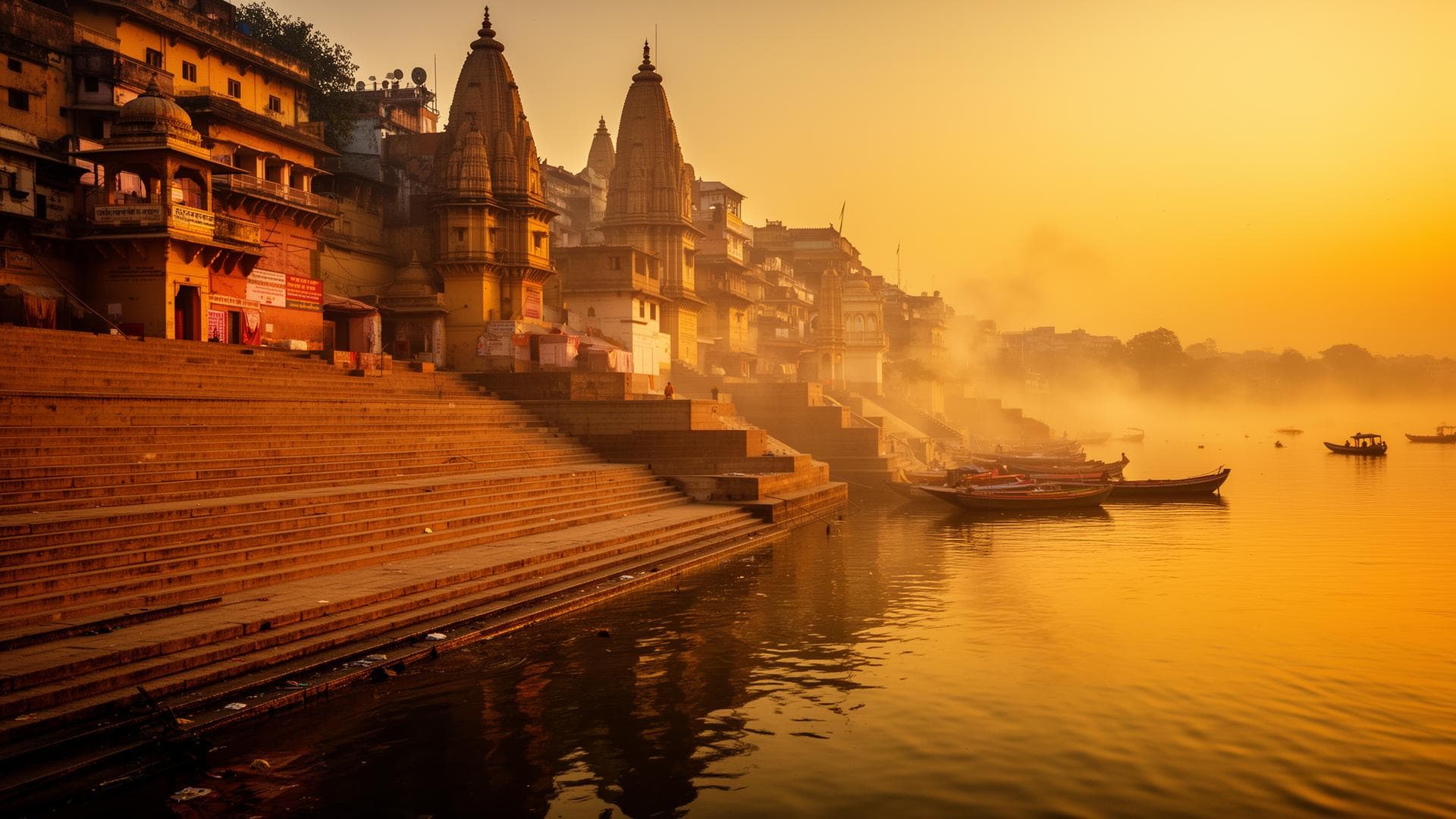
- Enjoy the calm riverfront, the old balcony and the great peepal tree, ideal for a quiet walk or meditation.
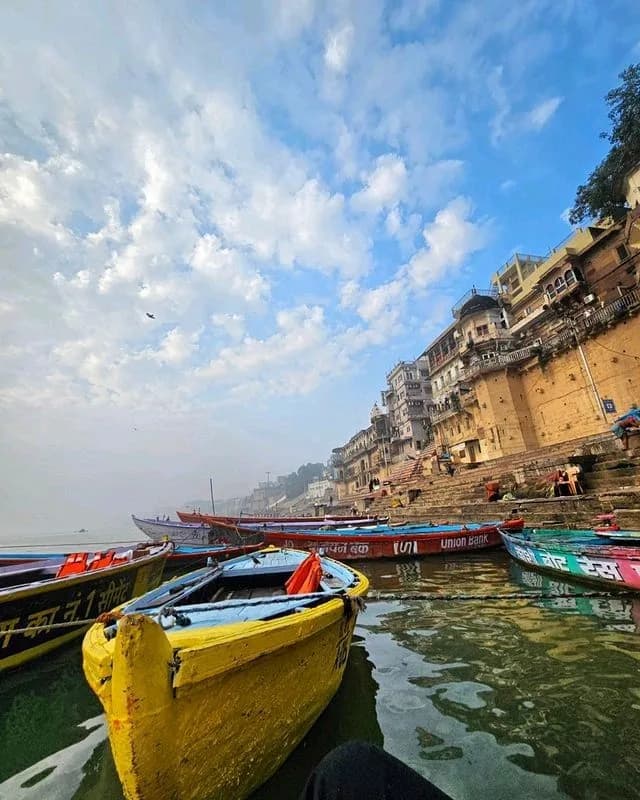
- Take a boat from here for a peaceful stretch of the southern riverfront.
- If you can, time your visit to the Nag Nathaiya in Kartik or the Dhrupad music festival.
How to reach Tulsi Ghat
The ghat is at Bhadaini, on the southern riverfront between Assi and Chet Singh Ghats, about 8 km from Varanasi Junction and close to Godowlia. It is easily combined with Assi, just a short walk away.
| From | Distance | Notes |
|---|---|---|
| Assi Ghat | A short walk | Just to the south; combine the two, with the Assi sunrise aarti. |
| Chet Singh Ghat | Adjacent | Just to the north along the riverfront. |
| Godowlia | A short ride | Reach the old city by auto, then walk down. |
| Varanasi Junction (Cantt) | About 8 km | Roughly a 30-minute drive by taxi or auto. |
| Airport | About 25 to 30 km | Lal Bahadur Shastri International Airport, roughly an hour by road. |
It combines beautifully with Assi and the southern temples, and with a boat ride. We arrange the transport, the boat and a guide.
Best time to visit and how to plan it
| When | Why |
|---|---|
| Sunrise | A calm, beautiful start on the river, paired with the Assi aarti nearby. |
| Kartik (October to November) | The Nag Nathaiya Leela on the river, an unforgettable old spectacle. |
| The Dhrupad festival (spring) | Days of the oldest classical music on the ghat. |
| Lolark Shashthi (around September) | The great fair at the kund; atmospheric but very crowded. |
- Pair it with Assi Ghat, Sankat Mochan and Tulsi Manas Mandir for a Tulsidas and Ram day.
- Allow 30 to 60 minutes, longer for the house, the kund and a boat.
For the ghats and temples planned as one route, see our Varanasi tour packages.
Accessibility for elderly and mobility limited visitors
- The ghat has stone steps and the old house and kund have their own steps; those with limited mobility should take care.
- It is calm and uncrowded on ordinary days, which suits a gentle, unhurried visit.
- A boat lets you enjoy the ghat and the river with less walking.
- We arrange transport close by and a guide to help, and can pace the visit gently.
Nearby sites to combine with your visit
Tulsi Ghat sits in the southern riverfront, among sites deeply tied to Tulsidas and to Rama.
| Site | What it is | Internal link |
|---|---|---|
| Assi Ghat | The southern ghat, famous for the sunrise Subah-e-Banaras aarti, a short walk away. | /temple/varanasi/assi-ghat |
| Sankat Mochan Hanuman Temple | The beloved Hanuman temple founded by Tulsidas. | /temple/varanasi/sankat-mochan-hanuman-temple |
| Tulsi Manas Mandir | The marble temple built to honour Tulsidas and his Ramcharitmanas. | /temple/varanasi/tulsi-manas-mandir |
| Chet Singh Ghat | The historic fort ghat just to the north. | /temple/varanasi/chet-singh-ghat |
| Kedar Ghat | A colourful, sacred bathing ghat nearby. | /temple/varanasi/kedar-ghat |
For the grand evening aarti and a boat ride, see our Varanasi tour packages.
Practical tips
| Good to know | Detail |
|---|---|
| It is a quiet, cultural ghat. | Come for the heritage and the calm, not for a big aarti spectacle; that is at Assi and Dashashwamedh. |
| Visit the house and the kund. | Tulsidas's relics and the ancient Lolark Kund are the highlights. |
| Time it for a festival if you can. | The Nag Nathaiya and the Dhrupad festival are special; check the dates. |
| Lolark Shashthi is crowded. | The September fair at the kund draws huge crowds; plan accordingly. |
Our guided heritage and cultural visits
We are a Varanasi based operator, a unit of Experience My India, with more than forty years of guiding travellers across Kashi, Ayodhya, and Prayagraj. The ghat is free, so what we arrange is the experience around it: a guide who brings the story of Tulsidas and his Ramcharitmanas alive, a visit to his house and the Lolark Kund, a boat on the river, and, for those who wish, help to experience the great festivals of the ghat, the Nag Nathaiya and the Dhrupad music festival.
| Experience | Includes | Price |
|---|---|---|
| Tulsidas heritage visit | A guide, Tulsidas's house and relics, and the Lolark Kund. | Contact us for pricing |
| Tulsidas and Ram day | Tulsi Ghat with Sankat Mochan and Tulsi Manas Mandir, with a guide. | Contact us for pricing |
| Southern ghats and boat | Tulsi Ghat with Assi and a boat on the Ganga. | Contact us for pricing |
| Festival experience | The Nag Nathaiya or the Dhrupad festival, arranged with seating. | Contact us for pricing |
Inclusions and exclusions are stated up front, with any taxes and conditions, and no charge appears later that was not named. See all our Varanasi tour packages for the full range.
Experience My India is a travel operator, not a temple or government body. Prices are ours. Ghat access is free and public; rituals, festivals and timings are set by the temples and organisers and can change.