


Essential info at a glance
| Detail | At a glance |
|---|---|
| What it is | The fort-temple of Lord Hanuman, the guardian deity of Ayodhya, traditionally visited before the Ram Mandir. |
| Morning darshan | 5:00 AM to 12:00 PM. |
| Evening darshan | 4:00 PM to 10:00 PM; open all days. |
| Entry fee | Free for all devotees. There is no VIP or paid darshan. |
| The climb | 76 stone steps to the sanctum, with handrails; a doli (palanquin) for elderly pilgrims. |
| The deity | A rare 6-inch gold idol of Bal Hanuman, the child Hanuman, seated on the lap of his mother, Mata Anjani. |
| The tradition | Seek Hanuman's blessing here first, before Ram darshan, as the guardian of Ram's birthplace. |
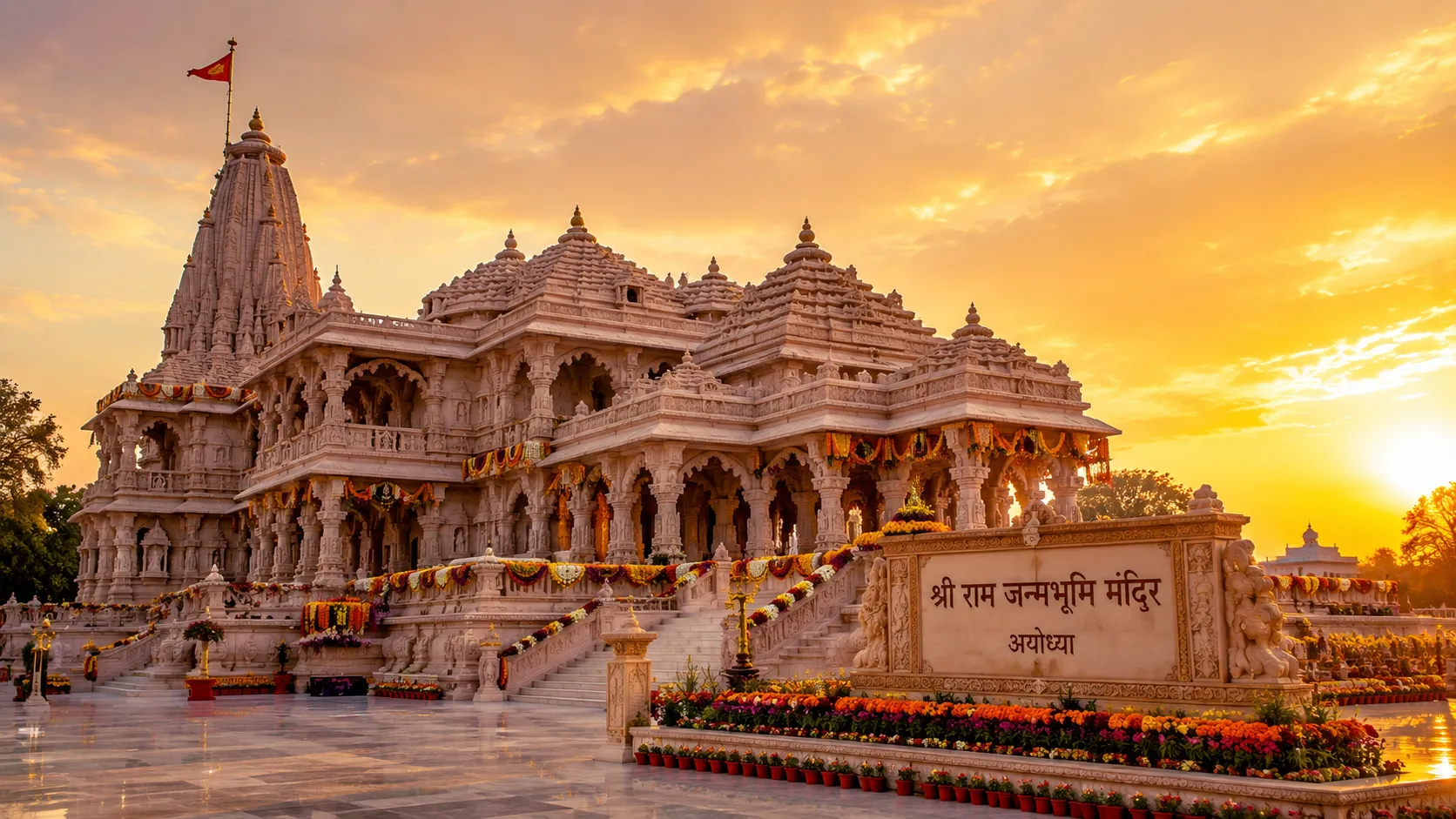
| Location | Ramkot, about 500 m to 1 km from the Ram Janmabhoomi Mandir. |
Hanuman Garhi timings and aarti
The temple keeps a split day, open in the morning and again from late afternoon into the night, every day of the week, and entry is free. It is a lively, joyful, thronged temple, especially on Tuesdays and Saturdays, the days of Hanuman, so early on a weekday morning is the calmest time. The aartis are the most powerful moments of the day.
| Ritual or session | Timing | Notes |
|---|---|---|
| Morning darshan | 5:00 AM to 12:00 PM | The Mangala aarti is around 5:00 to 5:30 AM. |
| Midday aarti | 12:00 PM | At the close of the morning session. |
| Evening darshan | 4:00 PM to 10:00 PM | The Sandhya aarti is around 4:00 PM. |
| Shayan aarti | About 9:00 to 9:30 PM | The night aarti before the temple closes. |
*Entry is free and there is no VIP darshan.
Hanuman Garhi: the guardian of Ayodhya
To understand Hanuman Garhi is to understand the very order of a pilgrimage to Ayodhya, for this is where every journey properly begins. Lord Hanuman, the greatest of all the devotees of Ram, is held to be the eternal guardian of Ayodhya, the protector of Ram's birthplace. Tradition tells that when Lord Ram returned in triumph from Lanka and was crowned king, he gave this hilltop to Hanuman, and that Hanuman chose it so that he might keep watch over the city and the Janmabhoomi forever. And so, to this day, it is believed that Hanuman resides here, guarding Ayodhya and its people.
From this flows the most important custom of Ayodhya: that a pilgrim must come to Hanuman Garhi first, before going for the darshan of Ram Lalla at the Ram Mandir. One seeks the blessing, the permission, of the faithful guardian before approaching the presence of the Lord he serves, exactly as one would seek a guardian's leave before entering a great king's inner chamber. This is not a custom invented for visitors; it is a deep tradition, kept by the pilgrims and the pandits of Ayodhya without exception, and many devotees say their Ram darshan feels incomplete, or subtly different, if they have not first bowed before Hanuman here. So powerful is the bond that a sacred flag, the Hanuman Nishan, is carried by devotees from here to the Ram Janmabhoomi and worshipped there before the morning puja. Begin your Ayodhya, then, as the city itself begins it: at the feet of Hanuman.
The fort-temple and the 76 steps
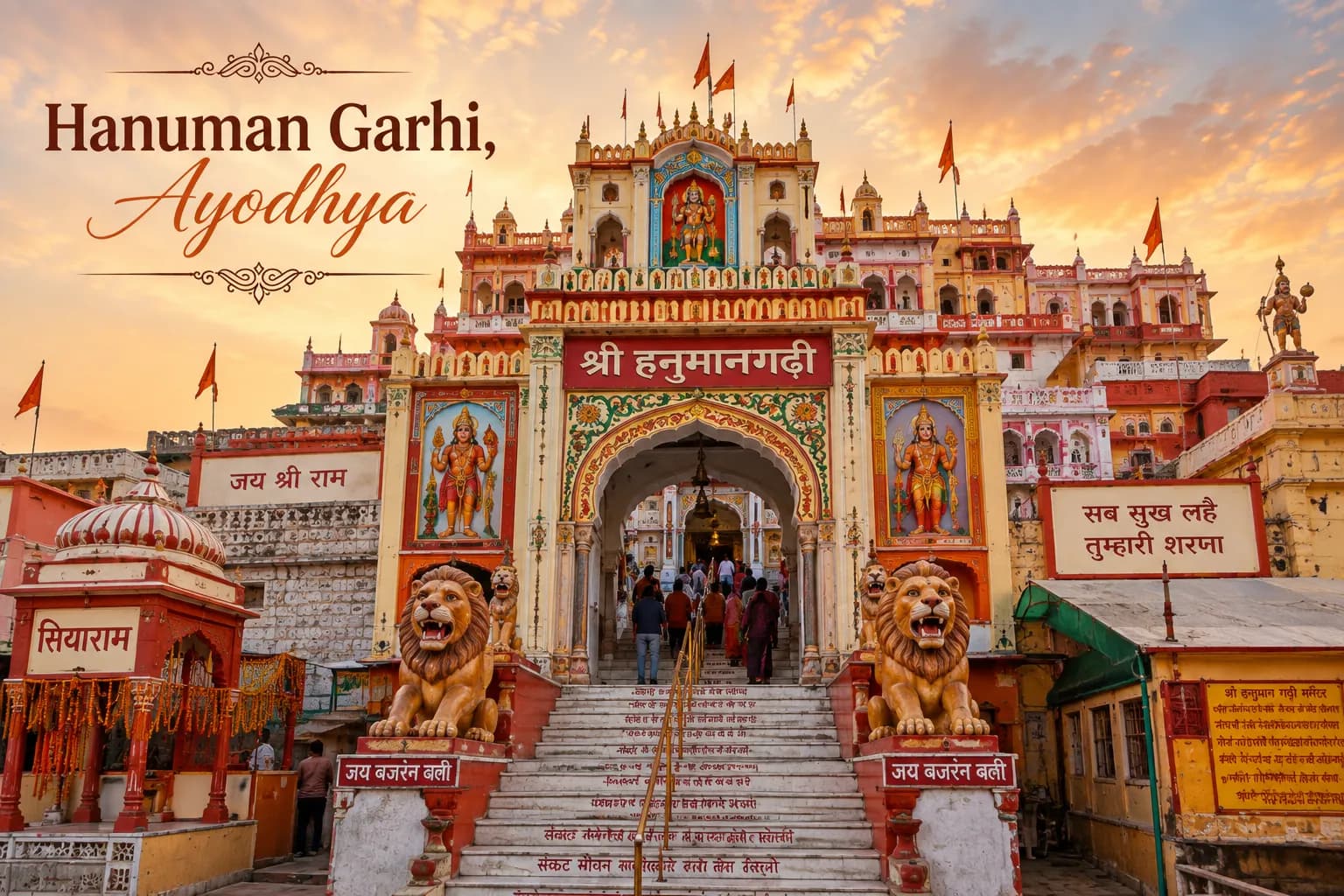
The name Hanuman Garhi means Hanuman's Fort, and the temple looks the part. It stands on a small commanding hillock in the old city, and it is built in the shape of a four-sided fort, with round bastions at each of its four corners, so that from the market below it looks like a fortress, and only within does it reveal itself as a temple. The site is ancient, revered since the age of the Ramayana, while the fortified structure that stands today was largely built in the eighteenth century, under the patronage of the Nawab of Awadh, who granted land for its upkeep; that a ruler of one faith supported this great temple of another is a noble and telling part of its history, and it is administered by the Nirvani Ani Akhara, an order of ascetic devotees.
To reach the sanctum, you climb the famous seventy-six stone steps, and the climb is itself part of the pilgrimage, a small effort of devotion offered on the way up. There are handrails on both sides, and, for elderly or unwell pilgrims who cannot manage the steps, a doli, a palanquin, can often be arranged at the base. And there is a reward at the top beyond the darshan: from the height of Hanuman Garhi, the whole skyline of sacred Ayodhya and the shining thread of the Saryu river spread out before you, a lovely, uplifting sight.
The rare Bal Hanuman in his mother's lap
The deity of Hanuman Garhi is one of the most tender and unusual images of Hanuman anywhere in India. In the sanctum, its walls carved in silver, sits a small idol, only about six inches high, of gold, showing Hanuman not as the mighty warrior of most temples, standing and roaring and tearing open his chest, but as Bal Hanuman, the child Hanuman, seated sweetly upon the lap of his mother, the goddess Anjani, and covered in sacred sindoor. It is a rare and beautiful depiction, found in very few temples, and there is a special grace in it: because it shows the divine child with his mother, it is held to be especially auspicious for those who pray for children and for the wellbeing of the family, and the maternal tenderness of it moves everyone who sees it.
Around the sanctum, and throughout the fort, the verses of the Hanuman Chalisa, the beloved forty-verse hymn to Hanuman, are inscribed, so that the very walls of the temple sing his praises, and pilgrims murmur the Chalisa as they climb and as they wait for darshan.
The joyful spirit of the temple
If the grand Ram Mandir is solemn and awe-inspiring, Hanuman Garhi is joyful and alive. It bustles and rings: bells clang, priests call, pilgrims crowd the steps, and the air is thick with the scent of flowers and of the famous besan laddu that is offered here as prasad and shared with delight. Devotees bring garlands of bananas, offerings of sindoor and sweets, and the monkeys, sacred here as Hanuman's own, scamper boldly about the walls and steps. There is a warmth and a happiness to a Hanuman Garhi darshan that lifts the spirits, and it is a wonderful, human, exuberant contrast to the majesty of the Ram Mandir, the two together giving the fullest feeling of Ayodhya. The temple is at its most vibrant on Tuesdays and Saturdays, the days of Hanuman, and at the great festivals of Hanuman Jayanti and Ram Navami, when it overflows with devotees.
The first darshan of Ayodhya, in my own words
By Rajeev Sharma, guide with Experience My India
I always begin a pilgrim's Ayodhya at Hanuman Garhi, never at the Ram Mandir, and I explain why, because so many first-time visitors do not know. I tell them that Hanuman is the guardian of this whole city, that Ram himself gave him this hill to watch over the birthplace, and that in Ayodhya we ask Hanuman's blessing before we go to Ram. People find that beautiful, and I have seen their Ram darshan mean more to them because they did it in the right order. We climb the seventy-six steps together, saying the Hanuman Chalisa, and at the top I show them the little gold child Hanuman in his mother's lap, which surprises everyone, because they expect the great warrior.
I will tell you honestly how I help, too. The darshan here is completely free, and no one needs to pay for it, so I warn my guests firmly to ignore any tout who claims to be an official guide charging a fee for darshan. What I bring is real: a local pandit who knows this temple, who explains the tradition, guides you through the queue and the offerings, arranges a proper puja if you wish, gets the laddu prasad, and, for an elderly guest, arranges the doli so they too can have this darshan. And I make sure we come early, before the crowds. Then I take them, blessed by Hanuman, on to Ram. That order, that care, is the difference between a rushed visit and a real pilgrimage.
In more than forty years of guiding, this is the temple where I most love to begin, because everything good in Ayodhya begins here.
Darshan, offerings and the prasad
- Darshan is free and by a single walk-in queue; there is no paid or VIP line, and no official fee, so ignore any tout who says otherwise.
- Traditional offerings are the famous besan laddu, sindoor, and garlands of bananas and flowers; the laddu prasad is a joy.
- Say the Hanuman Chalisa, inscribed on the walls, as you climb and wait; it is the hymn of this temple.
- The monkeys are sacred here but bold; keep hold of your prasad, spectacles and belongings.
- Remove footwear before the sanctum, dress modestly, and carry a little cash for offerings and the doli if needed.
How to reach Hanuman Garhi
The temple is in the Ramkot area, at the heart of the old city, only about 500 metres to a kilometre from the Ram Janmabhoomi Mandir, so the two are easily done together, Hanuman first. Vehicles cannot enter the narrow lanes right at the temple, so the last stretch is on foot or by e-rickshaw.
| From | Distance | Notes |
|---|---|---|
| Ram Janmabhoomi Mandir | About 500 m to 1 km | A 5 to 7 minute walk along the Ram Janmabhoomi Path; visit Hanuman Garhi first. |
| The foothills (drop point) | Then 76 steps | E-rickshaws and autos drop you near the foot of the steps; climb to the sanctum. |
| Ayodhya Dham Junction (railway) | About 2 km | By e-rickshaw, auto or taxi. |
| Maharishi Valmiki Airport, Ayodhya | About 10 km | The new airport; taxis and autos to the old city. |
Because the lanes are busy and the order of the pilgrimage matters, a local guide makes the whole day smooth and meaningful.
Best time to visit and how to plan it
| When | Why |
|---|---|
| Early morning on a weekday | The calmest darshan, with shorter queues; and the right way to begin your Ayodhya day. |
| Tuesdays and Saturdays | The days of Hanuman, especially auspicious, and very busy. |
| Hanuman Jayanti and Ram Navami | The great festivals, when the temple overflows with devotees. |
| Before your Ram Mandir darshan | Always visit Hanuman Garhi first, then go for Ram darshan, as tradition holds. |
- Pair it with the Ram Janmabhoomi Mandir the same morning, Hanuman first, then Ram.
- Allow 45 minutes to an hour, including the climb and the darshan.
For Ayodhya, or a combined Kashi and Ayodhya pilgrimage, planned end to end, see our tour packages.
Accessibility for elderly and mobility limited visitors
- The 76 steps are the main challenge; there are metal handrails on both sides, and a rest can be taken on the way up.
- A doli, a palanquin carried by bearers, can often be arranged at the base for elderly or differently-abled pilgrims; we can help arrange it.
- Come early, before the crowds, when the climb and the darshan are easiest.
- We plan an assisted visit and arrange the doli and a helper so that no one misses this darshan.
Nearby sacred sites in Ayodhya
Hanuman Garhi is at the heart of the old city, so it pairs with the great sites of Ayodhya, above all the Ram Mandir.
| Site | What it is | Internal link |
|---|---|---|
| Shri Ram Janmabhoomi Mandir | The grand temple of Lord Ram; visit it after Hanuman Garhi, as tradition holds. | /temple/ayodhya/ram-janmabhoomi-mandir |
| Kanak Bhavan | The golden palace temple of Ram and Sita. | /temple/ayodhya/kanak-bhavan |
| Saryu Ghats and the aarti | The sacred river of Ayodhya, with its evening aarti at Ram ki Paidi. | /temple/ayodhya/saryu-ghat-aarti |
| Dashrath Mahal | The palace of King Dashrath, Ram's father. | /temple/ayodhya/dashrath-mahal |
| Sankat Mochan (Varanasi) | The Hanuman temple in Kashi founded by Tulsidas, for the wider Hanuman devotion. | /temple/varanasi/sankat-mochan-hanuman-temple |
For the Ram Mandir darshan and its free Sugam booking, see our Ram Janmabhoomi Mandir guide.
Our guided darshan and pandit assistance
We are a Varanasi and Ayodhya based operator, a unit of Experience My India, with more than forty years of guiding pilgrims across Kashi, Ayodhya, and Prayagraj, and we have our own local guide and pandit in Ayodhya. Let us be clear and honest: the darshan at Hanuman Garhi is completely free, and no one is authorised to charge you a fee for darshan; please ignore any tout who claims to be an official guide for a payment.
What we genuinely offer is care and knowledge that make your darshan smooth and meaningful: a local pandit who knows this temple and its tradition, who guides you through the offerings and the queue, arranges a proper puja in your name if you wish, brings the laddu prasad, and, for elderly pilgrims, arranges the doli up the steps, all as part of a well-planned Ayodhya visit that keeps the right order, Hanuman first, then Ram.
| Service | Includes | Price |
|---|---|---|
| Guided Hanuman Garhi and Ram Mandir darshan | A local guide and pandit, the right order, the steps, the offerings and the tradition. | Contact us for pricing |
| Puja at Hanuman Garhi | A proper puja in your name with a temple pandit, and the prasad. | Contact us for pricing |
| Assisted or doli darshan | The palanquin up the steps and a helper for elderly or differently-abled pilgrims. | Contact us for pricing |
| Full Ayodhya darshan day | Hanuman Garhi with the Ram Mandir and the key Ayodhya sites. | Contact us for pricing |
Inclusions and exclusions are stated up front, with any taxes and conditions, and no charge appears later that was not named. Darshan itself is free; our charge is only for guiding, the pandit and the arrangements. See all our tour packages for the full range.
Experience My India is a travel operator, not the temple administration. Darshan is free; our charge is only for our guiding and services. Temple timings and rules are set by the temple and can change.