3 nights / 4 days
Pilgrimage
₹37,000
Starting From


Senior Citizen Kashi Ayodhya Yatra
Varanasi, Prayagraj & Ayodhya (Elders)|Pilgrimage
One City A Day Pace
Lift-Access Rooms
Daily Family WhatsApp
 Varanasi
By Rajeev Sharma
Varanasi-born Pilgrimage Guide
Basant Panchami (बसंत पंचमी), also called Vasant Panchami and Saraswati Puja, marks the arrival of spring and the birthday of Goddess Saraswati, the deity of knowledge, music and the arts. It falls on Thursday, 11 February 2027 (Magha Shukla Panchami). In Kashi the day turns yellow with Saraswati worship at the ghats and at Banaras Hindu University, and at the Prayagraj Sangam, 120 km away, it is one of the great Magh snan days. varanasiayodhyatours.com plans the puja, the yellow morning and the Sangam dip, on WhatsApp.
Experience Basant Panchami: spring, Saraswati, and a yellow morning on the Ganga with a Kashi-born guide — darshan, stays and boats arranged.
Basant Panchami falls on the fifth day of the bright fortnight of Magha, in late January or February. In 2027 it is Thursday, 11 February. It is held to be an abujha muhurat, an auspicious day needing no further reckoning, so it is a favoured day to begin anything, studies, a business, a new venture.
Basant Panchami is the festival of spring and of Saraswati. It closes winter and opens Vasant, the spring season, when the mustard fields turn gold, and it honours the goddess of wisdom, learning, music, speech and the arts, held to have been born on this day. Yellow is its colour, for the mustard bloom and for the vibrancy of the season, and people dress in yellow, offer yellow flowers, and make yellow sweets like kesar halwa and saffron rice. It is a bright, hopeful, gentle festival, learning and the new season celebrated together.
At the heart of the day is Saraswati Puja. Idols and images of the goddess, seated on a white lotus with her veena, are worshipped with yellow flowers, and, in a lovely tradition, students place their books, pens and instruments at her feet and ask for her blessing, and by custom do not read or write during the puja hours, out of respect for knowledge itself. Musicians and artists especially honour her, for she is the source of music and art. In a city as devoted to classical music as Banaras, that gives the day a particular depth.
Kashi keeps the day with rituals along the Ganga ghats and, above all, at Banaras Hindu University, which becomes a centre of Saraswati worship, with music recitals, poetry readings and student pujas, fitting for one of India's great seats of learning and of the Banaras Gharana. Temples hold elaborate pujas, the city wears yellow, and the mood is bright after the deep winter. For a visitor, it is a chance to see Kashi's cultural and scholarly soul, the city of learning and music, on the day of the goddess who embodies both.
Basant Panchami is also one of the principal snan (holy bathing) days of the Magh season at the Prayagraj Sangam, the confluence of the Ganga, Yamuna and Saraswati, about 120 km from Varanasi. In the month-long Magh Mela, and in Kumbh years especially, Basant Panchami is a great bathing day when lakhs take the sacred dip; that the invisible Saraswati river is honoured at the Sangam on Saraswati's own day gives it a special resonance. A Basant Panchami in the belt can pair the Kashi Saraswati worship with a Sangam snan; the Prayagraj Sangam snan packagedoes the dip properly.
Because Saraswati is the goddess of knowledge, Basant Panchami is the most auspicious day to begin a child's education. Families perform Vidya Arambham (also called Akshar Abhyasam or Praasana), in which a young child writes their first letters, often guided by an elder's hand, sometimes in a grain tray, beginning their lifelong learning under the goddess's blessing. Schools and universities hold special events, and students of all ages seek Saraswati's grace for the year of study ahead.
Two stories give the day its meaning. In one, Saraswati herself was created to bring speech to a silent universe and knowledge to ignorance, and her appearance is kept as Basant Panchami. In another, spring-and-love story, Kamadeva, the god of desire, had been burnt to ashes by Shiva; his wife Rati did long penance, and it was on Basant Panchami that Shiva relented and restored Kama to life, which is why the day is also bound to spring, love and renewal.
Basant Panchami is a free, open festival: the ghat and temple worship, the BHU events and the Sangam snan carry no ticket, and there is no VIP anything to sell. Two honest points. If you plan the Sangam snan, know that on a Magh bathing day, and above all in a Kumbh year, the Sangam holds vast crowds under heavy management, and it needs real planning, which is what our Sangam package is for; a symbolic dip is spiritually complete, and February water is cold. And in Kashi the day is gentler, a bright cultural morning rather than a mass event. What we honestly arrange is the timing, the yellow-morning worship, the BHU visit and, if you want it, the Sangam dip done safely, not access, which is open to all.
Fly into Lal Bahadur Shastri International Airport (VNS), about 25 km from Varanasi; trains serve Varanasi Junction, Banaras and Kashi stations. Prayagraj is about 120 km, roughly three hours by Innova, the route our Sangam runs take. February mornings are cool and can be foggy, so allow buffer. Full detail in the How to Reach Varanasi guide.
Our package guests stay at the Taj Ganges or Hilton Varanasi with breakfast, a comfortable base for a Kashi Basant Panchami; for a Sangam snan we advise a very early start from Varanasi or a Prayagraj-side stay on the big bathing day. More in the Stay & Hotels guide.
Because Basant Panchami is a great Magh snan day, it pairs naturally with the Prayagraj Sangam snan package, ₹25,000 per couple, and, in the calendar, sits between Makar Sankranti and Maha Shivratri in the Magh season. A custom Basant Panchami itinerary, Kashi Saraswati worship plus a Sangam dip, builds on one flat rate: ₹12,500 per day for two guests, confirmed in writing before any advance. It slots into the 4 Days Ayodhya Varanasi Tour Package, ₹50,000 per couple (₹25,000 per person). Browse all packages.
Thursday, 11 February 2027, on Magha Shukla Panchami. It marks the arrival of spring and the birthday of Goddess Saraswati.
The spring festival dedicated to Saraswati, goddess of knowledge, music and the arts. People wear yellow, worship the goddess, offer yellow flowers and sweets, and begin auspicious new work.
With Saraswati Puja along the Ganga ghats and at Banaras Hindu University, which becomes a centre of worship, music and poetry, and with temple pujas across the yellow-clad city.
It is one of the principal Magh snan days at the Sangam, when lakhs take the holy dip; in Kumbh years it is a great bathing day. Honouring the Saraswati river on Saraswati's day gives it special resonance.
Yellow stands for the mustard fields in spring bloom and for the vibrancy of the season; people wear yellow, offer yellow flowers, and make yellow sweets like kesar halwa.
The tradition of beginning a child's education on Basant Panchami, writing their first letters under Saraswati's blessing; it is considered the most auspicious day to start learning.
Saraswati is the goddess of knowledge; students place their books, pens and instruments at her feet for her blessing, and by custom do not read or write during the puja hours.
No; the worship and the Sangam snan are free. For the Sangam on a Magh bathing day, our package handles the heavy logistics; a guide adds planning, not access.
Basant Panchami is a major Magh snan day between Makar Sankranti, which opens the season, and Maha Shivratri; the Magh Mela at the Sangam runs through this whole window.
Especially so; it is a gentle, hopeful day about learning and spring, ideal for families, and the Kashi celebration is calm and cultural. Tell us your plans on WhatsApp.
Experience Basant Panchami: spring, Saraswati, and a yellow morning on the Ganga with a Kashi-born guide — darshan, stays and boats arranged.
Handpicked packages for sacred festivals and destinations.




Handpicked travel guides, local insights and practical information to help you plan your spiritual journey with ease.
.0bwph.107dyza.webp&w=2048&q=75)
Timings, entry process, VIP darshan, nearby attractions and important tips.
Fresh insights and useful information for your journey.
More spiritual gatherings across sacred destinations.
The Panchkroshi Yatra (पंचकोशी यात्रा) is the sacred parikrama around the whole of Kashi: an 88 km circuit that begins and ends at Manikarnika, with five padavs (halts), Kardameshwar, Bhimchandi, Rameshwar, Shivpur and Kapildhara, and 108 Shiva shrines along the way. Traditionally walked over five days, it is done today either on foot with dharamshala halts or in a single day by vehicle. varanasiayodhyatours.com plans both versions, the sankalp, the route and the pace, on WhatsApp.
View DetailsSubah-e-Banaras (सुबह-ए-बनारस) is Varanasi's daily dawn ritual at Assi Ghat: begun on 24 November 2014, it opens in the Brahma Muhurta before sunrise with Vedic chanting and a hawan, a morning Ganga aarti to the rising sun, then live Banaras Gharana classical music and an open yoga session on the ghat steps. It runs every morning, is free to attend, and is the contemplative dawn counterpart to the grand evening Ganga Aarti at Dashashwamedh. varanasiayodhyatours.com plans the pre-dawn pickup, the seating and a sunrise boat around it, on WhatsApp.
View Details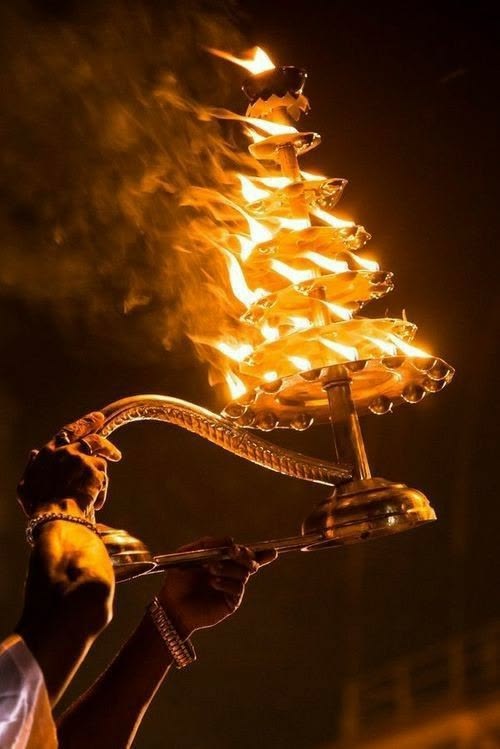
The Nageshwarnath temple (नागेश्वरनाथ) is Ayodhya's ancient presiding Shiva shrine, at Ram ki Paidi on the banks of the Saryu, said to have been established by Kush, the son of Lord Rama. In a city given to Rama, it is the great centre of Shiva worship, coming alive above all at Maha Shivratri, with its famous Shiva Baraat, and through the month of Sawan. varanasiayodhyatours.com plans the darshan and the Shiva festivals around it, on WhatsApp.
View Details
The Panchkroshi Yatra (पंचकोशी यात्रा) is the sacred parikrama around the whole of Kashi: an 88 km circuit that begins and ends at Manikarnika, with five padavs (halts), Kardameshwar, Bhimchandi, Rameshwar, Shivpur and Kapildhara, and 108 Shiva shrines along the way. Traditionally walked over five days, it is done today either on foot with dharamshala halts or in a single day by vehicle. varanasiayodhyatours.com plans both versions, the sankalp, the route and the pace, on WhatsApp.
View Details