
3 nights / 4 days
Pilgrimage
₹37,000
Starting From


Senior Citizen Kashi Ayodhya Yatra
Varanasi, Prayagraj & Ayodhya (Elders)|Pilgrimage
One City A Day Pace
Lift-Access Rooms
Daily Family WhatsApp
A 40-year guide to Faizabad's Nawabi heritage near Ayodhya, Gulab Bari, the Bahu Begum Ka Maqbara, Moti Mahal and the Company Garden.
Drop your details and we'll craft a personalized spiritual package.
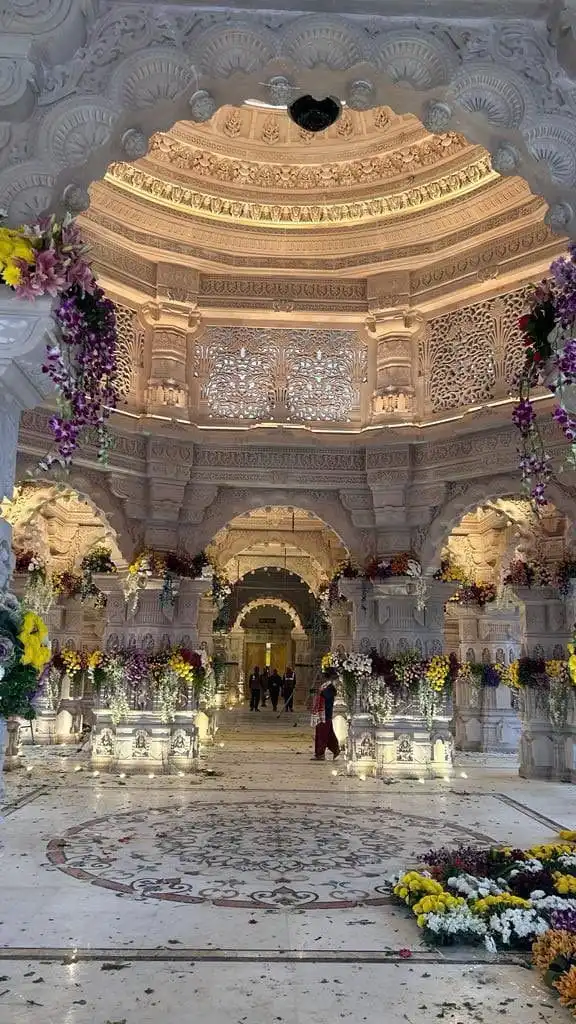
Home to the Ram Janmabhoomi temple, Hanuman Garhi, and Dashrath Mahal. The Saryu aarti at sunset is quieter than Varanasi's,it moves people who expected only the Ram Mandir to remember it most.
Faizabad, now officially part of the Ayodhya district, was the first capital of the Awadh (Oudh) Nawabs before Lucknow, and it keeps their elegant tombs, gardens and palaces. Visiting them gives a completely different texture from Ayodhya's temples: Indo-Islamic architecture, rose gardens and river-cooled afternoons, and a fuller picture of the region's layered history.
Gulab Bari, the Garden of Roses, is the tomb of Nawab Shuja-ud-Daula set within a charming garden of roses and fountains. Its carved twin-fish gateway, the emblem of Awadh, is a highlight. It is a peaceful, fragrant stop and one of Faizabad's most loved monuments.
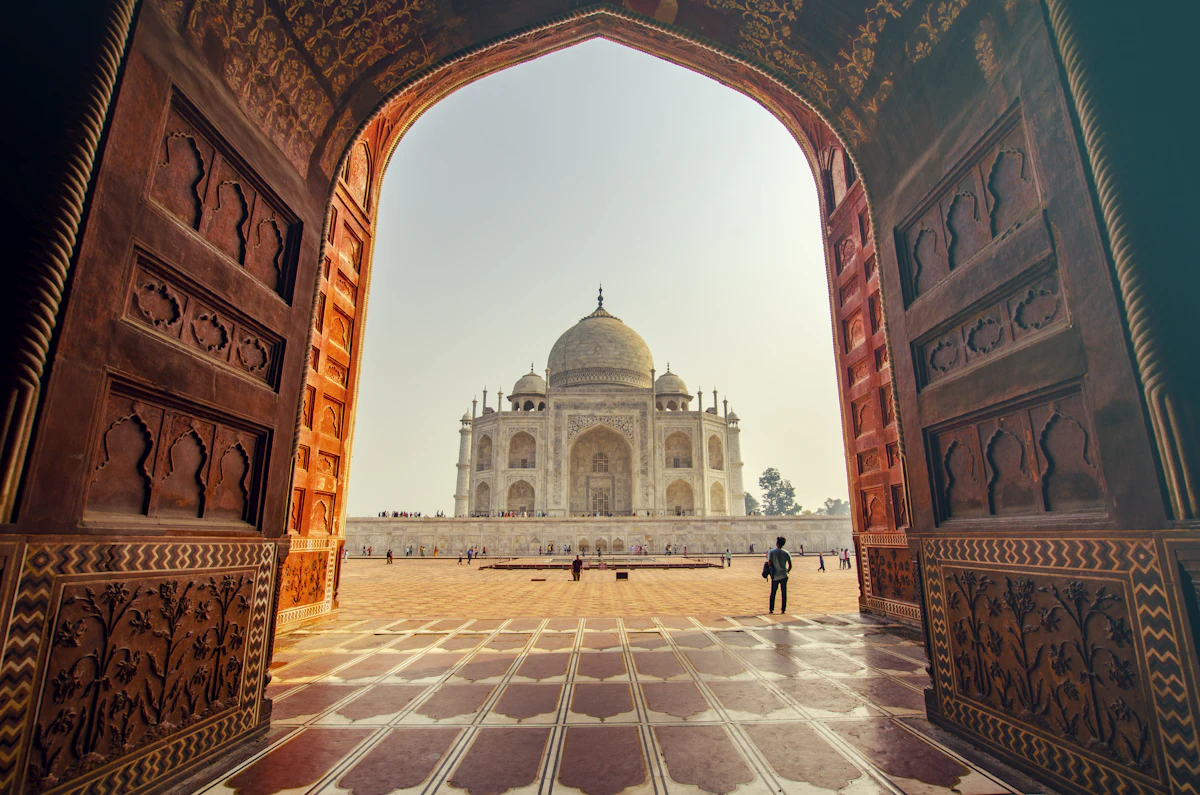
The Bahu Begum Ka Maqbara is the tomb of Bahu Begum, a queen of Awadh, and is often called the Taj Mahal of the East. The tallest monument in Faizabad, its elegant dome rewards a climb for sweeping city views. It is the architectural high point of the Faizabad trail.
Moti Mahal, an 18th-century Nawabi palace (traditionally dated to 1743), adds to the heritage trail for those who want more. The Company Garden, a colonial-era public garden, offers greenery and a leisurely pause, and pairs naturally with nearby Guptar Ghat on the same side of the river.
The monuments sit about 8 to 11 km from Ram Mandir and are reachable by car or auto, with their own timings and modest fees at some sites. They suit a second-day afternoon, ideally paired with Guptar Ghat. See the full Ayodhya guide and the two-day itinerary, or explore our packages. Message me, Rajeev, on WhatsApp at +91 7302265809.
Curated itineraries featuring this divine destination.









Grouped for quick scanning
Everything you need to know about Faizabad Heritage.
Topic 01
8 questions
Faizabad is Ayodhya's twin city, now part of the Ayodhya district, and the first capital of the Awadh Nawabs before Lucknow. It holds the region's Nawabi-era monuments: tombs, gardens and palaces, a complete change of texture from Ayodhya's temples.
Ayodhya is the ancient temple city and Rama's birthplace, while Faizabad is the adjoining Nawabi city, the former capital of Awadh, with Indo-Islamic monuments. They are part of the same district and a short drive apart.
For a complete change of texture from the temples: elegant Nawabi tombs, rose gardens and palaces, and a fuller picture of the region's layered history. It is a cool, leisurely contrast on a second day.
Gulab Bari, the rose-garden tomb of Nawab Shuja-ud-Daula; the Bahu Begum Ka Maqbara, called the Taj Mahal of the East; Moti Mahal, an 18th-century palace; and the Company Garden.
Yes, Faizabad was the first capital of the Awadh, or Oudh, Nawabs before the seat moved to Lucknow. Its monuments date from that era of Nawabi rule.
The Awadh Nawabs were the rulers of the Oudh region in the 18th and 19th centuries, known for their refined culture and architecture. Their early capital was Faizabad, which keeps their tombs and palaces.
Yes, for travellers who enjoy heritage. Its Nawabi monuments give an elegant, restful counterpoint to the temple circuit and round out the region's history.
Yes, Faizabad was officially merged into the Ayodhya district, so the Nawabi monuments are administratively part of greater Ayodhya, a short drive from the temples.
Topic 02
7 questions
Gulab Bari, the Garden of Roses, is the tomb of Nawab Shuja-ud-Daula in Faizabad, set within a garden of roses and fountains. Its carved twin-fish gateway, the emblem of Awadh, is a highlight.
It is the tomb of Nawab Shuja-ud-Daula, a ruler of Awadh, set within a rose garden. The name Gulab Bari means Garden of Roses.
For its setting among roses and fountains and its carved twin-fish gateway, the emblem of Awadh. It is one of Faizabad's most loved and peaceful monuments.
The twin fish are the royal emblem of Awadh, carved on the gateway of Gulab Bari. The motif appears across Awadhi architecture and is a distinctive feature here.
It is generally open through the day, with any modest fee and exact hours to confirm locally. Mornings and late afternoons are pleasant for the garden.
There may be a small entry fee, which varies, so confirm locally. The garden setting makes it a worthwhile, peaceful stop on the Faizabad trail.
Yes, the open rose garden and fountains make it an easy, pleasant stop for families, a calm break from the temple circuit.
Topic 03
8 questions
It is the tomb of Bahu Begum, a queen of Awadh, in Faizabad, often called the Taj Mahal of the East. The tallest monument in Faizabad, its elegant dome rewards a climb for sweeping city views.
For its elegant Indo-Islamic architecture and graceful dome, which earn it the nickname. It is the architectural high point of the Faizabad heritage trail.
Bahu Begum was a queen of Awadh, and her grand tomb is among Faizabad's finest monuments. The maqbara was built in her memory.
Yes, you can climb for sweeping views over Faizabad, as it is the tallest monument in the city. The views are the reward for the climb.
It is generally open through the day, with any fee and exact hours to confirm locally. Late afternoon is good for the climb and the views.
Moti Mahal is an 18th-century Nawabi palace, traditionally dated to 1743, adding to the Faizabad heritage trail for those who want more of the Nawabi architecture.
For heritage lovers, yes, as part of a fuller Faizabad trail alongside Gulab Bari and the Bahu Begum Ka Maqbara. Casual visitors may prioritise the two headline monuments.
The Company Garden is a colonial-era public garden in Faizabad, offering greenery and a leisurely pause. It pairs naturally with nearby Guptar Ghat on the same side of the river.
Topic 04
8 questions
About 8 to 11 km, a short drive on the Faizabad side. They suit a second-day afternoon, ideally paired with Guptar Ghat.
By car or auto, since they are 8 to 11 km from the temple and spread across Faizabad. A vehicle and a planned route make the trail efficient.
Yes, unlike the inner temple lanes, the Faizabad monuments are reachable by car and auto, with parking at the sites.
Some sites may charge a modest fee, which varies, so confirm locally. The Company Garden and gardens are generally low-cost or free.
They are generally open through the day with their own hours, which vary by site. Confirm locally, and plan a late-morning or afternoon visit.
The gardens and grounds are largely accessible, while the climb at the Bahu Begum Ka Maqbara is not. Tell us your needs and we prioritise the accessible parts.
Yes, with a vehicle between them and the gardens for easy strolling. The maqbara climb is optional, so elders can enjoy the views from below.
Yes, photography is generally welcome at these heritage sites and gardens, which are very photogenic. Follow any site-specific signage.
Topic 05
19 questions
The second day. The monuments sit 8 to 11 km out on the Faizabad side, away from the first-day temple circuit, and pair well with Guptar Ghat for a relaxed afternoon.
Yes, ideally. Both sit on the Faizabad side of the river, so a second-day plan linking Gulab Bari and the Bahu Begum Ka Maqbara with Guptar Ghat at sunset flows naturally.
Allow a half day to cover Gulab Bari, the Bahu Begum Ka Maqbara and the Company Garden comfortably, adding Moti Mahal for a fuller trail. A vehicle keeps it efficient.
October to March for mild weather, with late afternoons pleasant for the gardens and the maqbara views. Avoid the April to June midday heat in the open monuments.
They are generally calmer than the Ayodhya temples, a quiet, elegant contrast. They are busier on weekends and holidays but rarely overwhelming.
A guide adds the Nawabi history and the stories behind the tombs and gardens, and sequences the trail efficiently with Guptar Ghat. It enriches what can otherwise be a quiet wander.
Yes, foreigners are welcome at these heritage monuments and gardens, which are an accessible, restful contrast to the temples. Dress comfortably and respectfully.
Yes, the gardens, the climb at the maqbara and the open spaces make them an easy, enjoyable heritage outing for families, away from temple queues.
Because they reveal the region's layered history beyond the Ramayana, in elegant Indo-Islamic tombs and gardens. They give a restful, cultured contrast that rounds out an Ayodhya visit.
We add a second-day afternoon trail of Gulab Bari, the Bahu Begum Ka Maqbara and the Company Garden, paired with Guptar Ghat at sunset. See our Ayodhya packages, or message me, Rajeev, on WhatsApp at +91 7302265809.
Faizabad district was officially renamed and reorganised as Ayodhya district, bringing the Nawabi city and the temple city under one name. The Faizabad monuments are now administratively part of greater Ayodhya.
The twin fish, the Mahi Maratib, was a royal honour and the emblem of the Awadh Nawabs, seen on gateways and monuments like Gulab Bari. It is a signature motif of Awadhi heritage in the region.
Shuja-ud-Daula was a Nawab of Awadh in the 18th century, whose tomb is at Gulab Bari in Faizabad. His era shaped the citys Nawabi architecture and culture.
They share the Awadhi Nawabi style, since Faizabad was the early capital before Lucknow. Faizabads monuments are quieter and less visited, a more restful version of the same heritage.
Yes, the Faizabad side has eateries serving Awadhi vegetarian fare, a nice pairing with a heritage afternoon. As across Ayodhya, choose busy, clean places and bottled water.
The domed Bahu Begum Ka Maqbara, especially from its height for city views, and the rose garden and twin-fish gateway at Gulab Bari. Late afternoon light suits both.
It earns the nickname Taj Mahal of the East for its elegant dome and Indo-Islamic design, though it is smaller and quieter than the Taj. It is the architectural high point of Faizabad.
They are recognised heritage monuments maintained as such, with visitor access and modest fees at some. Confirm current arrangements locally, as upkeep and timings can change.
As a second-day afternoon trail, after the temple circuit on Day 1. Pair Gulab Bari and the Bahu Begum Ka Maqbara with Guptar Ghat at sunset for a restful, scenic close to the trip.
Still have a question?
Message Rajeev on WhatsApp