
3 nights / 4 days
Pilgrimage
₹37,000
Starting From


Senior Citizen Kashi Ayodhya Yatra
Varanasi, Prayagraj & Ayodhya (Elders)|Pilgrimage
One City A Day Pace
Lift-Access Rooms
Daily Family WhatsApp
A complete 40-year guide to the New Vishwanath Temple (Birla Temple) at Banaras Hindu University, including history, shikhara tower details, timings, and campus access.
Drop your details and we'll craft a personalized spiritual package.
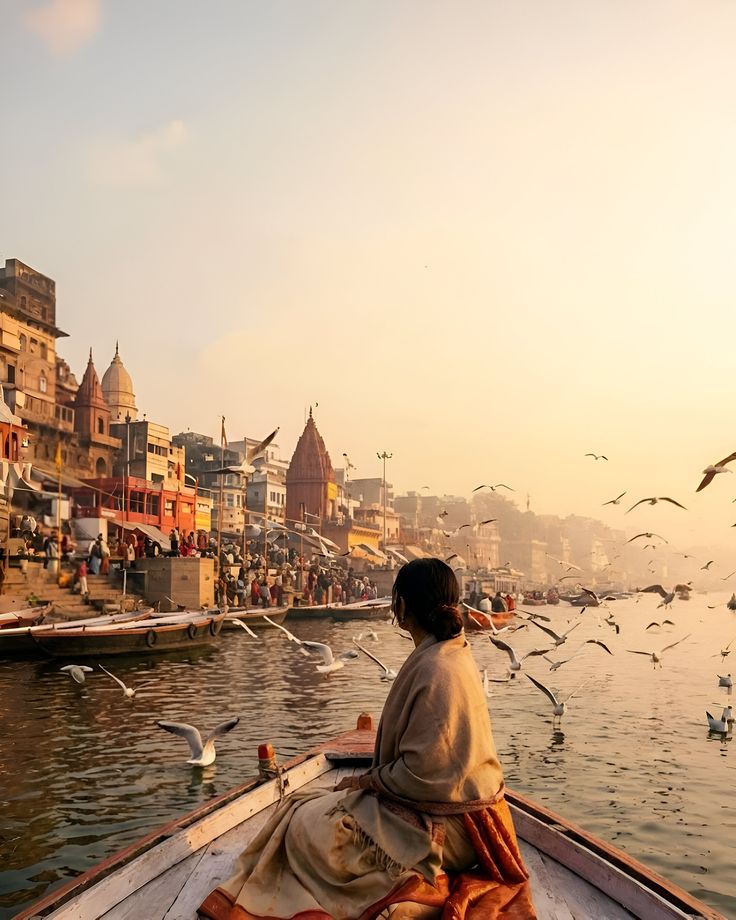
The Kashi Vishwanath Temple, the Dashashwamedh Ganga Aarti, a sunrise boat ride past the 80-plus ghats, and Sarnath, where the Buddha gave his first sermon
The New Vishwanath Temple, known to many as the Birla Temple and colloquially as VT, stands within the campus of Banaras Hindu University. Dedicated principally to Shiva as Vishwanath, it was built as a replica of the original Kashi Vishwanath Temple, to give devotees a grand temple in the spirit of the much-destroyed and rebuilt original. Made almost entirely of marble, set among trees and lawns, it is one of Varanasi's most serene and spacious temples, open to people of every caste, religion and belief.
The temple was the vision of Pandit Madan Mohan Malaviya, the great educationist, freedom fighter and founder of BHU, who, after establishing the university in 1916, wished to build a grand Vishwanath temple within the campus. The foundation was laid in March 1931. The Birla family, the leading industrialists of the day, undertook and funded the construction, with Jugal Kishore Birla pledging that funds would never fall short. Malaviya did not live to see it finished. The sanctum was consecrated in 1958, and the temple, with its towering spire, was completed in 1966, after roughly 35 years of work. An idol of Malaviya stands at the entrance.
This is an important point of clarity. The New Vishwanath Temple is a replica, inspired by and modelled on the original Kashi Vishwanath Temple, and its sanctum houses a Shiva lingam consecrated in 1958. It is not the original Jyotirlinga, which remains at the Kashi Vishwanath Temple in the old city by the Ganga. Pilgrims who wish to have darshan of the Jyotirlinga itself should visit the original temple; see our Kashi Vishwanath darshan guide. The BHU temple is a place of worship and reflection in its own right, with its own serene character.
The temple is built almost entirely of gleaming white marble in the Nagara, North Indian, style, modelled on the original Kashi Vishwanath. It stands about 77 metres, roughly 250 feet, tall, with a shikhara that is among the tallest temple towers anywhere, often described as the tallest in the world and taller than Delhi's Qutub Minar. The structure is richly detailed, with carved balconies, pavilions, spires and tall pillars, and sculptures of bulls, lions and other animals around the grounds. A Yashrashala stands on the northern side and a Vishram Shaala, a resting place for devotees, on the southern side. The tree-lined approach adds to its beauty.
The temple's most distinctive feature is its walls. The entire text of the Bhagavad Gita, along with extracts from other sacred Hindu scriptures, is inscribed, with illustrations, on the inner marble walls of the temple. Reading the verses as you move through the cool marble interior is a meditative experience unlike any other temple in the city, and it reflects Malaviya's vision of the temple as a place of learning as much as worship, fitting for its setting in a great university.
Though dedicated principally to Shiva, the temple holds nine shrines within one structure:
This allows devotees to pay their respects to many deities in one visit, and the symbolism of the whole is held to express the Hindu cosmos and the values of Dharma, Artha, Kama, Moksha and Karma.
The New Vishwanath Temple offers something the intense, crowded old-city temples cannot: calm. Set among the green, spacious BHU campus, with its marble halls and tree-lined paths, it is quiet, uncrowded and contemplative, a place to sit, read the Gita on the walls, and forget the bustle of the city. It is open to people of all faiths, castes and beliefs, reflecting Malaviya's inclusive vision, and it is as much a cultural and architectural landmark as a place of worship. For many visitors it is the most peaceful temple experience in Varanasi.
Visitor timings and daily schedules
Mahashivratri (February or March): the great night of Shiva, the temple's biggest occasion, beautifully lit, with very large crowds and long queues. Navratri, Janmashtami, Diwali and the Shravan period: celebrated with decoration and special worship. The temple foundation day: marked each year. Mondays: Rudrabhishek, the ritual bathing of the lingam, as Monday is Shiva's special day.
The temple is inside the BHU campus, about 1.7 km from the main gate, in southern Varanasi. It is roughly 3 km from Durga Kund, near Assi Ghat, and about 7 km from the old-city Kashi Vishwanath, with the railway stations and airport further out. Within the campus, BHU runs a free bus service, and e-rickshaws and autos reach the temple for a small fare. See how to reach Varanasi.
We are Experience My India, rated 4.5 stars on TripAdvisor and Google, with 50,000+ guests served since 2018. We pair the calm of the New Vishwanath Temple with the nearby Durga Kund, Tulsi Manas and Sankat Mochan temples and Assi Ghat, with a guide who explains the Malaviya story and the Gita on the walls, and for South Indian pilgrims everything in Telugu or Kannada. See our Varanasi packages or message Rajeev's team on WhatsApp at +91 7302265809. Plan your days with our Varanasi itinerary.
Curated itineraries featuring this divine destination.






Grouped for quick scanning
Everything you need to know about New Vishwanath Temple (BHU).
Topic 01
8 questions
It is a serene marble temple on the Banaras Hindu University campus, dedicated principally to Shiva and built as a replica of the original Kashi Vishwanath Temple. Conceived by Madan Mohan Malaviya and built by the Birla family between 1931 and 1966, it is famous for its tall marble tower, the Bhagavad Gita inscribed on its walls, and its calm, all-faiths welcome.
It is called the Birla Temple because the Birla family, the leading industrialists of the day, undertook and funded its construction, fulfilling Madan Mohan Malaviya's vision of a grand Vishwanath temple in the BHU campus. The name honours their patronage. The temple is also called the New Vishwanath Temple, Shri Vishwanath Mandir and, colloquially, VT.
It is called the New Vishwanath Temple because it was built in the 20th century as a modern counterpart and replica of the ancient Kashi Vishwanath Temple, dedicated to the same form of Shiva, Vishwanath. The word "new" distinguishes it from the original old-city temple. It is also known as the Birla Temple after its patrons and, locally, as VT.
VT is the colloquial acronym for Vishwanath Temple, the name by which students and locals often refer to the New Vishwanath Temple on the BHU campus. It is one of several names for the same temple, alongside Birla Temple, New Vishwanath Temple and Shri Vishwanath Mandir. All refer to the marble temple inside Banaras Hindu University.
Yes, the New Vishwanath Temple stands inside the campus of Banaras Hindu University, about 1.7 km from the main gate, set among the university's lawns and trees. It is under the direct administration of BHU. Its location within a great seat of learning is part of its character, reflecting Malaviya's vision of uniting education and spirituality.
The temple is dedicated principally to Shiva, in his form as Vishwanath, the lord of the universe, with a Shiva lingam in the ground-floor sanctum. It also holds eight other shrines to deities including Durga, Lakshmi Narayan, Nataraj, Parvati, Ganesha, Hanuman and Saraswati, making nine shrines in one temple. Shiva, however, is the central deity.
Yes, a defining feature of the New Vishwanath Temple is that it is open to people of all castes, religions and beliefs, reflecting the inclusive vision of Madan Mohan Malaviya. Everyone is welcome to enter and experience its architecture and atmosphere. This openness, set within a university, is part of what makes the temple distinctive among Varanasi's shrines.
The New Vishwanath Temple is a replica of, and inspired by, the original Kashi Vishwanath Temple in the old city, built to give devotees a grand temple in the spirit of the original, which was repeatedly destroyed and rebuilt over the centuries. It shares a similar architectural spirit while being a 20th-century marble structure with its own serene character.
Topic 02
8 questions
It was conceived by Pandit Madan Mohan Malaviya, the founder of BHU, and built and funded by the Birla family of industrialists, which is why it is also called the Birla Temple. The foundation was laid in 1931 and the temple completed in 1966. Malaviya envisioned it; the Birlas brought it to completion over some 35 years.
Pandit Madan Mohan Malaviya, the great educationist, freedom fighter and founder of Banaras Hindu University, conceived the temple, wishing to build a grand Vishwanath temple within the campus after founding the university in 1916. The Birla family then undertook its construction. An idol of Malaviya stands at the temple entrance in recognition of his vision.
Malaviya envisioned a grand Vishwanath temple within his university, uniting spirituality with education, and giving devotees a temple in the spirit of the much-destroyed original Kashi Vishwanath. The inscription of the Bhagavad Gita on the walls and the temple's openness to all faiths reflect this vision of learning and inclusiveness. It was to be a place of both worship and reflection.
The foundation of the New Vishwanath Temple was laid in March 1931. Construction then continued for decades, funded by the Birla family. The sanctum was consecrated in 1958, and the temple with its towering spire was completed in 1966. The long span reflects the scale and detail of the marble structure.
The temple was completed in 1966, after roughly 35 years of construction, when the spire was finished, topped with white marble and a golden kalash. The sanctum had been consecrated earlier, in 1958. Malaviya, who conceived it, had passed away before its completion. The finished temple stands as a fulfilment of his vision.
The temple's scale, its near-entirely marble construction, the towering shikhara, the nine shrines and the detailed inscription of the Bhagavad Gita and scriptures on the walls all made it a vast undertaking spanning decades, from the 1931 foundation to the 1966 completion. The sanctum was consecrated along the way in 1958. Such craftsmanship simply took time.
The Birla family, leading industrialists, undertook and funded the entire construction of the temple, fulfilling Malaviya's vision, with Jugal Kishore Birla assuring that funds would never fall short. Their patronage is why the temple is popularly called the Birla Temple. They are remembered for many such temples across India, of which this is among the most celebrated.
Yes, an idol of Pandit Madan Mohan Malaviya, the founder of BHU who conceived the temple, is installed within the temple premises at the entrance. It honours the visionary behind the temple. Seeing it at the entry is a fitting reminder of the man who united this seat of learning with this place of worship in his lifetime's work.
Topic 03
4 questions
No. The New Vishwanath Temple is a replica, modelled on the original, and its sanctum houses a Shiva lingam consecrated in 1958. It is not the original Jyotirlinga, which remains at the Kashi Vishwanath Temple in the old city by the Ganga. Pilgrims wishing to have darshan of the Jyotirlinga itself should visit the original temple.
No, they are different temples. The original Kashi Vishwanath, with the Jyotirlinga, is in the old city by the Ganga and is intensely busy. The BHU temple is a 20th-century marble replica on the university campus, calm and uncrowded. Many pilgrims visit both: the original for the Jyotirlinga darshan, the BHU temple for its serenity and architecture.
The ground-floor sanctum houses a Shiva lingam, consecrated in 1958, around which the temple is built. It is a place of worship of Shiva as Vishwanath, in the spirit of the original, rather than the original Jyotirlinga itself. The temple also holds eight further shrines to other deities, making nine shrines within the one structure.
Malaviya wished to give devotees a grand Vishwanath temple in the spirit of the original Kashi Vishwanath, which had been repeatedly destroyed and rebuilt over the centuries, and to place such a temple within his university as a union of faith and learning. The replica offered a serene, spacious setting for worship, complementing rather than replacing the ancient original.
Topic 04
8 questions
The temple is built almost entirely of gleaming white marble, which gives it its luminous, majestic appearance and its cool interior. It is constructed in the Nagara, North Indian, architectural style, modelled on the original Kashi Vishwanath. The marble walls also carry the inscribed Bhagavad Gita. The marble construction is central to the temple's serene, elegant character.
The shikhara, or tower, stands about 77 metres, roughly 250 feet, tall, making it one of the tallest temple towers anywhere. It is often described as the tallest temple tower in the world and is taller than Delhi's Qutub Minar. The towering marble spire is visible across the BHU campus and is one of the temple's defining features.
It is frequently described as having the tallest temple tower in the world, at about 77 metres, and it is certainly among the tallest, taller than the Qutub Minar. Such superlative claims are hard to verify definitively and depend on how one measures, so we present it as widely reputed rather than as a settled fact. Either way, it is strikingly tall.
Yes, at about 77 metres the temple's tower is commonly said to be taller than Delhi's Qutub Minar, which is around 73 metres. This comparison is often cited to convey the impressive height of the shikhara. The marble tower dominates the BHU campus skyline and is visible from a distance, a landmark of southern Varanasi.
The temple is built in the Nagara, North Indian, style, in a modern interpretation, modelled on the original Kashi Vishwanath Temple. It features a tall curved shikhara, carved balconies, pavilions, tall pillars and a decorated hall, with animal sculptures around the grounds. The near-entirely marble construction gives this traditional style a luminous, contemporary grandeur. It is considered a fine example of 20th-century temple architecture.
The temple holds nine shrines within one structure: the main Shiva shrine on the ground floor, Lakshmi Narayan and Durga on the first floor, and shrines to Nataraj, Parvati, Ganesha, Panchmukhi Mahadev, Hanuman, Saraswati and Nandi. This lets devotees honour many deities in one visit. The arrangement is held to symbolise the wholeness of the Hindu cosmos.
The entire text of the Bhagavad Gita, along with extracts from other sacred Hindu scriptures, is inscribed with illustrations on the inner marble walls of the temple. Reading the verses as you move through the cool marble interior is a meditative experience. This feature reflects Malaviya's vision of the temple as a place of learning as well as worship.
The Yashrashala is a dedicated space on the northern side of the temple, and the Vishram Shaala is a resting place for devotees on the southern side. Together they add to the comfort and convenience of visitors. Along with the tree-lined approach and the spacious grounds, they are part of what makes a visit here calm and unhurried compared with the old-city temples.
Topic 05
6 questions
For its serenity, its architecture and its uniqueness. It offers a calm, uncrowded, contemplative temple experience amid the green BHU campus, with a towering marble shikhara and the entire Bhagavad Gita on its walls. It is open to all faiths and is as much a cultural landmark as a place of worship. For many visitors it is the most peaceful temple experience in Varanasi.
Generally no, it is one of the calmer and less crowded temples in Varanasi, set in the spacious BHU campus, which is a large part of its appeal. The notable exception is Mahashivratri, when crowds and queues are very large. On most days it offers a peaceful, unhurried visit, in welcome contrast to the intense old-city temples.
Yes, very much so. Its marble halls, tree-lined approach and spacious campus setting make it one of the most peaceful and contemplative temples in the city, a place to sit quietly, read the Gita on the walls and reflect. This calm is its defining quality, and it is exactly why we send guests here who want a respite from the city's bustle.
The original Kashi Vishwanath, in the old city by the Ganga, holds the Jyotirlinga and is intensely busy, with narrow lanes and queues. The BHU temple is a 20th-century marble replica on a spacious campus, calm and uncrowded, with the Gita on its walls. One is the ancient Jyotirlinga; the other a serene modern landmark. Many pilgrims visit both.
The path to the temple is lined with dense trees, making for a beautiful, shaded walk with uninterrupted views of the marble architecture rising ahead. The spacious, green campus setting is part of the experience, quite unlike the crowded lanes of the old city. The tree-lined approach sets the calm, contemplative mood before you even reach the temple.
The temple represents the union of spirituality and learning that defined Madan Mohan Malaviya's vision, set as it is within his university. Its openness to all faiths, the Bhagavad Gita on its walls, and its symbolism, held to express the Hindu cosmos and the values of Dharma, Artha, Kama, Moksha and Karma, all reflect ideals of devotion, knowledge and inclusiveness.
Topic 06
12 questions
The temple is commonly open from about 4:00 AM to 12:00 PM and 1:00 to 9:00 PM daily, with a midday break, though sources differ and timings can change on festivals. Confirm locally before your visit. For a calm experience, come mid-morning or in the late afternoon, avoiding the midday break and the Mahashivratri crowds.
Morning and evening aartis are performed daily. Be aware that some online listings give an elaborate five-aarti schedule that appears to describe the original Kashi Vishwanath Temple rather than this one, so treat detailed aarti times with caution and confirm at the temple. The simplest course is to ask at the temple for the current day's schedule.
Yes, by most accounts the temple closes for a midday break, commonly around noon to 1:00 PM, reopening for the afternoon and evening. As exact timings vary by source, it is best to plan your visit for the morning or the late afternoon and confirm locally. Avoiding the midday closure ensures you are not turned away on arrival.
Mid-morning or late afternoon, in the cool months of October to March, is ideal for a calm, comfortable visit, with November to February the most pleasant. Avoid the midday break. Mahashivratri is special but extremely crowded. The temple's peaceful character is best enjoyed on an ordinary day, when you can take your time with the architecture and the Gita on the walls.
No, entry is free for all devotees and visitors, of every faith. Carry a little cash for any offerings or prasad. The temple's openness and free entry reflect Malaviya's inclusive vision. Note that you must remove your footwear at the entrance, and a pair of socks is wise, as the marble floor can be very cold underfoot.
On Mondays, Shiva's special day, devotees participate in Rudrabhishek, the ritual bathing of the Shiva lingam with offerings such as milk, honey, fruit and water. Mondays therefore see more devotional activity and somewhat larger crowds. If you wish to witness or take part in the Rudrabhishek, a Monday visit is the time, ideally arranged in advance.
Mahashivratri, the great night of Shiva in February or March, is the temple's biggest occasion, when it is beautifully lit with lamps and draws very large crowds, with queues that can take hours. [VERIFY date.] It is a powerful time to visit but requires patience. For a calm experience of the temple, choose an ordinary day rather than the festival.
Photography is generally restricted inside the sanctum, as at most temples, though the marble exterior and the grounds are usually fine to photograph. [VERIFY current rules.] Follow the temple's guidance and avoid photographing during rituals. The tree-lined approach and the towering marble shikhara are the most photogenic spots, from outside the sanctum.
It is inside the Banaras Hindu University campus, about 1.7 km from the main gate, in southern Varanasi. It is roughly 3 km from Durga Kund, near Assi Ghat, and about 7 km from the old-city Kashi Vishwanath, with the railway stations and airport further out. Its setting within the green campus is part of its peaceful character.
Take an auto, e-rickshaw or cab to the BHU main gate, then use the BHU free campus bus service, or an e-rickshaw or auto for a small fare, to reach the temple about 1.7 km inside. From Assi Ghat it is close by. We arrange a vehicle and guide who take you to the temple and cluster it with the nearby Durga Kund, Tulsi Manas and Sankat Mochan temples.
The temple is near Durga Kund, Tulsi Manas Mandir and Sankat Mochan, all a short ride away, and close to Assi Ghat. The BHU campus itself, with the Bharat Kala Bhavan museum, is worth exploring. These are naturally visited together in a southern-Varanasi circuit, which is exactly how we sequence them, pairing the temples with Assi for a boat and aarti.
Yes. We pair the calm of the New Vishwanath Temple with the nearby Durga Kund, Tulsi Manas and Sankat Mochan temples and Assi Ghat, with a guide who explains the Malaviya story and the Gita on the walls, and a car that waits at each stop. For South Indian pilgrims, everything is in Telugu or Kannada. Message us on WhatsApp at +91 7302265809.
Topic 07
7 questions
Budget about 45 minutes to an hour to take in the temple, read some of the Gita on the walls, visit the nine shrines and enjoy the grounds, more if you wish to sit quietly. Its calm makes it a temple to linger in rather than rush. Clustered with Durga Kund and Sankat Mochan nearby, it fits well into a southern-Varanasi half-day.
It is a good idea. You must remove your footwear at the entrance, and the marble floor can be very cold underfoot, especially in winter. A pair of socks makes walking through the cool marble interior much more comfortable while you read the Gita on the walls and visit the shrines. It is a small thing that noticeably improves the visit.
Yes, very much so. Its calm, spacious, level marble halls and grounds make it one of the easier and more pleasant temples to visit for families, children and elderly pilgrims, without the crush of the old-city lanes. The tree-lined approach and resting areas add to the comfort. For mobility needs, a vehicle can bring you close to the temple within the campus.
Yes, and it is worth doing. The Banaras Hindu University campus is one of Asia's largest residential universities, green and spacious, and the Bharat Kala Bhavan museum on campus holds a fine collection of art and artefacts. Combining the temple with a campus visit makes for a calm, cultural half-day, a contrast to the intensity of the riverfront and old city.
Yes. The temple is close to Assi Ghat, so a natural plan pairs the New Vishwanath Temple and the nearby Durga Kund, Tulsi Manas and Sankat Mochan with a sunrise boat or the Subah-e-Banaras dawn programme at Assi. The southern part of the city groups together neatly. We sequence the temples and the ghat into one smooth, unhurried itinerary.
Yes, the BHU campus and its surroundings have eateries and stalls, including a well-known spot outside the temple serving cold coffee topped with ice cream, and bhel puri stalls, both local favourites. Note that eateries on and around the campus tend to close by about 11 PM. A guide can point you to the best of the campus snacks after your visit.
That it offers a calm, all-faiths Shiva temple experience and a chance to read the Bhagavad Gita inscribed on the walls, a peaceful complement to the intense old-city Kashi Vishwanath. It sits near Assi Ghat and the southern temple cluster. A guide who explains the Malaviya story and the symbolism in Telugu or Kannada makes the visit richer. We arrange exactly this.
Still have a question?
Message Rajeev on WhatsApp