3 nights / 4 days
Pilgrimage
₹37,000
Starting From


Senior Citizen Kashi Ayodhya Yatra
Varanasi, Prayagraj & Ayodhya (Elders)|Pilgrimage
One City A Day Pace
Lift-Access Rooms
Daily Family WhatsApp
A 40-year guide to Mani Parvat, Ayodhya's hillock of the Sanjeevani legend, with shrines, Buddhist stupa remains, city views and a short climb worth taking.
Drop your details and we'll craft a personalized spiritual package.
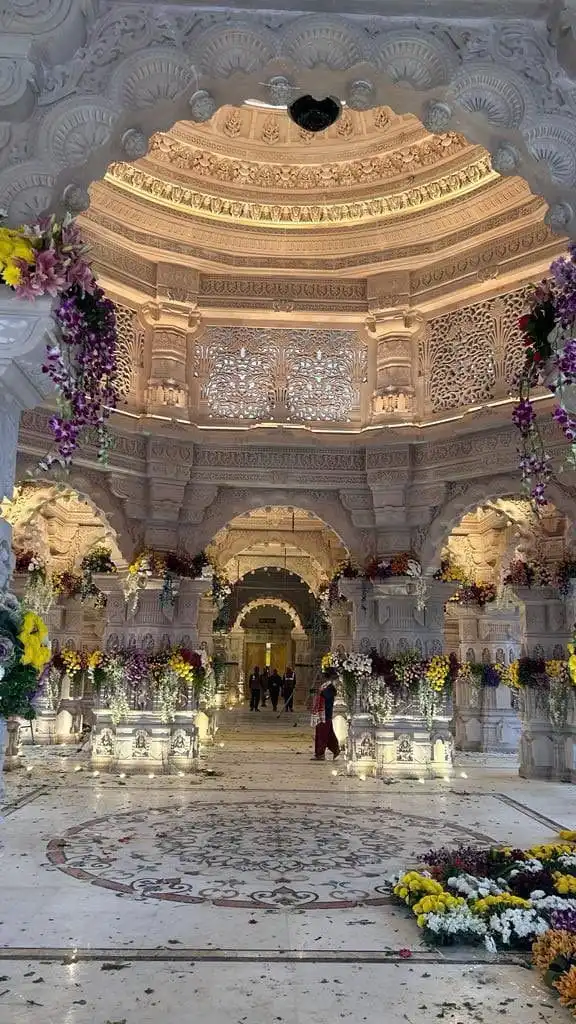
Home to the Ram Janmabhoomi temple, Hanuman Garhi, and Dashrath Mahal. The Saryu aarti at sunset is quieter than Varanasi's,it moves people who expected only the Ram Mandir to remember it most.
Mani Parvat is a small hillock, around 65 feet high, in the heart of Ayodhya. It carries two layers of history at once: the Ramayana's Sanjeevani legend, and an ancient Buddhist past, with the remains of a stupa attributed to Ashoka and an old monastery. Shrines sit on top, and the climb opens up the best panorama of Ayodhya, which is why it is both a pilgrimage and a viewpoint.
By tradition, Mani Parvat formed from a piece of the Sanjeevani mountain that Hanuman carried to revive Lakshman during the war, a fragment falling here. Separately, Ayodhya was the Buddhist city of Saketa, a centre of learning, and the Buddha is said to have preached at Mani Parvat, with a stupa attributed to Ashoka and ties to the accounts of the Chinese traveller Xuanzang. Few places hold the Ramayana and the Buddhist story so closely together.
Practical details for your visit
The shrines on the summit, the Buddhist stupa and monastery remains, and the panoramic views are the three reasons to climb. It is a fine photo point, especially at golden hour. The neighbouring Sugriv Parvat adds more archaeological and Buddhist interest for those who want to explore further.
From the ground: Mani Parvat is where I take people who say they have seen enough temples. Climb it in the late afternoon, look out over the rooftops to the river, and you understand the shape of the whole city. It is the one viewpoint in Ayodhya that puts everything else in place.
Mani Parvat sits about 2 km from Ram Mandir and pairs naturally with the adjacent Sugriv Parvat. It suits a second-day morning for the views, before heading to Guptar Ghat. See the full Ayodhya guide and the two-day itinerary.
Take an e-rickshaw for the 2 km from Ram Mandir. Want it timed for the best light and paired with Guptar Ghat? See our Ayodhya packages or message me, Rajeev, on WhatsApp at +91 7302265809.
Curated itineraries featuring this divine destination.






Grouped for quick scanning
Everything you need to know about Mani Parvat.
Topic 01
9 questions
Mani Parvat is a roughly 65-foot hillock in Ayodhya tied to the Ramayana's Sanjeevani legend, with shrines on top, ancient Buddhist stupa and monastery remains, and the best city views. It is about 2 km from Ram Mandir and takes a short climb. Entry is free.
It is famous for uniting two histories on one hill: the Ramayana's Sanjeevani legend and an ancient Buddhist past, with a stupa attributed to Ashoka. Add the finest panorama of Ayodhya, and it is both a pilgrimage and a viewpoint.
Tradition holds that when Hanuman carried the Sanjeevani mountain to revive Lakshman during the war, a piece of it fell here and became Mani Parvat. The hillock is revered as that fragment of the life-giving mountain.
About 65 feet, a small hillock rather than a true hill, with a short climb to the shrines and the viewpoint on top.
Parvat means hill or mountain, and the name links the hillock to the jewel-like Sanjeevani mountain of the legend. It marks the fragment of that mountain in Ayodhya.
Yes. Ayodhya was the Buddhist city of Saketa, and Mani Parvat holds the remains of a stupa attributed to Ashoka and an old monastery. The Buddha is said to have preached here, with ties to Xuanzang's accounts.
Tradition and old accounts hold that the Buddha preached at Mani Parvat, when Ayodhya was the learning centre of Saketa. The stupa and monastery remains reflect this Buddhist past.
It is the remains of an ancient stupa attributed to Emperor Ashoka, with traces of a monastery, marking Ayodhya's role as the Buddhist city of Saketa. It ties the hillock to a layer of history beyond the Ramayana.
Saketa was the ancient name for Ayodhya as a Buddhist learning centre, mentioned in Buddhist tradition and the accounts of travellers like Xuanzang. Mani Parvat's stupa remains are part of that legacy.
Topic 02
6 questions
Entry is free and the hillock is open through the day. It is best in the early morning or late afternoon for the light and the views. Verify any shrine-specific hours locally.
No, entry is free. It is an open hillock with shrines and viewpoints, so there is no ticket.
It is a short, manageable climb of a few minutes, suitable for most visitors. Take it slowly in the heat, and the reward is the best panorama of Ayodhya.
Only a few minutes to the top, plus time to enjoy the shrines and the view. Allow about 30 to 45 minutes for an unhurried visit.
Early morning or late afternoon, for cooler air and golden light over the city and the Saryu. It is a wonderful sunrise or sunset viewpoint.
Yes, they are the best in Ayodhya. From the top you see the city rooftops, the temples and the river, which makes sense of the whole layout in a single look.
Topic 03
6 questions
The summit shrines, the ancient Buddhist stupa and monastery remains, and panoramic views over Ayodhya and the Saryu. It is also a fine photo point at golden hour.
The short climb is manageable for many, with care, but those who find steps and slopes difficult may prefer to admire it from the base. Tell us your needs and we plan accordingly.
The climb to the summit makes full access difficult. Visitors with limited mobility can enjoy the base and surroundings, and we plan the day around what suits them.
Yes, very. The panorama of Ayodhya, the shrines and the stupa remains, and the golden-hour light make it one of the best photo spots in the city.
Yes, the short climb suits families, and children enjoy the views. Hold hands on the slope and carry water, especially in warmer months.
Dress modestly for the summit shrines, covering shoulders and knees, with comfortable shoes for the short climb. Carry a shawl if you are in Western clothes.
Topic 04
6 questions
About 2 km, a short e-rickshaw ride. It suits a second-day morning for the views before heading to Guptar Ghat or Faizabad.
Sugriv Parvat is an adjacent mound with archaeological and Buddhist interest, named for Sugriv of the Ramayana. It pairs naturally with Mani Parvat for those who want to explore further.
Yes, the two hillocks sit close together and are usually visited as a pair, combining the Sanjeevani and Buddhist stories with archaeological interest.
The second day, in the morning, when its views are at their best and the first-day temple circuit is already done. It opens the quieter, scenic side of Ayodhya.
Yes, it is a Day 2 morning highlight, often paired with Sugriv Parvat and followed by Guptar Ghat. See our day-by-day itinerary.
Sugriv Parvat next door, and Guptar Ghat and the Faizabad heritage sites later in the day. Together they make a relaxed second day away from the central crowds.
Topic 05
23 questions
Take an e-rickshaw for the 2 km from Ram Mandir. The short climb to the top begins at the base of the hillock.
Vehicles can approach the area, but the inner lanes suit e-rickshaws, and the summit is reached on foot up the short climb. Plan the last stretch accordingly.
Parking is available near the base in the wider area. Confirm arrangements locally, especially during festivals when the hillock is busier.
Yes, it is safe. Take care on the climb, wear good shoes, and keep children close near the edges at the top.
The central lanes within a short ride have pure-vegetarian eateries and sweet shops. Carry water for the climb, especially in warmer months.
Not strictly, but a guide brings out both the Sanjeevani legend and the Buddhist history of Saketa, which most visitors miss. It turns a viewpoint into a story.
Yes, foreigners are welcome, and the Buddhist heritage gives it special interest for many. Dress modestly for the shrines and take care on the climb.
It is generally calmer than the main temples, busier on festival days and at sunset for the views. Early morning is the most peaceful time.
Yes. For the best views in Ayodhya and the rare meeting of the Ramayana and Buddhist histories on one hill, the short climb is well worth it.
The panorama over the city and the Saryu, the summit shrines, and the ancient stupa remains. Time it for golden hour and bring a camera.
We add Mani Parvat as a second-day morning viewpoint, paired with Sugriv Parvat and Guptar Ghat. See our Ayodhya packages, or message me, Rajeev, on WhatsApp at +91 7302265809.
Ayodhya was the ancient Buddhist city of Saketa, a centre of learning visited by the Buddha and recorded by travellers like Xuanzang. Mani Parvats stupa and monastery remains are physical traces of that Buddhist past.
Xuanzang was a 7th-century Chinese pilgrim-traveller whose accounts describe Saketa, ancient Ayodhya, and its Buddhist monasteries and stupas. His writings help tie Mani Parvat to the citys Buddhist heritage.
Yes. Sravasti, a major Buddhist site with the Jetavana monastery, lies roughly 110 to 130 km away, making Ayodhya a stop for travellers on a wider Buddhist circuit alongside Mani Parvats remains.
No, they are two separate but adjacent hillocks. Mani Parvat carries the Sanjeevani and Buddhist stories and the best views, while Sugriv Parvat is a neighbouring mound with archaeological interest. They are usually visited together.
Yes, the summit gives a wonderful sunrise over the city and the Saryu, with mist in winter. Early morning is also the coolest and calmest time for the short climb.
Both. It has shrines on the summit and is revered for the Sanjeevani legend, while also being the finest viewpoint in Ayodhya. The stupa remains add a Buddhist heritage layer.
Through the Sanjeevani episode: Hanuman carried the life-giving mountain to revive Lakshman during the war against Ravana, and a fragment is said to have fallen here, forming Mani Parvat.
Remains attributed to an Ashokan stupa and an old monastery survive on and around the hillock, more as traces than a complete structure. A guide helps point them out among the shrines.
Kuber Tila, or Kuber Parvat, is another ancient mound within the wider Ayodhya complex, under development. It is one of several archaeological hillocks alongside Mani Parvat and Sugriv Parvat.
Yes. Its stupa remains pair well with Sravasti and the wider Buddhist trail for travellers interested in Saketas heritage. We can build a Buddhist-leaning circuit around Ayodhya on request.
October to March, for mild weather and clear views, with winter mornings offering mist and soft light. Avoid the April to June midday heat on the exposed climb.
Because after a day of darshan it offers something different: a short climb, fresh air, the best panorama in the city, and a quiet meeting of the Ramayana and Buddhist stories. It re-energises a trip.
Still have a question?
Message Rajeev on WhatsApp