3 nights / 4 days
Pilgrimage
₹37,000
Starting From


Senior Citizen Kashi Ayodhya Yatra
Varanasi, Prayagraj & Ayodhya (Elders)|Pilgrimage
One City A Day Pace
Lift-Access Rooms
Daily Family WhatsApp
A 40-year guide to Bharat Mata Mandir in Varanasi, the Mother India Temple holding a marble map instead of deities, timings, and how to reach.
Drop your details and we'll craft a personalized spiritual package.
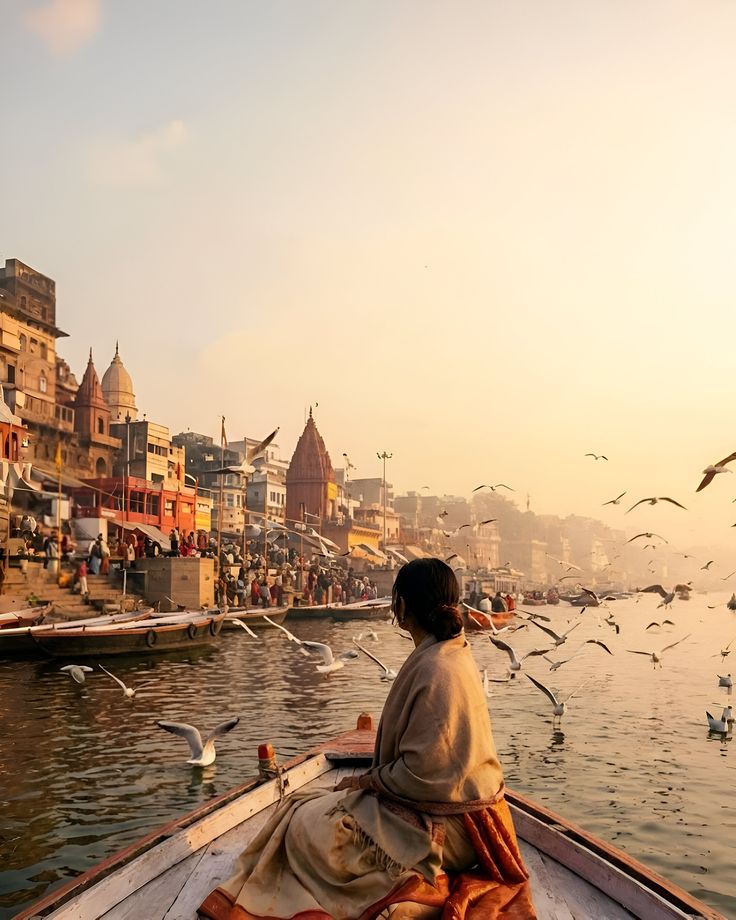
The Kashi Vishwanath Temple, the Dashashwamedh Ganga Aarti, a sunrise boat ride past the 80-plus ghats, and Sarnath, where the Buddha gave his first sermon
Bharat Mata Mandir, meaning the Mother India Temple, is unlike any other temple in Varanasi, or indeed in India. It holds no idol of a god or goddess. Instead, at its centre lies a massive relief map of undivided India, carved in marble, depicting the whole subcontinent as it was before Partition. Dedicated to Bharat Mata, the personification of the motherland, it is a temple to the nation itself, a monument of the freedom struggle, and a quiet, moving place that many pilgrims miss but foreign visitors seek out.
Bharat Mata, “Mother India,” is the national personification of India as a mother goddess, embodying the spirit, culture and diversity of the land and its people. She emerged as a powerful symbol during the freedom struggle, when the motherland came to be revered as sacred and worthy of devotion. To build a temple to Bharat Mata, rather than to a traditional deity, was to declare the nation itself sacred, and to call Indians of every faith and region to a shared love of their country. That is the vision this temple embodies.
The temple was built by Babu Shiv Prasad Gupt, a philanthropist and freedom fighter, and the founder of the Mahatma Gandhi Kashi Vidyapith, on whose campus it stands. Construction took place between 1918 and 1924, under the guidance of Durga Prasad Khatri, with a team of workers and masons whose names are recorded on a plaque in the building. By one account the temple was designed with the involvement of Pandit Madan Mohan Malaviya. After completion, it was formally inaugurated by Mahatma Gandhi on 25 October 1936, which is why the temple is so closely tied to Gandhi's ideals of non-violence and national unity.
The heart of the temple, and its great wonder, is the relief map of undivided India, carved in Makrana marble, the same marble used for the Taj Mahal. It depicts the entire pre-Partition subcontinent, including the regions of present-day Afghanistan, Baluchistan, Pakistan, Bangladesh, Myanmar (then Burma) and Sri Lanka (then Ceylon). The detail is extraordinary: mountain ranges and some 450 peaks, plains, plateaus, rivers, oceans and water bodies, all rendered in three-dimensional relief to scale. One inch of the map represents about 6.40 miles on the ground. From a window at the basement level you can see the differing heights of the peaks, and a caretaker can use a pointer to show the highest mountains and even the smallest islands. It is a feat of devotion and craftsmanship found nowhere else.
The temple is at its most beautiful on the two national days, Republic Day, 26 January, and Independence Day, 15 August. On these days the water bodies depicted in the marble map are filled with water, and the land areas are decorated with flowers, bringing the whole subcontinent vividly to life. The national festivals are celebrated with great feeling here, with the stories of the freedom struggle retold. If you can time your visit to either day, you will see the temple as it is meant to be seen, and feel the patriotic spirit that fills it.
Beyond the map, the building holds other points of interest. By some accounts it is laid out in a pentagonal form, and its hall is lined with marble figures of leaders of the freedom movement; we note these details as reported rather than confirmed. A board displays a poem written for the temple's inauguration by Maithili Sharan Gupt, the renowned modern Hindi poet honoured as Rashtra Kavi, the national poet. A plaque in one corner records the names of the craftsmen who built it. The temple is cared for by the founder's family and the Kashi Vidyapith.
Bharat Mata Mandir is a powerful symbol of Indian nationalism, patriotism and unity, born of the freedom struggle and tied to Gandhi's vision of a free, united and non-violent India. By enshrining the map of the motherland rather than a sectarian deity, it expresses the idea that the nation belongs to all its people, of every faith and region, and that love of the country can itself be a form of devotion. It stands as a reminder of the rich history and shared heritage of India, and of the ideals for which the freedom struggle was fought.
Visit Bharat Mata Mandir for something completely different from the city's other temples: a unique, moving monument to the nation, a marvel of marble craftsmanship, and a quiet, uncrowded space often missed by the pilgrim crowds. It is as much a historical and educational experience as a devotional one, especially rewarding for those interested in the freedom struggle, in geography, or simply in the unusual. It is a favourite of foreign visitors, and a thoughtful contrast to the intensity of the ghats and the old-city shrines.
Practical details for your visit
Bharat Mata Mandir stands on the campus of the Mahatma Gandhi Kashi Vidyapith on Vidyapith Road, in the Chetganj area of central Varanasi, near the Cantt railway station and not far from the main transport hubs. This makes it easy to reach by auto, e-rickshaw or taxi, and convenient to combine with arrival or departure. Note that it is on the Kashi Vidyapith campus, not the BHU campus. See how to reach Varanasi.
We are Experience My India, rated 4.5 stars on TripAdvisor and Google, with 50,000+ guests served since 2018. Because Bharat Mata Mandir sits near the Cantt area and is a quick, calm visit, we often add it to an arrival or departure day, or pair it with the ghats and the New Vishwanath Temple, with a guide who brings out the history and the map. For South Indian pilgrims, everything is in Telugu or Kannada. See our Varanasi packages or message Rajeev's team on WhatsApp at +91 7302265809. Plan with our Varanasi itinerary.
Curated itineraries featuring this divine destination.






Grouped for quick scanning
Everything you need to know about Bharat Mata Mandir.
Topic 01
8 questions
Bharat Mata Mandir, the Mother India Temple, is a unique temple in Varanasi that holds no idol of a god or goddess. Instead, it enshrines a vast relief map of undivided India carved in marble. Built by the freedom fighter Shiv Prasad Gupt and inaugurated by Mahatma Gandhi in 1936, it is dedicated to Bharat Mata, the motherland, and is a monument to nationalism and unity.
Its uniqueness is that it has no traditional deity. In place of an idol, its central feature is a huge marble relief map of undivided India, depicting the whole subcontinent before Partition with its mountains, rivers, plains and oceans to scale. It is widely described as the only temple of its kind, dedicated to the motherland rather than to a god or goddess.
No, and that is what makes it remarkable. Unlike any other temple, Bharat Mata Mandir has no idol of a god or goddess. Its object of devotion is the nation itself, represented by a marble relief map of undivided India at the centre of the building. The temple is dedicated to Bharat Mata, Mother India, the personification of the motherland.
Bharat Mata, or Mother India, is the national personification of India as a mother goddess, embodying the spirit, culture and diversity of the land and its people. She became a powerful symbol during the freedom struggle, when the motherland was revered as sacred. The temple honours her not through an idol but through the marble map of the country she personifies.
It symbolizes Indian nationalism, patriotism and unity, and the ideals of the freedom struggle and of Gandhi's vision of a united, non-violent India. By enshrining the map of the motherland rather than a sectarian deity, it declares the nation sacred and belonging to all its people, of every faith and region. It is a monument to the shared heritage and unity of India.
It is a temple in form and name, but its devotion is national rather than sectarian: it honours the motherland, Bharat Mata, rather than a traditional god or goddess. In this sense it is as much a patriotic monument as a place of worship, expressing a love of country open to people of every faith. It reflects Gandhi's hope for a temple that would unite all Indians.
It was built in the spirit of the freedom struggle, to express the idea that the nation itself is sacred and worthy of devotion, and to call Indians of every faith and region to a shared love of their country. Dedicating a temple to Bharat Mata rather than a deity was a powerful statement of unity and patriotism, in keeping with Gandhi's vision, which is why he inaugurated it.
It is widely described as the only temple of its kind, dedicated to Bharat Mata, the motherland, and centred on a marble relief map of undivided India rather than an idol. While there are other places named for Bharat Mata in India, this temple in Varanasi, with its remarkable marble map, is celebrated as unique. It is one of the city's most distinctive landmarks.
Topic 02
8 questions
It was built by Babu Shiv Prasad Gupt, a philanthropist and freedom fighter, and the founder of the Mahatma Gandhi Kashi Vidyapith, on whose campus it stands. It was constructed under the guidance of Durga Prasad Khatri, by craftsmen whose names are recorded on a plaque. The temple reflects Shiv Prasad Gupt's patriotism and his role in the freedom movement and in education.
Babu Shiv Prasad Gupt was a wealthy philanthropist, freedom fighter and patron of education and the nationalist cause, best known for founding the Mahatma Gandhi Kashi Vidyapith in Varanasi. He built the Bharat Mata Mandir as an expression of his patriotism and his vision of the nation as sacred. His family continues to be associated with the care of the temple. He was a notable figure of the freedom era.
The temple was constructed between 1918 and 1924. It was then formally inaugurated some years later, by Mahatma Gandhi on 25 October 1936. So while the building was completed in 1924, its famous inauguration came in 1936, which is the date most often associated with the temple. Both dates are part of its history, the construction and the inauguration.
It was inaugurated by Mahatma Gandhi on 25 October 1936, some years after its construction was completed in 1924. Gandhi's inauguration tied the temple firmly to the freedom struggle and to his ideals of unity and non-violence. The 1936 inauguration is the event most closely associated with the temple, marking its dedication to the motherland.
Yes, Mahatma Gandhi inaugurated the temple on 25 October 1936. His inauguration is one of the temple's most significant historical facts, linking it to his vision of a free, united and non-violent India, and to the idea that the temple should be open to all Indians regardless of faith or caste. It is part of why the temple is so closely associated with Gandhi.
By one account, the temple was designed with the involvement of Pandit Madan Mohan Malaviya, the founder of Banaras Hindu University. This is reported in some sources but not consistently, so we present it as a claim to be verified rather than an established fact. What is well established is that the temple was built by Shiv Prasad Gupt and inaugurated by Gandhi in 1936.
It was built to honour the motherland, Bharat Mata, as sacred, in the spirit of the freedom struggle and of national unity. Rather than enshrine a traditional deity, Shiv Prasad Gupt chose to enshrine a map of undivided India, declaring the nation itself worthy of devotion. Gandhi's inauguration affirmed this vision of a temple that would unite Indians of all faiths in love of their country.
It is deeply connected: it was built by the freedom fighter Shiv Prasad Gupt during the struggle for independence, dedicated to the motherland as a symbol of national unity, and inaugurated by Mahatma Gandhi in 1936. It embodies the patriotic and nationalist spirit of the era and Gandhi's ideals. The temple stands as a monument to the freedom movement and the idea of a united India.
Topic 03
8 questions
The relief map is carved in Makrana marble, the same prized marble used to build the Taj Mahal. The use of this fine white marble, and the extraordinary detail of the carving, make the map both a devotional object and a work of remarkable craftsmanship. It is the centrepiece of the temple and the reason the building is so celebrated and unique.
It depicts undivided India, the whole subcontinent as it was before Partition, including the regions of present-day Afghanistan, Baluchistan, Pakistan, Bangladesh, Myanmar (then Burma) and Sri Lanka (then Ceylon). It shows mountains, plains, plateaus, rivers, oceans and other features in three-dimensional relief to scale. The map is a portrait of the motherland as a single geographical and cultural whole.
The map shows the pre-Partition subcontinent, including the areas of today's Afghanistan, Baluchistan, Pakistan, Bangladesh, Myanmar (formerly Burma) and Sri Lanka (formerly Ceylon), alongside present-day India. This depiction of undivided India reflects the temple's origins before Independence and Partition, and its vision of the motherland as a single whole. It is a striking historical snapshot of the region.
Extraordinarily detailed. It renders mountain ranges and some 450 peaks, plains, plateaus, rivers, oceans and water bodies in three-dimensional relief, to scale, with measurements noted. You can pick out the highest mountains and even the smallest islands. The detail and precision of the carving, in marble, are what make the map such a marvel and the temple so celebrated. It rewards close, curious viewing.
By the temple's reckoning, one inch on the map represents about 6.40 miles on the ground. The horizontal scale is consistent across the map, while the vertical relief of the mountains is rendered to convey their differing heights. From a basement-level window you can see these height differences clearly. The careful scale is part of what makes the map a genuine geographical relief and not merely a decorative carving.
Yes, the map renders the great peaks in relief, and a caretaker can use a pointer to show the highest mountains, including Everest and K2, as well as smaller features and islands. From a basement window the differing heights of the peaks are visible. Asking the caretaker to point out the major peaks and islands is the best way to appreciate the detail of the carving.
A window installed at the basement, or ground, level lets visitors view the relief map from below or at its level, so that the differing heights of the various mountain peaks become clearly visible. It is a thoughtful feature that helps you appreciate the three-dimensional craftsmanship of the map. Looking through it is one of the small pleasures of a visit, revealing the map's depth and precision.
Yes, the map is carved to scale, with one inch representing about 6.40 miles on the ground, and the mountains rendered in relief to convey their relative heights. The measurements of geographical features are noted alongside. This makes it a genuine, if devotional, relief map of the subcontinent rather than a stylized image, which is precisely what makes it such a remarkable and unusual object.
Topic 04
7 questions
On Republic Day, 26 January, and Independence Day, 15 August, the water bodies on the marble map are filled with water and the land areas decorated with flowers, bringing the map of the subcontinent vividly to life. The national festivals are celebrated with patriotic feeling, and the stories of the freedom struggle are retold. These are the two best and most atmospheric days to visit the temple.
Republic Day, 26 January, and Independence Day, 15 August, are the best days, when the map's water bodies are filled with water and the land decorated with flowers, and the temple fills with patriotic celebration. On ordinary days it is a calm, quick visit at any time. If your trip coincides with a national day, timing your visit to the temple then is well worth it.
By some accounts the building has a pentagonal form, and its hall is lined with marble figures of leaders of the freedom movement, though these details are reported rather than firmly documented. The central and defining feature, on which all sources agree, is the marble relief map of undivided India. We would suggest confirming the building's other features on site, where a caretaker can explain them.
Yes, a board in the building displays a poem written for the temple's inauguration by Maithili Sharan Gupt, the renowned modern Hindi poet honoured as Rashtra Kavi, the national poet. The poem reflects the patriotic spirit of the temple and the era of its founding. It is one of the cultural touches, alongside the plaque of the craftsmen's names, that enrich a visit beyond the map itself.
The temple is cared for by the family of its founder, Babu Shiv Prasad Gupt, together with the Mahatma Gandhi Kashi Vidyapith, on whose campus it stands. A caretaker is usually present to show visitors the map and its features. The temple has also received attention under heritage and city-development schemes. Its upkeep preserves a unique monument of the freedom era for future visitors.
It is significant as a unique monument of Indian nationalism and unity, built during the freedom struggle, dedicated to the motherland rather than a deity, and inaugurated by Mahatma Gandhi. Its marble map of undivided India is a remarkable work of devotion and craftsmanship. It stands as a reminder of India's shared heritage and of the ideals of unity and non-violence for which the freedom movement stood.
It reflects Gandhi's ideals of national unity, non-violence and inclusiveness: a temple dedicated to the motherland, open to Indians of every faith and region, rather than to a sectarian deity. Gandhi's inauguration of the temple in 1936 affirmed this vision. The temple is often described as part of the heritage of his idea of a united, non-violent India, which gives it meaning beyond its remarkable map.
Topic 05
10 questions
For a completely different temple experience: a unique monument to the nation, a marvel of marble craftsmanship in the relief map, and a calm, uncrowded space often missed by the pilgrim crowds. It is as much historical and educational as devotional, rewarding for anyone interested in the freedom struggle, geography or the unusual. It is a favourite of foreign visitors and a thoughtful contrast to the ghats and shrines.
Yes, if you have an interest in history, the freedom struggle, or the simply unique, it is well worth the short visit. While it is off the main pilgrim trail, its marble map of undivided India is unlike anything else in Varanasi, and the temple is calm and uncrowded. Being central and quick to see, it is easy to add to a day, especially around arrival or departure.
The temple is commonly open from about 9:30 AM to 8:00 PM daily, though hours can vary, so confirm locally. Unlike the ritual-driven temples, it does not revolve around aarti times, so any time within opening hours is fine for a visit. A short visit of 20 to 30 minutes is usually enough, longer if you explore the map's detail with the caretaker.
No, entry is free. The temple is open to all visitors, of every faith and nationality, in keeping with its inclusive, national character. A small tip for the caretaker who shows you the map and its features is appreciated but not required. Its free entry and central location make it an easy and rewarding addition to a Varanasi itinerary.
A visit usually takes about 20 to 30 minutes, enough to take in the marble map, look through the basement window, and have the caretaker point out the peaks and islands. It is a quick, calm visit rather than a lengthy one, which makes it easy to fit into a day, particularly around arriving in or leaving the city, as it is centrally located.
Photography is generally permitted of the building and often of the marble map, though you should check on site, as rules can vary. [VERIFY current rules.] The relief map is a striking subject, particularly on the national days when it is filled with water and flowers. Be respectful and follow any guidance from the caretaker. Confirm before photographing if you are unsure.
No. Bharat Mata Mandir is on the campus of the Mahatma Gandhi Kashi Vidyapith, in the Chetganj area of central Varanasi, not on the BHU campus. It is sometimes confused with the marble New Vishwanath Temple at BHU, which is a different temple in a different part of the city. Bharat Mata Mandir is near the Cantt area, closer to the railway station and central hubs.
It is on the Mahatma Gandhi Kashi Vidyapith campus, on Vidyapith Road in the Chetganj area of central Varanasi, near the Cantt railway station and the main transport hubs. This central location makes it easy to reach and convenient to combine with arrival or departure. It is a short auto or taxi ride from the Cantt area and the railway station.
Take an auto, e-rickshaw or taxi to the Mahatma Gandhi Kashi Vidyapith campus on Vidyapith Road in central Varanasi; the temple is on the campus grounds. It is near the Cantt railway station, so it is easy to reach and quick to visit on an arrival or departure day. We can include it in your itinerary and a guide can bring out its history and explain the map.
Yes. Because it is central and a quick, calm visit, we often add Bharat Mata Mandir to an arrival or departure day, or pair it with the ghats and the New Vishwanath Temple, with a guide who brings out the freedom-struggle history and explains the remarkable marble map. For South Indian pilgrims, everything is in Telugu or Kannada. Message us on WhatsApp at +91 7302265809.
Topic 06
12 questions
They are different temples in different places. Bharat Mata Mandir, on the Kashi Vidyapith campus, is dedicated to the motherland and holds a marble map instead of a deity. The New Vishwanath Temple, on the BHU campus, is a marble Shiva temple built by the Birla family. Both are marble and from the modern era, but one honours the nation and the other Shiva.
Yes, it is a particular favourite of foreign visitors, who appreciate its unique concept, its remarkable marble map and its links to Gandhi and the freedom struggle, in a calm setting away from the pilgrim crowds. Its national rather than sectarian character makes it accessible and interesting to travellers of any background. A guide who explains the history and the map enriches the visit considerably.
Yes. Being central, near the Cantt area, it is easy to add to an arrival or departure day, or to pair with the ghats and the New Vishwanath Temple at BHU. It is a quick, calm visit that fits neatly between the more time-consuming experiences of the ghats and the old-city temples. We sequence it conveniently into your itinerary.
Yes, it can be engaging and educational for children, especially the giant relief map, where they can spot mountains, rivers and islands with the caretaker's pointer. It is calm, quick and uncrowded, easier with children than the busy ghats and lanes. The map turns a temple visit into a memorable geography and history lesson, which families often enjoy.
Makrana marble is a fine white marble quarried at Makrana in Rajasthan, prized for its quality and famously used to build the Taj Mahal. The relief map at Bharat Mata Mandir is carved in this marble, which adds to its beauty and craftsmanship. The use of such celebrated marble underlines the care and significance invested in this unique map of the motherland.
Yes, in keeping with its national rather than sectarian character and Gandhi's inclusive vision, the temple is open to people of all religions and backgrounds, including foreign visitors. Its object of devotion is the motherland, shared by all Indians regardless of faith. This openness is central to the temple's meaning as a symbol of national unity, and all respectful visitors are welcome.
That it is a unique, calm and quick visit, quite different from the city's deity temples, honouring the motherland through a remarkable marble map of undivided India and linked to Gandhi and the freedom struggle. Being central, it is easy to add to a Varanasi itinerary. A guide who explains the history and the map in Telugu or Kannada makes the visit meaningful, which we arrange.
Yes, being centrally located near the Cantt area, it is close to the railway station and the main transport hubs, and within reach of the ghats and the city's other sights by a short ride. The Mahatma Gandhi Kashi Vidyapith campus itself, with its links to the freedom movement, is of historical interest. We can plan a route that combines it efficiently with your other Varanasi visits.
Generally no. Unlike the great pilgrimage temples and the ghats, Bharat Mata Mandir is often quiet and uncrowded, frequently missed by the pilgrim crowds, which is part of its calm appeal. The exceptions are the national days, Republic Day and Independence Day, when it fills with patriotic celebration. On most days you can view the marble map peacefully and at your own pace.
Because it sits off the main pilgrimage trail, away from the ghats and the great deity temples, and it honours the motherland rather than a god, so devotional pilgrims often overlook it. Yet this is part of its charm: it is calm and uncrowded, and its unique marble map rewards those who seek it out. We make a point of including it for visitors who appreciate history and the unusual.
The Mahatma Gandhi Kashi Vidyapith is a public university in Varanasi, founded in 1921 by Babu Shiv Prasad Gupt and others as a nationalist institution during the freedom struggle, outside the colonial education system. The Bharat Mata Mandir stands on its campus, fittingly, given the shared founder and the shared spirit of nationalism and education. The campus itself is of historical interest to visitors.
Very much so. Beyond its devotional and patriotic meaning, the temple is educational: the relief map is a geography lesson in marble, showing the subcontinent's mountains, rivers and seas to scale, while the temple's history brings alive the freedom struggle and Gandhi's ideals. For students, families and the curious, it offers learning as well as devotion, which is part of why it is so rewarding to visit with a guide.
Still have a question?
Message Rajeev on WhatsApp