3 nights / 4 days
Pilgrimage
₹37,000
Starting From


Senior Citizen Kashi Ayodhya Yatra
Varanasi, Prayagraj & Ayodhya (Elders)|Pilgrimage
One City A Day Pace
Lift-Access Rooms
Daily Family WhatsApp
A complete 40-year guide to Manikarnika Ghat in Varanasi, the sacred cremation ground of Kashi, explaining its meaning, history, Dom community role, and rules of respect.
Drop your details and we'll craft a personalized spiritual package.
The Kashi Vishwanath Temple, the Dashashwamedh Ganga Aarti, a sunrise boat ride past the 80-plus ghats, and Sarnath, where the Buddha gave his first sermon
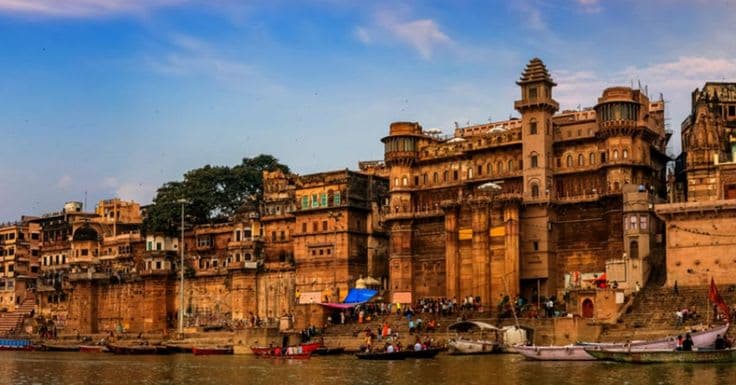
Manikarnika is the principal cremation ghat of Varanasi, often called the Maha Smashan, the great cremation ground. It lies on the Ganga in old Kashi, between the Dashashwamedh and Scindia stretches and near Lalita Ghat, a short walk from Kashi Vishwanath. Unlike a museum or monument, it is a continuously active ritual ground where final rites take place around the clock. As the scholar Diana Eck wrote, if Kashi is the heart of India, Manikarnika is the very navel of Kashi. See our ghats overview for how it sits among the 84 ghats.
For Hindus, death is a gateway shaped by karma, and the soul attains moksha, release from the cycle of rebirth, when cremated at Manikarnika. The belief rests on a divine promise: that Kashi is an Avimukta Kshetra, a place Shiva never leaves, and that here Shiva himself whispers the Taraka Mantra, the mantra of liberation, into the ear of the departed, ensuring their passage regardless of their karma. This is why, for centuries, families across India have brought their loved ones here for the final rites. It is the holiest cremation ground precisely because of this assurance of liberation.
The name Manikarnika joins two Sanskrit words, “mani,” a jewel, and “karnika,” an earring. The central legend tells that an earring of the Goddess, Parvati or Sati, fell here. In a related telling, Vishnu dug a sacred pit, the Manikarnika Kund, with his chakra while performing austerities, and as Shiva watched, the earring slipped and fell into it. The scriptures, including the Skanda Purana and the Padma Purana, describe the ghat as older than time, a place where the veil between worlds is thin.
Beside the ghat is the Manikarnika Kund, a small stepped sacred tank, said to have been made by Vishnu and counted among the oldest sacred water bodies in Kashi. Pilgrims believe that bathing here with devotion, especially on auspicious days, cleanses sins and bestows great merit, and it remains a focus of ritual. Manikarnika is also one of the 51 Shakti Peethas, sacred sites where parts of Sati's body are believed to have fallen; the earring fell here, and the Shakti is revered as Vishalakshi and Manikarni. This deepens the ghat's importance for the Shaktism tradition.
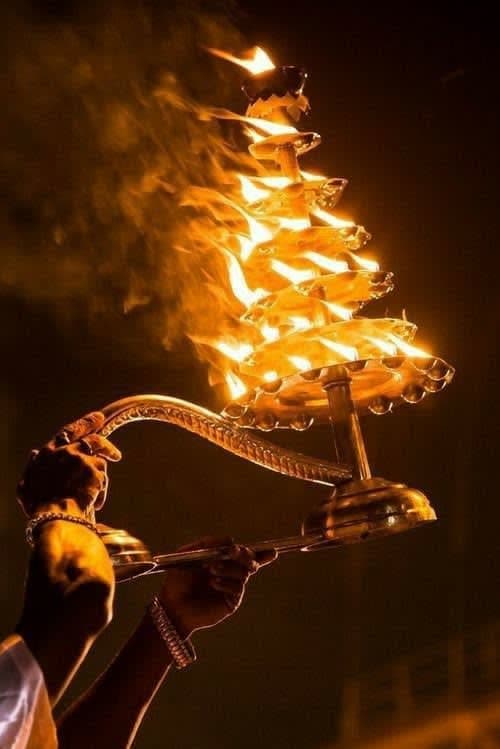
One of the most striking features of Manikarnika is its eternal fire, the Akhand Chita, believed to have burned continuously for thousands of years. By tradition, every funeral pyre at the ghat is lit from this single sacred flame, so that each cremation is connected to an unbroken continuity reaching back through the centuries. The flame is a symbol of the link between life, death and liberation, and of the cosmic cycle that continues beyond any single life.
The cremation rituals at Manikarnika are traditionally managed by the Dom community, who have safeguarded this duty across generations. Led by the figure known as the Dom Raja, they tend the eternal flame and provide the sacred fire from which each pyre is lit. Their role is central and indispensable: without the fire they keep, the rites cannot be performed. Theirs is an ancient, hereditary responsibility at the heart of Kashi's most sacred function.
The rituals here are conducted with precision and deep meaning. In brief and respectful outline: the departed is carried to the ghat on a bamboo bier as mourners chant “Ram Nam Satya Hai,” the name of Ram is truth; the body is bathed in the Ganga; the family performs the prescribed rites with a priest; the pyre is built from wood, traditionally with sandalwood; the chief mourner performs the lighting from the eternal flame; Vedic verses are chanted; and afterward the ashes are immersed in the river, completing the journey. By tradition, certain souls considered already pure, such as young children and renunciant holy men, are not cremated but immersed. The Hindu genealogy registers of Kashi are also kept in this area.
This is the heart of the matter. Manikarnika is a place of grief and faith, not a tourist spectacle, and the way you conduct yourself matters deeply.
Because grief makes people vulnerable, a few touts and self-styled “priests” exploit visitors here. The common pressure is a demand for a large “donation” toward cremation wood, sometimes framed as helping a poor dying person or a stranded family. Genuine charity exists, but these solicitations at the ghat are usually a scam, and you should never pay under emotional pressure. Decline firmly and politely, do not follow anyone to an upstairs “viewing balcony” that then demands a fee, and ignore unsolicited “guides” who attach themselves to you. A licensed guide arranged in advance protects you from all of this.
Honest note: there is no fee to observe respectfully from a distance or a boat. Any demand for a “viewing charge” or a pressured “wood donation” is not legitimate.
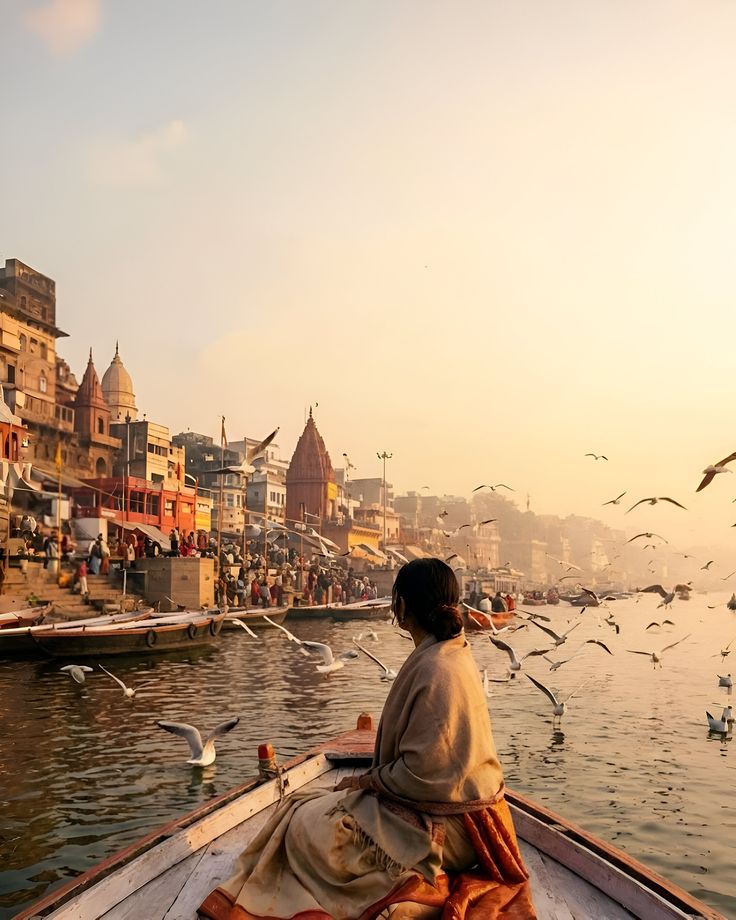
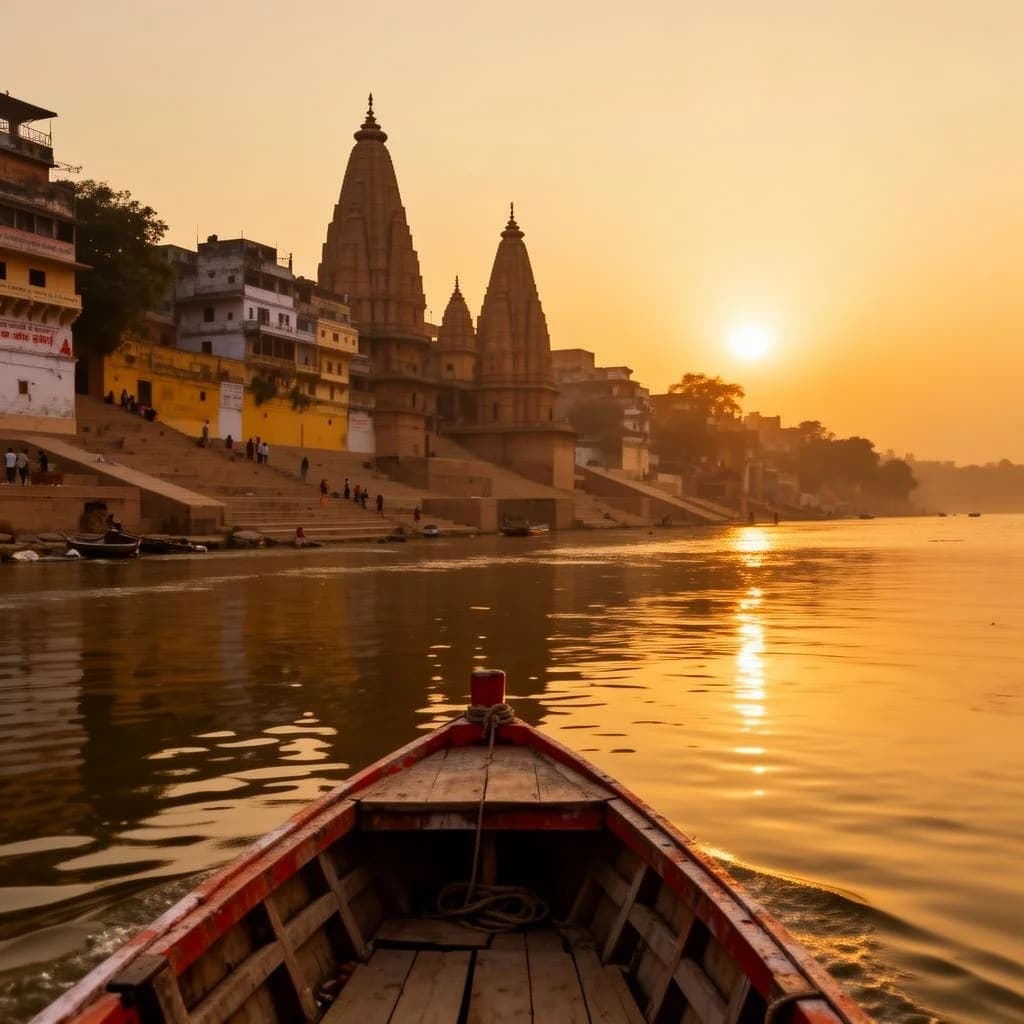
The most respectful and comfortable way to witness Manikarnika is from a boat on the Ganga, at a distance, where you can take in the scale and solemnity without intruding. A sunrise or daytime boat from Dashashwamedh passes the ghat; ask your boatman to slow rather than stop, and keep your camera down. If you approach by land, you come through the old-city lanes from Godowlia or nearby points, on foot for the final stretch. A knowledgeable guide explains what you are seeing and ensures you behave appropriately. See our Ganga boat ride guide.
Many who visit describe Manikarnika as overwhelming at first and quietly transformative once understood. It strips life to its essence: kings and commoners, rich and poor, all meet the same end, and that stark equality invites reflection rather than fear. In a world that avoids talk of death, the ghat stands as a reminder that acceptance brings peace, and that what endures is not the body but the soul's journey. For believers it is the final destination; for Kashi, it is where the city's promise of liberation is fulfilled daily. The deeper theme of why pilgrims come to Kashi to die is explored on our moksha in Kashi page.
We are Experience My India, rated 4.5 stars on TripAdvisor and Google, with 50,000+ guests served since 2018. For Manikarnika, a guide is not about sightseeing but about understanding: ours explains the significance and the rituals, ensures you observe with full respect, and shields you from touts and the donation scam, ideally from a boat at a quiet distance. For South Indian pilgrims, this is done in Telugu or Kannada. See our Varanasi packages or message Rajeev's team on WhatsApp at +91 7302265809. Plan your wider visit from the Varanasi travel guide.
Curated itineraries featuring this divine destination.






Grouped for quick scanning
Everything you need to know about Manikarnika Ghat.
Topic 01
8 questions
Manikarnika Ghat is the principal and holiest cremation ground in Varanasi, on the Ganga in old Kashi, where Hindu last rites are performed continuously, day and night. It is often called the Maha Smashan, the great cremation ground. It is a living, active ritual site of deep spiritual significance, not a monument or tourist attraction.
It is famous for the long-held belief that cremation here grants moksha, liberation from the cycle of birth and death, making it the holiest cremation ground in Hinduism. Families bring their departed from across India for this reason. Its eternal flame, its antiquity and its place beside Kashi Vishwanath all add to its renown.
Because of a divine promise in tradition: that Kashi is an Avimukta Kshetra, a place Shiva never leaves, and that Shiva himself whispers the Taraka Mantra, the mantra of liberation, into the ear of the departed here, ensuring their soul's release regardless of karma. This assurance of liberation is the spiritual lifeline of the ghat.
Maha Smashan means "the great cremation ground," a name for Manikarnika Ghat reflecting its status as the foremost cremation site in Hinduism. The term conveys both its scale and its sanctity. In Kashi, uniquely, the cremation ground sits at the very heart of the living city rather than on its edge, which is part of its profound character.
It is on the Ganga riverfront in old Kashi, roughly midway along the ghats between the Assi confluence in the south and the Varuna confluence in the north, between the Dashashwamedh and Scindia stretches and near Lalita Ghat. It is reached on foot through the old-city lanes, or seen from a boat on the river.
Yes, it lies within the broader old-city zone around the Kashi Vishwanath Temple and is a short walk away through the lanes. Many pilgrims include it in the same circuit as the temple. Final access near the ghat is on foot, as the narrow streets do not allow vehicles, so you walk in from a nearby drop point.
Tradition and scripture describe it as older than time, and its origins are traced to the ancient Vedic period, with the Skanda Purana and Padma Purana documenting its significance. Like most ghats it was substantially rebuilt in the 18th century, but its sacred role as a cremation ground reaches back far into antiquity. It is among Kashi's oldest sacred sites.
Yes, Manikarnika is the main and most important cremation ghat, where the great majority of Kashi's cremations take place around the clock. The second cremation ghat is Harishchandra, which is older but smaller and handles fewer rites. Both grant moksha by tradition, but Manikarnika is the foremost and most active.
Topic 02
7 questions
The Taraka Mantra is the mantra of liberation that, by tradition, Shiva whispers into the ear of those who die at Kashi, ensuring their soul attains moksha. It is associated with the phrase "Ram Nam Satya Hai," the name of Ram is truth. This whispered mantra is the heart of the belief that makes Manikarnika the holiest place to be cremated.
It means "the name of Ram is truth," a sacred phrase chanted by mourners as they carry the departed to the ghat. It expresses the Hindu understanding that only the divine is eternal and the body is transient. You will hear it accompanying funeral processions through the lanes of Kashi toward Manikarnika and Harishchandra.
Avimukta Kshetra means "the place never forsaken," a region Shiva is said never to leave. Kashi as a whole, and Manikarnika in particular, is held to be such a place, which is central to the belief that the soul attains liberation here. Shiva's constant presence is what guarantees the promise of moksha.
In the tradition, the belief is that cremation here, with Shiva's whispered Taraka Mantra, grants moksha regardless of one's karma, which is precisely why families bring their departed from afar. This is a matter of faith and scripture rather than something that can be proven. It is the assurance of liberation that gives the ghat its unique sanctity.
Yes, Manikarnika is one of the 51 Shakti Peethas, the sacred sites where parts of the Goddess Sati's body are believed to have fallen. Here it is the earring that fell, which also gives the ghat its name. The presence of Shakti adds a layer of devotion, drawing those who venerate the divine feminine.
As a Shakti Peeth, the Shakti associated with Manikarnika is revered under the names Vishalakshi and Manikarni. The nearby Vishalakshi temple in the old-city lanes is connected to this tradition. Devotees of Shaktism include Manikarnika in their pilgrimage for this reason, alongside its significance as a cremation ground.
By tradition, yes. Pilgrims believe that bathing in the Manikarnika Kund with devotion, especially on auspicious days, cleanses sins and bestows great merit, as it is one of the holiest tirthas in Kashi's sacred geography. The kund remains a focus of ritual beside the ghat. As always, mind your footing and do not swallow the water.
Topic 03
4 questions
Manikarnika combines two Sanskrit words, "mani," meaning a jewel, and "karnika," meaning an earring. The name comes from the legend that a jewelled earring of the Goddess fell here. It is a fitting name for a place where, in tradition, the divine and the mortal worlds meet at the water's edge.
The central legend tells that an earring of the Goddess, Parvati or Sati, fell at this spot. In a related telling, Vishnu dug a sacred pit here with his chakra while performing austerities, and as Shiva watched, the earring slipped and fell into the pit, which became the Manikarnika Kund. The name and the sanctity of the ghat both flow from this legend.
The Manikarnika Kund is a small stepped sacred tank beside the ghat, said to have been created by Vishnu and counted among the oldest sacred water bodies in Kashi. It is where, by legend, the earring fell, and pilgrims bathe there for spiritual merit. It remains a living focus of ritual alongside the cremation ground.
By tradition, Vishnu created the kund, digging it with his chakra during his austerities, with Shiva watching over him. It is described in this way in the legends and scriptures associated with the ghat. The kund is considered one of the most ancient and sacred water bodies in Kashi, predating much of the visible ghat.
Topic 04
6 questions
The eternal flame, called the Akhand Chita, is a sacred fire believed to have burned continuously at Manikarnika for thousands of years. By tradition, every funeral pyre at the ghat is lit from this single flame, connecting each cremation to an unbroken continuity. It symbolizes the link between life, death and liberation.
By tradition the eternal flame, the Akhand Chita, is said to have burned continuously for thousands of years, some accounts say over three thousand. It is a matter of sacred tradition rather than precise record. Whatever the exact span, the belief in its unbroken continuity is central to the ghat's meaning, with every pyre lit from it.
The cremation rituals and the eternal flame are traditionally tended by the Dom community, custodians of this sacred duty across generations, led by the figure known as the Dom Raja. They provide the fire from which each pyre is lit. Their role is hereditary, ancient and central to the rites at the ghat.
The Dom are the community who traditionally manage the cremation rituals at Manikarnika and keep its sacred fire, a hereditary responsibility passed across generations. Their custodianship of the flame is indispensable, as the rites cannot be performed without the fire they provide. They hold a central, respected role at the heart of Kashi's most sacred function.
The Dom Raja is the traditional head of the Dom community at Manikarnika, the figure responsible for the eternal flame and the cremation rites. The title is hereditary, and the Dom Raja's family has held this sacred duty for generations. He represents the community's central, custodial role in the rituals of the great cremation ground.
By tradition, yes. Each funeral pyre at Manikarnika is lit from the single eternal flame tended by the Dom community, rather than from a new fire. This practice connects every cremation to the unbroken continuity of the sacred fire, reinforcing the belief in the ghat's timeless, liberating power.
Topic 05
6 questions
The last rites follow ancient Vedic procedure: the departed is carried to the ghat with chanting, bathed in the Ganga, and the family performs the prescribed rites with a priest before the pyre is lit from the eternal flame, with Vedic verses chanted, and the ashes later immersed in the river. Pind Daan and related rites for the soul's peace are also performed.
In respectful outline: the body is brought on a bier as mourners chant "Ram Nam Satya Hai," bathed in the Ganga, and laid to rest briefly on the steps; the pyre is built from wood, traditionally including sandalwood; the chief mourner performs the lighting from the eternal flame; Vedic verses are chanted throughout; and the ashes are immersed in the Ganga, completing the journey.
The Mukhagni is the lighting of the funeral pyre, performed by the chief mourner, traditionally the eldest son, using fire from the eternal flame. It is a central, solemn moment of the last rites, marking the release of the body. It is performed with deep reverence and Vedic chanting, and it is private to the grieving family.
Most are cremated, but by tradition certain souls considered already pure are not, and are instead immersed in the Ganga: these include very young children and renunciant holy men, whose bodies are held to need no purification by fire. This is an old custom rooted in the tradition's understanding of purity. The great majority of rites, though, are cremations.
Pind Daan is a rite performed by priests, often with rice balls and offerings, to help the departed soul find peace and complete its onward journey. It is part of the broader funerary tradition observed at Kashi, alongside the cremation itself. Many families perform Pind Daan and related ancestral rites as part of the last rites at the ghats.
A great many, with rites performed around the clock; estimates commonly range from around 200 upward on a typical day. The number reflects the deep, nationwide belief in moksha at Kashi. We share this only to convey the scale of the sacred function; the ghat should be approached as a place of faith, not statistics.
Topic 06
9 questions
Yes, visitors may observe respectfully from a distance, but it must be approached as a sacred cremation ground, not a sightseeing stop. Watch quietly from afar or from a boat, never photograph the cremations, dress modestly, maintain silence, and follow any instructions. If you are sensitive to the sight, it is perfectly fine to honour the ghat from a distance or skip it.
Yes, foreign visitors are welcome to observe from a respectful distance, provided they dress modestly, stay well back from active cremations, maintain silence, never photograph the cremations, and follow the priests' instructions. A local guide helps ensure respectful conduct and explains the significance, which deepens understanding and prevents unintentional offence.
No. Photographing or filming the cremations, the pyres or the grieving families is prohibited and deeply disrespectful, and it provokes strong reactions, with phones confiscated. This is the firmest rule on the riverfront. Put your camera and phone away entirely near the burning ghat. Photograph the general river and skyline only from a respectful distance, never the rites.
With quiet reverence. Observe from a distance or a boat, keep silent, do not laugh, talk loudly or pose for pictures, dress modestly, never photograph the cremations, and decline touts demanding donations. Treat it exactly as you would a funeral of a stranger to whom you owe respect, because that is what it is. Sensitivity is the whole of the etiquette here.
Yes, and a boat on the river is the most respectful and comfortable way to witness Manikarnika, letting you take in its scale and solemnity from a distance without intruding on grieving families. Ask your boatman to slow rather than stop, and keep your camera down. This is the vantage we recommend for almost all visitors.
From a boat on the Ganga, at a distance, with your camera put away and in silence, ideally with a guide who explains the significance quietly. This lets you understand and honour the place without intruding. If approaching by land, stay well back from active cremations and never photograph them. Reverence, not curiosity, is the right spirit.
That is a personal judgement. The ghat is emotionally intense and confronting, and the sight of cremation may distress young children. If you do bring them, a boat view at a distance is gentlest, and prepare them gently beforehand. Many families choose to see it briefly from the river or to skip it, which is entirely appropriate.
Dress modestly and simply, with shoulders and knees covered, as you would for any funeral or sacred site. Avoid bright, festive or revealing clothing. The point is to show respect for a place of grief. Comfortable, plain attire and easy footwear for the lanes and steps are best. Reverent simplicity is the right note here.
Yes. Many visitors find it overwhelming at first, confronting the reality of death directly, and then quietly transformative once understood. It is a place of grief, faith and acceptance, not spectacle. If you approach it with reverence and an open heart, it can be one of the most moving experiences of Kashi. If it feels too much, it is fine to step back.
Topic 07
8 questions
A common scam is a demand for a large "donation" toward cremation wood, often framed as helping a poor dying person or a stranded family, pressed on emotionally moved visitors. While genuine charity exists, these ghat-side solicitations are usually a scam. Never pay under pressure, decline firmly and politely, and ignore anyone leading you to a paid "viewing balcony."
Yes, some self-styled "priests" and touts solicit donations or offer unsolicited "tours" and then demand money. Genuine rites are conducted by the families and the traditional custodians. Politely decline anyone who attaches themselves to you demanding a fee or donation, and arrange a licensed guide in advance to avoid them entirely. Do not feel obliged to pay strangers here.
No. Decline unsolicited "guides" who attach themselves to you in the lanes or at the ghat, as they often lead to demands for money. If you want the significance explained, arrange a licensed guide in advance through a trusted operator. A pre-arranged guide both enriches your understanding and shields you from the touts and the donation scam.
Yes, it is generally safe, as the area is busy and active at all hours. The main issues are not danger but the touts demanding donations and the need to conduct yourself with respect. Keep your belongings secure in the crowd, decline pressured solicitations, and the visit is safe. A boat view with a guide is the calmest and safest way.
By land, take an auto or taxi to a nearby point such as Godowlia or Maidagin, then walk the final stretch through the old-city lanes, as vehicles cannot reach the ghat. By river, take a boat from Dashashwamedh, which is the most respectful approach. During high water in the monsoon, lane routes can shift, so allow extra time.
Early morning, roughly 5 to 7 AM, is quieter and gentler, with fewer onlookers, and a sunrise boat passes the ghat. The site is active around the clock, so there is no closed time, but a quiet early visit from a boat is the most respectful and least crowded. Approach it as a moment of reflection rather than sightseeing.
A knowledgeable guide is valuable here, not for sightseeing but for understanding the significance and the rituals, ensuring you behave respectfully, and shielding you from touts and the donation scam. Arrange one in advance rather than accepting a tout at the ghat. For South Indian pilgrims, a Telugu or Kannada speaking guide makes the meaning clear.
Yes. We arrange a quiet, dignified visit, usually from a boat at a respectful distance, with a knowledgeable guide who explains the significance and the rituals and ensures you are not troubled by touts or the donation scam. For South Indian pilgrims, this is done in Telugu or Kannada. Message us on WhatsApp at +91 7302265809.
Topic 08
5 questions
Both are cremation ghats where, by tradition, cremation grants moksha. Manikarnika is the main, larger and most famous, with the eternal flame and continuous rites. Harishchandra is older and smaller, named after the truthful King Harishchandra, handling fewer cremations and feeling quieter. Both follow the same strict rules of respect and no photography.
Because of the deep belief that cremation here grants moksha, liberation from the cycle of rebirth, through Shiva's whispered Taraka Mantra at this Avimukta Kshetra. For a devout Hindu, this assurance of liberation is the highest spiritual goal, which is why families bring their loved ones from across India to be cremated at Manikarnika.
Yes, the ghat is active around the clock, as cremation rites are performed continuously, day and night, all year. There is no closing time. That said, a quiet daytime or early-morning view from a boat is the most respectful and comfortable way for a visitor to witness it, rather than approaching the active rites closely at night.
Many describe it as a lesson in impermanence and equality: kings and commoners, rich and poor, all meet the same end here, which strips life to its essence and invites reflection rather than fear. It teaches that what endures is not the body but the soul's journey, and that acceptance of death brings a kind of peace.
Yes, families come from across India and abroad to perform the last rites of their departed at Manikarnika, assisted by priests and the traditional custodians. If you need to arrange genuine funerary or ancestral rites, work through a reputable priest or operator rather than a ghat-side tout, so the rituals are performed properly and you are not exploited at a vulnerable time.
Still have a question?
Message Rajeev on WhatsApp