Of everything packed into this festival week, the one moment most travellers have never heard of - and never forget - is the Hari-Har Milan, a ritual so particular to Kashi that you could visit Varanasi a dozen times and miss it entirely.
The names tell the story. Har is a name of Lord Shiva, the lord of Kashi; Hari is a name of Lord Vishnu. For most of the year the two great streams of Hindu devotion - the Shaiva and the Vaishnav - run side by side but apart, each with its own temples, its own festivals, its own followers. On one night in the year, around Kartik, that changes. In a ceremony held late at night, the deities are symbolically brought face to face and exchange offerings: Shiva is offered the tulsi leaf sacred to Vishnu, and Vishnu the bilva leaf sacred to Shiva, and for a few hours the two traditions are, quite literally, united. It is called the Hari-Har Milan, the meeting of Hari and Har.
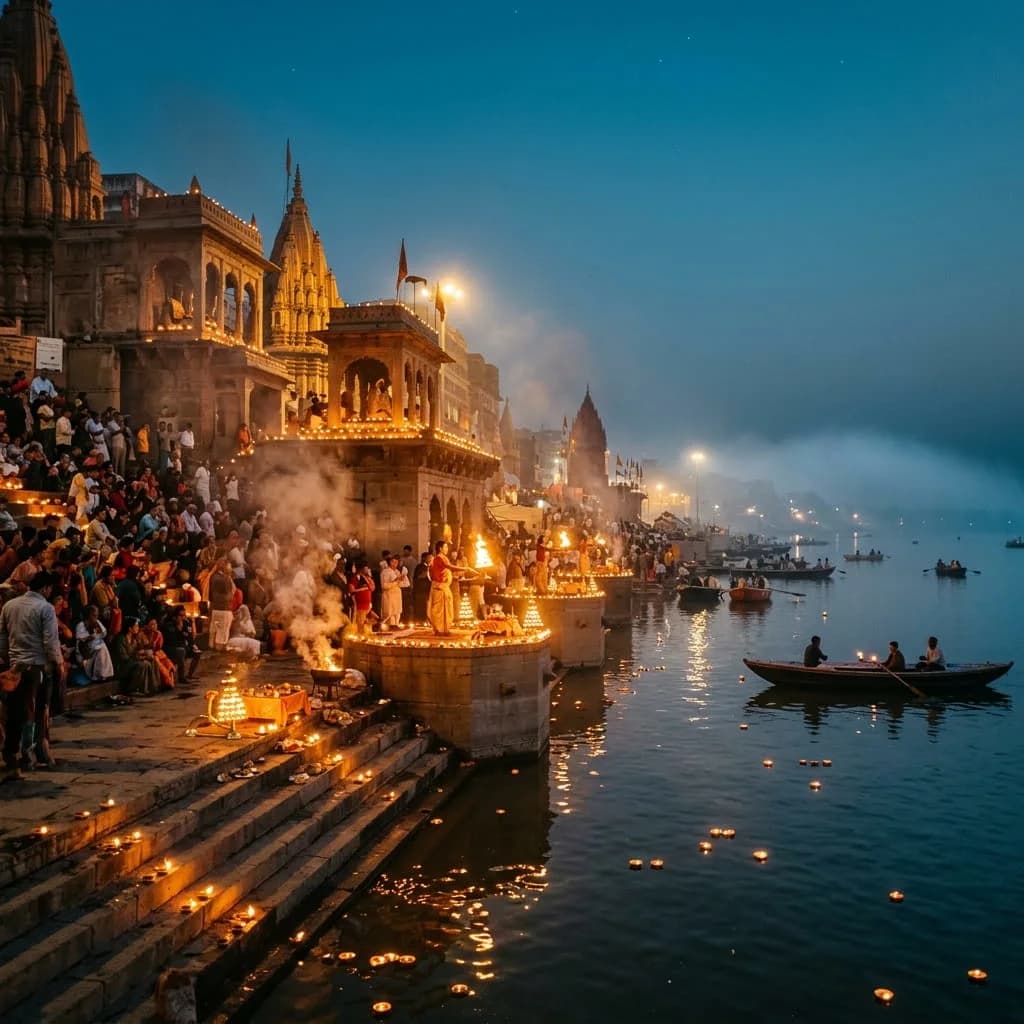
There is something deeply moving in it, especially in Kashi, the city of Shiva, welcoming Vishnu for a night. In a country whose faith is often described from outside as divided into sects, here is an ancient, living ceremony whose entire meaning is reconciliation - a reminder, enacted in lamplight at midnight on the ghats, that the divine is finally one. Pilgrims who attend describe it as the quietest and most intimate thing in a week of grand public spectacle.
It is optional, and it is late - well after the day's concerts have ended - so Experience My India takes you only if you wish, and leaves you to rest if you would rather save yourself for Dev Deepawali the next day. But for those who go, it is often the secret heart of the whole trip. Har Har Mahadev, Jai Gange.