3 nights / 4 days
Pilgrimage
₹37,000
Starting From


Senior Citizen Kashi Ayodhya Yatra
Varanasi, Prayagraj & Ayodhya (Elders)|Pilgrimage
One City A Day Pace
Lift-Access Rooms
Daily Family WhatsApp
A complete 40-year guide to Kashi Vishwanath Temple in Varanasi, the foremost Jyotirlinga of Lord Shiva, the Dham corridor, timings, history, and booking darshan.
Drop your details and we'll craft a personalized spiritual package.
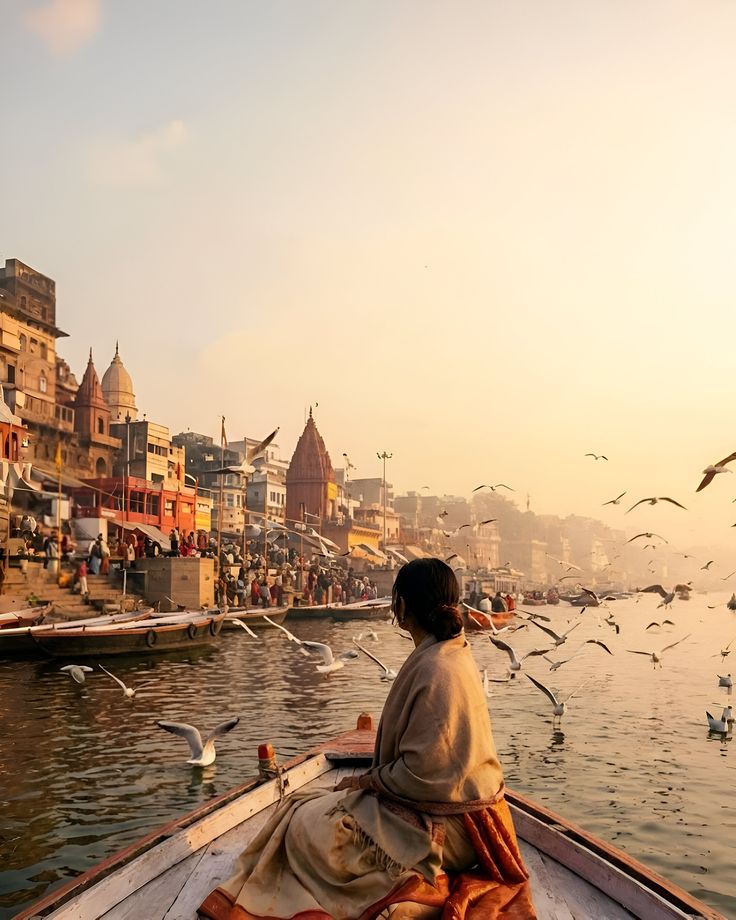
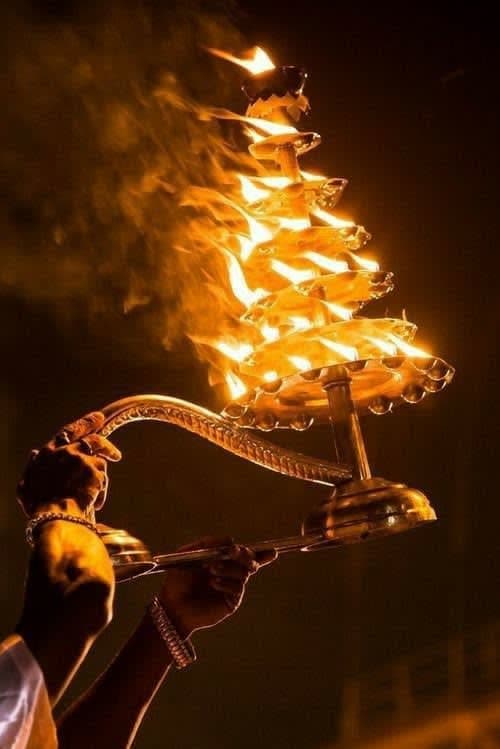
The Kashi Vishwanath Temple, the Dashashwamedh Ganga Aarti, a sunrise boat ride past the 80-plus ghats, and Sarnath, where the Buddha gave his first sermon
A Jyotirlinga is a place where Shiva is believed to have appeared as an infinite column of light. By tradition, Kashi Vishwanath is the most important of the twelve, and many hold that Kashi is where the Jyotirlinga first manifested. The deity is Vishwanath or Vishweshwara, the Lord of the Universe.
The defining belief of Kashi is moksha. Pilgrims hold that Shiva himself whispers the Taraka mantra into the ear of anyone who dies in Kashi, granting liberation from the cycle of birth and death. This is why a visit to the Jyotirlinga, paired with a dip in the Ganga, sits at the centre of the Kashi yatra. As the scriptures place it, Kashi rests on Shiva's trident and stands beyond even cosmic dissolution.
From the ground: Most South Indian pilgrims I guide come to complete a set of Jyotirlinga darshans. What I tell them is simple: Kashi is not a tick on a list. Give the Jyotirlinga unhurried time, then sit a while in the corridor by the river. That stillness is the darshan most people remember.
The story of Kashi Vishwanath is one of repeated destruction and devoted rebuilding. The temple is mentioned in the Skanda Purana, and excavations at Rajghat point to a city here in the 9th to 10th century BCE, so the shrine's roots run very deep. The dates below are the commonly cited milestones; treat the older ones as traditional history.
By tradition, during periods of threat the Jyotirlinga was hidden in the nearby Gyan Vapi well to protect it, which is why the well carries deep significance for devotees.
Key historical milestones of the temple
The present temple owes its existence to Maharani Ahilyabai Holkar of Indore, who rebuilt it in 1780 and is remembered across Kashi for also developing ghats and dharamshalas. In 1835, Maharaja Ranjit Singh of the Sikh Empire donated roughly one tonne of gold to plate the dome and spire, which is why the temple is popularly called the Golden Temple of Varanasi. Nagpur's Raghuji Bhonsle III later donated silver, and a tall Nandi statue was gifted by Nepal. Since 1983, the temple has been administered by the Government of Uttar Pradesh through the temple trust.
The temple is built in the Nagara style of North Indian architecture, in a quadrangular plan. A Sabha Griha, or congregation hall, leads to the Garbha Griha, the inner sanctum, where the Jyotirlinga, a dark stone lingam, rests on a silver platform. The structure rises in three parts: a tall spire of about 15.5 metres, a gold dome, and a gold spire bearing a flag and trident.
The complex holds more than the main shrine. Around the Jyotirlinga sit smaller shrines to deities including Kaal Bhairav, Avimukteshwara, Vishnu, Vinayaka, Dhandapani and others, and the goddess Annapurna Devi is venerated immediately beside the temple. The Gyan Vapi well, the well of wisdom, lies within the precinct.
For centuries, reaching the Jyotirlinga meant squeezing through the cramped Vishwanath Gali. The Kashi Vishwanath Dham corridor changed that. Its foundation was laid in 2019, and the first phase was inaugurated in December 2021, creating a large complex of about 5 lakh square feet that connects the temple directly to the Ganga near Manikarnika, with wide walkways, gates, lockers, helpdesks and waiting areas. The result has been a many-fold rise in visitors and a far more organised darshan, with the temple now receiving very large daily crowds.
Key figures of the temple redevelopment project
You will not drive to the gate. Vehicles stop around Godowlia, and you walk the final stretch through the lanes or enter via the corridor gates from the ghat side. At the gate you deposit your phone and leather items in a locker, pass security, and join either the free general queue or your pre-booked Sugam or Sparsh line. Inside, the pace is continuous; you have a brief, powerful darshan of the Jyotirlinga and move on. Afterward, the corridor opens to the river, a good place to sit.
From the ground: The corridor has three main approaches, and the right gate depends on whether you have a Sugam booking and which side you arrive from. If you are unsure, our guide meets you at the correct gate so you are not walking the wrong lane with elders in tow.
Five daily aartis at Kashi Vishwanath Temple (subject to confirmation)
Dress modestly, covering shoulders and knees; traditional attire is best. Phones, cameras and electronic items are not allowed inside, and there are lockers at the gates, so carry a printed copy of any darshan ticket and some cash for offerings. Leather belts and bags are restricted. For Sparsh Darshan, which enters the sanctum to touch the Jyotirlinga, unstitched cloth may be required.
The temple sits in Vishwanath Gali, off Godowlia in the old city, on the western bank of the Ganga. From Varanasi Junction (Cantt), it is roughly 6 km; from the airport, around 25 km. Vehicles cannot reach the gate, so most pilgrims take an auto or taxi to Godowlia and walk the final 10 to 15 minutes, or arrive from the ghat side via the corridor. Our how to reach Varanasi guide has the full transport detail.
General darshan is free. For the paid official options, Sugam Darshan for fast-track entry, Sparsh Darshan for sanctum entry, and aarti passes such as Mangala Aarti, the full step-by-step process, current fees and the scams to avoid are in our dedicated Kashi Vishwanath darshan guide. The one rule to remember now: book only through the official temple trust portal, never a lane agent.
We are Experience My India, rated 4.5 stars on TripAdvisor and Google, with 50,000+ guests served since 2018. A guided package handles your darshan slot, the right gate, transfers and a Telugu, Kannada or Hindi speaking guide, so the Jyotirlinga is 40 minutes of peace rather than four hours of queues. See our Varanasi packages or message Rajeev's team on WhatsApp at +91 7302265809. For the wider city, start with our Varanasi travel guide and the Ganga Aarti at Dashashwamedh, a five-minute walk away.
Curated itineraries featuring this divine destination.






Grouped for quick scanning
Everything you need to know about Kashi Vishwanath Temple.
Topic 01
7 questions
Kashi Vishwanath is a Hindu temple in Varanasi dedicated to Shiva, who is worshipped here as Vishwanath, Lord of the Universe. It enshrines one of the twelve Jyotirlingas and is considered the holiest Shiva shrine in Hinduism. It stands on the western bank of the Ganga in the old city, in Vishwanath Gali.
A Jyotirlinga is a shrine marking a place where Shiva is believed to have appeared as an infinite column of light. There are twelve Jyotirlingas across India, and Kashi Vishwanath is regarded as the most important. The lingam in the sanctum represents that formless, infinite manifestation of Shiva.
It is considered the most important because Kashi is held to be Shiva's own eternal city, where, by tradition, the Jyotirlinga first manifested and where dying grants liberation. The temple's antiquity, its place in the Puranas, and its central role in the Kashi yatra all reinforce that status among the twelve.
Vishwanath, and the related name Vishweshwara, mean Lord of the Universe. It is the name under which Shiva is worshipped at this temple, which is why the shrine is called Kashi Vishwanath, the Lord of the Universe at Kashi.
By tradition, Shiva whispers the Taraka mantra into the ear of anyone who dies in Kashi, granting moksha, release from the cycle of birth and rebirth. This belief makes Kashi the great cremation city and draws both pilgrims seeking darshan and families seeking last rites for their elders.
The lingodbhava legend tells of Brahma and Vishnu arguing over supremacy, when Shiva appeared as an endless pillar of light and challenged them to find its ends. Neither could. Shiva then revealed himself as infinite and beyond comparison. The twelve Jyotirlingas mark this manifestation, with Kashi the foremost.
The temple itself is a Jyotirlinga. Nearby Manikarnika Ghat is associated with Shakti tradition, and Kashi as a whole holds layered significance across Shiva and Shakti worship. For darshan, pilgrims focus on the Vishwanath Jyotirlinga and the goddess Annapurna beside it.
Topic 02
8 questions
The present structure was built in 1780 by Maharani Ahilyabai Holkar, the Maratha queen of Indore, adjacent to the earlier site. She is remembered across Kashi for also building ghats and dharamshalas. The temple has been administered by the Government of Uttar Pradesh through the temple trust since 1983.
The current temple dates to 1780, though some sources cite 1777 for the start of construction. [VERIFY the exact year.] The shrine itself is far older, mentioned in the Skanda Purana and rebuilt many times, so 1780 refers to the present structure, not the origin of worship at the site.
The temple was destroyed several times. The early temple was damaged during the campaign of Qutb-ud-din Aibak around 1194, and a later temple was demolished on the orders of the Mughal emperor Aurangzeb in 1669. Each time, devotees and rulers rebuilt or planned to rebuild it, culminating in the 1780 structure.
Because its spire and dome are plated with gold. In 1835, Maharaja Ranjit Singh of the Sikh Empire donated roughly one tonne of gold for the plating, at the request of his wife Maharani Datar Kaur. The gleaming golden shikhara is the temple's most famous feature, hence the nickname Golden Temple.
Sources commonly cite figures from around 800 kg up to one tonne of gold, donated by Maharaja Ranjit Singh in 1835 for the dome and spire. [VERIFY the exact figure.] The gold plating is what gives the temple its golden appearance and its popular name.
The Gyan Vapi, or well of wisdom, lies within the temple precinct. By tradition, during periods of threat the Jyotirlinga was hidden in this well to protect it, which is why it holds deep significance for devotees. It is part of the temple's layered history.
Yes. The temple and the Vishweshwara Jyotirlinga are mentioned in Hindu scriptures including the Skanda Purana, particularly its Kashi Khanda section, and referenced in the Shiva Purana. These texts establish the antiquity and supreme status of the shrine in the tradition.
Worship at Kashi is described as thousands of years old. Archaeological excavations at Rajghat indicate a city here as early as the 9th to 10th century BCE, and the shrine appears in very early texts. The 1780 building is recent by comparison; the sacred site itself is ancient.
Topic 03
5 questions
It is built in the Nagara style of North Indian temple architecture, in a quadrangular plan, with a tall shikhara, a gold dome and a gold spire bearing a flag and trident. A Sabha Griha leads to the Garbha Griha, the inner sanctum where the Jyotirlinga rests on a silver platform.
The main spire is commonly cited as about 15.5 metres high. The temple rises in three parts: the tall spire, a gold dome, and a smaller gold spire at the sanctum carrying a flag and trident. The gold plating across these is what earns it the Golden Temple name.
Around the main Jyotirlinga sit smaller shrines to deities including Kaal Bhairav, Avimukteshwara, Vishnu, Vinayaka and Dhandapani, among others. The goddess Annapurna Devi is venerated immediately beside the temple, and the Gyan Vapi well lies within the precinct.
Yes. A large stone Nandi, the bull mount of Shiva, sits at the temple, and a notable Nandi statue was gifted by the ruler of Nepal. Nandi faces the sanctum, as at all Shiva temples, and many pilgrims whisper their prayers into Nandi's ear. [VERIFY specific details.]
The Jyotirlinga in the sanctum is a dark stone lingam, set on a silver platform. The silver was donated by Raghuji Bhonsle III of Nagpur in 1841. The lingam represents the formless, infinite Shiva rather than an image, which is central to Jyotirlinga worship.
Topic 04
4 questions
The Dham corridor is a large redeveloped complex connecting the temple directly to the Ganga riverfront. Its foundation was laid in 2019 and the first phase opened in December 2021. It added wide walkways, gates, lockers, helpdesks and waiting areas, transforming a once cramped approach into an organised pilgrim complex.
The first phase of the Kashi Vishwanath Dham corridor was inaugurated in December 2021, after the foundation was laid in 2019. It is the largest redevelopment around the temple since Ahilyabai Holkar's reconstruction, and it sharply increased visitor numbers and improved crowd management.
The corridor complex is commonly described as around 5 lakh square feet. It stretches from the temple to the Ganga near Manikarnika, so pilgrims can move between the Jyotirlinga and the river within one connected, managed space rather than through the old narrow lanes.
Yes. That was the central aim. The corridor restores the temple's historic link to the river, letting pilgrims walk from the Jyotirlinga to the ghats directly. Many visitors now do darshan and then sit by the Ganga in the corridor, which is one of the calmest spots in the complex.
Topic 05
7 questions
The temple keeps long hours, commonly cited as opening around 2:30 to 3:00 AM and closing late at night, with a darshan pause around midday and during aartis. [VERIFY exact timings on the official portal.] Early morning is the calmest time for darshan, before the daytime crowds build.
Five aartis are performed daily: Mangala Aarti around 3 AM, Bhog Aarti around 11:15 AM, the evening Sandhya or Saptarishi Aarti around 7 PM, Shringar Aarti around 9 PM, and Shayan Aarti late at night. Aarti passes are booked through the official portal; details are in our darshan guide.
No. Photography, phones and electronic devices are not allowed inside, for security reasons. Lockers are provided at the gates. Because your phone is stored, carry a printed copy of any darshan ticket and some cash. This rule is strict, so plan to leave electronics behind.
Dress modestly, covering shoulders and knees, with traditional attire preferred for darshan. For Sparsh Darshan, which enters the sanctum to touch the Jyotirlinga, unstitched cloth such as a dhoti or saree may be required. [VERIFY current rules.] Avoid leather belts and bags, which are restricted.
It varies hugely with the queue. Free general darshan can take from under an hour to several hours on busy days, Mondays and during Shravan. A Sugam fast-track booking cuts the wait significantly. Build a buffer into your day, as darshan can also pause for aartis or crowds.
Early morning, soon after opening, is the calmest, with the shortest queues and the most peaceful atmosphere. October to March is the best season overall. Avoid Shravan Mondays and major festival days unless you have a Sugam booking, as crowds can mean very long waits.
Women take darshan at the temple and can book darshan options including, where available, Sparsh Darshan, subject to dress and slot rules. Specific sanctum-entry rules and slot availability change, so confirm current rules on the official portal or with us when booking. [VERIFY.]
Topic 06
6 questions
It is in Vishwanath Gali, off Godowlia, in the old city of Varanasi, on the western bank of the Ganga. It is roughly 6 km from Varanasi Junction and about 25 km from the airport. Vehicles cannot reach the gate; you walk the final stretch or arrive from the ghat side via the corridor.
Take an auto or taxi to Godowlia crossing, then walk about 10 to 15 minutes through the lanes, or approach from the ghat side through the Dham corridor. No vehicles go to the gate. Our how to reach Varanasi guide covers fares and routes, and our guides meet you at the correct gate.
Book only through the official temple trust portal, never a lane agent. The full step-by-step process, current fees and timing advice are in our Kashi Vishwanath darshan guide. If you prefer, our team guides you through the official booking so your slot is confirmed before you arrive.
General darshan is free. The temple trust also offers paid official options: Sugam Darshan for fast-track entry, Sparsh Darshan for sanctum entry, and aarti passes such as Mangala Aarti. Fees change, so confirm them on the official portal. Our darshan guide lists the indicative prices and the booking steps.
Yes. This is our speciality. Our Telugu and Kannada speaking guides handle darshan slot guidance, meet you at the right corridor gate, and explain the rituals in your language. We also arrange South Indian meals and a comfortable pace for elders. Message us on WhatsApp at +91 7302265809.
If you have time, yes. The New Vishwanath temple inside the Banaras Hindu University campus is a calm, open replica that is far less crowded than the original. It is a good complement, especially for elders who find the old city lanes tiring. See our New Vishwanath at BHU page for details.
Topic 07
4 questions
The original shrine is referred to in tradition as Adi Vishveshwar, the first Lord of the Universe. Over centuries the temple was destroyed and rebuilt several times, and the present 1780 structure carries forward that ancient lineage of worship under the name Kashi Vishwanath.
Since 1983, the temple has been administered by the Government of Uttar Pradesh through the Shri Kashi Vishwanath Temple Trust. The trust runs darshan, aarti passes, seva bookings and the official portal, which is why genuine bookings only come through that single official channel.
Avimukta means never forsaken. By tradition, Shiva declared that he would never abandon Kashi, even at the time of cosmic dissolution, so the city is called the Avimukta kshetra. This belief underlies why Kashi is held to grant moksha and why the Jyotirlinga is so revered.
No. While it is the supreme Shiva shrine, pilgrims of all traditions visit, and the complex includes shrines to Vishnu, Ganesha, Annapurna and others. Kashi is considered sacred across Hindu traditions, and visitors of any faith may take respectful darshan in the public queue.
Topic 08
4 questions
Yes. Rudrabhishek, a special abhishek of the Jyotirlinga with chanting from the Yajur Veda, is offered as a paid seva through the temple trust, commonly cited around ₹450 with one priest. Booking and timing details are in our darshan guide. It is one of the most sought-after rituals here.
Common offerings include Ganga jal, milk, bilva (bel) leaves, flowers and dhatura. You can buy these from authorised stalls just outside the gate rather than carrying them from far. Offering items you buy and present yourself feels different from bringing them from home, as many pilgrims find.
Yes, most pilgrims do. The Annapurna Devi temple, the goddess of nourishment, sits immediately beside Kashi Vishwanath, and darshan of Annapurna alongside the Jyotirlinga is a long-standing custom. It takes only a few extra minutes and completes the visit. See our Annapurna Devi page for details.
Yes. Monday is Shiva's day, so crowds are heavier, and Mondays during the month of Shravan, around July and August, are extraordinarily busy with very long queues. If you must visit on a Shravan Monday, book a Sugam slot well ahead, or choose another weekday for a calmer darshan.
Topic 09
8 questions
Yes. Because phones and electronics are not allowed inside, lockers are provided at the gates for a small charge to store your phone, bag and leather items. [VERIFY current locker charges.] Carry a printed copy of any darshan ticket, since you will not have your phone inside.
Differently-abled (divyang) devotees are generally given free or assisted entry, and Sugam Darshan exists partly to help seniors and those who cannot stand in long queues. [VERIFY current divyang and senior rules on the official portal.] Tell us when booking and we arrange the smoothest route for elders.
Yes. The temple trust offers a free live darshan stream through its official portal, so devotees who cannot travel can still have darshan of the Jyotirlinga. [VERIFY the current live-darshan link.] It is also useful for checking the atmosphere and crowd before you plan your visit.
Yes, visitors of all nationalities may take darshan, subject to the same dress, security and photography rules as everyone else. Carry your passport as photo ID. For the sanctum-entry Sparsh Darshan, the same dress requirements apply. Our guides assist international pilgrims with the booking and the gates.
Prasad and offering items are sold at authorised counters and stalls just outside the temple gates. Buy from these rather than from people who approach you in the lanes. Since your phone is in the locker, carry small cash for prasad, offerings and the locker charge.
It is very close, roughly a five-minute walk through the lanes, or a short approach via the Dham corridor on the ghat side. This is why most pilgrims pair morning darshan at the Jyotirlinga with the evening Ganga Aarti at Dashashwamedh on the same day.
Carry a government photo ID, a printed copy of any darshan or aarti ticket, and small cash for the locker, prasad and offerings. Leave your phone, camera and leather items ready to be stored in the locker. Dress modestly, and for Sparsh Darshan keep unstitched cloth handy.
For free general darshan, arriving before 5 AM gives you the best chance of a short queue. With a Sugam booking, arrive a little before your slot. On Mondays, festival days and during Shravan, arrive even earlier or rely on a Sugam slot, as queues build quickly after sunrise.
Still have a question?
Message Rajeev on WhatsApp