3 nights / 4 days
Pilgrimage
₹37,000
Starting From


Senior Citizen Kashi Ayodhya Yatra
Varanasi, Prayagraj & Ayodhya (Elders)|Pilgrimage
One City A Day Pace
Lift-Access Rooms
Daily Family WhatsApp
A complete 40-year guide to taking a Ganga Boat Ride in Varanasi, including sunrise/sunset options, boat types, fair pricing, safety, and avoiding scams.
Drop your details and we'll craft a personalized spiritual package.
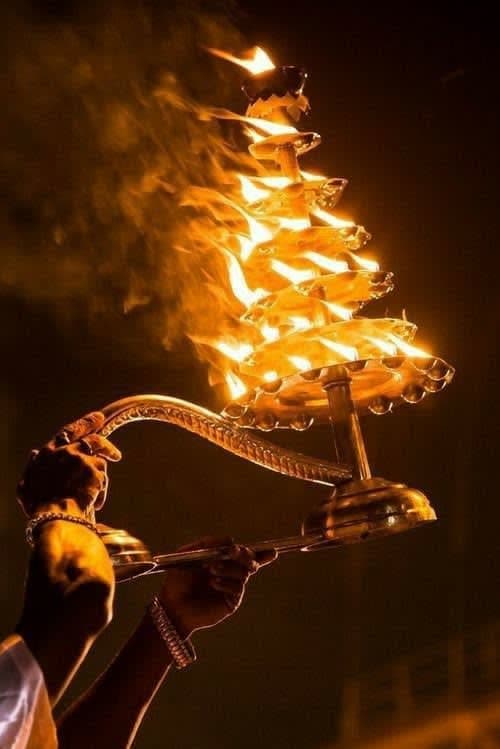
The Kashi Vishwanath Temple, the Dashashwamedh Ganga Aarti, a sunrise boat ride past the 80-plus ghats, and Sarnath, where the Buddha gave his first sermon
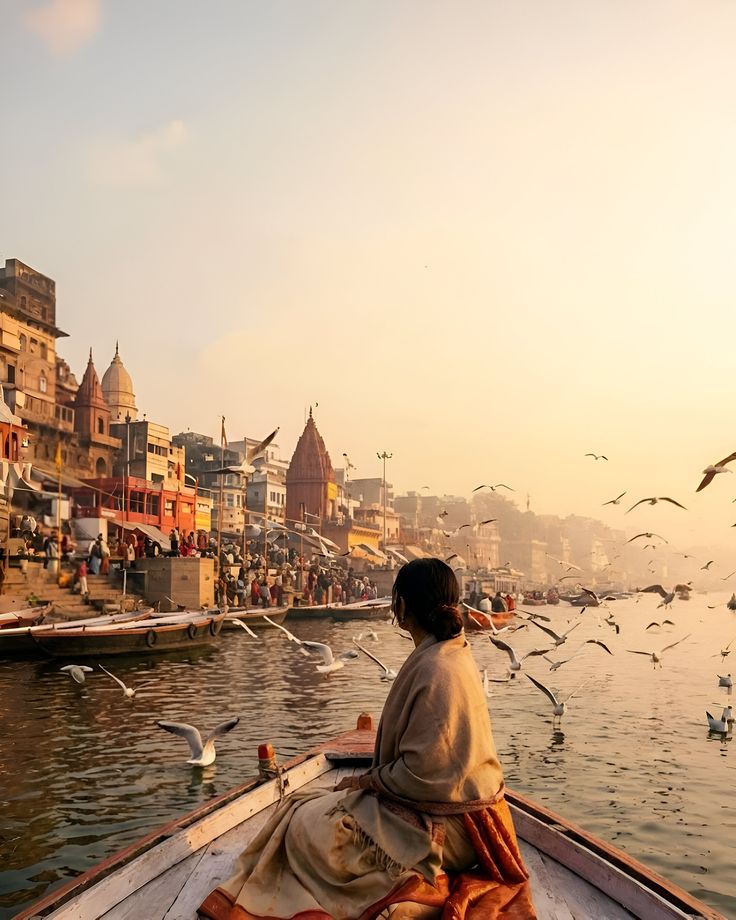
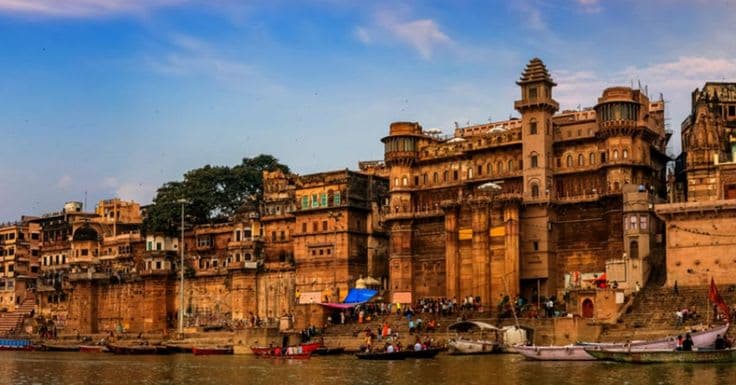
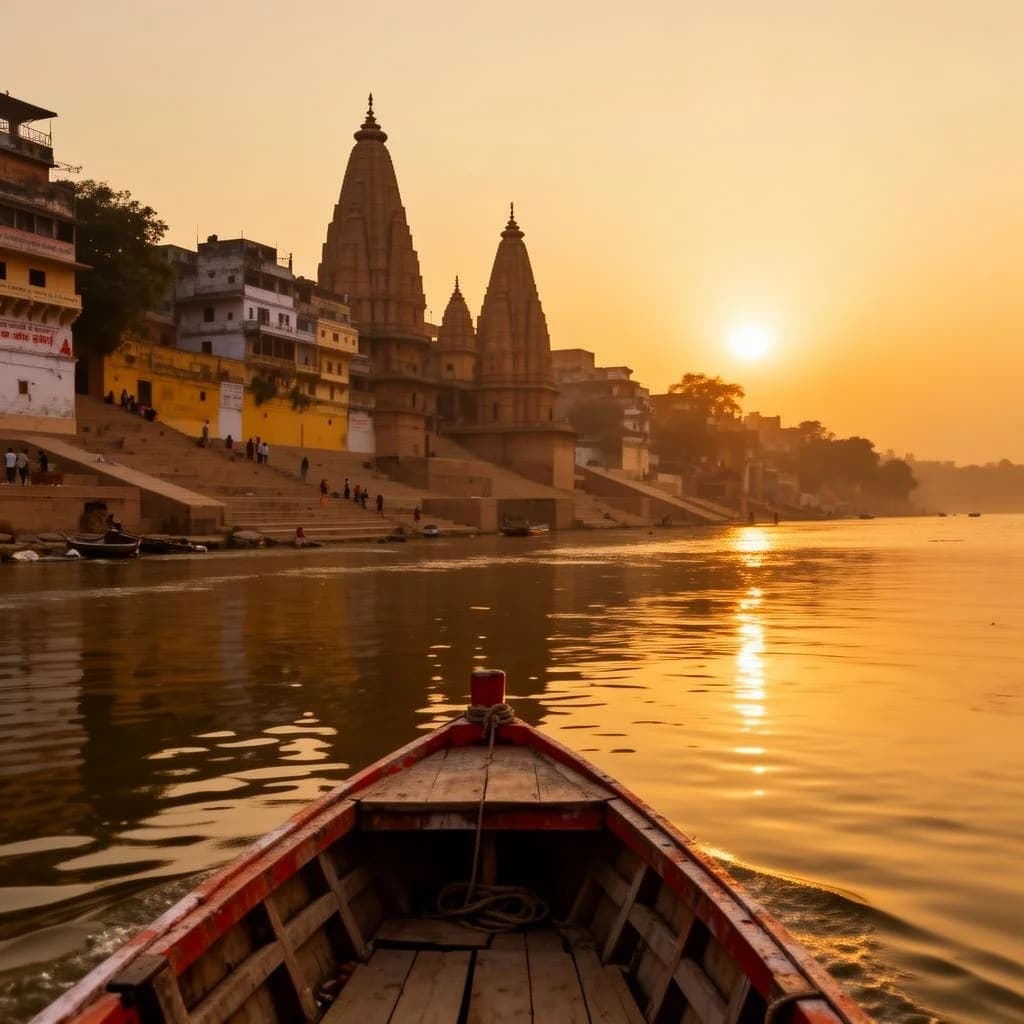
From the water you see what no walk can show: the whole sweep of the ghats waking at dawn, pilgrims bathing, priests at their rituals, the palaces and temples rising from the steps, and the cremation fires at Manikarnika in their proper, distant solemnity. A boat ride is how the city first makes sense. It is the experience every visitor remembers, and the one I always put first in a plan. See our ghats overview for what each ghat is.
Both are beautiful; they are different experiences.
If you can only do one, take the sunrise ride. If you can do both, the sunrise boat and an evening aarti boat bookend a perfect day.
The classic ride runs from Assi Ghat in the south north to Manikarnika and back, about 3 km one way and roughly an hour. Along the way you pass Tulsi and Kedar Ghats, Harishchandra (the smaller cremation ghat), Dashashwamedh (the main aarti ghat), the palace ghats of Man Mandir and Scindia with its tilted temple, and Manikarnika. A shorter ride runs Assi to Dashashwamedh; going all the way to Manikarnika and back usually costs a little more. A full 84-ghat circuit runs Assi to Namo Ghat at the north.
Comparing river transport options
Fair market price ranges
Because a boat ride is a non-negotiable highlight, the water's edge can feel like the Wild West. The common tricks:
The defence is simple and it works. Before your foot touches the boat, confirm three things out loud and get clear agreement:
Pay at the end of the ride, not upfront, and give only a small deposit if the boatman must step away first. Better still, book a fixed-price boat in advance through a trusted agency or your hotel, which removes the haggling entirely.
In 2026 the administration is strict: every boat must carry life jackets, and you should insist on wearing one. If a boat has none, choose another; safety is not worth a small saving. A few points of respect and care:
You have three routes:
For sunrise and especially for Dev Deepawali and other festivals, book ahead, as boats are scarce and prices climb.
Assi Ghat: quieter and peaceful, the best start for a sunrise ride and the Subah-e-Banaras programme.
Dashashwamedh Ghat: the most convenient and central, busiest, and the right ghat for the evening aarti boat.
Man Mandir Ghat: less crowded, good for photography.
A lovely plan is to start from a quieter ghat and end at Dashashwamedh.
During the monsoon, roughly July to September and sometimes into October, the Ganga rises and can flood the lower ghats, so the full Assi to Manikarnika route may not be possible and only short private rides run, if any. In high-water years, boat services are suspended for weeks. If a boat ride is central to your trip, avoid mid-monsoon, and always confirm availability for your dates. See best time to visit.
We are Experience My India, rated 4.5 stars on TripAdvisor and Google, with 50,000+ guests served since 2018. We arrange a licensed, life-jacketed boat at a fixed price with no haggling, positioned for the best sunrise light or a clear aarti view, and for South Indian pilgrims your boatman or guide can narrate in Telugu or Kannada. See our Varanasi packages or message Rajeev's team on WhatsApp at +91 7302265809. Plan your days with our Varanasi itinerary and read about Subah-e-Banaras.
Curated itineraries featuring this divine destination.






Grouped for quick scanning
Everything you need to know about Ganga Boat Ride.
Topic 01
8 questions
A boat ride is the single most powerful experience in Varanasi, showing you the whole sweep of the ghats waking at dawn, pilgrims bathing, priests at their rituals and the palaces rising from the river, in a way no walk can. It is how the city first makes sense, and the experience most visitors remember above all others.
Sunrise, around 5 to 6 AM, is the best, with the finest light, mist on the river, calm water and the ghats coming alive. Sunset, around 6 to 7 PM, is also lovely and lets you watch the Ganga Aarti from the water. If you can do only one, choose the sunrise ride; if both, do both.
Both are beautiful but different. Sunrise gives the best light, calm and the waking ghats, the transformative ride. Sunset lets you watch the evening Ganga Aarti from the water, often the finest vantage of the ceremony. The ideal is to do a sunrise boat one morning and an evening aarti boat another, bookending a perfect day.
A typical ride lasts about 45 minutes to an hour for the classic Assi to Manikarnika and back, and one to two hours for a fuller circuit. Some operators offer longer three-hour tours. Confirm the duration by the clock before you board, as a common trick is cutting the ride short. Decide the length when you agree the price.
The classic route runs from Assi Ghat in the south north to Manikarnika and back, about 3 km one way, passing Tulsi, Kedar, Harishchandra, Dashashwamedh, Man Mandir and Scindia ghats. A shorter ride goes Assi to Dashashwamedh, and a full 84-ghat circuit runs to Namo Ghat at the north. Agree the route before boarding.
Most rides start from Assi Ghat, quieter and ideal for sunrise, or Dashashwamedh Ghat, central, busiest and best for the evening aarti. Man Mandir Ghat is a calmer alternative good for photography. You can also start from the ghat nearest your hotel. A nice plan begins at a quiet ghat and ends at Dashashwamedh.
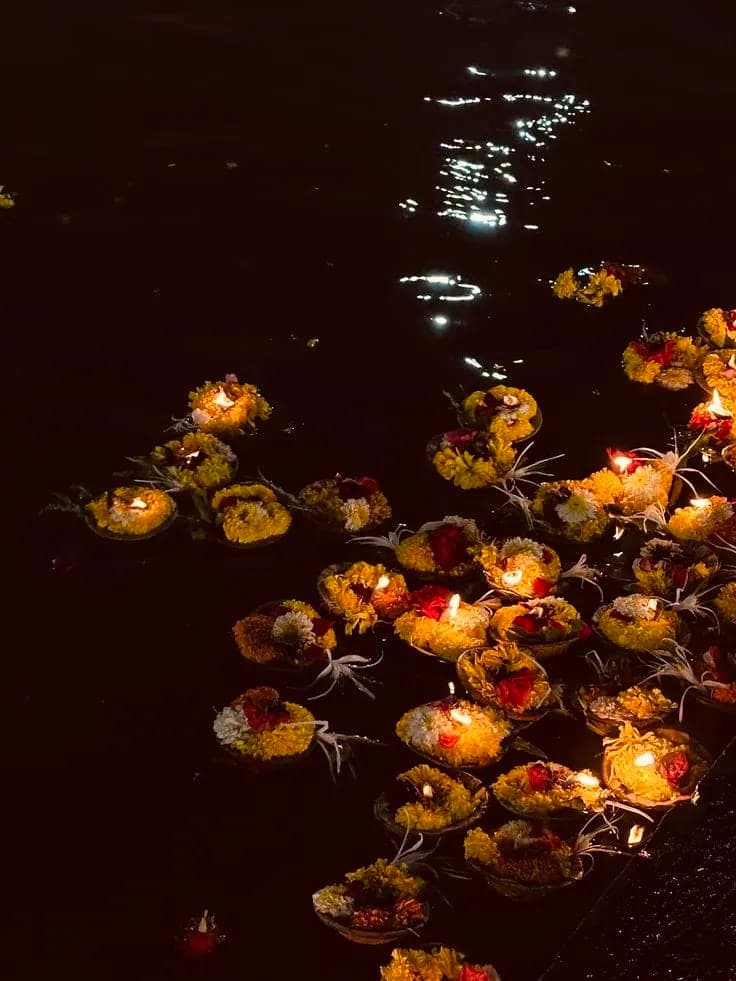
Yes, and it is often the finest view, with your boat positioned on the river facing the Dashashwamedh ceremony platform, away from the crush on the steps. It is especially good for elders, families and photographers. Book an evening aarti boat and arrive early, as boats fill the central arc well before the ceremony starts.
Absolutely. It is widely considered the must-do experience of Varanasi, capturing the soul of the city from the river at a modest cost. Even a short shared sunrise ride is worthwhile. The only caveats are to book or bargain carefully to avoid overpaying, insist on a life jacket, and avoid mid-monsoon when boats may not run.
Topic 02
10 questions
A seat on a shared boat is the cheapest option, commonly around ₹100 to ₹250 per person, with the evening and sunrise windows at the higher end. Shared boats are good value for solo travellers and couples happy to share with others. Confirm whether the quote is per person or total before boarding.
A private rowboat is commonly around ₹1,000 to ₹1,500 total in the daytime, rising to roughly ₹1,500 to ₹2,200 at the sunrise premium, and an evening private aarti boat around ₹1,200 to ₹3,000. These are fair ranges, not fixed prices; agree the total for the whole boat, the duration and the route before you board.
Sunrise is the premium window, the most sought-after time for the best light and calm, so demand pushes prices up; a private rowboat that costs around ₹1,500 at noon can cost ₹2,200 at dawn. The same spike happens around the evening aarti. Knowing this in advance helps you judge whether a quote is fair.
A private evening boat to watch the Ganga Aarti from the water is commonly around ₹1,200 to ₹3,000 total depending on size and operator, with shared evening seats far cheaper. Group aarti boat tariffs are sometimes quoted around ₹3,000 to ₹4,500. Book ahead, as aarti boats fill the central arc well before the ceremony.
Larger heritage cruises and bajra vessels, such as Alaknanda, start from roughly ₹6,000 and rise with comfort and group size. They offer a steadier, more comfortable ride than a rowboat, suiting groups and those who prefer comfort over the rustic experience. For most visitors, a hand-rowed boat is the more atmospheric choice.
Unfortunately yes, foreign visitors are often quoted two to four times the fair rate, with opening quotes as high as ₹4,000 for a simple rowboat. Counter firmly but politely using the fair ranges, or book a fixed-price boat in advance through an agency or hotel to avoid the haggling and the inflated foreigner pricing entirely.
This is a common point of confusion deliberately exploited by some boatmen. Always clarify whether the quote is per person or for the whole boat, and state it back as a total, for example "₹400 total, not per person." Get clear agreement before boarding, so there is no dispute or demand for more at the end.
Pay at the end of the ride, not upfront, so the boatman has reason to complete the full agreed duration and route. Give only a small deposit if he must step away before you board. Paying in full in advance removes your leverage if the ride is cut short, which is a known trick.
Yes, on the ghat bargaining is normal and expected, and opening quotes are usually inflated. Counter firmly but politely, using the fair ranges as your guide, and walk to another boat if needed. If you dislike haggling, book a fixed-price boat through your hotel or an agency for a small markup and skip the negotiation.
A shared sunrise rowboat seat, around ₹100 to ₹250 per person, is the cheapest way and still a wonderful experience. Bargain on the ghat or book a shared tour. The trade-off is sharing the boat with others and less flexibility on route and timing than a private boat gives.
Topic 03
9 questions
The main ones are quoting two to four times the fair price, confusing per-person and total price then demanding more at the end, adding extra passengers to a "private" boat, and cutting the ride short after twenty minutes claiming the current is dangerous unless you pay more. Confirming price, duration and route out loud defeats all of them.
Before boarding, confirm three things out loud and get clear agreement: the exact total price (not per person), the exact duration by the clock, and the exact route. Pay at the end, not upfront. Insist on life jackets. Best of all, book a fixed-price, vetted boat in advance through your hotel or a trusted agency.
The exact price stated as a total, not per person; the exact duration by the clock; and the exact route, for example Assi to Manikarnika and back. Say each one out loud and wait for clear agreement before stepping aboard. These three confirmations defeat almost every boat scam on the river.
This is a known trick, often dressed up as the current being "too dangerous" to continue unless you pay more. Having agreed the duration by the clock and the route out loud before boarding is your protection, and paying only at the end gives you leverage. Stay calm, hold to the agreement, and pay the agreed amount.
Some try, which is why you should confirm it is a private boat for your group only and clarify the total passenger count before boarding. If others are added against your agreement, point to what you agreed. Booking a fixed-price private boat through an agency removes this risk, as the terms are set in advance.
In 2026 the administration is strict and every boat must carry life jackets. Insist on wearing one, and if a boat has none, simply choose another, as safety is not worth a small saving. Reputable agencies and licensed operators provide life jackets as standard. This is a non-negotiable point, especially with children aboard.
Yes, when you use a licensed boat with life jackets and a sensible boatman, boat rides are safe and among the city's great pleasures. The cautions are wearing the life jacket, not standing or leaning suddenly in a rowboat, keeping phones on a strap, and avoiding boats in high-water monsoon conditions. Choose a vetted operator for peace of mind.
Yes, with care. Use a boat with life jackets sized for children, keep them seated and away from the edge, and choose a steadier motorboat or larger boat if you prefer. A private boat is calmer than a shared one for families. Avoid the monsoon high water. Many families do the sunrise ride and love it.
No. Devout pilgrims take a brief ritual dip from designated bathing ghats, but you should not swim for leisure from a boat: the current and water quality make it unsafe. Stay seated with your life jacket on, and enjoy the river from the boat. Keep your belongings secure, as the river claims many dropped phones.
Topic 04
9 questions
Three ways: directly on the ghat by bargaining with a boatman, through your hotel or a trusted agency for a fixed fair price with a vetted boatman, or online in advance for sunrise and aarti tours. The hotel or agency route is calmest and avoids haggling. For festivals, book well ahead, as boats sell out.
Booking in advance through a hotel or agency gives a fixed, fair price and a vetted, life-jacketed boat with no haggling, for a small markup. Booking on the ghat can be cheaper if you bargain well, but you carry the risk of the scams. For sunrise and festivals, advance booking is strongly recommended.
Yes, most hotels and guesthouses arrange boat rides, often with a pickup from the ghat nearest you, at a fixed price for a small markup over the hardest ghat-side bargain. Confirm the price, duration and route with them beforehand. It is a calm, reliable option, especially for a sunrise ride when you want no stress at dawn.
A hand-rowed wooden boat is the classic, quiet, authentic experience, gentle and atmospheric but slower. A motorboat is faster and steadier, covering more ghats in less time, but noisier and less serene. For the magic of a sunrise ride, the rowboat is the choice; for covering distance or for nervous passengers, the motorboat suits.
A shared boat is cheapest per person and sociable, fine for solo travellers and couples. A private boat gives you the whole boat, flexible route and timing, and a calmer experience, better for families, photographers and those who want to linger. For a special sunrise, a private rowboat is the ride most worth the extra cost.
Assi Ghat is best for a quiet, peaceful sunrise start with the Subah-e-Banaras programme; Dashashwamedh is most convenient and central and best for the evening aarti; Man Mandir is calmer and good for photography. A lovely plan starts from a quieter ghat and ends at Dashashwamedh to catch the morning or evening ceremony.
Yes, the classic route passes Manikarnika, the main cremation ghat, and you observe it respectfully from the water at a distance, never photographing the cremations. Going all the way to Manikarnika and back may cost a little more than the shorter Assi to Dashashwamedh ride. Confirm the route and price before boarding.
The full circuit runs from Assi Ghat in the south to Namo Ghat in the north, covering all 84 ghats from the water, a longer and more comprehensive ride than the classic Assi to Manikarnika loop. It shows the whole riverfront, including the quieter northern ghats. It takes longer and costs more; agree the route and time first.
Yes, the boat gives wonderful angles on the palace ghats, the tilted temple at Scindia and the sunrise light, and photography of the general riverfront is welcome. The firm exception is the cremation ghats, Manikarnika and Harishchandra, where photographing the pyres is forbidden and deeply disrespectful. Keep your phone or camera on a strap over the water.
Topic 05
7 questions
Often not the full ride. In the monsoon, roughly July to September, the Ganga rises and can flood the lower ghats, so the full Assi to Manikarnika route may not run and only short private rides are available, if any. In high-water years, boats are suspended for weeks. Confirm availability for your dates if a boat ride matters.
Yes, winter dawns, especially December and January, can be cold on the water, often single digits, with mist over the river. Dress warmly with layers and a shawl for a sunrise ride. The cold is well worth it for the beautiful misty light, which is at its finest in these months. Hot chai afterward is part of the ritual.
Dress modestly, as Varanasi is a holy city, with warm layers for a winter sunrise. Bring water, a camera or phone on a strap, a small cushion if you dislike hard wooden planks for an hour, and some cash. Wear the provided life jacket. A light scarf helps against sun, mist or river breeze depending on the season.
Yes, and a boat ride is often the best way for elders to see the ghats comfortably without long walks on uneven steps. Choose a steadier larger boat or motorboat, board at a convenient ghat, and keep the duration moderate. Ensure a properly fitted life jacket and a helping hand on and off the boat. We arrange all of this.
Yes, generally, especially on a booked, licensed boat in the busy sunrise and aarti windows when the river is full of other boats. As anywhere, prefer a vetted operator over a random ghat-side tout, keep belongings secure, and trust your judgement. Booking through a hotel or agency adds comfort and removes the haggling at the water's edge.
With us, yes. For South Indian pilgrims, we arrange a boatman or guide who narrates the ghats and rituals in Telugu or Kannada, so nothing is lost in translation on the most memorable ride of your trip. This is part of why many pilgrims from Andhra Pradesh, Telangana and Karnataka book their Kashi boat ride with us.
Yes. We arrange a licensed, life-jacketed boat at a fixed price with no haggling, positioned for the best sunrise light or a clear aarti view, and combined with your darshan, ghats and aarti into one smooth plan. For South Indian pilgrims, it is narrated in Telugu or Kannada. Message us on WhatsApp at +91 7302265809.
Topic 06
10 questions
You will see the ghats waking at dawn: pilgrims taking ritual dips, priests performing pujas, sadhus in meditation, washermen at work, and the soft golden light spreading over the palaces and temples that rise from the steps. You may pass the morning aarti at Assi Ghat. It is the city at its most alive and most beautiful.
Arrive about 30 minutes before sunrise, roughly 5 to 5:30 AM depending on the season, so you are on the water as the light breaks. Reaching the ghat early also gives you time to find a good boat, agree the fare calmly and settle in. Your boatman will position the boat for the best sunrise view.
Yes, that is the classic plan: a sunrise boat ride first, then walk from the ghats to Kashi Vishwanath for darshan, since Dashashwamedh is a short walk from the temple. Ending the boat at Dashashwamedh sets you up perfectly. We sequence the boat, darshan and the evening aarti into one smooth day.
Yes. Start at Assi Ghat for the Subah-e-Banaras dawn programme of chanting, music and yoga, then step onto a boat for the sunrise ride, or do the boat first and the programme after. The two pair beautifully at Assi in the early morning. See our Subah-e-Banaras page for timings and detail.
A hand-rowed boat typically seats a small group comfortably, while larger motorboats and cruises take more. For a private family or group boat, tell the operator your numbers so the right boat is arranged and not overloaded. Never let a boat be overloaded beyond its safe capacity, and ensure a life jacket for every passenger.
For a larger group, a bigger motorboat or a cruise is steadier and more comfortable and keeps everyone together, while a hand-rowed boat is more atmospheric for two to six people. For groups with elders or children, the steadier larger boat is usually the better choice. We match the boat to your group size and needs.
Many boatmen in 2026 carry a QR code for UPI apps, so digital payment is increasingly possible, but it is unreliable, so carry cash as well. Agree the total in advance and pay at the end. Having small-denomination cash avoids disputes over change and works even where the network or the boatman's app fails.
A private rowboat at sunrise gives the best photography, with soft golden light, mist, and the freedom to ask the boatman to pause or angle the boat. Man Mandir and the palace ghats, and the tilted temple at Scindia, are highlights. Keep your camera on a strap, and never photograph the cremation ghats.
Around the Ganga Aarti, yes, many boats gather on the water facing Dashashwamedh, and the central arc fills well before the ceremony. Booking ahead and arriving early secures a good position. Away from the aarti window, evening rides are calmer. A sunrise ride is generally quieter on the water than the aarti-time evening.
On a private boat, yes, you can agree a route and ask the boatman to linger at certain ghats or angle for photographs, within the agreed time. Shared boats follow a set route. Discuss any preferences when you agree the fare. We tailor the route on our private boats, for example focusing on Kedar Ghat for South Indian pilgrims.
Still have a question?
Message Rajeev on WhatsApp