
3 nights / 4 days
Pilgrimage
₹37,000
Starting From


Senior Citizen Kashi Ayodhya Yatra
Varanasi, Prayagraj & Ayodhya (Elders)|Pilgrimage
One City A Day Pace
Lift-Access Rooms
Daily Family WhatsApp
A 40-year guide to Tulsi Smarak Bhawan, the Tulsidas memorial in Ayodhya, its nightly Ramleela, the Ayodhya Shodh Sansthan research library, timings and what to see.

Drop your details and we'll craft a personalized spiritual package.
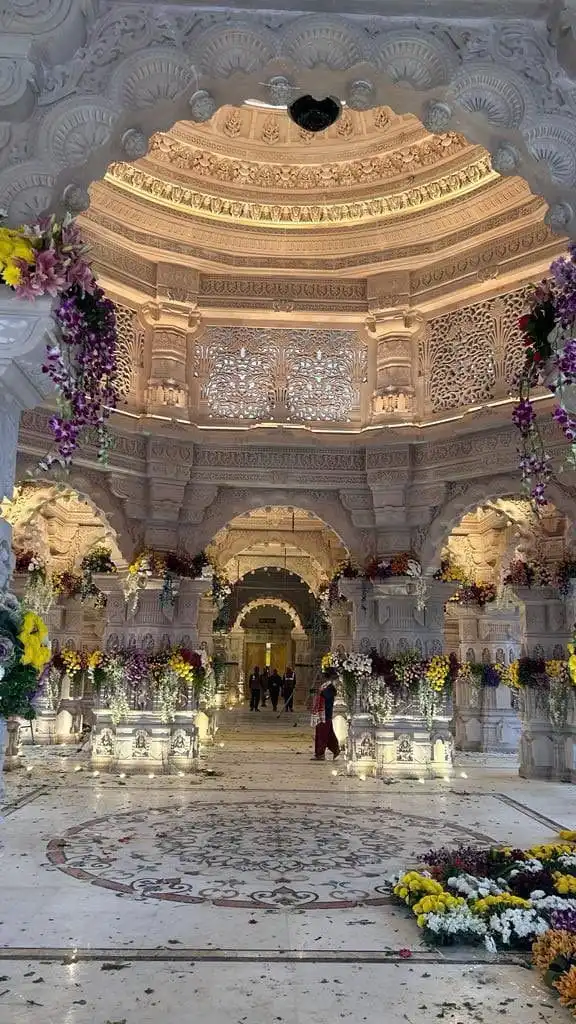
Home to the Ram Janmabhoomi temple, Hanuman Garhi, and Dashrath Mahal. The Saryu aarti at sunset is quieter than Varanasi's,it moves people who expected only the Ram Mandir to remember it most.
Tulsi Smarak Bhawan is a memorial to Goswami Tulsidas, the 16th-century poet-saint who wrote the Ramcharitmanas, the Awadhi retelling of the Ramayana that countless devotees know by heart. Established in 1969, it honours his life and work, hosts a nightly Ramleela, and houses a serious research centre and library on Ayodhya and the Ramayana.
The highlight is the daily Ramleela, staged roughly 6:00 to 9:00 PM, a dramatic enactment of episodes from the Ramayana. Unlike the seasonal Ramleelas elsewhere, this one runs through the year, which makes it a reliable evening experience whenever you visit. It is free and deeply atmospheric.
From the ground: After the Saryu aarti, when many visitors think the day is over, I bring people here. To watch the Ramayana acted out, in the city where it is set, in the memorial of the poet who carried it to the people, is a fitting last note. Children love it, and elders are moved by it.
The Bhawan houses the Ayodhya Shodh Sansthan, a research institute, and a library holding works on Tulsidas, the Ramayana and the history and culture of Ayodhya. For the curious and the scholarly, it is a quiet, rewarding resource.
Practical details for your visit
Tulsi Smarak Bhawan sits about 2 km from Ram Mandir, near the riverfront cluster. It pairs naturally with the Saryu aarti at Ram Ki Paidi and Ram Katha Park for a full cultural evening. See the full Ayodhya guide and the itinerary.
Take an e-rickshaw for the 2 km from Ram Mandir. Want your evening sequenced, aarti then Ramleela? See our Ayodhya packages or message me, Rajeev, on WhatsApp at +91 7302265809.
Curated itineraries featuring this divine destination.








Grouped for quick scanning
Everything you need to know about Tulsi Smarak Bhawan.
Topic 01
8 questions
Tulsi Smarak Bhawan is the memorial to the poet-saint Tulsidas, author of the Ramcharitmanas, established in 1969 in Ayodhya. It houses a research centre and library and stages a nightly Ramleela around 6 to 9 PM. Entry is free, about 2 km from Ram Mandir.
It is famous as the memorial to Tulsidas and for its daily, year-round Ramleela, a reliable evening experience. The Ayodhya Shodh Sansthan research centre and library add scholarly depth.
Goswami Tulsidas was a 16th-century poet-saint who wrote the Ramcharitmanas, the Awadhi retelling of the Ramayana that brought the epic to ordinary devotees. Tulsi Smarak Bhawan honours his life and work.
The Ramcharitmanas is Tulsidas's Awadhi-language retelling of the Ramayana, one of the most loved and recited devotional texts in North India. Tulsi Smarak Bhawan memorialises its author.
In 1969, as a memorial to Tulsidas. It has since grown into a cultural and research centre, with a library and the nightly Ramleela as its best-known feature.
It is a memorial and cultural centre rather than a conventional temple, honouring Tulsidas and the Ramayana through performance, research and a library. It complements the city's temples.
The Ayodhya Shodh Sansthan is a research institute housed at Tulsi Smarak Bhawan, dedicated to the study of Ayodhya, Tulsidas and the Ramayana, with a supporting library.
Yes, especially in the evening for its nightly Ramleela. The combination of the Tulsidas memorial, the research library and the daily performance gives a cultural depth the temples alone do not.
Topic 02
7 questions
The Ramleela is staged daily, roughly 6:00 PM to 9:00 PM. Verify exact timing locally, and arrive a little early for a good seat, especially in season.
Yes, unlike the seasonal Ramleelas elsewhere, this one runs through the year, which makes it a reliable evening experience whenever you visit Ayodhya.
Yes, the Ramleela is free to watch, as is entry to the Bhawan. Arrive early in busy season for a comfortable spot.
The Ramleela is a dramatic enactment of episodes from the Ramayana, with costume, music and dialogue. At Tulsi Smarak Bhawan it is performed nightly, telling the story in the city where it is set.
Yes, children usually love the costumes, music and drama of the Ramleela, and it is a lively, engaging way to share the Ramayana with them in the evening.
The performance runs roughly across the 6 to 9 PM window, often in segments. You can watch as much as you like; even part of it makes a memorable evening.
See both. The Saryu aarti is at sunset and the Ramleela follows in the evening, so a common plan is the aarti at Ram Ki Paidi first, then the Ramleela here.
Topic 03
7 questions
Entry is free, with the nightly Ramleela around 6 to 9 PM. The library and research centre keep their own daytime hours. Verify current timings locally before your visit.
No, entry is free, including the Ramleela. The library and research centre are open to visitors and scholars during their hours.
Yes, the library and the Ayodhya Shodh Sansthan are open to the curious and to scholars during their hours, holding works on Tulsidas, the Ramayana and Ayodhya's history.
The auditorium and grounds are largely accessible, more so than the stepped temples. Tell us your needs and we plan an easy route, making it a good evening stop for those with limited mobility.
Yes. Seated Ramleela performances and a level, accessible venue make it comfortable for elderly visitors, a gentle and moving way to end the day.
Photography around the grounds is generally fine, but follow any restrictions during performances and in the library. Be considerate of the audience during the Ramleela.
The evening, for the nightly Ramleela around 6 to 9 PM. Visit the library by day if you want to explore its collection in a quieter setting.
Topic 04
6 questions
About 2 km, near the riverfront. It is a short e-rickshaw ride and easy to combine with the Saryu aarti and Ram Katha Park for an evening of culture.
Ram Ki Paidi and the Saryu aarti, Ram Katha Park, the Lata Mangeshkar Chowk and Nageshwarnath Temple are all close, making for a full evening on the riverfront.
Yes, ideally. The aarti at Ram Ki Paidi is at sunset and the Ramleela here follows, so the two flow into one rich evening with the riverfront between them.
The evening, for the nightly Ramleela, is the highlight. Daytime suits a quieter visit to the library and the memorial.
Yes, it is the cultural close to an evening on the one-day and two-day plans, paired with the Saryu aarti and Ram Katha Park. See our day-by-day itinerary.
The Saryu aarti at Ram Ki Paidi and Ram Katha Park, both nearby. Together they make a complete cultural evening after the day's temples.
Topic 05
22 questions
Take an e-rickshaw for the 2 km from Ram Mandir to the riverfront area. It is a short, easy ride, especially convenient for an evening Ramleela.
The area is more accessible than the inner temple lanes, but e-rickshaws remain the easiest option. Confirm vehicle access on busy festival evenings.
Parking is available in the area, with more arrangements during busy Ramleela evenings and festivals. Confirm locally on the day.
Yes, it is safe and well attended for the nightly Ramleela. Take normal care of belongings in the audience, and keep children close in the crowd.
The nearby riverfront and central lanes have pure-vegetarian eateries and sweet shops. Choose busy, clean places and bottled water, ideally before the evening Ramleela.
Not strictly, but a guide explains the significance of Tulsidas and the Ramcharitmanas, the Ramleela episodes, and the library, and sequences your evening with the aarti nearby.
Yes, foreigners are welcome, and the Ramleela is an engaging, visual way to follow the Ramayana even without the language. The Tulsidas memorial and library add context.
Tulsidas's Ramcharitmanas made the Ramayana accessible to ordinary devotees in their own tongue, shaping how millions experience Rama's story. Honouring him in Ayodhya, the story's setting, is deeply fitting.
The nightly Ramleela around 6 to 9 PM, the moving close to an Ayodhya evening. If you are scholarly, give the library and research centre some time too.
We sequence your evening as the Saryu aarti followed by the Ramleela here, with the riverfront and Ram Katha Park between. See our Ayodhya packages, or message me, Rajeev, on WhatsApp at +91 7302265809.
The Saryu aarti is an evening river worship of lamps and chants at Ram Ki Paidi, while the Ramleela at Tulsi Smarak Bhawan is a dramatic stage enactment of the Ramayana. They are different experiences that pair perfectly in one evening.
Tulsidas spent much of his life in Varanasi, my own city, where he composed and lived, while his Ramcharitmanas is rooted in Ramas Ayodhya. Tulsi Smarak Bhawan honours him in the city of the story he told.
The Ramleela draws on the Awadhi and Hindi of the Ramcharitmanas. Even without the language, the costume, music and action make the story easy to follow, which is why foreign visitors enjoy it.
Yes, copies of the Ramcharitmanas and other Ramayana literature are widely sold in the Ram Path bazaar and the temple lanes, and the Tulsi Smarak Bhawan library holds scholarly editions.
Both enact the Ramayana, but Varanasis Ramnagar Ramleela is a famous month-long seasonal event, while Tulsi Smarak Bhawans is a nightly, year-round performance. The latter is the reliable choice whenever you visit Ayodhya.
The nightly Ramleela draws a steady audience, busier in peak season and festivals. Arrive a little early for a comfortable seat, and it is calmer than the temple crowds.
October to March, when the evenings are pleasant for the open Ramleela, with the busiest, most festive performances around Deepotsav and Ram Navami.
Allow an hour or more for the Ramleela, more if you also explore the library. You can watch as much of the performance as you like; even part of it is rewarding.
Yes, the Ramleela is staged in a performance space at the Bhawan, with seating for the audience. The venue is level and accessible, comfortable for elderly visitors.
Yes, the research centre and library are open to scholars and the curious during their hours, holding works on Tulsidas, the Ramayana and the history and culture of Ayodhya.
Yes, the nightly Ramleela is engaging for children and moving for elders, and the level, accessible venue makes it an easy, enjoyable family evening.
Tradition holds that Tulsidas began composing the Ramcharitmanas on Vivah Panchami, the day of Rama and Sitas wedding. It deepens the link between the poet, the text and Ayodhyas festivals.
Still have a question?
Message Rajeev on WhatsApp