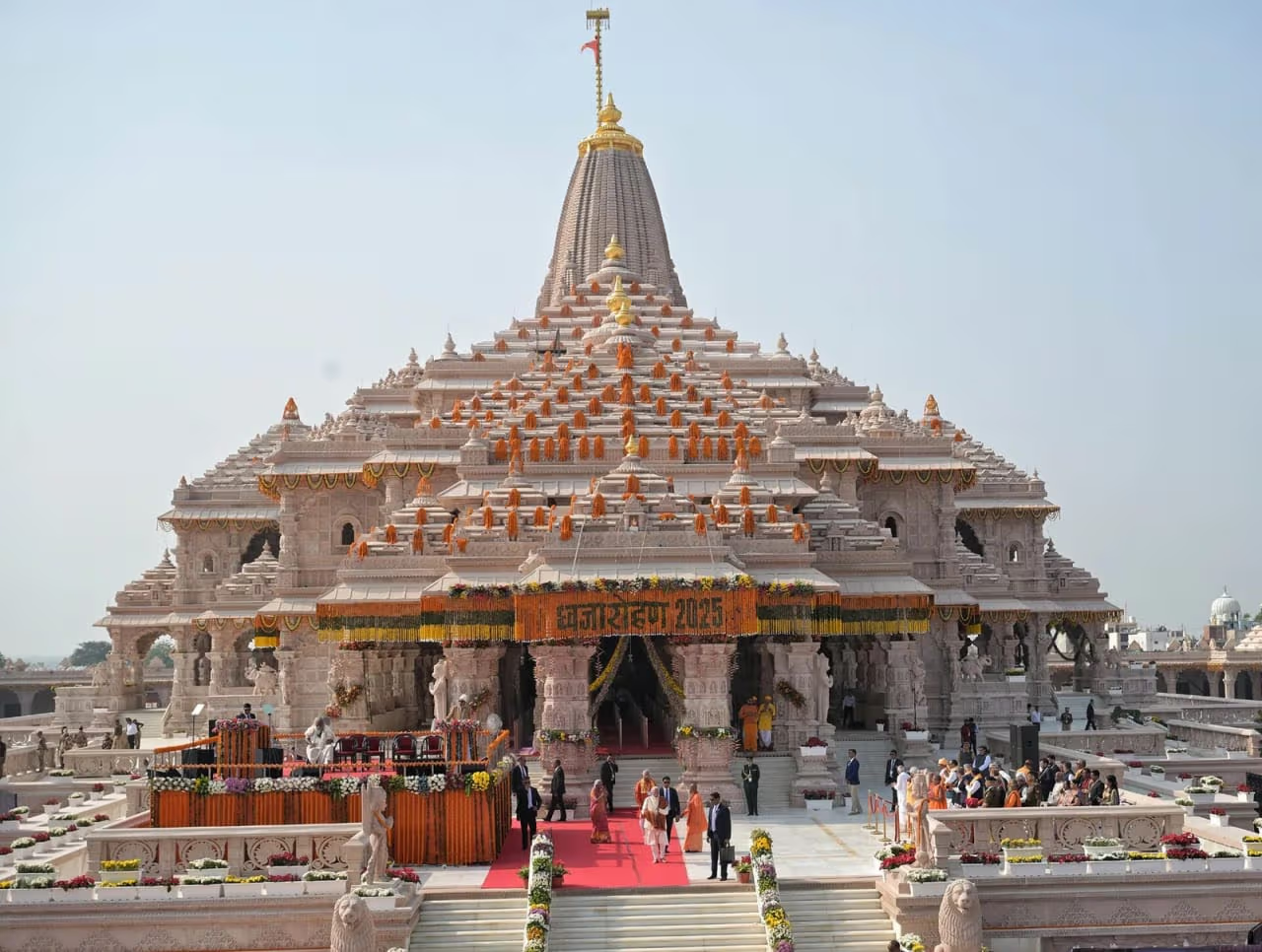
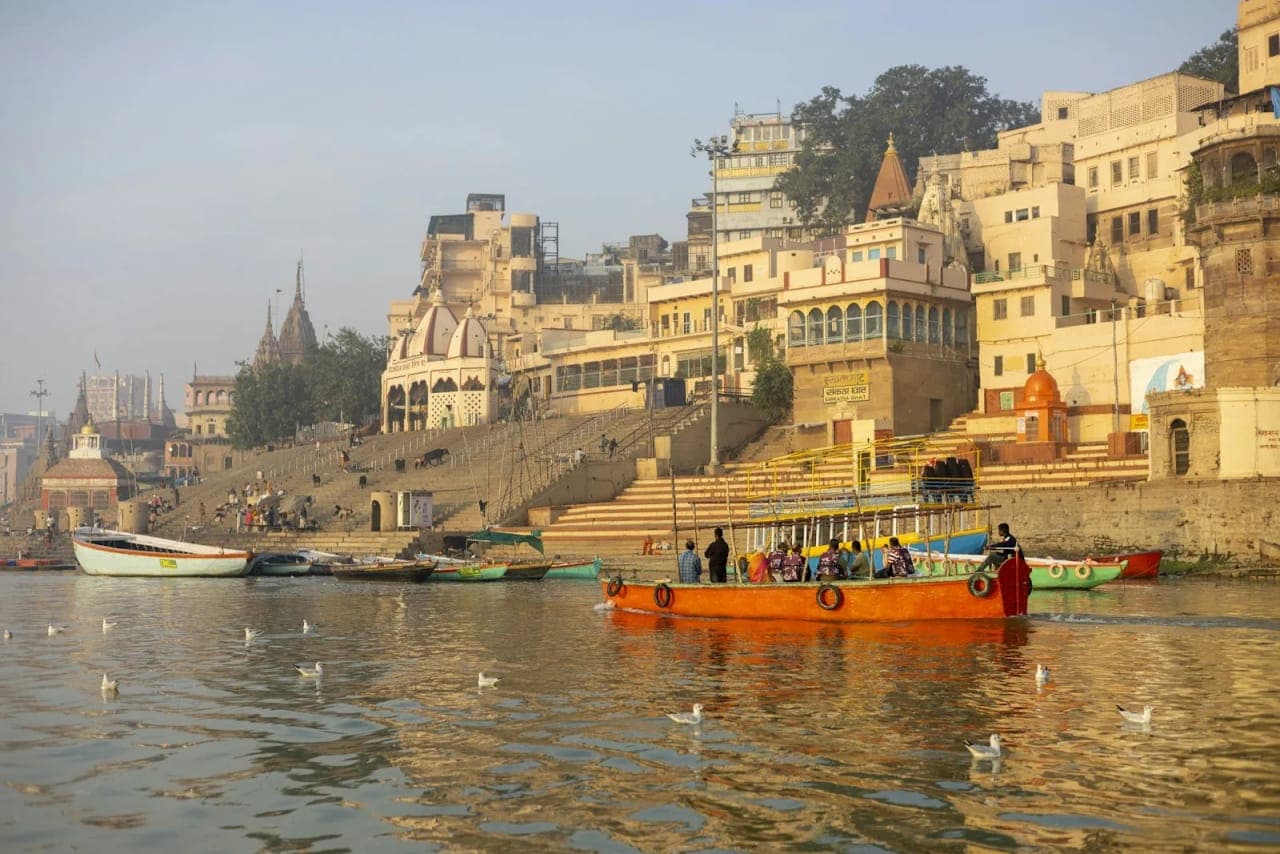
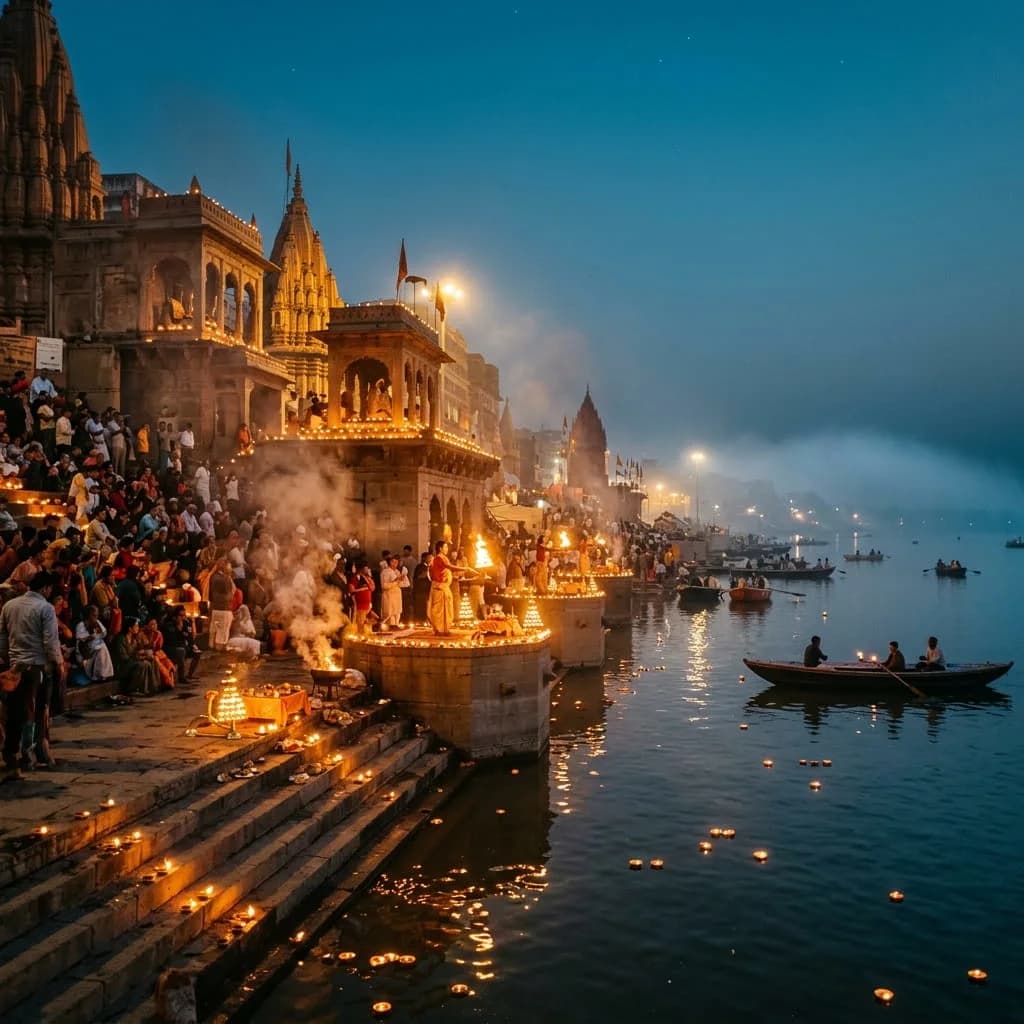
A Varanasi-first two-city tour has one genuinely tricky day - Day 2 - because a lot has to happen before the cities change. Getting the order and the timing right is the difference between reaching Ayodhya for the Saryu Aarti and reaching it after dark.
Here is the shape of it in numbers. Kashi Vishwanath opens for darshan at around 4:00 AM, and the early morning is the calmest hour of the day; the general queue can otherwise run 2-4 hours on Mondays, in Sawan and at Mahashivratri. Ayodhya is about 210-220 km away, roughly a 4.5 hour drive through Sultanpur and Jaunpur. And the Saryu Aarti at Ram ki Paidi begins at dusk - about 5:45 PM in winter. Line those up and the plan writes itself: sunrise boat, early Vishwanath darshan on a Sugam pass, checkout by late morning, transfer by early afternoon, and Ayodhya before the aarti. Experience My India books your Sugam pass precisely so the morning darshan does not eat the day.
Now the train question, because a lot of listings get it wrong. There is no dedicated Varanasi-to-Ayodhya Vande Bharat: the 22549 Vande Bharat that people quote actually runs Gorakhpur to Prayagraj via Ayodhya, not from Varanasi. Direct Varanasi-Ayodhya trains do exist, but their fixed timings rarely leave room for a full Kashi morning first, which is why, on this specific itinerary, the private cab - door-to-door and flexible - is usually the simplest choice. If a train suits your dates, we book a suitable current option; we would rather tell you the truth about the route than sell you a train that does not run.
Two last points that hold in both cities. General darshan is completely free at Kashi Vishwanath and the Ram Mandir alike - a Sugam Darshan e-pass (about Rs 250-300, official portals only) simply speeds the queue - and leather is strictly forbidden inside Kashi Vishwanath, belts and wallets included, alongside phones and cameras. Plan the Day 2 morning well, and the two cities join up without a single wasted hour.