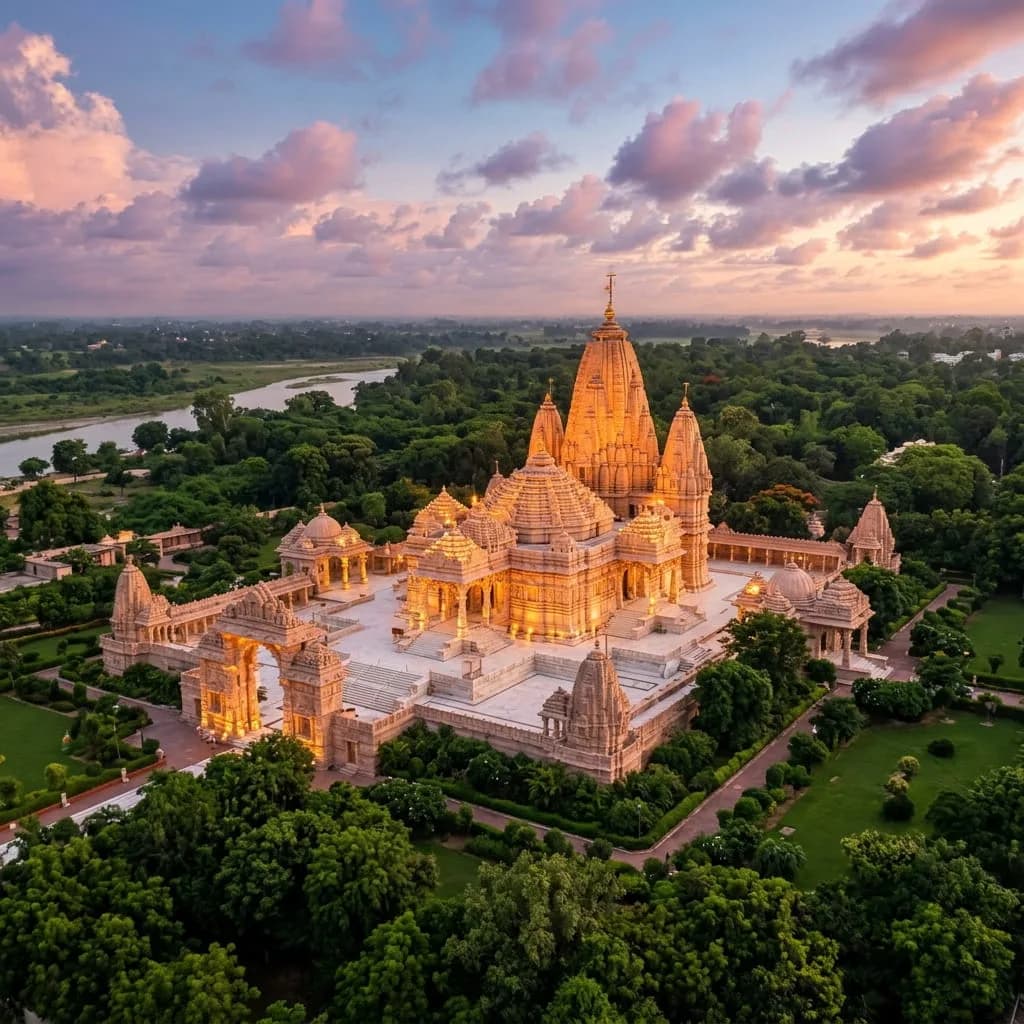
Guests book this tour for Kashi Vishwanath. Almost every one tells us afterward that it was the river - the sunrise and the aarti - that they didn't expect to feel so deeply.
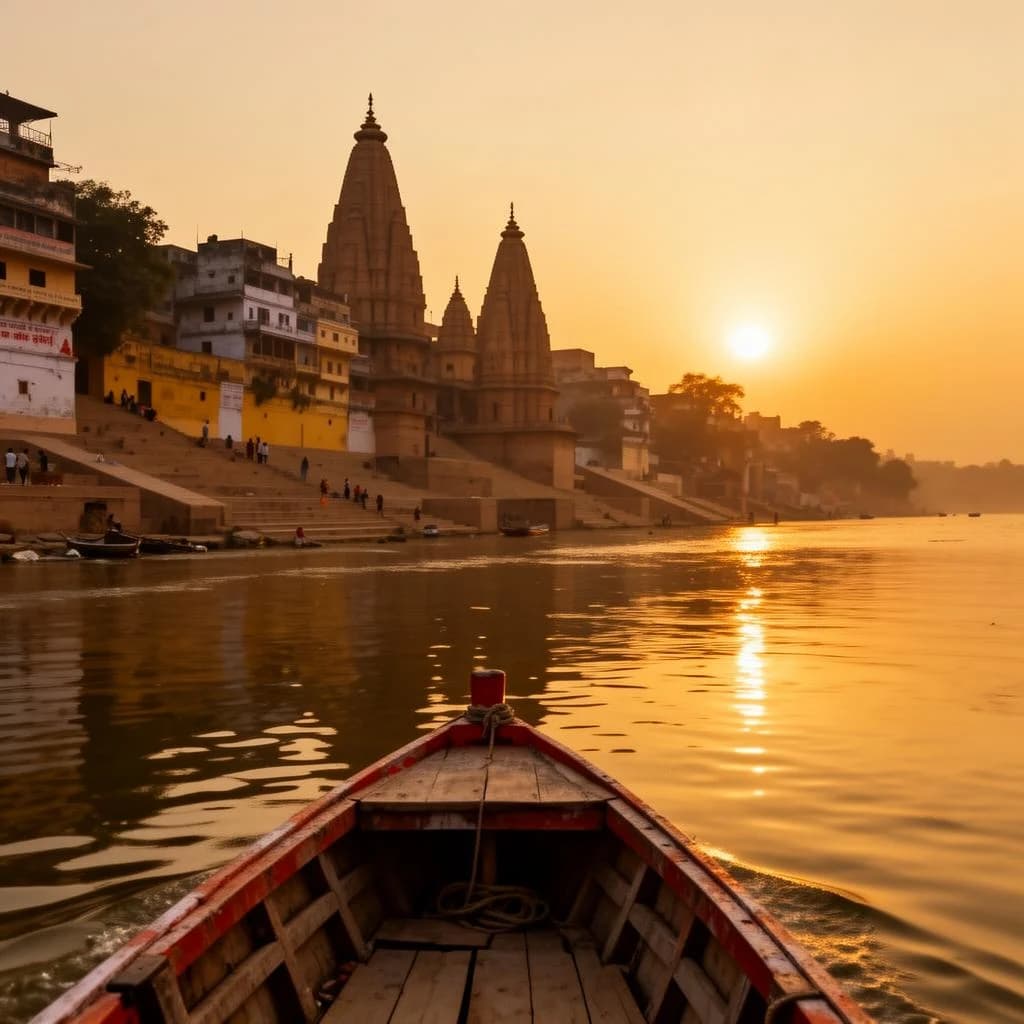
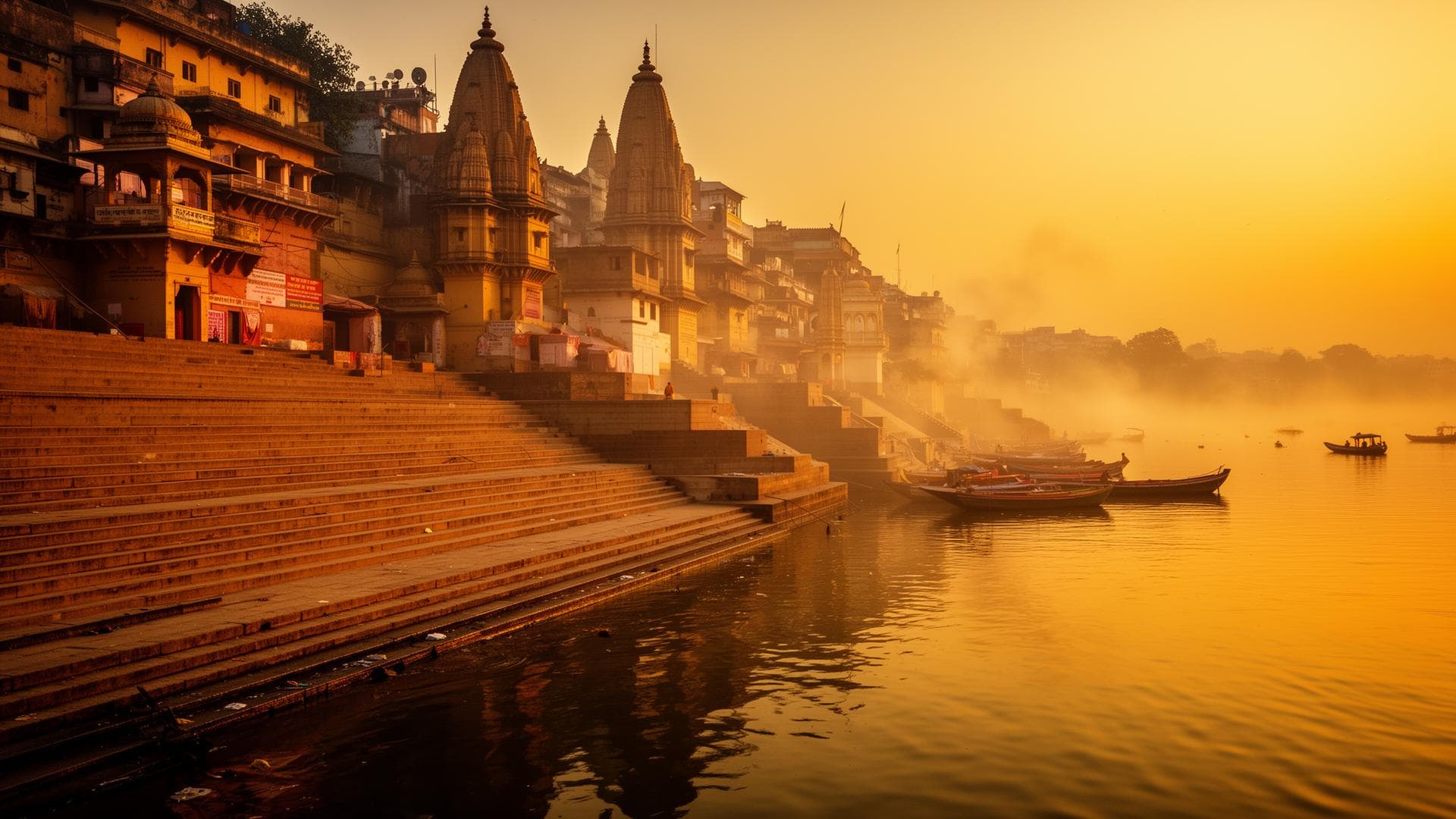
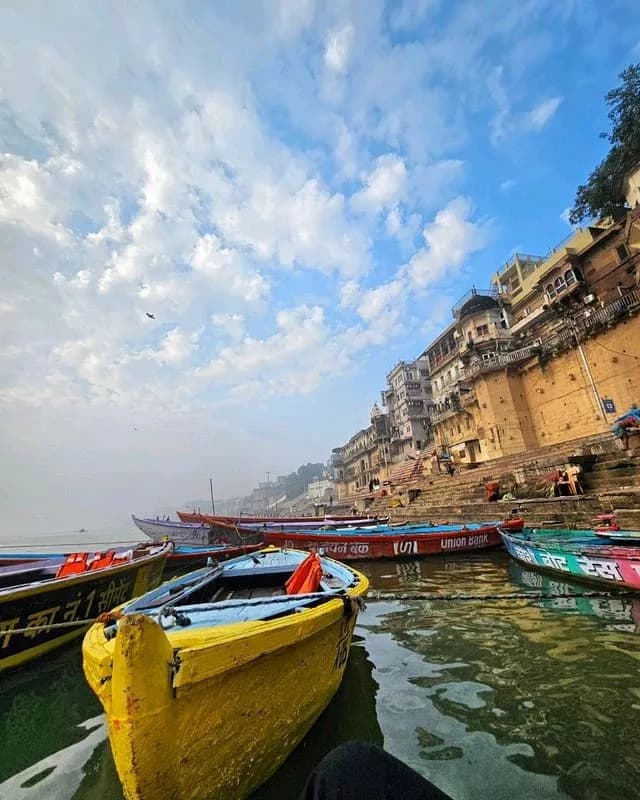
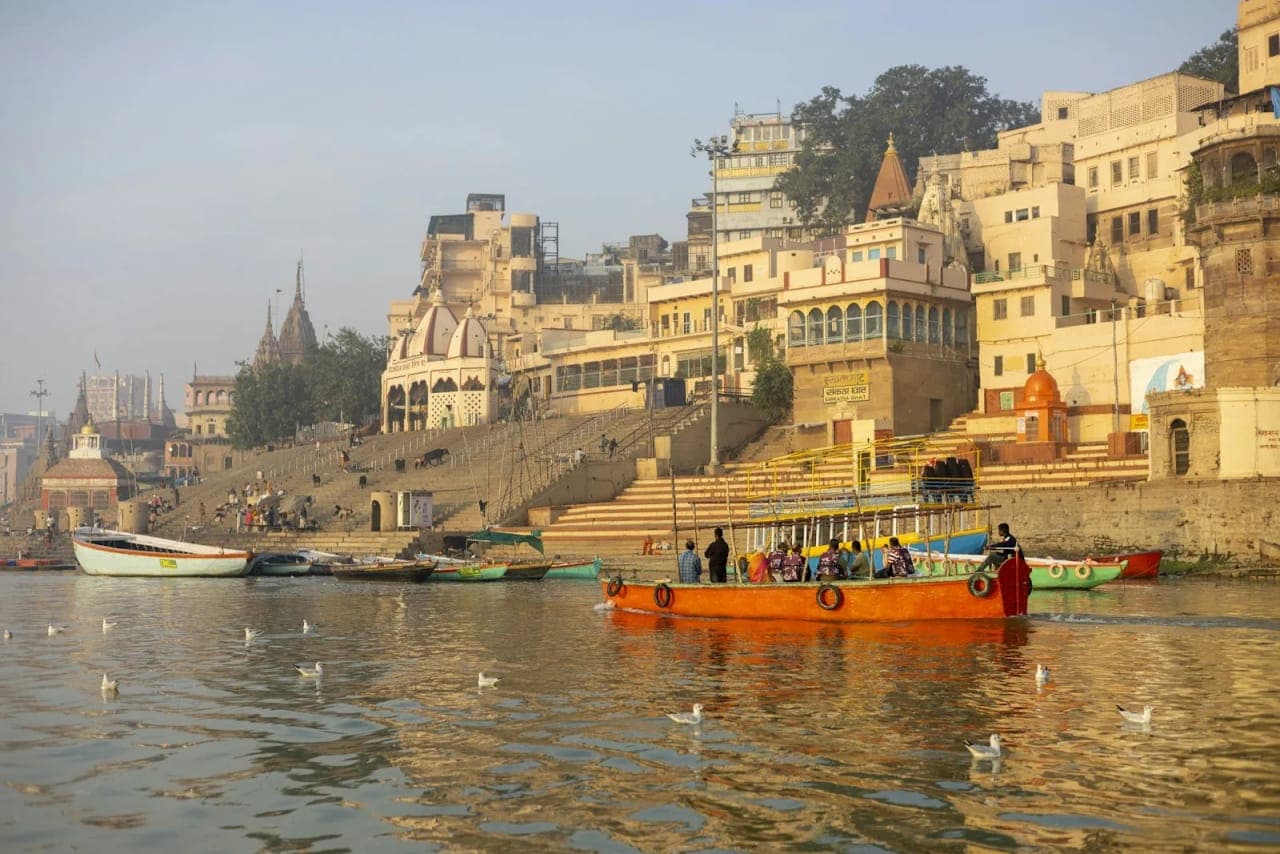
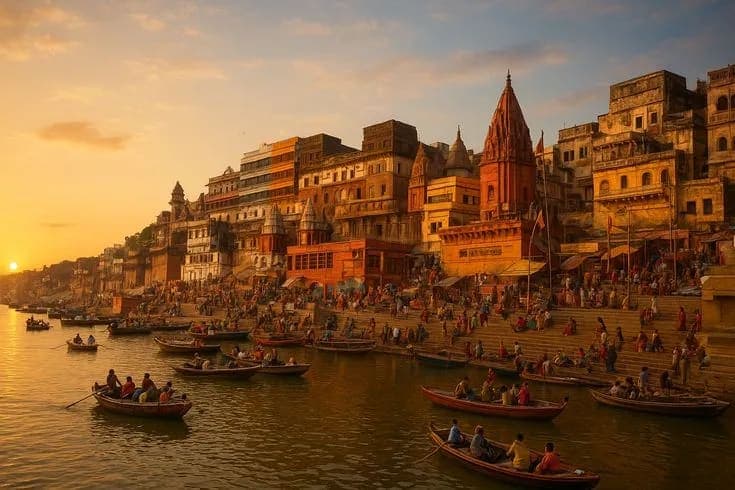
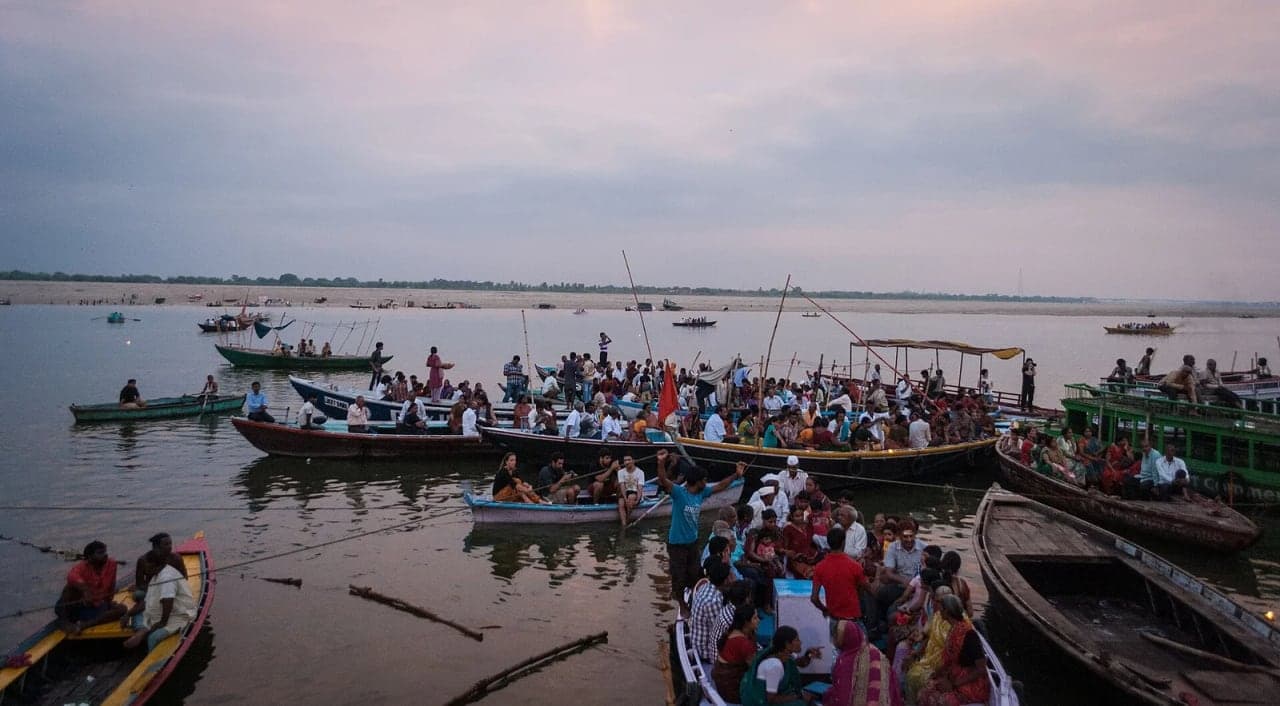
At dawn the Ganga is still and pink. The boat moves slowly along the western bank while Kashi wakes: pilgrims chest-deep in the water offering the sun, a priest's bell, marigolds drifting past, the wet stone steps climbing to temples that have stood for centuries. And then Manikarnika, where the cremation fires never go out. Seeing life and death share one riverbank, quietly, without drama, is the moment many travellers say changed how they think about both. There is no photography here, and none is wanted; you simply watch, and the city teaches you something without a word.
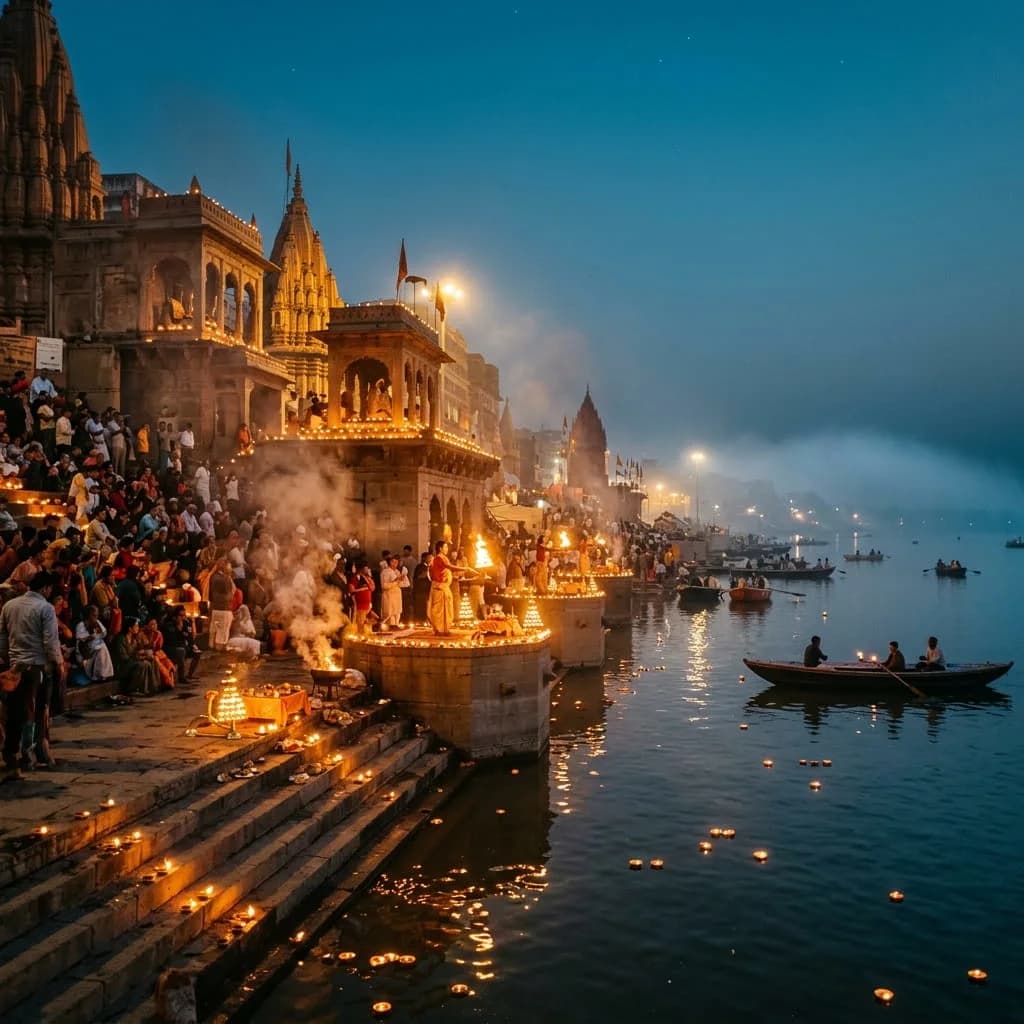
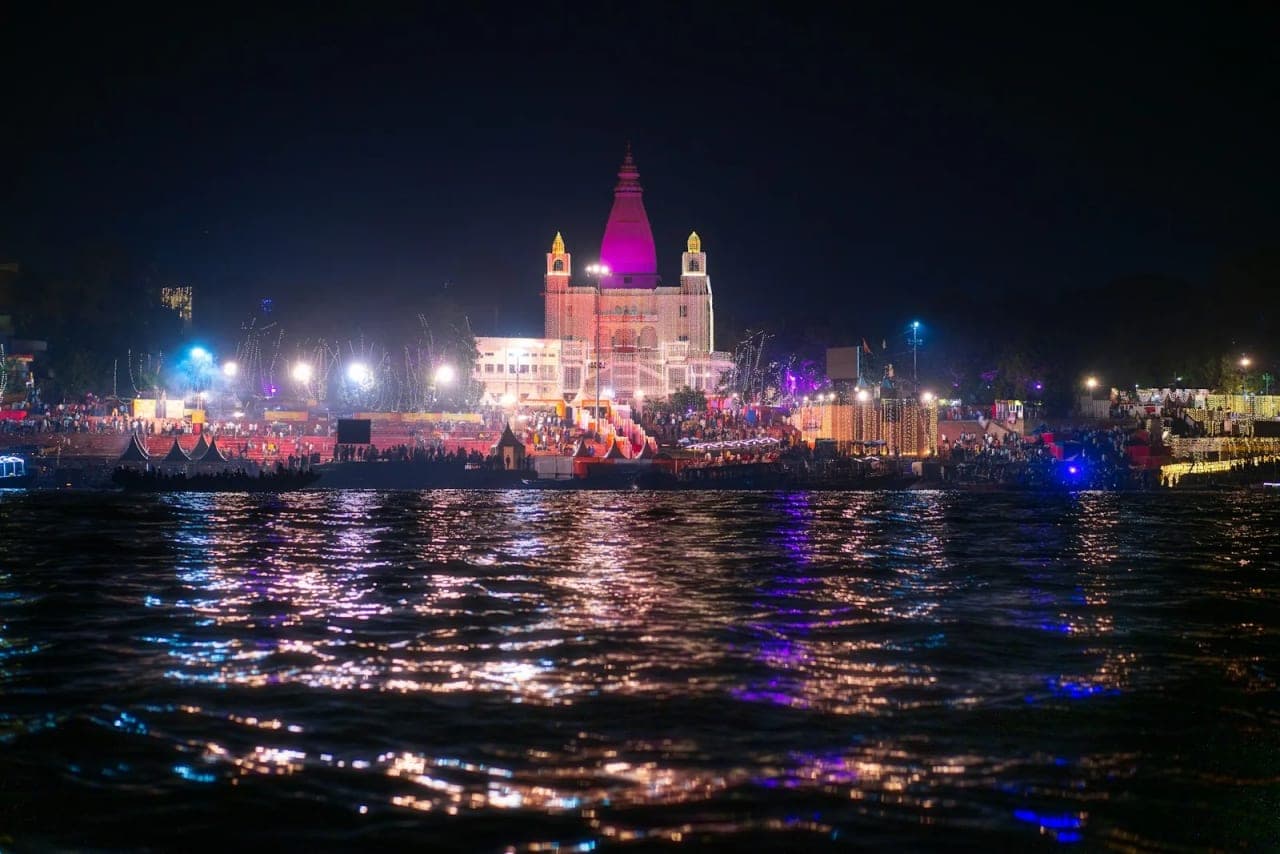
By evening the same river is transformed. At Dashashwamedh the priests take their places, the great tiered lamps are lit, the conches sound, and the aarti rises - fire circling in wide arcs against the dark, thousands chanting on the steps, the flames doubled in the black water. From a boat, drawn up close on the river, you watch it head-on with the whole ghat blazing before you. In our WhatsApp feedback, this is the single moment guests describe most, and the word that keeps returning is overwhelming - in the oldest, fullest sense of the word.
Rajeev Sharma and the Experience My India Kashi team position your boat early, before the river fills, so the aarti is yours to watch rather than fight through. After hundreds of evenings on this water, the reaction that still moves our own guide is the same every time: guests who came for a temple, and leave changed by a river.