Getting from Ayodhya to the Sangam and back in two days is simple enough, but how you make the transfer quietly decides how the trip feels - and the deciding factor is one most people never think about until they are standing on a wet ghat with a suitcase.
The distance first. Ayodhya to Prayagraj is about 165-170 km via NH-330, through Sultanpur and Pratapgarh - roughly a 4-hour drive. There are trains, too; a service such as the Manwar Sangam Express runs the route, and for the return it can suit travellers who prefer rail. But the fixed timings of a train rarely leave room for a full day at the Sangam and the temples first, which is why, for this itinerary, the private cab tends to win - and for one reason above the obvious comfort.
The drive itself is easy and worth a word. NH-330 runs south from Ayodhya through Sultanpur and then Pratapgarh, country that is flat, green and unhurried - sugarcane and mango belts, small market towns, and a clean, well-surfaced highway for most of the way. We time the 7 AM departure to clear Ayodhya before the day thickens, and there is a comfortable tea-and-washroom halt around the midpoint so the elderly and children are not pushed. Pratapgarh, the last big town before the river, is amla country - the Indian gooseberry preserve, murabba, that the region is known for - and most guests reach the Sangam relaxed rather than road-weary. It is a transfer, not an endurance test.
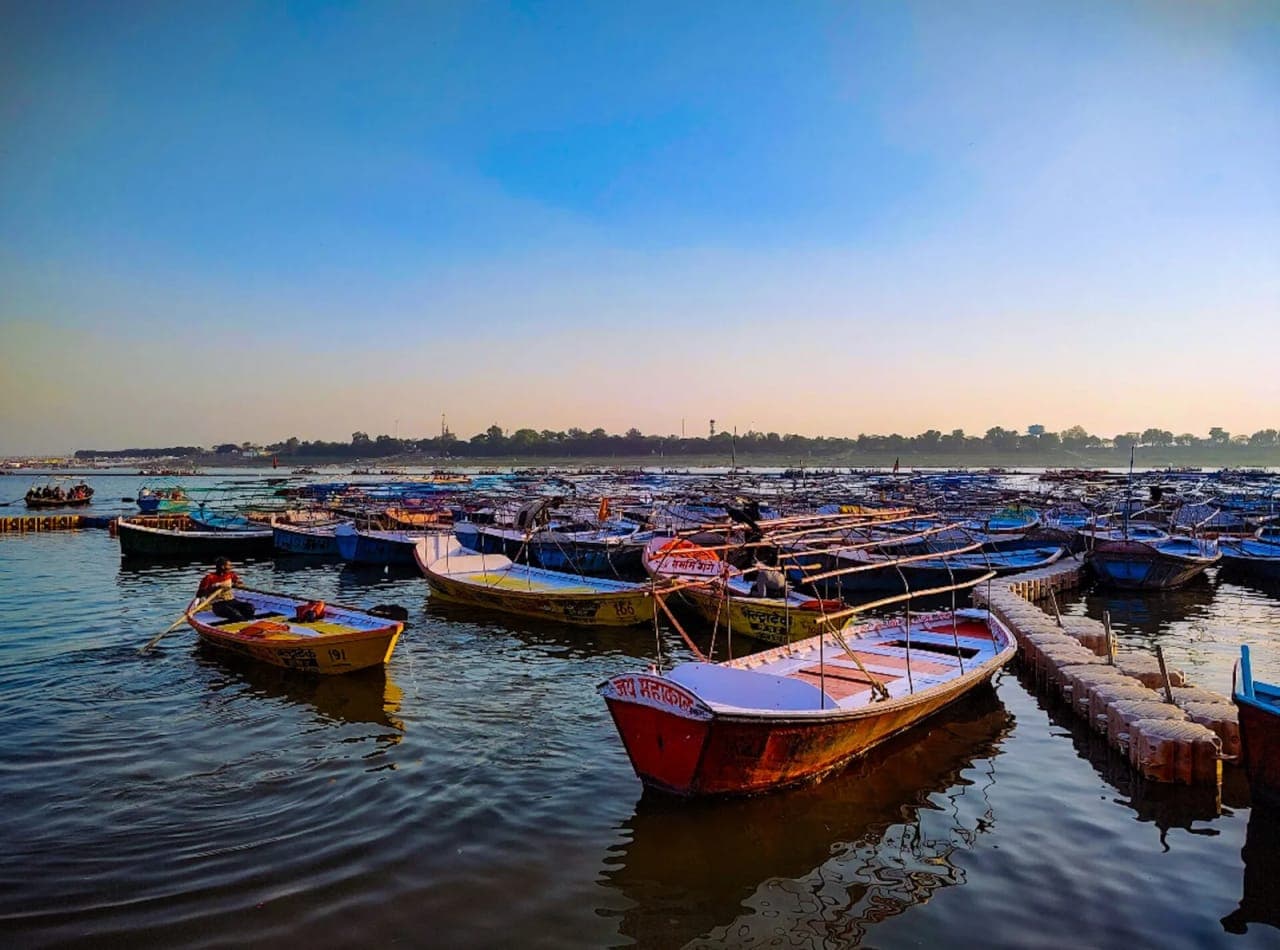
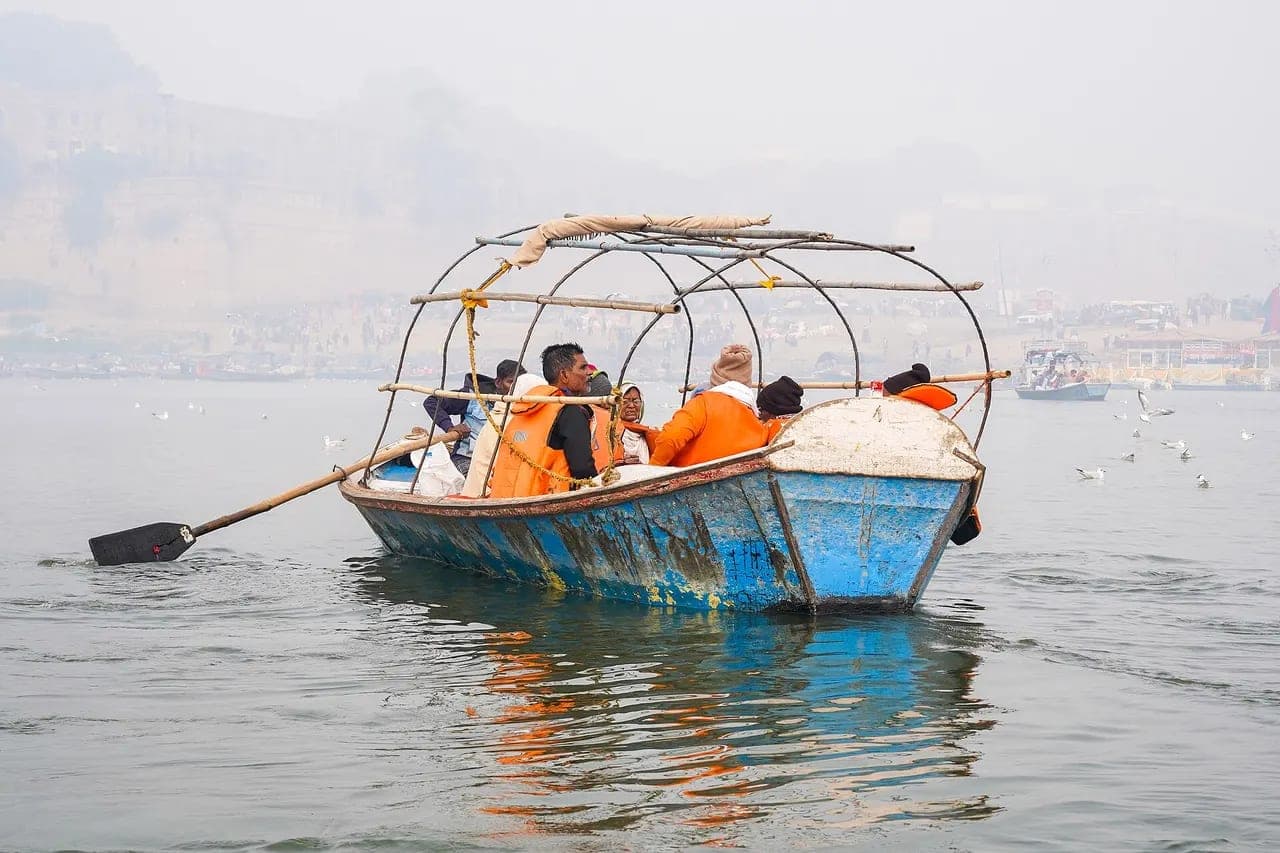
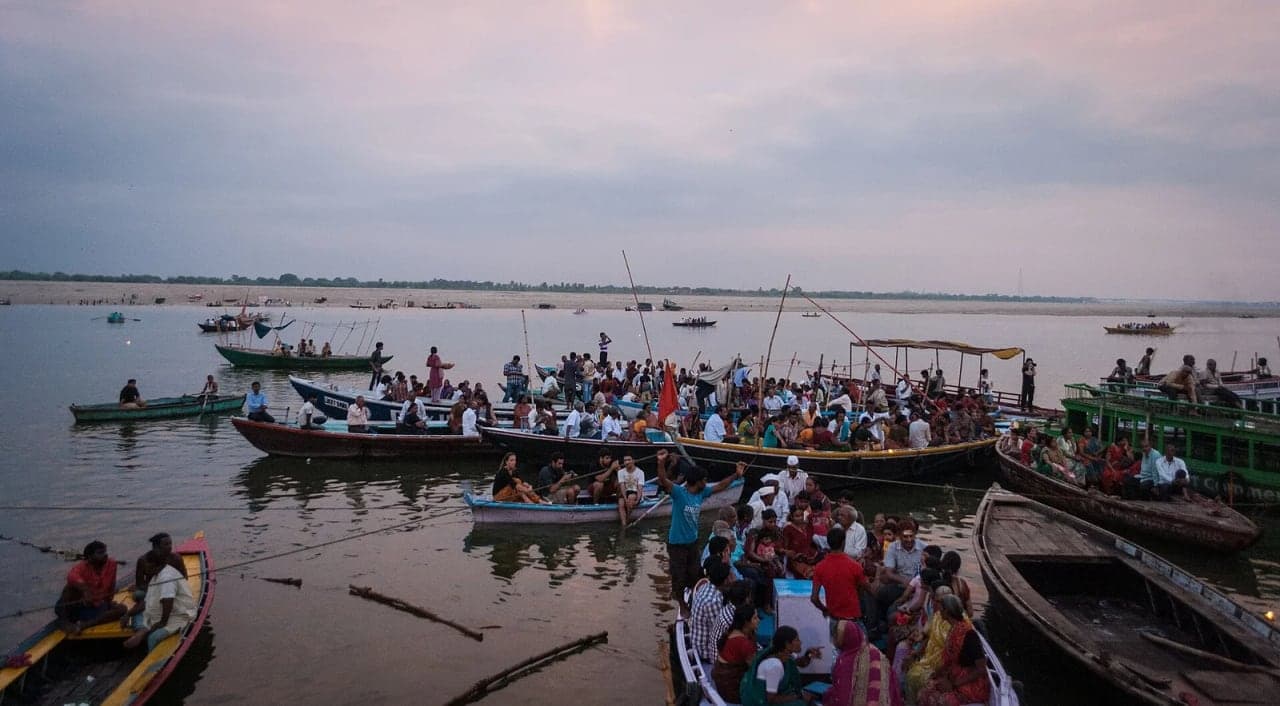
That reason is your luggage. The Sangam dip is taken from a boat, out on the open water; you climb onto a rocking wooden boat, bathe in a change of clothes, and climb off onto crowded steps. If you have come by train and auto, your bags are either with you on that boat or left with a stranger on the ghat - and the ghat is exactly where touts and opportunists gather. By private cab, your luggage stays locked in the vehicle the whole time. You step onto the boat carrying nothing and guarding nothing, do the dip in peace, and step off to a cab that is yours. Experience My India arranges the boat in advance at a fixed fare as well, so there is no bargaining either.
Two more honest points. The Allahabad Fort is Army-controlled - only the outer section with the Patalpuri Temple and the Akshayavat is open to pilgrims, and the rest needs prior permission, so this is not a Mughal-fort tour. And Anand Bhavan and Swaraj Bhavan close on Mondays, which is why Day 2 is planned around it. Door-to-door, bags secure, boat pre-booked - the transfer stops being a logistics problem and becomes, simply, the drive down to the river.