.webp&w=2048&q=75)
Essential info at a glance
| Detail | At a glance |
|---|---|
| What it is | The conch-bearing form of Lord Vishnu; one of the twelve Madhavs of Prayag. |
| Morning session | 5:00 AM to 12:00 PM. |
| Afternoon closure | 12:00 PM to 4:00 PM (the deity's rest). |
| Evening session | 4:00 PM to 9:00 PM. |
| Aartis | Morning around 6:00 AM; evening around 7:00 PM. |
| Entry fee | Free. There is no paid VIP darshan. |
| The emblem | The Shankh, the conch of Vishnu; the cosmic sound and ultimate purity. |
| Location | Chhatnag, Old Jhunsi, across the river; the ancient Pratishthanpur. |
Shankh Madhav timings and aarti
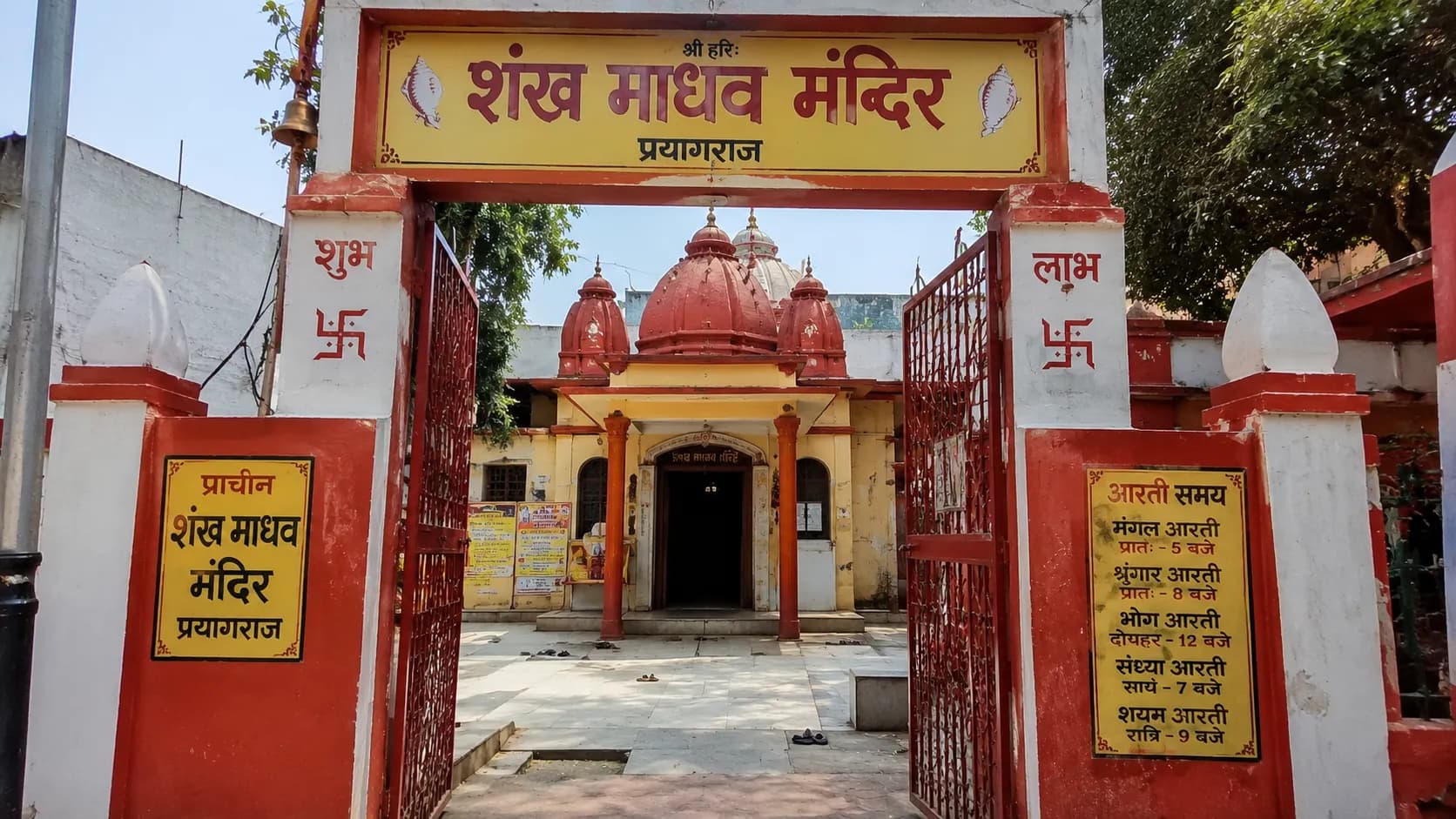
The temple keeps a split day, open from 5:00 AM to noon and again from 4:00 PM to 9:00 PM, with a closure through the afternoon for the rest of the deity. Its aartis are its most devotional moments, the morning aarti around 6:00 AM and the evening aarti around 7:00 PM, when the serene, spiritual atmosphere of this ancient shrine is at its loveliest. Entry is free, and on ordinary days the temple is peaceful, allowing a quick and close darshan; the timings can shift a little during the Magh Mela and the Kumbh, when the crowds are large.
| Detail | When | Notes |
|---|---|---|
| Morning session | 5:00 AM to 12:00 PM | With the morning aarti around 6:00 AM. |
| Afternoon closure | 12:00 PM to 4:00 PM | The deity's rest. |
| Evening session | 4:00 PM to 9:00 PM | With the evening aarti around 7:00 PM. |
| Busiest | Magh Mela, Kumbh | Timings shift; crowd-control in Mela season. |
Shankh Madhav Mandir: the conch-bearing Madhav
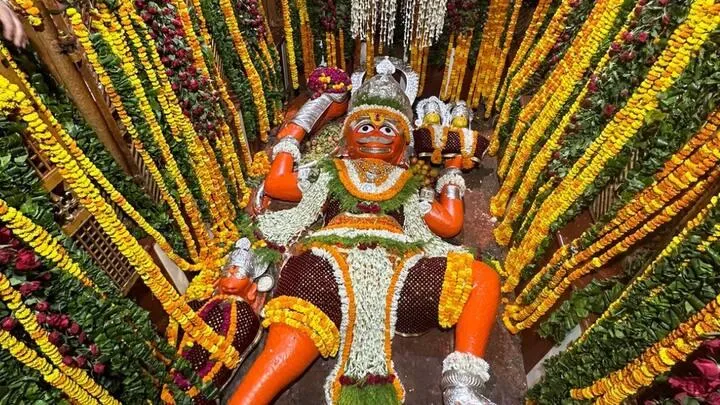
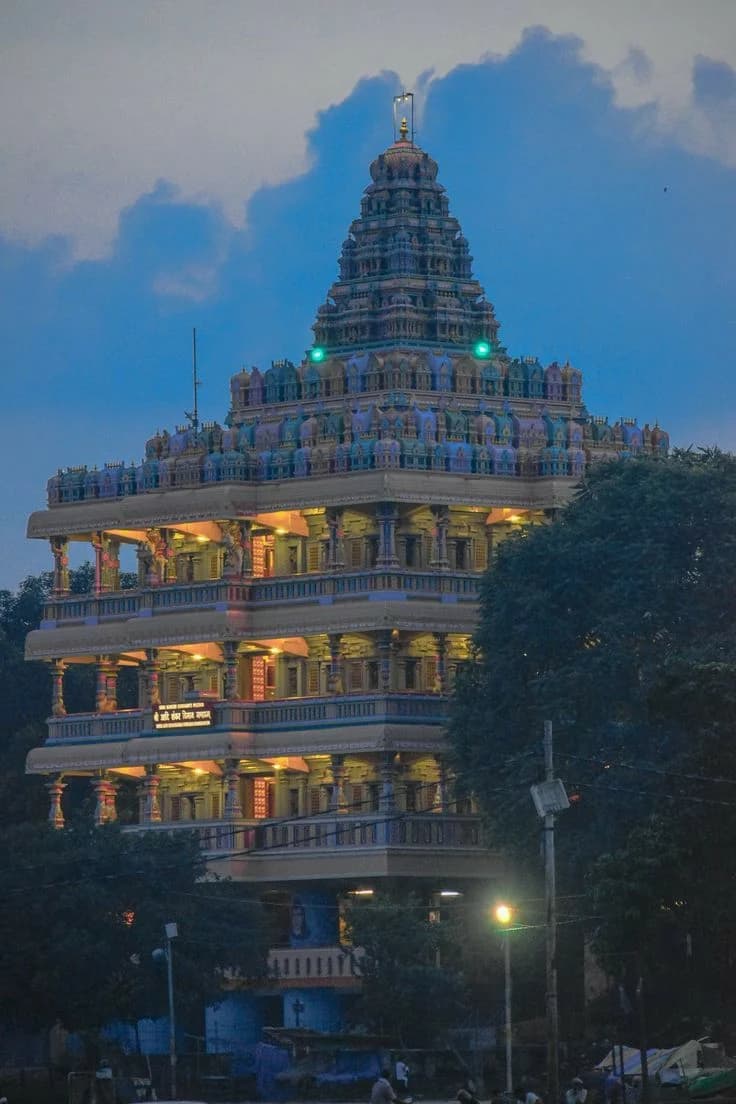
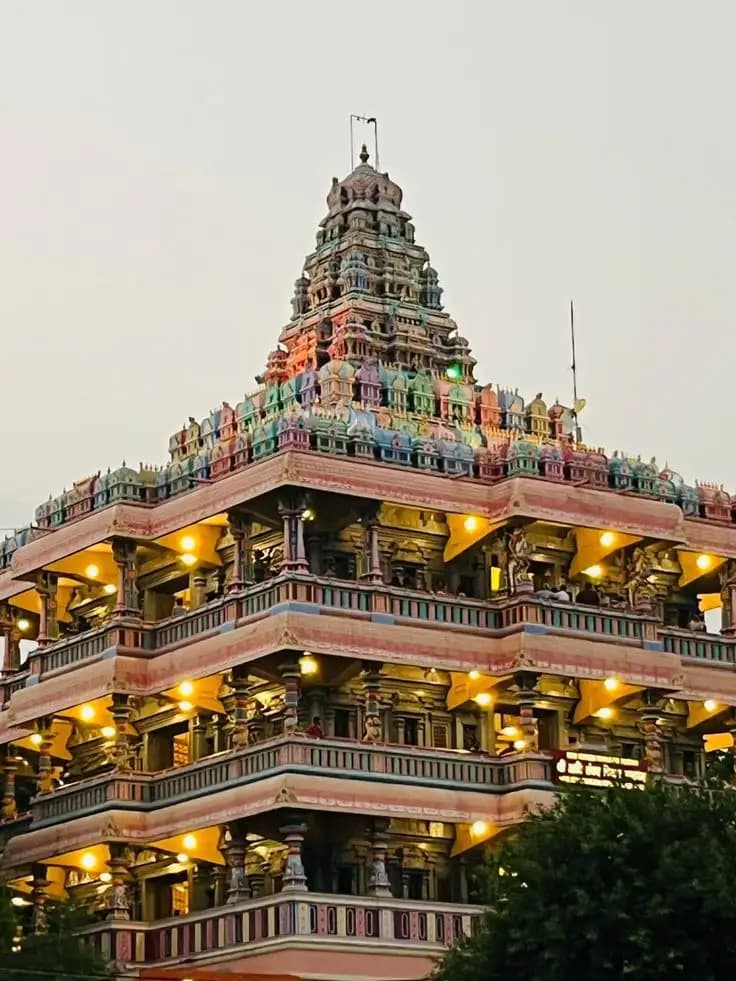
As Kashi is the Shiv Nagari, the city of Shiva, so Prayag is the Vishnu Nagari, the city of Vishnu, guarded on every side by the twelve Madhavs, the twelve forms of the Lord. And among them is Shankh Madhav, the Vishnu of the conch, whose ancient temple stands at Chhatnag in Old Jhunsi, across the river on the eastern side of the Sangam. It is an ancient and greatly revered shrine, and it holds a place of the first honour, for in the Padma Purana it is counted as the first of all the Madhavs. In its quiet, ancient sanctity, far across the river from the great ghats, the Lord is worshipped here holding the sacred conch, the emblem of the holy sound and of purity itself.
The conch-bearing Vishnu: the cosmic sound and purity
The name of the deity holds his form and his meaning. For the twelve Madhavs of Prayag are named each for one of the four sacred emblems that Lord Vishnu bears in his four hands: the Chakra, the discus; the Gada, the mace; the Padma, the lotus; and the Shankha, the conch. And here we come to the Shankh Madhav, the Lord of the conch. The Shankha, the conch of Vishnu, is the great Panchajanya; and when it is blown, it sounds forth the primordial cosmic sound, the sacred syllable Om, the Nada Brahma, the very first vibration from which the whole of creation arose. Its sound is the call to dharma, the herald of victory, and a purifier of all who hear it, driving out all that is impure and inauspicious. So the conch is the emblem of holy sound and of ultimate purity; and Shankh Madhav is the Vishnu of the cosmic sound, the Lord of the sacred vibration and of purity itself, the conch-bearing Madhav, completing, with the discus of the Chakra Madhav, the mace of the Gada Madhav, and the lotus of the Padma Madhav, the four emblems of the Lord.
Jhunsi, the ancient Pratishthanpur
The ground on which Shankh Madhav stands is of the deepest antiquity, and worth knowing. For Jhunsi, across the Ganga on the eastern side of the Sangam, is no ordinary place: it is the ancient Pratishthana, the Pratishthanpur, among the very oldest inhabited places in all of India. It was, the tradition tells, the storied capital of the great King Pururavas and of the kings of the lunar dynasty, the Chandravanshi; and it is the setting of one of the most beautiful of all the old tales, the immortal, celestial love of King Pururavas and the heavenly nymph Urvashi. It was a city of the Mauryas, the Kushanas and the Guptas in their turn, an ancient seat of kings and of culture; and though the old capital has long since passed into the mounds of Jhunsi, the ground remains hallowed by that immense past. So Shankh Madhav, the conch-bearing Lord, keeps his guard upon ground sacred and storied beyond almost any other.
The twelve guardians and the Parikrama
Shankh Madhav is one of the great company of the twelve Madhavs, the twelve forms of Vishnu that guard the holy field of Prayag. For the tradition tells that the Madhavs are of two kinds: the central Madhavs, who dwell at the very heart of Prayag, at the immortal Akshayavat; and the directional Madhavs, of whom Shankh Madhav is one, who are set in the several directions around the sacred field to put an end to every obstacle and to guard the holy boundaries, established, it is said, after Lord Brahma performed the first great yajna of creation here. And so Shankh Madhav is a station upon the Dwadash Madhav Parikrama, the sacred circuit of all twelve, which the pilgrims of Prayag undertake for the highest merit; for it is held that the full fruit of the Sangam bath is realised only upon the completion of the circuit of the twelve, and that to walk it is a merit equal to encircling the whole cosmos.
The conch of the Lord, in my own words
By Rajeev Sharma, guide with Experience My India
I love taking my pilgrims across the river to Shankh Madhav at Jhunsi, above all by boat from the Sangam. I explain that this is the Vishnu of the Shankh, the conch, and I tell them the beautiful meaning: that the conch, when it is blown, sounds the very first sound of creation, our sacred Om, the primordial cosmic sound, and that it stands for holy sound and for ultimate purity. And I tell them that our old Padma Purana counts this as the very first of our twelve Madhavs, so it is a special honour to bow here.
And I love to tell my guests where they are standing: that this Jhunsi is the ancient Pratishthanpur, the old capital of King Pururavas and our lunar-dynasty kings, the place of the famous love of Pururavas and the nymph Urvashi, one of the oldest cities in all of India. People are amazed at the antiquity of it. And I fit Shankh Madhav into the full Dwadash Madhav Parikrama, our circuit of the twelve guardians of Prayag, which completes the Sangam pilgrimage. We offer Tulsi and flowers and chant the Vishnu Sahasranama. A serene, ancient, deeply holy place across the river, and I love to share it.
In more than forty years of guiding, bowing before the Lord of the sacred sound here on this most ancient ground is among the most moving things I do.
What to see and do
- Take the darshan of Shankh Madhav, the conch-bearing Vishnu, the first of the Madhavs in the Padma Purana.
- Cross by the scenic holy boat from the Sangam ghats to the Jhunsi side.
- Offer Tulsi leaves and flowers, and chant the Vishnu Sahasranama.
- Stand on the ground of the ancient Pratishthanpur, the lunar-dynasty capital of Pururavas.
- Include Shankh Madhav in the Dwadash Madhav Parikrama, the circuit of the twelve.
How to reach Shankh Madhav
Shankh Madhav is at Munshi Ka Bagicha, on Chhatnag Ghat Road in Old Jhunsi, across the river on the eastern side of the Sangam, about 11 to 13 km from the railway station; reach it by auto or cab toward Chhatnag Road, Jhunsi, or by a boat from the Sangam ghats.
| From | Distance | Notes |
|---|---|---|
| The Triveni Sangam | Across the river, on the Jhunsi side | By a scenic holy boat from the ghats, or by road. |
| Nagvasuki Temple | Toward the Jhunsi / Daraganj side | The serpent-king; the eastern quarter of Prayag. |
| The eastern Madhavs (Jhunsi) | In Jhunsi | Sankashthar Madhav and the eastern sites. |
| Prayagraj Junction (railway) | About 11 to 13 km | By auto or cab toward Chhatnag, Jhunsi. |
| Prayagraj (Bamrauli) Airport | About 20 to 25 km | The city airport; taxis to Jhunsi. |
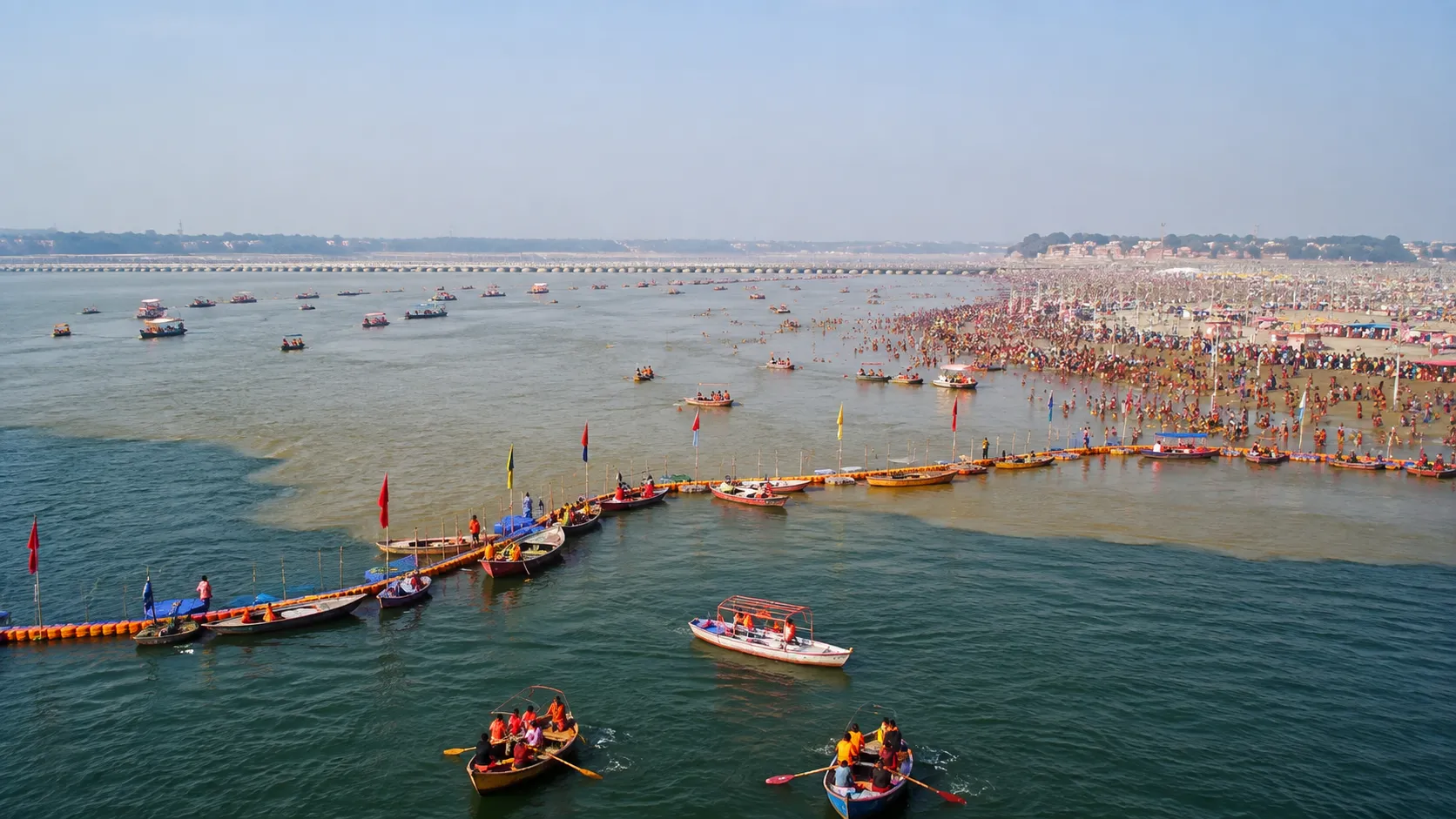
The boat from the Sangam is the loveliest way across.
Best time to visit and how to plan it
| When | Why |
|---|---|
| Morning, around the 6:00 AM aarti | The calmest and most serene time for darshan. |
| The Kumbh and Magh Mela | When the Dwadash Madhav Parikrama flourishes across the Jhunsi side. |
| Ekadashi and Dwadashi | The days of Vishnu, especially auspicious for the Madhavs. |
| By boat from the Sangam | For the scenic crossing to the Jhunsi side. |
- Pair it with the Sangam and the other Madhavs on the Dwadash Madhav Parikrama.
- Combine it with the ancient Jhunsi and the eastern sites of Prayag.
For Prayagraj, or a combined Kashi, Ayodhya and Prayagraj pilgrimage, planned end to end, see our tour packages.
Accessibility for elderly and mobility limited visitors
- It is reached across the river; the road route is easier than the boat for the frail.
- If crossing by boat, boarding needs care; the boat itself is restful, and we assist elderly pilgrims.
- The serene, uncrowded shrine suits a calm, unhurried visit.
- We arrange the boat or the car and plan a gentle crossing and darshan.
Etiquette for visiting
- Remove footwear and be reverent; offer Tulsi and flowers in the Vaishnava custom.
- Keep the peace and quiet of this ancient, serene shrine.
- Mind the river and the boats if you cross by water, and keep children close.
- Keep the place clean, and follow the priests and any queue in Mela season.
Our guided darshan and Prayagraj tours
We are a Varanasi, Ayodhya and Prayagraj based operator, a unit of Experience My India, with more than forty years of guiding pilgrims across all three holy cities, and our own local guide and pandit in Prayagraj. Darshan is free, so what we offer is the experience made smooth and meaningful: the scenic boat across to the ancient Shankh Madhav at Jhunsi, a guide who tells the meaning of the conch and the story of ancient Pratishthanpur, the full Dwadash Madhav Parikrama for the devout, and the whole Prayagraj and three-city pilgrimage.
| Service | Includes | Price |
|---|---|---|
| Sangam and Shankh Madhav darshan | The Sangam snan and the boat to Shankh Madhav at Jhunsi, with a guide. | Contact us for pricing |
| Dwadash Madhav Parikrama | The circuit of the twelve Madhavs, including Shankh Madhav, with a guide and a pandit. | Contact us for pricing |
| Full Prayagraj darshan day | Shankh Madhav within a wider Prayagraj visit, with a guide. | Contact us for pricing |
| Kashi, Ayodhya and Prayagraj pilgrimage | The three holy cities, with darshan, transfers and a guide. | Contact us for pricing |
Inclusions and exclusions are stated up front, with any taxes and conditions, and no charge appears later that was not named. Darshan is free; our charge is only for guiding, the boat and services. See all our tour packages for the full range.
Experience My India is a travel operator, not the temple administration. Darshan is free; our charge is only for our guiding, the boat and services. Timings and rules are set by the temple and can change.
Nearby sacred sites in Prayagraj
Shankh Madhav is one of the twelve Madhavs, at ancient Jhunsi across the river.
| Site | What it is | Internal link |
|---|---|---|
| Veni Madhav Temple | The chief of the twelve Madhavs, the presiding Vishnu of Prayag. | /temple/prayagraj/veni-madhav-temple |
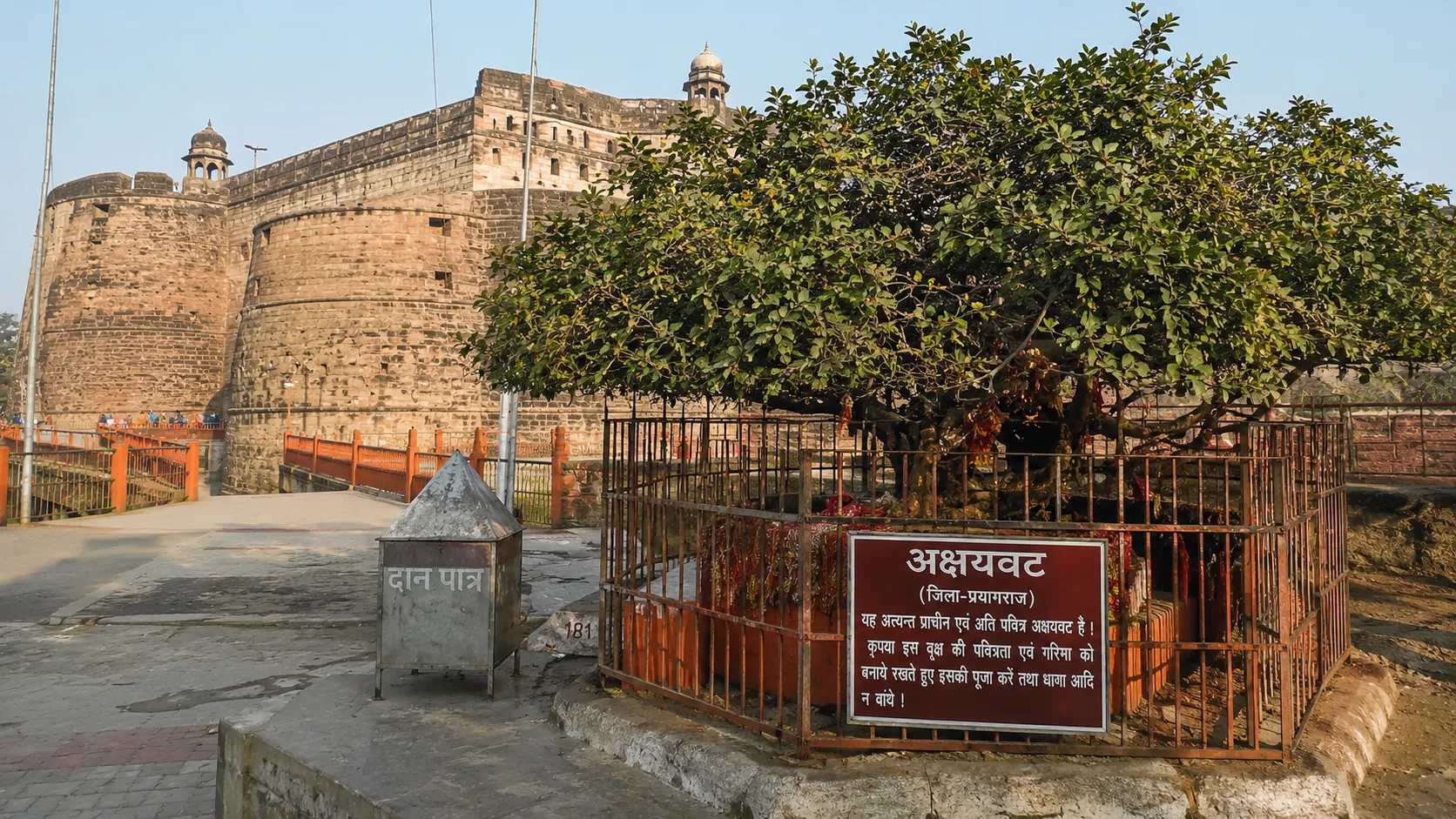
| Adi Vat Madhav | One of the central Madhavs, at the immortal Akshayavat. | /temple/prayagraj/adi-vat-madhav |
| Chakra Madhav | The discus-bearing Madhav, at Arail; a directional guardian. | /temple/prayagraj/chakra-madhav |
| Gada Madhav | The mace-bearing Madhav, at Naini; a directional guardian. | /temple/prayagraj/gada-madhav |
| Triveni Sangam | The sacred confluence; the Dwadash Madhav completes the Sangam pilgrimage. | /temple/prayagraj/triveni-sangam |
For the chief and the central Madhavs, see our Veni Madhav and Adi Vat Madhav guides.