All Prayagraj temples
32 temples
Showing 12 of 32
The Triveni Sangam: the heart of Prayagraj
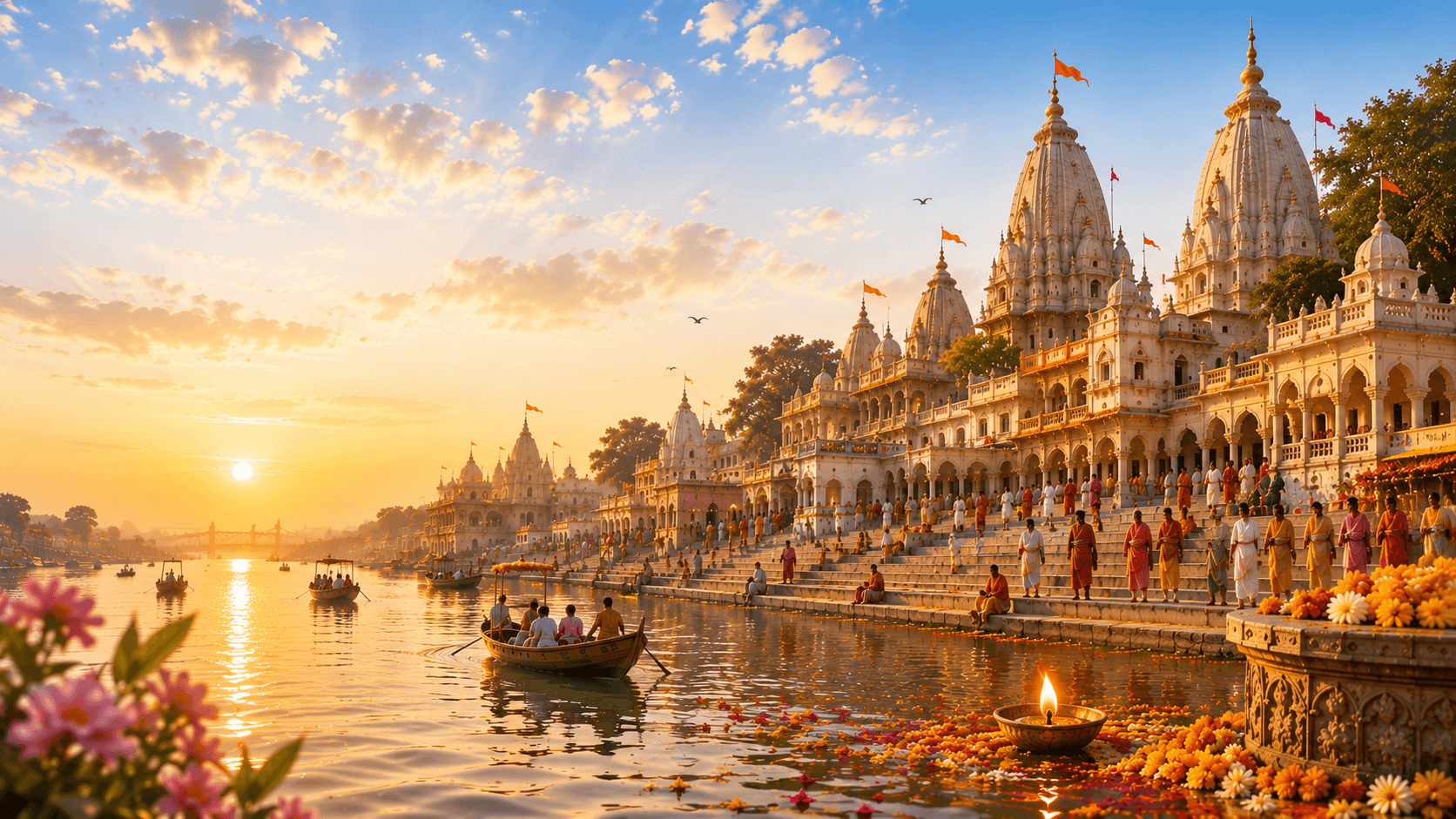
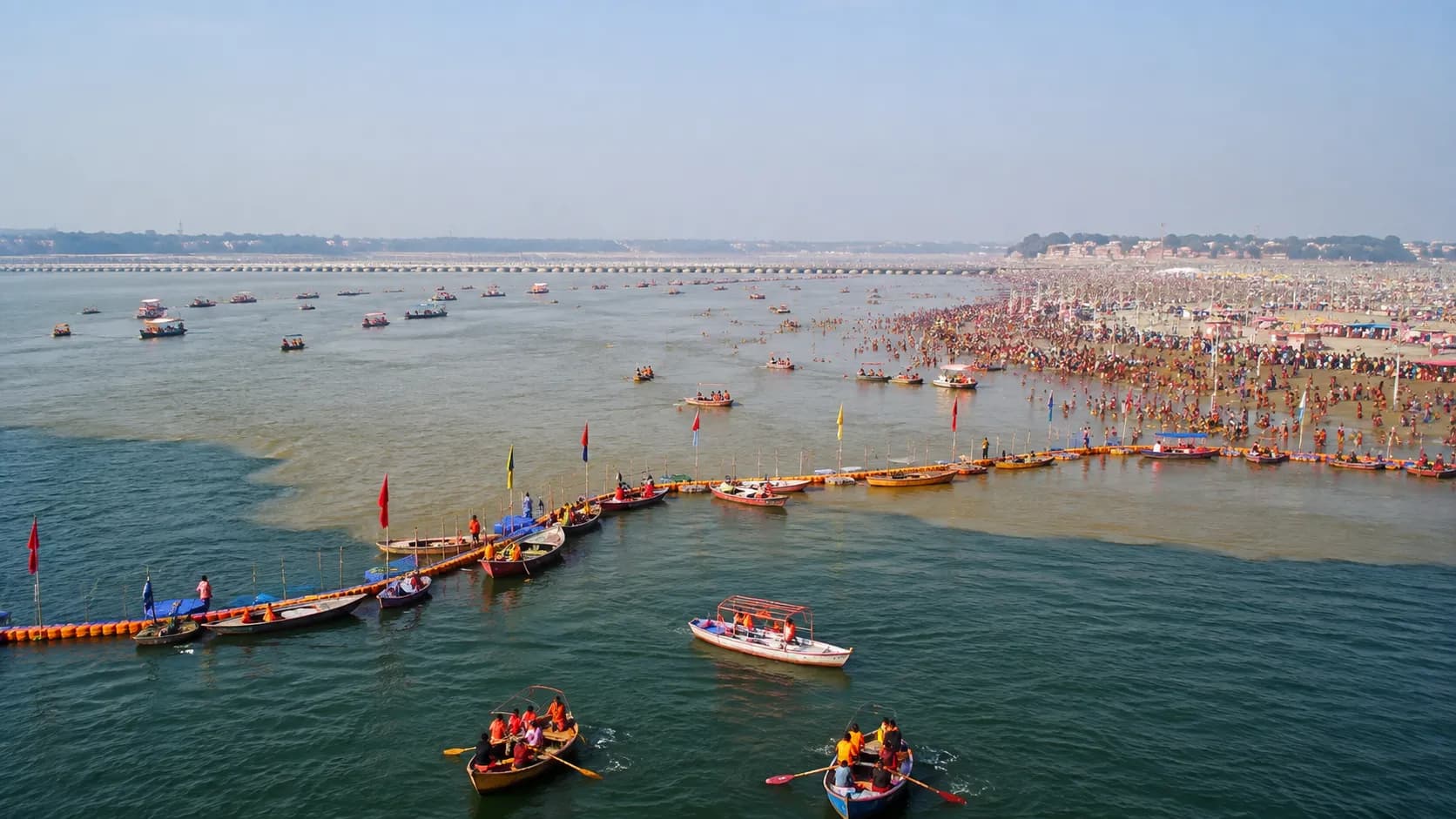
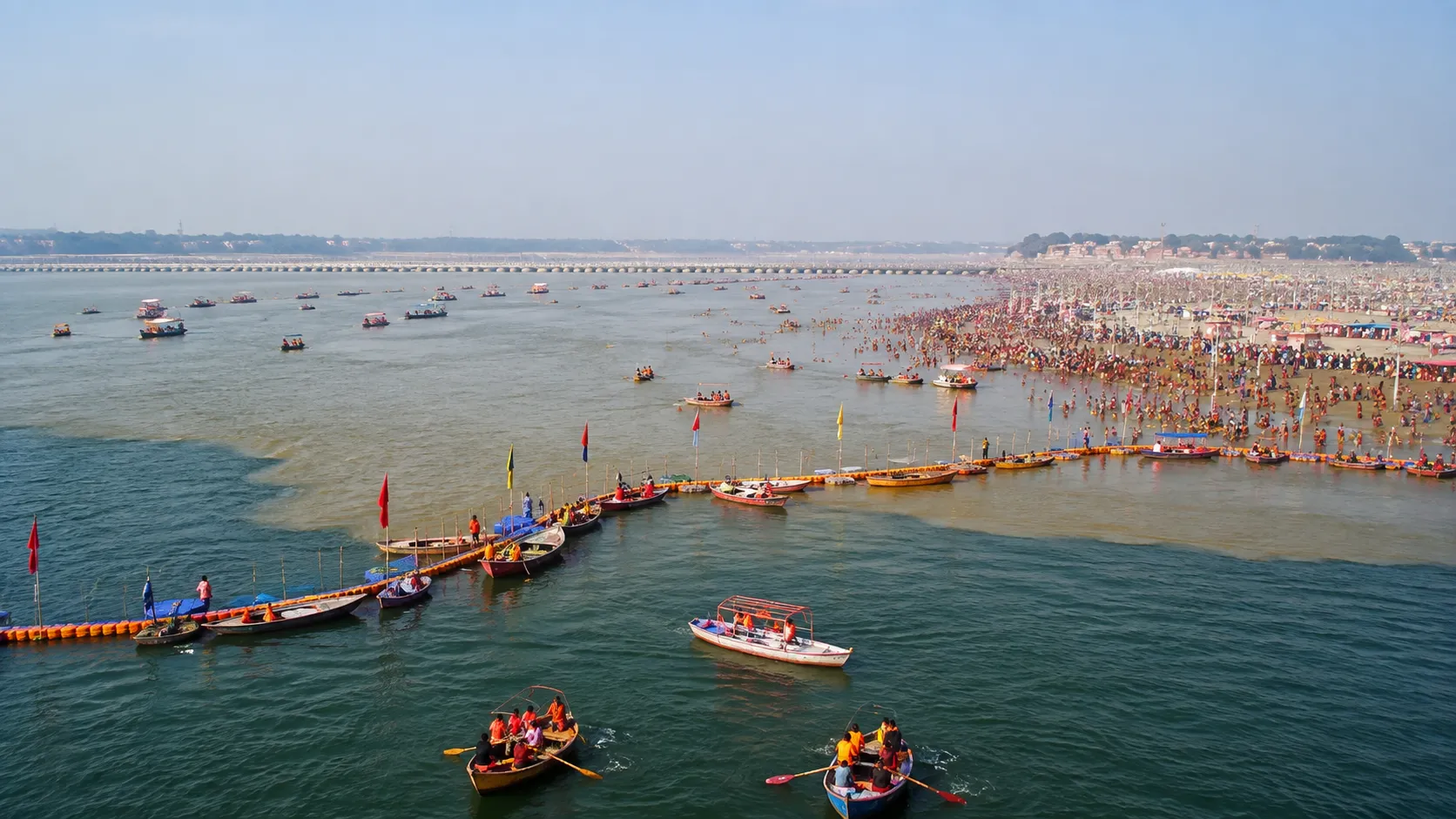
At the heart of everything is the Triveni Sangam, the sacred confluence of the Ganga, the Yamuna and the Saraswati, and the reason the whole world comes to Prayag. To take the holy snan, the bath, at the meeting of the rivers is to be cleansed of sins and to draw near to liberation; and it is around this holy bath that the entire pilgrimage of Prayag is built.
The confluence is also the site of the Kumbh Mela and the Magh Mela, the great river-festivals; and a boat out to the very point where the waters of two colours meet is the first act of every pilgrim. Begin here.
The great temples and guardians of the Sangam
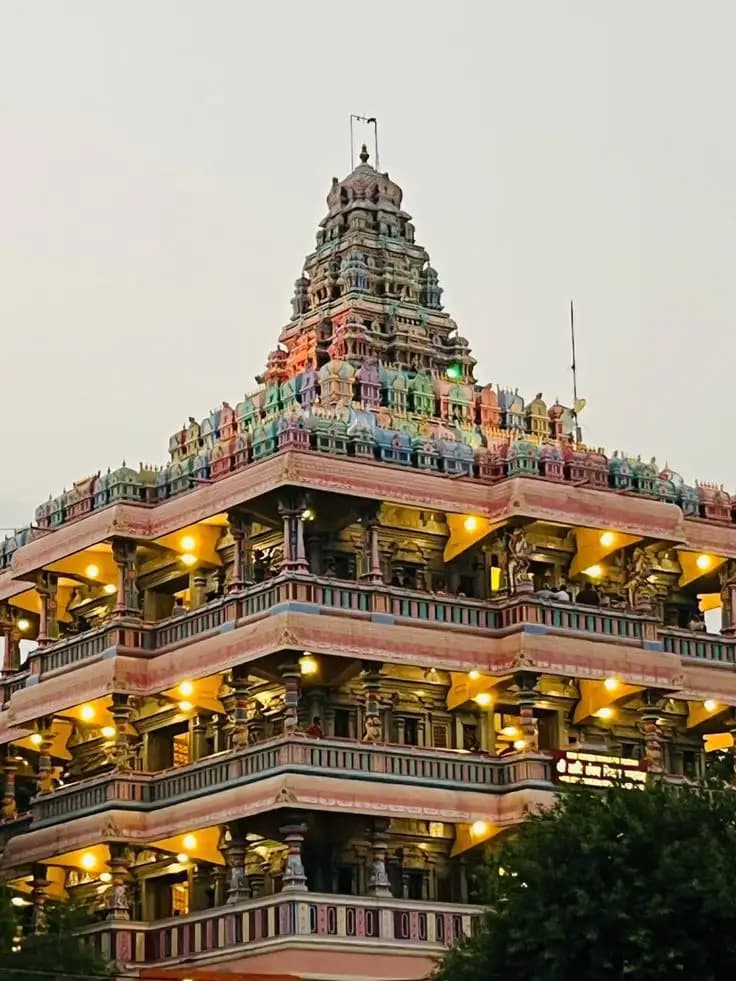
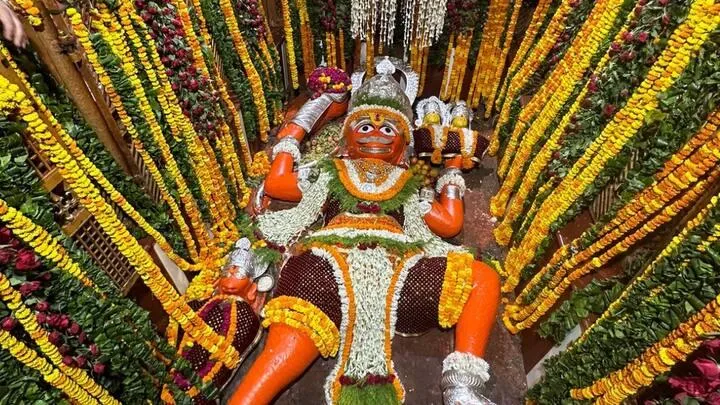
Around the Sangam stand its great guardian-temples, which the pilgrim visits after the holy bath. Chief among them is the Bade Hanuman, the Lete Hanuman, the unique reclining Hanuman, the guardian of the Sangam, whose darshan completes the holy bath; and the Nagvasuki temple, the shrine of the serpent-king Vasuki, also visited after the snan, and a place of relief from the Kaal Sarp Dosha; and the great Shankar Viman Mandapam, the towering South-Indian-style temple by the Sangam.
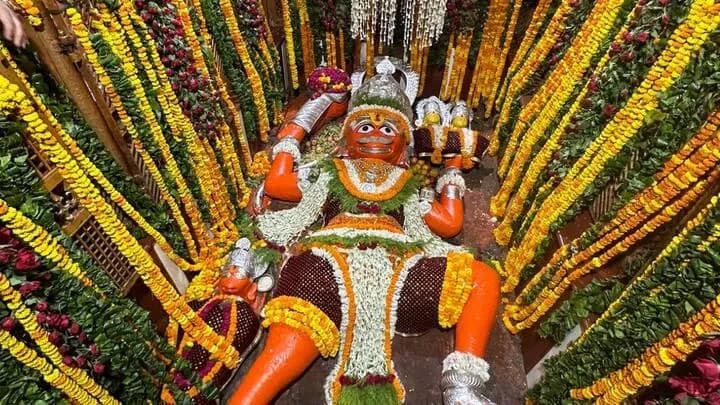
Bade Hanuman (Lete Hanuman)
The reclining Hanuman, guardian of the Sangam; darshan completes the snan.
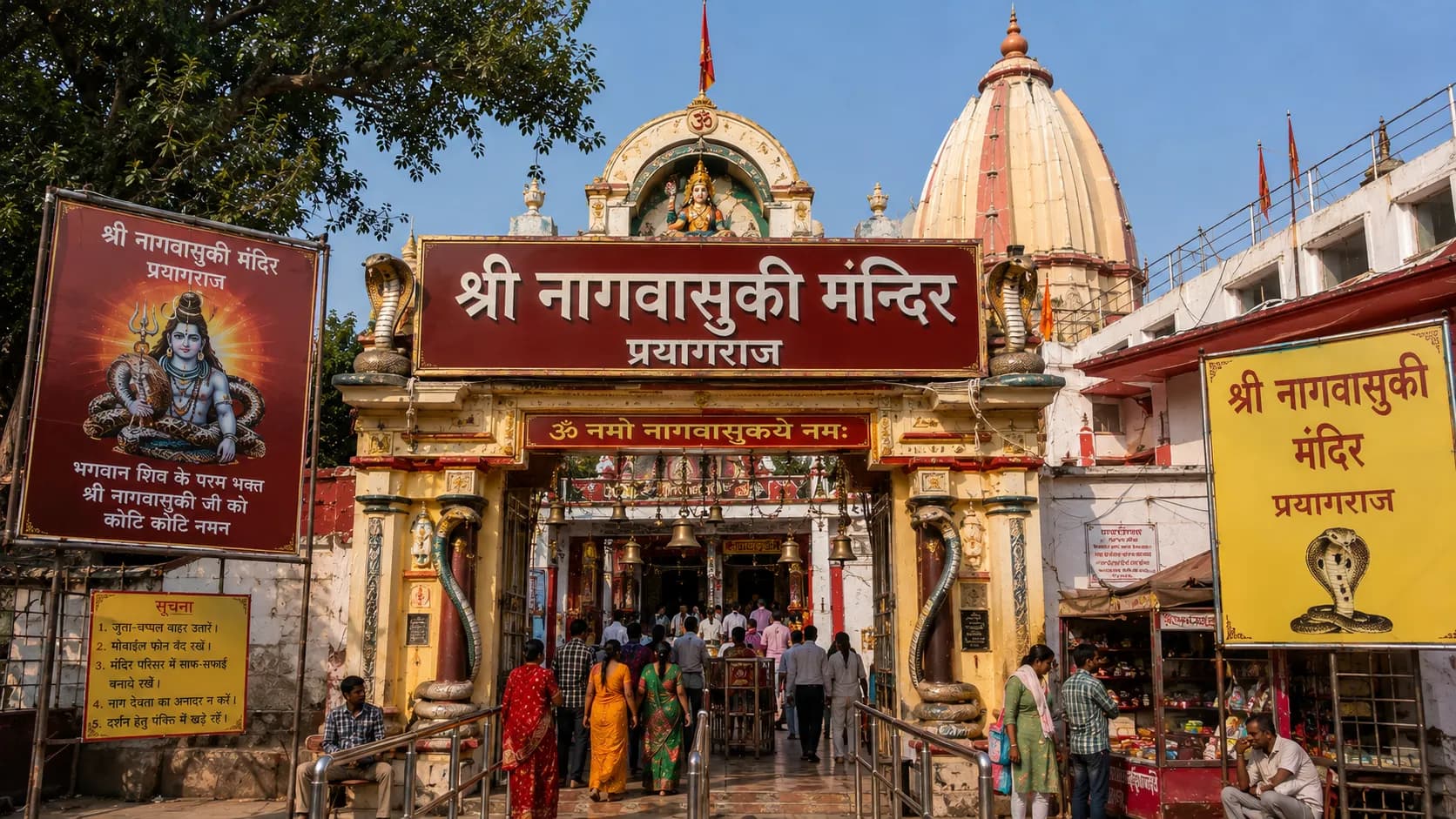
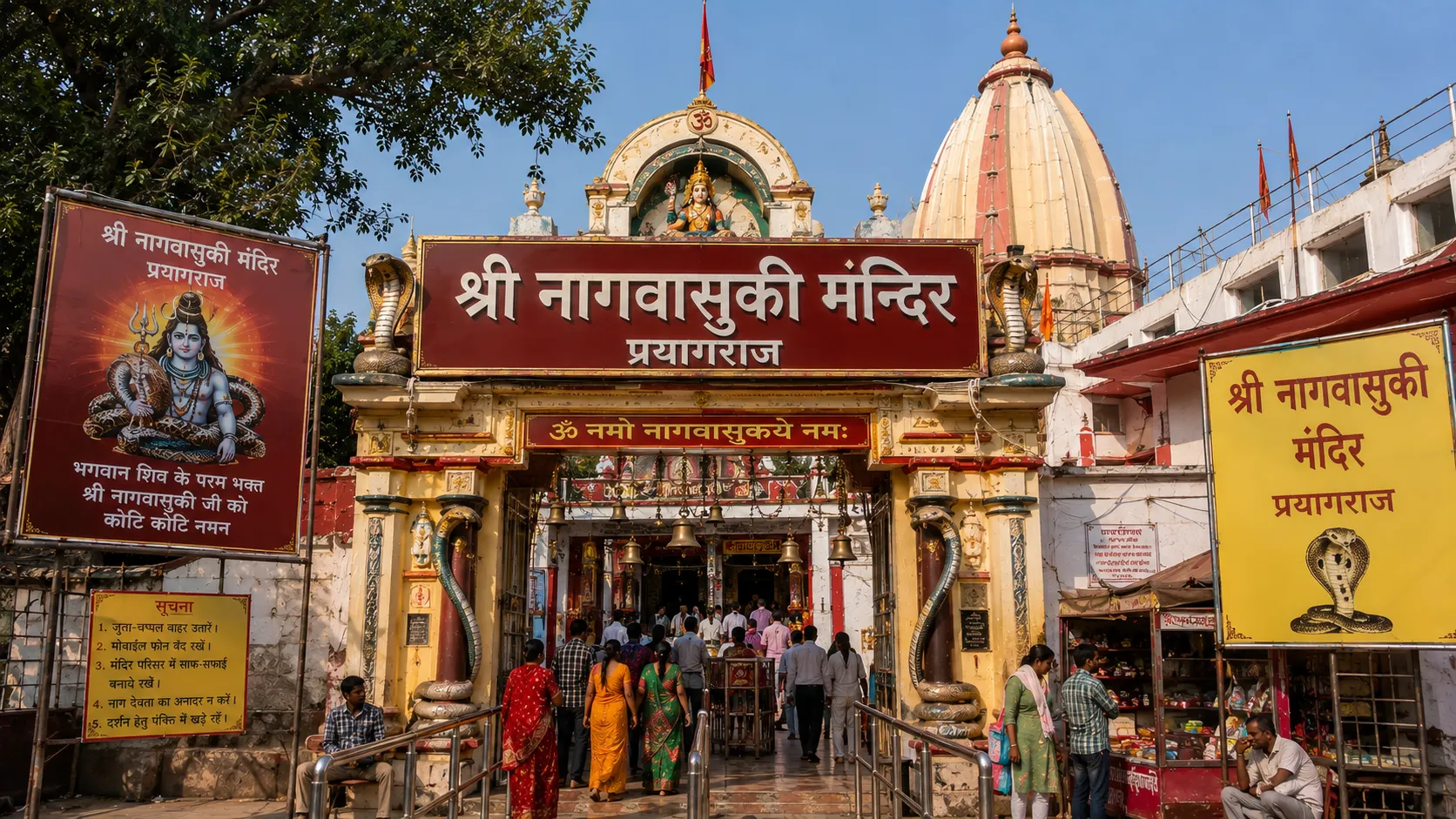
Nagvasuki Temple
The serpent-king Vasuki; visited after the snan; relief from Kaal Sarp Dosha.
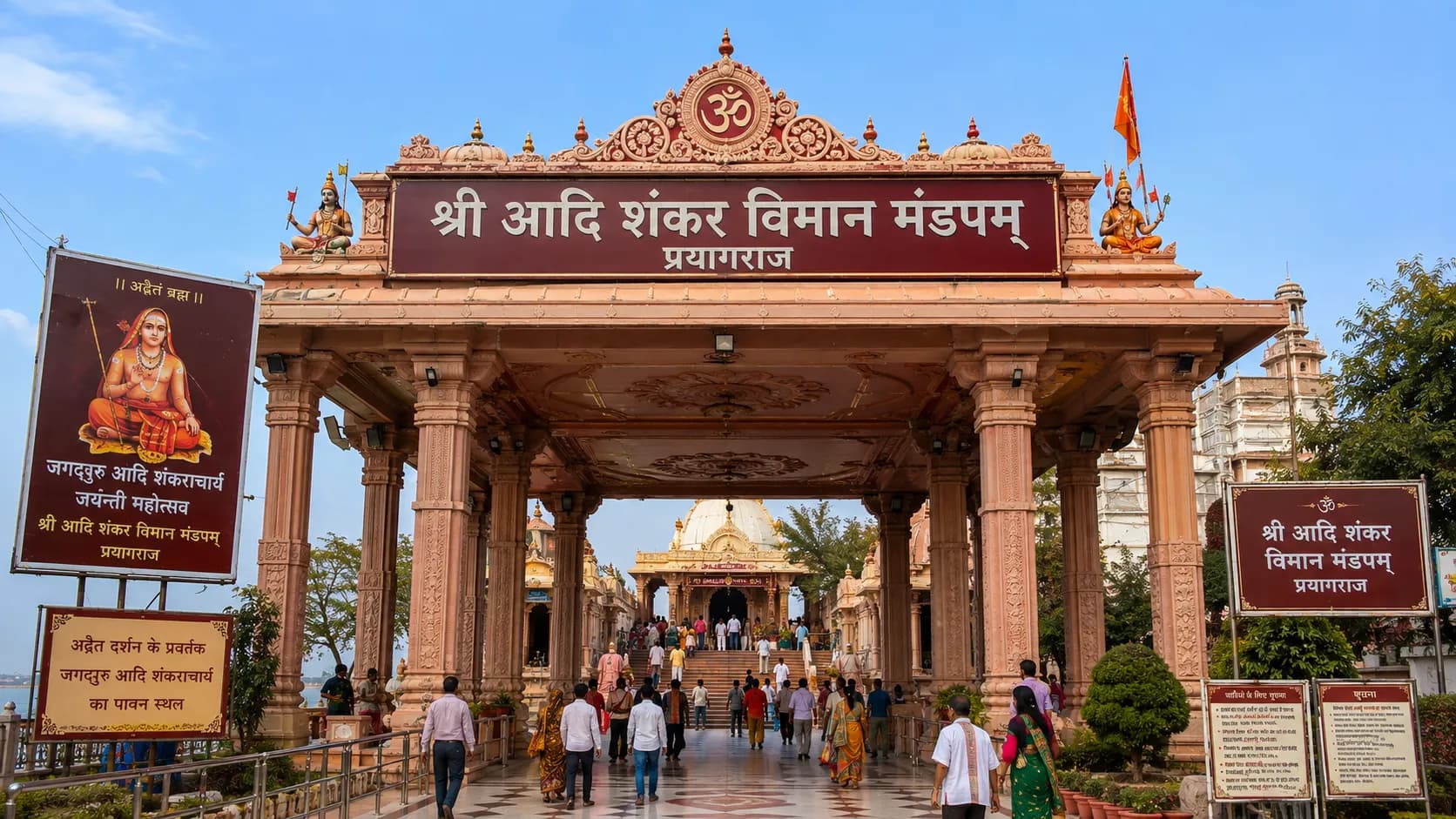
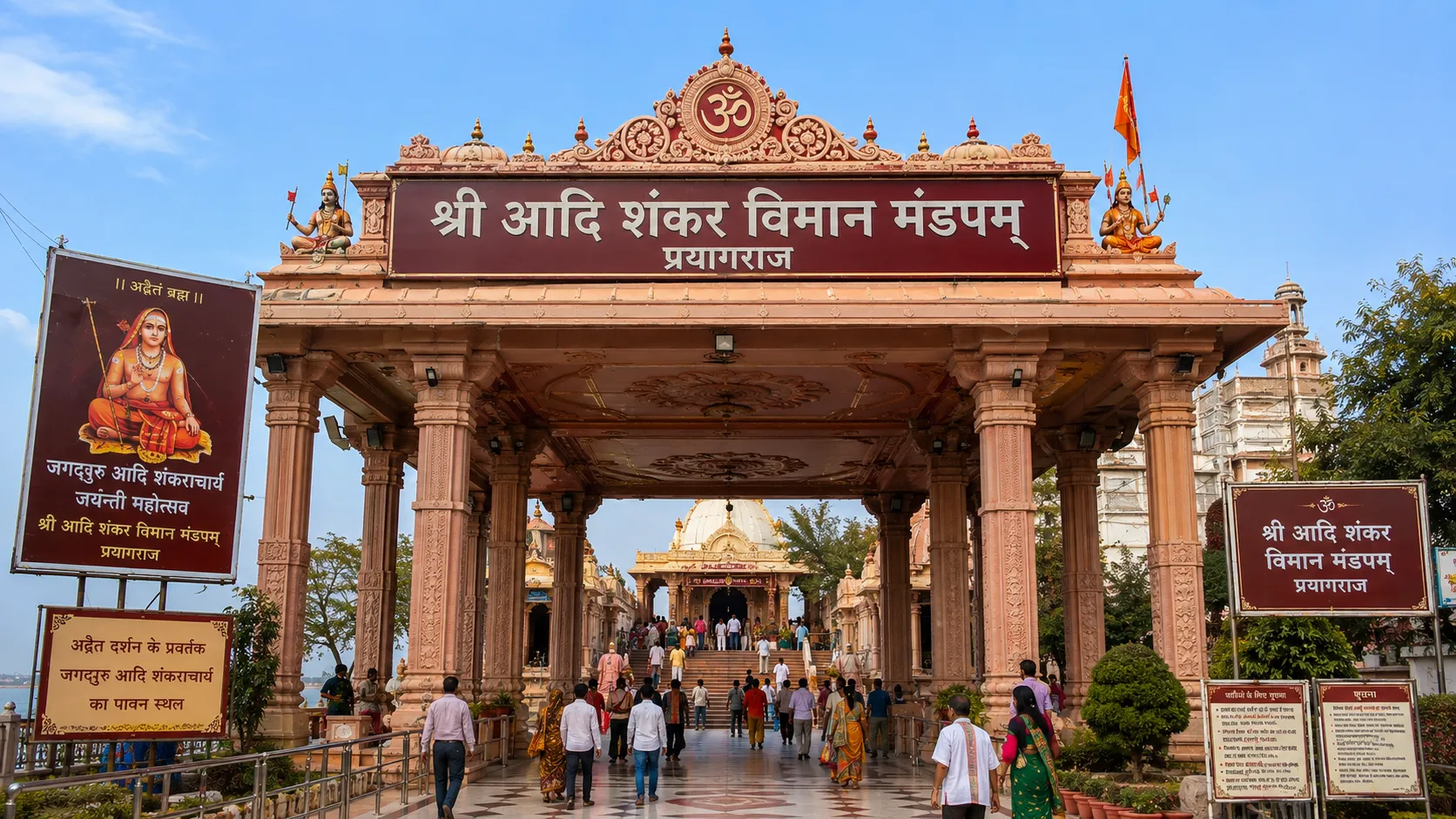
Shankar Viman Mandapam
The towering South-Indian-style temple by the Sangam; the Shakti Peeths and Divya Desams.
The Fort and the immortal Akshayavat
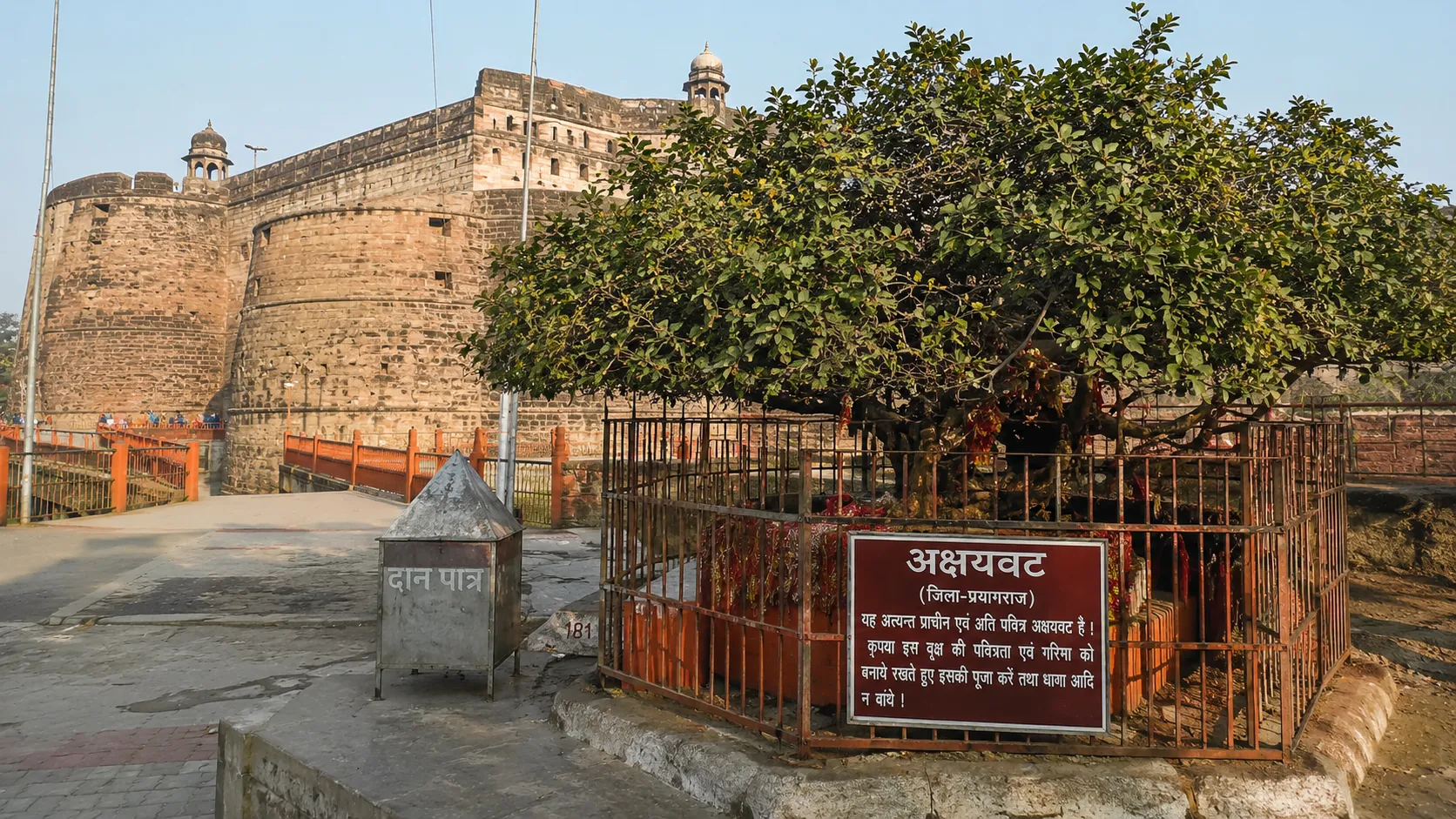
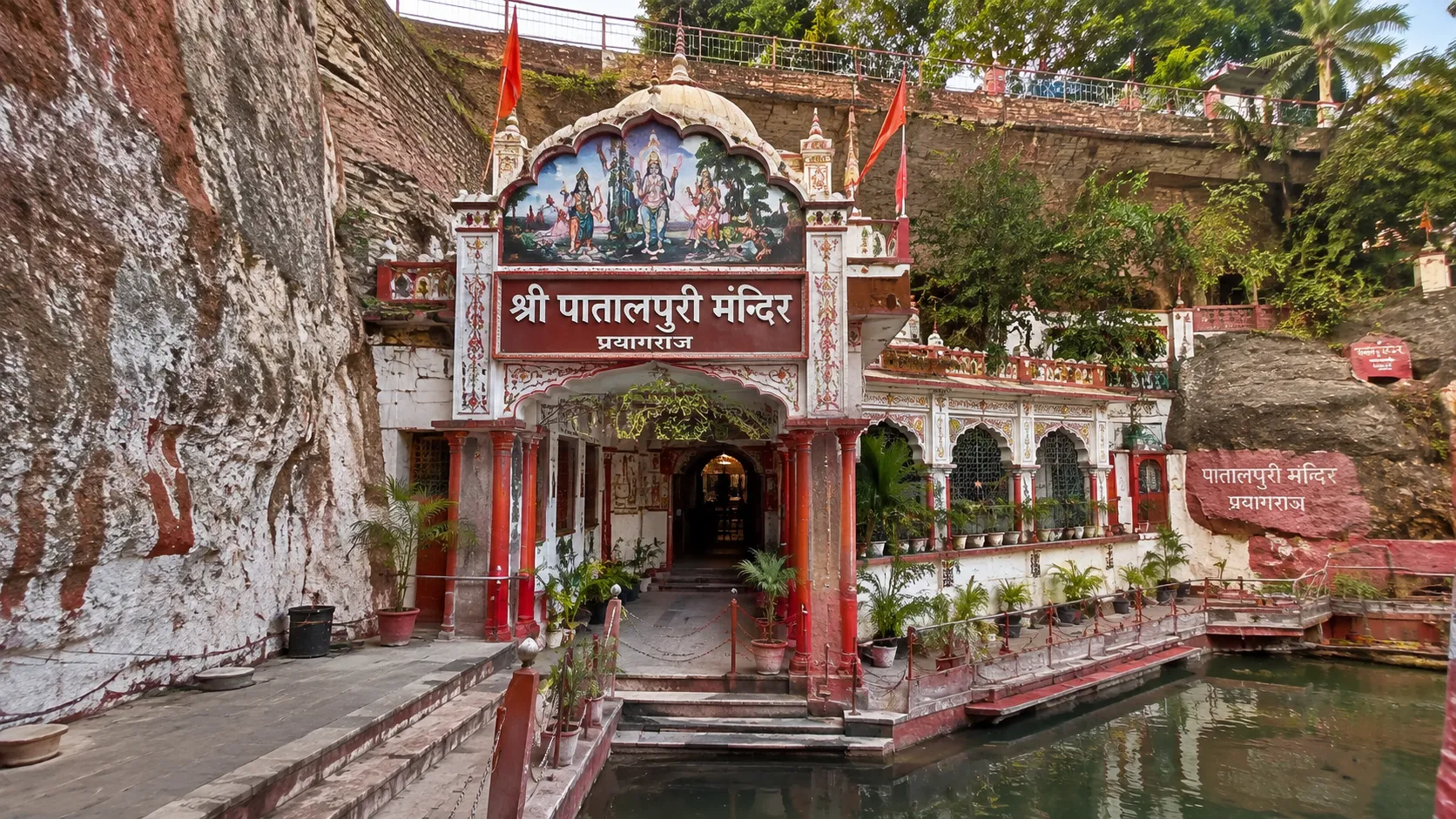
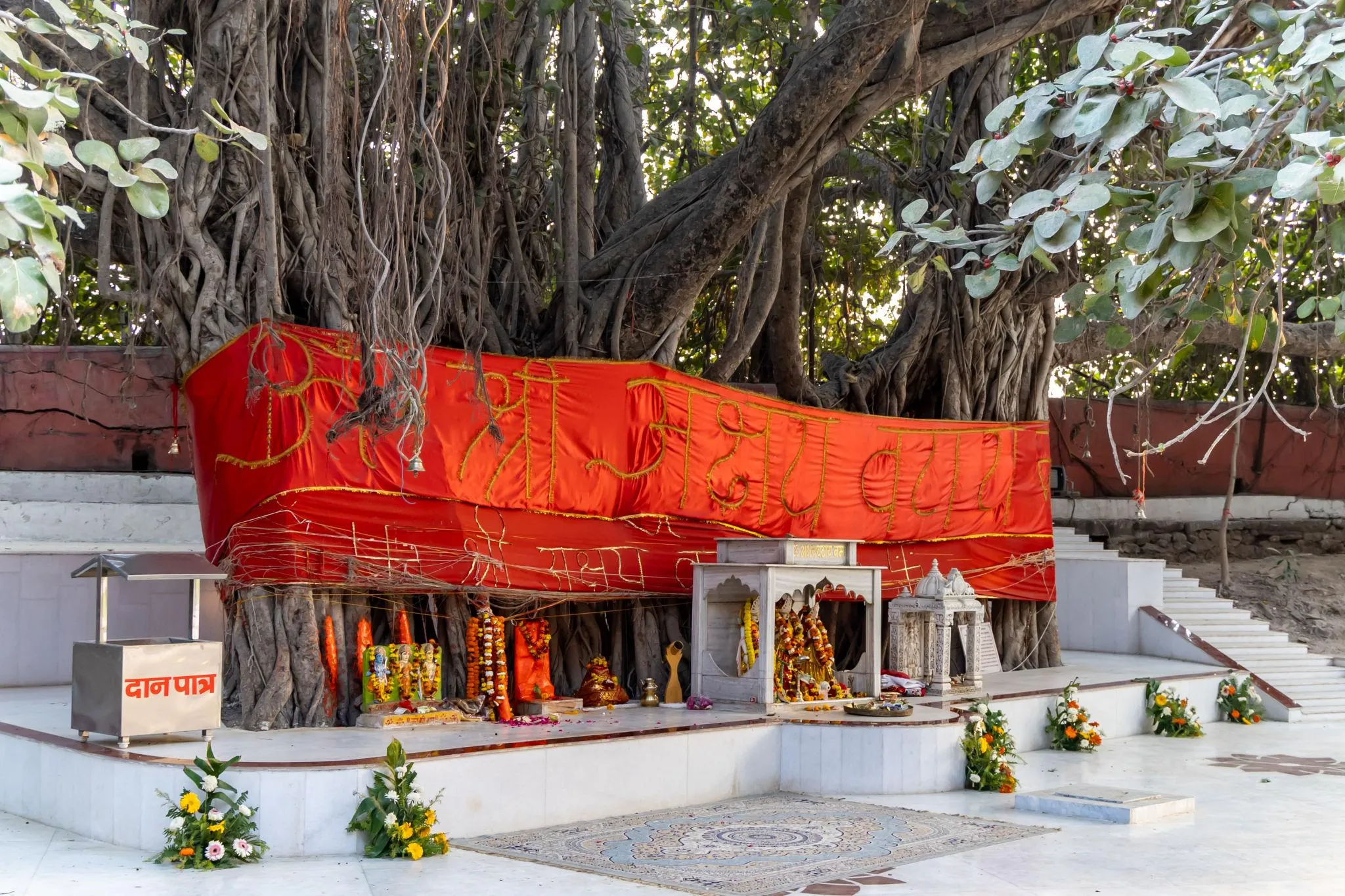
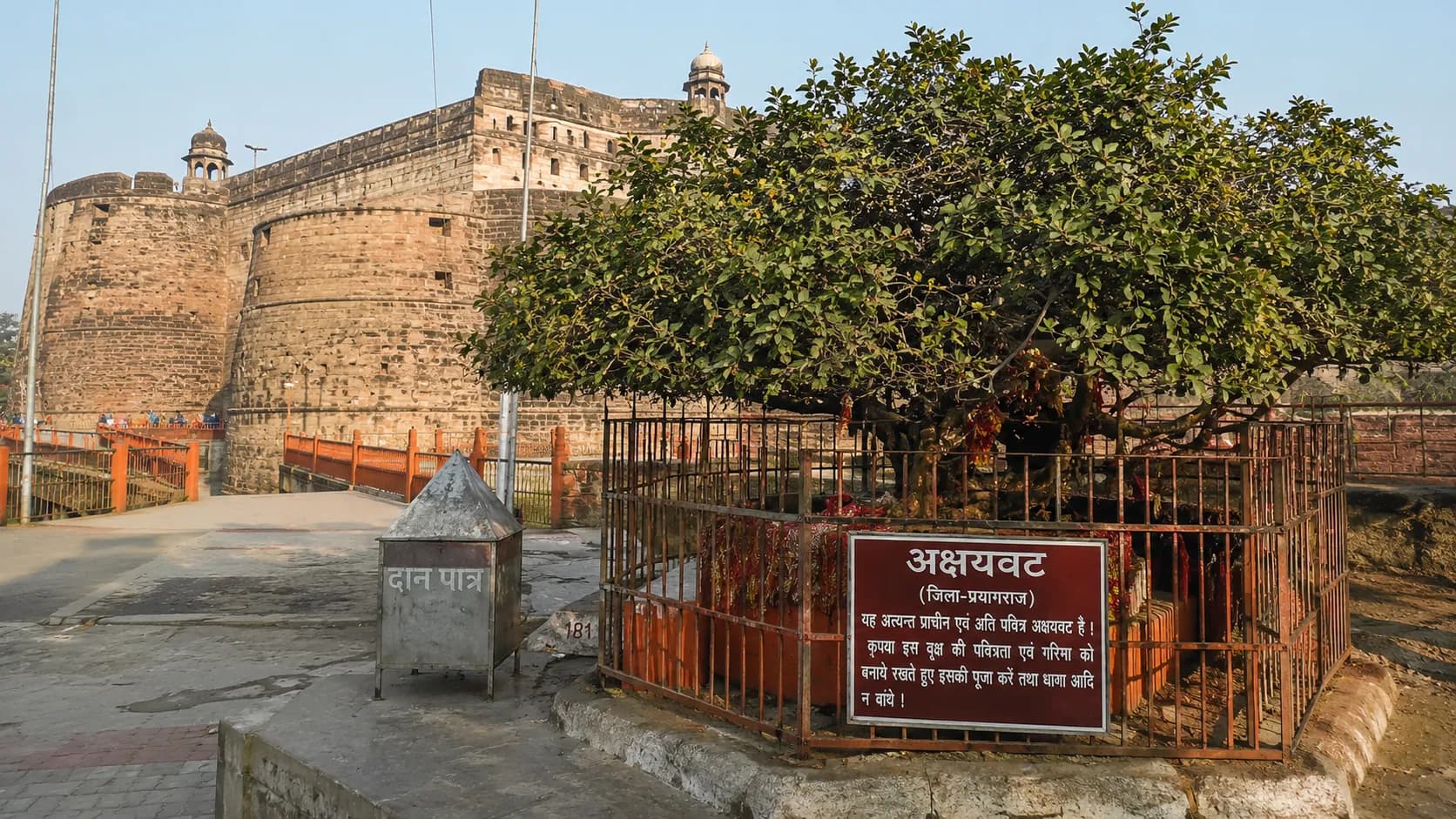
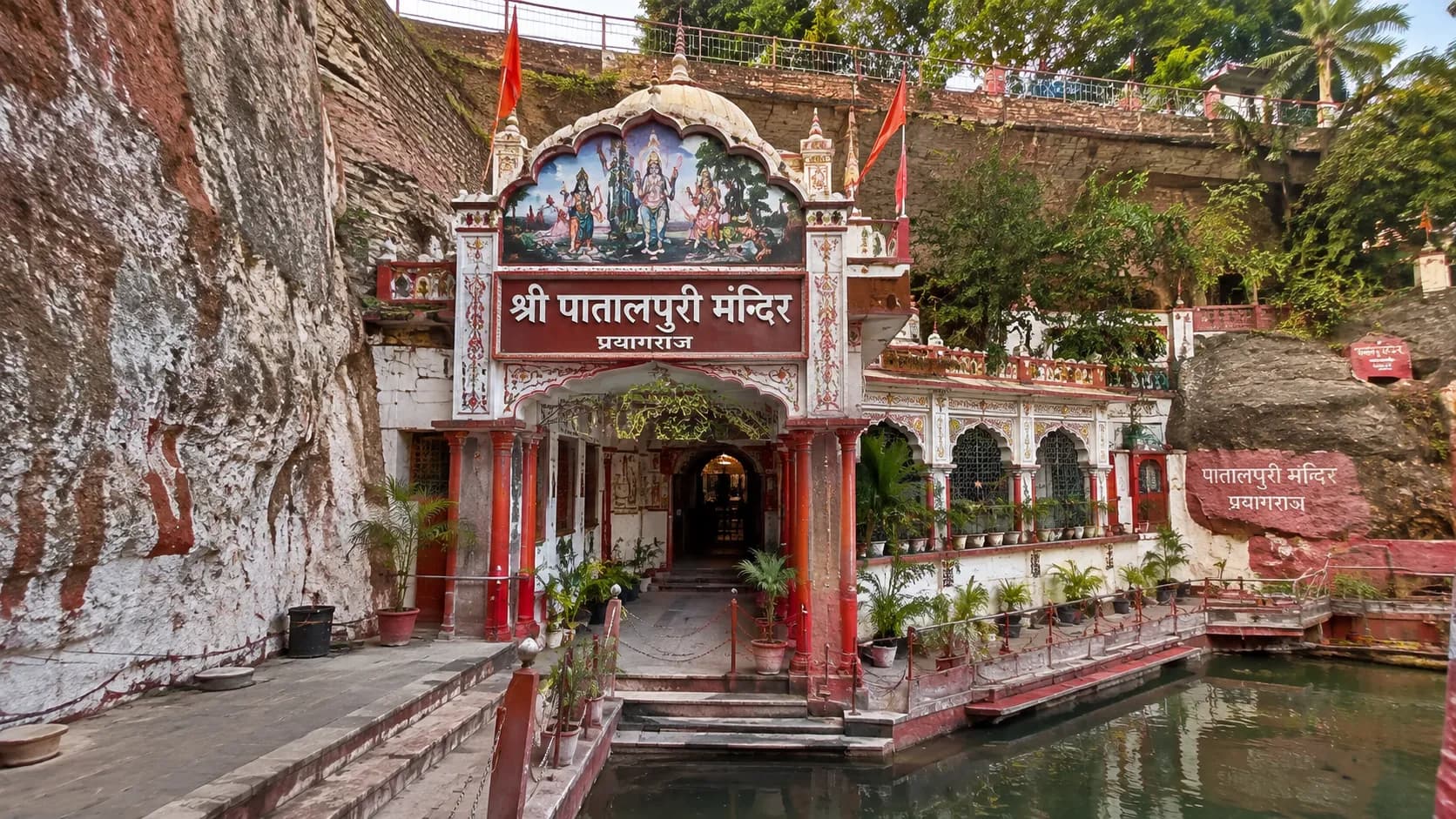
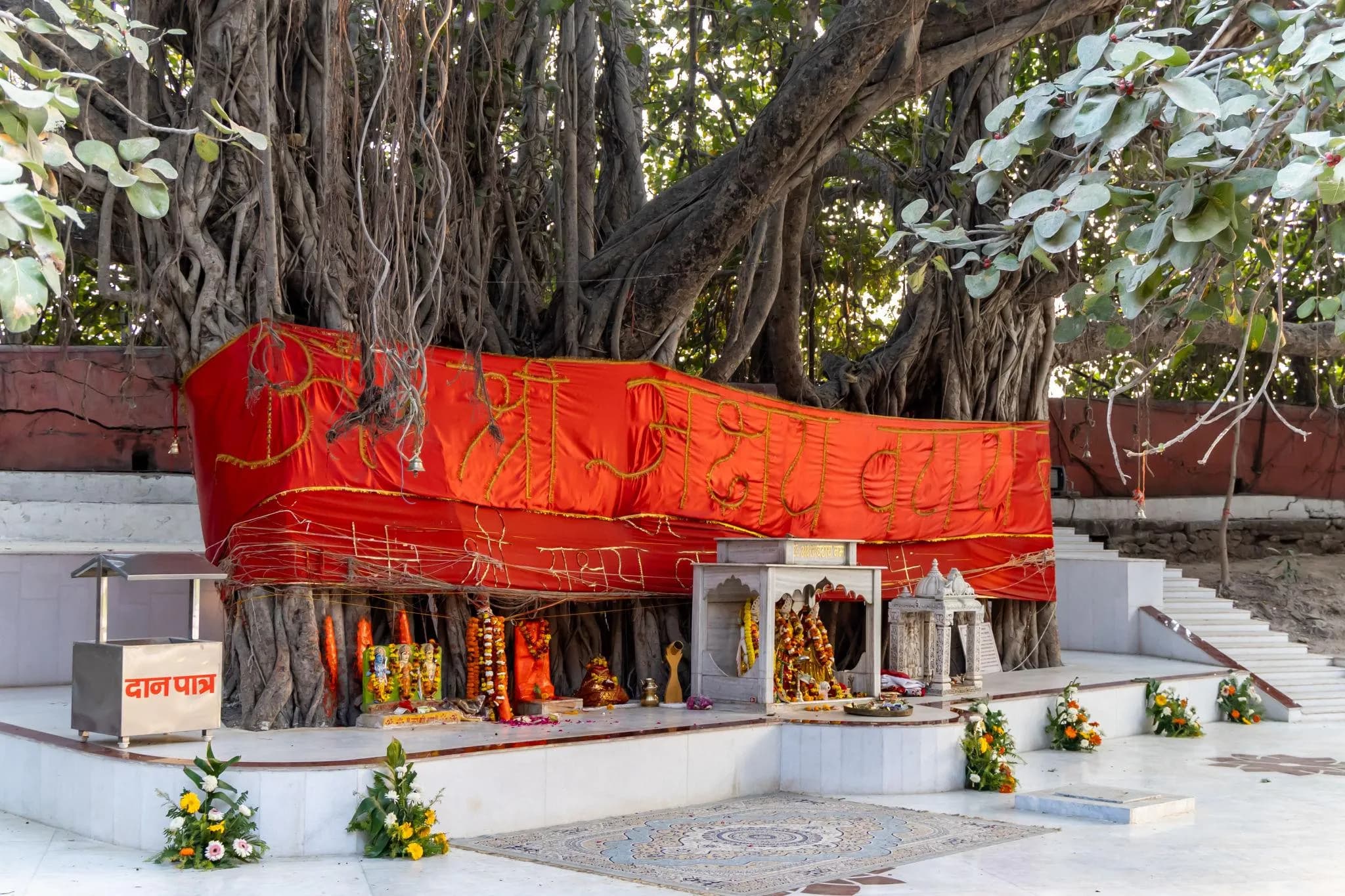
By the Sangam rises the great Allahabad Fort, built by the Emperor Akbar, within whose walls is kept one of the deepest secrets of Prayag: the Akshayavat, the immortal, undying banyan tree, and the underground Patalpuri temple beneath it. The immortal tree, which the scriptures say alone survives the dissolution of the world, and the netherworld-temple around it, are among the most sacred of all the sites of the holy city.
The Dwadash Madhav: the twelve Vishnus
Prayag is the Vishnu Nagari, the city of Vishnu, and the Lord guards his holy city in twelve forms, the Dwadash Madhav, the twelve Madhavs, whose temples stand at the twelve points around the sacred field. To go round all twelve, the Dwadash Madhav Parikrama, is the crown of the Sangam pilgrimage, held to complete the merit of the holy bath.
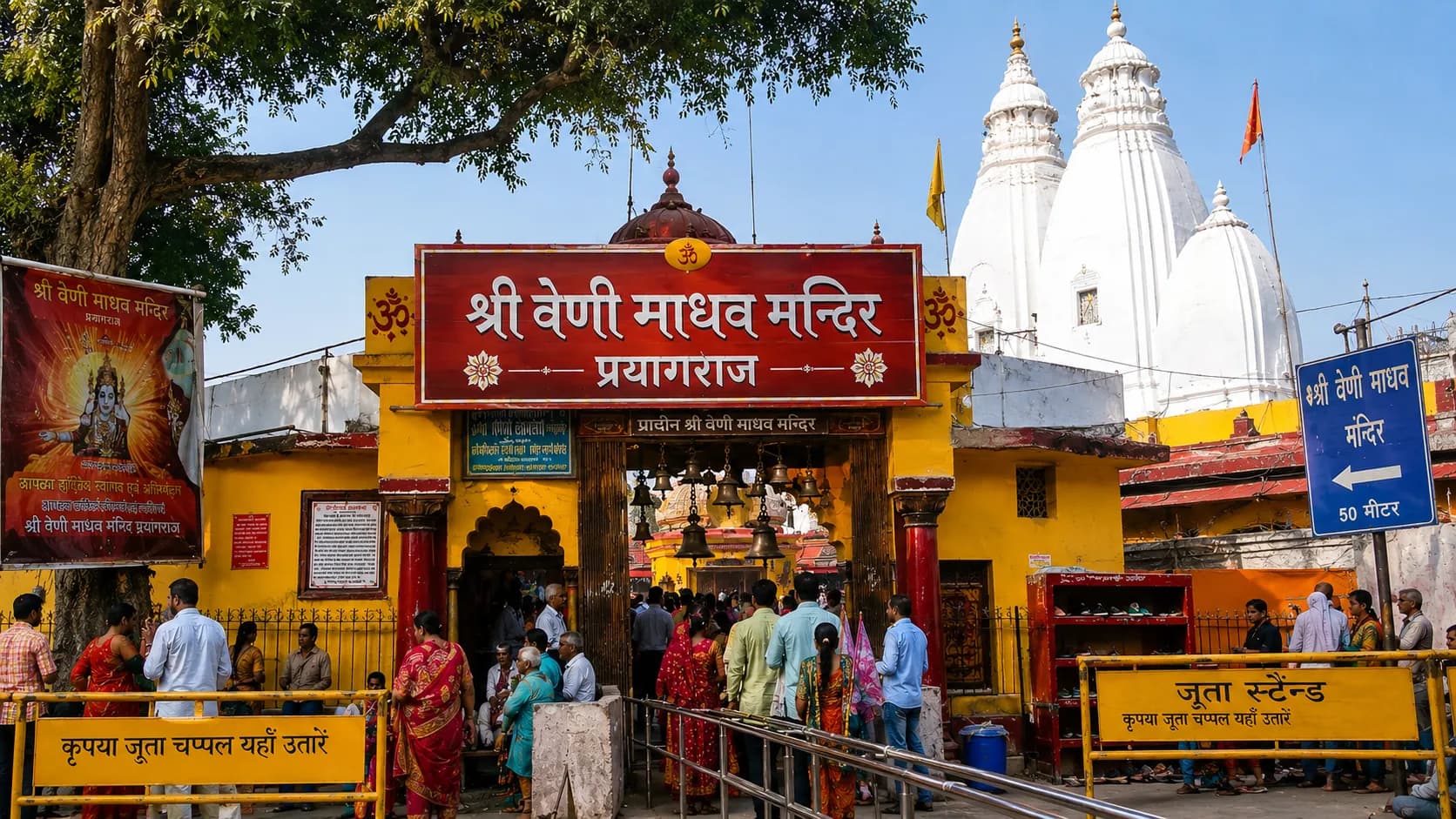
Chief among the twelve is the Veni Madhav, the presiding Vishnu of Prayag; and there are the four emblem-Lords, of the conch, the discus, the mace and the lotus, and the Infinite and the Enchanting, and more.
Dwadash Madhav Parikrama
The complete guide to the sacred circuit of all twelve Madhavs.
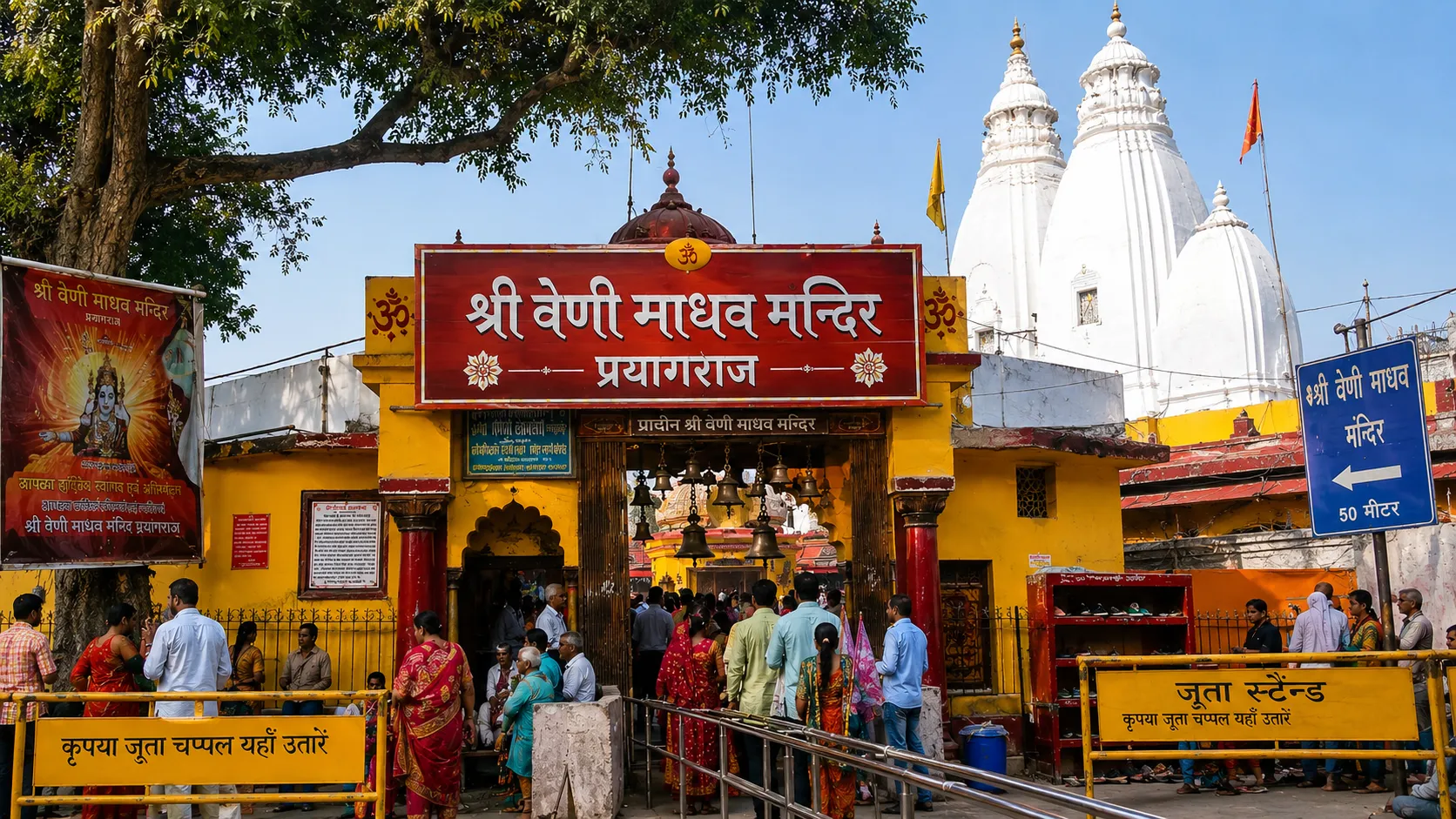
Veni Madhav
The chief and presiding Vishnu of Prayag, the Nagar Devta, in Daraganj.
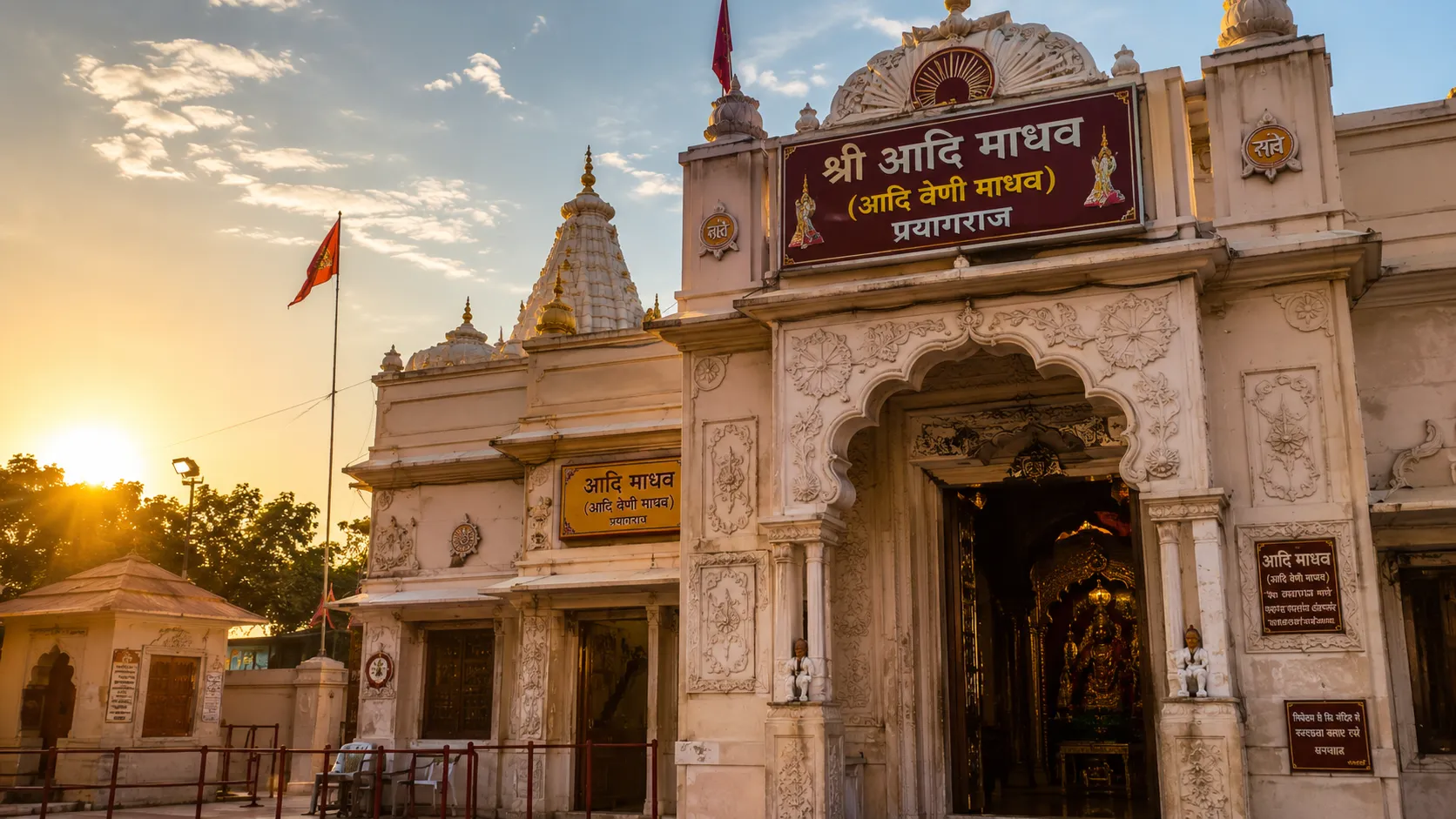
Adi Vat Madhav
The primal Vishnu of the immortal Akshayavat.
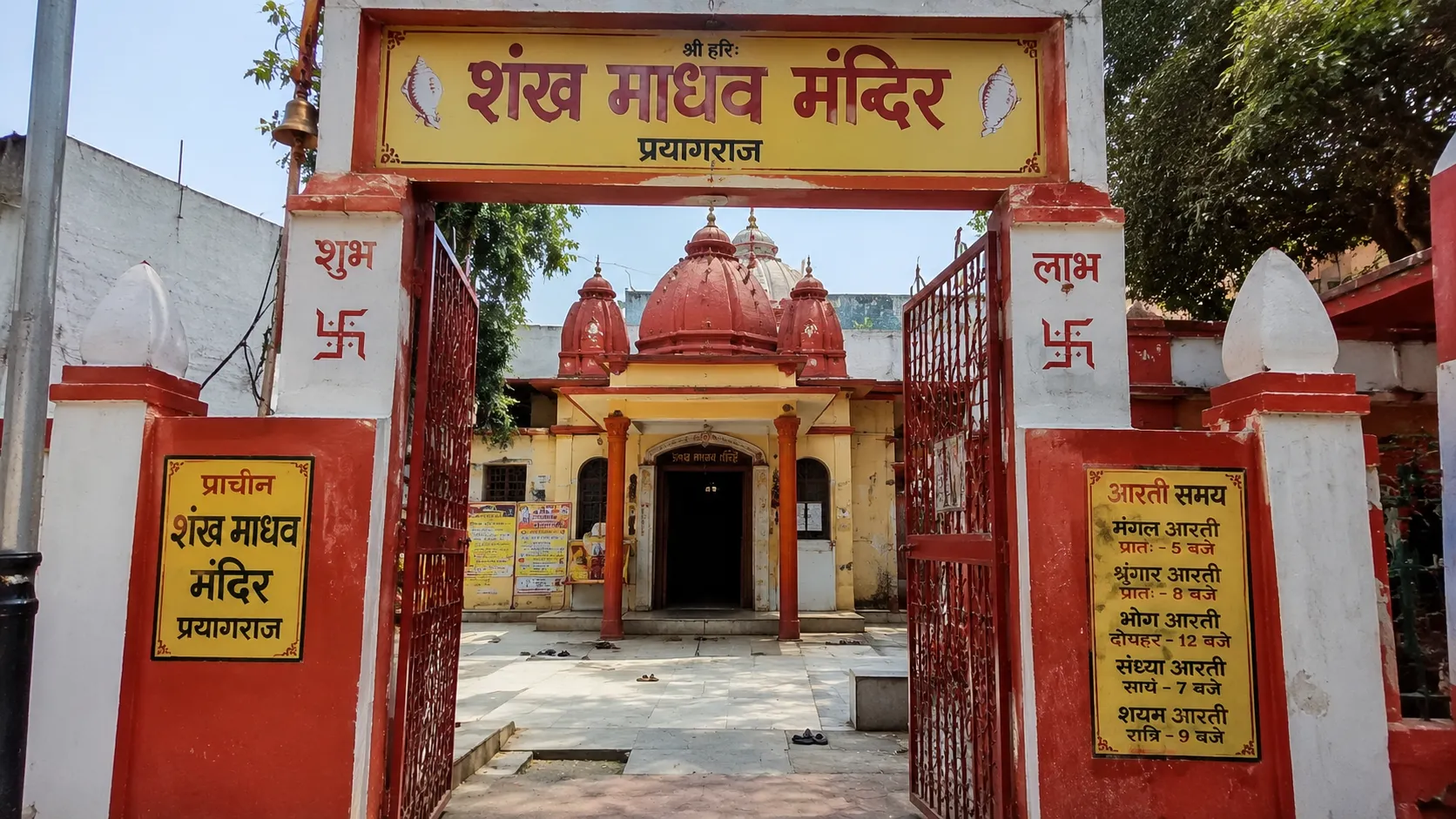
Shankh Madhav
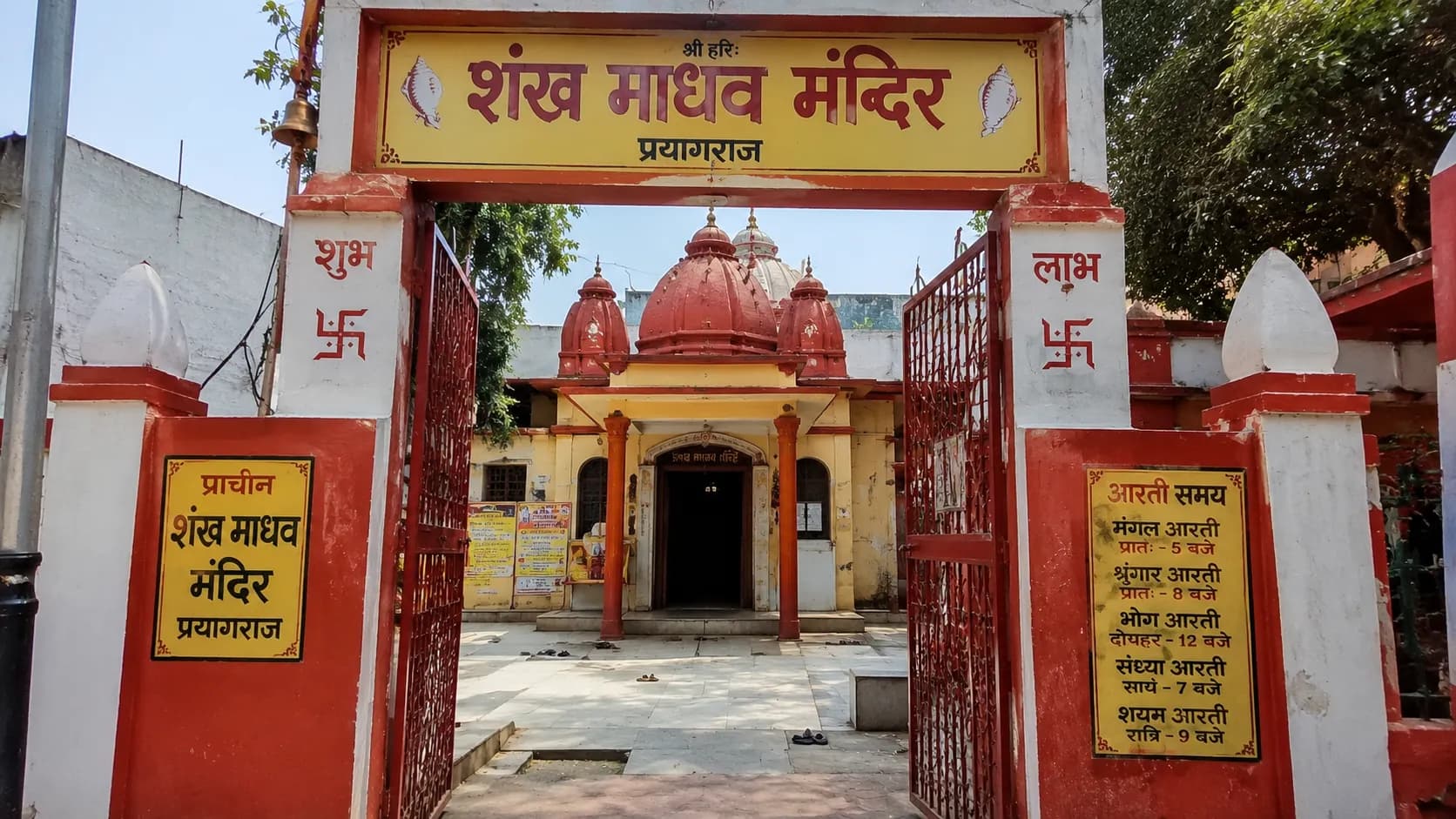
The Lord of the conch, one of the four emblem-Madhavs.
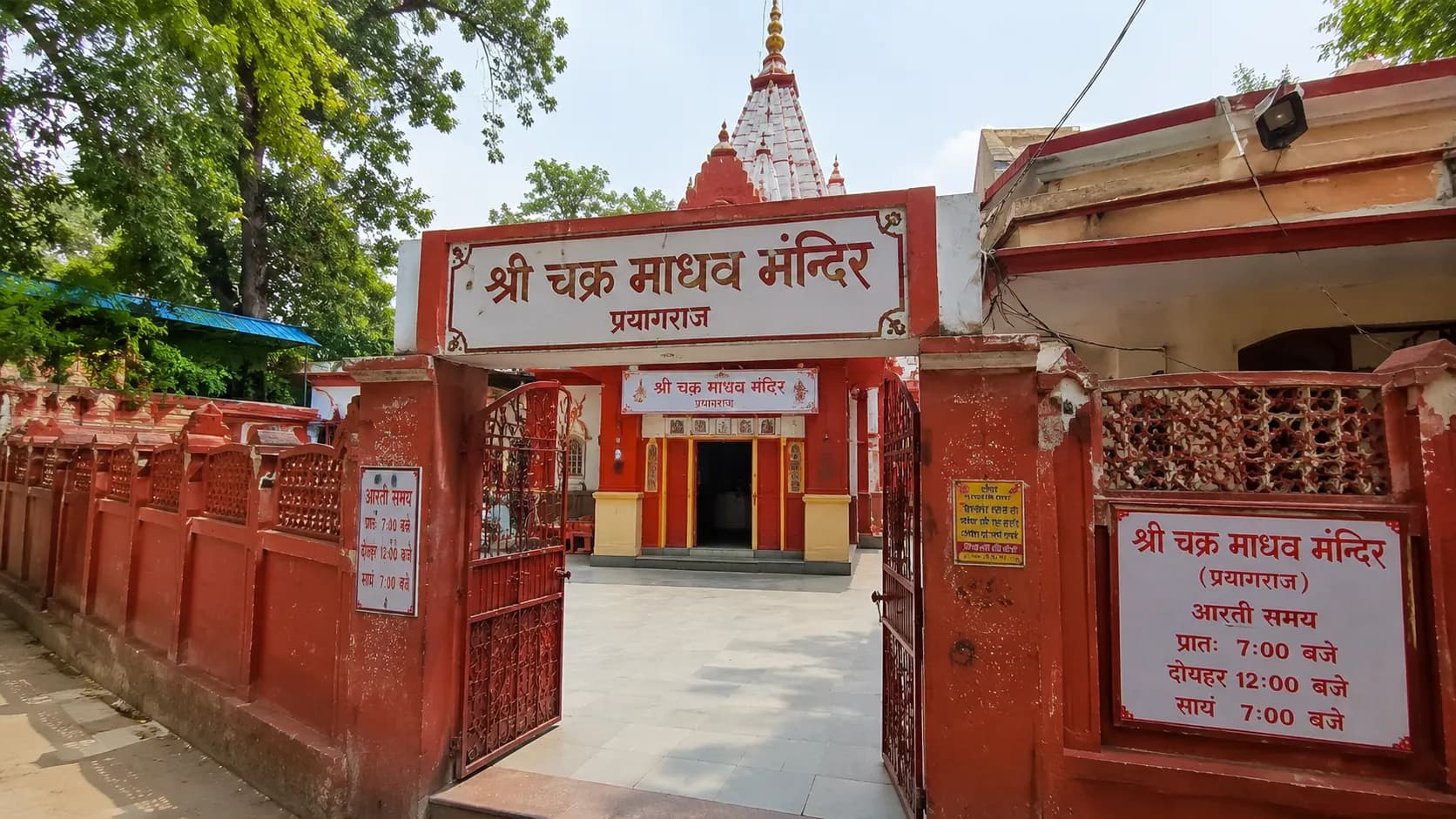
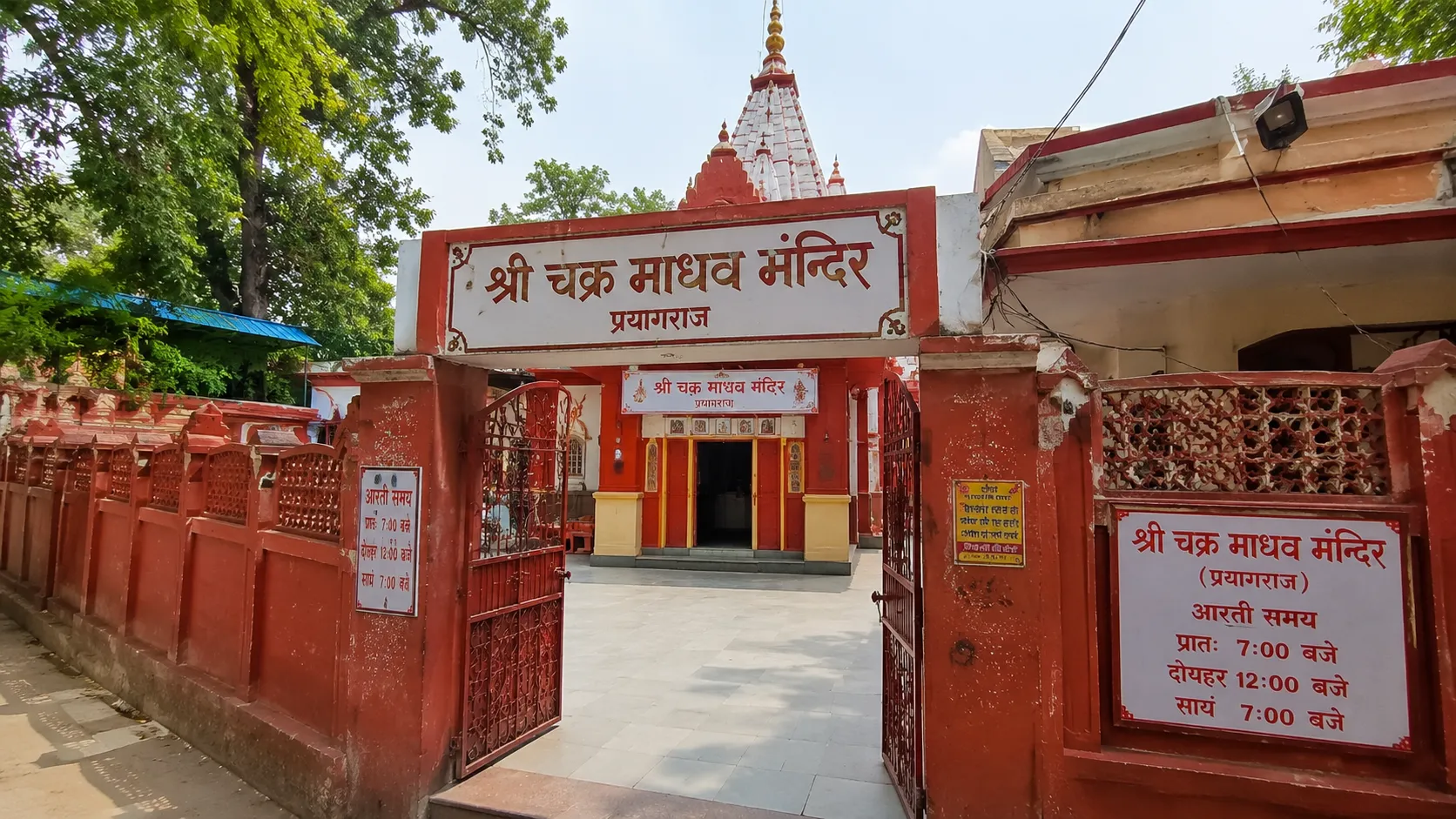
Chakra Madhav
The Lord of the discus, one of the four emblem-Madhavs.
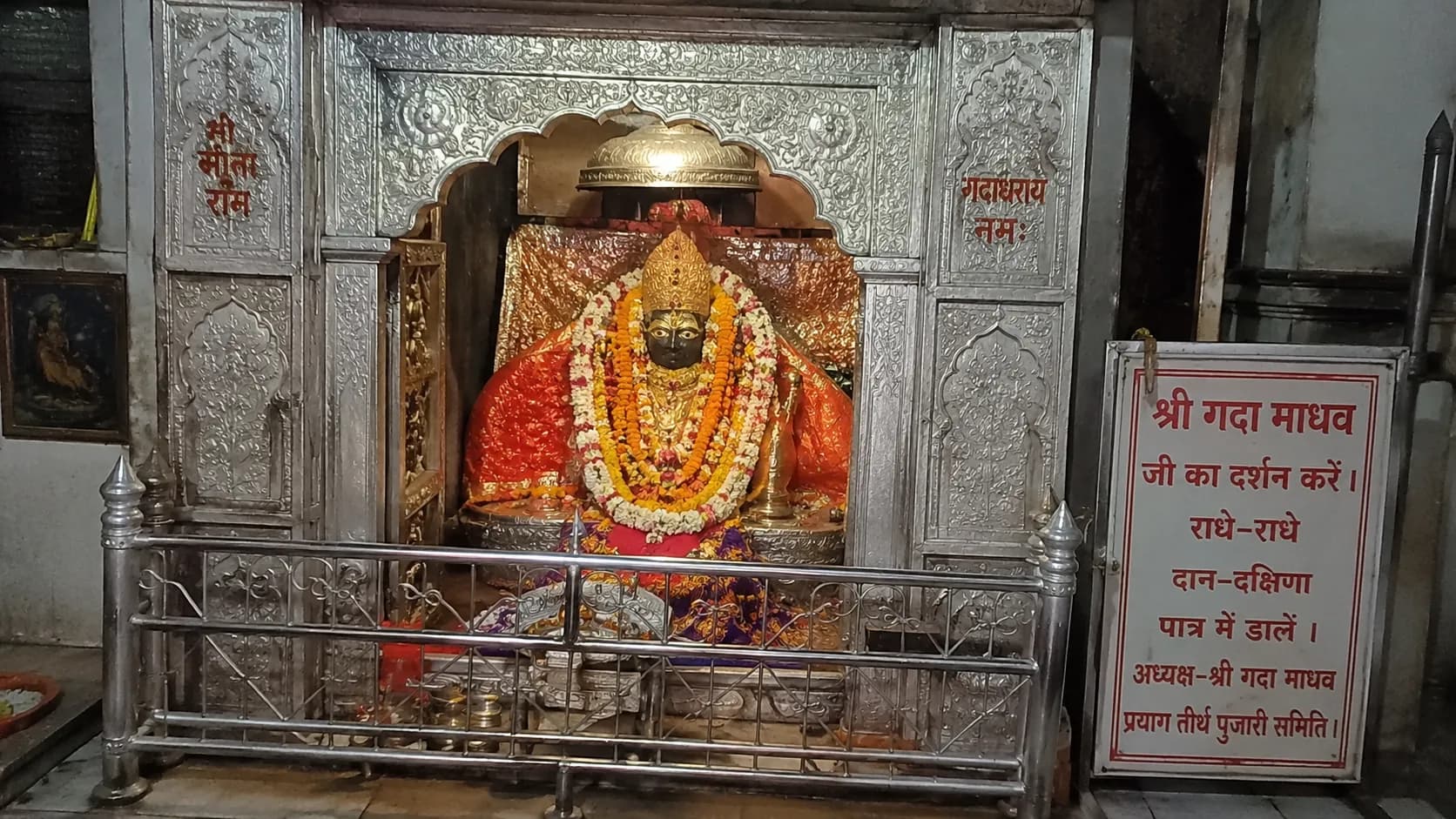
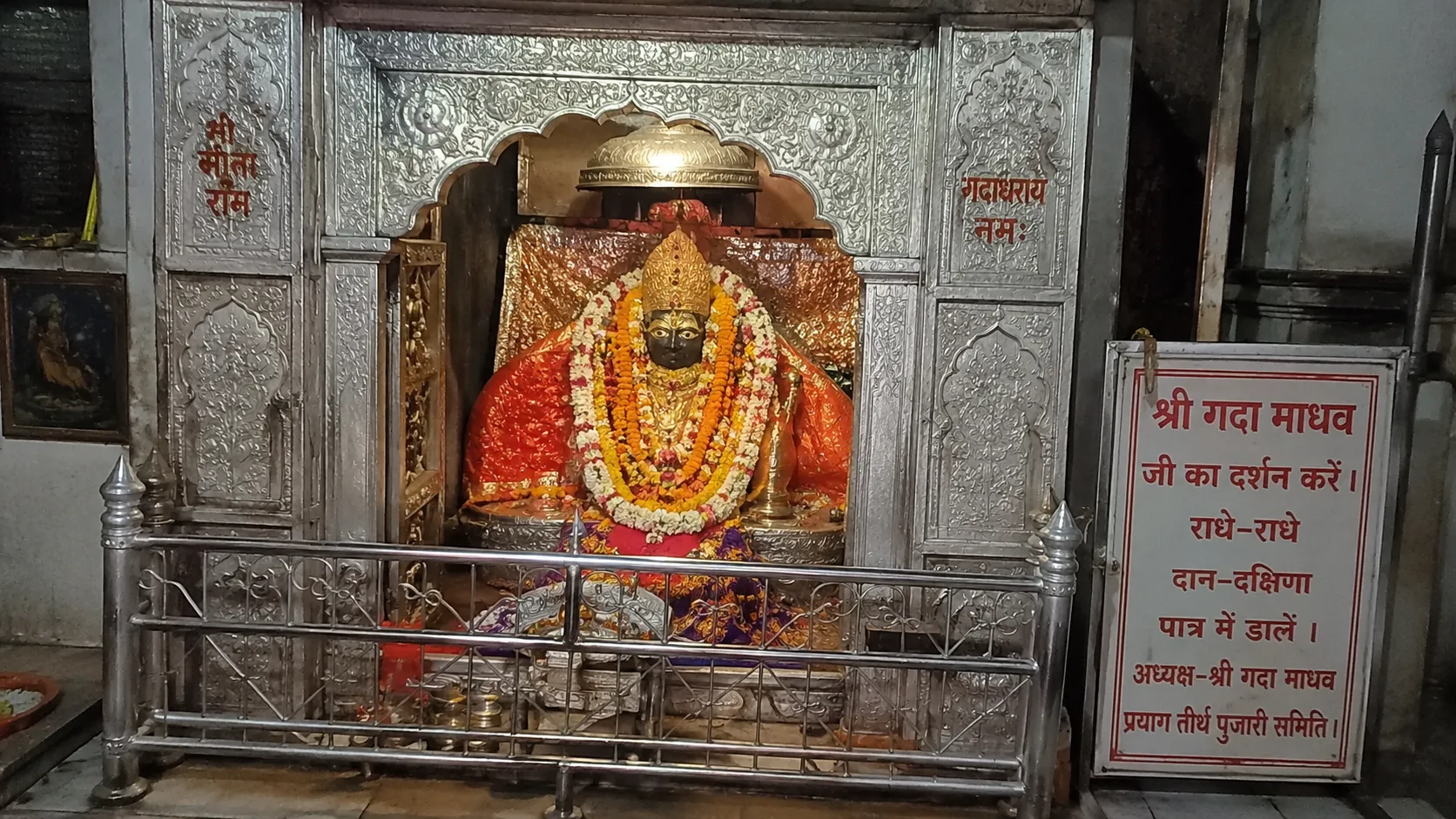
Gada Madhav
The Lord of the mace, one of the four emblem-Madhavs.
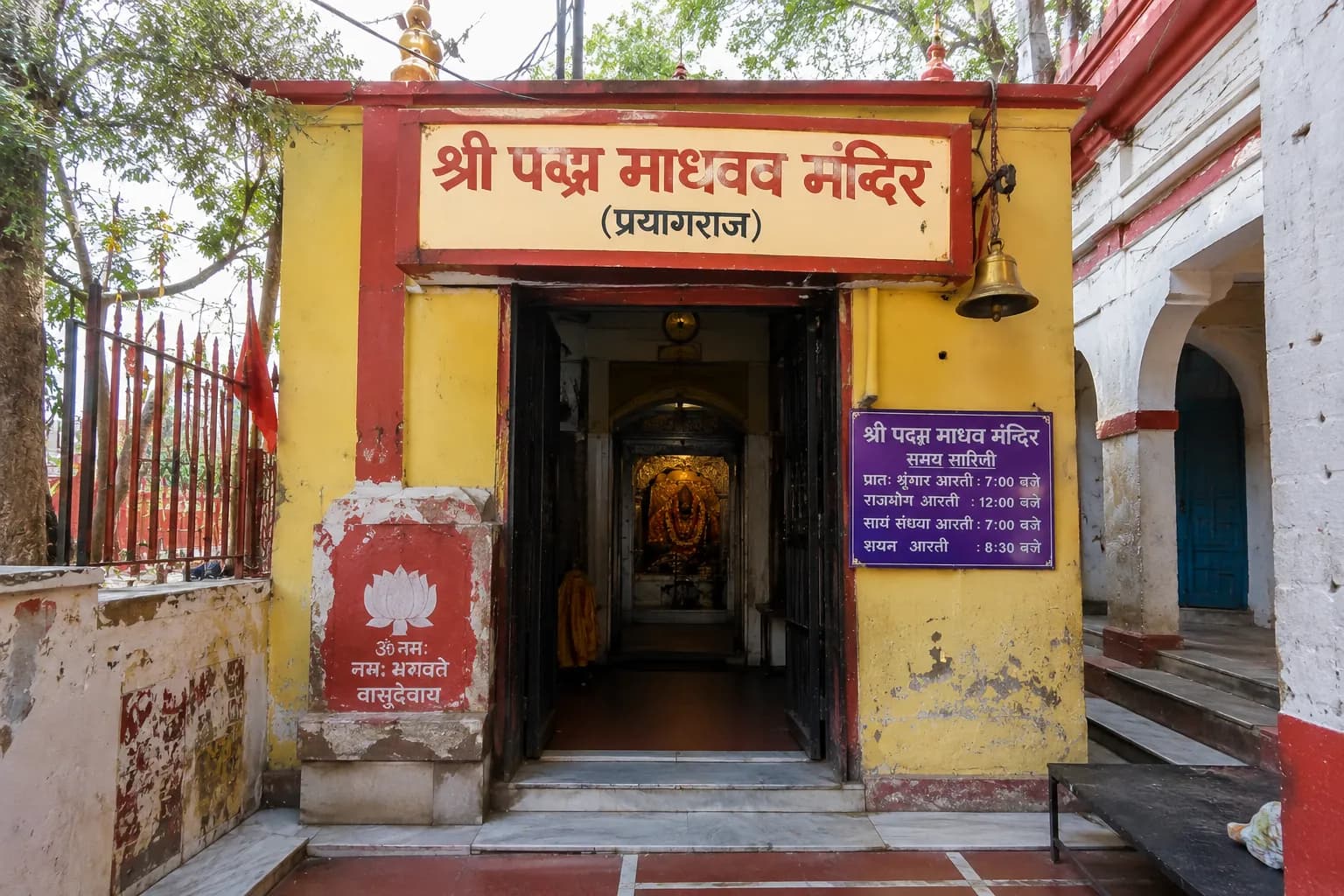
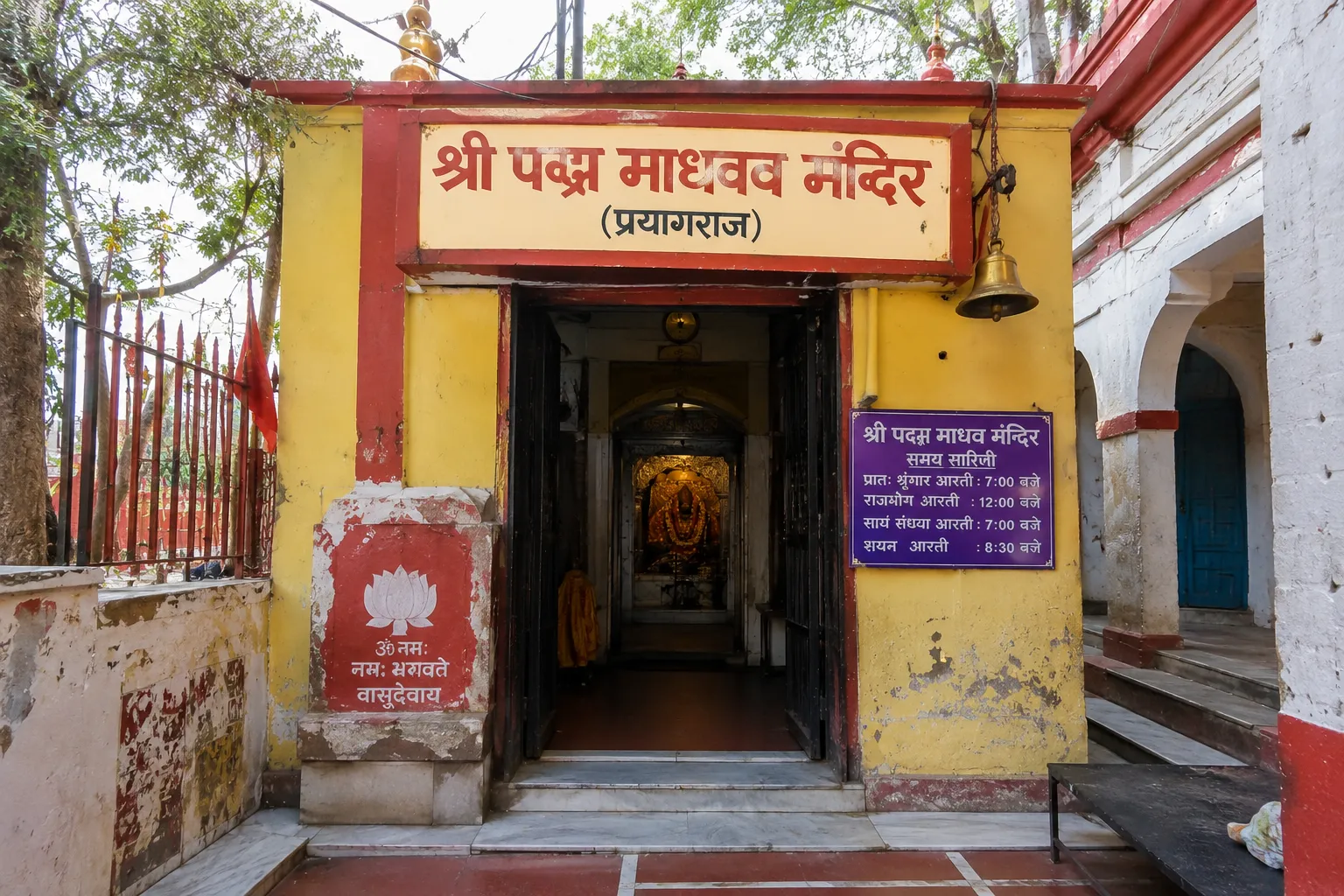
Padma Madhav
The Lord of the lotus, one of the four emblem-Madhavs.
Anant Madhav
The Infinite Lord, among the twelve Madhavs of Prayag.
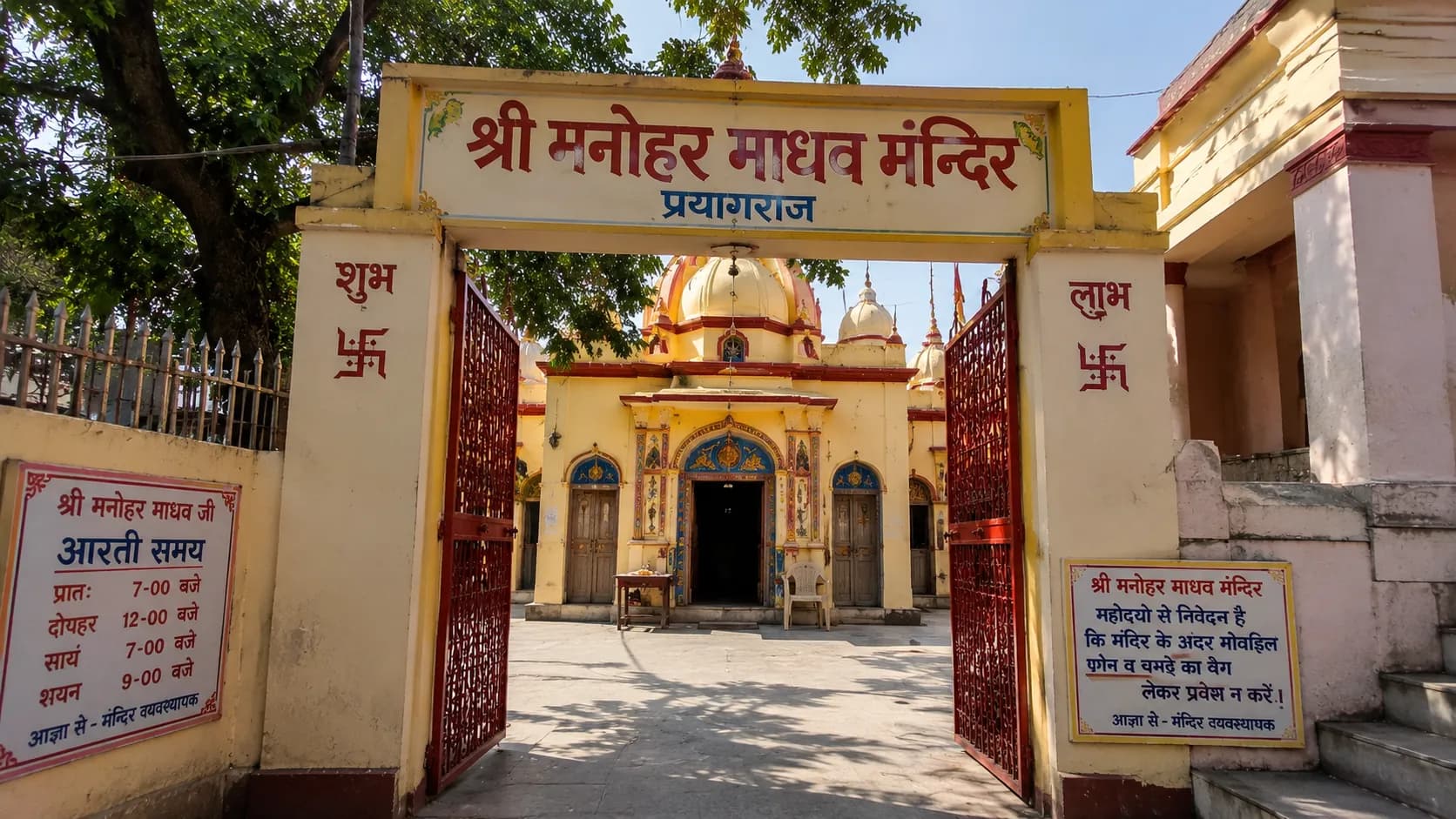
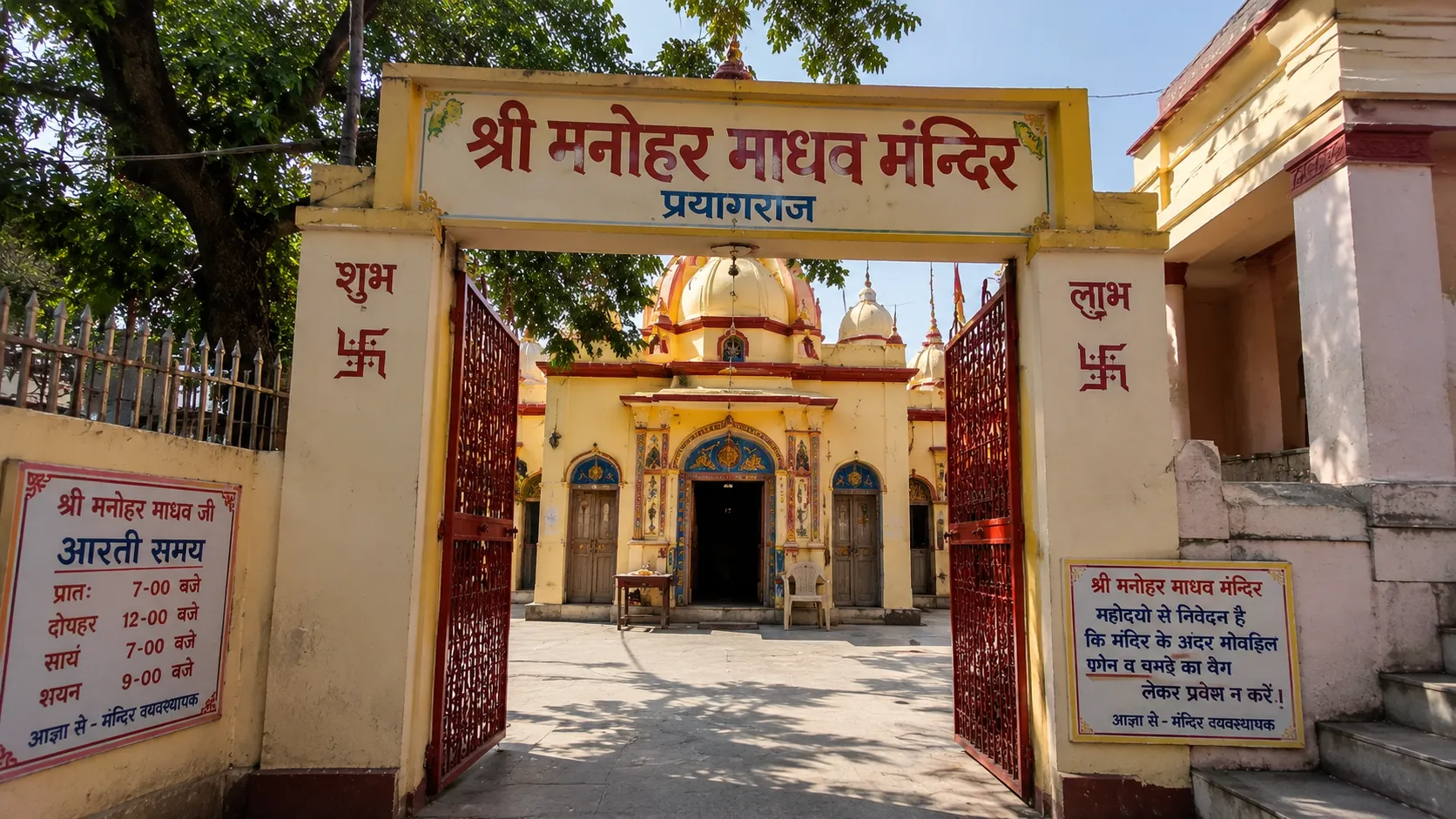
Manohar Madhav
The Enchanting Lord, among the twelve Madhavs of Prayag.
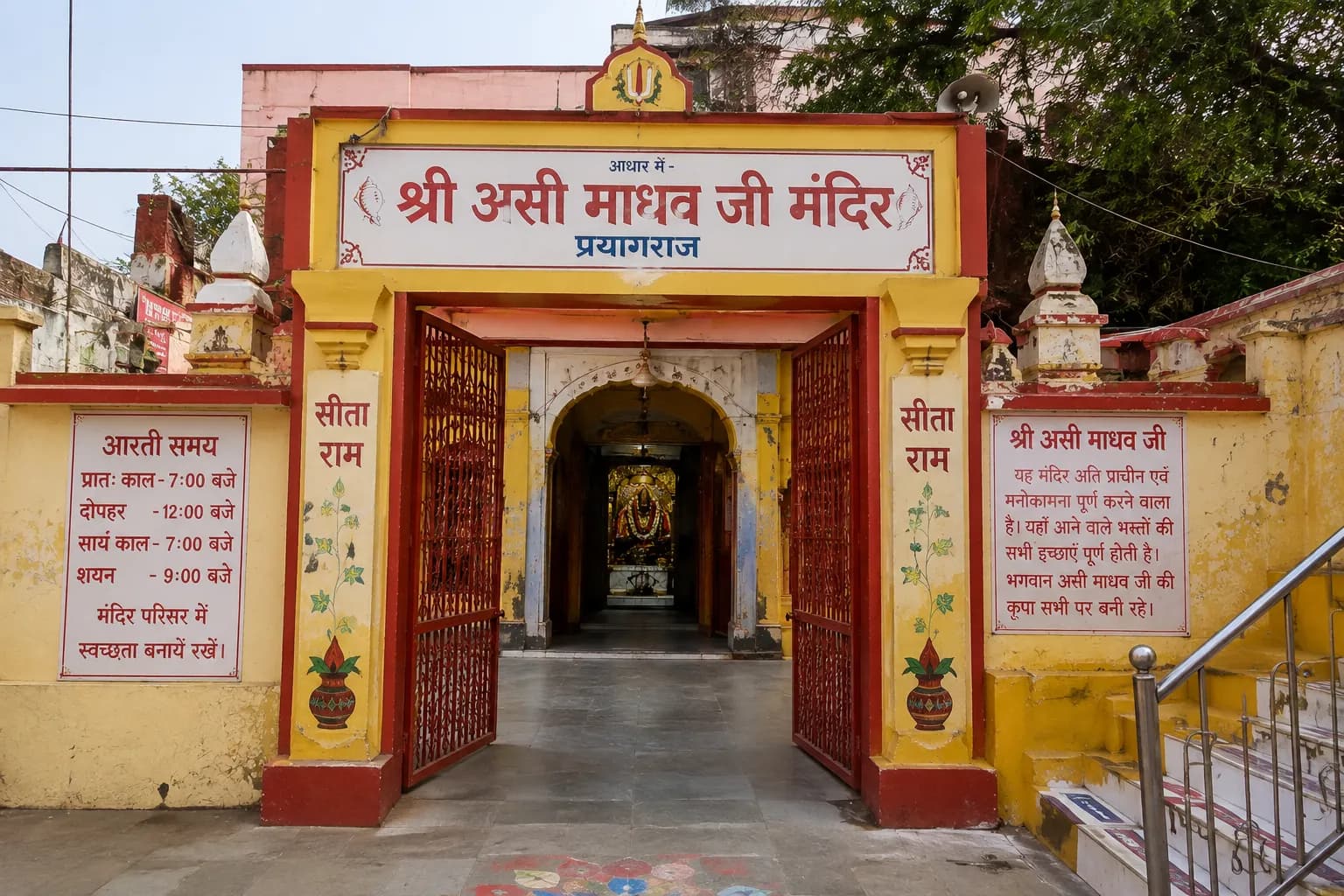
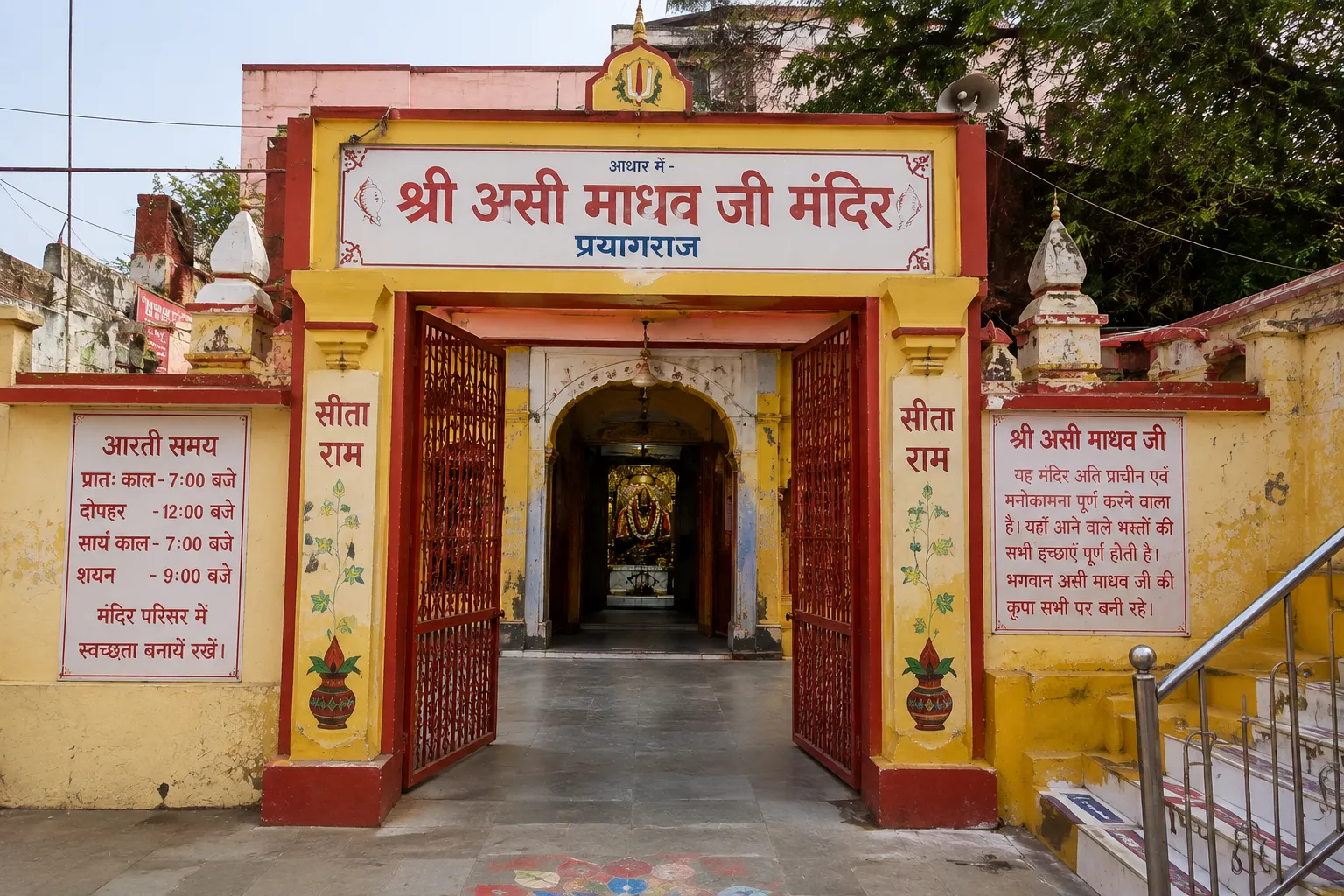
Asi Madhav
The serpent-shrine Madhav, among the twelve of Prayag.
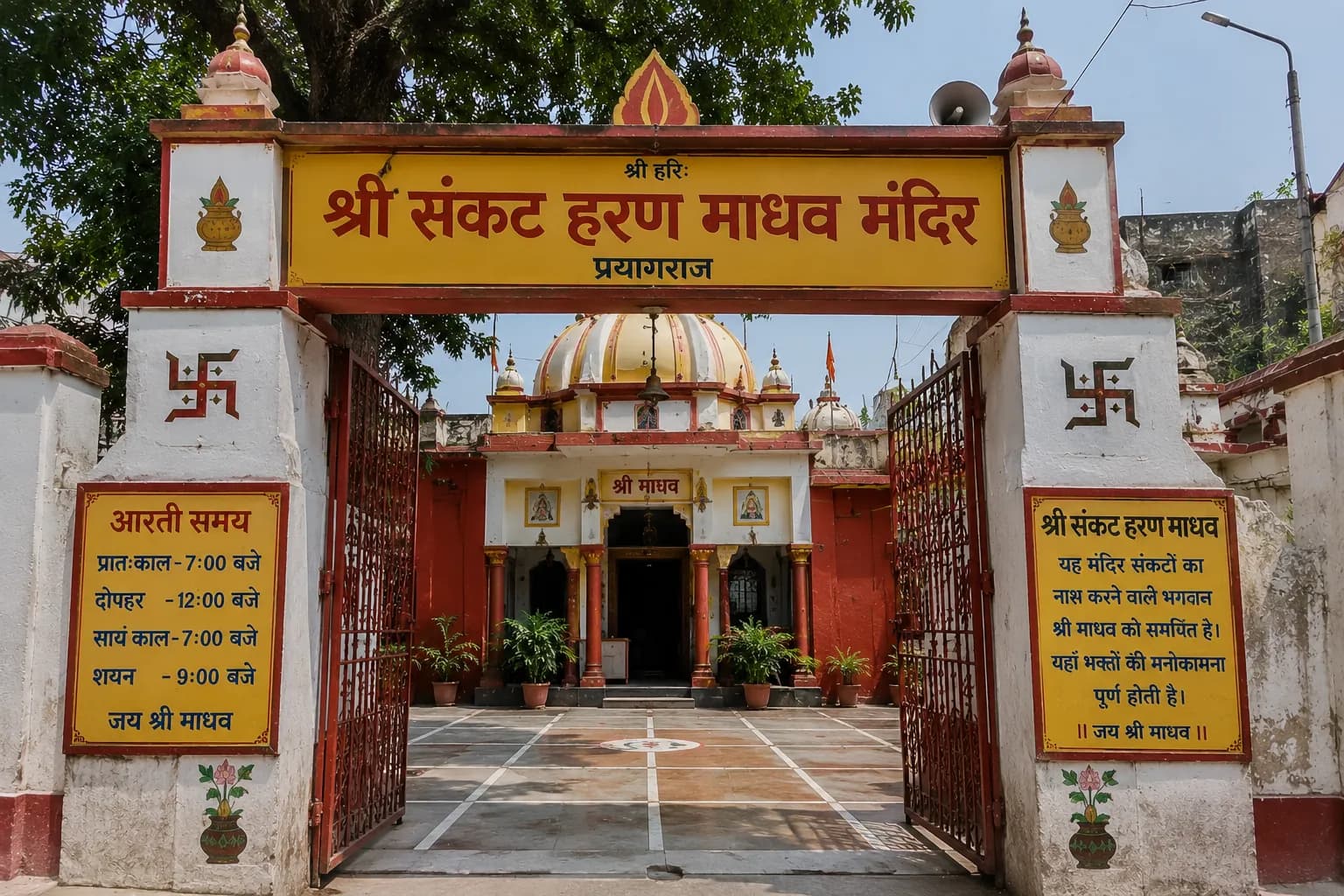
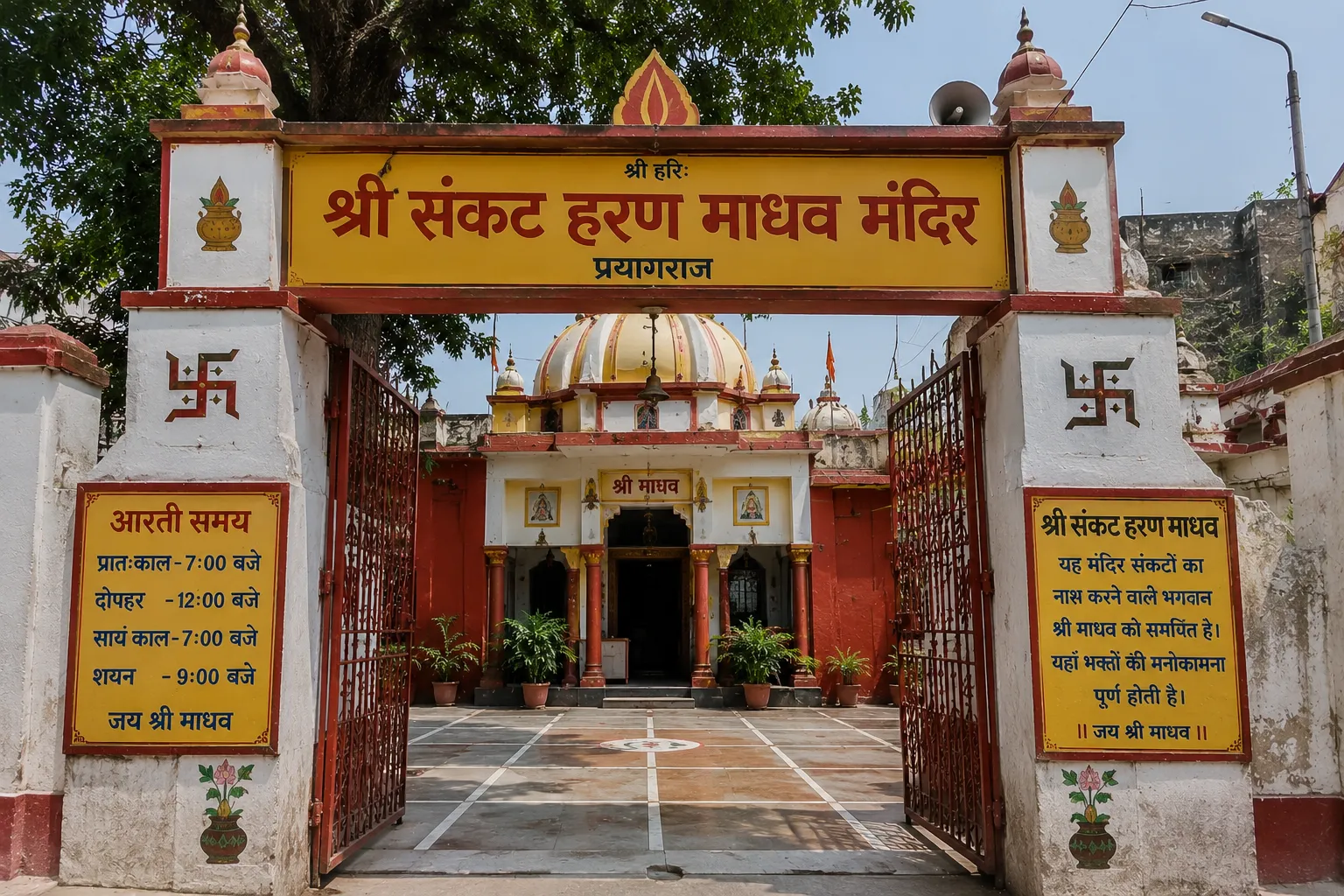
Sankasht Har Madhav
The remover of distress, among the twelve Madhavs.
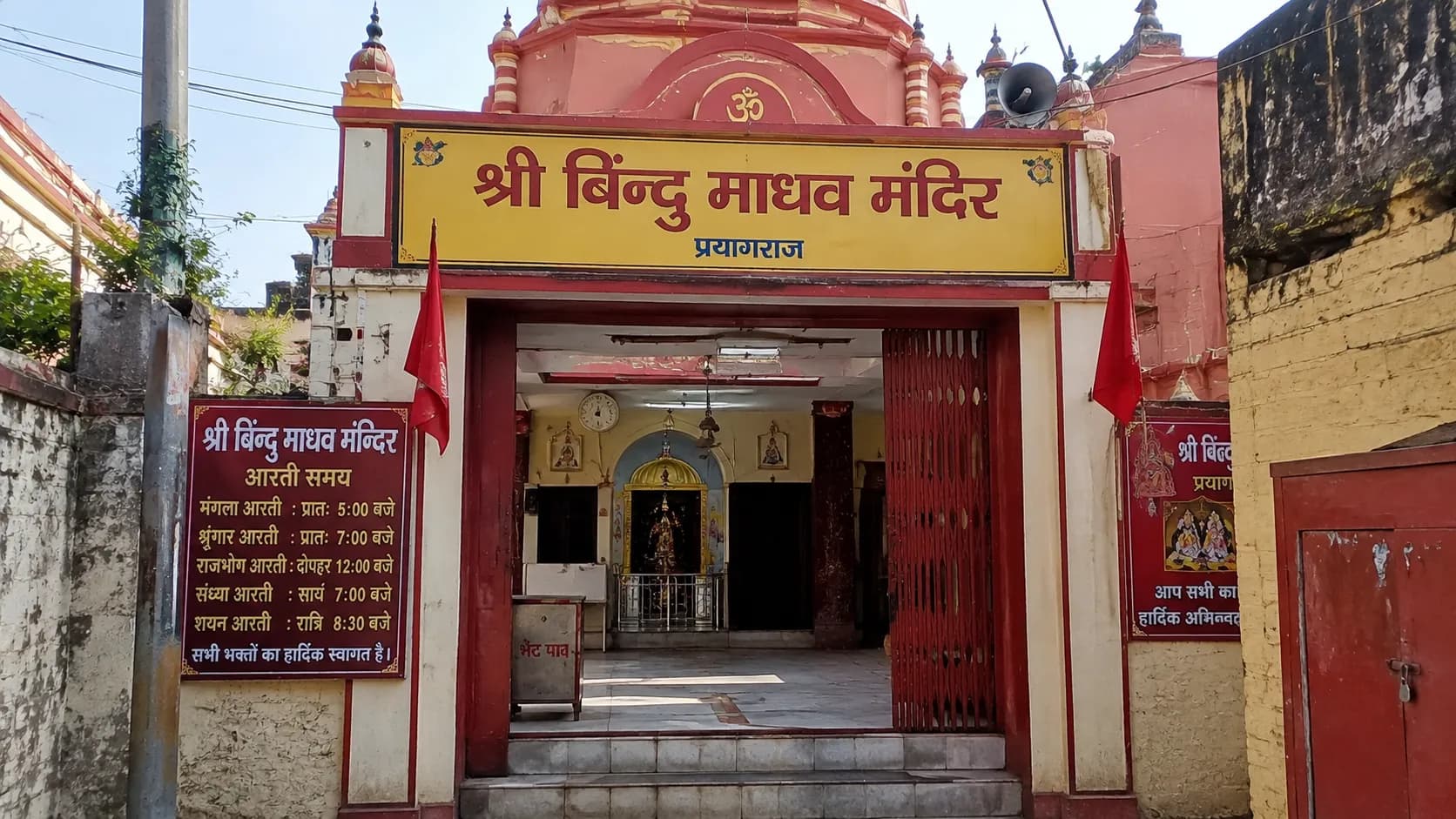
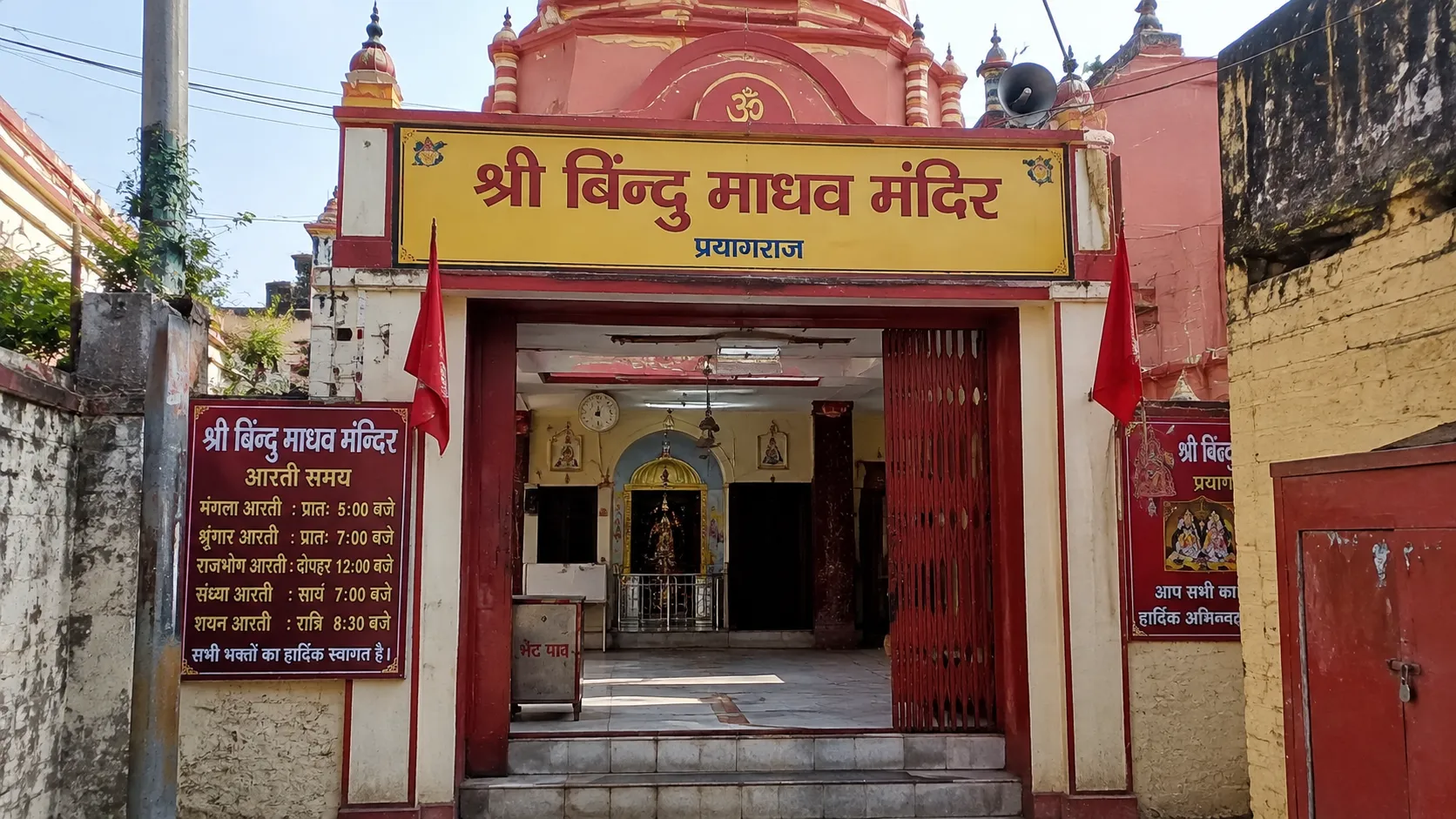
Bindu Madhav
The Lord of the sacred drop, among the twelve Madhavs.
See the full Dwadash Madhav Parikrama guide for all twelve.
The Devi temples: the Shakti Peeths of Prayag
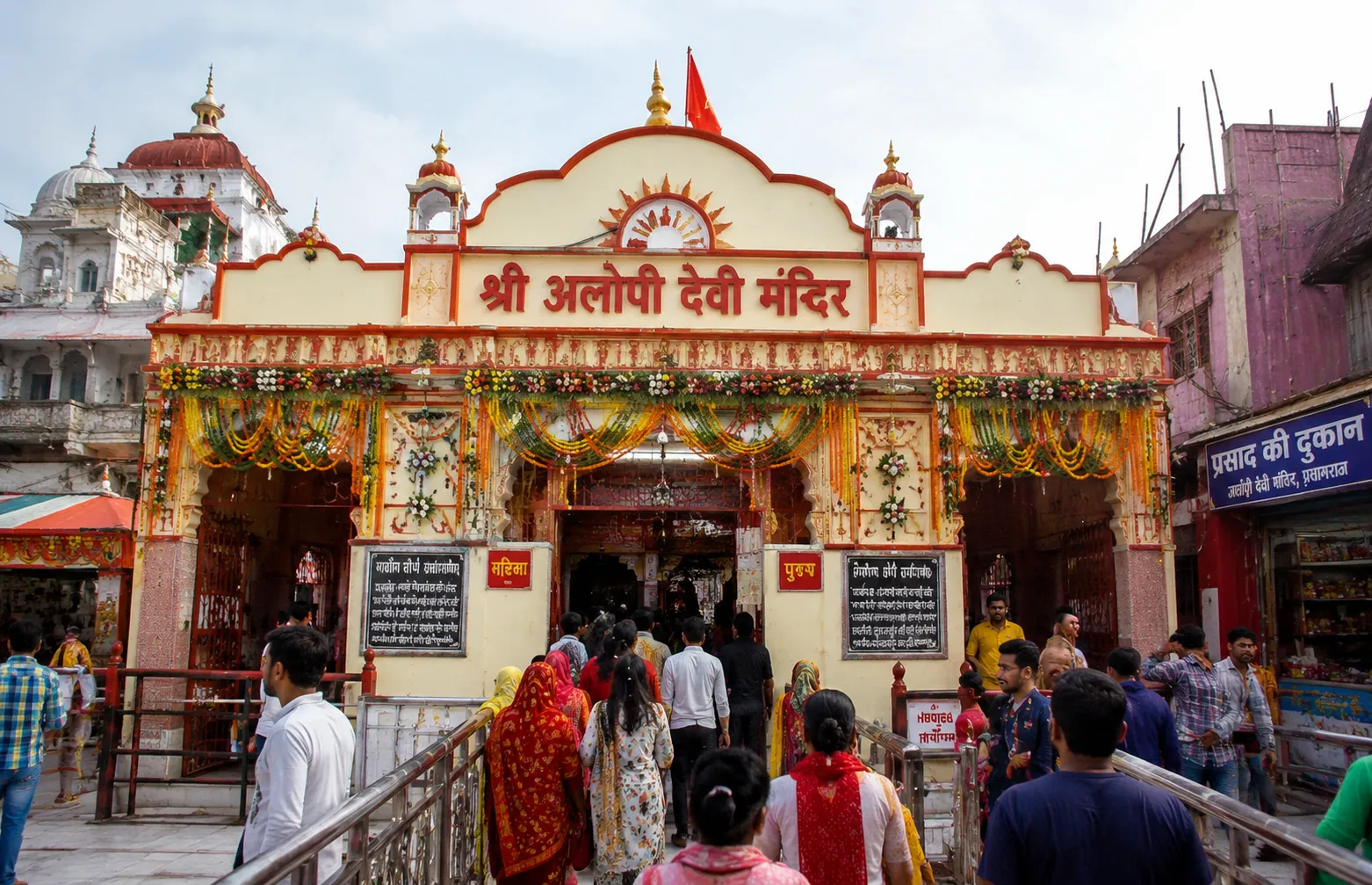
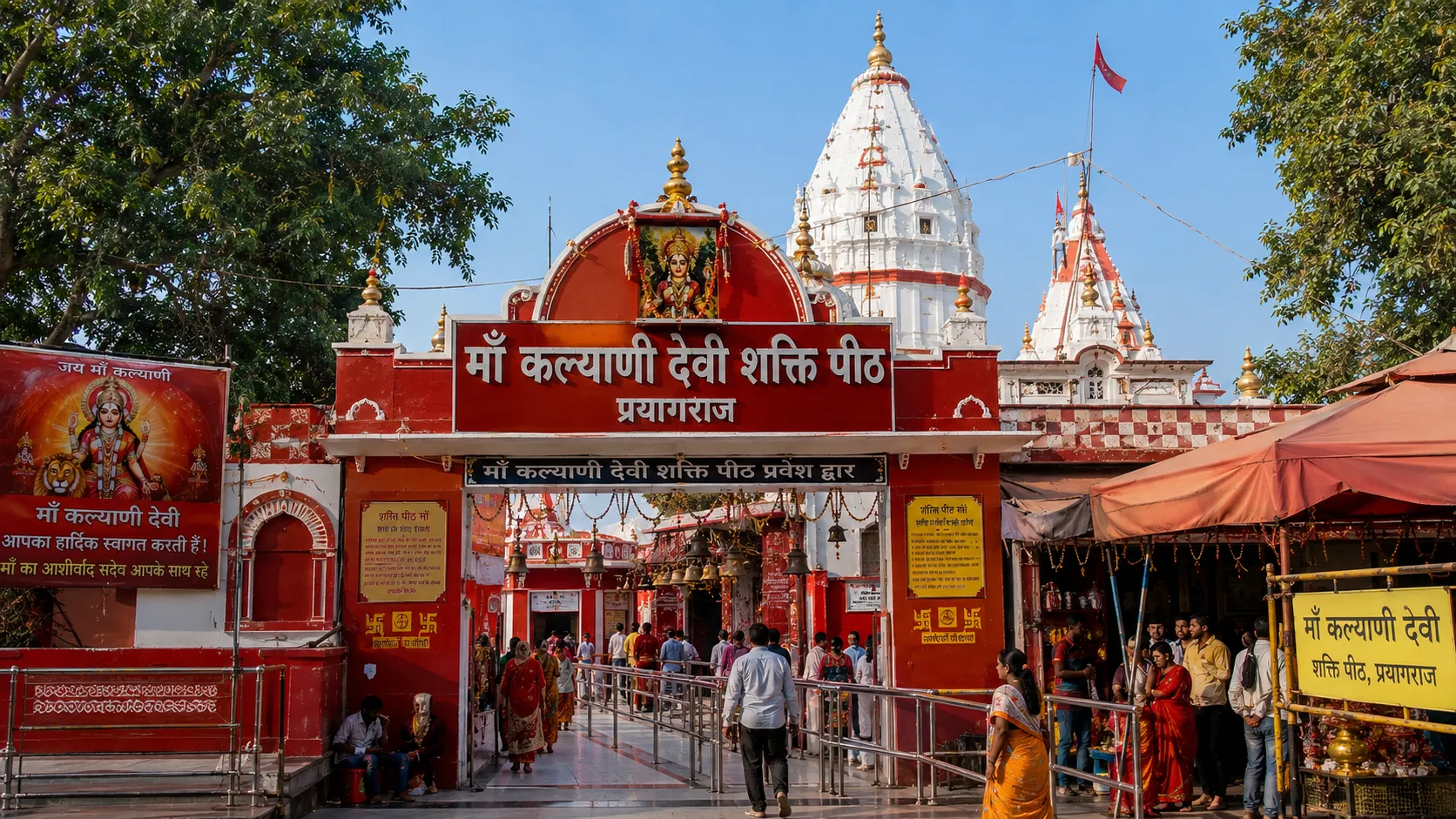
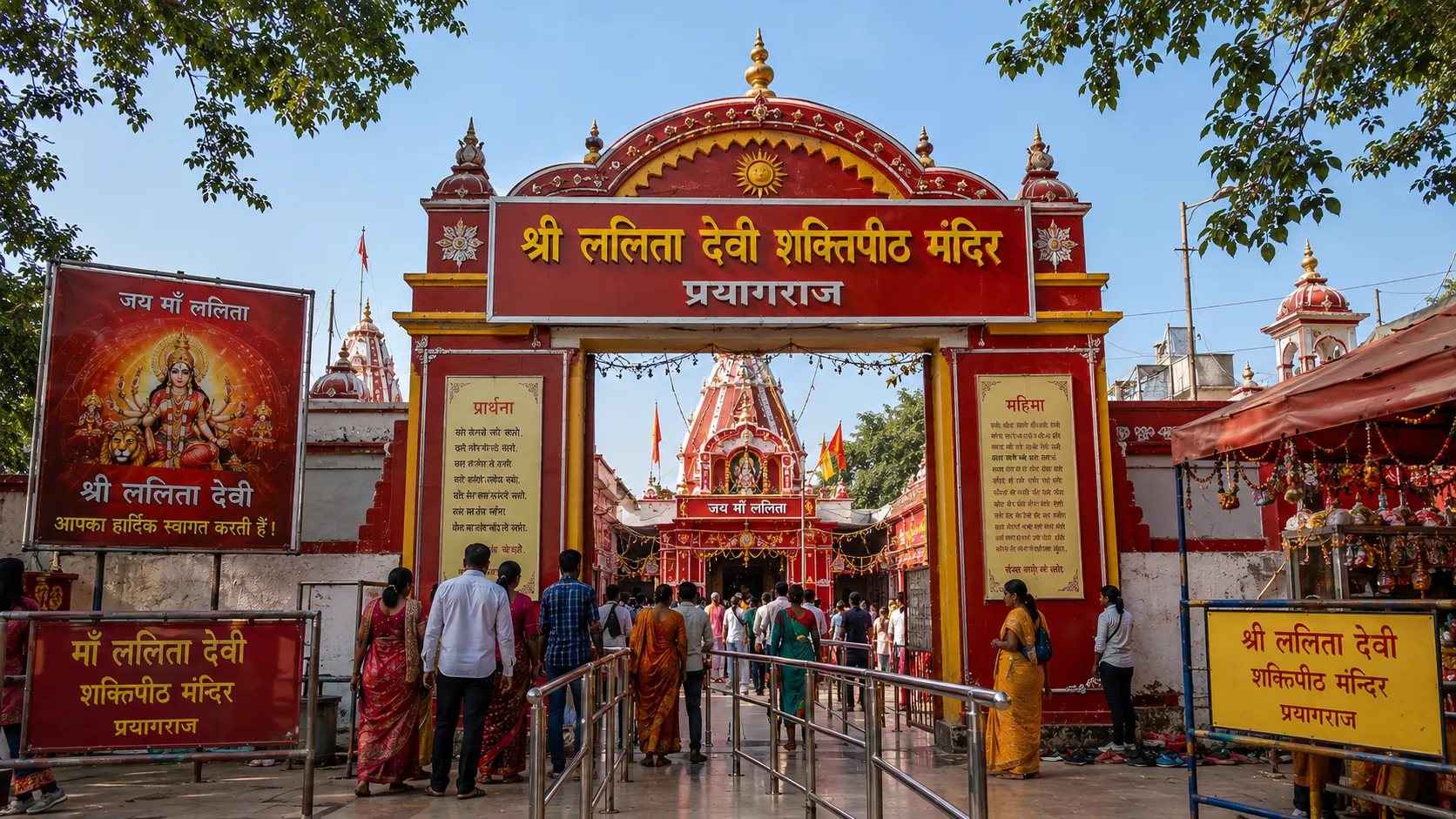
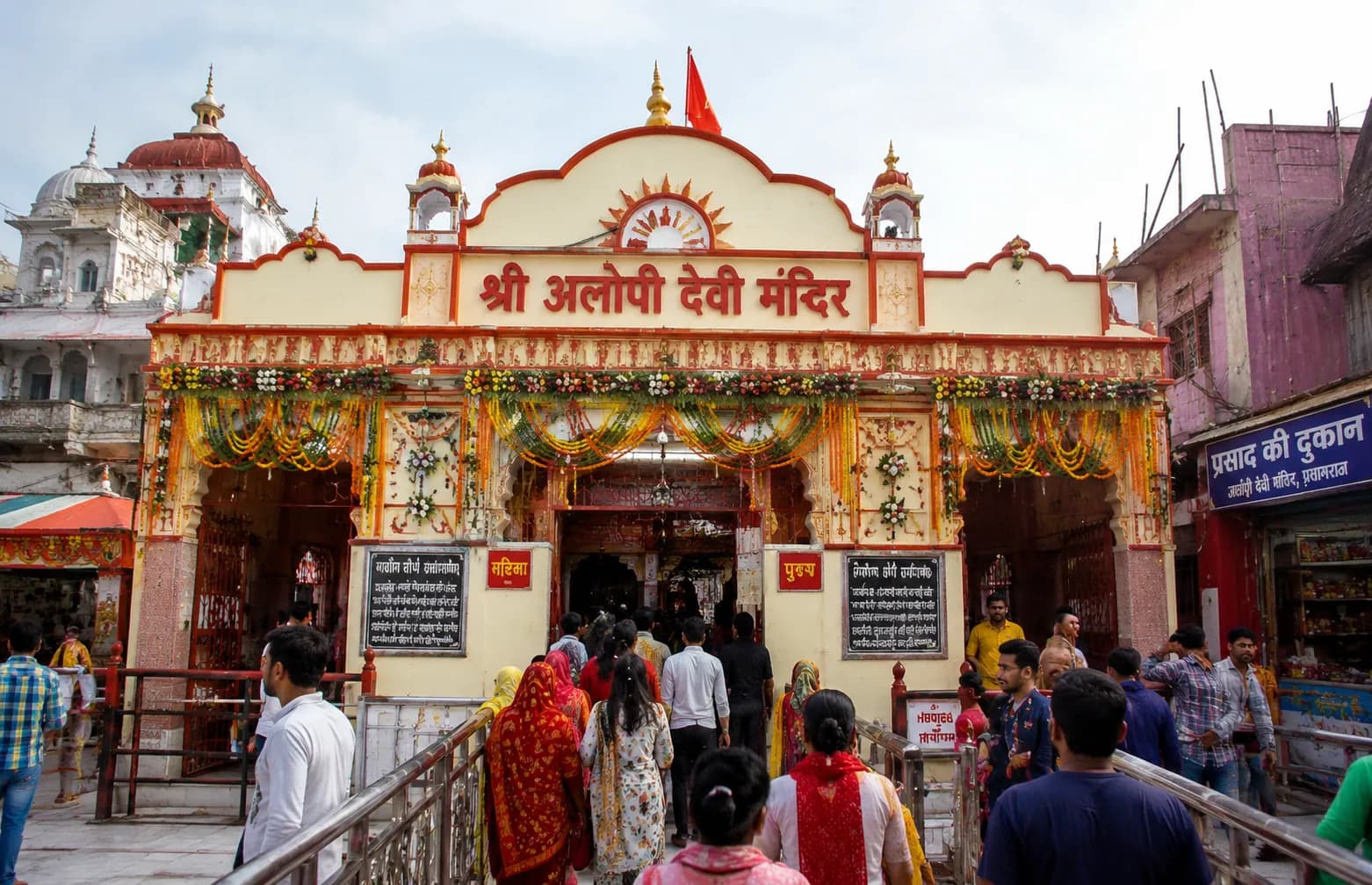
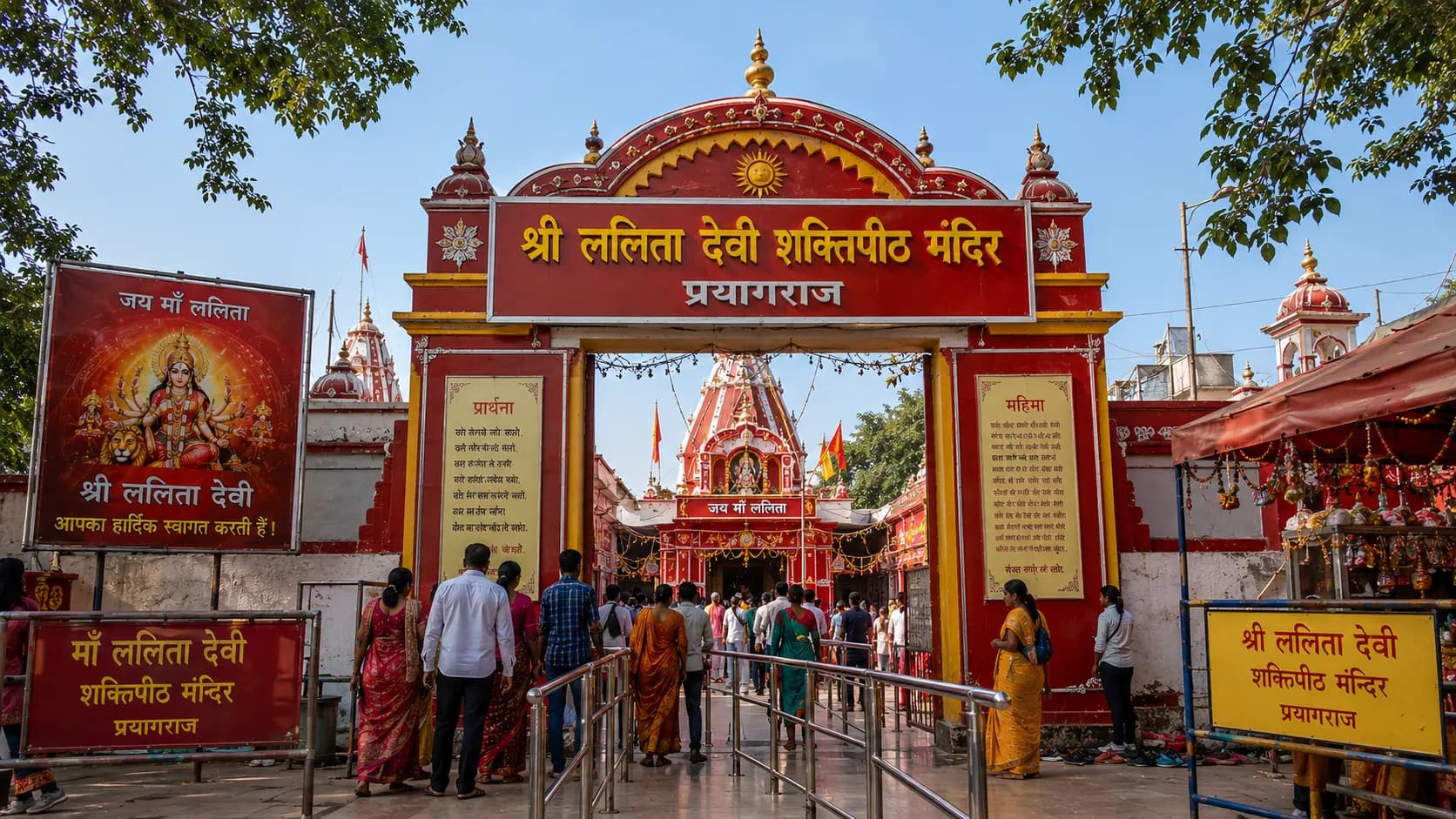
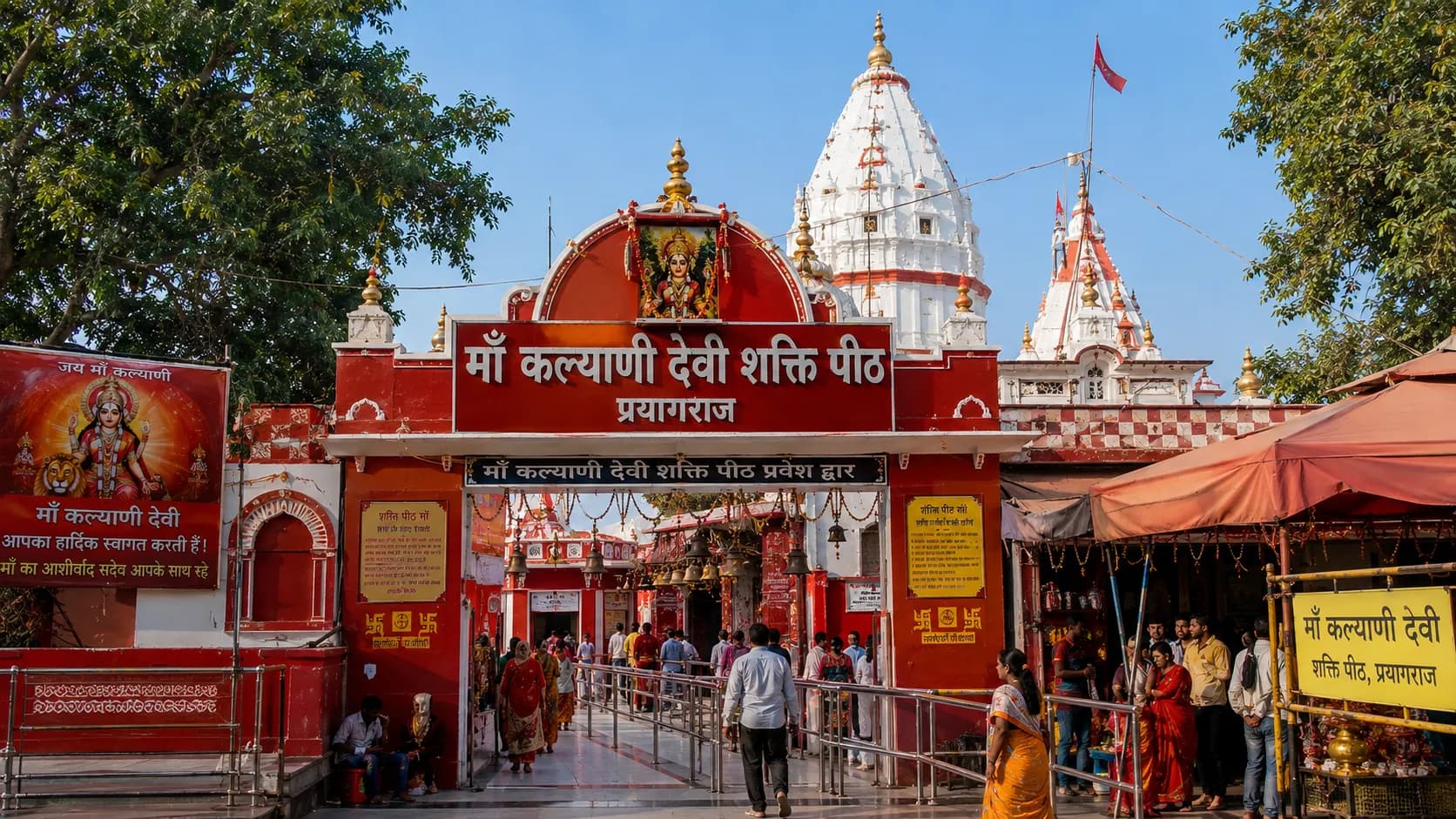
Prayag is holy too to the Mother, the Devi, and it holds three great and ancient Shakti Peeths, where parts of the body of the goddess Sati are held to have fallen. There is the Alopi Devi, the vanished goddess, worshipped in a form like no other; and the Lalita Devi and the Kalyani Devi, the two great Shakti Peeths of the fingers of Sati.
The great Shiva temples of Prayag
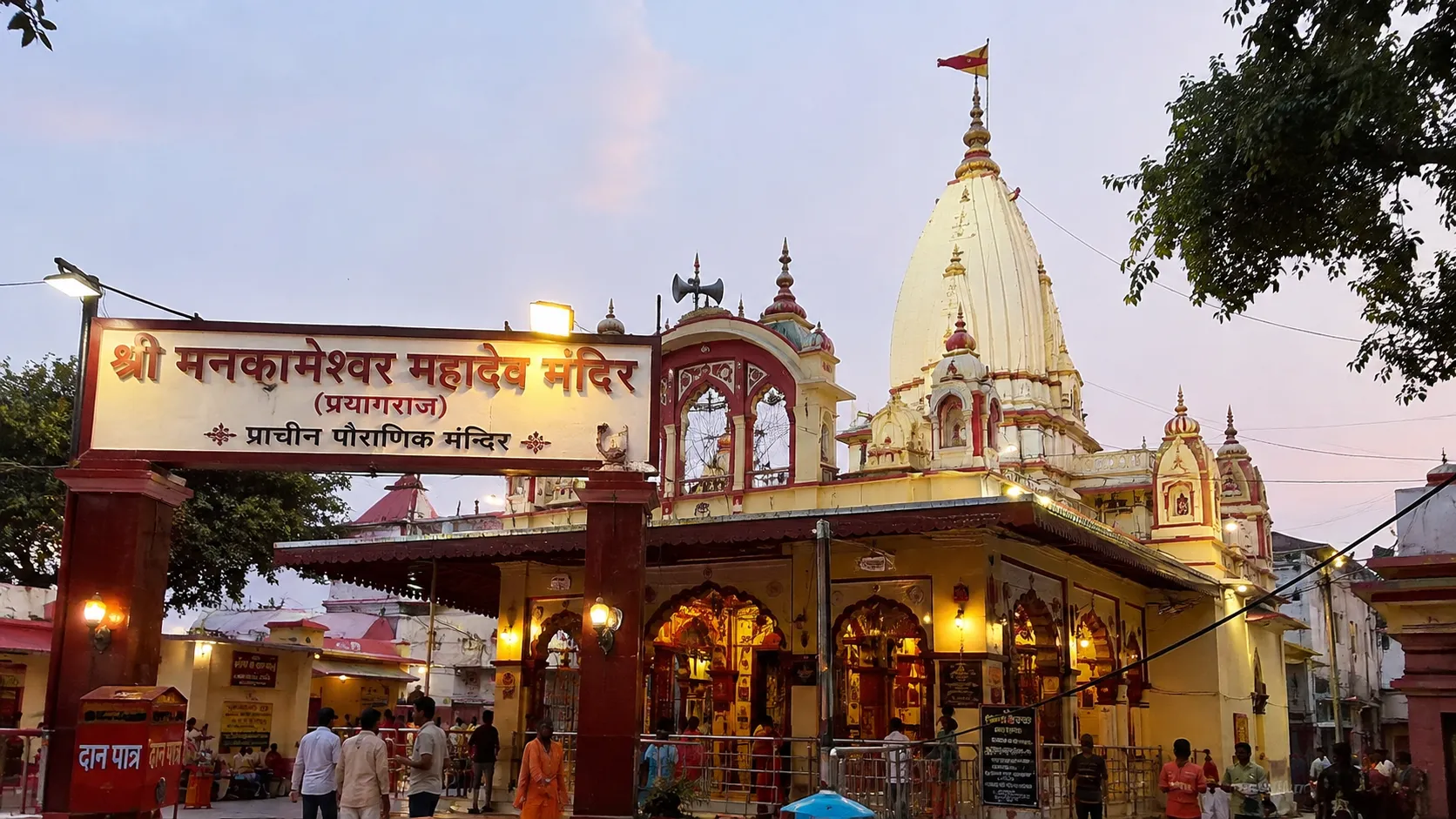
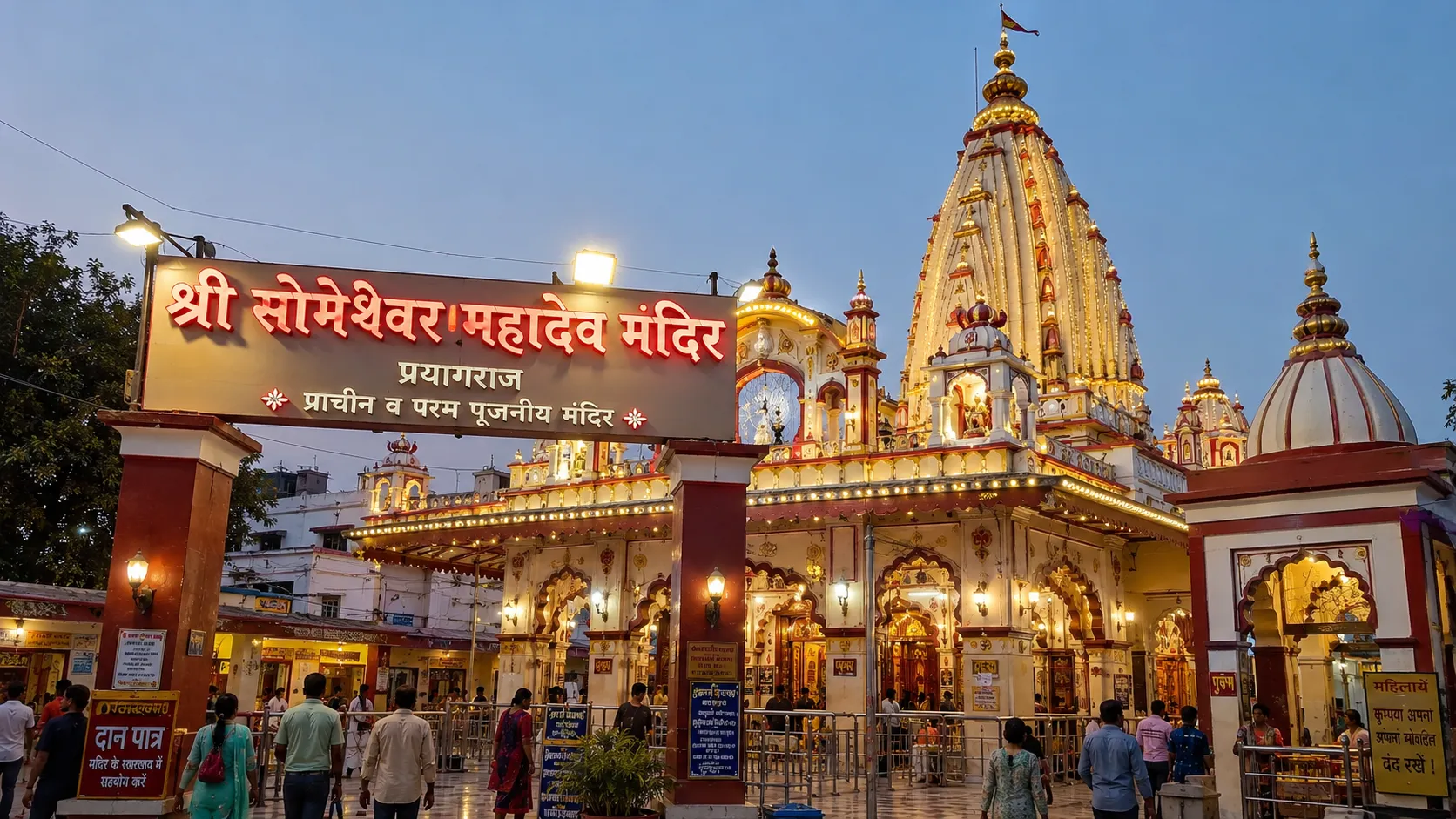
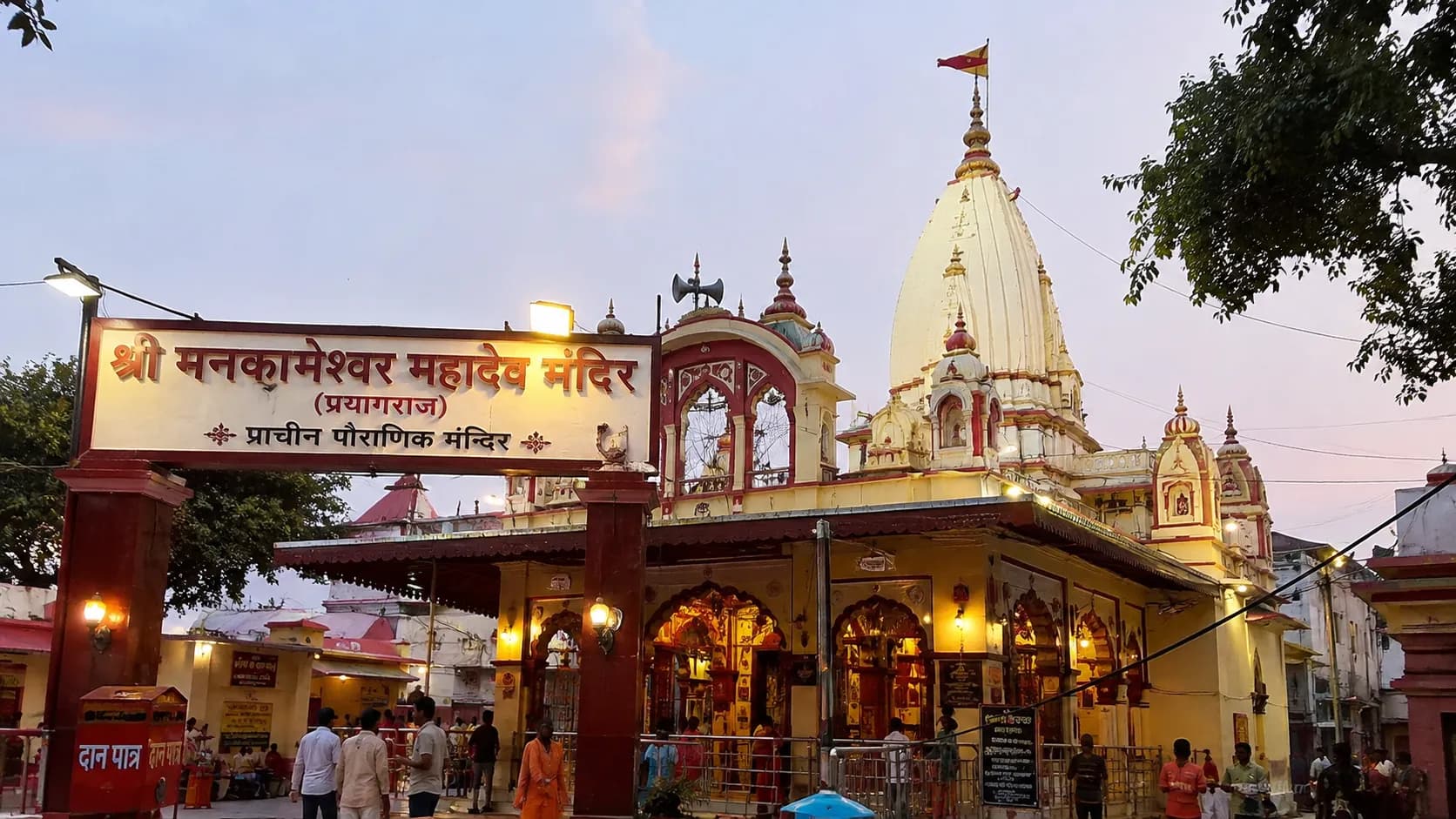
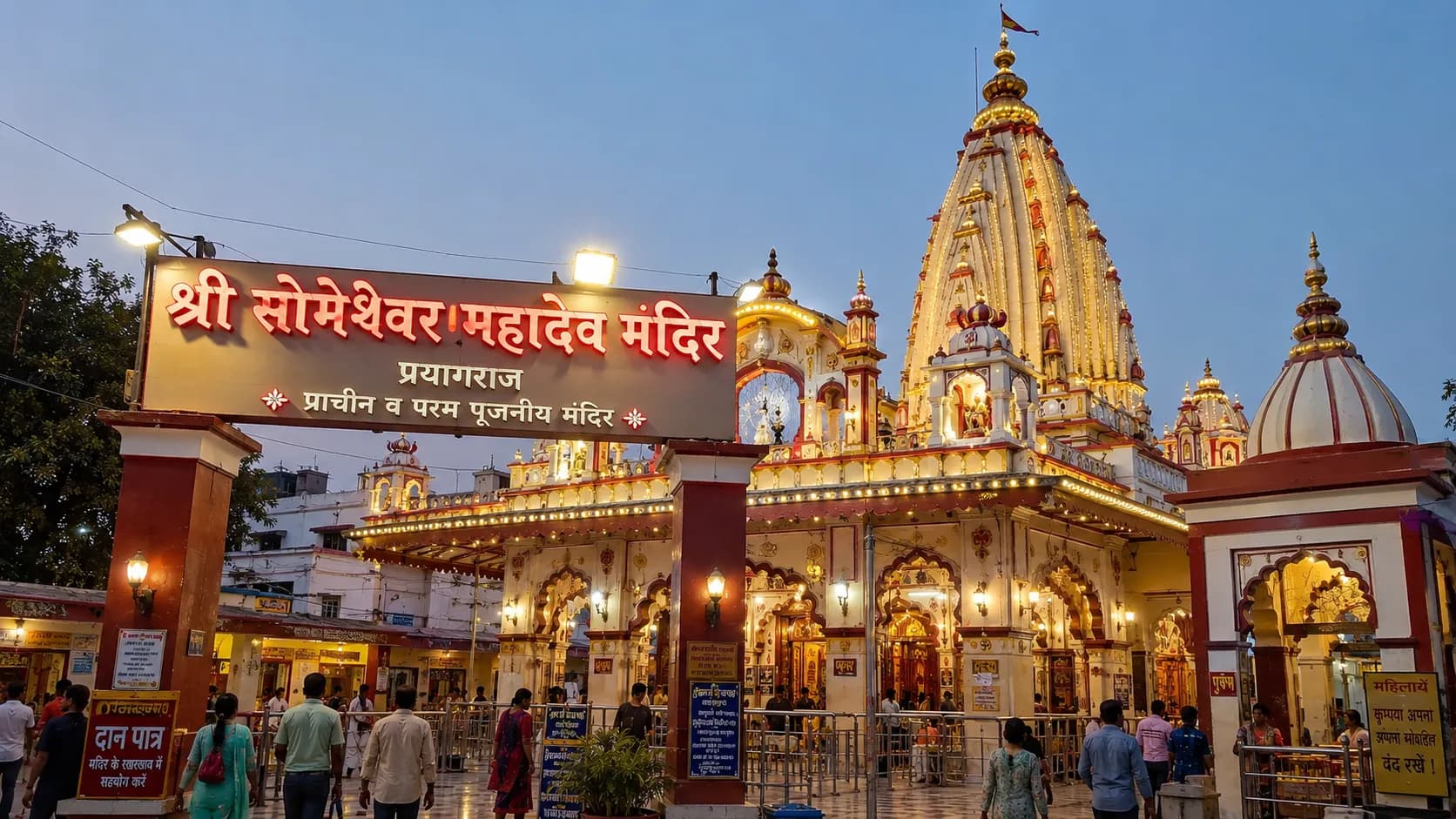
And Prayag holds its great temples of Lord Shiva too, chief among them the Mankameshwar, the wish-fulfilling Shiva by the Yamuna, and the Someshwar Mahadev, the Moon-Lord Shiva across the river at Arail; one of the four principal deities of Prayag along with Veni Madhav, Alopi Devi and Mankameshwar.
The Ramayana trail: where Lord Ram rested in exile
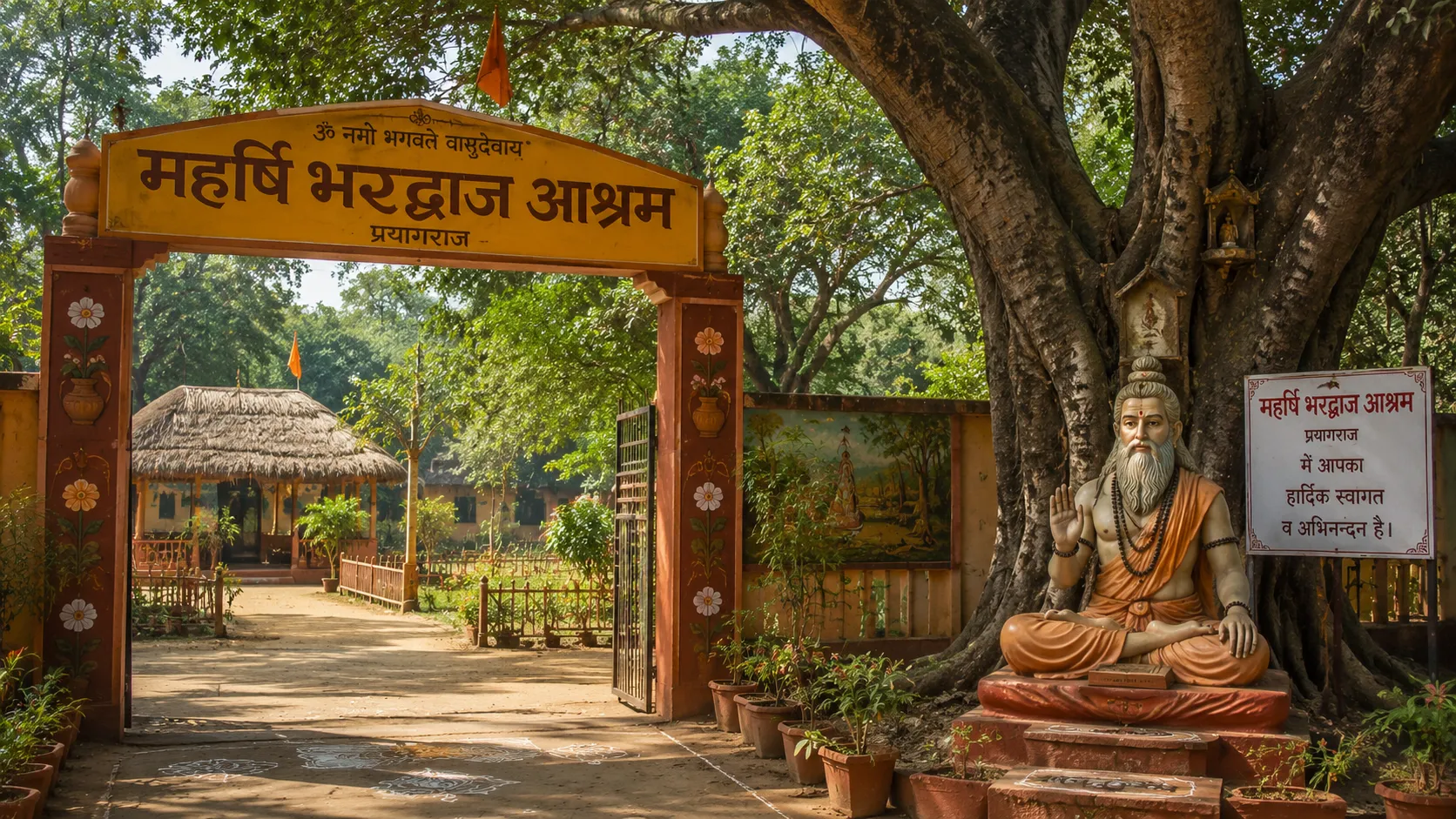
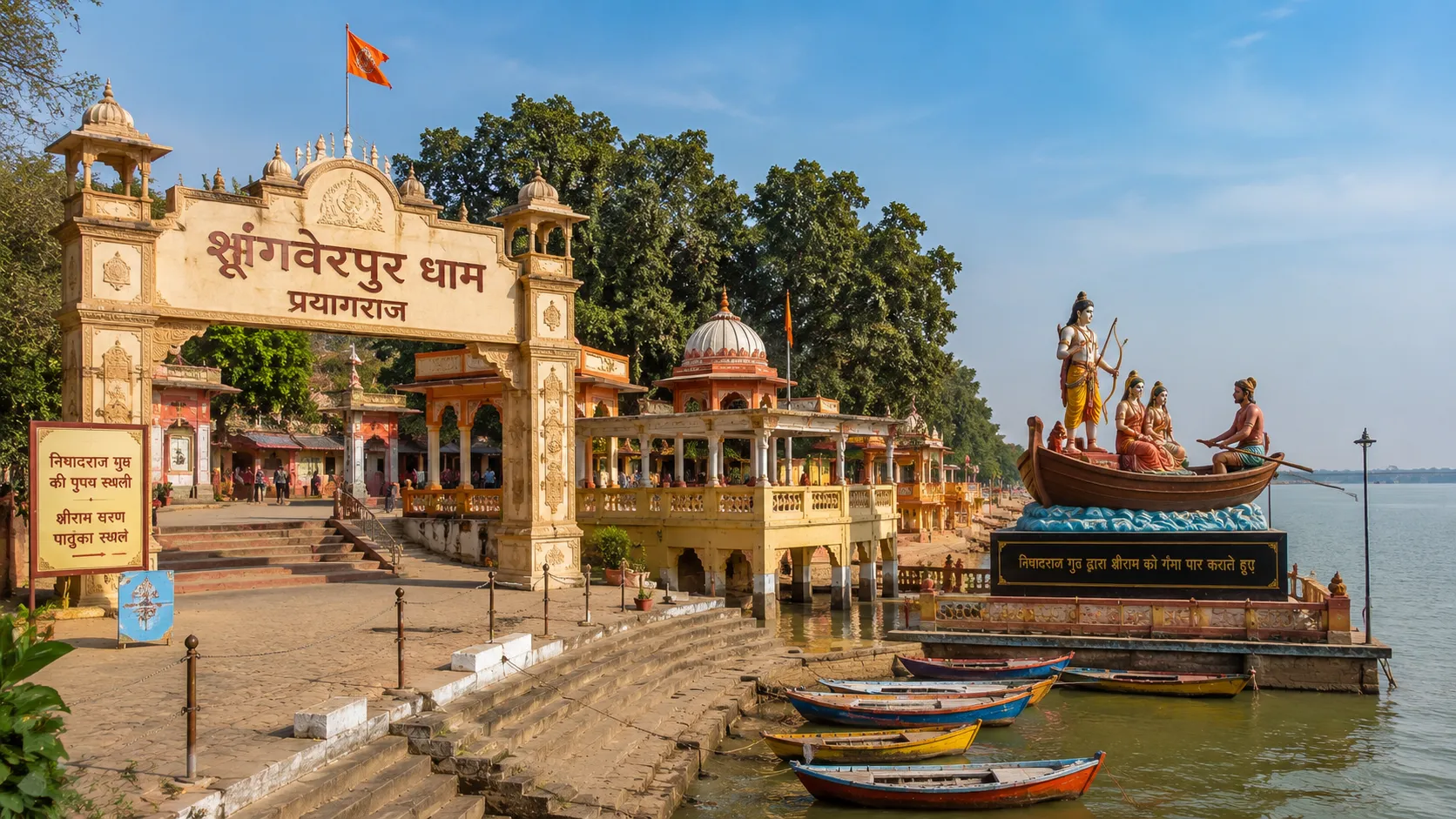
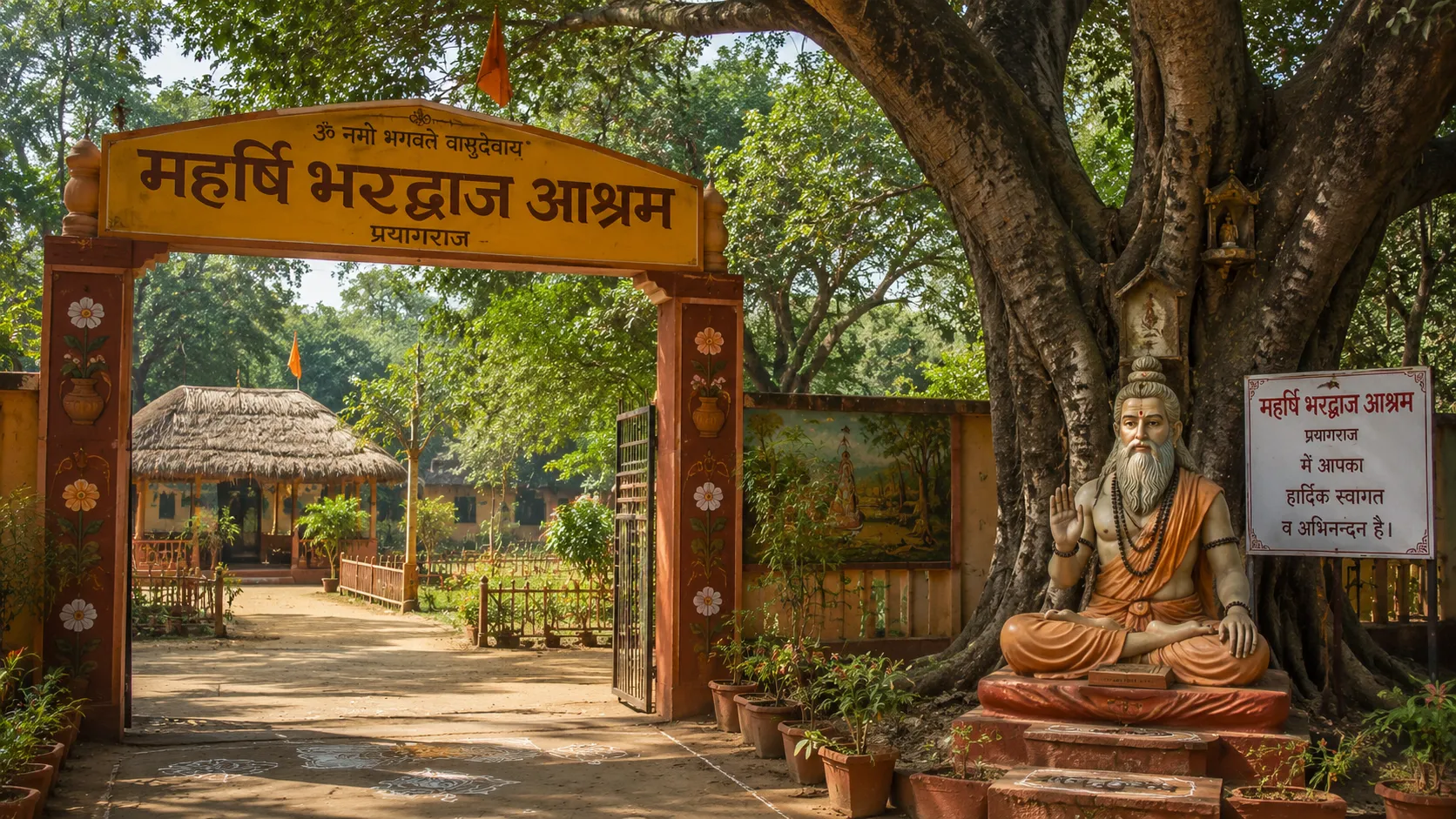
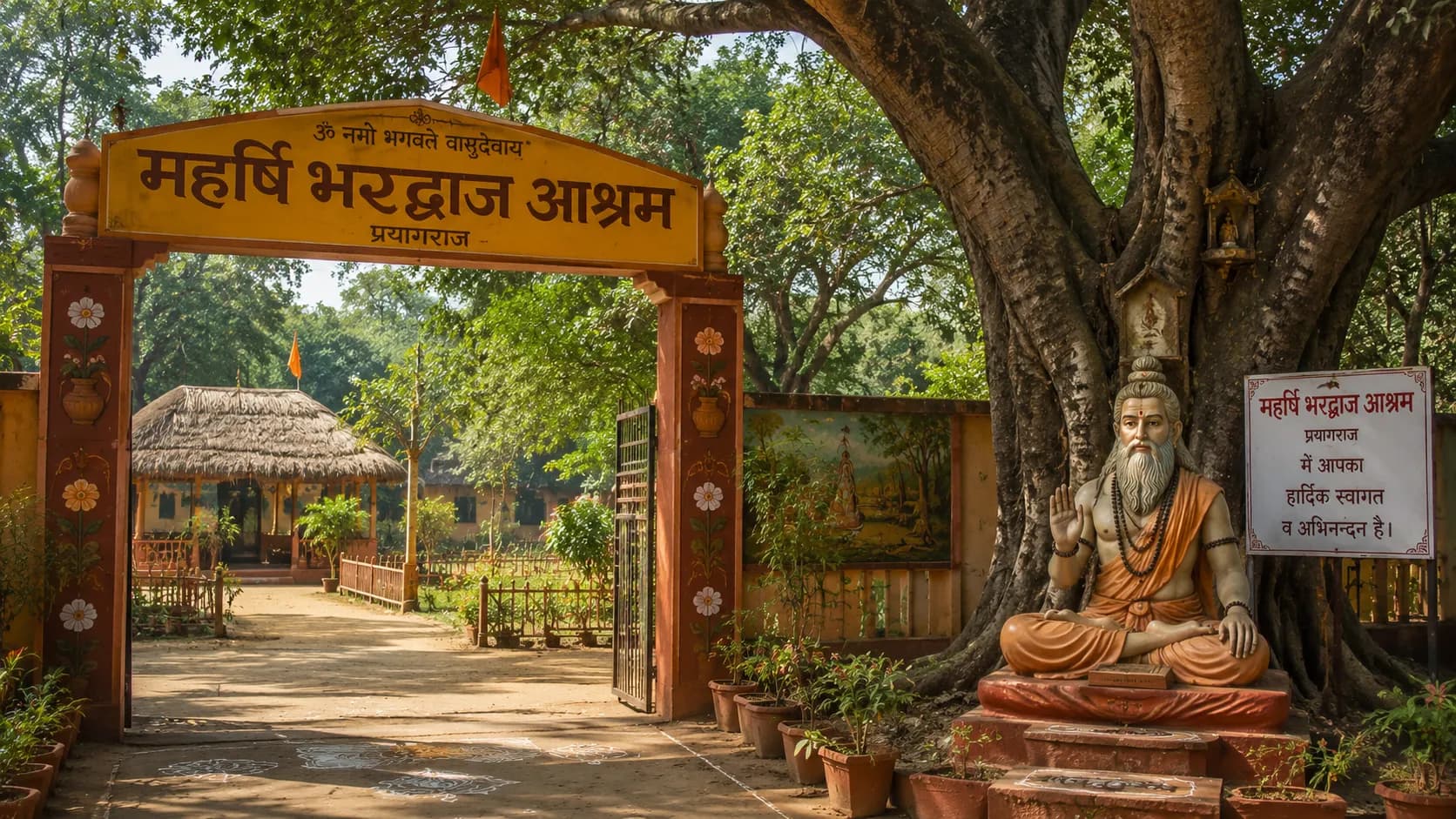
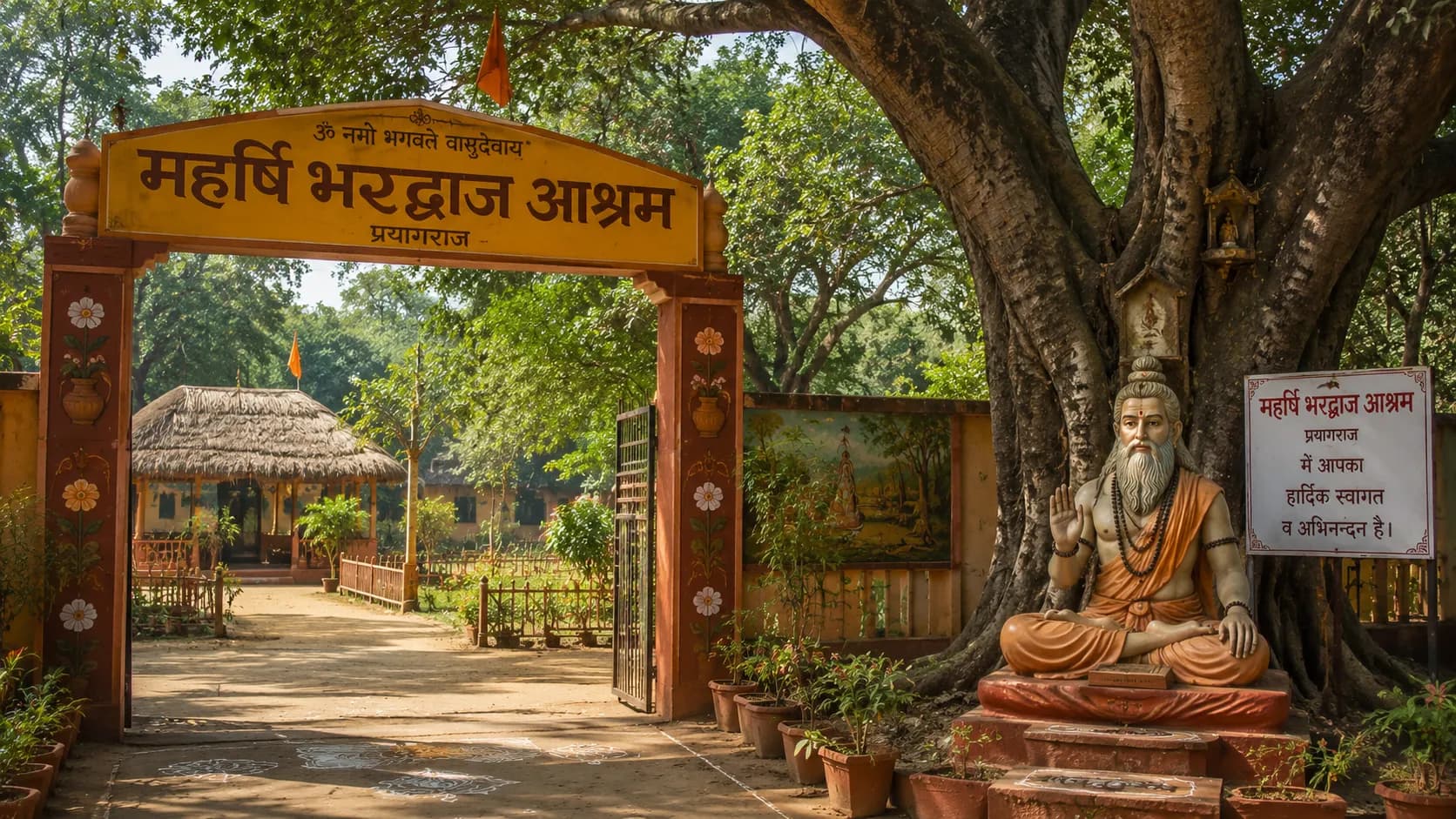
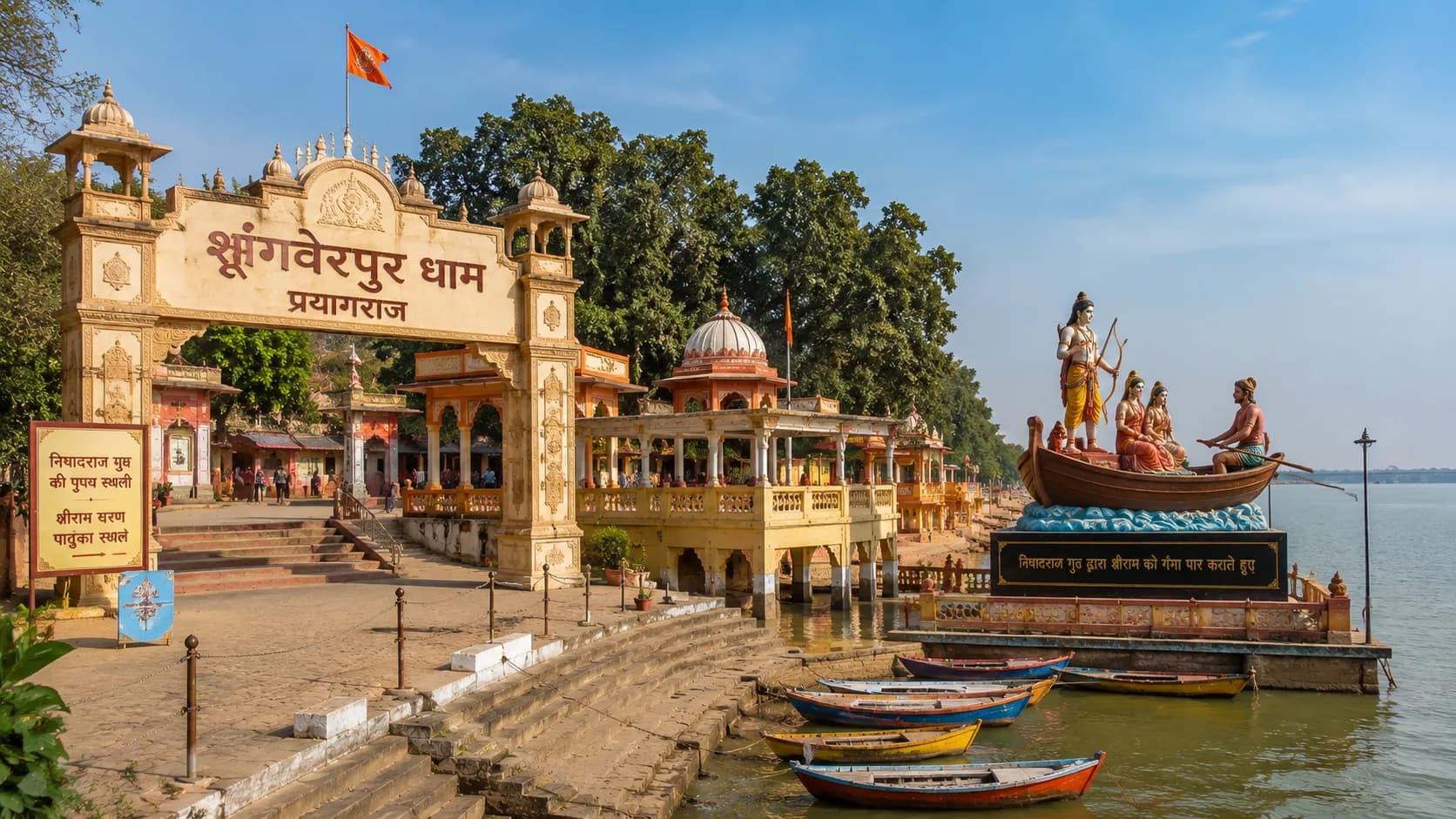
Prayag is woven deeply into the Ramayana, for the exile of Lord Ram passed this way. There is the Bharadwaj Ashram, the ancient hermitage of the great sage Bharadwaj, the first halt of Ram's exile and the frame of the Ramcharitmanas; and, a little way off, the Shringverpur Dham, the capital of Nishadraj, where Ram spent his first night of exile and crossed the Ganga, home of the beloved Kevat story.
Heritage and the freedom struggle
Beyond its temples, Prayag, as the old British capital of the province, is rich in the heritage of the Mughal, the colonial, and the freedom-struggle ages, above all in the graceful Civil Lines quarter.
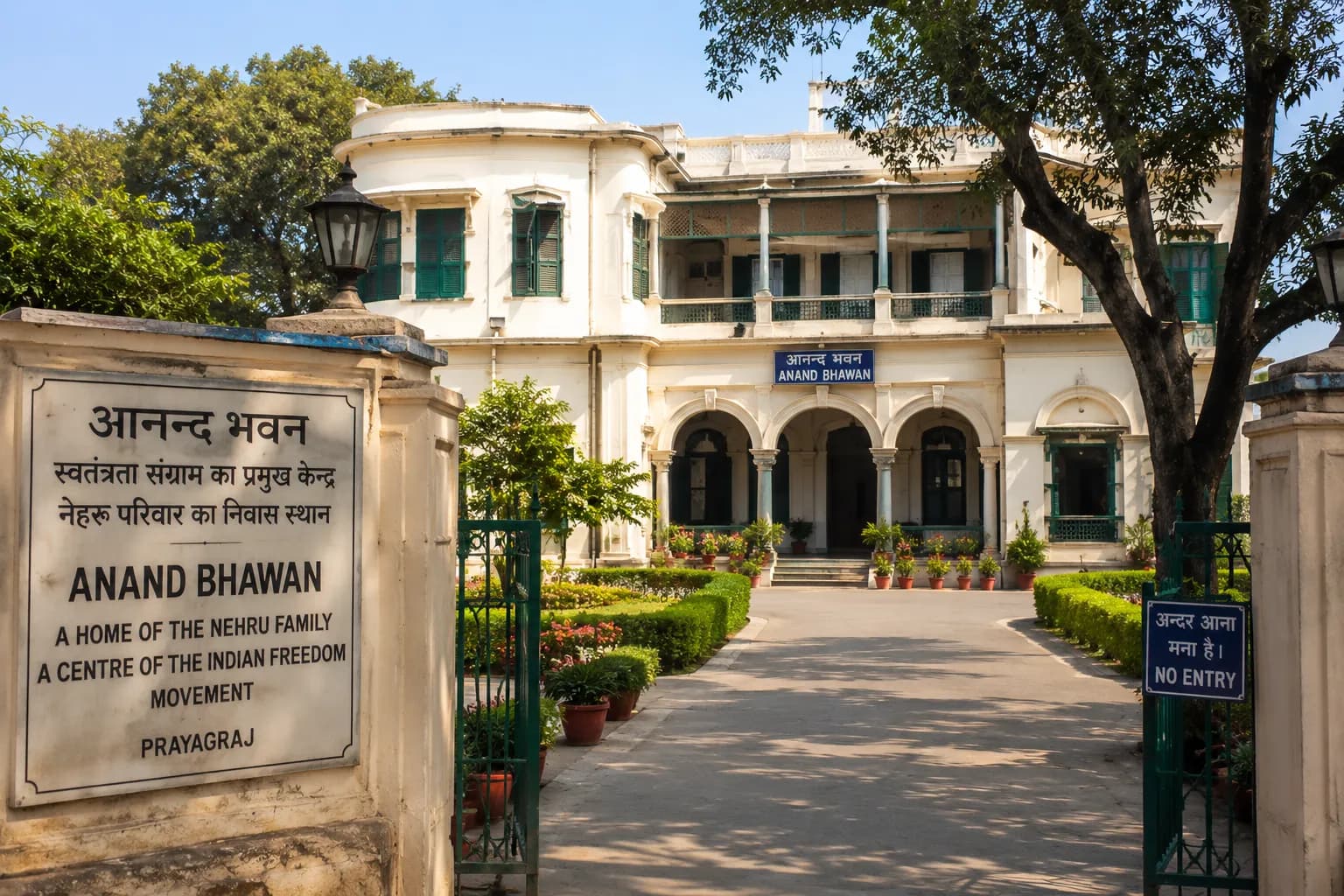
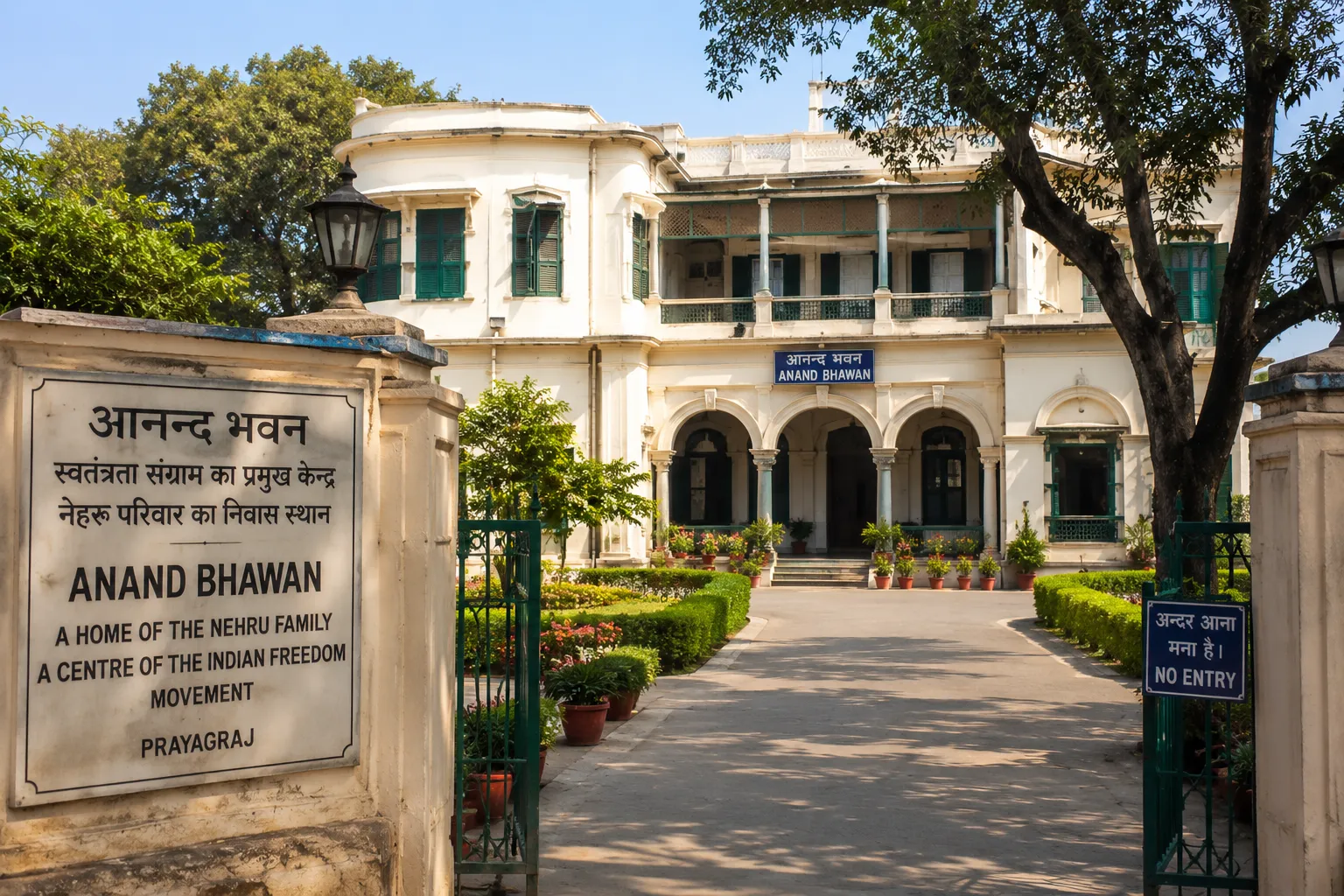
Anand Bhawan
The Nehru family mansion and museum; an epicentre of the freedom struggle.
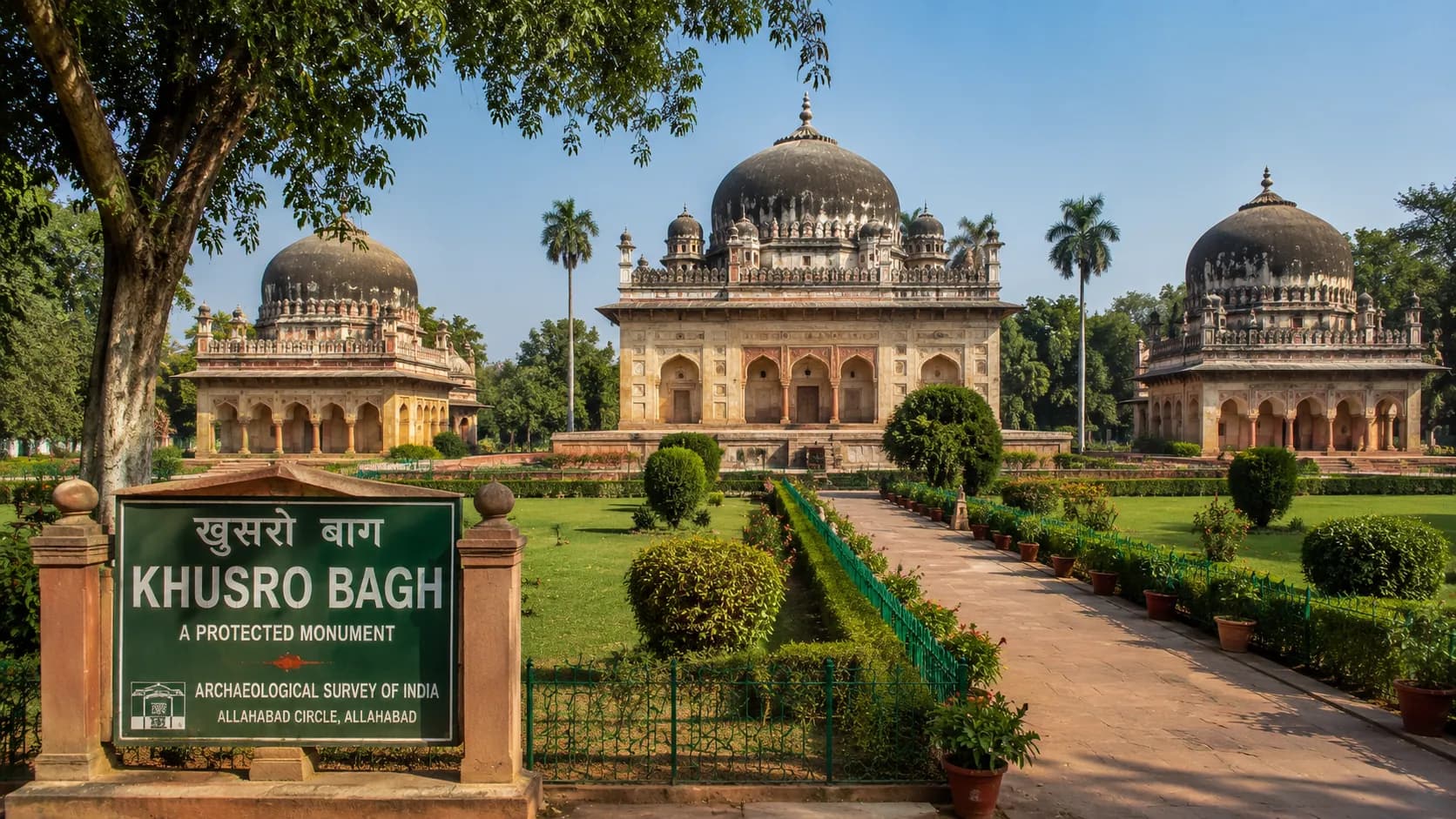
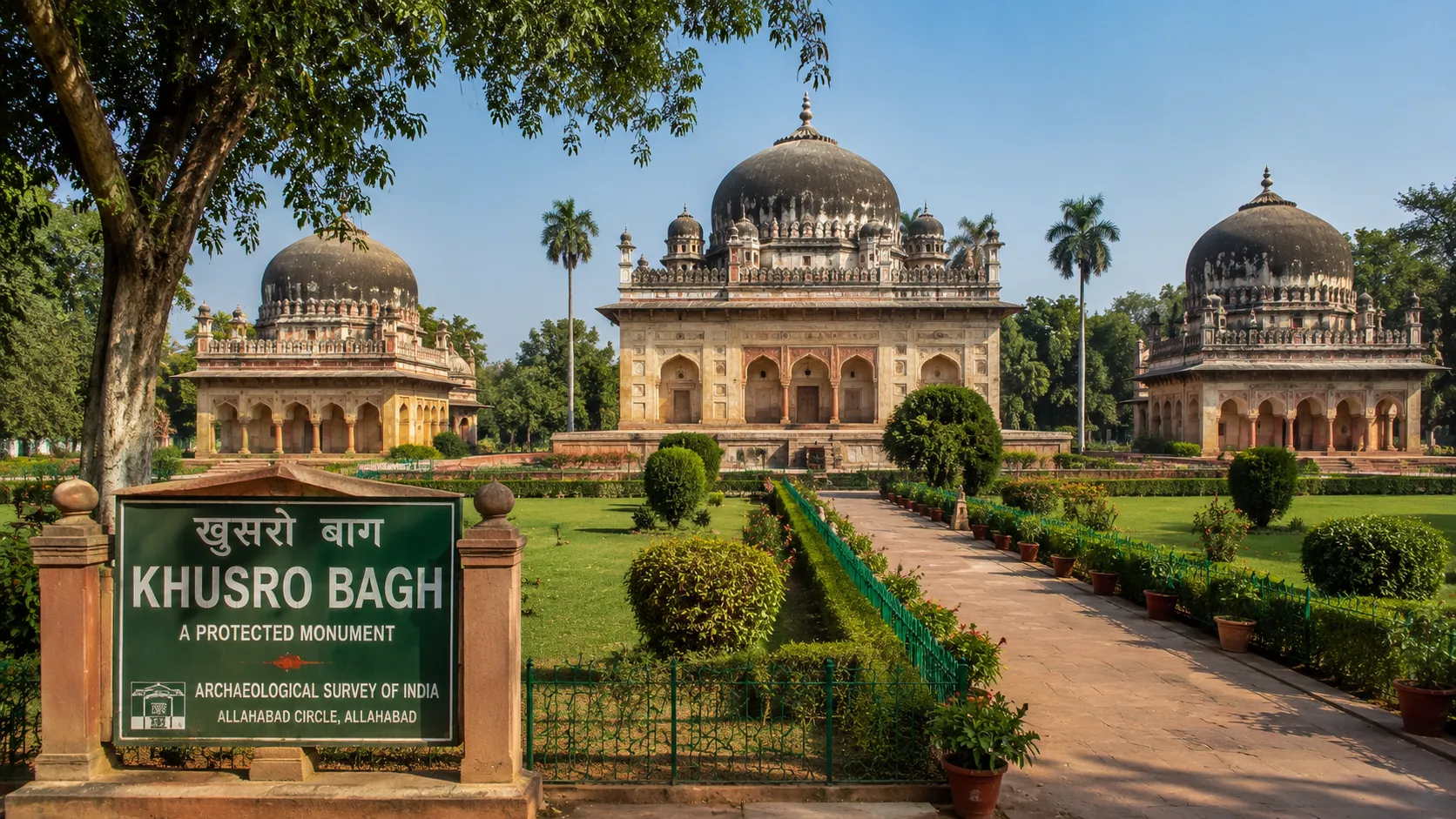
Khusro Bagh
The Mughal walled garden and the tombs of Prince Khusro and his family.
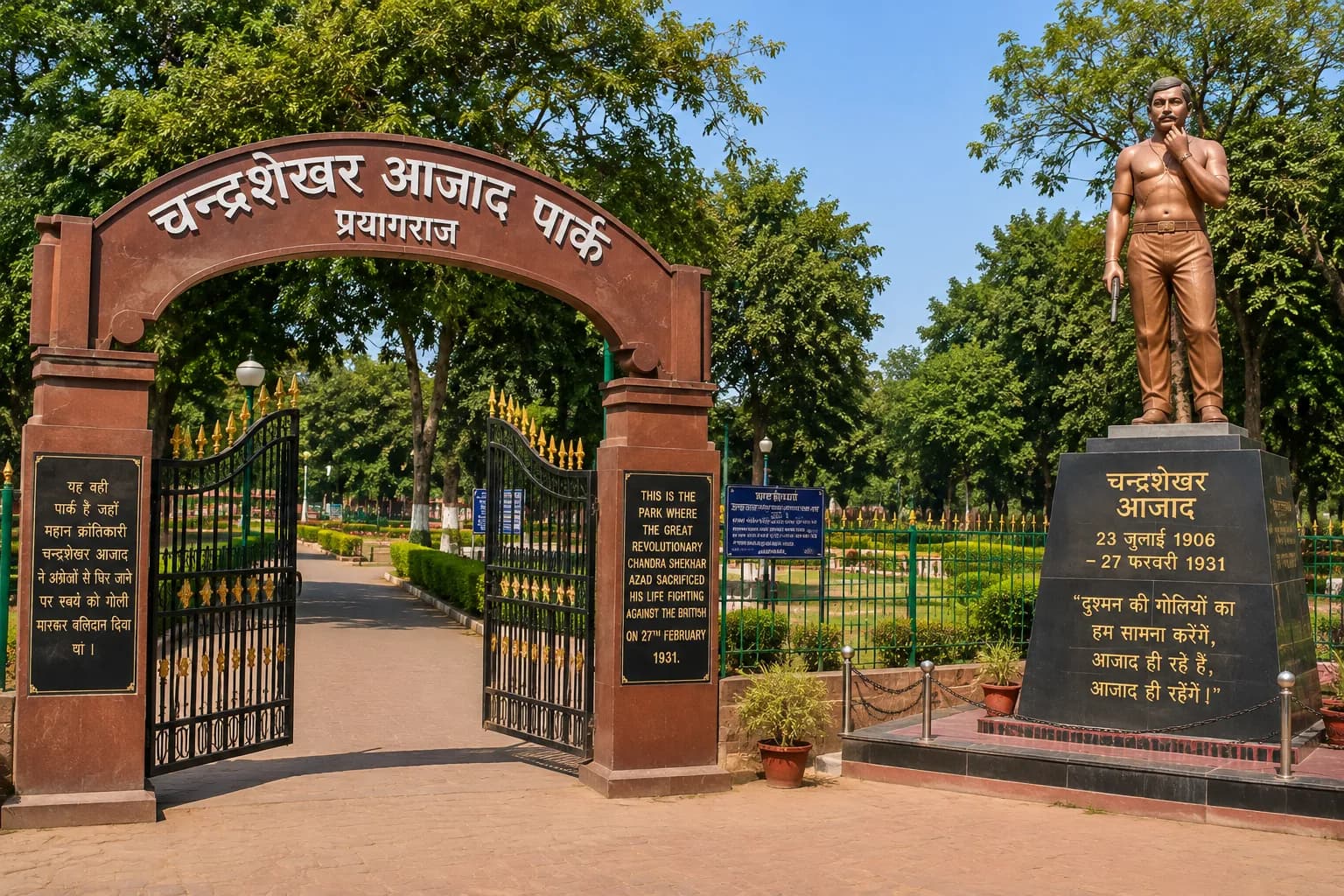
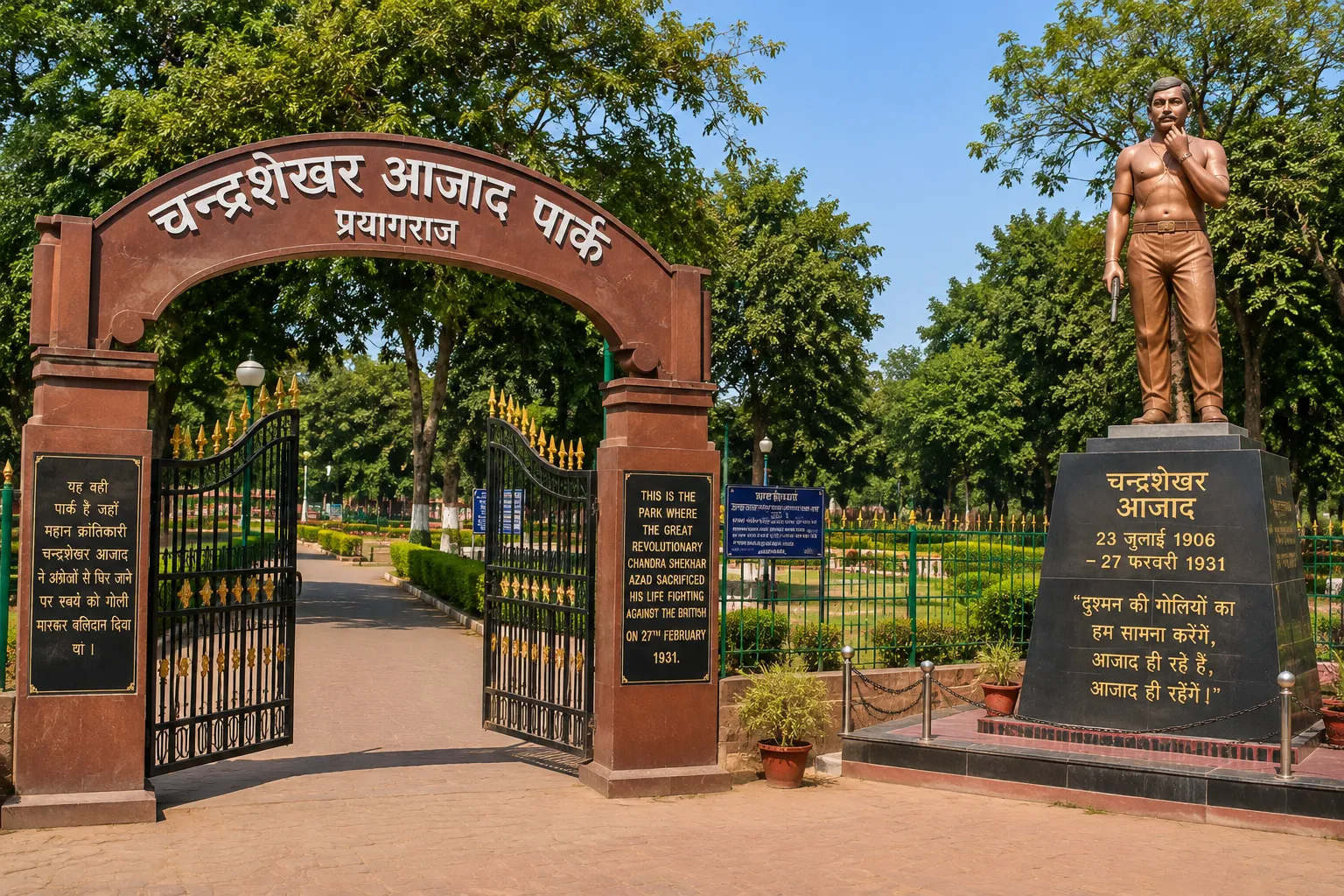
Chandra Shekhar Azad Park
The great park, hallowed by the martyr Azad's final stand; the Allahabad Museum.
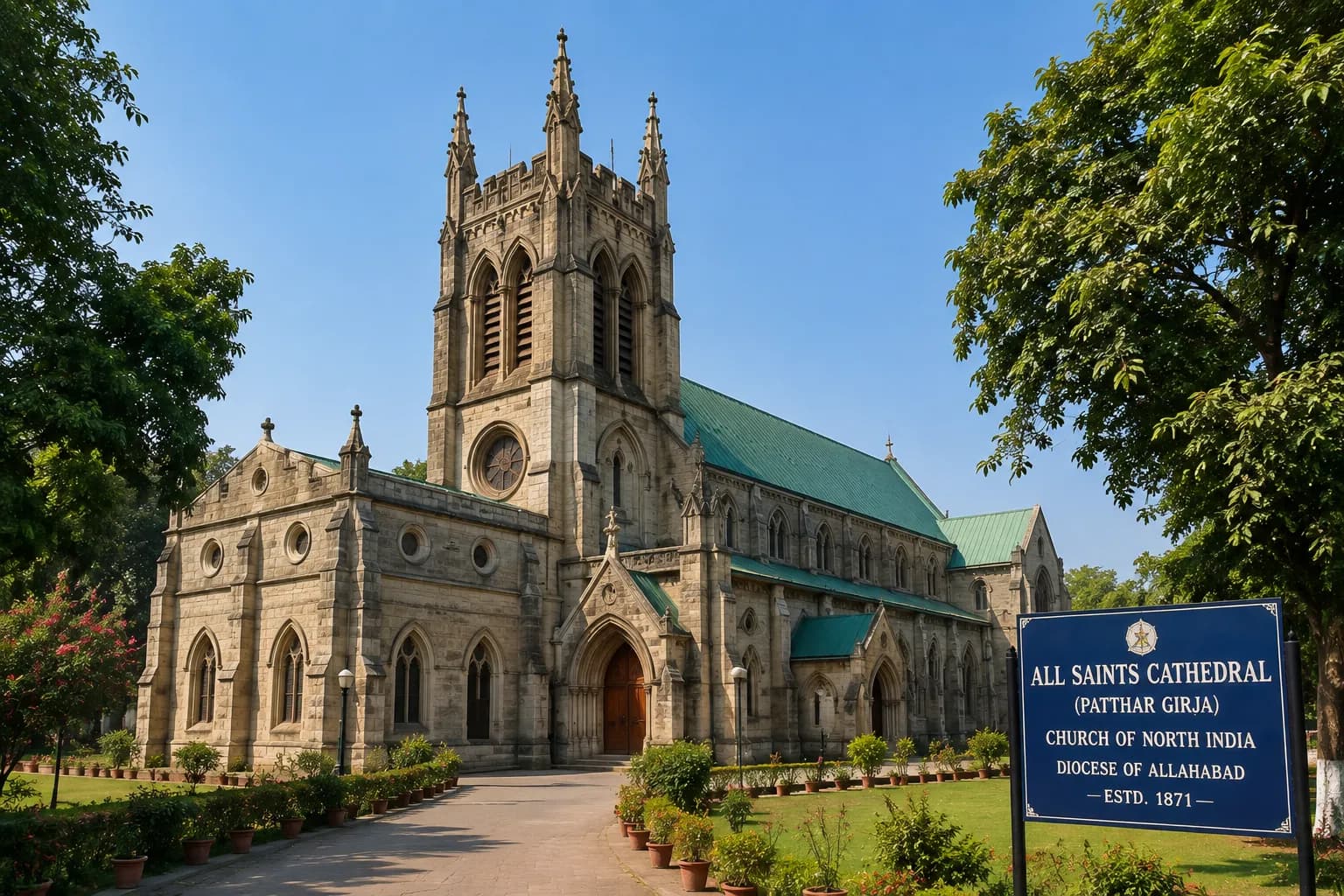
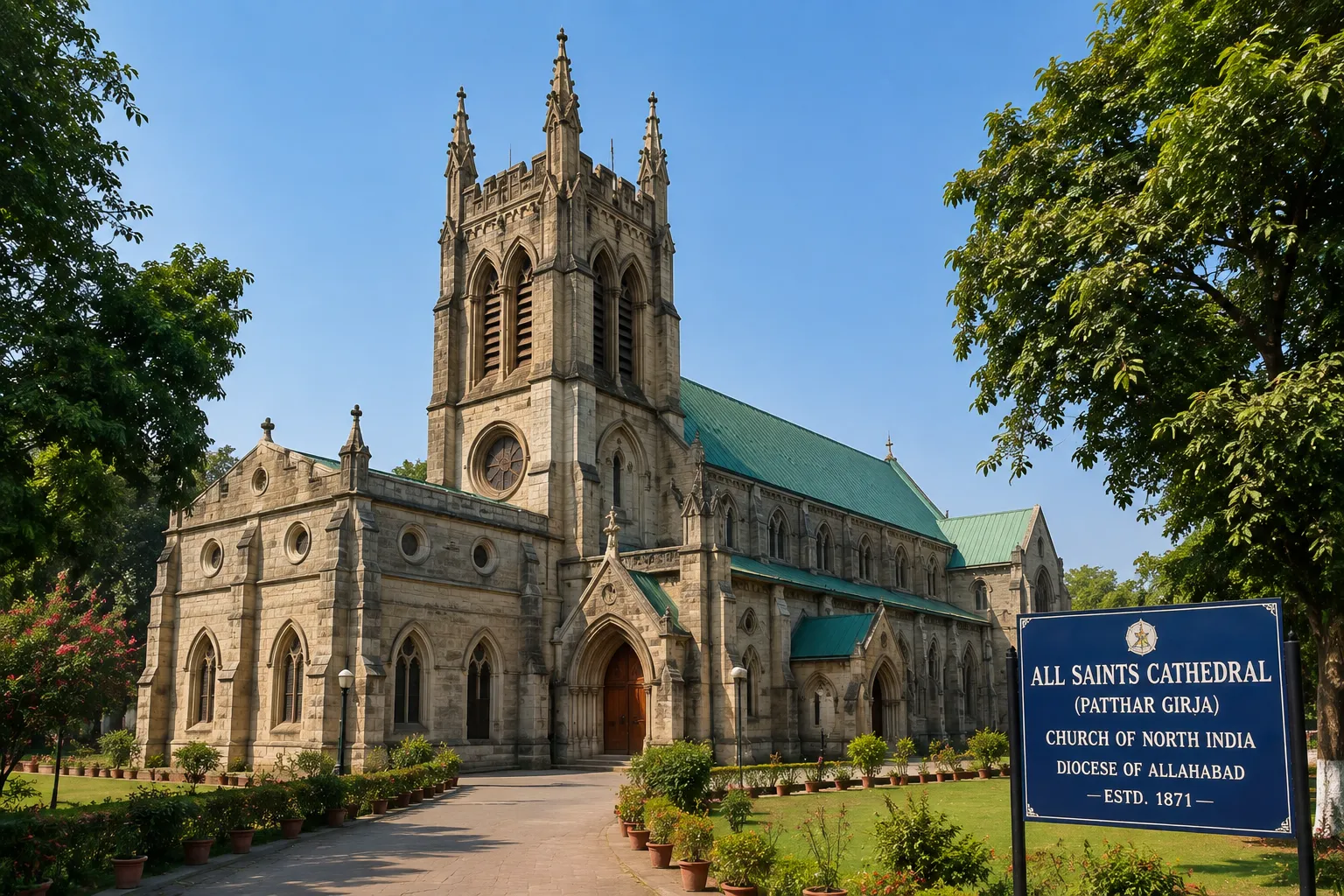
All Saints Cathedral (Patthar Girja)
The magnificent Gothic Revival cathedral, the Church of Stones.
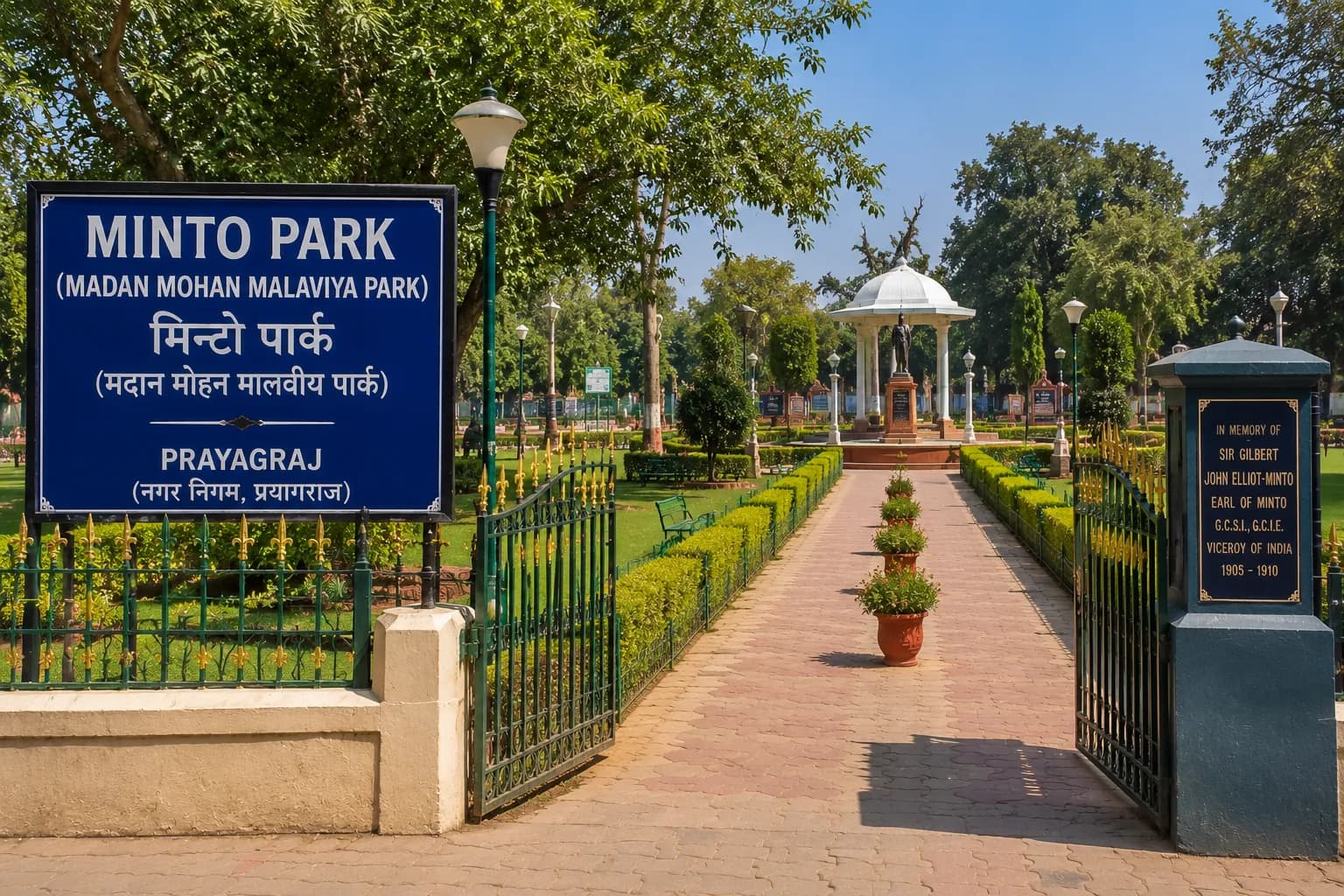
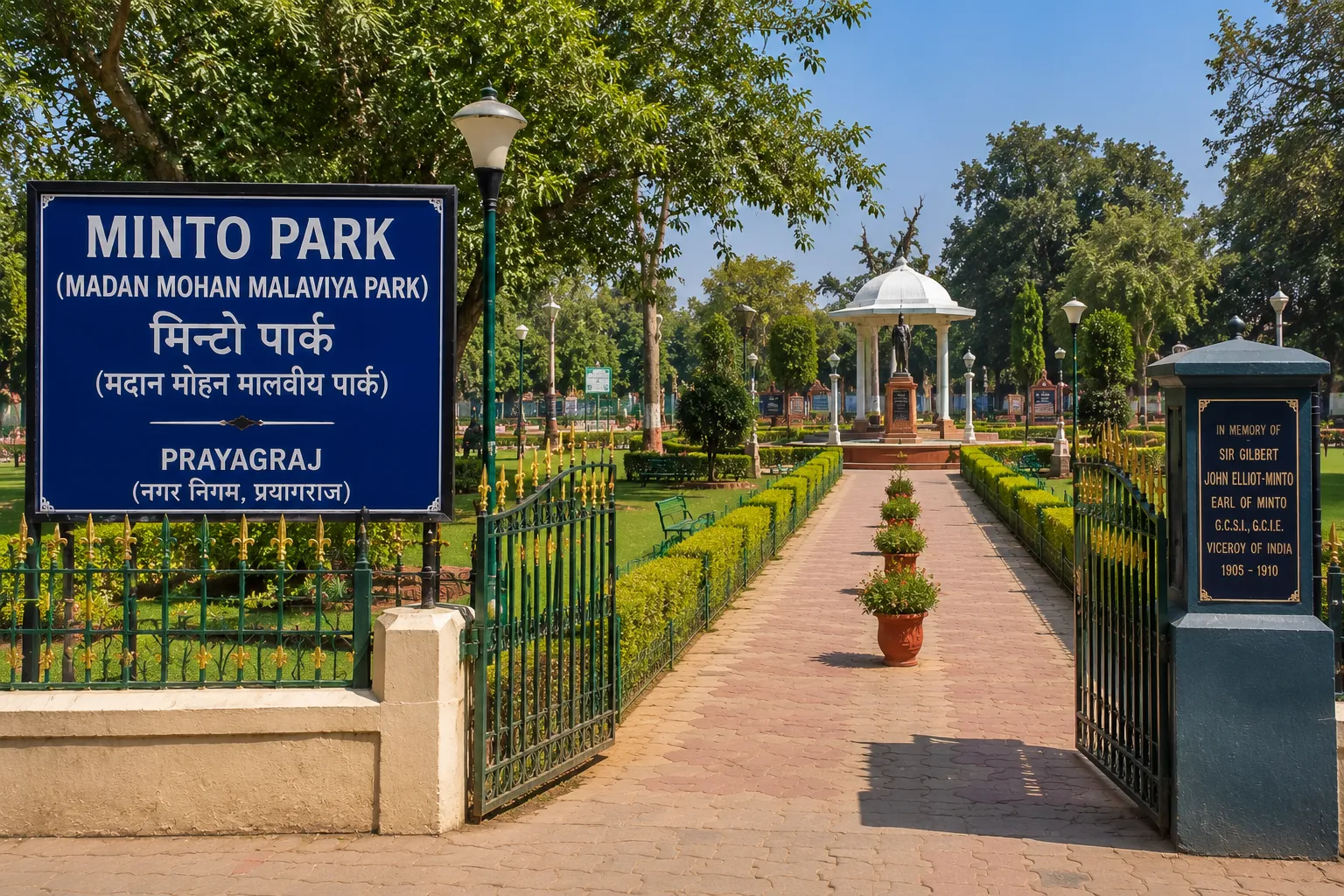
Minto Park
The Yamuna-side park of the 1858 Proclamation, with its Ashoka memorial.
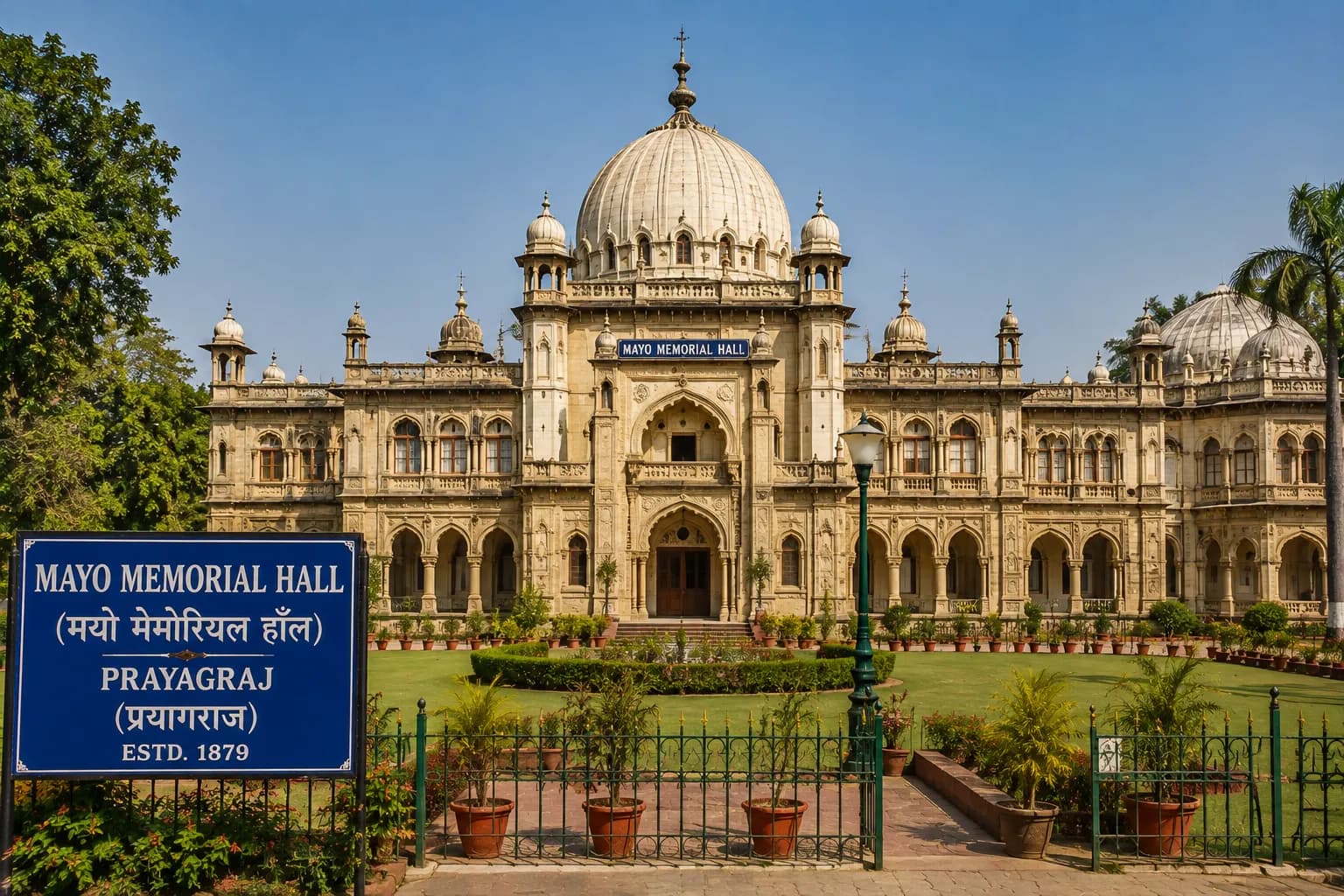
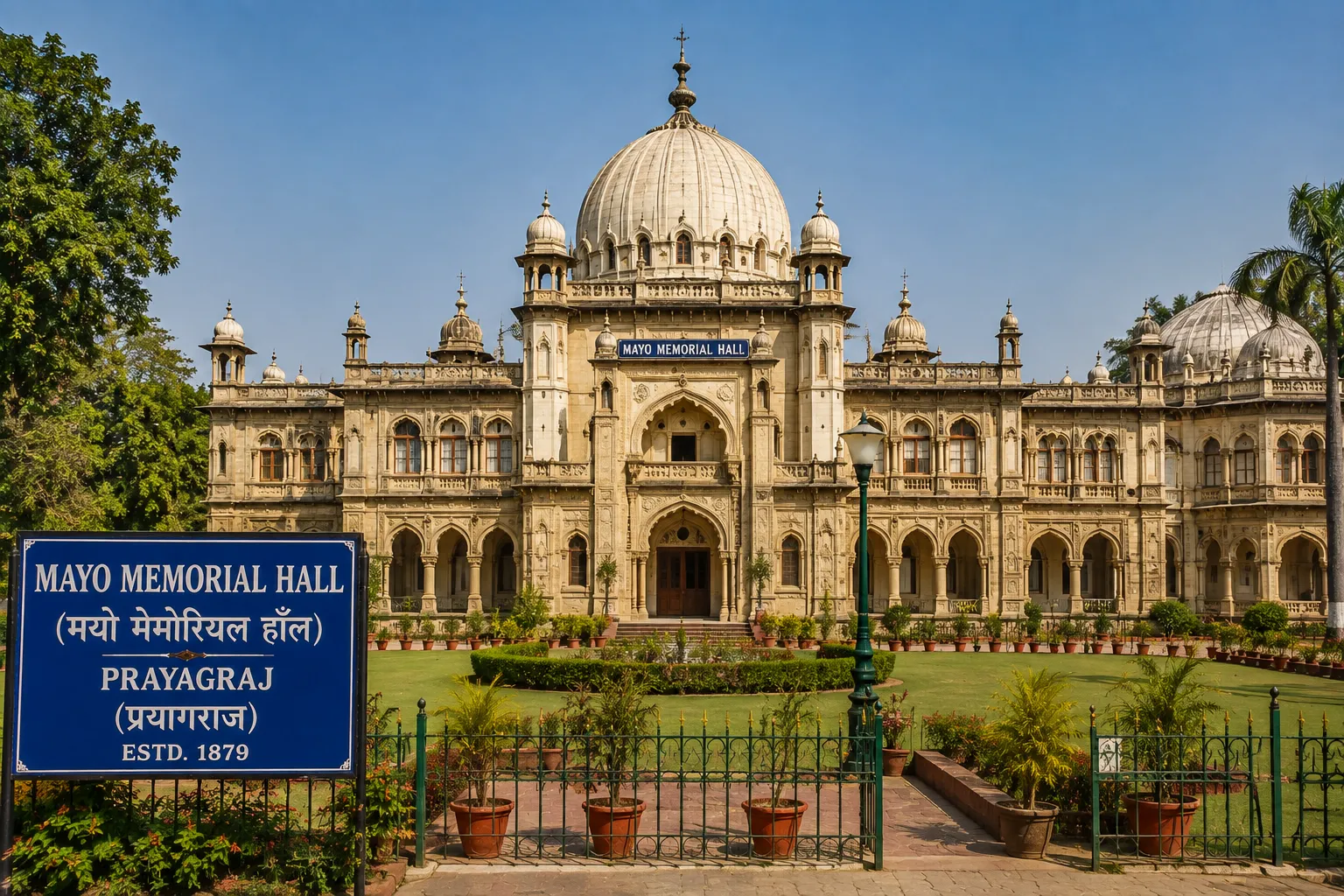
Mayo Memorial Hall
The grand colonial town hall of 1879, with its 180-foot tower.
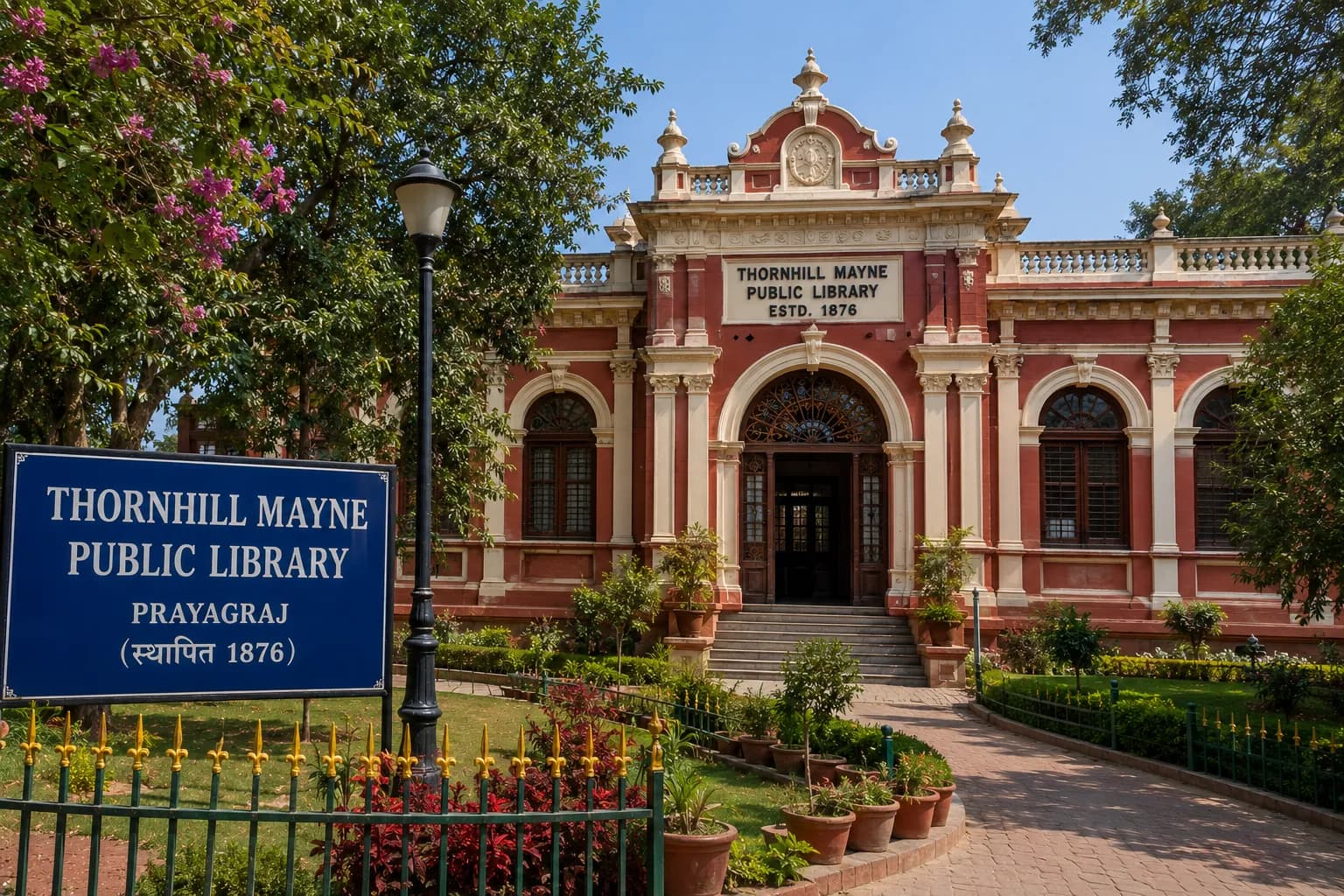
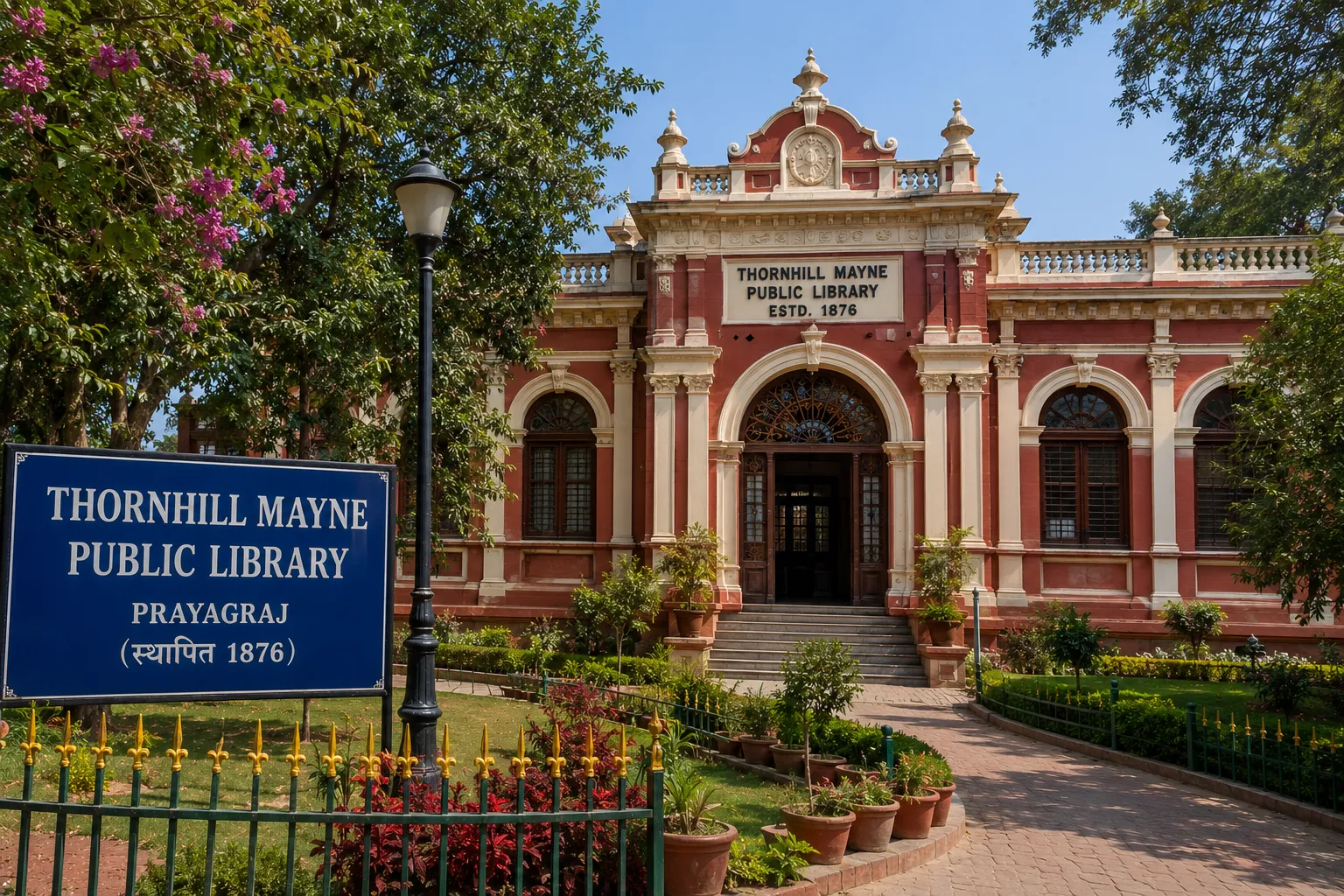
Thornhill Mayne Public Library
The largest library in UP, in a Scottish Baronial building in Azad Park.
The Kumbh Mela and the Magh Mela
Prayag is above all the city of the Kumbh, for at the Sangam is held the Kumbh Mela, the greatest gathering of human beings anywhere on the earth, and, every year, the Magh Mela, the winter river-festival, when for the whole holy month of Magh the devout live in tents by the river in the austerity of the Kalpvas.
The Maha Kumbh of 2025, a confluence of cycles said to come but once in many generations, drew hundreds of millions of pilgrims to the Sangam. The Kumbh and Magh dates change with the calendar each year; ask us for the current dates, and plan well ahead, for these are the holiest and busiest of all times to come.
Planning your visit to Prayagraj
October to March is the pleasant season; the Magh Mela (January to February) and, in its years, the Kumbh are the holiest and busiest times.
By air to Prayagraj (Bamrauli) airport; by rail to Prayagraj Junction, a great railway hub; by road on good highways from Varanasi (about 120 km), Lucknow and Ayodhya.
Two to three days for the Sangam, the main temples and the heritage; more for the full Dwadash Madhav Parikrama or the Kumbh.
Civil Lines and the city for hotels; tented camps at the Sangam in the Mela season.
Prayagraj pairs naturally with Varanasi and Ayodhya in one great pilgrimage.
For Prayagraj, or a combined Kashi, Ayodhya and Prayagraj pilgrimage planned end to end, see our tour packages. See tour packages.
Our Prayagraj tours and the three-city pilgrimage
We are a Varanasi, Ayodhya and Prayagraj based operator, a unit of Experience My India, with more than forty years of guiding pilgrims across all three holy cities, and our own local guides and pandits in Prayagraj. Darshan everywhere is free; what we offer is the whole of it made smooth, meaningful and complete.
Prayagraj darshan tour
The Sangam, the main temples, the Fort and the heritage, with a guide. Two to three days.
Complete Dwadash Madhav Parikrama
The full circuit of the twelve Madhavs, with boats and a pandit.
Kumbh / Magh Mela pilgrimage
The Sangam snan and darshan in the Mela season, with all arrangements.
Experience My India is a travel operator, not the temples' administration. Darshan is free; our charge is only for guiding, transport, boats, the pandit and services. Inclusions and exclusions are stated up front, and no charge appears later that was not named. Timings, dates and rules are set by the temples and authorities and can change.
The holy city, in my own words
I have been guiding pilgrims around Prayagraj for more than forty years, and I never tire of it, because there is no city quite like it. Everything begins at the Sangam, the meeting of our three holy rivers; I take my pilgrims out by boat for the snan at dawn, and it moves them every time. From there the whole city opens up: the reclining Hanuman and the serpent-king who guard the Sangam, the immortal Akshayavat hidden in the Fort, our twelve Madhavs whom we go round in the great parikrama, our three Shakti Peeths of the Mother, our Shivas, and the ashram of Bharadwaj where Lord Ram himself rested in exile.
And then there is the other Prayag, the modern one, the old capital: the Nehru house, the Mughal gardens, the park where the young Azad gave his life for our freedom, the beautiful old Gothic church. I love that in one city a pilgrim can touch the first sacrifice of creation and the making of modern India both.
Whether my guests have a day or a week, whether they come for the Sangam bath or the Kumbh or the whole Dwadash Madhav Parikrama, I plan it all for them. In more than forty years of guiding, sharing the whole of Prayagraj, the Tirtharaj, with those who come to it is among the greatest joys of my life.
The three holy cities: Kashi, Ayodhya and Prayag
Prayagraj is one of the three great holy cities of the region, and pilgrims most often visit all three together in one journey.
Frequently asked questions
What is Prayagraj famous for?+
The Triveni Sangam, the sacred confluence of the Ganga, Yamuna and Saraswati; the Kumbh Mela; and its many temples, Shakti Peeths and heritage sites. It is honoured as the Tirtharaj, the King of holy places.
What is the Triveni Sangam?+
The sacred meeting of three holy rivers, the Ganga, the Yamuna and the mystical Saraswati; the holy bath there is the heart of the Prayag pilgrimage.
What are the main temples of Prayagraj?+
The Bade Hanuman (reclining Hanuman), the Nagvasuki, the twelve Madhavs (chief among them Veni Madhav), the Shakti Peeths (Alopi, Lalita, Kalyani Devi), and the Shivas (Mankameshwar, Someshwar); with the immortal Akshayavat in the Fort.
What is the Dwadash Madhav Parikrama?+
The sacred circuit of the twelve Madhavs, the twelve forms of Vishnu that guard Prayag; it completes the Sangam pilgrimage. See our full guide.
When is the Kumbh Mela in Prayagraj?+
The Kumbh comes on a fixed cycle at the Sangam, with the Magh Mela every year in the winter; the dates change each year, so ask us for the current dates.
How many days do I need in Prayagraj?+
Two to three days for the Sangam, the main temples and the heritage; more for the full Dwadash Madhav Parikrama or a Mela visit.
How do I reach Prayagraj?+
By air to Bamrauli airport, by rail to Prayagraj Junction, or by road from Varanasi (about 120 km), Lucknow and Ayodhya.
What heritage sites are there in Prayagraj?+
Anand Bhawan, Khusro Bagh, Chandra Shekhar Azad Park, All Saints Cathedral, Minto Park, Mayo Memorial Hall and the Thornhill Mayne Public Library, among others.
Is Prayagraj connected to the Ramayana?+
Yes; Bharadwaj Ashram was the first halt of Ram's exile, and at Shringverpur, nearby, Ram crossed the Ganga in exile.
Can I visit Varanasi and Ayodhya too?+
Yes; Prayagraj, Varanasi and Ayodhya are usually visited together in one great three-city pilgrimage, which we plan end to end.
Visiting Prayagraj?
Our guided packages bundle VIP darshan, a local guide, stays, and private transport across the whole circuit — so you spend the day at the temple, not in queues.
See tour packages →