.webp&w=2048&q=75)
.webp&w=2048&q=75)
Essential info at a glance
| Detail | At a glance |
|---|---|
| Opening hours | Durga Kund temple is open daily from 4:00 AM to 1:00 PM and from 3:00 PM to 8:00 PM, with the evening close shifting to around 8:00 to 9:00 PM by season. |
| Afternoon break | The temple is closed from 1:00 PM to 3:00 PM, so plan around the midday gap. |
| Aartis | Mangala aarti runs around 4:00 to 5:30 AM, Bhog aarti at 12:00 PM, Sandhya aarti at 7:00 PM, and the Sayan night aarti around 11:00 PM. |
| Entry fee | Entry is free for all devotees. There is no paid VIP or online fast track darshan here. |
| Dedicated to | Goddess Durga, with shrines to Lakshmi, Saraswati and Kali within the complex. |
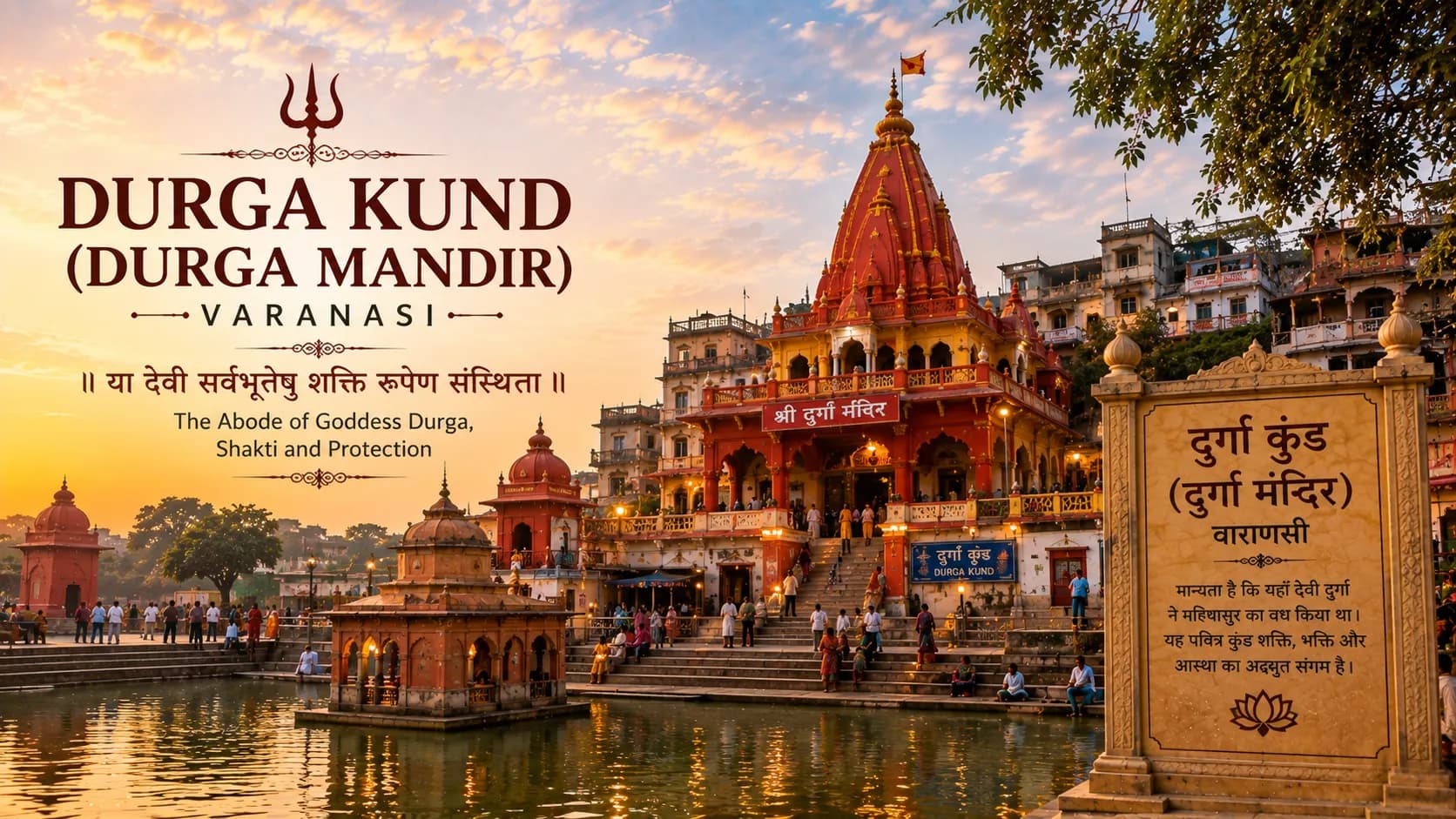
| Built | In the 18th century, around 1760, by Rani Bhabani of Natore, in red Nagara style beside the Durga Kund tank. |
| Also known as | Durga Kund Mandir, and the Monkey Temple, for the many monkeys on the premises. |
| Location | Durgakund Road, Bhelupur, about 5 km from Varanasi Junction, and a short walk from Tulsi Manas and Sankat Mochan. |
Durga Kund temple timings and darshan hours
The temple opens before dawn with the Mangala aarti and runs late, but it closes through the early afternoon. If quiet is what you want, come early; the calmest darshan is between 4:00 and 8:00 AM. If you want the temple at its most beautiful, come toward dusk, when the red walls and the kund catch the evening light.
| Session | Timing | Notes |
|---|---|---|
| Morning darshan | 4:00 AM to 1:00 PM | The best window for a quiet darshan is 4:00 to 8:00 AM. |
| Afternoon break | 1:00 PM to 3:00 PM | The temple is closed; plan around this gap. |
| Evening darshan | 3:00 PM to 8:00 PM | The kund and the red facade look their best at dusk. Closing shifts to 8:00 to 9:00 PM by season. |
| Winter variation | Around 5:00 AM to 8:00 PM | In winter the hours may shift later in the morning. |
Public darshan runs within the windows above; the Sayan night aarti around 11:00 PM is the closing ritual and may fall after public hours.
Aarti schedule at Durga Mandir
| Aarti | Timing | Notes |
|---|---|---|
| Mangala aarti (morning) | Around 4:00 to 5:30 AM | The pre dawn awakening of the goddess, a powerful and quiet hour. |
| Bhog aarti (midday) | 12:00 PM | The midday food offering, before the afternoon break. |
| Sandhya aarti (evening) | 7:00 PM | The main evening aarti for visitors, atmospheric and well attended. |
| Sayan aarti (night) | Around 11:00 PM | The closing ritual that puts the goddess to rest. |
Navratri, Dussehra, and the crowd reality
Durga Mandir is one of the most important Devi temples in Varanasi, so its high season is Navratri and Dussehra. Through the nine nights of Navratri the temple is lit up and garlanded, and the crowd swells enormously, especially on Ashtami and Navami. It is the most powerful time to be here, and also the hardest to get a quick darshan.
There is no paid VIP darshan or online fast track pass at Durga Mandir, unlike Kashi Vishwanath. Crowds are managed with standard queue lines, and at peak times a local priest or guide can sometimes help with a smoother entry, but there is no formal booking portal, so be wary of anyone selling one.
If you want the intensity of Navratri without losing half a day to the queue, timing and local knowledge are everything. We plan the hour, the gate and the route so you experience the festival rather than only the line.
A dawn darshan by the kund, in my own words
By Rajeev Sharma, Varanasi local
I like to bring people to Durga Mandir early, when the sky is only just turning and the red of the temple looks almost black against it. The Mangala aarti is on, the bells are going, and the kund beside the temple sits still and dark. It is a different feeling from Kashi Vishwanath or Sankat Mochan, softer, more maternal, because this is the mother goddess in her fierce and protecting form, and Banarasi families come to her the way you go to a mother when you are worried.
I always warn guests about the monkeys before we go in, because this place is not called the Monkey Temple for nothing. They are bold, they are everywhere in the trees around the kund, and a phone or a bag of prasad left loose in your hand is a gift to them. We keep everything zipped away. Inside the courtyard, once the aarti settles, there is a calm that people who arrived tense do not expect.
In more than forty years of guiding, the travellers who remember Durga Kund best are the ones who came at first light and simply sat by the tank for a while afterward. The red temple, the still water, the goddess: it stays with you.
Entry, rules, and what to carry
Dress and conduct
- Dress modestly, covering shoulders and knees, as at any temple.
- Footwear comes off at the entrance; leave it at the counter or in the car.
- Keep your voice low near the sanctum, especially during aarti.
Entry and photography
- Entry is free for all devotees. The temple welcomes visitors, though the inner sanctum may be reserved for worshippers at peak times.
- Photography of the red exterior and the kund is usually fine and very rewarding; avoid photographing inside the sanctum and during aarti, and check for signs.
The monkeys
- This is the Monkey Temple, so keep glasses, phones, and open prasad secured, and never tease or feed the monkeys.
What to carry
- A little cash for prasad and the shoe counter donation.
- Water in summer, and footwear that slips on and off easily.
How to reach Durga Kund temple and parking
The temple sits on Durgakund Road in the Bhelupur area of southern Varanasi, in the same cluster as Tulsi Manas and Sankat Mochan, so all three are easily combined.
| From | Distance | Notes |
|---|---|---|
| Tulsi Manas Mandir | About 250 metres | Almost adjacent; a two to three minute walk. |
| Sankat Mochan Mandir | About 700 metres | A short walk or hop to the southwest. |
| Varanasi Junction (Cantt) or Godowlia | About 5 km | Easily reached by auto rickshaw or cab from the station or Godowlia. |
| BHU | About 1.3 km | Close to Banaras Hindu University and the New Vishwanath Temple. |
| Airport | About 27 km | Lal Bahadur Shastri International Airport, roughly an hour by road. |
Parking near Durgakund is reasonable, and most autos and cabs drop you close to the gate. We arrange a car and a guide so the southern cluster flows as one outing.
Best time to visit and how to plan it
| When | Why |
|---|---|
| 4:00 to 8:00 AM | The quietest darshan of the day, with the Mangala aarti and the calm of the kund. |
| Dusk | The red temple and the tank look their most beautiful in the evening light. |
| October to March | Pleasant weather; ideal for the courtyard and the kund. |
| Navratri and Dussehra | The temple at its most alive and most crowded; plan extra time. |
| Avoid 1:00 to 3:00 PM | The temple is closed for the afternoon break. |
- Pair it with Tulsi Manas next door and Sankat Mochan close by for one calm morning or evening.
- Allow 30 to 45 minutes, more during Navratri or if you want to sit by the kund.
For the southern cluster planned as one outing, see our Varanasi tour packages.
The red temple, the swayambhu idol, and why Durga Kund matters
Durga Mandir is one of the three temples that Banaras tradition counts as essential alongside Kashi Vishwanath and Annapurna, and a visit to the city is often said to be incomplete without it. What makes it special is not only the goddess but the belief around her idol: the icon of Durga here is held to be swayambhu, that is, it appeared on its own rather than being carved by human hands, and the temple's origin is told in the Devi Bhagavata Purana. For devotees, that self manifested presence gives the darshan a particular weight.
| History at a glance | Detail |
|---|---|
| Built | In the 18th century, around 1760, by Rani Bhabani of Natore, a Bengali queen and devotee of Durga. |
| The idol | The icon of Durga is believed to be swayambhu, appeared on its own; its origin is told in the Devi Bhagavata Purana. |
| Architecture | North Indian Nagara style, with multiple shikharas of different heights and a carved entrance, in a panchayatana layout. |
| The colour | Painted red with ochre to match the goddess, red standing for power and auspiciousness. |
| Other deities | Shrines to Lakshmi, Saraswati and Kali within the complex. |
| The kund | The rectangular Durga Kund tank beside the temple, once connected to the Ganga. |
The temple is built around an open courtyard with a colonnade that leads to the kund, and its intricately carved columns and stacked spires make it one of the most photogenic temples in the city. It is a working Devi shrine, busy and beloved, not a museum piece, which is part of its power.
The Durga Kund tank
The temple takes half its name from the kund, the large rectangular tank on one side of the complex. In earlier times it was connected to the Ganga, and it has long been regarded as sacred, with the nearby Durga Ghat built in 1772 adding to the area's importance. Today the kund is mainly a place to sit and take in the temple's reflection, and it is at its most beautiful at dusk. Treat it as a sacred and scenic spot rather than a bathing tank, and enjoy the calm it brings to an otherwise busy corner of the city.
Accessibility for elderly and mobility limited visitors
- The temple has a large open courtyard largely at ground level, easier than the old city lanes.
- Come at 4:00 to 8:00 AM to avoid the crowds if mobility is a concern, and avoid Navratri peak days.
- Parking is close to the gate, so the walk is short.
- We arrange a car to the gate and plan the southern cluster so a senior visitor is comfortable throughout.
Nearby sacred sites to combine with your darshan
Durga Kund sits at the heart of the southern temple cluster, so it is easy to see several sites in one calm outing.
| Site | What it is | Internal link |
|---|---|---|
| Tulsi Manas Mandir | The white marble temple with the Ramcharitmanas carved on its walls, about 250 metres away. | /varanasi/tulsi-manas-mandir |
| Sankat Mochan Hanuman Temple | The Hanuman temple founded by Tulsidas, a short distance to the southwest. | /varanasi/sankat-mochan-hanuman-temple |
| New Vishwanath Temple (BHU) | The modern Shiva temple on the Banaras Hindu University campus, close by. | /varanasi/new-vishwanath-temple-bhu |
| Assi Ghat | The southern ghat, famous for the sunrise Subah-e-Banaras and evening aarti. | /varanasi/assi-ghat |
| Kashi Vishwanath Temple | The Jyotirlinga at the heart of Kashi, about 5 km north. | /varanasi/kashi-vishwanath-temple |
To add the river to your day, see our evening Ganga aarti experience.
Safety and practical tips
Durga Kund is a rewarding, atmospheric temple, but the monkeys and the crowds are the two things to plan for.
| Watch out for | How to handle it |
|---|---|
| The monkeys, bold and everywhere around the kund. | Keep glasses, phones and open prasad secured; do not tease or feed them. |
| The midday break, 1:00 PM to 3:00 PM. | Come in the morning or from mid afternoon so you do not find it shut. |
| Anyone selling a paid or fast track darshan. | There is no VIP ticket or portal here; entry is free. Ignore the offer. |
| Pushy prasad and flower sellers, and inflated auto fares. | Buy from proper stalls and fix the fare before you set off. |
| The kund water. | Treat it as sacred and scenic; it is for viewing, not a clean bathing tank. |
A guided visit removes the guesswork and the hustle so you can focus on the darshan.
Our guided Varanasi visits including Durga Kund
We are a Varanasi based operator, a unit of Experience My India, with more than forty years of guiding pilgrims across Kashi, Ayodhya, and Prayagraj. Entry to Durga Mandir is free, so what we arrange is the visit around it: transport, a local guide, and a smooth route through the southern cluster, timed to the aarti and around the crowds.
| Package | Includes | Price |
|---|---|---|
| Southern temple cluster half day | Car, a Varanasi local guide, and darshan at Durga Kund, Tulsi Manas and Sankat Mochan. | Contact us for pricing |
| Durga Mandir with Assi Ghat | The temple paired with the Assi Ghat sunrise or evening on the river. | Contact us for pricing |
| Navratri special darshan | Timed entry help, a guide, and transport during the Navratri rush. | Contact us for pricing |
| Full Kashi darshan day | Kashi Vishwanath, the corridor, the southern cluster, and the evening Ganga aarti. | Contact us for pricing |
Inclusions and exclusions are stated up front, with any taxes and conditions, and no charge appears later that was not named.
Experience My India is a travel operator, not the temple administration. Prices are ours. Temple timings and rules are set by the temple and can change.