.webp&w=2048&q=75)
Essential info at a glance
| Detail | At a glance |
|---|---|
| What it is | The lotus-bearing form of Lord Vishnu; one of the twelve Madhavs of Prayag. |
| Morning hours | 6:00 AM to 12:00 PM. |
| Afternoon closure | 12:00 PM to 4:00 PM (the deity's rest). |
| Evening hours | 4:00 PM to 8:00 or 9:00 PM. |
| Aartis | Morning around 6:30 AM; evening around 7:00 PM. |
| Entry fee | Free. There is no paid VIP darshan. |
| The emblem | The Padma, the lotus of Vishnu; purity, creation and the universe. |
| Location | Bikar Devariya, Ghurpur, southern outskirts; the South-West quarter. |
Padma Madhav timings and aarti
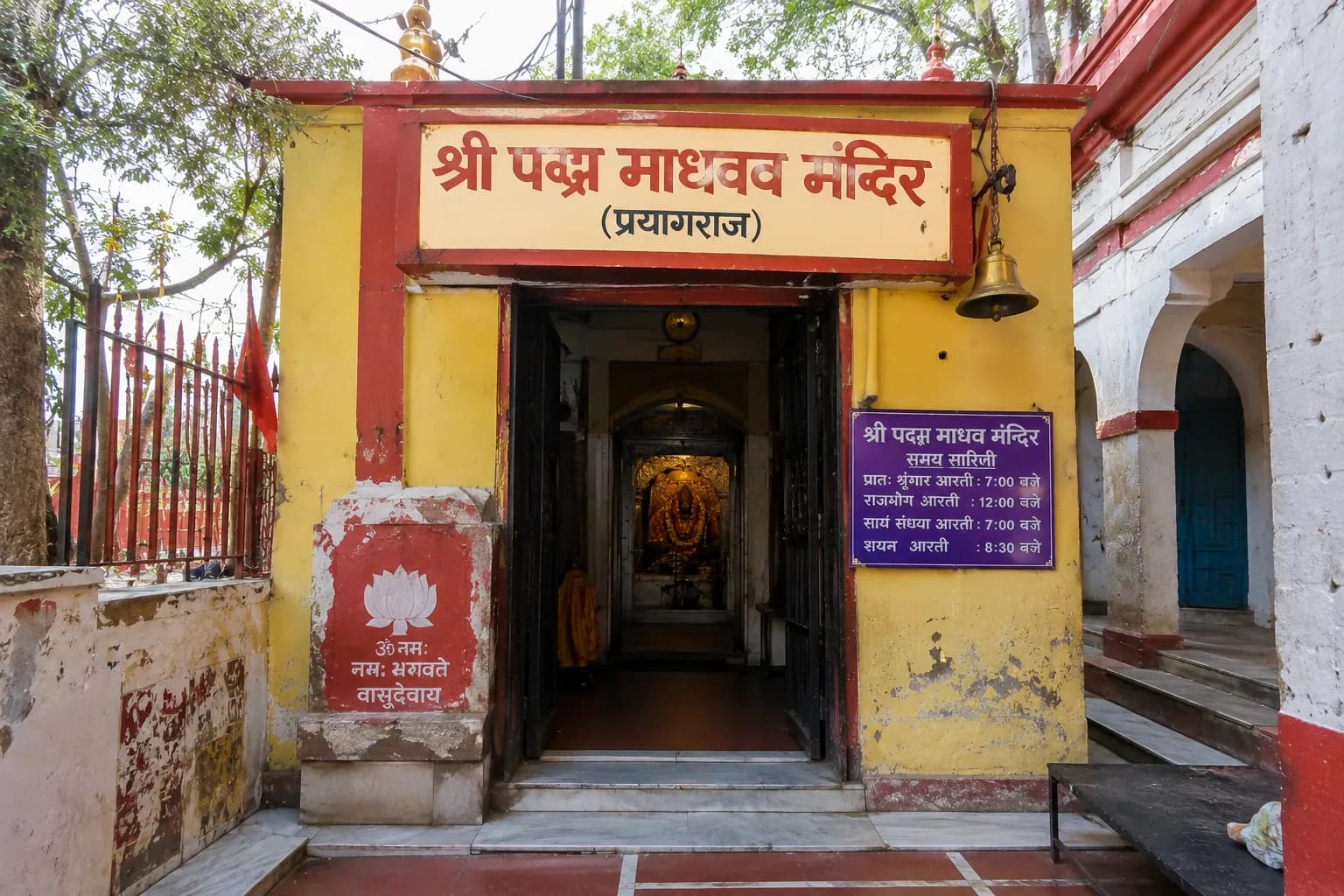
The temple keeps a split day, open from 6:00 AM to noon and again from 4:00 PM to 8:00 or 9:00 PM, with a closure through the afternoon for the rest of the deity. Its aartis are its most devotional moments, the morning aarti around 6:30 AM, shortly after the temple opens, and the evening aarti around 7:00 PM, at sundown. Entry is free, and this being a traditional, rural, community-managed shrine, it is calm and crowd-free except at the great festivals; you can easily get a close and peaceful darshan. The best time is the morning, from about 6:00 to 11:00 AM.
| Detail | When | Notes |
|---|---|---|
| Morning hours | 6:00 AM to 12:00 PM | With the morning aarti around 6:30 AM. |
| Afternoon closure | 12:00 PM to 4:00 PM | The deity's rest. |
| Evening hours | 4:00 PM to 8:00 or 9:00 PM | With the evening aarti around 7:00 PM. |
| Best darshan | 6:00 to 11:00 AM | Calm and peaceful; crowds only at festivals. |
Shri Padma Madhav Temple: the lotus-bearing Madhav
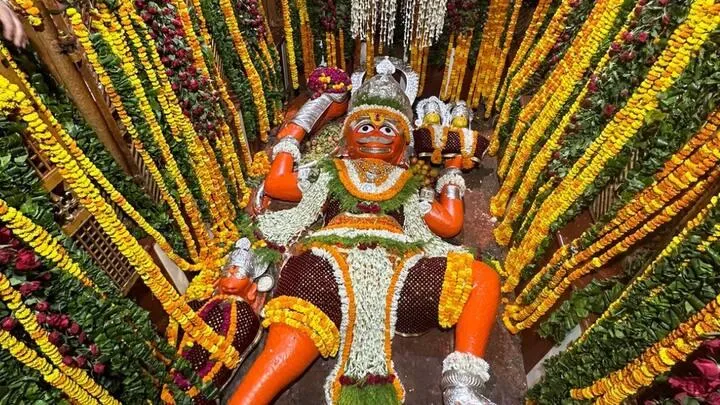
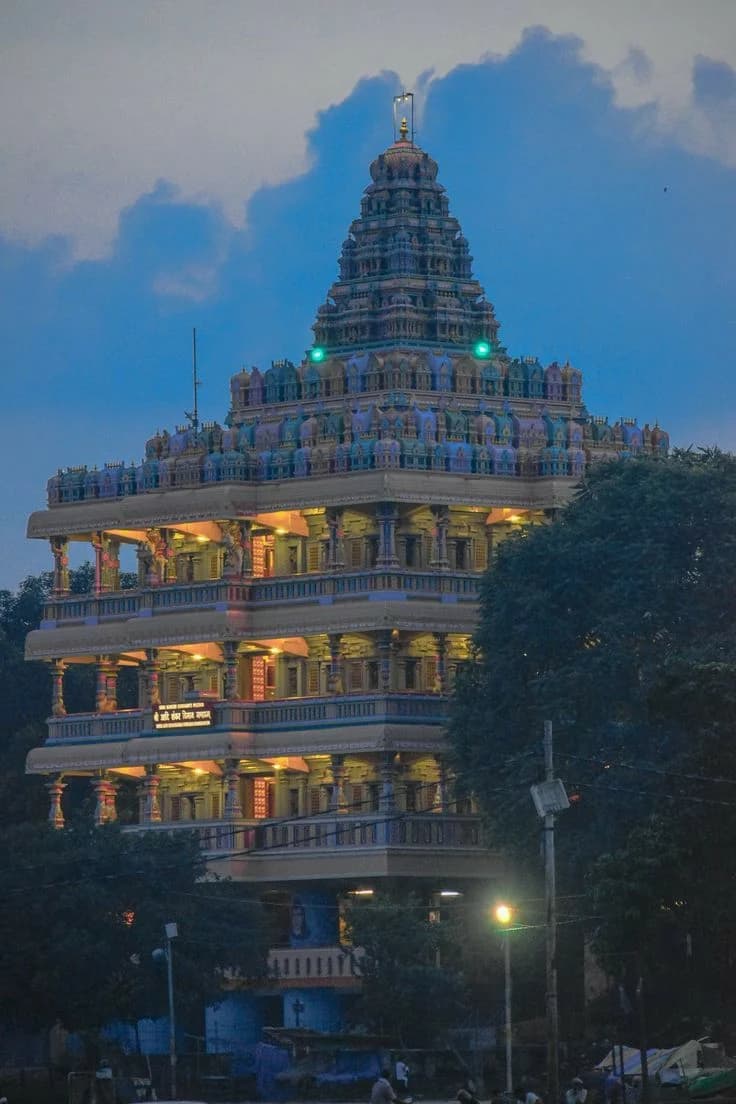
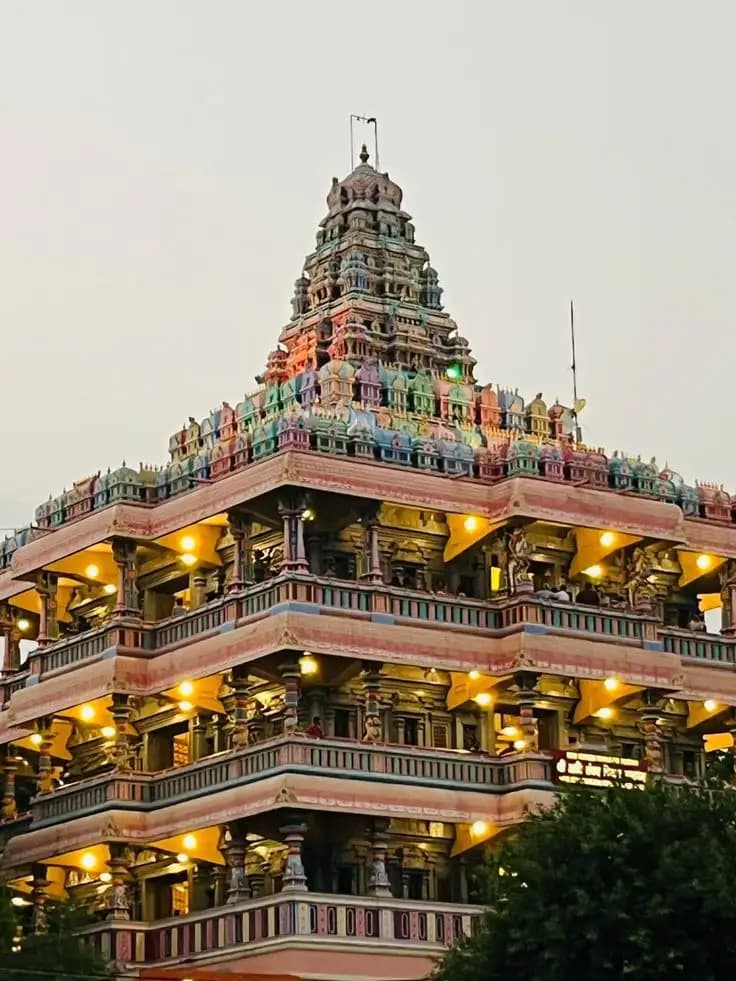
As Kashi is the Shiv Nagari, the city of Shiva, so Prayag is the Vishnu Nagari, the city of Vishnu, guarded on every side by the twelve Madhavs, the twelve forms of the Lord. And among them is Shri Padma Madhav, the Vishnu of the lotus, whose ancient shrine stands out in the rural southern outskirts of the city, at Bikar Devariya near Ghurpur, where the Lord is worshipped, the tradition tells, in a self-manifested form of sacred stone. It is a peaceful, rural, little-visited shrine, far from the great city temples; and it holds a special completeness, for its lotus is the last of the four sacred emblems of Vishnu, borne among the Madhavs, and with Padma Madhav the four are made whole.
The lotus-bearing Vishnu: purity, creation and the universe
The name of the deity holds the deepest of meanings, for the lotus is among the most sacred and beautiful of all the emblems of our faith. The Padma, the lotus, is one of the four emblems that Lord Vishnu bears in his four hands; and it carries a threefold glory. First, it is the emblem of purity: for the lotus rises up unstained and perfect from the mud and the murky water, and floats pure upon the surface, and so it is the very sign of the soul that lives in the world yet is untouched by its impurity, and of the unfolding of the spirit toward the light. Second, it is the emblem of creation itself: for it was from a lotus, springing from the navel of Lord Vishnu as he reclined upon the cosmic waters, that Lord Brahma was born, and from Brahma the whole creation arose, so that the lotus is the very seat and source of the created worlds. And third, the sages tell that the lotus contains within it the whole earth and the universe, its stalk the great cosmic mountain Meru, the axis of all the worlds. So Padma Madhav is the Vishnu of the lotus, the Lord of purity, of creation, and of the unfolding universe.
The four emblems made complete
With Padma Madhav, a beautiful completeness is reached, for the four sacred emblems that Lord Vishnu bears in his four hands are all present and honoured among the twelve Madhavs of Prayag. There is the Shankh Madhav, the Lord of the conch, the cosmic sound and purity; the Chakra Madhav, the Lord of the discus, the destroyer of evil; the Gada Madhav, the Lord of the mace, the crusher of the demons; and here the Padma Madhav, the Lord of the lotus, purity and creation. Together these four, the conch and the discus and the mace and the lotus, are the whole power and grace of the Lord, held out in his four hands and set to guard the holy city on every side; and to bow before all four is to worship the fullness of the Lord's protecting might and mercy.
The guardian of the South-West and the twelve Madhavs
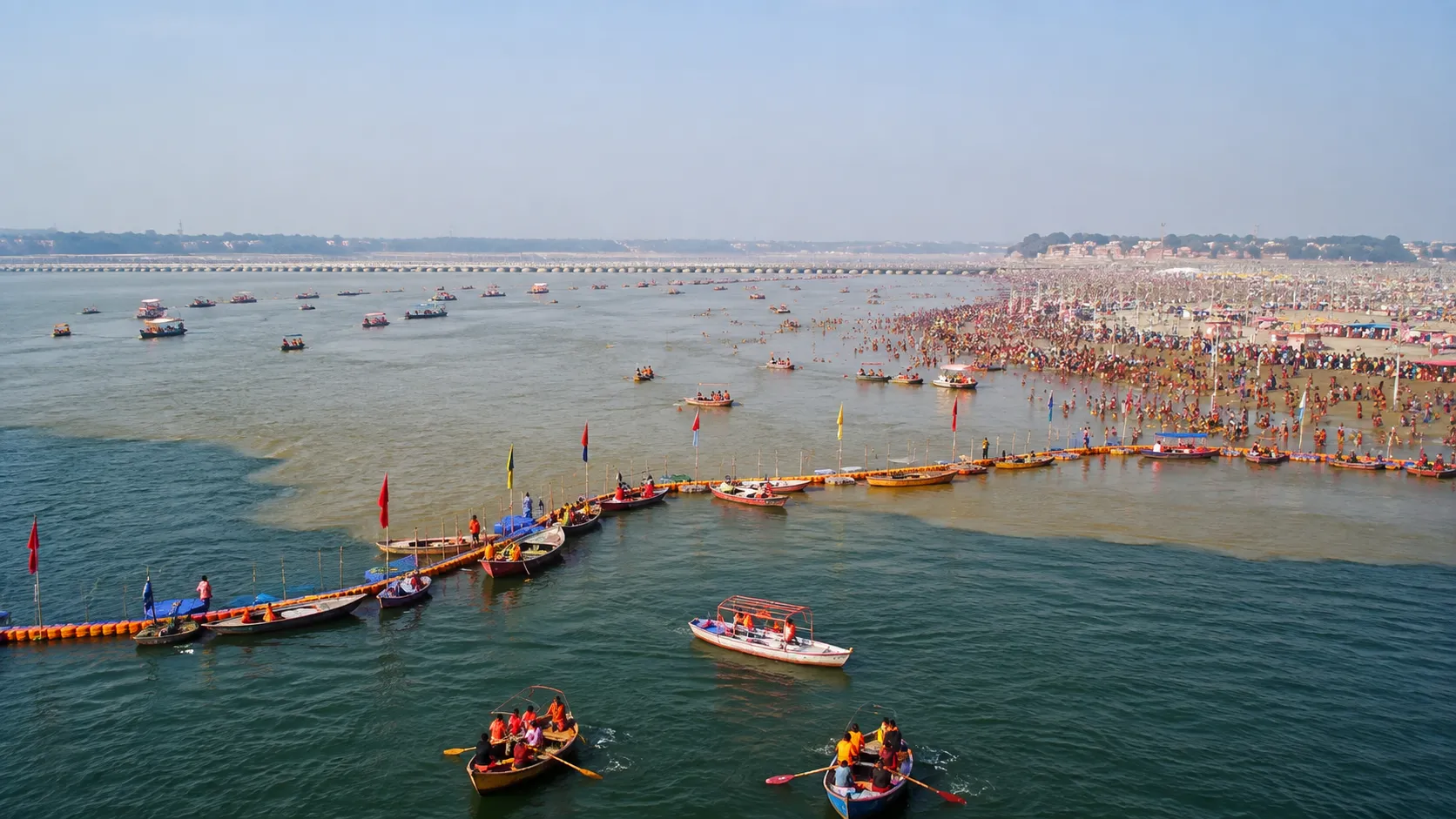
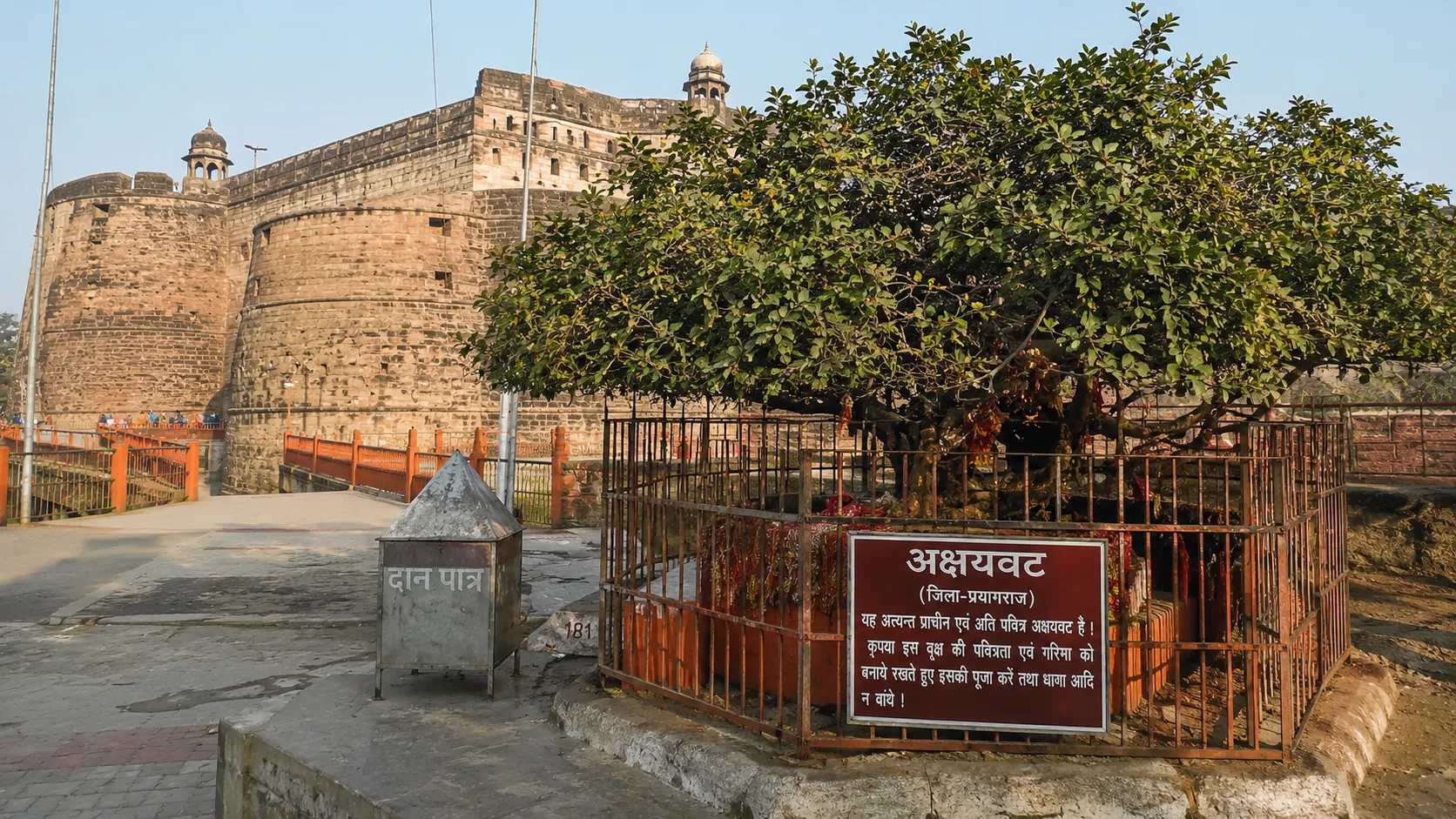
Padma Madhav is one of the eight directional Madhavs, those forms of Vishnu that, after Lord Brahma had performed here the first great yajna of creation, were set at the several quarters around the sacred field of Prayag, to put an end to every obstacle and to guard the holy boundaries in all directions. And Padma Madhav keeps his watch in the Nairitya Kona, the south-western quarter, of the immortal Akshayavat, the deathless tree at the heart of Prayag. So he is a station upon the Dwadash Madhav Parikrama, the sacred circuit of all twelve Madhavs, which the pilgrims of Prayag undertake for the highest merit; for it is held that the full fruit of the Sangam bath is realised only upon the completion of the circuit, and that to walk it is a merit equal to encircling the whole cosmos.
The lotus of the Lord, in my own words
By Rajeev Sharma, guide with Experience My India
I love taking my devout pilgrims out to Padma Madhav in the quiet southern villages, because it is peaceful and off the usual path, and the meaning is so beautiful. I explain that this is the Vishnu of the Padma, the lotus, and I tell them the lovely threefold meaning: the lotus that rises pure from the mud, the sign of the soul in the world; the lotus from Vishnu's navel from which Brahma and all creation were born; and the lotus that holds the whole universe. People find it very moving.
And I love to tell them the satisfying thing, that with Padma Madhav we complete the four emblems of the Lord among our Madhavs, the conch and the discus and the mace and the lotus, all four now worshipped and guarding our Prayag. For the devout who do the full Dwadash Madhav Parikrama with me, reaching Padma Madhav, the lotus, and completing the four emblems, is a special moment. It is a directional guardian, the one who watches the south-west corner by the Akshayavat. A quiet, rural, deeply meaningful shrine, and I love to share it with those who truly wish to know our twelve Madhavs.
In more than forty years of guiding, completing the four emblems of the Lord here at the lotus is among the most fulfilling things I share.
What to see and do
- Take the darshan of Shri Padma Madhav, the lotus-bearing Vishnu, in his sacred stone form.
- Reflect on the lotus: purity from the mud, the creation-lotus of Brahma, the universe held within.
- Complete the four emblems of Vishnu, with the conch, discus, mace and lotus Madhavs.
- Offer the lotus, Tulsi and flowers, and chant the Vishnu Sahasranama.
- Include Padma Madhav in the Dwadash Madhav Parikrama, the circuit of the twelve.
How to reach Padma Madhav
Padma Madhav is at Bikar Village (Bikar Devariya), Ghurpur, in the rural southern outskirts of the city, in the South-West quarter; it is best reached by a personal vehicle or a hired taxi, as it is off the main routes.
| From | Distance | Notes |
|---|---|---|
| Prayagraj city centre / the Sangam | In the southern outskirts | By personal vehicle or taxi; off the main routes. |
| The southern Madhavs (Naini, Chhivanki) | In the southern cluster | Gada Madhav and the southern sites. |
| Prayagraj Junction (railway) | In the southern outskirts | By taxi toward Ghurpur, Bikar Devariya. |
| Prayagraj (Bamrauli) Airport | A longer drive | The city airport; taxis to the southern villages. |
It is best done with a vehicle, as part of the southern-cluster darshan.
Best time to visit and how to plan it
| When | Why |
|---|---|
| 6:00 to 11:00 AM | The calmest, most peaceful time for a close darshan. |
| The Kumbh and Magh Mela | When the Dwadash Madhav Parikrama flourishes. |
| Ekadashi, Dwadashi and Amavasya | The days of Vishnu and the new moon, especially auspicious. |
| With the southern Madhavs | To do the southern cluster of the parikrama together. |
- Pair it with the Sangam and the other Madhavs on the Dwadash Madhav Parikrama.
- Plan a vehicle for the rural southern cluster; combine it with Gada Madhav and the southern sites.
For Prayagraj, or a combined Kashi, Ayodhya and Prayagraj pilgrimage, planned end to end, see our tour packages.
Accessibility for elderly and mobility limited visitors
- It is a rural shrine reached by vehicle; the drive is easy, and the temple generally manageable.
- Come in the cool of the morning for a calm, unhurried darshan.
- The quiet, uncrowded setting suits a restful visit for elderly pilgrims.
- We arrange the car and the whole southern-cluster route at a gentle pace.
Etiquette for visiting
- Remove footwear and be reverent; offer the lotus, Tulsi and flowers in the Vaishnava custom.
- Respect the traditional, rural, community-managed shrine and its priests.
- Keep the quiet village temple and its surroundings clean.
- Keep your phone away in the sanctum, and follow any queue at festivals.
Our guided darshan and Prayagraj tours
We are a Varanasi, Ayodhya and Prayagraj based operator, a unit of Experience My India, with more than forty years of guiding pilgrims across all three holy cities, and our own local guide and pandit in Prayagraj. Darshan is free, so what we offer is the experience made smooth and meaningful: the vehicle out to the rural Padma Madhav, a guide who tells the beautiful meaning of the lotus and completes the four emblems, the full Dwadash Madhav Parikrama for the devout, and the whole Prayagraj and three-city pilgrimage.
| Service | Includes | Price |
|---|---|---|
| Guided Padma Madhav darshan | The vehicle to the rural shrine and the darshan, with a guide. | Contact us for pricing |
| Dwadash Madhav Parikrama | The circuit of the twelve Madhavs, including Padma Madhav, with a guide and a pandit. | Contact us for pricing |
| The four emblems darshan | The conch, discus, mace and lotus Madhavs, with a guide. | Contact us for pricing |
| Kashi, Ayodhya and Prayagraj pilgrimage | The three holy cities, with darshan, transfers and a guide. | Contact us for pricing |
Inclusions and exclusions are stated up front, with any taxes and conditions, and no charge appears later that was not named. Darshan is free; our charge is only for guiding, the vehicle and services. See all our tour packages for the full range.
Experience My India is a travel operator, not the temple administration. Darshan is free; our charge is only for our guiding, the vehicle and services. Timings and rules are set by the temple and can change.
Nearby sacred sites in Prayagraj
Padma Madhav is one of the twelve Madhavs, in the southern outskirts of Prayag.
| Site | What it is | Internal link |
|---|---|---|
| Veni Madhav Temple | The chief of the twelve Madhavs, the presiding Vishnu of Prayag. | /temple/prayagraj/veni-madhav-temple |
| Adi Vat Madhav | One of the central Madhavs, at the immortal Akshayavat. | /temple/prayagraj/adi-vat-madhav |
| Shankh Madhav | The conch-bearing Madhav; one of the four emblems. | /temple/prayagraj/shankh-madhav |
| Chakra Madhav | The discus-bearing Madhav; one of the four emblems. | /temple/prayagraj/chakra-madhav |
| Gada Madhav | The mace-bearing Madhav; one of the four emblems. | /temple/prayagraj/gada-madhav |
For the chief and the central Madhavs, see our Veni Madhav and Adi Vat Madhav guides.