.webp&w=2048&q=75)
.webp&w=2048&q=75)
Essential info at a glance
| Detail | At a glance |
|---|---|
| What it is | An ancient, revered Shiva temple famous for a self manifested lingam said to grow by a sesame seed, a til, every year. |
| Opening hours | Open every day from 4:30 AM to 9:00 PM. |
| Aartis | The morning puja begins right after opening at 4:30 AM; the evening aarti is around 7:30 to 8:00 PM. |
| Entry fee | Free for all devotees. There is no VIP darshan or ticket. |
| The lingam | A tall swayambhu shivling, now about 3.5 feet high, believed to grow a little each year. |
| Unique culture | A rare blend of Banarasi and Malayali, Kerala, culture, with an Ayyappan shrine, probably the only one in Varanasi. |
| What to offer | Sesame seeds, til, and water, for prosperity and peace. |
| Location | Pandey Haveli, Sonarpura, about 1.5 km south-west of Kashi Vishwanath and 500 m from the Ganga. |
Tilbhandeshwar temple timings and aarti
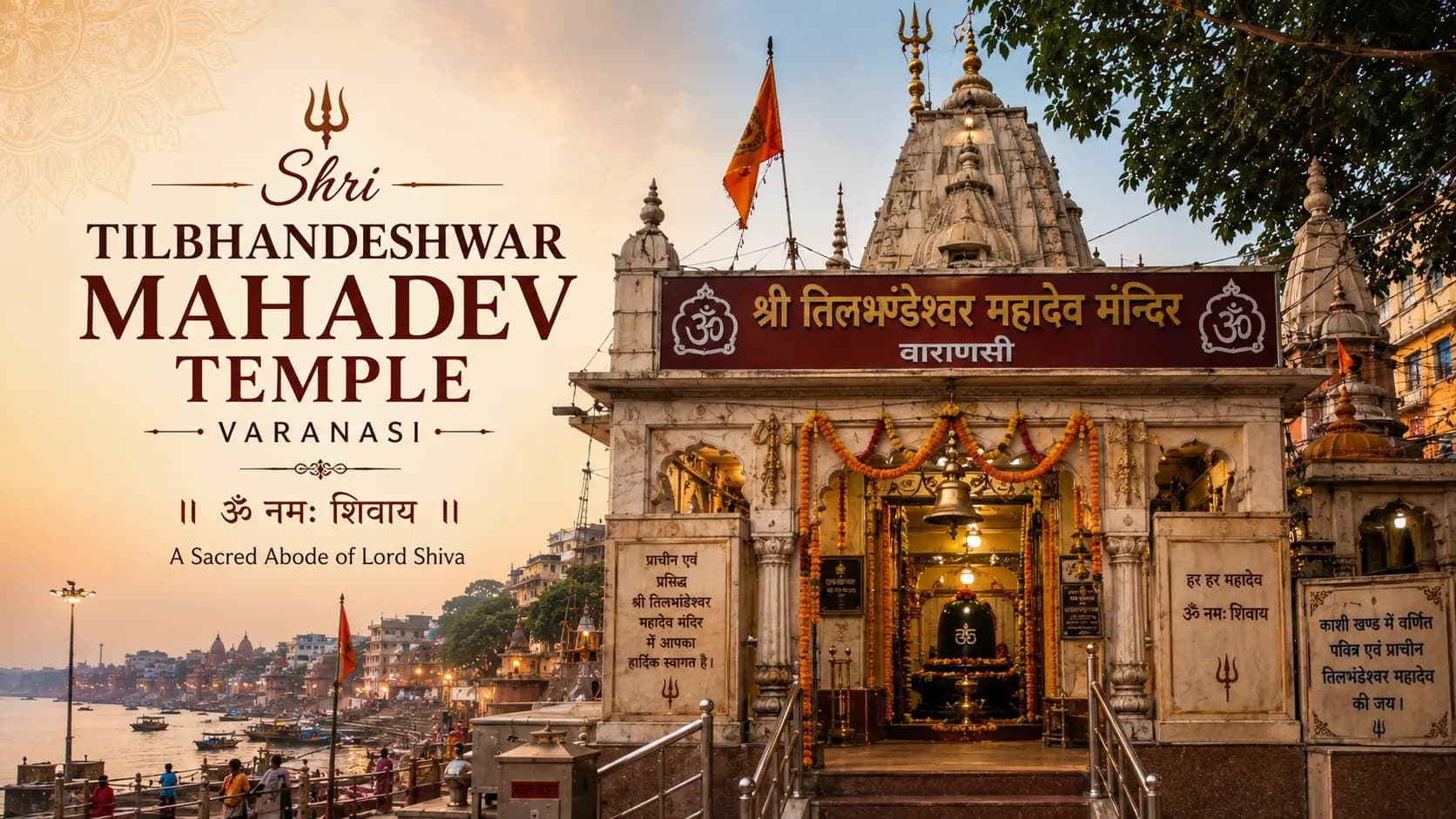
The temple keeps a simple, long single day, open from before dawn to the evening, with worship morning and evening. It is a peaceful, local temple, usually uncrowded, so on most days you can come close to the deity with ease, the great exceptions being Mahashivratri and the holy month of Shravan, when it fills with devotees.
| Detail | Timing | Notes |
|---|---|---|
| Opening hours | 4:30 AM to 9:00 PM | Open every day of the week. |
| Morning puja and aarti | From 4:30 AM | Begins right after opening; the calmest darshan. |
| Evening aarti | Around 7:30 to 8:00 PM | The evening worship. |
| Busy times | Mahashivratri and Shravan | Expect large crowds and long waits; otherwise quiet. |
*Entry is free and there is no VIP darshan.
The lingam that grows a sesame seed each year
The wonder of this temple, and the reason for its name, is its shivling. Tilbhandeshwar takes its name from til, the sesame seed, for it is believed that this self manifested lingam grows a little every year, by the size of a til. Local tradition holds that it appeared here on its own more than two thousand years ago, and it now stands about three and a half feet tall, with a broad base, a living, growing form of Shiva rather than an installed idol.
There are wonderful old stories of its power. It is said that invaders tried more than once to destroy the lingam and could not, and that a British officer, to test the tale of its growth, once tied a thread tightly around it, only to find the thread snapped by the next morning. Whether one sees it as a miracle or as the slow work of the living earth, devotees have worshipped this growing lingam for centuries, and offer it sesame seeds and water, asking for prosperity and peace.
Sage Vibhandak and the Kerala connection
The temple's most surprising feature is that it is, in part, a South Indian temple in the heart of Kashi. Tradition tells that the sage Vibhandak came here from the south long ago, and was so amazed by the growing lingam that he stayed to perform penance rather than go on to the great Vishwanath temple. Pleased with him, Shiva is said to have granted the boon that the lingam would grow by a sesame each year, and from the sage and the sesame the temple takes its names, Tilbhandeshwar and, in his honour, Vibhandeshwar.
Because of that southern connection, the temple grew into a rare and beautiful blend of Banarasi and Malayali, that is Kerala, culture, in its architecture, its customs and its rituals. It is one of the few places in Varanasi where the traditions of the deep south and the deep north meet and mingle, and it has long been a spiritual home for the Malayali community of the city.
The rare Ayyappan shrine
The clearest sign of that fusion is the shrine to Lord Ayyappan within the temple, which is probably the only shrine to Ayyappan in all of Varanasi. Ayyappan is a beloved deity of the south, the god of self control whose great pilgrimage is to Sabarimala in Kerala, and to find him enshrined here, among the Banarasi gods, is a quiet marvel. The temple accordingly celebrates the southern festivals too, the Ayyappan Pooja and Makar Sankranti, alongside the Banarasi Mahashivratri, Nag Panchami, Shravan and Navratri. Besides Shiva and Ayyappan, the temple also houses Parvati, Bhairav and other deities, and it is said that even Mata Sharda, the goddess of knowledge, once spent time here.
Rituals here: Jalabhishek and Rudrabhishek
As a powerful and peaceful Shiva temple, Tilbhandeshwar is a fine place for the sacred abhishek rituals, and because it is usually uncrowded, they can be performed here calmly and with care. There is no line skipping pass, but private rituals can be arranged with the temple priests, which is what we help with.
| Ritual | What it is and why it is done |
|---|---|
| Jalabhishek | The offering of sacred water over the shivling, the simplest and most beloved worship of Shiva, for peace and blessings. |
| Rudrabhishek | The abhishek of the lingam with milk, honey, water and offerings, amid Vedic chanting, for wellbeing and the removal of obstacles. |
| Sesame and water offering | The temple's own tradition, offering til and water to the growing lingam for prosperity and peace. |
We arrange these rituals with verified temple priests, on the day and in the name you choose, with the prasad sent to you, and everything quoted up front. You can also arrange a Rudrabhishek at the main Jyotirlinga; see our Kashi Vishwanath Temple guide.
A hidden marvel of Kashi, in my own words
By Rajeev Sharma, Varanasi local
Tilbhandeshwar is one of my favourite temples to surprise people with. It is off in the Sonarpura lanes, near the Madanpura weavers, quiet and unhurried, and I tell my guests two things that always astonish them. First, that the shivling here is believed to grow by a sesame seed every single year, and that it now stands taller than a man. Second, that this Banarasi temple has a shrine to Ayyappan, the great god of Kerala, probably the only one in all of Kashi, because a southern sage settled here long ago.
I love watching a visitor take that in, the deep south and the deep north worshipping side by side in one small temple. We offer sesame and water to the lingam, the way it is done here, and if a family wants it, I arrange a Jalabhishek or a Rudrabhishek with the priests, which is beautifully calm here because the temple is rarely crowded. In a city of famous temples, this is the hidden marvel that makes people feel they have understood something deeper about Kashi.
In more than forty years of guiding, this is the temple that best shows how Kashi quietly gathers all of India into itself.
Entry, rules, and what to carry
- Entry is free. There is no VIP darshan; private rituals can be booked with the priests, which we arrange.
- Dress neatly and modestly in traditional clothing; avoid shorts or revealing clothes.
- Remove footwear before entry, and keep your voice low near the sanctum.
- Offer sesame seeds and water to the lingam, the temple's own tradition.
- Carry a little cash for offerings, and for a ritual if you book one on the day.
How to reach the Tilbhandeshwar Temple
The temple is in Pandey Haveli, Sonarpura, next to the Bengali Tola Inter College and near the Madanpura weavers' lanes, about 1.5 km south-west of Kashi Vishwanath and only about 500 metres from the Ganga. You reach it through the local lanes on foot.
| From | Distance | Notes |
|---|---|---|
| Kashi Vishwanath | About 1.5 km | To the north-east in the old city. |
| Sonarpura or Madanpura | A short walk | Take an auto or e rickshaw here, then walk in through the lanes. |
| The Ganga (nearest ghats) | About 500 m | The riverfront is close; combine with a ghat visit. |
| Varanasi Junction (Cantt) | About 5 km | Autos and cabs to Sonarpura, then on foot. |
| Airport | About 25 to 30 km | Lal Bahadur Shastri International Airport, roughly an hour by road. |
Take an auto or e rickshaw to Sonarpura or Madanpura and walk the last stretch through the vibrant lanes; a guide who knows them makes it simple.
Best time to visit and how to plan it
| When | Why |
|---|---|
| Early morning | The calmest darshan, right after the 4:30 AM opening. |
| Shravan (July to August) | The great Shiva season and the Sawan Mela, the most powerful and most crowded time. |
| Mahashivratri | The great night of Shiva, at its most intense. |
| Ayyappan Pooja and Makar Sankranti | The southern festivals, when the temple's Kerala side comes to the fore. |
| Mondays | The day of Shiva, busier and auspicious. |
- Pair it with Kashi Vishwanath and the southern ghats, or with a Rudrabhishek here.
- Allow 30 to 45 minutes for darshan, longer if you are having a ritual performed.
For the temples planned as one route, see our Varanasi tour packages.
Accessibility for elderly and mobility limited visitors
- The temple is in the old city lanes reached on foot, which can be hard for those with limited mobility.
- It is usually calm and uncrowded, which suits a gentle visit; avoid the Mahashivratri and Shravan peaks if a queue is difficult.
- If a visit is not possible, we can arrange for a ritual to be performed in your name and the prasad sent to you.
- We arrange a car to the nearest drop point and a guide to help through the lanes.
Nearby sacred sites to combine with your darshan
Tilbhandeshwar sits in the southern old city near the river, so it pairs naturally with the great temples and ghats nearby.
| Site | What it is | Internal link |
|---|---|---|
| Kashi Vishwanath Temple | The Jyotirlinga at the heart of Kashi, where you can also book a Rudrabhishek. | /temple/varanasi/kashi-vishwanath-temple |
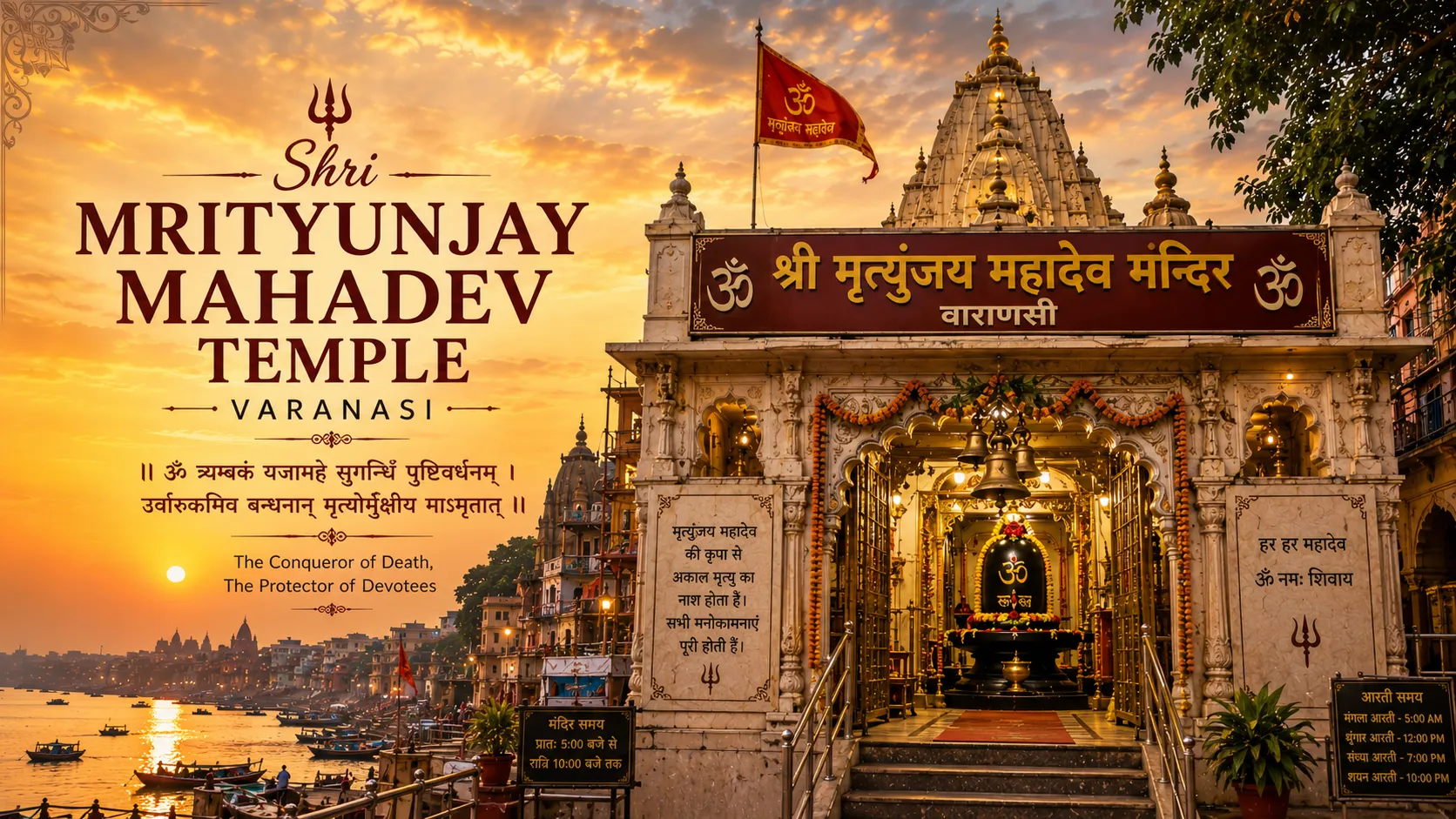
| Mrityunjay Mahadev Temple | The old city shrine of Shiva as the conqueror of death, for more Shiva darshan. | /temple/varanasi/mrityunjay-mahadev-temple |
| Assi Ghat | The southern ghat, famous for the sunrise Subah-e-Banaras aarti. | /temple/varanasi/assi-ghat |
| Dashashwamedh Ghat | Home of the grand evening Ganga aarti, toward the river. | /temple/varanasi/dashashwamedh-ghat |
To add the river to your day, see our evening Ganga aarti experience.
Practical tips
| Good to know | Detail |
|---|---|
| It is a quiet, local temple. | Usually uncrowded, so darshan is easy; savour the calm and the growing lingam. |
| Dress traditionally. | Neat, modest clothing; avoid shorts and revealing clothes. |
| Offer sesame and water. | The temple's own tradition, for prosperity and peace. |
| Look for the Ayyappan shrine. | A rare sight in the north; part of what makes this temple special. |
Book a ritual or guided visit with us
We are a Varanasi based operator, a unit of Experience My India, with more than forty years of guiding pilgrims across Kashi, Ayodhya, and Prayagraj. Entry is free, so what we arrange is the ritual and the visit around it: a Jalabhishek, Rudrabhishek or special puja performed by verified temple priests, in your name, with the prasad sent to you, and a guide through the lanes.
| Service | Includes | Price |
|---|---|---|
| Jalabhishek at Tilbhandeshwar | The water offering over the lingam by a priest, with prasad. | Contact us for pricing |
| Rudrabhishek at Tilbhandeshwar | The full abhishek with a priest and Vedic chanting, and a guide. | Contact us for pricing |
| Special puja or havan | A puja or fire offering arranged end to end with the priests. | Contact us for pricing |
| Guided old city Shiva darshan | Tilbhandeshwar with Kashi Vishwanath and the ghats, with a guide. | Contact us for pricing |
Inclusions and exclusions are stated up front, with any taxes and conditions, and no charge appears later that was not named. See all our Varanasi tour packages for the full range.
Experience My India is a travel operator, not the temple administration. Ritual and tour prices are ours; the puja is performed by the temple's own priests. Temple timings and rules are set by the temple and can change.