Essential info at a glance
| Detail | At a glance |
|---|---|
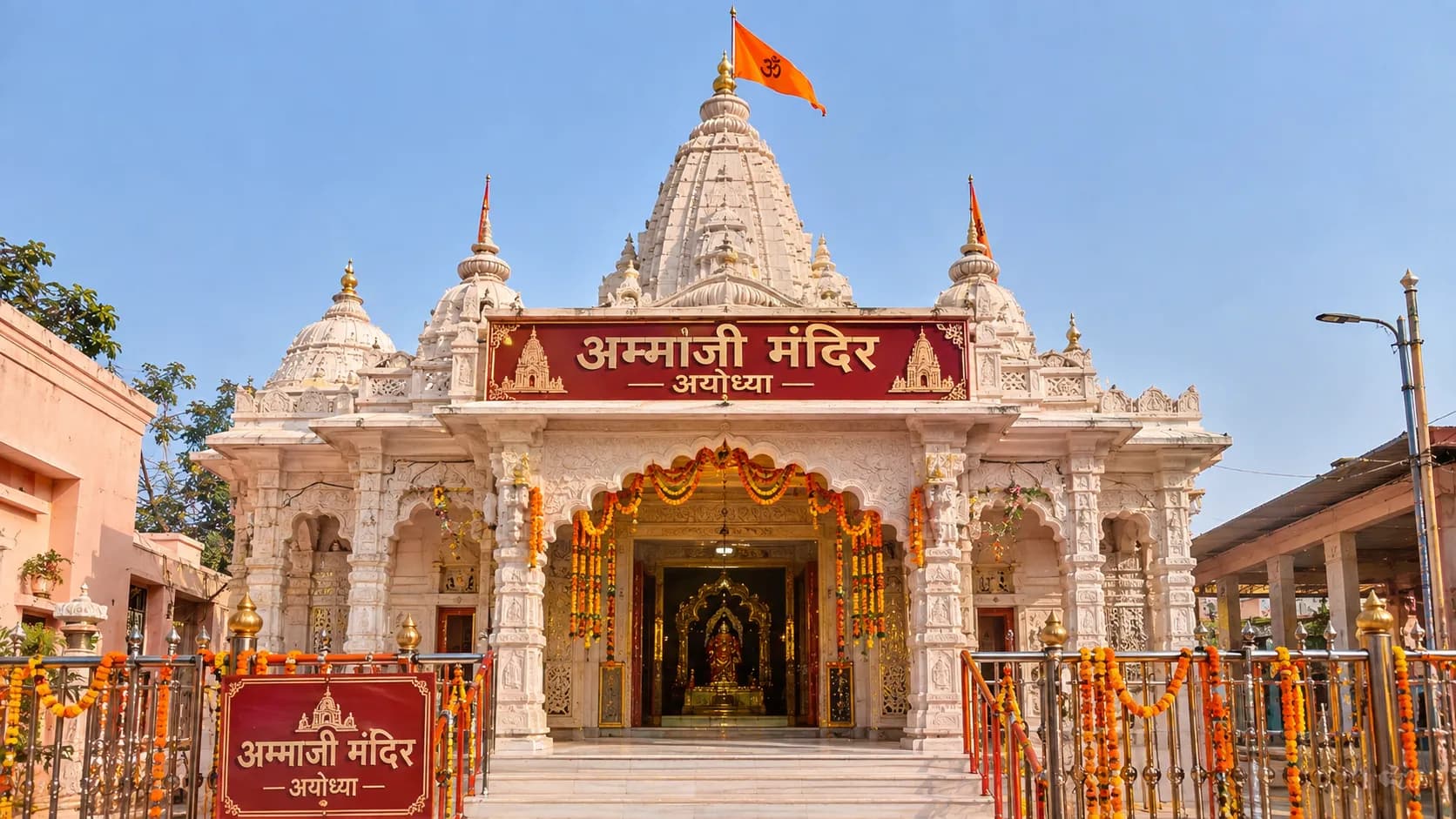
| What it is | A South Indian, Dravidian-style Sri Vaishnava temple of Lord Ram, the Divya Desam temple of Ayodhya, over a century old. |
| Morning darshan | 7:00 AM to 12:00 PM. |
| Midday break | 12:00 PM to 4:00 PM, closed for rituals and rest. |
| Evening darshan | 4:00 PM to 8:00 PM; evening pooja and prasad around 5:00 to 7:00 PM. |
| Entry fee | Free for all devotees. There is no VIP darshan. |
| The deities | Kodanda Ram with Sita and Lakshman, Sri Ranganatha, Hanuman, and the Alwars and Acharyas. |
| Founded by | Yogi Parthasarathy Iyengar and his wife Yogi Singammal, the Ammaji, consecrated in 1904. |
| Location | An inner lane in Tulsi Nagar, near the Saryu. |
Ammaji Mandir timings and worship
The temple keeps a split day in the traditional way, open in the morning and again in the evening, closing through the afternoon for rituals and rest, and entry is free. Its worship follows the strict and beautiful Sri Vaishnava Agama tradition of the South: the morning pujas begin soon after the 7:00 AM opening, and the evening pooja and the distribution of prasad take place in the late afternoon and evening. It is a peaceful, intimate, uncrowded temple, so darshan is calm and direct, quite unlike the great thronged shrines.
| Session or ritual | Timing | Notes |
|---|---|---|
| Morning darshan | 7:00 AM to 12:00 PM | The morning pujas begin soon after opening. |
| Midday break | 12:00 PM to 4:00 PM | Closed for rituals and the deity's rest. |
| Evening darshan | 4:00 PM to 8:00 PM | Evening pooja and prasad around 5:00 to 7:00 PM. |
| Entry fee | Free | No VIP or paid darshan. |
Ammaji Mandir: a little South India in Ram's city
Ram is the Lord of all India, worshipped from the Himalayas to the sea, and nowhere is that beautiful unity felt more sweetly than at Ammaji Mandir, for here, in the heart of Ram's northern city, stands a perfect little temple of the deep South. Built in the classical Dravidian style of Tamil Nadu, it has all the marks of a great southern shrine: a soaring Raja Gopuram, the sculpted gateway tower, a Dwajasthambam, the sacred flagpole, and the pillared Maha Mantapam and Ardha Mantapam within, and it is served, to this day, according to the ancient Pancharatra Agama, the strict ritual tradition of the Sri Vaishnavas, the followers of the great Acharya Ramanuja and the Tamil poet-saints, the Alwars. Ayodhya is itself one of the hundred and eight Divya Desams, the sacred abodes of Lord Vishnu revered in that great southern tradition, for it is the birthplace of Ram, an avatar of Vishnu; and Ammaji Mandir is the Divya Desam temple of Ayodhya, the home where South Indian pilgrims worship Ram in the way of their own tradition, so that it is fondly known as the Divyadesa Mandir. To step into it is to step, for a moment, into Tamil Nadu, in the very city of Ram, a lovely and moving surprise.
The story of its founding: a dream and the idols of the South
The temple owes its being to a beautiful story of longing and grace. Late in the nineteenth century, a great Vedic scholar and publisher of the sacred texts, Yogi Parthasarathy Iyengar, of Tiruvallikeni in Chennai, set out on the pilgrimage that every devout Sri Vaishnava dreams of, to visit all the hundred and eight Divya Desams, the holy abodes of the Lord; and travelling far into the north, he came at last to Ayodhya, the birthplace of Ram, and worshipped there with a full heart. But a longing grew in him, that he might build in Ram's own city a temple in the beloved style of his southern home, so that the Lord might be served there in the Tamil way.
And the Lord answered, and in the tenderest fashion, through a dream given to Parthasarathy's wife, Yogi Singammal. In her dream she was shown the sacred festival idols of Sri Ram and Sita, lying hidden and neglected in a rundown old temple in a village far to the south, at Thiruppullani, the place also called Dharbasayanam in Tamil Nadu, the very shore where, the Ramayana tells, Lord Ram once lay upon a bed of darbha grass and prayed to the sea before building his bridge to Lanka. Guided by the dream, the couple journeyed to Thiruppullani, found the hidden idols of Ram and Sita, and, with the blessing and permission of the King of Ramanathapuram, carried them reverently all the way north to Ayodhya; and there they built their Dravidian temple, and installed the southern Ram in His own northern birthplace, consecrating the temple in the year 1904. So the deity of this temple is Ram brought home, the Lord of the south enshrined at His own beginning, joined by the dream of a devout woman.
Ammaji: the mother who built the temple
The temple takes its name, lovingly, from that same devout woman. Yogi Parthasarathy lived only a few more years after the temple was raised before he departed for Vaikuntha; but his widow, Yogi Singammal, did not return to the south. She stayed on, alone, in far Ayodhya, for some thirty to forty years, and gave her whole life to the temple: she completed what her husband had begun, she organised the daily worship and the great festivals, and, a learned and revered teacher of the Sri Vaishnava philosophy in her own right, she gave discourses and led the singing of the Lord's name, and taught the tradition of Ramanuja to disciples who became great teachers themselves. The people of Ayodhya came to love and revere this gentle, learned South Indian mother among them, and they called her, simply and fondly, Ammaji, respected mother; and so her temple became, and remains, the Ammaji Mandir, named for the woman whose devotion built it up. There is something deeply moving in a temple named not for a king or a god but for a widow's lifelong love, and it gives the place a rare tenderness.
The deities and the South Indian Ram Navami
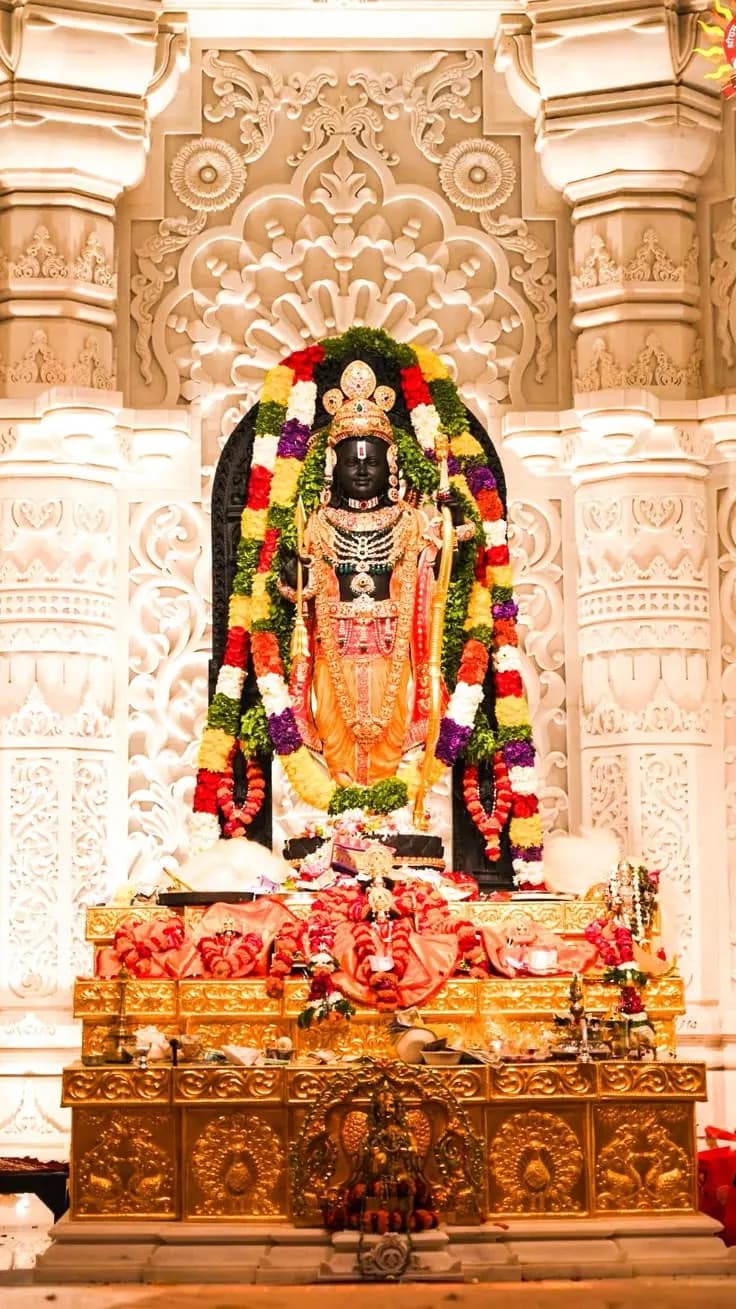
Within the temple, the darshan is a delight, and unlike any other in Ayodhya. In the central shrine stands the beautiful Ram as Kodanda Rama, holding his great bow, with the ever-serving Lakshman on one side and Mother Sita on the other. Around are the other shrines of the Sri Vaishnava world: Sri Ranganatha, the reclining Vishnu, the Lord whom Ram Himself is said to have worshipped as his family deity, for whom the site was once sacred; the mighty Hanuman; the dancing Krishna; Vishvaksena, the Lord's commander; even Sri Balaji of Tirumala; and the revered Alwars and Acharyas, the poet-saints and masters of the tradition, Nammalwar, the great Ramanuja, and Manavala Mamunigal. And once a year the temple blazes into glory at its Ram Navami festival, kept for five days in the full South Indian style of the Divya Desams: with the daily Thirumanjanam, the sacred bathing of the Lord, and, most wonderfully, the grand Purappadu, the procession, when the festival deity of Ram is carried each day through the streets of Ayodhya upon a different vahana, the mount of Hanuman, the eagle Garuda, the elephant, a rare and splendid sight, South India's own celebration of Ram, in Ram's own city.
A bridge of devotion, north and south, in my own words
By Rajeev Sharma, guide with Experience My India
Ammaji Mandir is one of my favourite surprises to give a pilgrim, and I especially love bringing my South Indian guests, because they walk in and gasp, a real Dravidian temple, a gopuram, the Agama worship, everything as at home, right here in Ayodhya. I tell them the beautiful story: how a scholar from Chennai longed to build a South Indian temple for Ram here, and how the Lord showed his wife, in a dream, the hidden idols of Ram and Sita far away at Thiruppullani, where Ram prayed before crossing to Lanka, and how they brought those southern idols all the way north to His birthplace. And I tell them about Ammaji herself, Singammal, the widow who stayed here alone for forty years and gave her life to the temple, so that they named it after her. People are so moved by a temple built by a woman's devotion.
For my North Indian guests, I use it to show something precious: that Ram belongs to all of India, that the great tradition of the south, of Ramanuja and the Alwars, loves Ayodhya and Ram as deeply as we do, and that here is a living bridge between north and south, in the love of one Lord. If you can come at their Ram Navami, when they carry Ram through the streets on the Garuda and the elephant, in the southern way, it is one of the most beautiful sights in all of Ayodhya. It is a peaceful, intimate, deeply devotional little temple, and I never let a thoughtful pilgrim, from north or south, miss it.
In more than forty years of guiding, this is the temple whose story of a woman's devotion, and of India's unity in Ram, most moves the pilgrims I bring.
What to see and do
- Admire the Dravidian architecture, the Raja Gopuram, the Dwajasthambam and the pillared mantapams.
- Take darshan of Kodanda Ram with Sita and Lakshman, and of Sri Ranganatha, Hanuman and the deities.
- See the shrines of the Alwars and Acharyas, the poet-saints and masters of the Sri Vaishnava tradition.
- Experience the strict, beautiful Sri Vaishnava Agama worship, and receive the prasad.
- If you can, come for the five-day South Indian Ram Navami, with Ram carried through the streets on his vahanas.
How to reach Ammaji Mandir
The temple is in an inner lane of Tulsi Nagar, near the Saryu, at the heart of old Ayodhya, close to the core temples. It is easily reached on foot or by e-rickshaw from the Ayodhya Dham station or the local landmarks.
| From | Distance | Notes |
|---|---|---|
| The core temples (Ram Mandir, Kanak Bhavan) | A short walk or ride | In the core; by foot or e-rickshaw. |
| Ayodhya Dham Junction (railway) | A few km | By e-rickshaw or auto to Tulsi Nagar. |
| The Saryu ghats | Nearby | Close to the river; combine with the riverfront. |
| Maharishi Valmiki Airport, Ayodhya | About 10 km | The new airport; taxis and autos to the old city. |
Being in an inner lane, a guide helps you find and understand this hidden southern gem.
Best time to visit and how to plan it
| When | Why |
|---|---|
| Around the morning or evening pujas | For the beautiful Sri Vaishnava Agama worship and the prasad. |
| Ram Navami (March or April) | The grand five-day South Indian festival, with Ram carried through the streets on his vahanas. |
| Vaikunta Ekadashi and the Vaishnava festivals | The great days of the Sri Vaishnava calendar. |
| For South Indian pilgrims | A home away from home, and the Divya Desam temple of Ayodhya. |
- Pair it with the core temples; it is a lovely, distinctive addition to an Ayodhya day.
- Allow 20 to 30 minutes for the darshan and the architecture.
For Ayodhya, or a combined Kashi and Ayodhya pilgrimage, planned end to end, see our tour packages.
Accessibility for elderly and mobility limited visitors
- The temple is largely at ground level, in an inner lane, reachable by e-rickshaw, though there may be a step or two.
- It is peaceful and uncrowded, which suits a slow, restful, direct darshan.
- The temple offers dormitory accommodation, useful for South Indian and elderly pilgrims.
- We arrange transport and plan a gentle visit within your Ayodhya day.
Our guided darshan and Ayodhya tours
We are a Varanasi and Ayodhya based operator, a unit of Experience My India, with more than forty years of guiding pilgrims across Kashi, Ayodhya, and Prayagraj, and we have our own local guide and pandit in Ayodhya. Entry and darshan are free, so what we arrange is the visit around it: a guide who tells the beautiful story of the temple, of Ammaji and of the southern idols brought to Ram's birthplace, and, for our South Indian pilgrims, the Divya Desam darshan in their own tradition, woven into a fuller day of Ayodhya.
| Service | Includes | Price |
|---|---|---|
| Guided Ammaji Mandir darshan | The South Indian temple, its story and deities, with a guide. | Contact us for pricing |
| Ayodhya Divya Desam darshan | The Divya Desam darshan of Ayodhya at Ammaji Mandir, for Sri Vaishnava pilgrims, with a guide. | Contact us for pricing |
| Full Ayodhya darshan day | Ammaji Mandir within a wider Ayodhya pilgrimage, with a guide. | Contact us for pricing |
| Kashi and Ayodhya pilgrimage | Varanasi and Ayodhya combined, with darshan, transfers and a guide. | Contact us for pricing |
Inclusions and exclusions are stated up front, with any taxes and conditions, and no charge appears later that was not named. Darshan is free; our charge is only for guiding and services. See all our tour packages for the full range.
Experience My India is a travel operator, not the temple administration. Darshan is free; our charge is only for our guiding and services. Temple timings and rules are set by the temple and can change.
Nearby sacred sites in Ayodhya
Ammaji Mandir is in Tulsi Nagar, near the core temples and the Saryu.
| Site | What it is | Internal link |
|---|---|---|
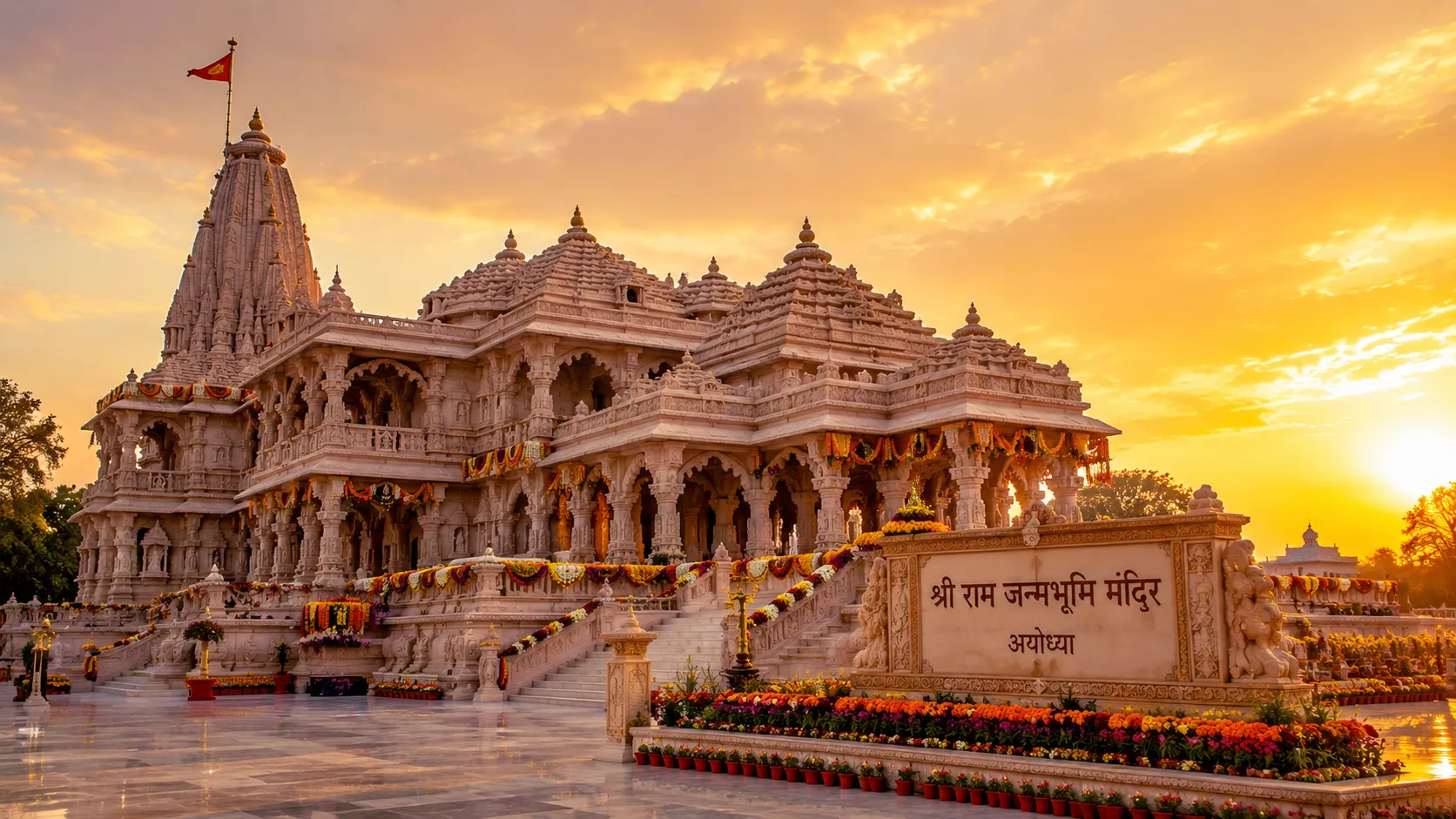
| Shri Ram Janmabhoomi Mandir | The grand temple of Lord Ram; Ayodhya is a Divya Desam of Vishnu. | /temple/ayodhya/ram-janmabhoomi-mandir |
| Kanak Bhavan | The Golden Palace of Ram and Sita, nearby. | /temple/ayodhya/kanak-bhavan |
| Hanuman Garhi | The guardian temple of Hanuman, visited first. | /temple/ayodhya/hanuman-garhi |
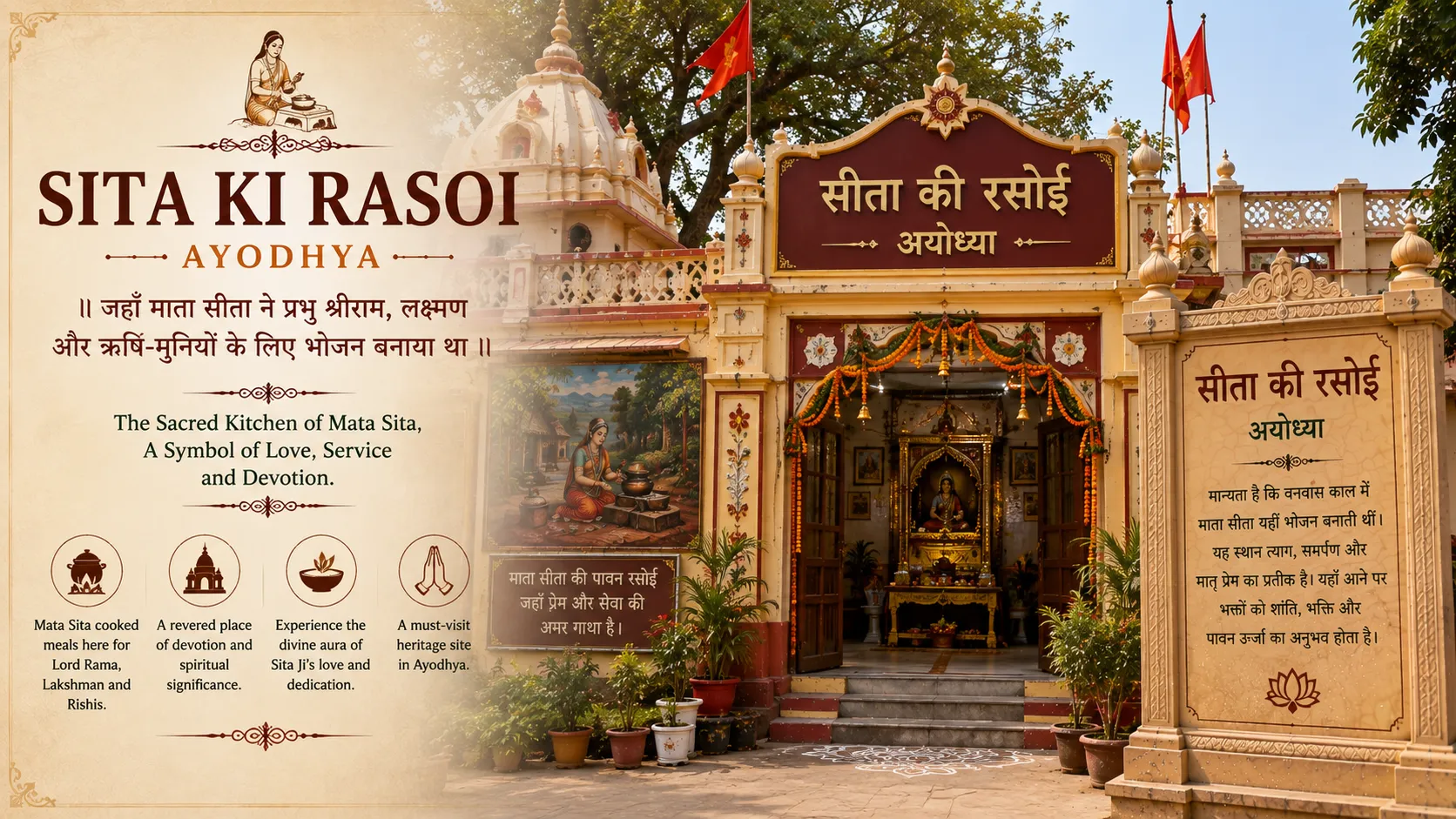
| Sita Ki Rasoi | The sacred kitchen of Sita, on the Sita trail. | /temple/ayodhya/sita-ki-rasoi |
| ISKCON Temple (Varanasi) | The great modern Vaishnava temple of Kashi, for the wider Vaishnava devotion. | /temple/varanasi/iskcon-temple |
For the Ram Mandir darshan and its free Sugam booking, see our Ram Janmabhoomi Mandir guide.