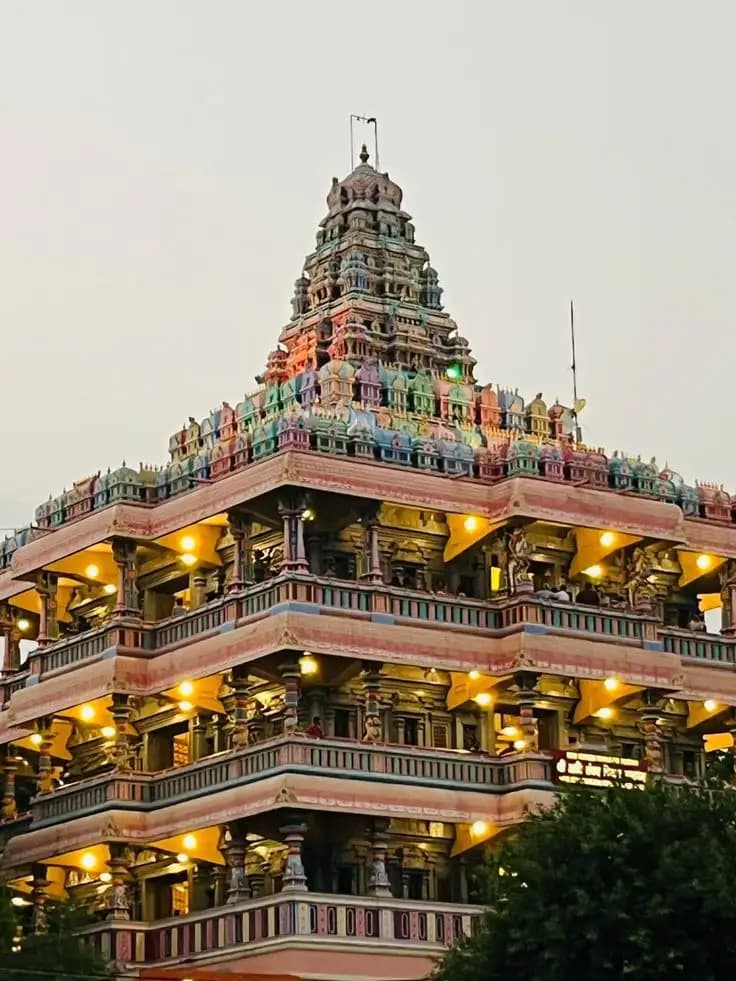
.webp&w=2048&q=75)

Essential info at a glance
| Detail | At a glance |
|---|---|
| What it is | A unique and famous Shakti Peeth where no idol is worshipped, but only the sacred doli, the cradle of the goddess. |
| Opening hours | 5:00 AM to 10:00 PM daily (accessible roughly 5:30 AM to 9:00 PM). |
| Morning aarti | Around 5:30 AM. |
| Evening aarti | Around 7:00 PM. |
| Entry fee | Free for all devotees. There is no VIP darshan. |
| The wonder | No idol; a red-draped wooden cradle, worshipped as the ever-present, formless goddess. |
| The meaning | Alopi means the disappeared one; the goddess who vanished here. |
| Busiest | Tuesdays, Fridays and all nine days of Navratri; near the Sangam. |
Alopi Devi Mandir timings and aarti
The temple is open every day from 5:00 AM to 10:00 PM, though the inner sanctum may briefly rest around midday, and it is broadly accessible from about 5:30 AM to 9:00 PM. Entry is free. Its aartis are its most devotional moments, the morning aarti around 5:30 AM and the evening aarti around 7:00 PM, and it is said that the sacred doli, the cradle, gently sways during the aarti, a sign of the living presence of the goddess. On ordinary days the queues move quickly; on Tuesdays and Fridays, and above all through the nine days of Navratri, the temple fills with great crowds and joyous celebration.
| Detail | When | Notes |
|---|---|---|
| Opening hours | 5:00 AM to 10:00 PM | Broadly accessible 5:30 AM to 9:00 PM; free. |
| Morning aarti | Around 5:30 AM | The morning worship of the doli. |
| Evening aarti | Around 7:00 PM | The doli is said to sway during the aarti. |
| Busiest days | Tuesdays, Fridays, Navratri | Higher footfall and vibrant celebrations. |
Alopi Devi Mandir: the temple with no idol
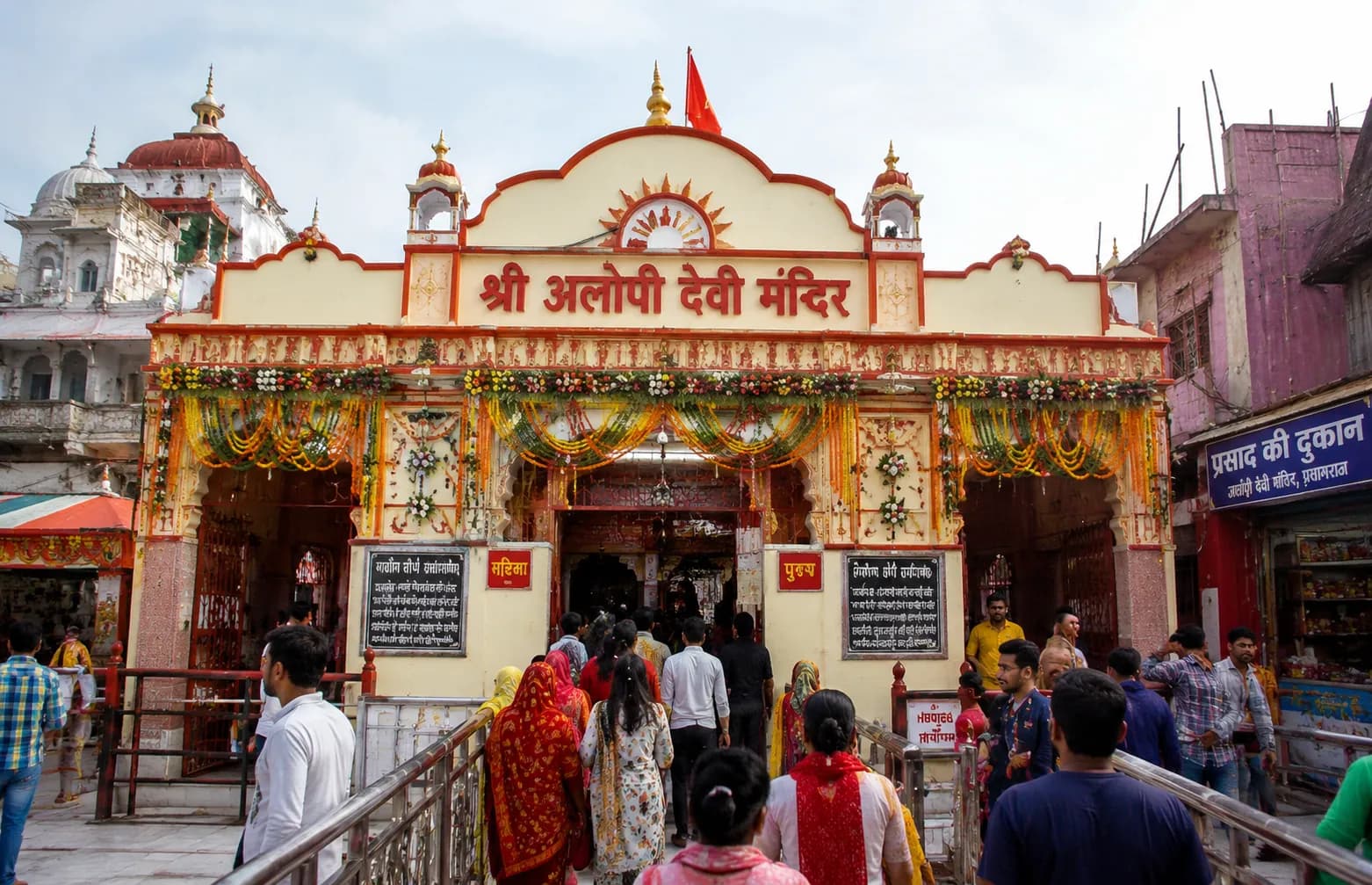
Of all the temples of Prayagraj, the Alopi Devi Mandir, in the Alopi Bagh quarter near the Sangam, is perhaps the most unique and mysterious, and among the most beloved. For here there is no idol at all: no murti, no carved image, no painted face of the goddess looks back at the devotee from the sanctum. Instead, at the heart of the temple hangs a simple sacred cradle, a doli, a wooden swing, draped in red cloth and adorned with sarees and flowers; and it is to this humble, swinging cradle, and not to any image, that thousands of pilgrims bow their heads each day in the deepest reverence. For the doli is held to be the very living presence of the goddess Alopi Devi, the Mother who dwells here unseen. It is one of the very few temples in all of India where the divine is worshipped in this formless, hidden way, and it draws the devout in their lakhs, above all in Navratri.
The goddess who disappeared: the Alop legend
The name of the temple holds its whole meaning, for Alopi means the disappeared one, she who vanished; and the reason there is no idol here is the beautiful and poignant legend of the goddess who disappeared. The temple is honoured as one of the Shakti Peethas, the sacred sites of the goddess. The story is this: that when Sati, the first consort of Lord Shiva, sacrificed herself in the fire of her father Daksha's yajna, unable to bear the insult offered to her Lord, the grief-stricken Shiva took up her lifeless body and roamed the whole cosmos in his inconsolable sorrow; and to release him from that grief, and to save the universe from a mourning god, Lord Vishnu sent his Sudarshan Chakra and cut the body of Sati, so that its parts fell at many places across the land, and each place where a part of the goddess fell became a holy Shakti Peeth.
And here, the tradition tells, fell the very last part of the body of the goddess; but it did not fall and settle as at the other Peethas, for at this spot it vanished, alop, disappeared completely, leaving no trace, so that the goddess here became wholly formless. And that is why, alone among the Shakti Peethas, this temple has no image and no relic, but only the empty cradle of the vanished Mother; for she who disappeared cannot be given a form. There is also a beloved local tale, told by the old people of the region, of a beautiful bride carried through these once-forested lands in her doli, whose wedding procession was set upon by dacoits; and when the robbers seized the palanquin, the bride had vanished into thin air, gone without a trace, and the people, knowing they had beheld a miracle of the Mother, raised this temple and worshipped her doli. By either telling, the truth of Alopi is the same: the goddess who is here, and yet unseen.
The formless divine and the swinging doli
There is a deep and beautiful truth in the worship at Alopi Devi, and the pilgrims feel it. For by giving the goddess no form, no idol, no face, the temple turns the whole heart and mind of the devotee toward the formless divine itself, toward the boundless, invisible, ever-present power of the Mother, the great Shakti that cannot be captured in any image of stone or metal. To bow before an empty cradle, and to feel, as the pilgrims here do, that the Mother is truly present within it, unseen, is a purer and higher form of worship than the eye alone can give. And the devout say that the goddess, though she never shows her form, answers every sincere prayer: Alopi Mai, they say, never reveals herself, yet fulfils every true wish. To her the people of Prayagraj turn as to a mother and family protector, for the welfare and protection of their homes, for children long prayed for, for the lifting of hardships and illnesses, and for her blessing before every wedding and every new beginning; nothing, the old folk say, is begun in Prayagraj without the nod of Alopi Mai.
The temple, its history and its festivals
The temple at Alopi Bagh is an ancient and cherished one, and over the centuries it has been cared for and renewed, notably by the Maratha rulers, the Scindias, who did much for the sacred sites of Prayagraj in the eighteenth and nineteenth centuries. Within the complex is a sacred kund, a holy tank, and the temple hums throughout the year with the devotion of the city. It comes most gloriously to life at Navratri, the nine nights of the goddess, kept twice a year, when the temple is thronged with devotees and filled with special prayers, rituals and the singing of bhajans, a tide of devotion to the Mother; and at the season of the great Magh Mela and the Kumbh, when the pilgrims who come for the Sangam make sure also to bow before Alopi Devi. Tuesdays and Fridays, sacred to the goddess, draw the faithful all year round.
The Mother who is unseen, in my own words
By Rajeev Sharma, guide with Experience My India
I love bringing my guests to Alopi Devi, because it always surprises and moves them. I tell them: in this temple, there is no idol, no image of the Mother at all, only a cradle, a doli, wrapped in red cloth. And they are amazed, and ask why; and then I tell them the beautiful story, that this is where the last part of Mother Sati fell, and then vanished, alop, disappeared without a trace, so that she became formless, and cannot be given a shape; and so we worship her empty cradle, for she is here, unseen. It is a profound idea, and people feel it deeply, bowing before that swinging cradle.
I tell them the lovely thing the people of Prayagraj say: that Alopi Mai never shows her form, but fulfills every true wish; that no one here begins a marriage or a new work without her blessing. And I explain that to worship with no idol, to turn the mind to the formless Mother herself, is a very high and pure devotion. My guests who have been with me to the Vishalakshi Shakti Peeth in Kashi love to see this sister-Peeth here at Prayag. It is a unique, mysterious, tender place, most beautiful at Navratri, and I never let a devotee of the Mother pass through Prayag without her darshan.
In more than forty years of guiding, this temple of the unseen, formless Mother is among the most moving and mysterious I share.
What to see and do
- Take the darshan of the sacred doli, the cradle of the goddess, worshipped in place of any idol.
- Attend the morning or evening aarti, when the doli is said to sway with the Mother's presence.
- Offer red cloth, sarees, flowers and sindoor to the goddess, as the devout do.
- Pray to Alopi Mai for family welfare, protection and your heart's true wish.
- Visit especially during Navratri, and pair it with the Sangam darshan.
How to reach Alopi Devi Mandir
The temple is in the Alopi Bagh quarter of Prayagraj, near the Triveni Sangam, easily reached by road, and a natural part of the Sangam pilgrimage.
| From | Distance | Notes |
|---|---|---|
| The Triveni Sangam | Near, in the Sangam area | The confluence; pair the darshan with the snan. |
| Bade Hanuman Mandir and the Fort | A short ride | The guardian Hanuman and the great fort. |
| Prayagraj Junction (railway) | A few km | By auto, e-rickshaw or taxi. |
| Prayagraj (Bamrauli) Airport | About 15 to 18 km | The city airport; taxis to the temple. |
It sits naturally with the Sangam and the sacred core of Prayagraj.
Best time to visit and how to plan it
| When | Why |
|---|---|
| Around the aartis, morning or evening | For the worship of the doli and its swaying presence. |
| Tuesdays and Fridays | The days sacred to the goddess, drawing the faithful. |
| Navratri (Mar-Apr and Sep-Oct) | The nine nights of the Mother, the temple's most glorious time. |
| The Magh Mela and Kumbh | When the Sangam pilgrims also come to bow before Alopi Devi. |
- Pair it with the Sangam, Bade Hanuman and the Fort in a Prayagraj day.
- Allow 30 to 45 minutes; longer on the crowded days and in Navratri.
For Prayagraj, or a combined Kashi, Ayodhya and Prayagraj pilgrimage, planned end to end, see our tour packages.
Accessibility for elderly and mobility limited visitors
- The temple is reachable by road and generally manageable; the priests and staff informally assist the elderly and disabled.
- Come on a general day at a quieter hour for a calm, comfortable darshan.
- The quick-moving queues suit elderly visitors, except on the busiest festival days.
- We arrange transport and plan a gentle darshan within your Prayagraj day.
Etiquette for visiting
- Remove footwear and dress modestly; be reverent before the sacred doli.
- Offer your red cloth, flowers or sindoor with devotion, in the local custom.
- Keep to the queue and follow the priests, especially on Tuesdays, Fridays and in Navratri.
- Keep your phone away in the sanctum, and mind children in the crowds.
Our guided darshan and Prayagraj tours
We are a Varanasi, Ayodhya and Prayagraj based operator, a unit of Experience My India, with more than forty years of guiding pilgrims across all three holy cities, and our own local guide in Prayagraj. Darshan is free, so what we offer is the experience made smooth and meaningful: a guide who tells the beautiful story of the goddess who vanished and the worship of the formless Mother, the darshan woven with the Sangam and the sacred core of Prayagraj, and, for the devotees of the Mother, the Shakti Peethas of the holy cities, from Alopi at Prayag to Vishalakshi at Kashi.
| Service | Includes | Price |
|---|---|---|
| Guided Alopi Devi and Sangam darshan | The temple and the Sangam, with the story of the vanished goddess, with a guide. | Contact us for pricing |
| Full Prayagraj darshan day | Alopi Devi within a wider Prayagraj visit, with a guide. | Contact us for pricing |
| Shakti Peeth and Devi pilgrimage | Alopi at Prayag with Vishalakshi at Kashi and the Devi shrines, with a guide. | Contact us for pricing |
| Kashi, Ayodhya and Prayagraj pilgrimage | The three holy cities, with darshan, transfers and a guide. | Contact us for pricing |
Inclusions and exclusions are stated up front, with any taxes and conditions, and no charge appears later that was not named. Darshan is free; our charge is only for guiding, transport and services. See all our tour packages for the full range.
Experience My India is a travel operator, not the temple administration. Darshan is free; our charge is only for our guiding and services. Timings and rules are set by the temple and can change.
Nearby sacred sites in Prayagraj
Alopi Devi is near the Sangam, at the sacred core of Prayagraj.
| Site | What it is | Internal link |
|---|---|---|
| Triveni Sangam | The sacred confluence of the Ganga, Yamuna and Saraswati, nearby. | /temple/prayagraj/triveni-sangam |
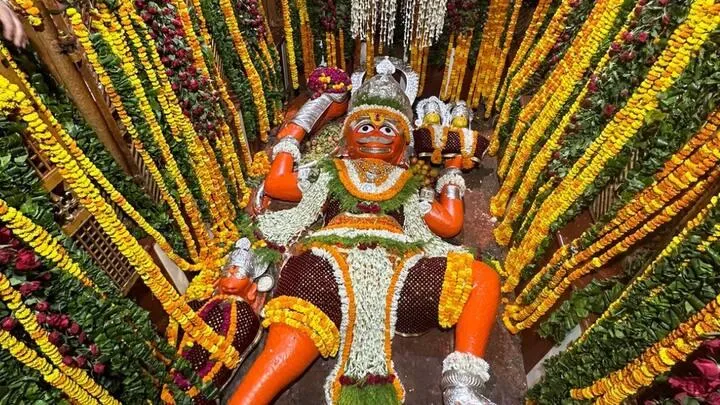
| Bade Hanuman Mandir | The reclining Hanuman, guardian of the Sangam. | /temple/prayagraj/bade-hanuman-mandir |
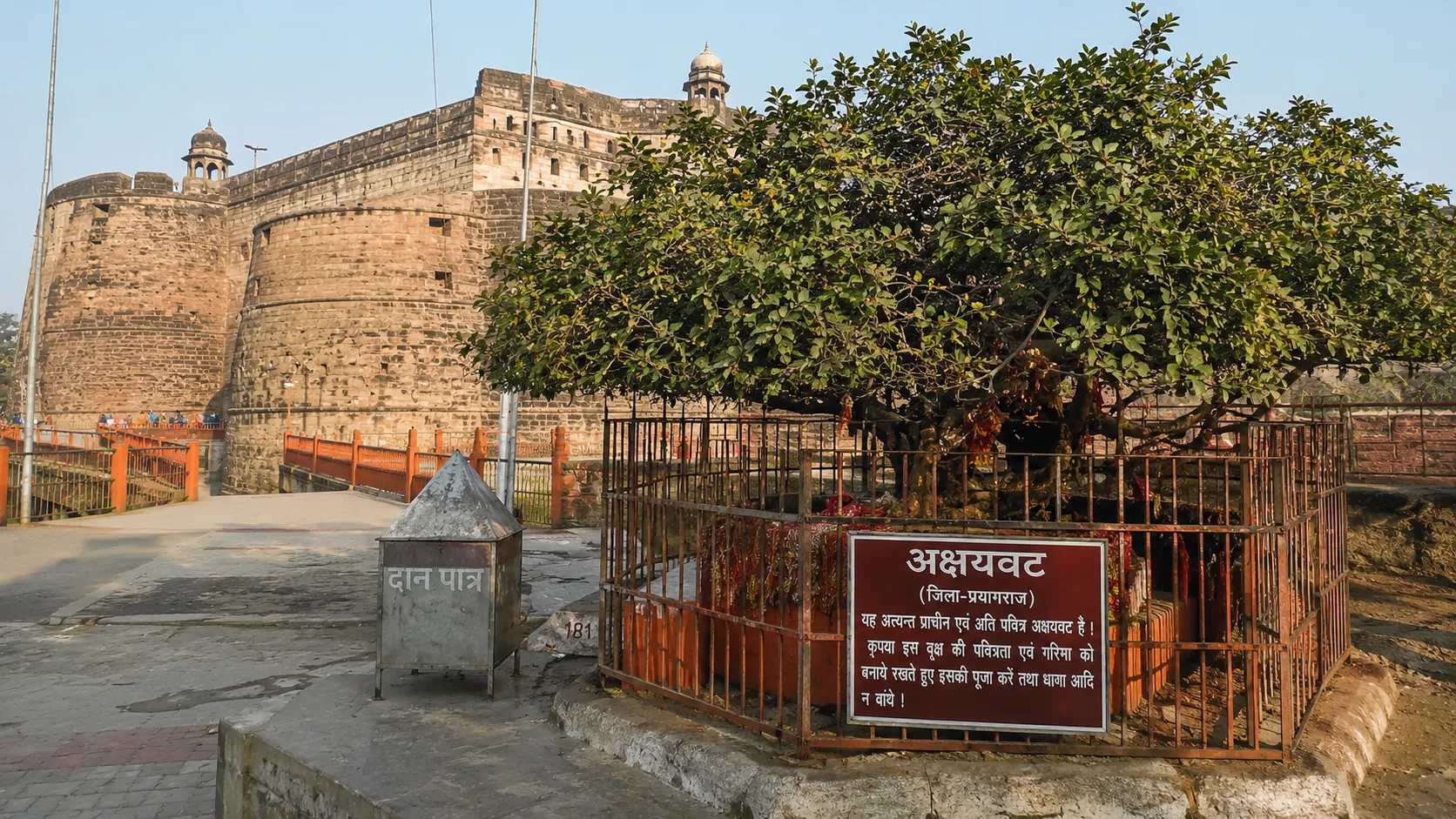
| Allahabad Fort and Patalpuri | The great fort with the immortal Akshayavat and the underground temple. | /temple/prayagraj/allahabad-fort-akshayavat |
| Vishalakshi Temple (Varanasi) | The great Shakti Peeth of Kashi; the sister Peeth of the goddess. | /temple/varanasi/vishalakshi-temple |
| Durga Kund Mandir (Varanasi) | A famed Devi temple of Kashi, for the wider worship of the Mother. | /temple/varanasi/durga-kund-mandir |
For the Sangam snan and the confluence, see our Triveni Sangam guide.