.webp&w=2048&q=75)
Essential info at a glance
| Detail | At a glance |
|---|---|
| What it is | The historic Nehru family mansion and house museum, an epicentre of India's freedom struggle. |
| Opening hours | 9:30 AM to 5:00 PM. |
| Closed | Mondays and gazetted national holidays. |
| Ground floor only | About Rs 30 per person. |
| Full access (both floors) | About Rs 100 per person. |
| Jawahar Planetarium show | About Rs 70 per ticket (shows through the day). |
| Foreign nationals | About Rs 200 to 250 per person. |
| Location | Motilal Nehru Road, Tagore Town; opposite the Bharadwaj Ashram. |
Anand Bhawan timings and tickets
Anand Bhawan is open from 9:30 AM to 5:00 PM, and is closed on Mondays and on gazetted national public holidays. Allow two to three hours to see the mansion, the adjoining Swaraj Bhawan, and the Jawahar Planetarium. The tickets are modest: about Rs 30 per person for the ground floor and grounds, and about Rs 100 for full access to both floors and the first-floor exhibits; the planetarium show is a separate ticket of about Rs 70; foreign nationals pay about Rs 200 to 250.
| Ticket | Price | Notes |
|---|---|---|
| Ground floor and grounds | About Rs 30 per person | Exterior and ground-floor view. |
| Full access (both floors) | About Rs 100 per person | Ground and first-floor exhibits. |
| Jawahar Planetarium show | About Rs 70 per ticket | Shows scheduled through the day. |
| Foreign nationals | About Rs 200 to 250 per person | For the mansion. |
Anand Bhawan: the Nehru family mansion and museum
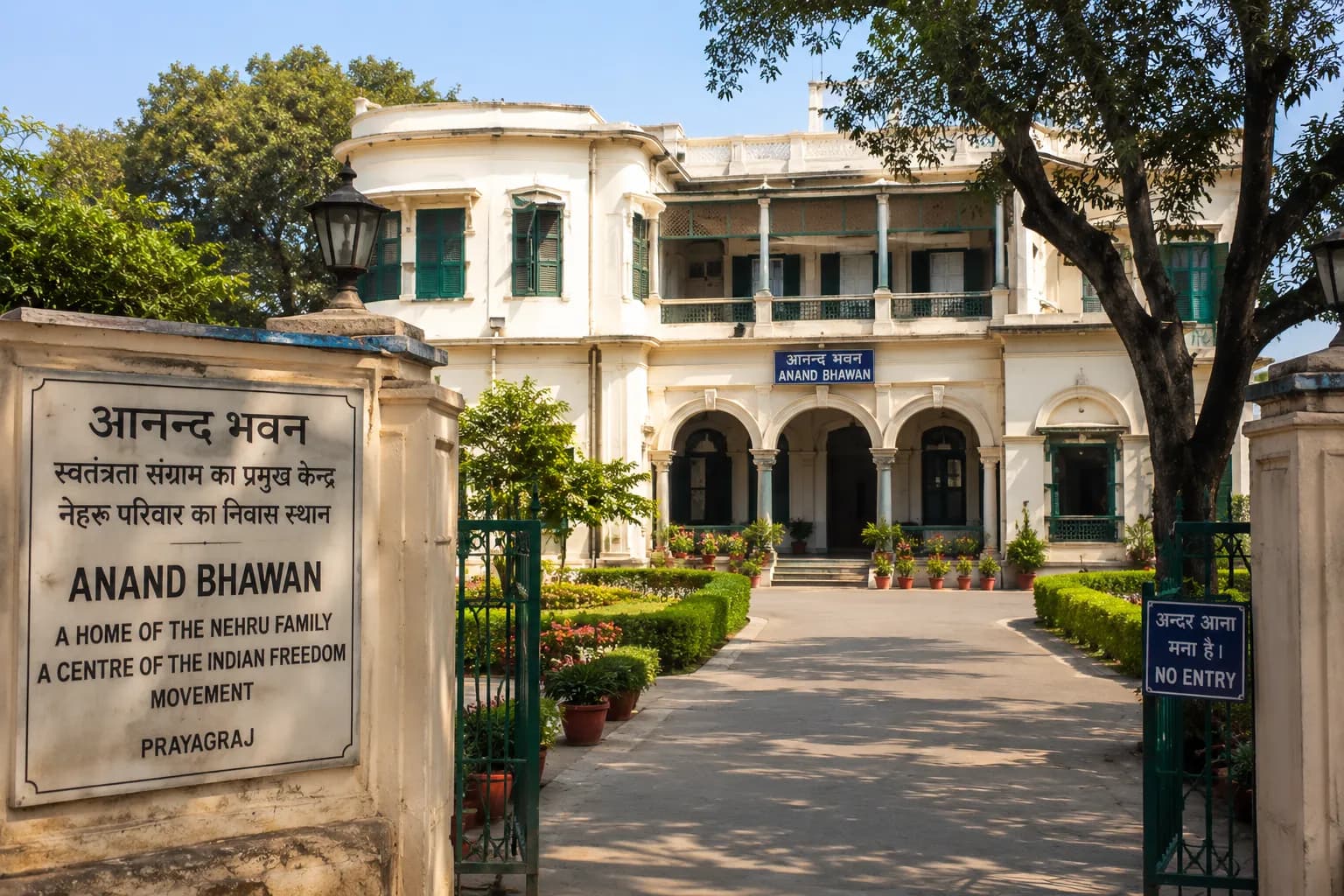
In the leafy Tagore Town quarter of Prayagraj, on Motilal Nehru Road and directly opposite the ancient Bharadwaj Ashram, stands one of the most significant heritage sites of modern India: Anand Bhawan, the abode of happiness, the historic mansion and house museum of the Nehru family. It was built in the year 1930 by the eminent lawyer and leader Motilal Nehru to serve as the family's residence; and today, preserved as a museum, it is counted among the best-run museums in the country, drawing visitors from across India and the world who come to see how one of the nation's most consequential families lived, and to walk through the rooms where so much of the history of India's freedom was made. It is a graceful two-storey mansion set in its gardens, and a quiet, dignified counterpart, across the road, to the sacred hermitage of the sages.
The home of the Nehru family and the freedom struggle
Anand Bhawan was the home of one of the most prominent families in the history of modern India. Here lived Motilal Nehru, the distinguished lawyer and a leader of the Indian National Congress who built the house; here lived his son, Jawaharlal Nehru, who would become the first Prime Minister of independent India; and to this family belonged Indira Gandhi, Motilal's granddaughter and Jawaharlal's daughter, herself later a Prime Minister of India, who was born in the family's earlier mansion in the same premises. And the house was far more than a private home, for it was one of the great centres of the Indian independence movement: within its walls, Mahatma Gandhi and the leaders of the Congress met and stayed, and many of the decisions and turns of the long freedom struggle were debated and taken here. Jawaharlal Nehru himself wrote of it that it was far more than a structure of brick and concrete, that it was connected intimately with the national struggle for freedom, and that within its walls great events had happened and great decisions had been reached. To walk through Anand Bhawan is to walk through a house that was a witness to the making of a nation.
The two mansions: Anand Bhawan and Swaraj Bhawan
The story of Anand Bhawan is really the story of two great adjacent mansions, and it is worth telling. The original and older mansion in these grounds was itself first called Anand Bhawan, and had been bought and made grand by Motilal Nehru around the turn of the twentieth century as the family home. Then, in the year 1930, at the height of the freedom movement, Motilal Nehru donated that original mansion to the Indian National Congress, to serve as the local headquarters of the freedom struggle; and it was renamed Swaraj Bhawan, the abode of self-rule, of freedom. It was in this Swaraj Bhawan that Indira Gandhi had been born, and it holds an underground room, the tradition tells, that was used for the secret meetings of the freedom fighters, away from the eyes of the colonial police; today it is a museum of the freedom struggle, with a light-and-sound programme that tells its story. And so, having given away the old house, Motilal Nehru built, that same year, the new Anand Bhawan close beside it, as the family's new home; and it was this house that Indira Gandhi, then Prime Minister, donated to the nation in 1970, wishing it to be a living memory, whereupon it became the museum we visit today.
The museum, the planetarium and what to see
Within the museum, the mansion is lovingly preserved much as the family kept it, so that the visitor moves through the actual rooms of their life: the room of Jawaharlal Nehru, with its simple charpoy; the rooms in which the Congress leaders met; the family's own books and furniture; and a great many photographs and pieces of memorabilia of the freedom movement, among them the charkha, the spinning wheel, associated with Mahatma Gandhi. Across the grounds stands the Swaraj Bhawan, with its freedom-struggle exhibits and its light-and-sound show. And beside the mansion is the Jawahar Planetarium, built in 1979, where sky shows on astronomy and science are held through the day, raised to foster a love of science, in the spirit of Jawaharlal Nehru's own deep interest in it; it is a favourite of children and families, with its own ticket and show timings. Together, the mansion, the Swaraj Bhawan and the planetarium make a full and rewarding half-day.
A house that witnessed history, in my own words
By Rajeev Sharma, guide with Experience My India
I love bringing my visitors to Anand Bhawan, because it is a change of pace from our temples and ghats, and a window into the making of modern India. I show them how it is the home of the Nehru family, of Motilal, of Jawaharlal our first Prime Minister, and connected to Indira Gandhi, born just across in Swaraj Bhawan; and I tell them, simply as history, that this house was one of the great centres of our freedom struggle, where Gandhiji and the leaders came, and many great decisions were taken. People find it moving to walk through the actual rooms, to see Jawaharlal's simple bed and Gandhiji's charkha.
I explain the story of the two mansions, how Motilal gave the old house to the Congress as Swaraj Bhawan and built this new Anand Bhawan; and the families and children always love the Jawahar Planetarium, the star show, which I try to time our visit around. And I always pair it with the Bharadwaj Ashram right opposite, so my visitors see both the ancient sacred and the modern history of Prayag, face to face across one road. I keep the history simple and fair, just as it happened, and let people make of it what they will. It is a dignified, fascinating, well-kept place, and a lovely part of a full Prayag visit.
In more than forty years of guiding, walking visitors through this house that witnessed the making of the nation is among the most interesting things I share.
What to see and do
- Tour the preserved mansion: Jawaharlal Nehru's room, the Congress-meeting rooms, and the family's belongings.
- See the memorabilia of the freedom movement, including the charkha associated with Mahatma Gandhi.
- Visit the adjoining Swaraj Bhawan, with its freedom-struggle exhibits and light-and-sound show.
- Catch a sky show at the Jawahar Planetarium, a favourite with families and children.
- Pair it with the Bharadwaj Ashram directly opposite, the sacred beside the heritage.
How to reach Anand Bhawan
Anand Bhawan is on Motilal Nehru Road in Tagore Town, near Balson Chauraha, in a central part of the city, easily reached by road; autos, e-rickshaws and cabs drop you at the front gate.
| From | Distance | Notes |
|---|---|---|
| Bharadwaj Ashram | Directly opposite | The ancient hermitage, across the road. |
| The Triveni Sangam | A few km | The sacred confluence; pair the heritage and the sacred. |
| Prayagraj Junction (railway) | About 4 to 5 km | By auto, e-rickshaw or cab to the gate. |
| Prayagraj (Bamrauli) Airport | About 12 to 15 km | The city airport; cabs to Tagore Town. |
It sits with Bharadwaj Ashram and the Sangam in the heart of the city.
Best time to visit and how to plan it
| When | Why |
|---|---|
| 9:30 AM to 5:00 PM, Tuesday to Sunday | The opening hours; it is closed on Mondays and national holidays. |
| Around a planetarium show time | To fit the sky show into your visit; check the schedule on arrival. |
| Winter (Nov to Feb) | The most pleasant season for the mansion and gardens. |
| With Bharadwaj Ashram | To pair the modern heritage with the ancient sacred, opposite each other. |
- Pair it with Bharadwaj Ashram opposite, and the Sangam and the city's sites.
- Allow 2 to 3 hours for the mansion, Swaraj Bhawan and the planetarium; avoid Mondays.
For Prayagraj, or a combined Kashi, Ayodhya and Prayagraj visit, planned end to end, see our tour packages.
Accessibility for elderly and mobility limited visitors
- The mansion is two-storeyed, reached by stairs; the ground floor, grounds and exhibits are enjoyable without the climb.
- The grounds and gardens are level and pleasant for a gentle, unhurried visit.
- The planetarium and Swaraj Bhawan are largely accessible; check on any steps on arrival.
- We arrange transport to the gate and plan a comfortable, well-paced heritage visit.
Etiquette for visiting
- It is a museum; treat the exhibits and the historic rooms with care and respect.
- Flash photography inside the museum is prohibited, to protect the artefacts; follow the rules.
- Keep your voice low in the mansion, and keep to the marked routes.
- Keep the gardens clean, and mind children at the planetarium and grounds.
Our guided visits and Prayagraj tours
We are a Varanasi, Ayodhya and Prayagraj based operator, a unit of Experience My India, with more than forty years of guiding visitors across all three cities, and our own local guide in Prayagraj. The museum charges its own ticket, so what we offer is the story and the planning: a guide who tells the history of the house and the family and the freedom struggle, fairly and well, the visit paired with the Bharadwaj Ashram opposite and the Sangam, and the whole heritage and pilgrimage of the city, woven into a full Prayag day.
| Service | Includes | Price |
|---|---|---|
| Guided Anand Bhawan and heritage visit | Anand Bhawan with Bharadwaj Ashram, and the story, with a guide (museum ticket extra). | Contact us for pricing |
| Prayagraj heritage circuit | Anand Bhawan and the heritage sites of the city, with a guide. | Contact us for pricing |
| Full Prayagraj day | Anand Bhawan within a wider Prayagraj visit, with a guide. | Contact us for pricing |
| Kashi, Ayodhya and Prayagraj tour | The three cities, sacred and heritage, with a guide. | Contact us for pricing |
Inclusions and exclusions are stated up front, with any taxes and conditions, and no charge appears later that was not named. The museum ticket is separate; our charge is only for guiding and services. See all our tour packages for the full range.
Experience My India is a travel operator, not the museum administration. The museum is ticketed by the Jawaharlal Nehru Memorial Fund; our charge is only for our guiding and services. Timings, tickets and rules are set by the museum and can change.
Nearby sites in Prayagraj
Anand Bhawan is in the heart of Prayagraj, among its sacred and heritage sites.
| Site | What it is | Internal link |
|---|---|---|
| Bharadwaj Ashram | The ancient hermitage where Ram rested in exile, directly opposite. | /temple/prayagraj/bharadwaj-ashram |
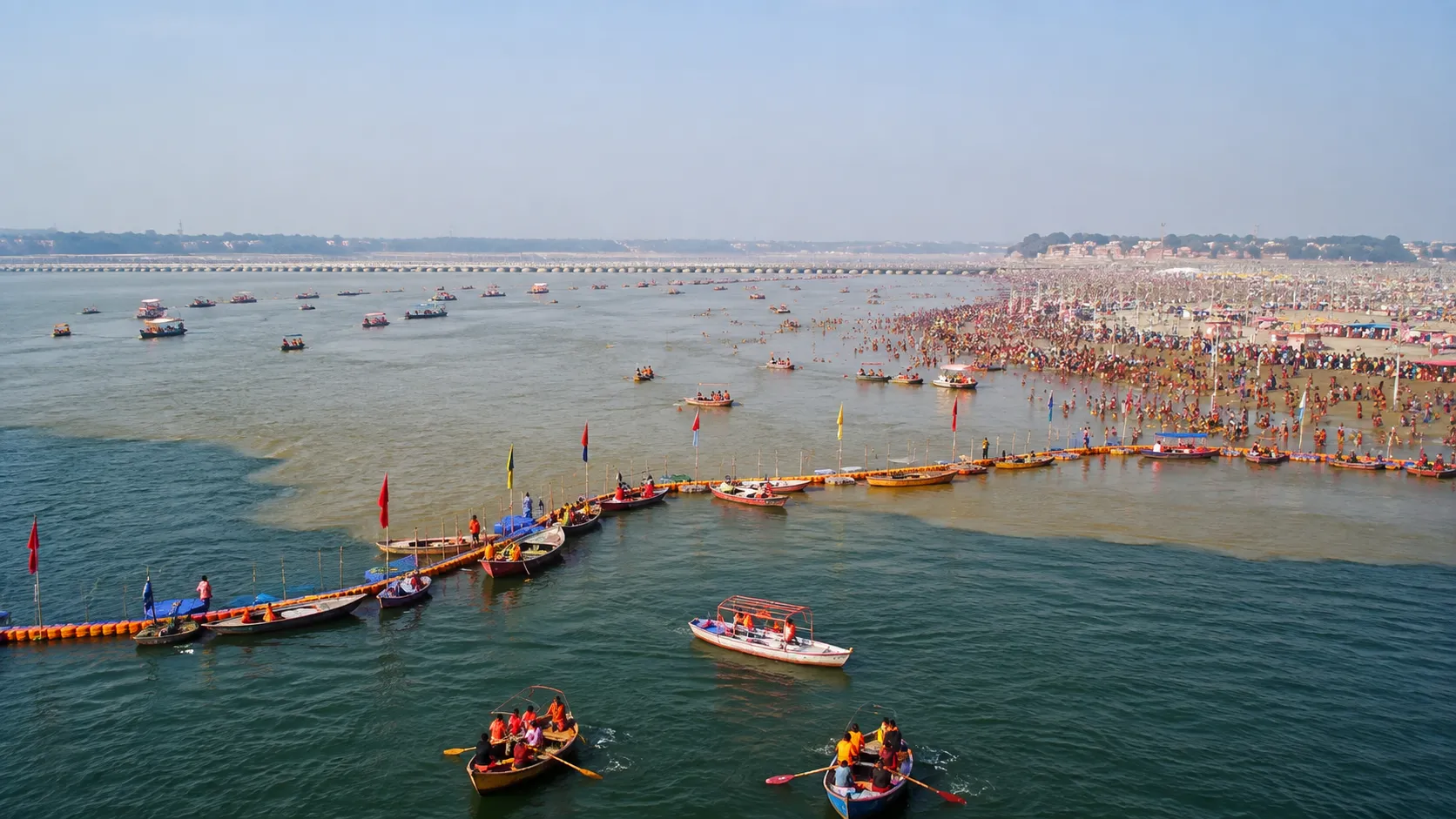
| Triveni Sangam | The sacred confluence of the Ganga, Yamuna and Saraswati. | /temple/prayagraj/triveni-sangam |
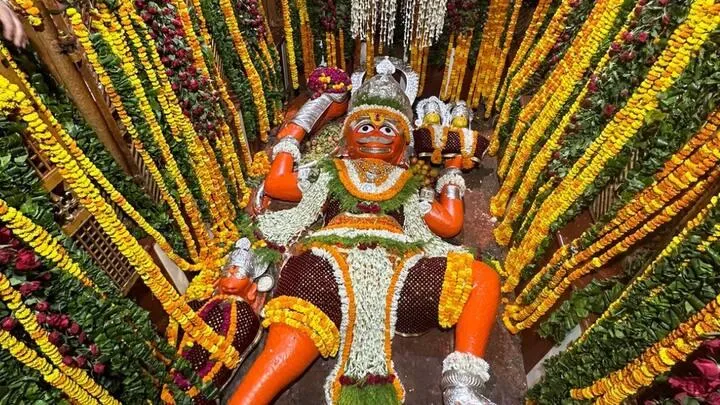
| Bade Hanuman Mandir | The reclining Hanuman, guardian of the Sangam. | /temple/prayagraj/bade-hanuman-mandir |
| Bharat Kala Bhavan (Varanasi) | The great art and history museum of Kashi, for more heritage. | /temple/varanasi/bharat-kala-bhavan |
| Ram Katha Museum (Ayodhya) | The museum of the Ram story in Ayodhya. | /temple/ayodhya/ram-katha-museum |
For the Bharadwaj Ashram opposite, see our Bharadwaj Ashram guide.