Please note: which Ram Katha site this is
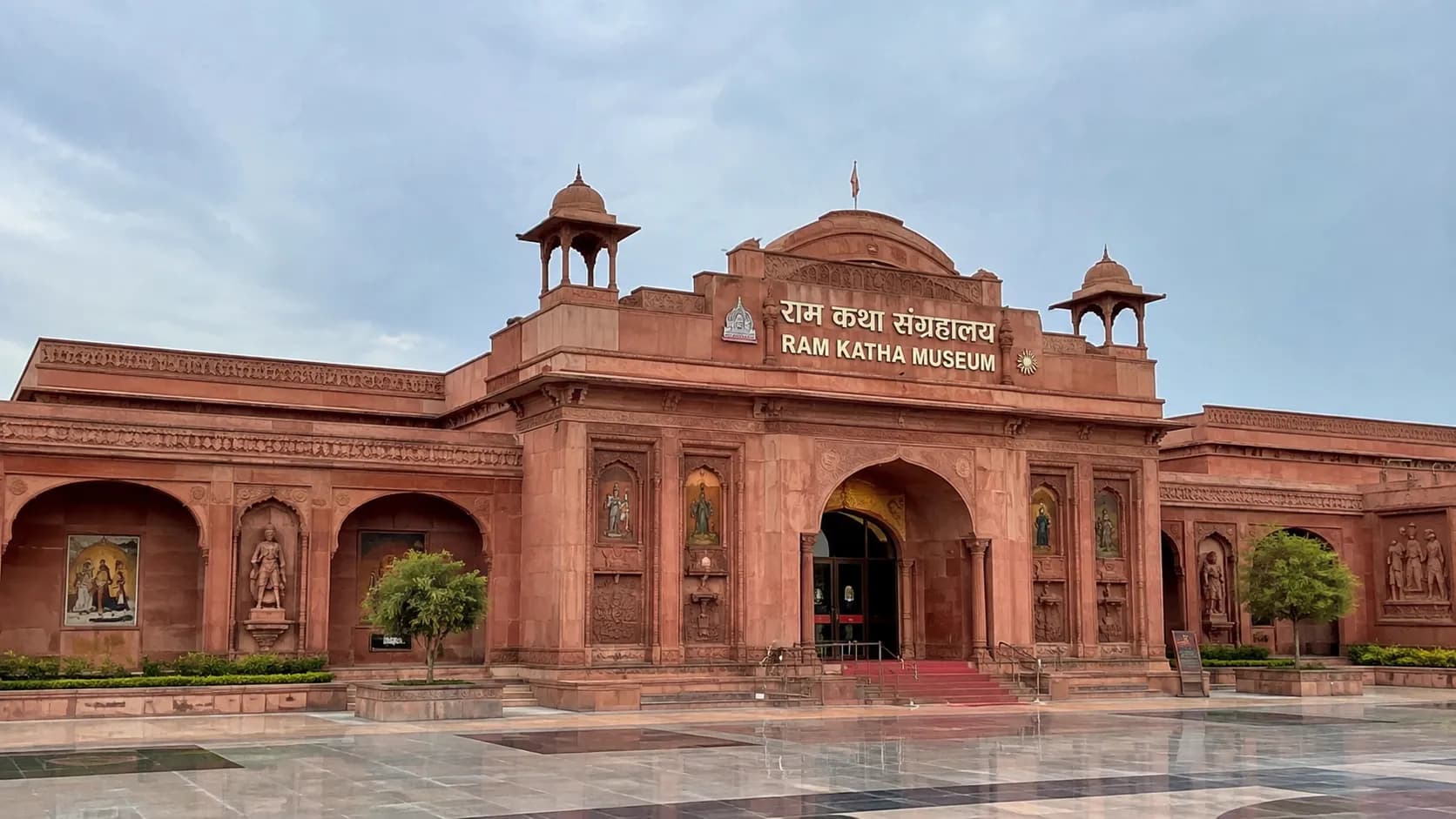
This page is about the Ram Katha Museum, the Ram Katha Sangrahalaya, the indoor museum of Ram and Ayodhya antiquities at Raj Sadan. It is a different place from the open-air Ram Katha Park by the Saryu, which is a cultural and event space, the venue of the Deepotsav. If you are looking for the park and its festival, see our separate guide to Ram Katha Park. This page is for the museum and its treasures.
Essential info at a glance
| Detail | At a glance |
|---|---|
| What it is | The museum of the antiquities and art of Lord Ram and ancient Ayodhya, also called the Ayodhya Museum, established in 1988. |
| Opening hours | 10:00 AM to 4:30 PM; closed on Mondays and the second Saturday of every month. |
| Entry fee | Free for all visitors. |
| Time needed | About 2 hours for the galleries. |
| The collection | Over 1,000 rare sculptures and artefacts, including Gupta and Sunga-period statues, terracotta, coins and manuscripts. |
| Also famous for | Paintings and photographs of the life of Lord Ram and the Ramayana traditions. |
| Recent change | Handed to the Ram Janmabhoomi Trust, which will display artefacts from the Ram Janmabhoomi excavation. |
| Location | Raj Sadan, near the Saryu, about 1.2 km from the Ayodhya Dham railway station. |
Ram Katha Museum timings and entry
The museum keeps regular daytime hours and, importantly, is closed on Mondays and on the second Saturday of every month, so plan around that. Entry is free, and it takes about two hours to see the galleries properly. It is a quieter, scholarly place than the great temples, less crowded, and it holds a special appeal for anyone who loves history, art and the deep past of Ayodhya.
| Detail | Value | Notes |
|---|---|---|
| Opening hours | 10:00 AM to 4:30 PM | Closed Mondays and the second Saturday of every month. |
| Entry fee | Free | For all visitors. |
| Time needed | About 2 hours | For the galleries and the collection. |
| Best for | History and art lovers | A quiet, less-crowded, cultural visit. |
*Entry is free.
Ram Katha Museum: the story of Ram in art and antiquity
Ayodhya is one of the seven sacred cities of ancient India and the birthplace of Lord Ram, and its story is not only sung in the temples but studied and treasured in this fine museum. The Ram Katha Sangrahalaya, established in 1988 and also known simply as the Ayodhya Museum, is devoted to the Ram Katha, the whole saga of the life and teachings of Lord Ram, and to the deep history of the city that bore him. It holds more than a thousand rare sculptures and artefacts, and it takes the visitor on a fascinating journey, at once soothing and scholarly, through the life of Ram and the flourishing of Ayodhya in ages long past. For the thoughtful traveller who wishes to understand Ayodhya not only with the heart but with the mind, this is one of the most rewarding places in the city.
The ancient antiquities of Ayodhya
The heart of the museum is its collection of antiquities, which lays bare the astonishing antiquity of Ayodhya. Here are stone sculptures of the Gupta and Sunga ages, some going back nearly two thousand years, works of great beauty and dignity. Here are terracotta figures and objects, and pottery that throws light on the glorious ancient tradition of ceramics in this land; here are ancient coins, and rare palm-leaf manuscripts, and objects of metal and of textile, all patiently gathered, conserved and displayed. Together they are the physical evidence, in stone and clay and copper, of the long, rich, unbroken life of this sacred city, from the age of the Ramayana and beyond, and to move among them is to feel the sheer depth of time on which Ayodhya stands.
The Ramayana in art
Beyond the antiquities, the museum holds a lovely and vivid collection of paintings and photographs depicting the life of Lord Ram and the episodes of the Ramayana, and it presents, too, the rich heritage of the Ramayana traditions and the global reach of Ram's story across many lands and cultures, for the tale of Ram is loved and told, in a hundred forms, from India across the whole of Asia. Its art gallery, with its relics and images of Lord Ram, is a quiet, beautiful place to sit with the story that makes Ayodhya holy, told not in scripture but in colour and form. It is an education and a delight at once.
The Ram Janmabhoomi excavation finds
The museum has recently entered a new chapter. It has been handed over to the Shri Ram Janmabhoomi Teerth Kshetra Trust, the body that built and cares for the Ram Mandir, and the Trust intends to display here the artefacts that were recovered during the excavation of the Ram Janmabhoomi campus, before and during the building of the temple. In time, then, this museum will hold not only the wider antiquities of Ayodhya but the very finds unearthed from the sacred ground of the birthplace itself, a remarkable addition that will make it more important than ever for anyone who wishes to understand the site and its history.
The depth of Ayodhya, in my own words
By Rajeev Sharma, guide with Experience My India
The Ram Katha Museum is where I bring the traveller who wants to understand Ayodhya with the mind as well as the heart, the ones who love history and art. It is quiet and uncrowded, a relief after the temples, and inside there are more than a thousand treasures. I show them the old Gupta and Sunga sculptures, nearly two thousand years old, and the terracotta and the ancient pottery, and I tell them: look, this is the proof, in stone and clay, of how ancient and how great this city has always been. People who love history are enthralled.
I also love the paintings, room after room telling the story of Ram, and I explain how the tale of Ram is told across the whole of Asia, in so many forms. And I tell my guests the new thing, that the museum has been given to the Ram temple trust, and will show the very things dug up from the birthplace ground, which makes it more special than ever. For anyone who has seen the great museums of my own Kashi, the Bharat Kala Bhavan and the Sarnath museum, this is Ayodhya's own such treasure. It is a scholarly, beautiful pause in a pilgrimage, and I never let a curious traveller miss it.
In more than forty years of guiding, this is where the history-loving pilgrim most often lingers longest.
[Photography may be restricted inside; follow the museum's rules.]
What to see and do
- See the ancient Gupta and Sunga-period sculptures, some nearly two thousand years old.
- Explore the terracotta figures, pottery, coins and rare palm-leaf manuscripts of ancient Ayodhya.
- Enjoy the paintings and photographs depicting the life of Ram and the Ramayana.
- Learn of the Ramayana traditions and the global reach of Ram's story.
- In time, see the artefacts recovered from the Ram Janmabhoomi excavation.
How to reach the Ram Katha Museum
The museum is at Raj Sadan in Ayodhya, near the Saryu, about 1.2 km from the Ayodhya Dham railway station and close to the town, easily reached by road.
| From | Distance | Notes |
|---|---|---|
| Ayodhya Dham Junction (railway) | About 1.2 km | By e-rickshaw, auto or taxi. |
| The core temples (Ram Mandir, Hanuman Garhi) | A short drive | By e-rickshaw, auto or taxi through the town. |
| The Saryu ghats | A short drive | Combine with the riverfront. |
| Maharishi Valmiki Airport, Ayodhya | About 10 to 12 km | The new airport; taxis and autos to the town. |
It pairs naturally with the Tulsi Smarak Bhawan and the cultural sites; a guide brings its treasures to life.
Best time to visit and how to plan it
| When | Why |
|---|---|
| A weekday, 10 AM to 4:30 PM | The regular hours; avoid Mondays and the second Saturday, when it is closed. |
| With the Tulsi Smarak Bhawan | The two cultural and scholarly sites go well together. |
| When you want a quiet pause | It is calm and uncrowded, a restful counterpoint to the temples. |
| For history and art lovers | A highlight for anyone who cherishes the deep past of Ayodhya. |
- Pair it with the Tulsi Smarak Bhawan and the core temples over a day of Ayodhya.
- Allow about 2 hours for the galleries.
For Ayodhya, or a combined Kashi and Ayodhya pilgrimage, planned end to end, see our tour packages.
Accessibility for elderly and mobility limited visitors
- The museum is a building on level ground, reachable by road, easier than the old-city temples.
- It is calm and quiet, which suits a slow, seated, contemplative visit; check on lift access for any upper galleries.
- Come at a non-peak hour for the easiest visit.
- We arrange transport and plan a gentle cultural visit within your Ayodhya day.
Nearby sacred sites in Ayodhya
The Ram Katha Museum sits among the cultural and sacred sites of the holy city.
| Site | What it is | Internal link |
|---|---|---|
| Tulsi Smarak Bhawan | The Tulsidas memorial, museum and daily Ramleela, the cultural counterpart. | /temple/ayodhya/tulsi-smarak-bhawan |
| Ram Katha Park | The open-air cultural park and Deepotsav venue by the Saryu, a different site. | /temple/ayodhya/ram-katha-park |
| Shri Ram Janmabhoomi Mandir | The grand temple of Lord Ram, whose excavation finds the museum will display. | /temple/ayodhya/ram-janmabhoomi-mandir |
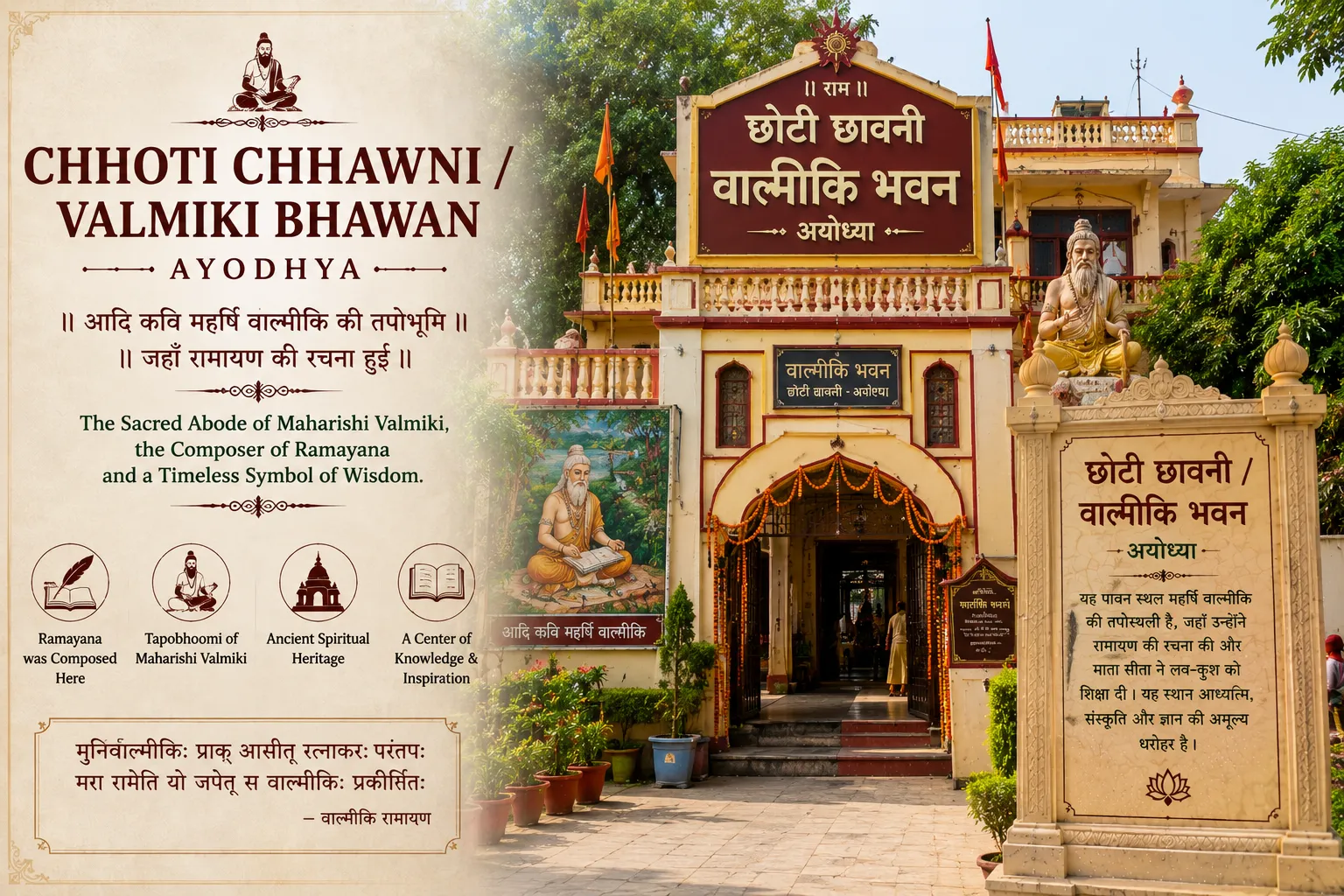
| Chhoti Chhawni (Valmiki Bhawan) | The marble hall with the whole Ramayana engraved on its walls. | /temple/ayodhya/chhoti-chhawni-valmiki-bhawan |
| Bharat Kala Bhavan (Varanasi) | The great art museum of Kashi, for the museum lover's wider trail. | /temple/varanasi/bharat-kala-bhavan |
For the Ram Mandir darshan and its free Sugam booking, see our Ram Janmabhoomi Mandir guide.
Our guided cultural visits and Ayodhya tours
We are a Varanasi and Ayodhya based operator, a unit of Experience My India, with more than forty years of guiding pilgrims across Kashi, Ayodhya, and Prayagraj, and we have our own local guide and pandit in Ayodhya. Entry is free, so what we arrange is a rewarding cultural visit: a guide who brings the antiquities, the terracotta and the story of Ram to life, and weaves the museum, with the Tulsi Smarak Bhawan and the temples, into a rich, well-planned day of Ayodhya for the thoughtful traveller.
| Service | Includes | Price |
|---|---|---|
| Guided museum visit | A guide through the antiquities, terracotta and Ramayana art of the museum. | Contact us for pricing |
| Ayodhya culture and heritage day | The museum with the Tulsi Smarak Bhawan and the cultural sites, with a guide. | Contact us for pricing |
| Full Ayodhya darshan day | The museum within a wider Ayodhya pilgrimage, with a guide. | Contact us for pricing |
| Museums of Kashi and Ayodhya | This museum with Bharat Kala Bhavan and the Sarnath museum in Varanasi. | Contact us for pricing |
Inclusions and exclusions are stated up front, with any taxes and conditions, and no charge appears later that was not named. Entry is free; our charge is only for guiding and services. See all our tour packages for the full range.
Experience My India is a travel operator, not the museum authority. Entry is free; our charge is only for our guiding and services. Timings and rules are set by the museum and can change, and the museum is now managed by the Ram Janmabhoomi Trust.