.webp&w=2048&q=75)
Essential info at a glance
| Detail | At a glance |
|---|---|
| What it is | An ancient wish-fulfilling Shiva temple on the Yamuna, whose lingam is said to have been installed by Lord Ram. |
| Opening hours | 5:00 AM to 12:00 PM and 4:00 PM to 10:00 PM (later on Mondays and special days). |
| Mangala aarti | 4:00 AM to 5:00 AM. |
| Evening aarti | Around 7:00 PM to 9:30 PM (main aarti around 7:00 to 8:30 PM). |
| Entry fee | Free for all. There is no VIP darshan. |
| The name | Mankameshwar, the Lord who fulfills the heart's desires; the abhishek is held to grant wishes. |
| Also known as | Kameshwar Tirtha (in the Puranas) and Pishach Mochan Tirtha. |
| Location | Fort Road, near Saraswati Ghat, on the Yamuna, close to the Fort and Sangam. |
Mankameshwar Temple timings and aarti
The temple keeps a split day, open in the morning and again in the afternoon and evening, with the hours running later on Mondays, the day of Shiva, and on special days. Its aartis are its most beautiful moments: the Mangala aarti before dawn, and the evening aarti, when the blowing of the conch, the beat of the drums, the ringing of the bells and the chanting of prayers fill the temple with a soothing sacred music above the flowing Yamuna. Entry is free, and on ordinary days the queues move smoothly; but on Mondays, on Maha Shivratri, and through the holy month of Shravan, the temple draws extraordinary crowds of devotees bringing milk and flowers to the Lord.
| Detail | When | Notes |
|---|---|---|
| Morning hours | 5:00 AM to 12:00 PM | With the Mangala aarti before dawn. |
| Evening hours | 4:00 PM to 10:00 PM | Later on Mondays and special days. |
| Mangala aarti | 4:00 AM to 5:00 AM | The dawn aarti. |
| Sandhya / Shayan aarti | Around 7:00 PM to 9:30 PM | Main evening aarti around 7:00 to 8:30 PM. |
| Busiest | Mondays, Maha Shivratri, Shravan | Great crowds; barricaded queues on rush days. |
Shri Mankameshwar Mahadev Mandir: the wish-fulfilling Shiva
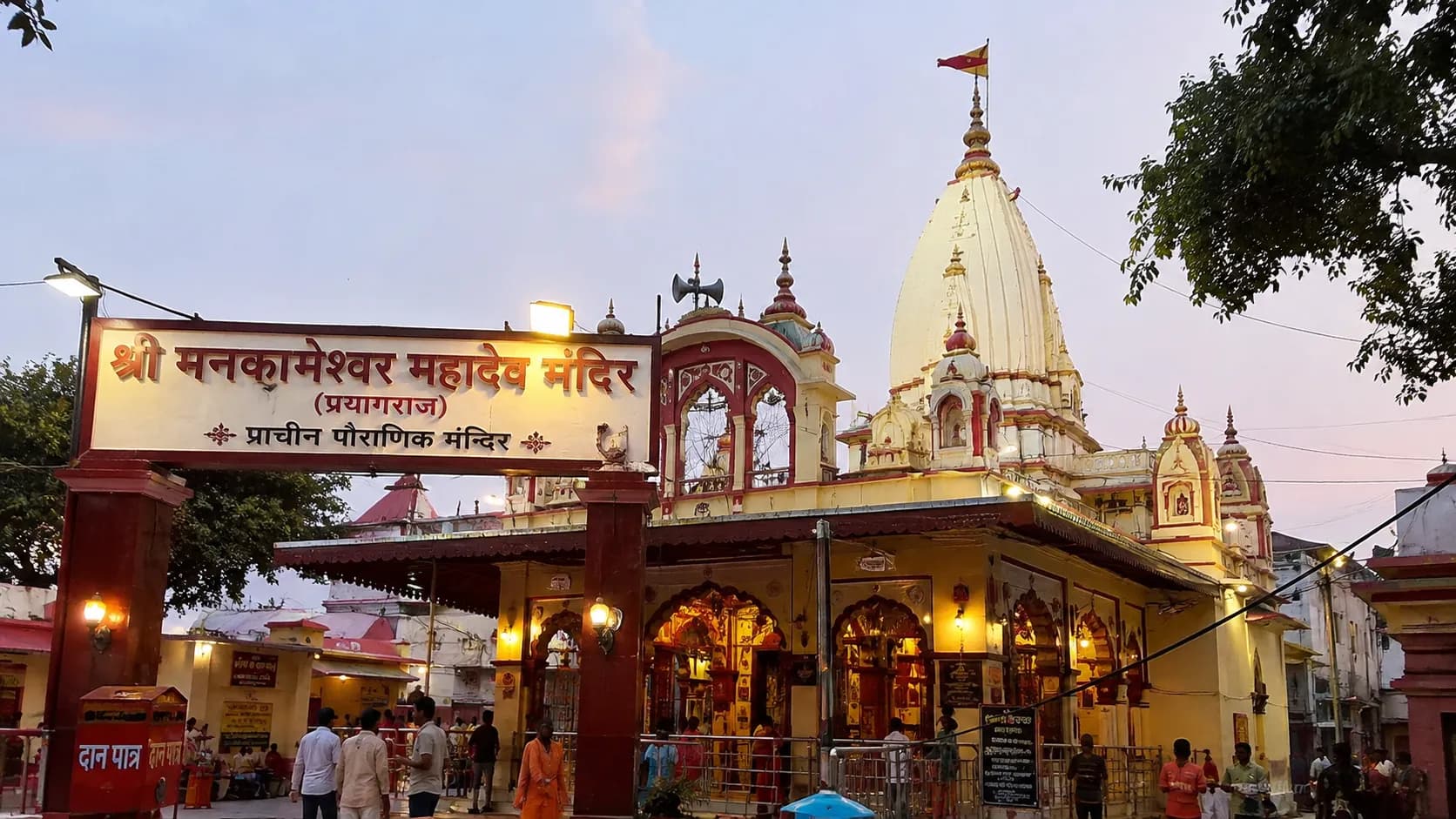
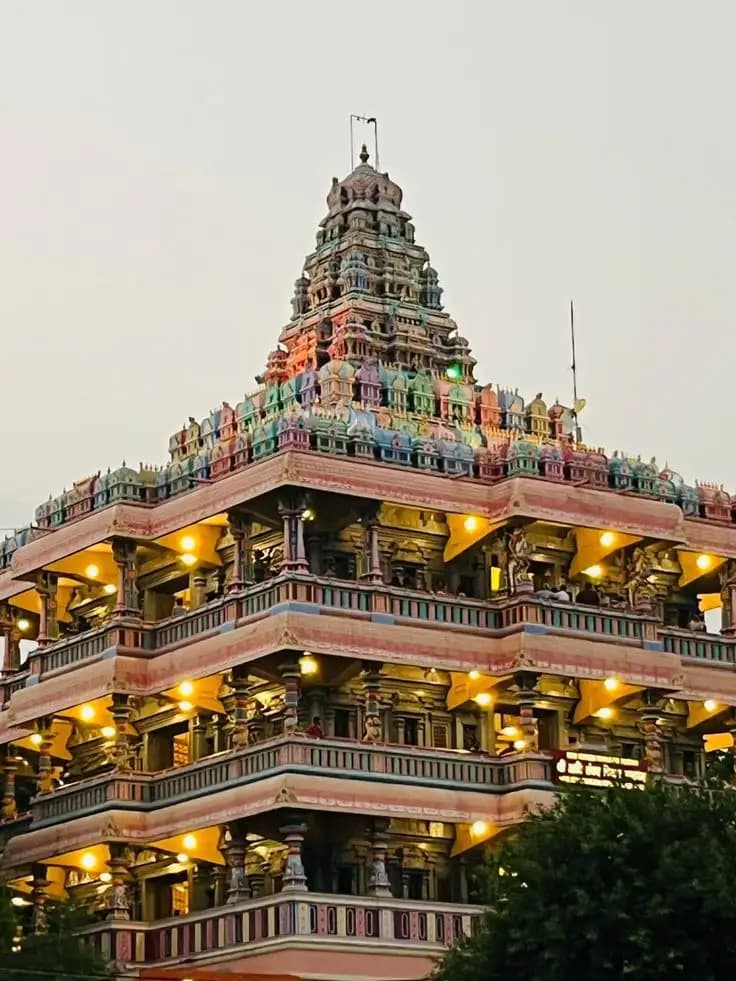
On the banks of the Yamuna, by the lovely Saraswati Ghat and a short way from the great Fort and the Sangam, stands one of the most ancient and revered Shiva temples of Prayagraj: the Shri Mankameshwar Mahadev Mandir, the temple of the wish-fulfilling Lord. Within its sanctum is worshipped a Shivalinga of black stone, some three and a half feet high and said to run far deeper still beneath the earth; and it is a temple of the deepest antiquity, praised in the great Puranas, the Shiva, the Skanda and the Padma, and in the Prayag Mahatmya, under the name of the Kameshwar Tirtha. To this day it is among the most beloved and most visited temples of the holy city, drawing the devout from across India, above all on the Mondays sacred to Shiva.
The Lord who fulfills the heart's desires
The temple's name holds the reason for its fame, for Mankameshwar is made of Man, the mind or the heart, and Kameshwar, the Lord Shiva as the fulfiller of desires; and so Mankameshwar means the Lord who fulfills the desires of the heart, the wish-granting Mahadev. It is the firm and beautiful belief of Prayagraj that the devotee who comes here with deep reverence and a sincere heart, and performs the abhishek, the sacred bathing of the lingam, will have his heartfelt wishes and aspirations fulfilled; wishes made at this temple, the people say, do not go unfulfilled. And there is a deeper meaning still in the name, for the Puranas tell that this is the very place, the Kameshwar Tirtha, where Lord Shiva, in his great austerity, burnt Kamadeva, the god of desire himself, to ashes with the fire of his third eye. So Mankameshwar is the Lord who is master of all desire, who burnt desire itself, and who therefore, in his grace, may grant or dissolve the desires of the heart as he wills; and to him the devotee brings the deepest longings of the soul.
Founded by Lord Ram: the story of Sita's wish
The most cherished story of this temple binds it to Lord Ram himself, and to a wife's wish and a husband's love. The tradition tells that in the days of his exile, Lord Ram, with Mata Sita and Lakshman, came to the holy Prayag and rested here at the Sangam, beneath the immortal Akshayavat, on their way to Chitrakoot. And there, when Mata Sita had taken her sacred bath at the confluence of the rivers, her heart filled with a longing to worship Lord Shiva, as was her devotion; but there was no temple of Shiva near at hand. And so Lord Ram, that his beloved's wish might be fulfilled, himself established a Shivalinga upon this spot with his own hands, and there Ram and Sita together worshipped Lord Shiva and performed the abhishek. This, the tradition holds, is the very lingam that stands here to this day, installed by Lord Ram to grant the wish of Sita; and so it is fitting beyond words that this should be the temple of wish-fulfilment, for it was born of the granting of a wish, by the Lord's own hand. To worship here is to worship the Shiva whom Ram and Sita worshipped, at the lingam that Ram himself raised.
The abhishek, the release and the Yamuna
The great act of worship here is the abhishek, the pouring of sacred water, milk and offerings over the lingam, performed with the deepest devotion, above all on the Mondays and through the month of Shravan; and the Pradosh Puja, on the evenings of Saturdays and the pradosh hour, is held especially auspicious. And the temple is holy in another way too, for it is known as the Pishach Mochan Tirtha, the tirtha of release: from the affliction of evil spirits, and, the tradition holds, from the burdens of one's debts and one's sins as well, so that the devotee leaves lighter in soul. All of this unfolds in a place of great beauty, for a flight of steps leads down from the temple to the Saraswati Ghat on the Yamuna, with lovely open views across the wide river toward the Sangam, and a goshala, a home for cows, stands within the grounds. It is a peaceful, powerful, and deeply spiritual place.
The wish-granting Lord, in my own words
By Rajeev Sharma, guide with Experience My India
I love bringing my guests to Mankameshwar, because it is the wish-granting Shiva of Prayag, and the story behind it is so beautiful. I tell them: after your Sangam bath, come to this ancient temple on the Yamuna and make your heartfelt wish to Mahadev, for it is believed here that no true wish goes unfulfilled. And then I tell them the wonderful thing, that Lord Ram himself installed this very lingam, in his exile, so that Mata Sita could worship Shiva after her bath at the Sangam; so this is the wish-fulfilling temple because it was born of Ram granting Sita's wish. People are always moved by that.
I show them how to do the jalabhishek, pouring the sacred water on the Lord, especially lovely on a Monday, and I tell them the temple also frees one of debts and sins, a Pishach Mochan Tirtha. And I take them down the steps to the Saraswati Ghat, for the beautiful view over the Yamuna toward the Sangam. For my guests who have taken Vishwanath's darshan in Kashi and Nageshwarnath's in Ayodhya, I tell them here is the great Shiva of Prayag, so they honour Mahadev in all three of our holy cities. It is a peaceful, powerful place, and I never let a devotee of Shiva miss it.
In more than forty years of guiding, this wish-granting Shiva by the Yamuna, raised by Ram's own hand, is among the most beloved I share.
What to see and do
- Take the darshan of the ancient Shivalinga, said to have been installed by Lord Ram himself.
- Perform the jalabhishek, and make your heartfelt wish to the wish-granting Mahadev.
- Attend the Mangala aarti at dawn or the beautiful evening aarti with the conch and drums.
- Go down the steps to the Saraswati Ghat for the lovely Yamuna view toward the Sangam.
- Hear the story of Ram and Sita, and visit especially on a Monday or in Shravan.
How to reach Mankameshwar Temple
The temple is on Fort Road, near Saraswati Ghat in Kydganj, on the bank of the Yamuna, a short way from the Fort and the Sangam, easily reached by road.
| From | Distance | Notes |
|---|---|---|
| The Triveni Sangam | A short distance | The confluence; pair the abhishek with the Sangam snan. |
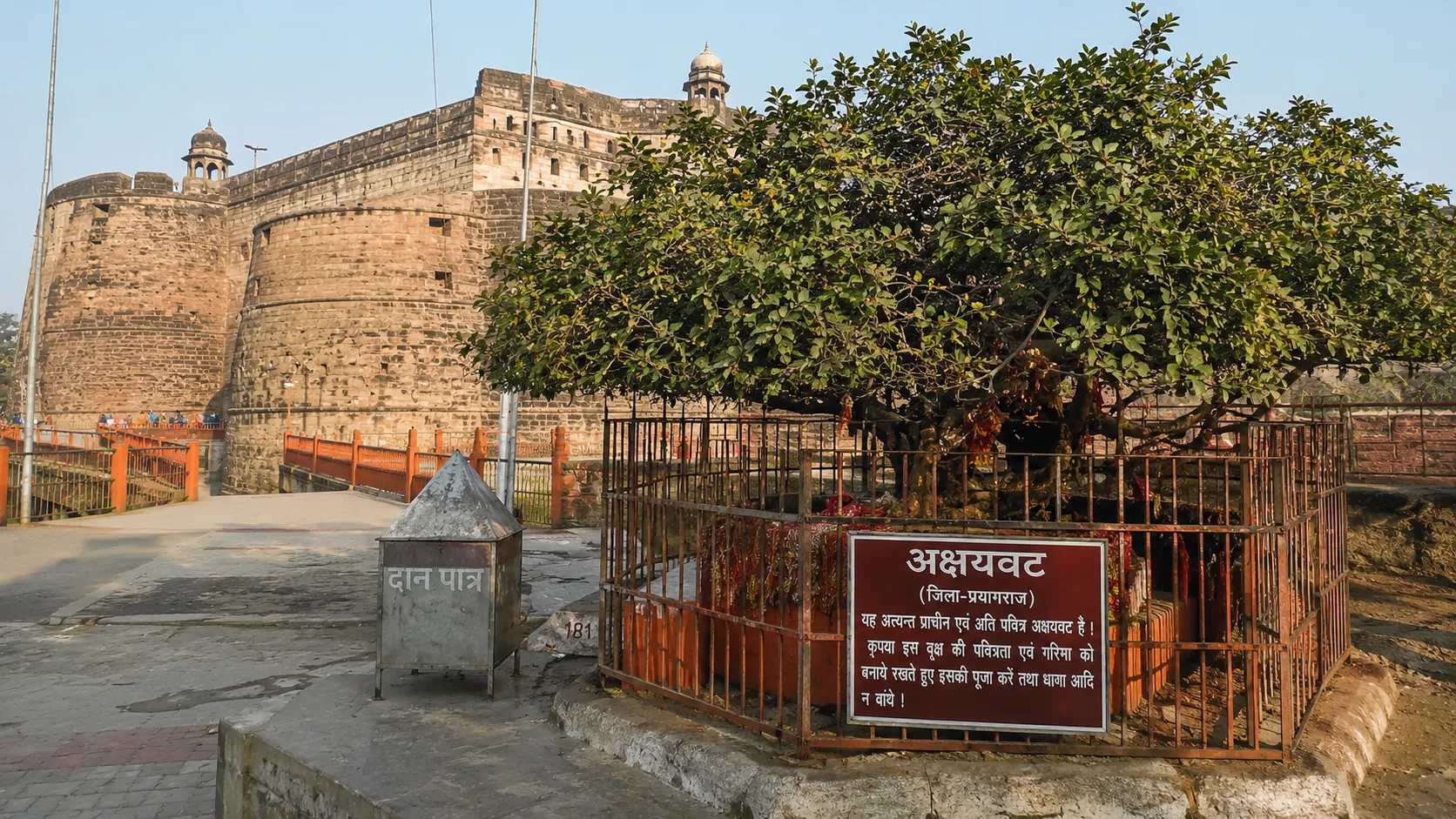
| The Allahabad Fort and Akshayavat | Nearby, on Fort Road | The great fort and the immortal banyan. |
| Bade Hanuman Mandir | A short ride | The guardian Hanuman of the Sangam. |
| Prayagraj Junction (railway) | About 6 km | By auto, e-rickshaw or taxi. |
| Prayagraj (Bamrauli) Airport | About 15 to 18 km | The city airport; taxis to the temple. |
It sits naturally with the Sangam and the Fort.
Best time to visit and how to plan it
| When | Why |
|---|---|
| Mondays | The day of Shiva, when the temple is most auspicious and most thronged. |
| Maha Shivratri and the month of Shravan | The greatest days of Shiva, with grand worship and abhishek. |
| The Mangala aarti at dawn, or evening aarti | The beautiful worship with conch, drums and bells. |
| Saturday evening (Pradosh) | The Pradosh Puja, especially auspicious for wishes. |
- Pair it with the Sangam, the Fort and the sacred core of Prayagraj.
- Allow 30 to 45 minutes for the darshan and abhishek; longer on Mondays and in Shravan.
For Prayagraj, or a combined Kashi, Ayodhya and Prayagraj pilgrimage, planned end to end, see our tour packages.
Accessibility for elderly and mobility limited visitors
- The temple is reachable by road and generally manageable; the steps to the ghat can be skipped if difficult.
- Come on a general day at a quieter hour for a calm darshan and abhishek.
- The helpful priests guide devotees through the abhishek; ask for assistance if needed.
- We arrange transport and plan a gentle darshan within your Prayagraj day.
Etiquette for visiting
- Remove footwear and dress modestly; be reverent before the Shivalinga.
- Offer water, milk and flowers in the abhishek with devotion, in the local custom.
- Keep to the queue and follow the priests, especially on Mondays and in Shravan.
- Keep your phone away in the sanctum, and mind the steps down to the ghat.
Our guided darshan and Prayagraj tours
We are a Varanasi, Ayodhya and Prayagraj based operator, a unit of Experience My India, with more than forty years of guiding pilgrims across all three holy cities, and our own local guide and pandit in Prayagraj. Darshan is free, so what we offer is the experience made meaningful: a pandit to help you with the abhishek and your sankalp for your heart's wish, a guide who tells the beautiful story of Ram and Sita and the wish-granting Lord, the darshan woven with the Sangam and the sacred core of Prayagraj, and, for the devotees of Shiva, the great Mahadevs of the three holy cities, Vishwanath at Kashi, Nageshwarnath at Ayodhya, and Mankameshwar at Prayag.
| Service | Includes | Price |
|---|---|---|
| Guided Mankameshwar darshan and abhishek | The darshan and abhishek with a pandit and sankalp, with a guide. | Contact us for pricing |
| Mankameshwar and Sangam day | The temple with the Sangam snan and the sacred core, with a guide. | Contact us for pricing |
| Full Prayagraj darshan day | Mankameshwar within a wider Prayagraj visit, with a guide. | Contact us for pricing |
| Kashi, Ayodhya and Prayagraj pilgrimage | The three holy cities and their great Shiva temples, with a guide. | Contact us for pricing |
Inclusions and exclusions are stated up front, with any taxes and conditions, and no charge appears later that was not named. Darshan is free; our charge is only for guiding, the pandit and services. See all our tour packages for the full range.
Experience My India is a travel operator, not the temple administration. Darshan is free; our charge is only for our guiding and services. Timings and rules are set by the temple and can change.
Nearby sacred sites in Prayagraj
Mankameshwar is on the Yamuna, at the sacred core of Prayagraj.
| Site | What it is | Internal link |
|---|---|---|
| Triveni Sangam | The sacred confluence of the Ganga, Yamuna and Saraswati, close by. | /temple/prayagraj/triveni-sangam |
| Allahabad Fort and Akshayavat | The great fort and the immortal banyan where Ram and Sita rested. | /temple/prayagraj/allahabad-fort-akshayavat |
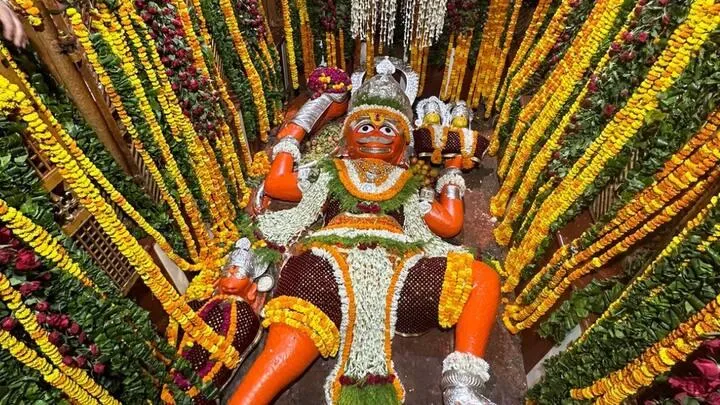
| Bade Hanuman Mandir | The reclining Hanuman, guardian of the Sangam. | /temple/prayagraj/bade-hanuman-mandir |
| Kashi Vishwanath (Varanasi) | The great Jyotirlinga Shiva of Kashi; the Mahadev of the first city. | /temple/varanasi/kashi-vishwanath-temple |
| Nageshwarnath (Ayodhya) | The ancient guardian Shiva of Ayodhya; the Mahadev of Ram's city. | /temple/ayodhya/nageshwarnath-temple |
For the Sangam snan and the confluence, see our Triveni Sangam guide.