.webp&w=2048&q=75)
Essential info at a glance
| Detail | At a glance |
|---|---|
| What it is | An ancient riverside temple of Lord Vasuki, the king of serpents; the only temple in India dedicated to Nag Vasuki. |
| Why it matters | Where Vasuki rested after churning the ocean; his darshan is held to complete the Kumbh pilgrimage. |
| Morning hours | 5:30 AM to 12:00 PM. |
| Evening hours | 3:00 PM to 9:30 PM (midday closure roughly 12:00 to 3:00 PM). |
| Aartis | Morning around 6:00 AM; evening around 7:00 PM (up to 7:30 by season). |
| Entry fee | Free for all. There is no VIP darshan. |
| Kaal Sarp Dosha | One of the very few temples in India where one may be relieved of Kaal Sarp Dosha. |
| Location | Daraganj, on the Ganga, north of the Sangam. |
Nagvasuki Temple timings and aarti
The temple keeps a split day, open from 5:30 AM to noon and again from 3:00 PM to about 9:30 PM, with a midday closure roughly between noon and 3:00 PM. Its aartis are its most devotional moments, the morning aarti around 6:00 AM and the evening aarti around 7:00 PM. Entry is free, and on ordinary days entry is direct for all; but on Nag Panchami, and during the Kumbh and Magh Mela, the temple draws enormous crowds and queue management applies. The temple stands high on the Ganga bank, reached by a steep flight of steps.
| Detail | When | Notes |
|---|---|---|
| Morning hours | 5:30 AM to 12:00 PM | With the morning aarti around 6:00 AM. |
| Midday closure | Roughly 12:00 to 3:00 PM | The temple typically rests at midday. |
| Evening hours | 3:00 PM to 9:30 PM | Some list closing around 9:00 PM. |
| Evening aarti | Around 7:00 PM | Up to 7:30 PM by season. |
| Busiest | Nag Panchami, Kumbh and Magh Mela | Enormous crowds; queue management applies. |
Nagvasuki Temple: the temple of the serpent king
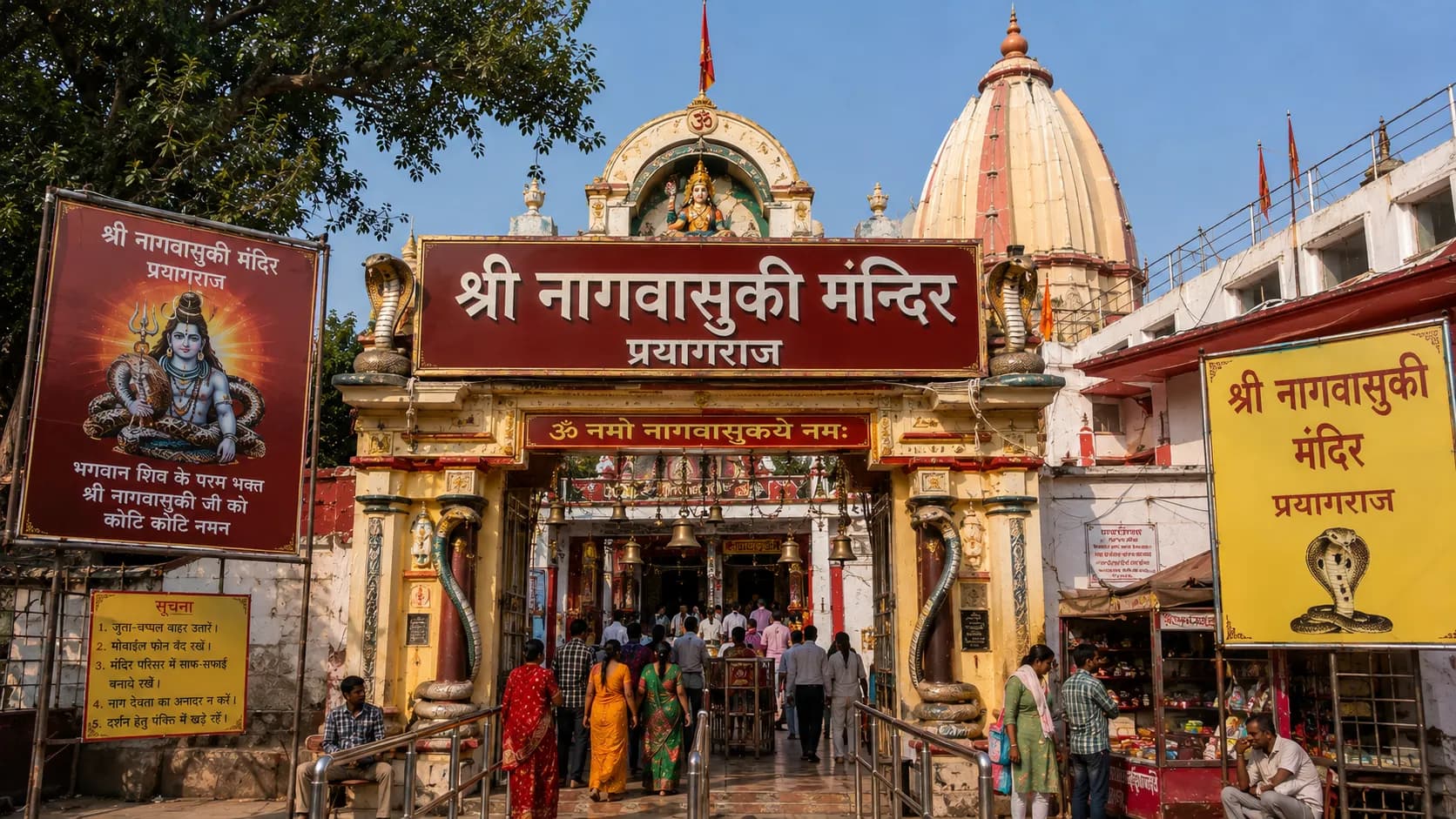
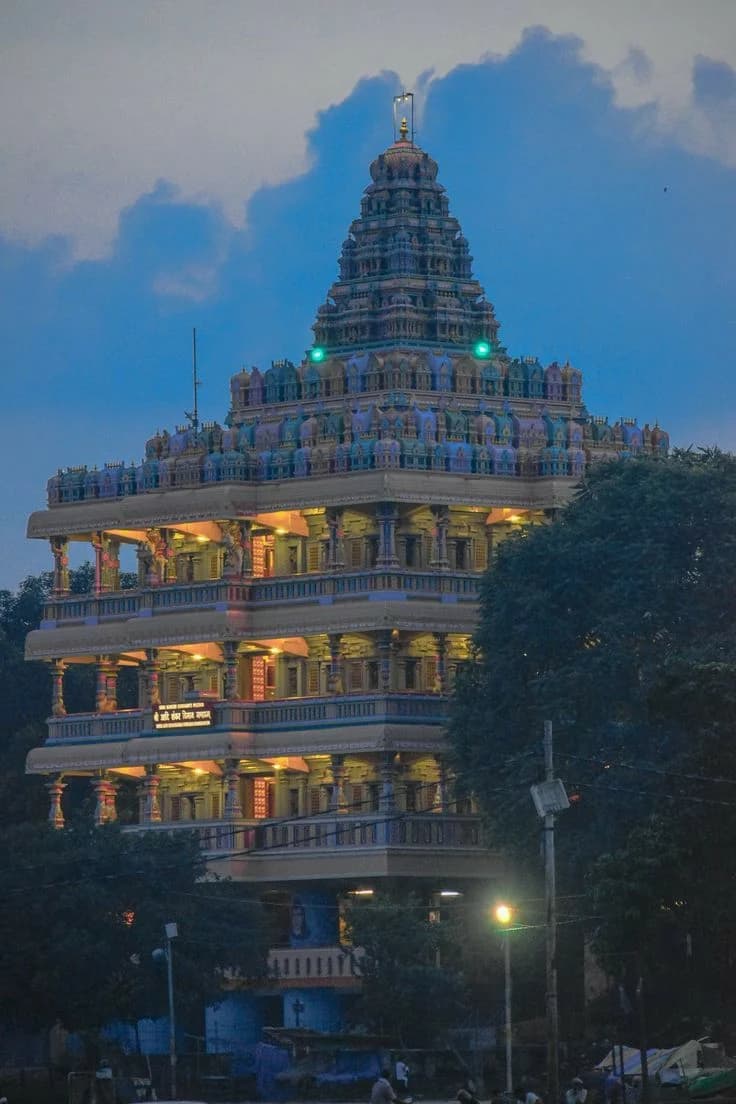
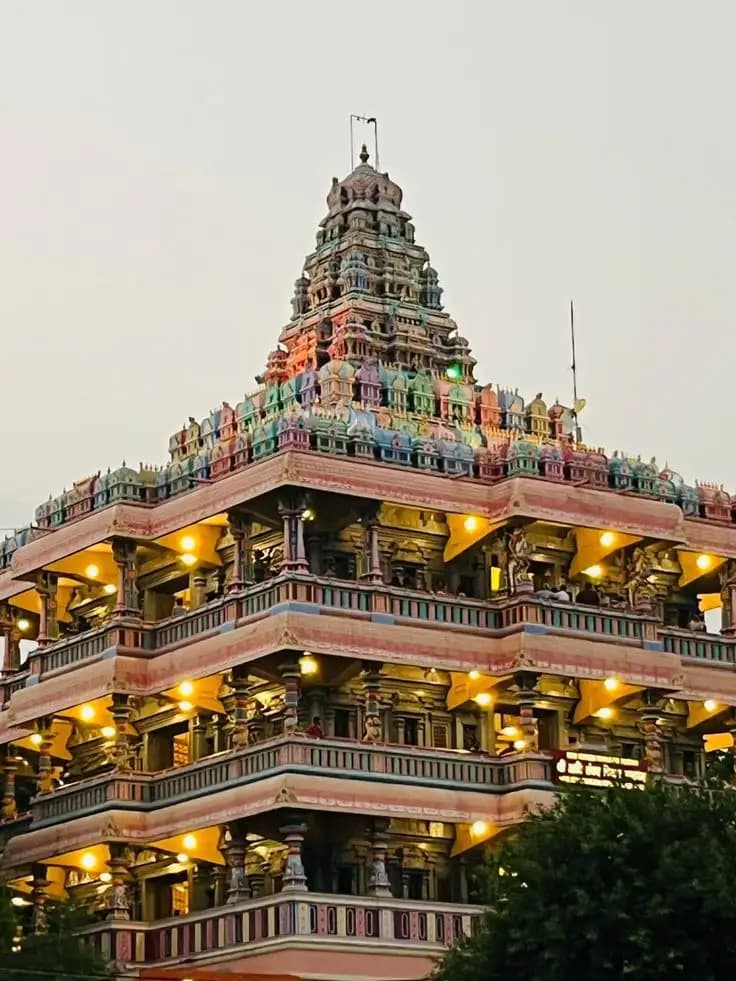
High on the bank of the holy Ganga, in the Daraganj quarter to the north of the Sangam, stands one of the most distinctive and revered temples of Prayagraj: the Shri Nagvasuki Mandir, the temple of Lord Vasuki, the great king of serpents. It is said to be the only temple in all of India dedicated to Nag Vasuki himself, the Nagraj, the sovereign of all the serpent-beings; and within its sanctum is worshipped his image in black stone, a majestic five-hooded serpent-form with four coils of his body, which tradition holds was first installed by the Manasaputras, the mind-born sons of Lord Brahma. The temple, whose origins reach back to the tenth century and whose present form was raised by a Maratha king, is praised in the Skanda, the Padma, the Bhagavata and the Matsya Puranas and in the Mahabharata; and Vasuki is honoured here by many great names, Sheshraj, Sarpnath, Anant, the eternal serpent lord.
Vasuki, the king of serpents and the churning rope
To understand this temple is to know the greatness of Vasuki, one of the mightiest beings in all the cosmos. He is the king of the Nagas, the serpents, who in our tradition are the guardians of hidden treasures, of knowledge, and of the deep secrets of the universe. And his greatest deed is written into the very origin of the world's holiest things, for it was Vasuki who served as the churning rope in the Samudra Manthan, the churning of the great ocean of milk. When the gods and the demons together sought to churn the ocean for the amrit, the nectar of immortality, it was the mighty Vasuki who allowed himself to be wound about the great Mount Mandara, which was the churning rod, and it was Vasuki whom the gods and the demons seized at either end and pulled, this way and that, again and again, turning the mountain and churning the sea, so that from the ocean at last the nectar of immortality arose. The friction of that terrible churning wounded the great serpent grievously, all along the length of his body; he gave his very self to bring forth the nectar. And Vasuki is close, too, to Lord Shiva, who wears the serpent-king coiled about his own neck as his ornament, a sign of his mastery over the primal forces of life.
Where the serpent king rested and was healed
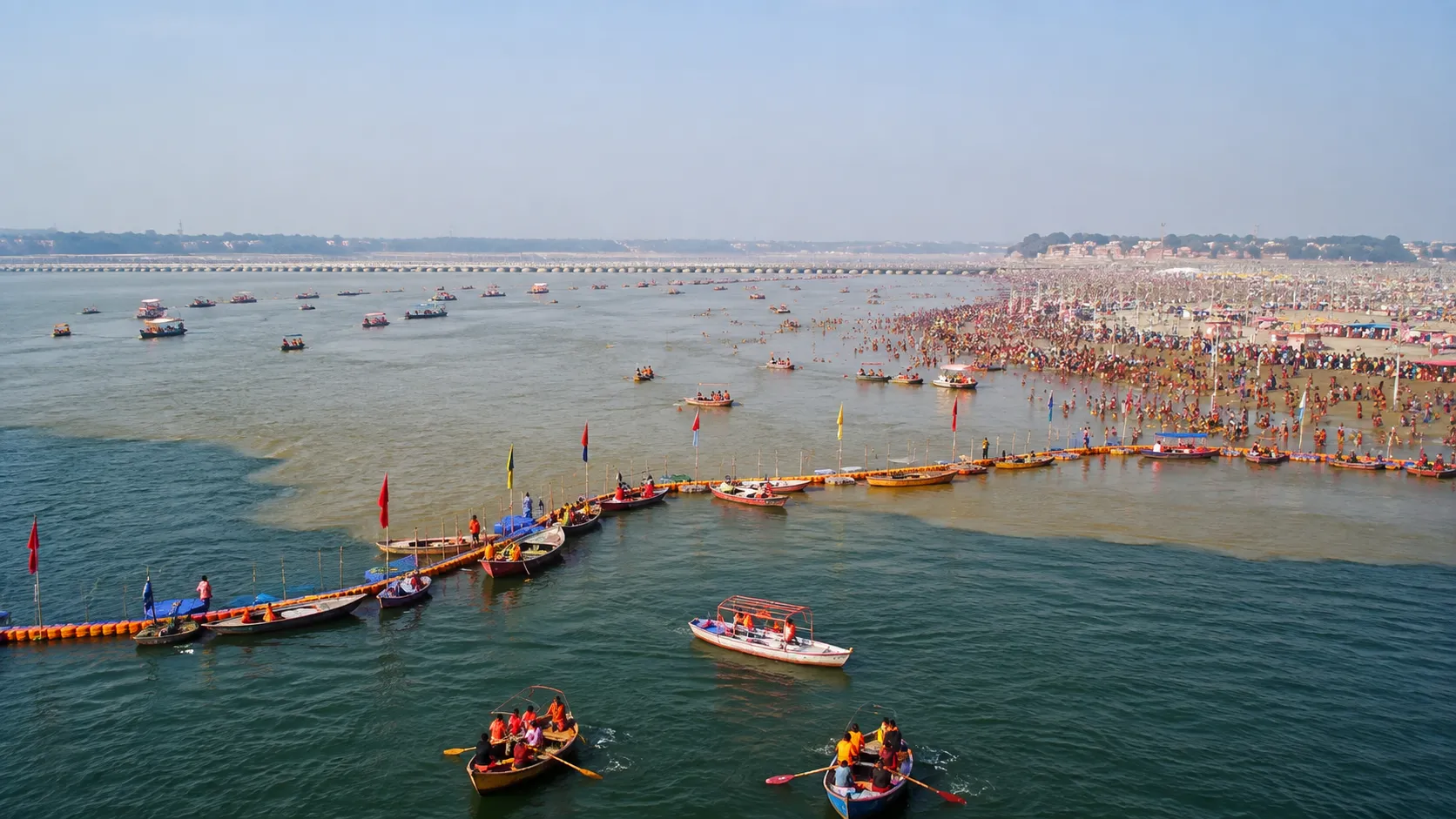
And here is the heart of this temple's story, and its deep and beautiful bond with the Sangam. When the great churning was done, the mighty Vasuki was left utterly weary and grievously wounded from his labour; and, seeking a place to rest and to heal, he came, upon the counsel of Lord Vishnu himself, here to Prayag, to the holy confluence of the rivers. And when the serpent-king immersed his wounded body in the sacred waters of the Sangam, the holy Triveni healed all his hurts and gave his weary spirit peace. So this is the place where the king of serpents came to rest and was made whole after the churning of the ocean. And when at last, restored, he made ready to depart, the sages and the gods entreated him to remain; and Vasuki consented to abide here forever, upon one condition, that his devotees should first bathe at the Triveni Sangam, and then come to worship him, above all upon the day of Nag Panchami. And so the serpent-king dwells at Prayag to this day, and the pilgrim's way is set: the holy dip at the Sangam, and then the darshan of Nagvasuki. Indeed the people of Prayagraj hold, as with the guardian Hanuman, that the great pilgrimage of the Kumbh is left incomplete for one who does not, after the holy dip, come to bow before the serpent-king; for the Samudra Manthan from which the Kumbh itself takes its name was Vasuki's own great deed, and it was the Sangam that healed him.
The boons: Kaal Sarp Dosha, protection and Nag Panchami
For all these reasons, Nagvasuki is a temple of great and specific power, sought by devotees for particular blessings. Above all, it is held to be one of only a very few temples in all of India, the other being at Trimbakeshwar near Nashik, where the devotee may be relieved of the Kaal Sarp Dosha, the great and much-feared affliction of the horoscope, when the planets fall under the shadow of the serpent-nodes and bring obstacles and suffering to a life; the worship of the serpent-king here, with the proper puja, is believed to lift that shadow. Pilgrims come, too, to seek the protection of Vasuki from fears, from unknown dangers, and from the harm of serpents. And the temple's supreme day is Nag Panchami, the great festival of the serpents in the month of Shravan, when millions come to worship the Nagas with fasts and offerings and rituals, and the temple is filled with a spectacle of devotion. There is, besides, a cherished tale that when the temple was threatened with destruction in the Mughal age, it stood untouched and unharmed, for the sword could not strike it and the serpent-king revealed his mighty form; so the temple has stood, resilient, through all the ages.
The serpent king of the Sangam, in my own words
By Rajeev Sharma, guide with Experience My India
I always tell my pilgrims at Prayag: after your holy dip at the Sangam, you must climb up to Nagvasuki, for our belief is that the Kumbh pilgrimage is not complete without the darshan of the serpent-king, just as with Bade Hanuman. And then I tell them the great story, that this is Lord Vasuki, the king of all serpents, who was the very rope in the churning of the ocean that brought forth the nectar, and how, wounded and weary from that mighty deed, he came here to Prayag and the holy Sangam waters healed him, and he stayed. People are amazed to learn that the churning which gives the Kumbh its name was Vasuki's own labour, and that this is where he was healed.
Many of my guests come here for a special reason, the Kaal Sarp Dosha, for this is one of only two temples in all India where one can be freed of that difficult affliction of the stars; I arrange the proper puja with the temple pandits for those who need it, and they leave with great peace of mind. I take them up the steep steps to the beautiful old temple above the Ganga, and show them the five-hooded Lord in black stone. If they can come on Nag Panchami, it is a sight of a lifetime. The serpent-king is a mighty and merciful Lord, and I never let a pilgrim to Prayag miss him after the Sangam.
In more than forty years of guiding, this serpent-king who was healed by the Sangam is among the most fascinating I share.
What to see and do
- Take the darshan of the five-hooded Lord Vasuki, the king of serpents, in black stone.
- Complete your Sangam and Kumbh pilgrimage with the darshan of the serpent-king, after the holy dip.
- Arrange the puja for relief from Kaal Sarp Dosha, if the affliction troubles you.
- Hear the great story of the Samudra Manthan and how the Sangam healed Vasuki.
- Visit on Nag Panchami for the grand festival, and enjoy the Ganga view from the temple.
How to reach Nagvasuki Temple
The temple is in the Daraganj quarter, on the Ganga bank near the Prayag Dashashwamedh Ghat (not to be confused with the Varanasi ghat of the same name), a few km north of the Sangam, reached by road and then a steep flight of steps.
| From | Distance | Notes |
|---|---|---|
| The Triveni Sangam | A few km | Bathe at the Sangam, then come for the serpent-king's darshan. |
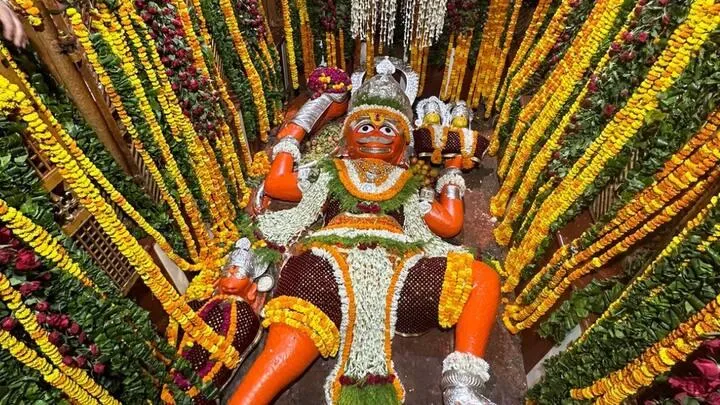
| Bade Hanuman Mandir | Near, by the Sangam | The other guardian whose darshan completes the pilgrimage. |
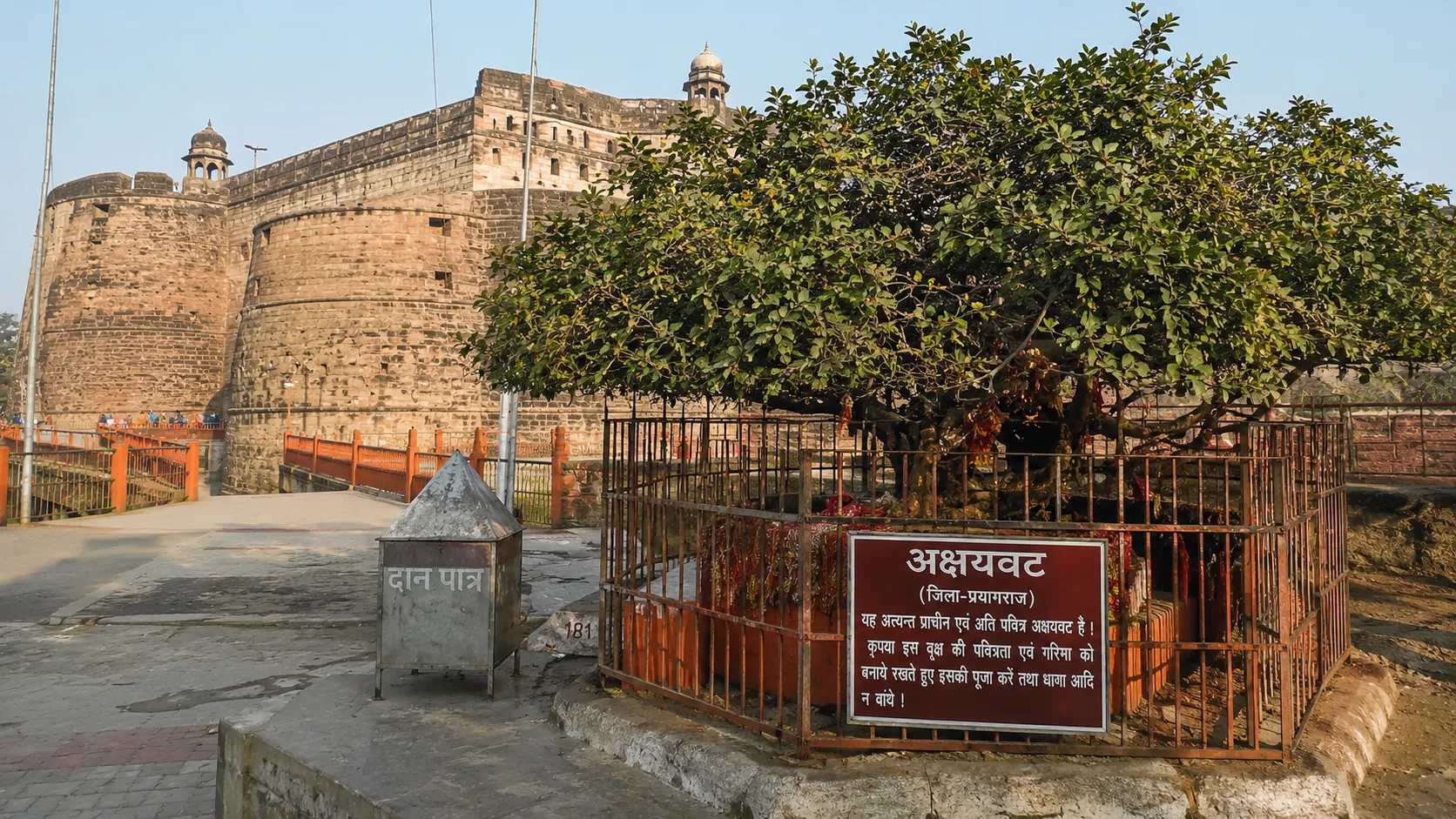
| The Allahabad Fort | A short ride | The great fort by the Sangam. |
| Prayagraj Junction (railway) | About 7.5 km | By auto, e-rickshaw or taxi. |
| Prayagraj (Bamrauli) Airport | About 15 to 18 km | The city airport; taxis to the temple. |
It is the natural next stop after the Sangam snan.
Best time to visit and how to plan it
| When | Why |
|---|---|
| Nag Panchami (Shravan, Jul-Aug) | The great festival of the serpents, the temple's supreme day. |
| The Kumbh and Magh Mela (Jan-Mar) | To complete the great pilgrimage after the Sangam dip, though hugely crowded. |
| Mondays and the month of Shravan | Sacred to the Nagas and to Shiva, whose serpent Vasuki is. |
| For the Kaal Sarp Dosha | Any day, with the proper puja arranged through the temple pandits. |
- Pair it with the Sangam, Bade Hanuman and the Fort in a Prayagraj day.
- Allow 30 to 45 minutes for the darshan; longer for the Kaal Sarp Dosha puja and on festival days.
For Prayagraj, or a combined Kashi, Ayodhya and Prayagraj pilgrimage, planned end to end, see our tour packages.
Accessibility for elderly and mobility limited visitors
- The temple stands high on the Ganga bank, reached by a steep flight of steps, so a helper is useful for the frail.
- Come on a general day at a quieter hour for a calm, unhurried darshan.
- The pandits guide devotees through the puja, including the Kaal Sarp Dosha rites, seated as needed.
- We arrange transport and plan a gentle darshan within your Prayagraj day.
Etiquette for visiting
- Remove footwear and dress modestly; be reverent before the serpent-king.
- Offer milk, flowers and your prayers in the local custom, especially on Nag Panchami.
- Keep to the queue and follow the pandits, especially on Nag Panchami and in Mela season.
- Mind the steep steps, and keep children close in the crowds.
Our guided darshan and Prayagraj tours
We are a Varanasi, Ayodhya and Prayagraj based operator, a unit of Experience My India, with more than forty years of guiding pilgrims across all three holy cities, and our own local guide and pandit in Prayagraj. Darshan is free, so what we offer is the experience made smooth and meaningful: the Sangam snan and then the darshan of the serpent-king in the proper order to complete the pilgrimage, a pandit to perform the Kaal Sarp Dosha puja for those who need it, a guide who tells the great story of the churning and the healing, and the whole Prayagraj and three-city pilgrimage.
| Service | Includes | Price |
|---|---|---|
| Sangam and Nagvasuki darshan | The Sangam snan and the serpent-king's darshan, in order, with a guide. | Contact us for pricing |
| Kaal Sarp Dosha puja | The puja for relief from Kaal Sarp Dosha with the temple pandits, with a guide. | Contact us for pricing |
| Full Prayagraj darshan day | Nagvasuki within a wider Prayagraj visit, with a guide. | Contact us for pricing |
| Kashi, Ayodhya and Prayagraj pilgrimage | The three holy cities, with darshan, transfers and a guide. | Contact us for pricing |
Inclusions and exclusions are stated up front, with any taxes and conditions, and no charge appears later that was not named. Darshan is free; our charge is only for guiding, the pandit's puja and services. See all our tour packages for the full range.
Experience My India is a travel operator, not the temple administration. Darshan is free; the Kaal Sarp Dosha puja is performed by the temple pandits, and our charge is only for our guiding and arrangements. Timings and rules are set by the temple and can change.
Nearby sacred sites in Prayagraj
Nagvasuki is on the Ganga, near the Sangam, at the sacred core of Prayagraj.
| Site | What it is | Internal link |
|---|---|---|
| Triveni Sangam | The sacred confluence and the Kumbh, whose amrit came of the churning Vasuki served. | /temple/prayagraj/triveni-sangam |
| Bade Hanuman Mandir | The reclining Hanuman; the other guardian whose darshan completes the pilgrimage. | /temple/prayagraj/bade-hanuman-mandir |
| Allahabad Fort and Akshayavat | The great fort and the immortal banyan, by the Sangam. | /temple/prayagraj/allahabad-fort-akshayavat |
| Mankameshwar Mahadev | The wish-fulfilling Shiva, whose serpent-ornament is Vasuki himself. | /temple/prayagraj/mankameshwar-temple |
| Kashi Vishwanath (Varanasi) | The great Shiva of Kashi, who wears the serpent-king about his neck. | /temple/varanasi/kashi-vishwanath-temple |
For the Sangam snan and the confluence, see our Triveni Sangam guide.