Essential info at a glance
| Detail | At a glance |
|---|---|
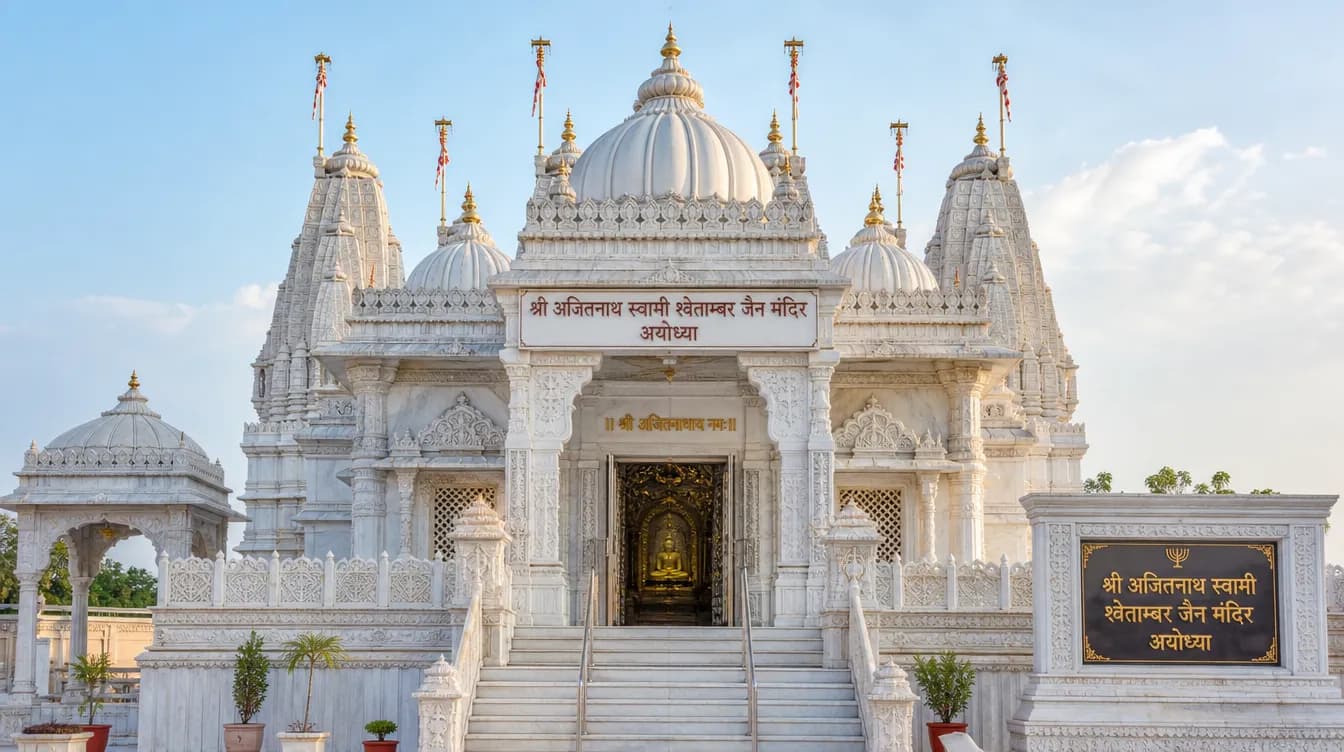
| What it is | A Shwetambar Jain temple honouring the birthplace of Bhagwan Ajitnath, the 2nd Tirthankara. |
| Opening hours | 5:00 AM to 8:00 PM daily. |
| Entry fee | Free for all devotees. There is no VIP darshan or paid pass. |
| Aartis | Morning puja and aarti around 6:30 to 7:00 AM, and evening aarti around 6:30 to 7:00 PM. |
| One of five | Ayodhya is the birthplace of five Tirthankaras; this is Ajitnath's, the second. |
| The Lord | Ajitnath, the Invincible, second of the 24 Tirthankaras, of the Ikshvaku dynasty. |
| Best time | Early morning or late afternoon, for quiet prayer and a peaceful darshan. |
| Location | Katra Mohalla, near Naya Ghat, Ayodhya. |
Ajitnath Swami Mandir timings and aarti
The temple is open every day from 5:00 AM to 8:00 PM, and entry is free. The daily worship is kept in the Shwetambar Jain tradition, with the morning puja and aarti around 6:30 to 7:00 AM and the evening aarti around 6:30 to 7:00 PM. It is a peaceful, uncrowded temple, so darshan is managed smoothly and without long waits, and the early morning and the late afternoon are the loveliest, quietest times for prayer and reflection.
| Detail | When | Notes |
|---|---|---|
| Opening hours | 5:00 AM to 8:00 PM | Open every day; free. |
| Morning puja and aarti | Around 6:30 to 7:00 AM | The morning worship in the Shwetambar tradition. |
| Evening aarti | Around 6:30 to 7:00 PM | The evening worship. |
| Entry fee | Free | No VIP or paid darshan; first come, first served. |
Ajitnath Swami Mandir: the birthplace of the 2nd Tirthankara
This Shwetambar Jain temple in the Katra quarter of Ayodhya, near Naya Ghat, is dear to the Jains for a great reason: it honours the birthplace of Bhagwan Ajitnath, the second of the twenty-four Tirthankaras, born here in the holy city. For Ayodhya was the birthplace not of the first Tirthankara alone but of several, and Ajitnath, who came immediately after the founder Rishabhdev, was among them. Here, tradition tells, in the royal house of King Jitashatru and Queen Vijaya, of the ancient Ikshvaku dynasty, the great soul who would become Ajitnath took birth; and the temple that keeps his memory is a sacred station of Jain pilgrimage, a place where devotees come to bow at the birthplace of the second Lord, in the beautiful adorned manner of the Shwetambar tradition.
Bhagwan Ajitnath, the Invincible
The Tirthankara this temple honours bears a name of great strength: Ajitnath, from ajit, meaning the invincible, the unconquerable, the one who cannot be overcome; and his name signifies the unconquerable spirit of one who has vanquished the inner enemies of desire and delusion, and won the victory over the self that is the goal of the Jain path. Born here in Ayodhya, second in the line of the Tirthankaras after the great founder Rishabhdev, and of the same royal Ikshvaku dynasty as Ram, he in time renounced the world, conquered all within, attained the supreme knowledge, and taught the eternal way, before attaining his own final liberation at the great mountain of Sammed Shikharji. His emblem is the elephant, the noble and mighty beast; and he is revered, as the second of the ford-makers, among the greatest and earliest of the enlightened teachers of the Jain faith.
The five Tirthankara birthplaces of Ayodhya: the Jain Tirth Vandana
This temple is one of five, for one of the great glories of Ayodhya, less known than its fame as the city of Ram, is that it is the birthplace of five of the twenty-four Jain Tirthankaras: Bhagwan Rishabhdev, or Adinath, the first and the founder of the faith; Ajitnath, the second, whose birthplace this is; Abhinandannath, the fourth; Sumatinath, the fifth; and Anantnath, the fourteenth; and all five were of the ancient and sacred Ikshvaku dynasty, the same royal line as Lord Ram. Their birthplaces lie close together, within a few kilometres, in and around the old city, and to make the round of all five, bowing at each in turn, is a beautiful and deeply cherished pilgrimage, the Jain Tirth Vandana, the homage to the birthplaces of the Tirthankaras. The circuit reaches beyond the city too, to Ratnapuri a little to the west, the birthplace of the fifteenth Lord, Dharmanath; so that the Jain circuit of the Ayodhya region holds the birthplaces of six Tirthankaras in all.
The temple and an honest word
This is a Shwetambar temple, and here Bhagwan Ajitnath is enshrined in the loving Shwetambar manner, his image adorned and serene, and worshipped morning and evening with the beautiful rituals of the tradition. It is a peaceful, calm, and reverent place, rarely crowded, a haven for the quiet prayer and inner reflection at the heart of the Jain path. And an honest and useful word, as at all the Jain temples of Ayodhya: entry and darshan are completely free, for everyone; there is no VIP darshan, no paid queue, and no need of any agent or middleman. Unlike the great thronged Hindu shrines, these Jain temples are peaceful and welcoming, so please never pay any tout who promises special or fast-track entry, for the doors are open to all, free, and without any such arrangement.
The birthplace of the Invincible Lord, in my own words
By Rajeev Sharma, guide with Experience My India
I love bringing Jain pilgrims to the Ajitnath temple, because it is the birthplace of the second Tirthankara, the one who came right after the great founder Rishabhdev. I tell them the beautiful meaning of his name, Ajitnath, the Invincible, the unconquerable, the one who conquered himself, which is the real victory in our traditions. And I explain the wonderful thing about Ayodhya: that five Tirthankaras were born in this one city, all of the same Ikshvaku line as our Lord Ram, and I take my Jain guests to bow at all five, the Jain Tirth Vandana. To bow at the birthplaces of five of the Tirthankaras in a single day is a profound pilgrimage.
This is a Shwetambar temple, so the Ajitnath here is beautifully adorned, and my Shwetambar guests especially love to worship in their own tradition. As at all the Jain temples, I give my guests the honest word that entry is free and they should never pay any agent, because I look after the people I bring. It is a peaceful, gentle, deeply reverent temple, one of the five holy birthplaces, and often we go on to Ratnapuri as well, for the fifteenth Lord. The round of the Tirthankara birthplaces is one of the most meaningful things I share with Jain pilgrims, and this temple of the Invincible Lord is a lovely part of it.
In more than forty years of guiding, the round of the five Tirthankara birthplaces is among the most meaningful pilgrimages I share with Jain devotees.
What to see and do
- Bow at the birthplace of Bhagwan Ajitnath, the 2nd Tirthankara, and take darshan of his adorned idol.
- Attend the morning or evening aarti, in the beautiful Shwetambar tradition.
- Complete the Jain Tirth Vandana, the round of all five Tirthankara birthplaces of Ayodhya.
- Reflect on Ajitnath, the Invincible, and the victory over the self at the heart of the Jain path.
- Extend the circuit to Ratnapuri, the birthplace of the 15th Tirthankara, Dharmanath.
How to reach Ajitnath Swami Mandir
The temple is at Katra Mohalla, near Naya Ghat, in the old quarter of Ayodhya, easily reached on foot or by e-rickshaw, and close to the other Tirthankara birthplace temples.
| From | Distance | Notes |
|---|---|---|
| The other Tirthankara birthplaces | Within a few km | The five Jain birthplaces; do the Jain Tirth Vandana together. |
| Naya Ghat and the Saryu ghats | A short walk | Near the riverfront quarter. |
| The core temples (Ram Mandir, Hanuman Garhi) | A short ride | By auto or e-rickshaw. |
| Ratnapuri (Dharmanath's birthplace) | About 24 km west | The 15th Tirthankara's birthplace, for the regional circuit. |
| Ayodhya Dham Junction (railway) | A short ride | By e-rickshaw, auto or taxi. |
It is close to the other Jain birthplaces for the Jain Tirth Vandana.
Best time to visit and how to plan it
| When | Why |
|---|---|
| Early morning or late afternoon | For quiet prayer and a peaceful darshan, and the aartis. |
| Ajitnath's Janm Kalyanak | The birth anniversary of the Lord, especially auspicious. |
| Winter (October to March) | The most pleasant season for the Ayodhya Jain trail. |
| With the Jain Tirth Vandana | To bow at all five Tirthankara birthplaces, and Ratnapuri too. |
- Pair it with the other four Tirthankara birthplaces for the Jain Tirth Vandana, and with Ratnapuri.
- Allow 20 to 30 minutes for this temple; a half-day for the full Vandana.
For Ayodhya, or a combined Kashi and Ayodhya pilgrimage, planned end to end, see our tour packages.
Etiquette for visiting
- This is a Jain temple; be respectful, keep your voice low, and follow any guidance.
- Remove footwear and any leather items before entering, and dress modestly.
- Do not carry outside food into the sanctum, and follow the temple's rules of purity.
- Behold the adorned image of the Tirthankara with reverence, in the Shwetambar way.
Accessibility for elderly and mobility limited visitors
- The temple is at lane level in the old quarter, reachable by e-rickshaw; check on any steps to the sanctum.
- Being peaceful and uncrowded, it allows an easy, unhurried darshan without long waits.
- The other Jain birthplaces are close by, easy to combine gently.
- We arrange transport and plan a gentle Jain Tirth Vandana within your Ayodhya day.
Our guided visits and the Jain Tirth Vandana
We are a Varanasi and Ayodhya based operator, a unit of Experience My India, with more than forty years of guiding pilgrims across Kashi, Ayodhya, and Prayagraj. Entry and darshan are free, so what we offer is the story and the planning: a guide who tells the story of Bhagwan Ajitnath and the five Tirthankara birthplaces, and the whole Jain Tirth Vandana of the city, extended if you wish to Ratnapuri and the wider Jain circuit of the region. And we look after you honestly, so you never pay a tout for what is free.
| Service | Includes | Price |
|---|---|---|
| Guided Jain Tirth Vandana | The five Tirthankara birthplaces of Ayodhya, including this temple, with a guide. | Contact us for pricing |
| Ayodhya region Jain circuit | The five city birthplaces with Ratnapuri, the birthplaces of six Tirthankaras. | Contact us for pricing |
| Full Ayodhya darshan day | This temple within a wider Ayodhya visit, with a guide. | Contact us for pricing |
| Kashi and Ayodhya Jain pilgrimage | The Jain tirthas of both cities and the region, with a guide. | Contact us for pricing |
Inclusions and exclusions are stated up front, with any taxes and conditions, and no charge appears later that was not named. Darshan is free; our charge is only for guiding and services. See all our tour packages for the full range.
Experience My India is a travel operator, not the temple administration. Darshan is free; our charge is only for our guiding and services. Timings and rules are set by the temple and can change.
Nearby sacred sites in Ayodhya
The Ajitnath Swami Mandir is one of the five Tirthankara birthplaces of Ayodhya.
| Site | What it is | Internal link |
|---|---|---|
| Rishabhdev Digambar Jain Mandir (Badi Murti) | The birthplace temple of the first Tirthankara, Adinath, with its 31-foot statue. | /temple/ayodhya/rishabhdev-jain-mandir |
| Sri Anantnath Jain Temple | The birthplace temple of the 14th Tirthankara, Anantnath. | /temple/ayodhya/anantnath-jain-temple |
| Ayodhya Shwetambar Jain Temple | The Shwetambar tirth of the five Tirthankaras of Ayodhya. | /temple/ayodhya/shwetambar-jain-temple |
| Ratnapuri | The birthplace of Dharmanath, the 15th Tirthankara, near Ayodhya. | /temple/ayodhya/ratnapuri |
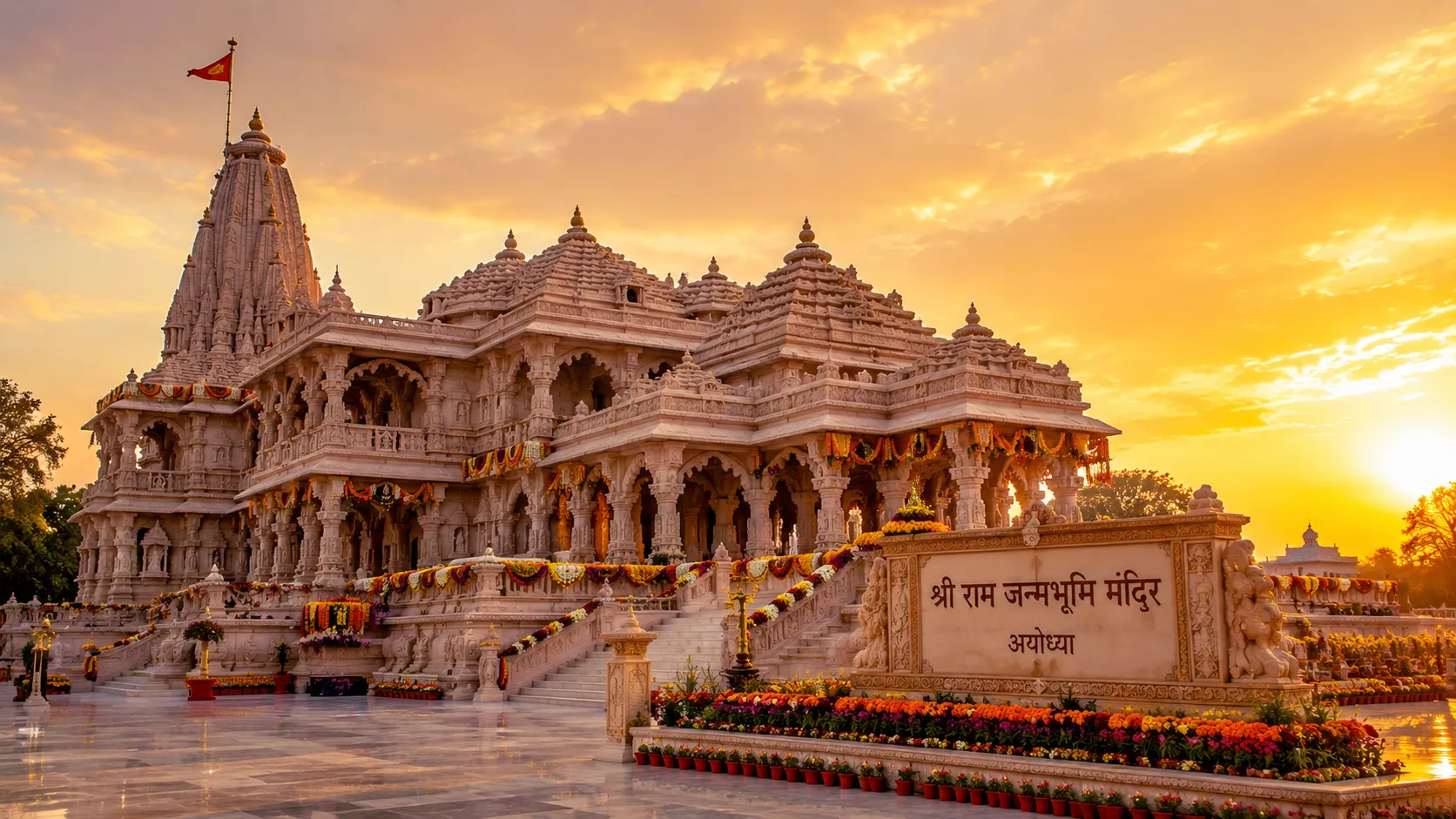
| Shri Ram Janmabhoomi Mandir | The birthplace of Ram, of the same Ikshvaku dynasty as the Tirthankaras. | /temple/ayodhya/ram-janmabhoomi-mandir |
For the Ram Mandir darshan and its free Sugam booking, see our Ram Janmabhoomi Mandir guide.