

Essential info at a glance
| Detail | At a glance |
|---|---|
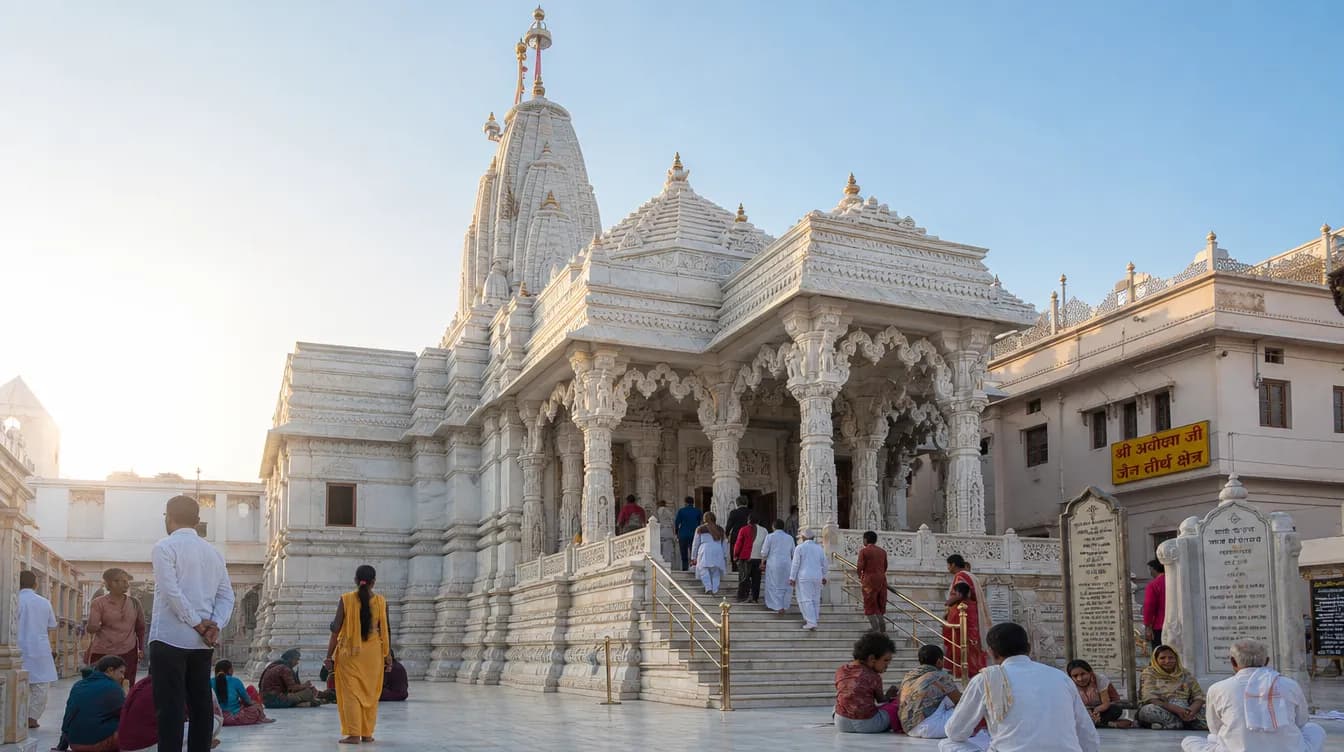
| What it is | The Shwetambar Jain temple of Ayodhya, dedicated to the five Tirthankaras born in the sacred city. |
| Opening hours | 5:00 AM to 8:00 PM daily. |
| Entry fee | Free for all devotees. There is no VIP darshan. |
| Rituals | Morning and evening prayers and worship, in the Shwetambar tradition; times vary on festival days. |
| The five Tirthankaras | Adinath, Ajitnath, Abhinandannath, Sumatinath and Anantnath, born in Ayodhya. |
| Its companion | The Digambar Badi Murti temple, with its 31-foot Adinath statue. |
| Facilities | A heritage-look temple with carved pillars and a Jain bhojnalaya serving Jain food. |
| Location | Awas Vikas Colony, Aalamganj Katara, Ayodhya. |
Ayodhya Shwetambar Jain Temple timings
The temple is open every day from 5:00 AM to 8:00 PM, and entry is free. Its prayers and rituals are kept morning and evening in the beautiful Shwetambar Jain tradition; the exact aarti times can shift on festival days, so it is best to come during the standard morning or evening worship windows, or to check locally. It is a peaceful, uncrowded, and tranquil temple, ideal for a quiet, reflective darshan, and there is a Jain bhojnalaya on the premises serving pure Jain food.
| Detail | When | Notes |
|---|---|---|
| Opening hours | 5:00 AM to 8:00 PM | Open every day; free. |
| Prayers and rituals | Morning and evening | In the Shwetambar tradition; times vary on festival days. |
| Best times | During morning or evening worship | For the aartis and a peaceful darshan. |
| Bhojnalaya | On the premises | Pure Jain food for pilgrims. |
The Shwetambar Jain Tirth of the five Tirthankaras
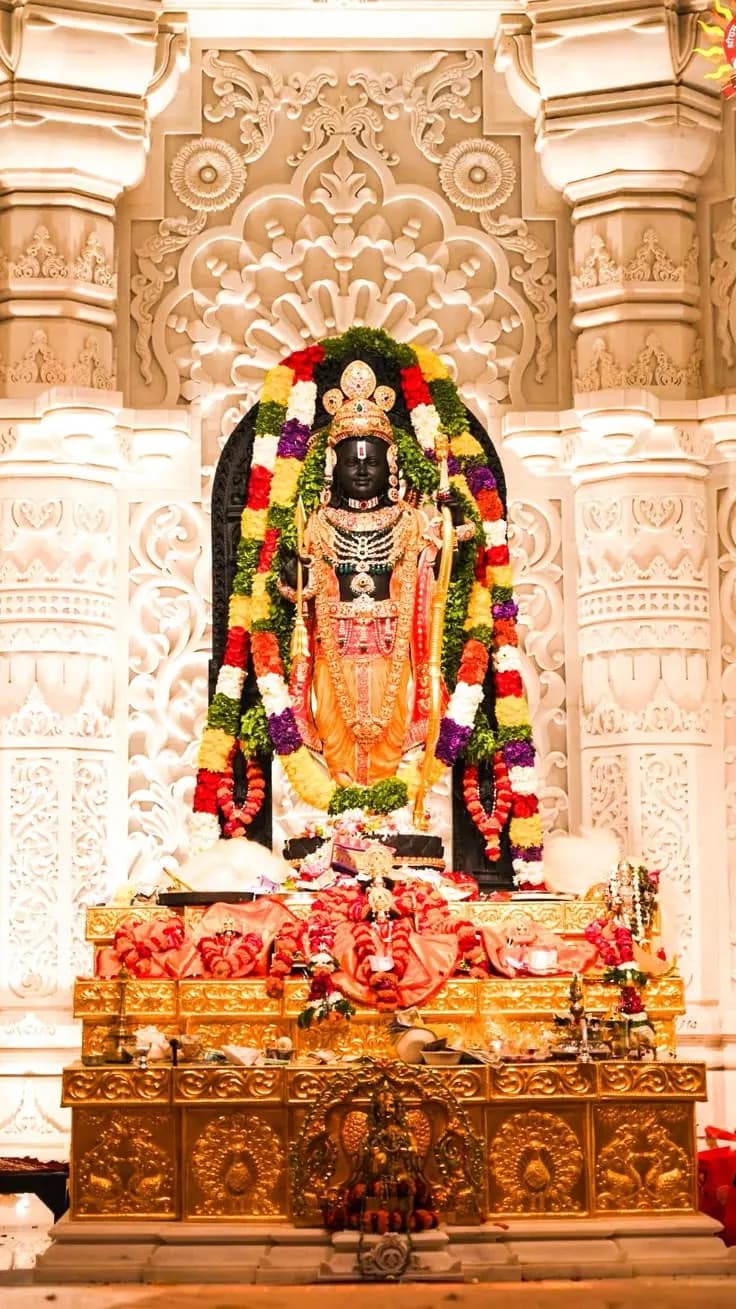
At Awas Vikas Colony in Ayodhya stands the Shri Ayodhya Jain Tirth, the beautiful Shwetambar Jain temple of the holy city, and it is dedicated to a most sacred purpose: to honour the five great Tirthankaras who, the Jain tradition holds, were born here in Ayodhya. It is a temple of gentle, heritage beauty, its architecture carrying an age-old charm, with intricately carved pillars and finely worked shrines, and within it the Tirthankaras are enshrined in the loving Shwetambar manner, their images adorned and serene. It is above all a place of deep tranquillity, a haven for reflection and inner stillness amid a busy pilgrimage, and there is a bhojnalaya on the premises where pilgrims may take pure Jain food. For the Shwetambar Jains especially, it is the temple of their tradition in the sacred birthplace, and a cherished stop.
Ayodhya, the birthplace of five Tirthankaras
The reason Ayodhya is so holy to the Jains, and this temple so revered, is one of the great facts of Jain sacred geography: Ayodhya is one of the very holiest cities in all of Jainism, honoured as the birthplace of no fewer than five of the twenty-four Tirthankaras. First and greatest among them is Bhagwan Rishabhdev, or Adinath, the very first Tirthankara and the founder of the Jain dharma, who was born in this city in the remotest antiquity; and with him, the Lords Ajitnath, Abhinandannath, Sumatinath and Anantnath were all born here too. Ayodhya is honoured as a Kalyanak Kshetra, a land of the great auspicious life-events of the Tirthankaras, for some eighteen of those sacred Kalyanaks, their conception, their birth, their renunciation, took place upon this single holy ground, a concentration of sanctity almost without equal. So to a Jain, Ayodhya is a supreme tirtha, an eternal and sacred city, the cradle of the faith itself.
Shwetambar and Digambar: the two great Jain traditions
A visitor may wonder at finding two great Jain temples in Ayodhya, and the reason is a beautiful one. The Jain faith flows in two great and ancient traditions, the Shwetambar and the Digambar, differing gently in some of their ways yet one in their devotion to the same Tirthankaras and the same path of non-violence and truth. The Shwetambar, whose temple this is, means the white-clad, for its monks and nuns wear simple white robes; and in its temples the images of the Tirthankaras are lovingly adorned, clothed and bejewelled and given inlaid eyes, so that they gaze upon the devotee. The Digambar, whose great temple is the neighbouring Badi Murti with its towering Adinath, means the sky-clad, and depicts the Tirthankaras plain and unadorned, as a symbol of complete renunciation. Both traditions hold Ayodhya among their holiest of cities, and both come here in love; and so, fittingly, Ayodhya welcomes all Jains, with this Shwetambar tirth and the great Digambar Badi Murti standing together as the two faces of one devotion in the sacred birthplace.
The Jain trail of Ayodhya and its shared heritage
This temple and the Badi Murti are the two grand hearts of a whole Jain trail through Ayodhya, which the pilgrim may follow: the two great temples, the ancient Katra Jain temple some three centuries old, and the tonks, the memorial shrines of the Tirthankaras, some standing by the bank of the Saryu with their holy footprints. And this Jain Ayodhya is woven together with the Hindu city in the most beautiful way, for Bhagwan Rishabhdev is revered as the founder of the very Ikshvaku dynasty, the Solar line of which Lord Ram was the great descendant, so that both faiths honour the same royal house of Ayodhya; and Rishabhdev's son Bharata is he after whom our country, Bharat, is named. Even the sister-city bond of the two holy cities holds for the Jains, for Kashi is the birthplace of Bhagwan Parshvanath, the twenty-third Tirthankara, and nearby Ratnapuri of another; so the whole sacred land is joined in devotion. To follow the Jain trail of Ayodhya is to touch the very roots of a great and gentle faith.
The tirth of the Tirthankaras, in my own words
By Rajeev Sharma, guide with Experience My India
I love bringing Jain pilgrims to this Shwetambar temple, and I always explain to my other guests why there are two great Jain temples in Ayodhya: because the Jain faith has two beautiful traditions, the Shwetambar, whose temple this is, with the adorned images of the Tirthankaras, and the Digambar, whose great Badi Murti has the plain, towering Adinath. And both, I tell them, love Ayodhya as one of their holiest cities, because five Tirthankaras were born here, the first of them Rishabhdev, the founder of the Jain faith himself. My Shwetambar guests are always so moved to worship in their own tradition's temple in the sacred birthplace.
It is a peaceful, beautiful, heritage temple, so calm, with the lovely carved pillars, and the bhojnalaya where my Jain guests can take proper Jain food, which they always appreciate. I take them on the whole Jain trail, this temple and the Badi Murti, the old Katra temple, the tonks by the Saryu, and I tell them the wonderful shared story, that Rishabhdev founded the Ikshvaku line that Ram was born into, and that Kashi, my own city, is the birthplace of Parshvanath, so the two holy cities are joined for the Jains too. It is a profound, gentle, deeply peaceful side of Ayodhya, and I never let a Jain pilgrim miss the temple of their own tradition here.
In more than forty years of guiding, this is the tranquil temple whose peace and heritage most soothe the pilgrims I bring.
What to see and do
- Take darshan of the five Tirthankaras, enshrined in the adorned Shwetambar manner.
- Admire the heritage architecture and the intricately carved pillars of the temple.
- Attend a morning or evening aarti and ritual in the Shwetambar tradition.
- Take pure Jain food at the bhojnalaya on the premises.
- Follow the Ayodhya Jain trail, with the Digambar Badi Murti, the Katra temple and the tonks.
How to reach the Shwetambar Jain Temple
The temple is at 682, Awas Vikas Colony, in the Aalamganj Katara area of Ayodhya, easily reached by road. It pairs naturally with the Digambar Badi Murti and the other Jain sites.
| From | Distance | Notes |
|---|---|---|
| The Digambar Badi Murti (Raiganj) | A short ride | The companion Jain temple; do the two together. |
| The core temples (Ram Mandir, Hanuman Garhi) | A short ride | By auto or e-rickshaw. |
| Ayodhya Dham Junction (railway) | A short ride | By e-rickshaw, auto or taxi to Awas Vikas Colony. |
| The Katra Jain temple and the tonks | In the city | The other Jain sites; do the Jain trail together. |
| Maharishi Valmiki Airport, Ayodhya | About 10 to 15 km | The new airport; taxis and autos to the city. |
It is best seen with the Badi Murti and the other Jain sites for a full Jain trail.
Best time to visit and how to plan it
| When | Why |
|---|---|
| During morning or evening worship | For the Shwetambar aartis and rituals, and a peaceful darshan. |
| Winter (October to March) | The most pleasant season for the Ayodhya Jain trail. |
| Mahavir Jayanti, Akshaya Tritiya and Paryushan | The great Jain festivals, kept with devotion. |
| With the Badi Murti and the Jain trail | To see both traditions and the whole Jain Ayodhya. |
- Pair it with the Digambar Badi Murti, the Katra temple, the tonks and, if you can, the Kashi Jain tirthas.
- Allow 30 to 45 minutes for the temple; longer for the full Jain trail.
For Ayodhya, or a combined Kashi and Ayodhya pilgrimage, planned end to end, see our tour packages.
Etiquette for visiting
- This is a Jain temple; be respectful, keep your voice low, and follow any guidance.
- Remove footwear and any leather items before entering, and dress modestly.
- Do not carry outside food into the sanctum, and follow the temple's rules of purity.
- Behold the adorned images of the Tirthankaras with reverence, in the Shwetambar way.
Accessibility for elderly and mobility limited visitors
- The temple is reachable by road and generally well laid out; check on any steps to the sanctum.
- It is peaceful and uncrowded, which suits a slow, restful, direct darshan.
- The bhojnalaya on the premises is a convenience for elderly pilgrims to rest and eat.
- We arrange transport and plan a gentle Jain-trail visit within your Ayodhya day.
Our guided visits and the Jain trail
We are a Varanasi and Ayodhya based operator, a unit of Experience My India, with more than forty years of guiding pilgrims across Kashi, Ayodhya, and Prayagraj. Entry and darshan are free, so what we offer is the story and the planning: a guide who tells the great story of Ayodhya as the birthplace of the Tirthankaras and explains the two Jain traditions, and, for our Jain pilgrims, the whole Jain trail of the city in their own tradition, and the joining of the two Jain birthplace cities, Ayodhya and Kashi.
| Service | Includes | Price |
|---|---|---|
| Guided Ayodhya Jain trail | The Shwetambar tirth, the Digambar Badi Murti, the Katra temple and the tonks, with a guide. | Contact us for pricing |
| Guided Shwetambar temple visit | The temple, the five Tirthankaras and the tradition, with a guide. | Contact us for pricing |
| Kashi and Ayodhya Jain pilgrimage | The Jain tirthas of both cities, Ayodhya and Kashi, with a guide. | Contact us for pricing |
| Full Ayodhya darshan day | The Jain temple within a wider Ayodhya visit, with a guide. | Contact us for pricing |
Inclusions and exclusions are stated up front, with any taxes and conditions, and no charge appears later that was not named. Darshan is free; our charge is only for guiding and services. See all our tour packages for the full range.
Experience My India is a travel operator, not the temple administration. Darshan is free; our charge is only for our guiding and services. Timings and rules are set by the temple and can change.
Nearby sacred sites in Ayodhya
The Shwetambar Jain temple is at Awas Vikas Colony, among the Jain and Ram sites of Ayodhya.
| Site | What it is | Internal link |
|---|---|---|
| Rishabhdev Digambar Jain Mandir (Badi Murti) | The great Digambar Jain temple with its 31-foot Adinath, the companion. | /temple/ayodhya/rishabhdev-jain-mandir |
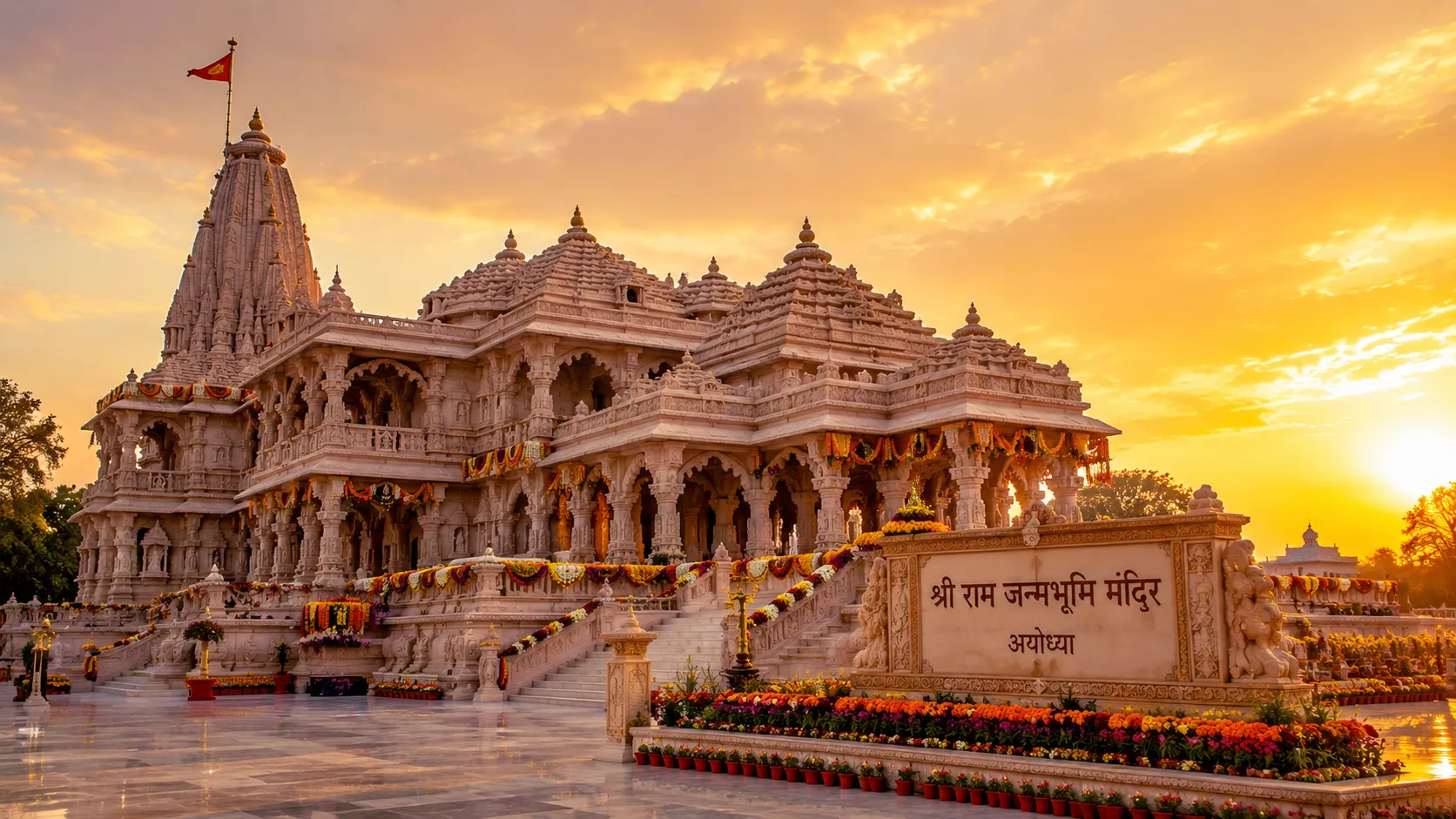
| Shri Ram Janmabhoomi Mandir | The birthplace of Ram, of the Ikshvaku dynasty founded by Rishabhdev. | /temple/ayodhya/ram-janmabhoomi-mandir |
| Surajkund | The Sun pond of Ram's Suryavanshi (Ikshvaku) line, the shared dynasty. | /temple/ayodhya/surajkund |
| Saryu Ghats and the aarti | The sacred river, by which the tonks of the Tirthankaras stand. | /temple/ayodhya/saryu-ghat-aarti |
| Kashi Jain tirthas (Varanasi) | The birthplace of Parshvanath, the 23rd Tirthankara, in Kashi. | /temple/varanasi/jain-temples |
For the Ram Mandir darshan and its free Sugam booking, see our Ram Janmabhoomi Mandir guide.