.webp&w=2048&q=75)
Essential info at a glance
| Detail | At a glance |
|---|---|
| What it is | A historic green park on the Yamuna, the site of the reading of the Proclamation of 1858. |
| Opening hours | 5:00 AM to 7:00 PM daily (up to 7:30 PM by the sunset). |
| Best time | 5:30 to 6:30 PM, for the sunset breeze and the nearby river rituals. |
| Entry fee | Free (a nominal Rs 5 to 10 may apply on peak events). |
| The memorial | A four-lion pillar, now crowned with the Ashoka Lion Capital of free India. |
| Nearby aarti | The Yamuna aarti at Saraswati Ghat, next door, around 6:00 to 6:30 PM. |
| History | Where Earl Canning read Queen Victoria's Proclamation on 1 November 1858. |
| Location | Kydganj, on the Yamuna, next to the Allahabad Fort and the New Yamuna Bridge. |
Minto Park timings and the nearby aarti
The park is open every day from 5:00 AM to 7:00 PM, a little later by the season and the sunset, and entry is free, with only a nominal fee on peak holiday events. The loveliest time is the evening, from about 5:30 to 6:30 PM, for the cool river breeze and the sunset over the Yamuna. And there is a beautiful bonus close by: a five-minute walk brings you to the Saraswati Ghat, where the evening Yamuna aarti is performed around sunset, roughly between 6:00 and 6:30 PM, with seating on the ghat steps free and open to all. So park and river make a fine evening together.
| Detail | When | Notes |
|---|---|---|
| Park hours | 5:00 AM to 7:00 PM | Up to 7:30 PM by the sunset; free. |
| Best time | 5:30 to 6:30 PM | For the sunset breeze and the river rituals. |
| Saraswati Ghat Yamuna aarti | Around 6:00 to 6:30 PM | Next door, a 5-minute walk; free seating. |
| Entry fee | Free | A nominal Rs 5 to 10 may apply on peak events. |
Minto Park: the historic Yamuna riverfront park
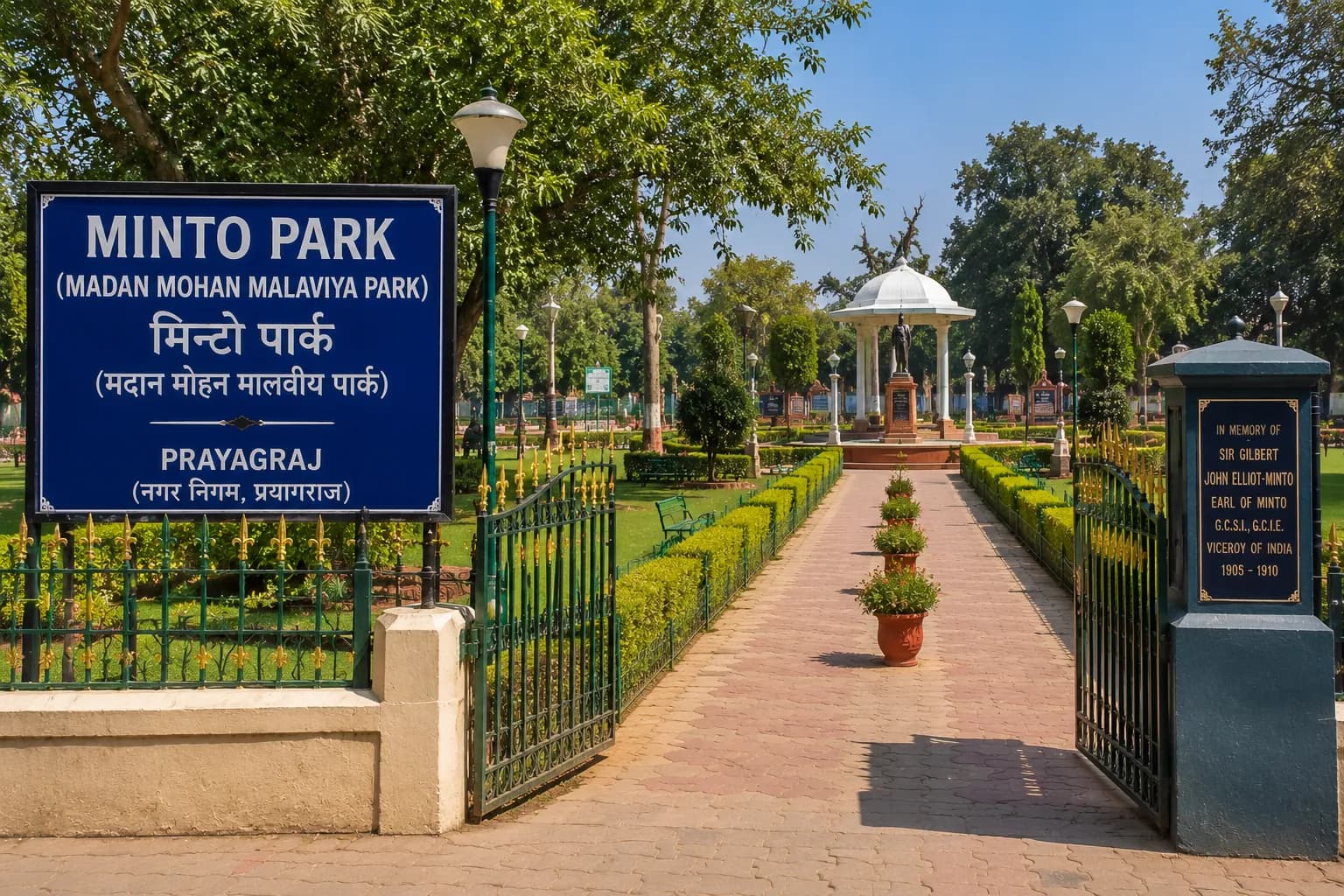
On the bank of the Yamuna, in the Kydganj quarter and right beside the great Allahabad Fort and the New Yamuna Bridge, lies Minto Park, now officially named Madan Mohan Malaviya Park, a pleasant green public space with a quietly momentous history. For this lawn by the river was the stage of one of the great turning points in the history of modern India, and it holds, at its heart, a memorial that tells a story of history and of its reclaiming. Today it is a well-kept park, loved by the people of the city for an evening stroll and the cool of the river breeze; but to the visitor who knows its past, it is a place where the very course of the nation once turned.
The Proclamation of 1858: a turning point in history
The great historical importance of this park rests on a single day. On the 1st of November, 1858, here on this ground, Earl Canning, the Governor-General of India, read out the declaration of the Proclamation of Queen Victoria; and by that Proclamation the governance of India passed out of the hands of the East India Company and into the direct rule of the British Crown. It was the aftermath of the great Revolt of 1857, that vast uprising against the Company's rule; and in its wake, the British Crown took India directly under its own government. So this quiet park was the site of the end of the rule of the Company, and the beginning of the era of the British Raj under the Crown, which would endure until India won her freedom in 1947. Few spots in the country are tied so directly to so pivotal a turn of history.
The memorial and its reclaiming
At the heart of the park stands the memorial to that day, and its story is a moving one. To mark the fiftieth anniversary of the Proclamation, in 1908 the Earl of Minto, then the Viceroy of India, raised here a stone proclamation pillar, and set upon its top the busts of Queen Victoria and King Edward VII; and the park came to be named, after him, Minto Park. But after India won her independence, this monument of the imperial age was quietly and beautifully reclaimed for the free nation. The busts of the British sovereigns were taken down from the pillar, and in their place was set the Ashoka Lion Capital, the four lions of Sarnath that are the national emblem of the Republic of India; and the park was given a new name, that of Pandit Madan Mohan Malaviya, the revered educationist and freedom fighter, the founder of the Banaras Hindu University. And so today the old proclamation pillar, raised to mark the coming of Crown rule, stands crowned instead with the lions of free India, in a park that bears the name of a hero of the freedom struggle, a quiet and eloquent symbol of a nation that took its own history back into its own hands.
The Yamuna riverfront and the aarti
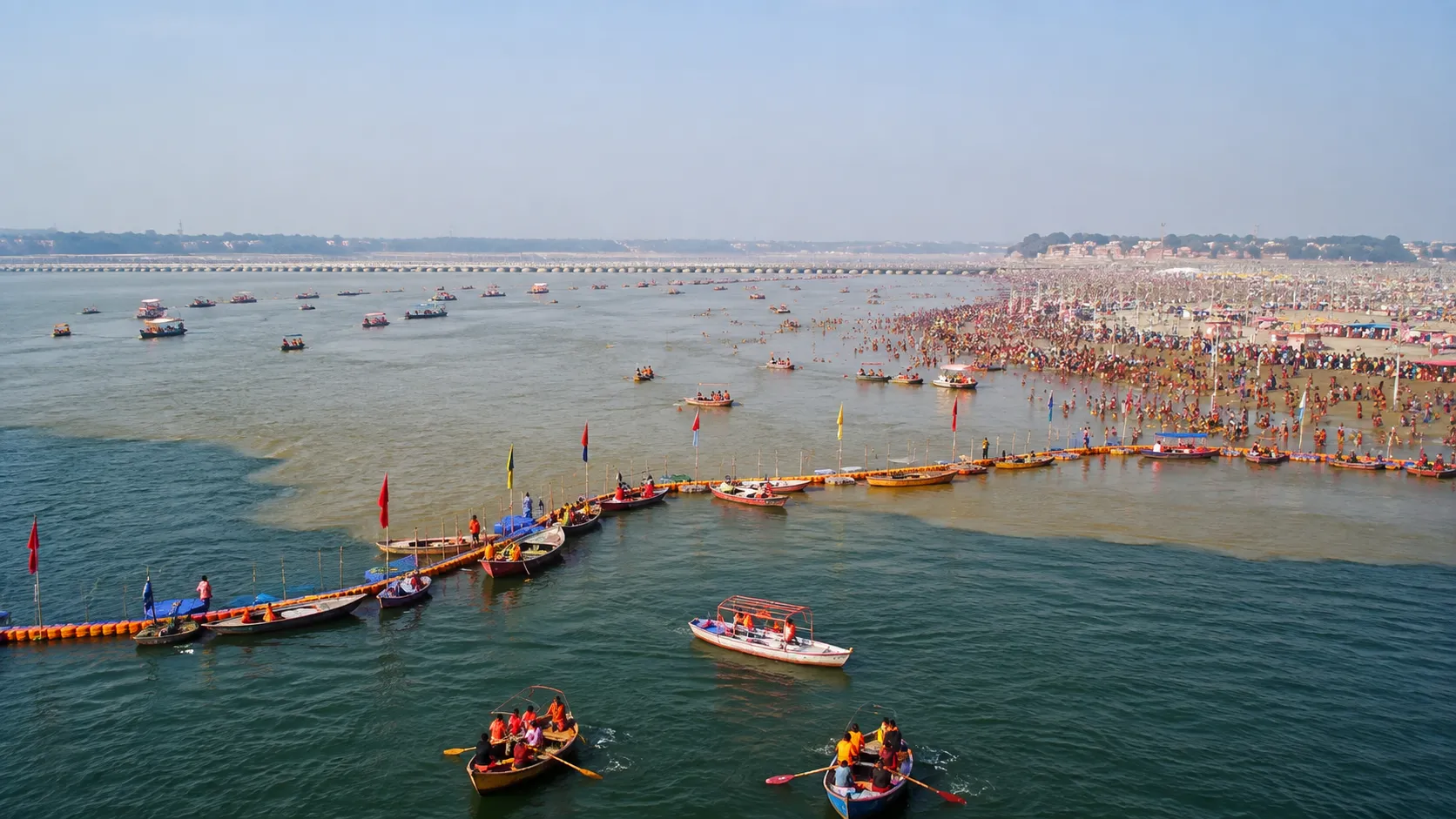
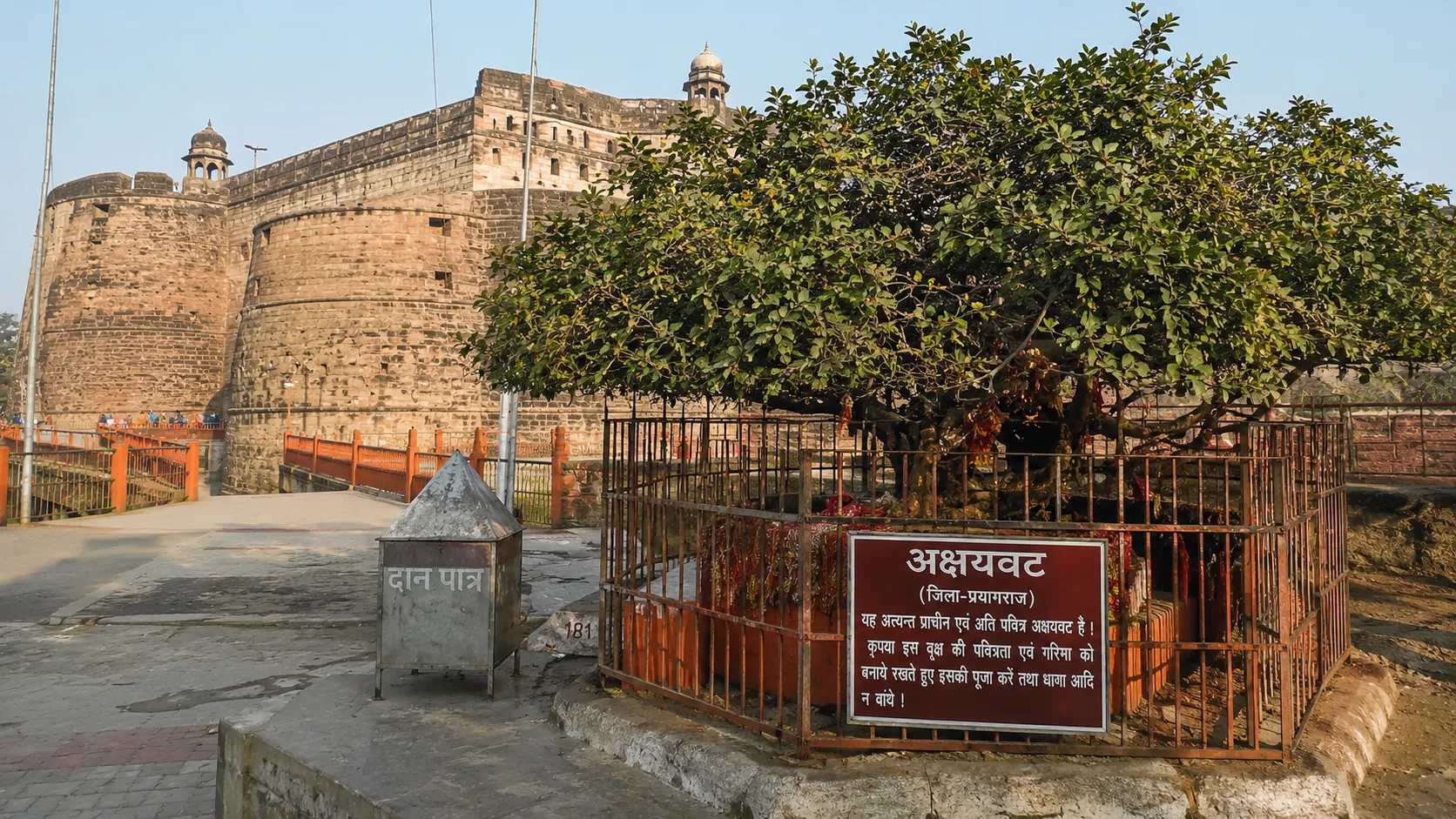
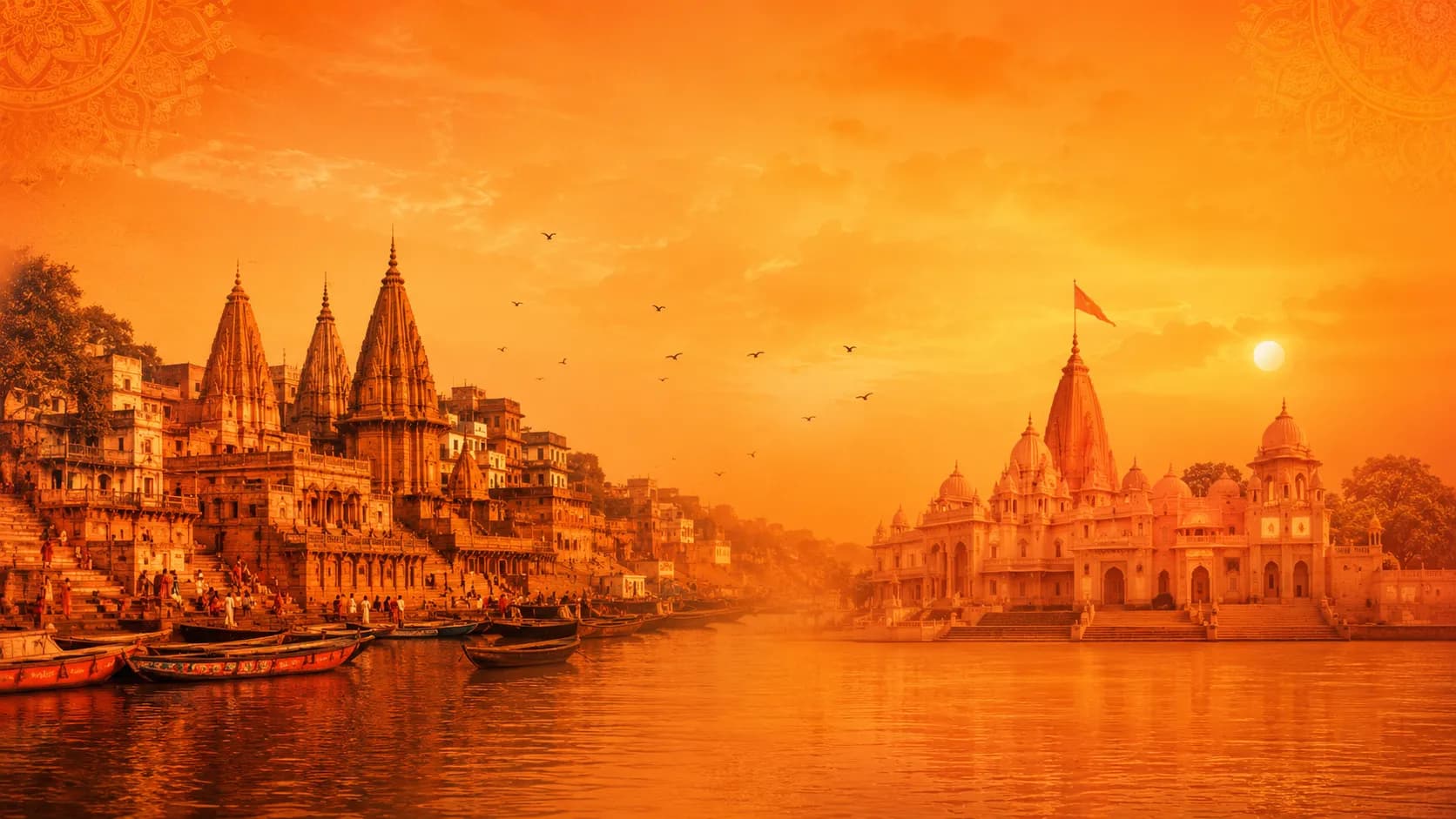
Beyond its history, Minto Park is simply a lovely place to be, on the bank of the Yamuna beside the towering old Fort and the great span of the New Yamuna Bridge, with wide, open views over the river and a cool breeze in the evening, when families and friends gather on its lawns. And its loveliest neighbour is the Saraswati Ghat, just a few minutes' walk away, where each evening around sunset the beautiful Yamuna aarti is performed on the riverbank, the lamps and the chanting reflected in the water, with seating on the steps free and open to all. To take an evening walk in the park and then step across to the ghat for the aarti is one of the gentlest and most pleasant of Prayagraj evenings.
Where history turned, in my own words
By Rajeev Sharma, guide with Experience My India
I like to bring my visitors to Minto Park in the evening, and I tell them, as we stand there, that this quiet lawn is one of the most historic spots in the country: for right here, in 1858, the British read out the proclamation that took India from the Company and gave it to the Crown, after the great revolt of 1857. People are often surprised that so pivotal a moment happened in such a modest place. And then I show them the memorial, and tell them my favourite part: how, after independence, we took down the British busts from the top of the old pillar and put up our own Ashoka lions, our national emblem, and renamed the park for Madan Mohan Malaviya, the freedom fighter who founded BHU. I find that story very moving, how we made the old imperial monument our own.
And then I take them the short walk to the Saraswati Ghat for the lovely evening Yamuna aarti, so they end the day with the lamps on the river, right beside the great Fort. I pair the park with the Fort and its own ancient Ashoka pillar, so my visitors see the whole sweep, Ashoka to the Mughals to the British to free India, in one riverside corner. It is a peaceful, green, deeply historic place, and I never let a visitor who cares for our history miss it.
In more than forty years of guiding, telling the story of how we crowned that old pillar with our own lions is among the most stirring things I share.
What to see and do
- See the historic memorial pillar, crowned now with the Ashoka Lion Capital of free India.
- Learn the story of the 1858 Proclamation, and of the memorial's reclaiming after independence.
- Enjoy the Yamuna riverfront, the sunset and the cool breeze by the great Fort.
- Walk five minutes to the Saraswati Ghat for the evening Yamuna aarti.
- Pair it with the Allahabad Fort and its own ancient Ashoka pillar, next door.
How to reach Minto Park
Minto Park is at Kydganj, on the Yamuna, right next to the Allahabad Fort and the New Yamuna Bridge, easily reached by road, and a natural companion to the Fort and the riverfront.
| From | Distance | Notes |
|---|---|---|
| The Allahabad Fort | Adjacent | The great Mughal fort, next door; the Ashoka pillar within. |
| Saraswati Ghat | A 5-minute walk | For the evening Yamuna aarti. |
| The Triveni Sangam | A few km | The sacred confluence. |
| Prayagraj Junction (railway) | A few km | By auto, e-rickshaw or cab. |
| Prayagraj (Bamrauli) Airport | About 15 to 18 km | The city airport; cabs to Kydganj. |
It sits by the Fort and the Yamuna riverfront.
Best time to visit and how to plan it
| When | Why |
|---|---|
| Evening (5:30 to 6:30 PM) | For the sunset, the river breeze, and the Yamuna aarti next door. |
| Winter (Nov to Feb) | The most pleasant season for the riverside park. |
| With the Allahabad Fort | To see the whole sweep of history, from the Ashoka pillar to the Proclamation. |
| With the Saraswati Ghat aarti | To end the evening with the lamps on the Yamuna. |
- Pair it with the Fort, the Saraswati Ghat aarti and the Sangam.
- Allow 30 to 45 minutes for the park and the memorial; longer for the aarti next door.
For Prayagraj, or a combined Kashi, Ayodhya and Prayagraj visit, planned end to end, see our tour packages.
Accessibility for elderly and mobility limited visitors
- The park is level and open, with easy paths, pleasant for a gentle evening stroll.
- The memorial and the river views are easily reached; there are lawns and benches to rest.
- The walk to the Saraswati Ghat is short; a helper is useful for the steps at the ghat.
- We arrange transport and plan a comfortable, gentle riverside evening.
Etiquette for visiting
- Treat the historic memorial with respect, and do not deface or climb it.
- Keep the park clean and green; do not litter on the lawns or the riverbank.
- Be respectful and reverent at the Yamuna aarti next door.
- Mind the river and the steps at the ghat, and keep children close in the evening.
Our guided heritage visits and Prayagraj tours
We are a Varanasi, Ayodhya and Prayagraj based operator, a unit of Experience My India, with more than forty years of guiding visitors across all three cities, and our own local guide in Prayagraj. Entry is free, so what we offer is the story and the planning: a guide who tells the history of the 1858 Proclamation and the moving story of the memorial's reclaiming, the park paired with the Fort and the Saraswati Ghat aarti, and the whole heritage of the city, woven into a full Prayag day.
| Service | Includes | Price |
|---|---|---|
| Guided Minto Park and Fort visit | The park, the memorial and the Fort, with the story, with a guide. | Contact us for pricing |
| Yamuna-side heritage and aarti evening | Minto Park, the Fort and the Saraswati Ghat aarti, with a guide. | Contact us for pricing |
| Full Prayagraj day | Minto Park within a wider Prayagraj visit, with a guide. | Contact us for pricing |
| Kashi, Ayodhya and Prayagraj tour | The three cities, sacred and heritage, with a guide. | Contact us for pricing |
Inclusions and exclusions are stated up front, with any taxes and conditions, and no charge appears later that was not named. Entry is free; our charge is only for guiding and services. See all our tour packages for the full range.
Experience My India is a travel operator, not the park administration. Entry is free; our charge is only for our guiding and services. Timings and rules are set by the authorities and can change.
Nearby sites in Prayagraj
Minto Park is on the Yamuna, by the Fort, among the heritage sites of Prayagraj.
| Site | What it is | Internal link |
|---|---|---|
| Allahabad Fort and Akshayavat | Akbar's great Mughal fort, next door, with its ancient Ashoka pillar. | /temple/prayagraj/allahabad-fort-akshayavat |
| Triveni Sangam | The sacred confluence of the Ganga, Yamuna and Saraswati. | /temple/prayagraj/triveni-sangam |
| Chandra Shekhar Azad Park | The martyr's park, with the colonial Victoria canopy; the freedom heritage. | /temple/prayagraj/chandra-shekhar-azad-park |
| Khusro Bagh | The Mughal garden and tombs, near the railway station. | /temple/prayagraj/khusro-bagh |
| Sarnath Archaeological Museum (Varanasi) | Home of the original Ashoka Lion Capital, India's national emblem. | /temple/varanasi/sarnath-archaeological-museum |
For the great fort and its ancient Ashoka pillar next door, see our Allahabad Fort guide.