.webp&w=2048&q=75)
Essential info at a glance
| Detail | At a glance |
|---|---|
| What it is | A 130-foot four-storey South Indian temple by the Sangam that gathers the sacred sites of all India in one structure. |
| Morning hours | 6:00 AM to 1:00 PM. |
| Evening hours | 4:00 PM to 8:00 PM. |
| Evening aarti | Daily at sunset, around 7:00 to 7:30 PM. |
| Entry fee | Free, with a nominal archana fee (around Rs 10). No VIP darshan. |
| The four floors | Adi Shankaracharya; the 51 Shakti Peethas; the 108 Vishnu Divya Desams; the Sahasra Linga. |
| Built by | The Kanchi Kamakoti Peetham, consecrated in 1986. |
| Location | Triveni Road, Daraganj, near the Sangam; panoramic Sangam views from the top. |
Shankar Viman Mandapam timings and aarti
The temple keeps a split day, open from 6:00 AM to 1:00 PM and again from 4:00 PM to 8:00 PM, and entry is free, with only a nominal fee for a special archana. Its evening aarti is held daily at sunset, around 7:00 to 7:30 PM, a beautiful hour in the twilight above the Sangam. The queues are usually manageable, easier than at the great thronged shrines, and one may view the sanctum and stand in the courtyard for the aarti without long waits; on Maha Shivratri and through Shravan, and during the Kumbh, the crowds are much larger.
| Detail | When | Notes |
|---|---|---|
| Morning hours | 6:00 AM to 1:00 PM | Free; nominal archana fee. |
| Evening hours | 4:00 PM to 8:00 PM | The evening reopening. |
| Evening aarti | Around 7:00 to 7:30 PM | At sunset, in the twilight above the Sangam. |
| Busiest | Maha Shivratri, Shravan, the Kumbh | Larger crowds; Shiva is the primary deity. |
Shri Adi Shankar Viman Mandapam: a South Indian temple by the Sangam
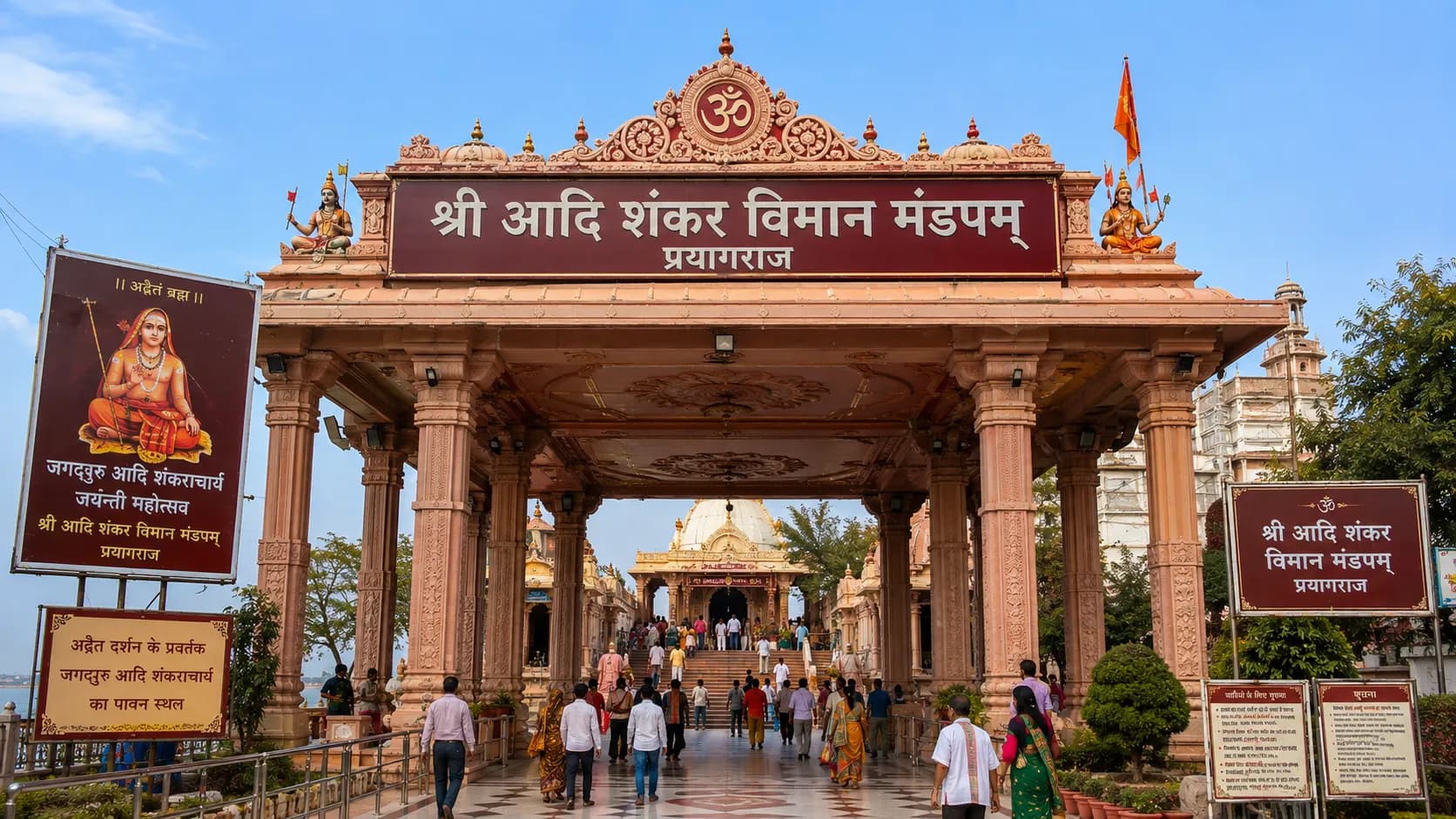
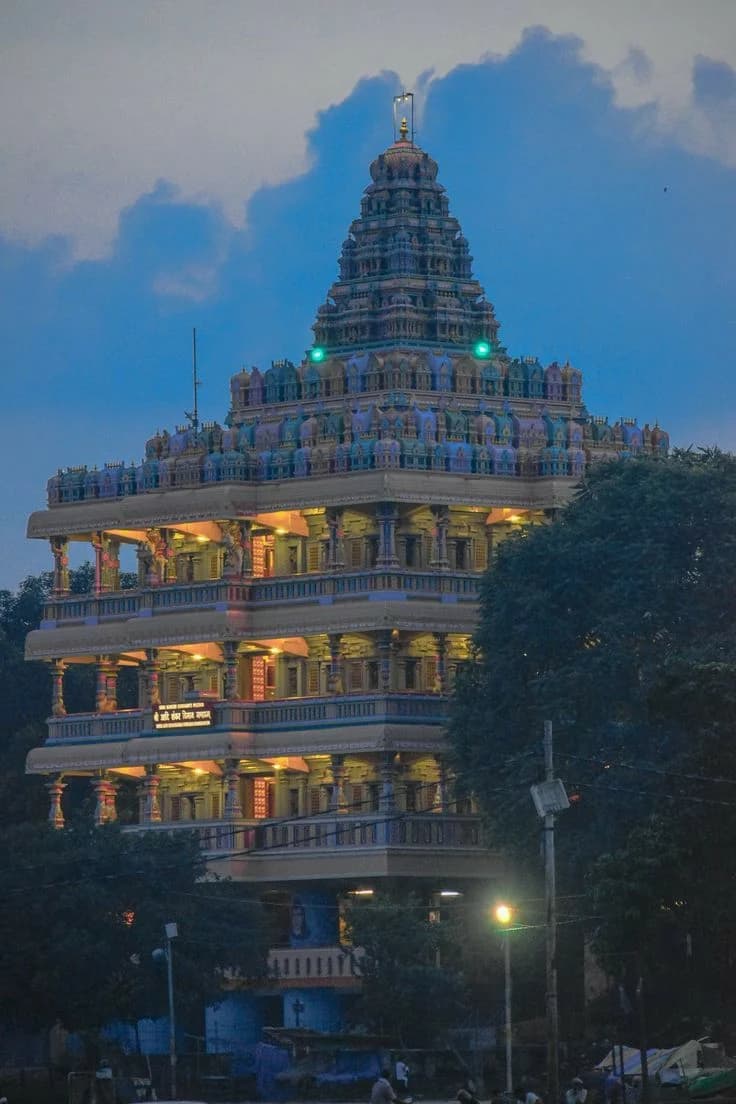
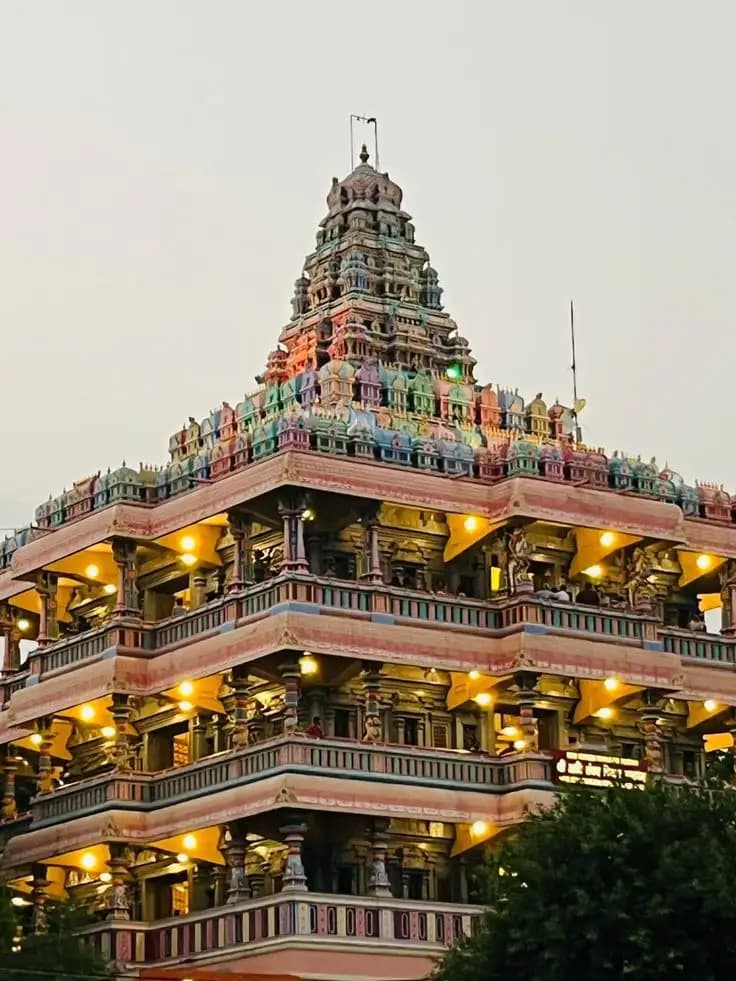
Rising some hundred and thirty feet above the bank of the Ganga, near the sacred Sangam, is one of the most striking and unusual temples in all of North India: the Shri Adi Shankar Viman Mandapam, a magnificent, towering, four-storey temple built entirely in the grand South Indian, Dravidian, Vimana style, with its soaring tiered tower, its finely carved pillars and its walls bright with murals of the gods and of the Ramayana. To come upon so complete and beautiful a South Indian temple here in the north, by the confluence of the Ganga and Yamuna, is a wonderful surprise. It was built by the revered Sri Kanchi Kamakoti Peetham, the great southern seat of the successors of Adi Shankaracharya, and consecrated in 1986, raised by Shankaracharya Swami Jayendra Saraswati to fulfil the cherished wish of his master, the great Paramacharya of Kanchi; and its worship to this day is performed in the South Indian manner, by South Indian priests. It is the tallest structure in all the Sangam area, and a beloved landmark of Prayagraj.
All of sacred India in one temple: the four floors
The true wonder of the Viman Mandapam is what it holds, for it gathers, in its four ascending floors, the sacred sites of the whole of India into one soaring temple, so that the pilgrim, climbing from floor to floor, may worship at all of them in this one place. On the ground floor stands the great Adi Shankaracharya himself, with the sages Kumarila Bhatta and Mandana Mishra whom he met in debate, and the walls tell the whole story of his life in murals. On the first floor is enthroned Devi Kamakshi, the goddess of Kanchi, and around her are gathered all the fifty-one Shakti Peethas, the holiest sites of the Mother across the land, so that here one may bow to every one of the fifty-one. On the second floor stands Lord Venkateswara, the Balaji of Tirupati, and with him the Veni Madhav of Prayag, and around them are gathered all the hundred and eight Vishnu Divya Desams, the holiest abodes of Vishnu, so that here one may worship at every one of the hundred and eight. And on the topmost floor, in the Rudraksha Mandapam, is the Sahasra Yoga Linga, a single great Shivalinga carved with a thousand and eight smaller lingas upon it, with the murals of Shiva's play around, and beyond, from the terrace, the whole panorama of the Sangam and the wide rivers spread out below. In this one temple, then, are the Devi, the Vishnu and the Shiva of all India, the three great streams of our worship, Shaivism, Vaishnavism and Shaktism, brought together as one.
Adi Shankaracharya and the unity of dharma
It is a most fitting thing that this temple of unity should be raised in honour of Adi Shankaracharya, and here at Prayag; for no one did more than he to unite the faith. Adi Shankara was the great saint and philosopher of the eighth century, the master of Advaita, the teaching of the oneness of all; and in a life of but thirty-two years he walked the whole length and breadth of India on foot, and by his wisdom and his debates, at this very spot, the tradition holds, among them, he revived and reunited the whole of Sanatan Dharma, drawing its many streams into one. He established the four great mathas at the four corners of the land, and the orders of monks and the very akharas of sages that to this day lead the Kumbh at this Sangam; and he taught that the worshippers of Shiva and of Vishnu and of the Devi worship, in truth, the one Supreme. And so this temple, which gathers Shiva and Vishnu and the Devi and all their holy places into one, at the Sangam where the rivers themselves become one, is the perfect monument to his vision. It was the wish of the Paramacharya of Kanchi that the pilgrim, having taken the holy bath at the Sangam, should have here a great temple in which to offer his worship; and so this Mandapam completes the Prayag pilgrimage, making of the bathing-place also a place of the gods.
A temple of all India, in my own words
By Rajeev Sharma, guide with Experience My India
The Viman Mandapam is one of my favourite places to bring guests, because it always astonishes them. First, to find such a grand South Indian temple, a proper Dravidian tower, here in the north by our Sangam, is a lovely surprise. And then I tell them the wonder of it: climb these four floors, and you will worship at all of sacred India in one temple. On one floor, all fifty-one Shakti Peethas of the Mother; on the next, all hundred and eight Divya Desams of Vishnu, with Tirupati Balaji; on the top, the great Shiva with his thousand lingas, and the whole Sangam spread out below. People can hardly believe they can bow to all of them in one place.
I love to tell them that this is all in honour of Adi Shankaracharya, the great saint who, in a life of just thirty-two years, walked all India and united our whole dharma, all the sects into one, and started the very akharas that lead our Kumbh; and that this temple of unity stands fittingly here at Prayag, where the rivers themselves become one. And I take them up to the top terrace for the beautiful view over the Sangam, especially at sunset for the aarti. For my guests who have seen the great South Indian temple of Ammaji in Ayodhya, this is a lovely companion. It is a peaceful, magnificent, and deeply meaningful place, and I never let a pilgrim to Prayag miss it after the Sangam bath.
In more than forty years of guiding, this temple that holds all of sacred India in one is among the most wondrous I share.
What to see and do
- Climb the four floors and worship at all of sacred India: the Shakti Peethas, the Divya Desams and the great Shiva.
- Bow to Adi Shankaracharya on the ground floor, and see the murals of his life.
- Take darshan of Devi Kamakshi and all 51 Shakti Peethas, and of Tirupati Balaji and all 108 Divya Desams.
- See the Sahasra Yoga Linga on the top floor, and the panoramic Sangam view from the terrace.
- Attend the sunset aarti, and visit after your Sangam bath to complete the pilgrimage.
How to reach Shankar Viman Mandapam
The temple is on Triveni Road, in Daraganj, near the Sangam, the tallest structure in the area and easily spotted; it is reached by road and a natural part of the Sangam visit.
| From | Distance | Notes |
|---|---|---|
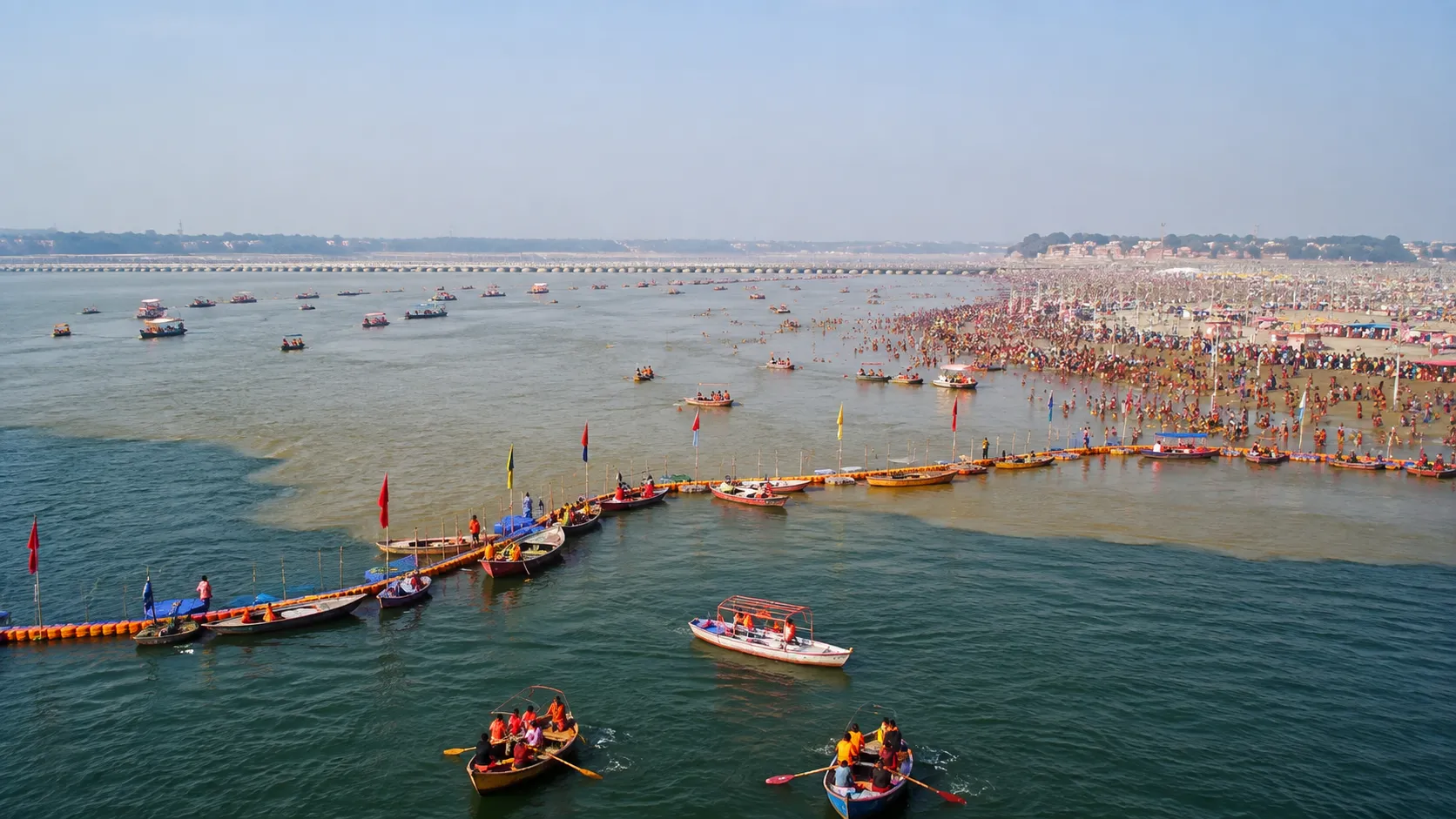
| The Triveni Sangam | Near, by the confluence | Bathe at the Sangam, then come to worship here. |
| Bade Hanuman and Nagvasuki | A short ride | The guardian Hanuman and the serpent-king, nearby. |
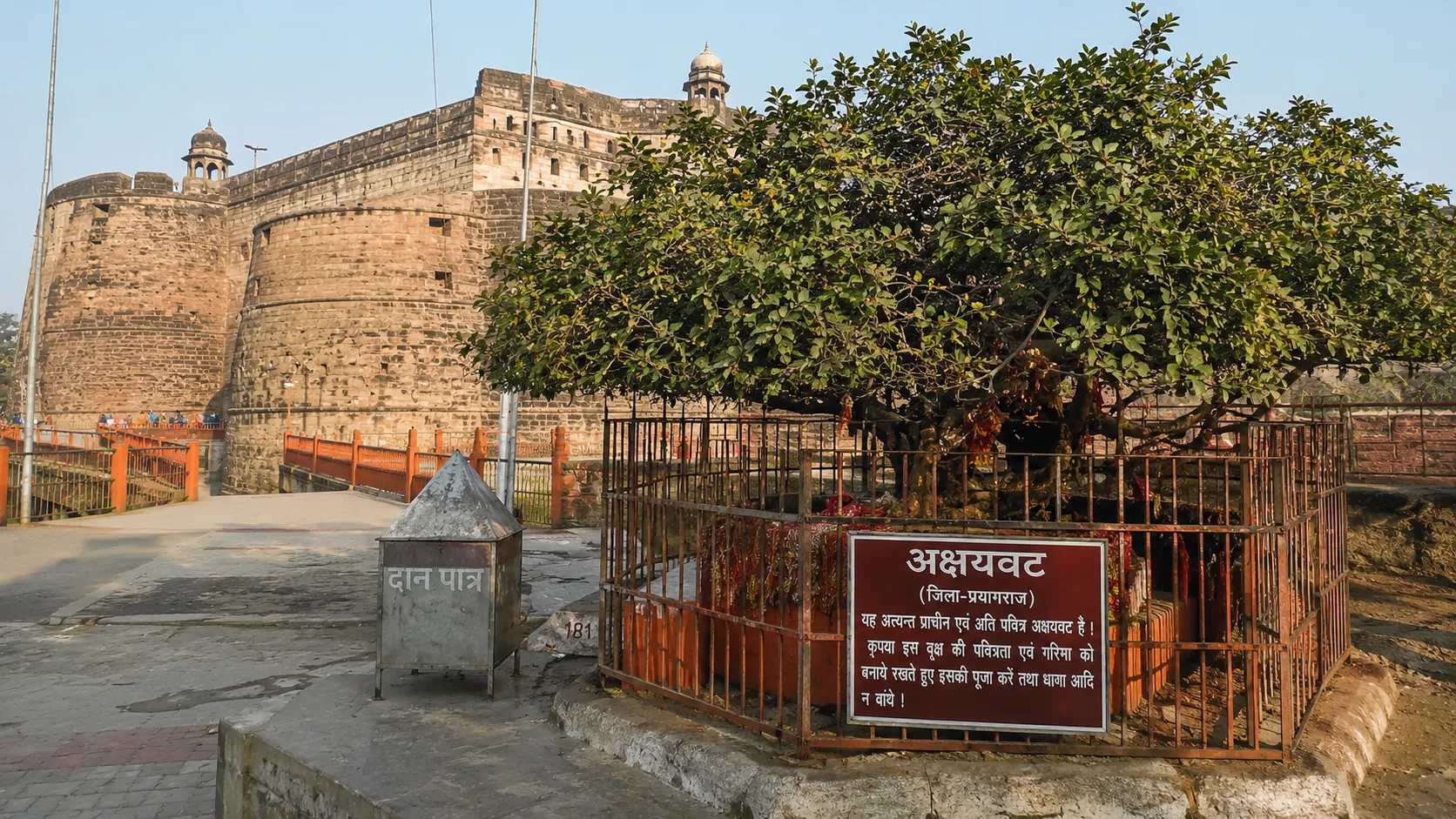
| The Allahabad Fort | A short ride | The great fort by the Sangam. |
| Prayagraj Junction (railway) | About 7 to 8 km | By auto, e-rickshaw or taxi. |
| Prayagraj (Bamrauli) Airport | About 15 to 18 km | The city airport; taxis to the temple. |
It sits naturally with the Sangam and the sacred core of Prayagraj.
Best time to visit and how to plan it
| When | Why |
|---|---|
| After the Sangam bath | As the Paramacharya wished, to worship after the holy dip; it completes the pilgrimage. |
| Sunset, for the evening aarti | The aarti in the twilight, with the view over the Sangam. |
| Maha Shivratri and the month of Shravan | The great days of Shiva, the primary deity. |
| The Kumbh and Magh Mela | When the temple, the tallest at the Sangam, is at its most thronged. |
- Pair it with the Sangam, Bade Hanuman, Nagvasuki and the Fort.
- Allow 45 minutes to an hour to climb the floors and enjoy the terrace view.
For Prayagraj, or a combined Kashi, Ayodhya and Prayagraj pilgrimage, planned end to end, see our tour packages.
Accessibility for elderly and mobility limited visitors
- The temple has four floors reached by stairs, so the upper floors may be hard for those who cannot climb; the ground-floor Shankaracharya shrine is easily reached.
- Come at a quieter hour, and take the climb slowly, resting on each floor to view its shrines.
- The peaceful, manageable crowds suit a calm, unhurried visit for elderly pilgrims.
- We arrange transport and plan a gentle visit within your Prayagraj day.
Etiquette for visiting
- Remove footwear and dress modestly; be reverent at each of the many shrines.
- Follow the South Indian priests and the customs of the temple's worship.
- Keep your voice low, and mind the stairs between the floors and the terrace edge.
- Follow any photography rules, and be considerate of others at the shrines and the aarti.
Our guided visits and Prayagraj tours
We are a Varanasi, Ayodhya and Prayagraj based operator, a unit of Experience My India, with more than forty years of guiding pilgrims across all three holy cities, and our own local guide in Prayagraj. Entry is free, so what we offer is the story and the planning: a guide who leads you up through the four floors and tells the meaning of each, the Shakti Peethas, the Divya Desams and the Sahasra Linga, and the great, unifying vision of Adi Shankaracharya, the darshan woven with the Sangam and the sacred core of Prayagraj, and the great three-city pilgrimage.
| Service | Includes | Price |
|---|---|---|
| Guided Viman Mandapam and Sangam visit | The four floors and the Sangam, with the story, with a guide. | Contact us for pricing |
| Full Prayagraj darshan day | The Viman Mandapam within a wider Prayagraj visit, with a guide. | Contact us for pricing |
| South Indian and Divya Desam trail | The Viman Mandapam with Ammaji, Ayodhya's Divya Desam temple, and the Shakti sites. | Contact us for pricing |
| Kashi, Ayodhya and Prayagraj pilgrimage | The three holy cities, with darshan, transfers and a guide. | Contact us for pricing |
Inclusions and exclusions are stated up front, with any taxes and conditions, and no charge appears later that was not named. Entry is free; our charge is only for guiding and services. See all our tour packages for the full range.
Experience My India is a travel operator, not the temple administration. Entry is free; our charge is only for our guiding and services. Timings and rules are set by the temple and can change.
Nearby sacred sites in Prayagraj
The Viman Mandapam is near the Sangam, at the sacred core of Prayagraj.
| Site | What it is | Internal link |
|---|---|---|
| Triveni Sangam | The sacred confluence; worship here after the holy bath. | /temple/prayagraj/triveni-sangam |
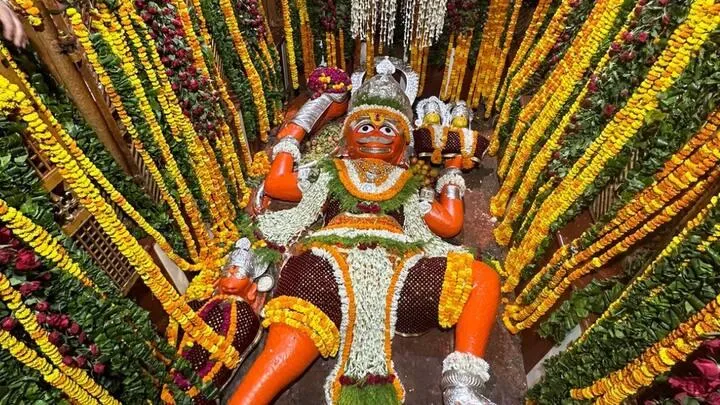
| Bade Hanuman Mandir | The reclining Hanuman, guardian of the Sangam. | /temple/prayagraj/bade-hanuman-mandir |
| Nagvasuki Temple | The serpent-king who was healed by the Sangam. | /temple/prayagraj/nagvasuki-temple |
| Alopi Devi Mandir | The Shakti Peeth of the vanished goddess; for the Devi of Prayag. | /temple/prayagraj/alopi-devi-mandir |
| Ammaji Mandir (Ayodhya) | Ayodhya's South Indian Divya Desam temple, for the Sri Vaishnava tradition. | /temple/ayodhya/ammaji-mandir |
For the Sangam snan and the confluence, see our Triveni Sangam guide.