Essential info at a glance
| Detail | At a glance |
|---|---|
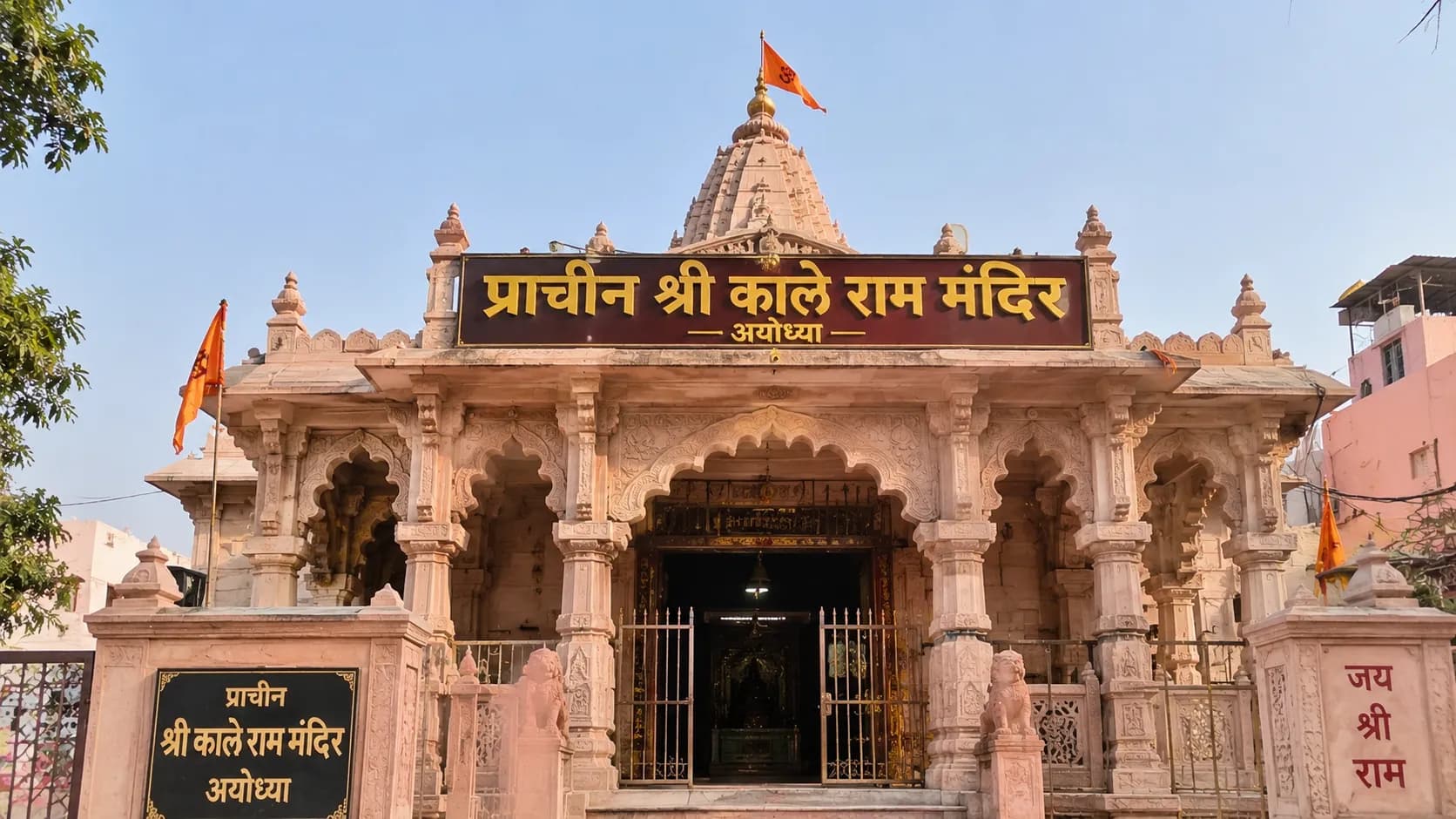
| What it is | An ancient temple of the revered black-stone idol of Lord Ram, near Ram ki Paidi; Kale Ram means the Black Ram. |
| Morning darshan | 4:30 AM to 11:30 AM. |
| Evening darshan | 4:00 PM to 9:00 PM. |
| Entry fee | Free for all devotees. There is no VIP darshan. |
| The idol | A black idol of Lord Ram, with a dramatic story of being saved and recovered across centuries. |
| Also famous for | Being said to be the only temple depicting Ram with all his brothers, and Hanuman and Sita. |
| Dress code | Traditional, modest attire is preferred. |
| Location | Theri Bazar, near Ram ki Paidi and Swargdwar, opposite the Gora Ram temple. |
Kale Ram Temple timings and aarti
The temple keeps a split day, open in the morning and again in the evening, and entry is free, with daily aartis and puja in the opening hours. It is an ancient, revered, and relatively uncrowded temple, so darshan is usually calm; the early morning and the evening aartis are the loveliest times. Traditional, modest dress is preferred.
| Ritual or session | Timing | Notes |
|---|---|---|
| Morning darshan | 4:30 AM to 11:30 AM | With the morning aarti and puja. |
| Evening darshan | 4:00 PM to 9:00 PM | With the evening aarti and puja. |
| Entry fee | Free | No VIP or paid darshan. |
| Dress | Traditional and modest | Please dress respectfully. |
Kale Ram: the ancient Black Ram
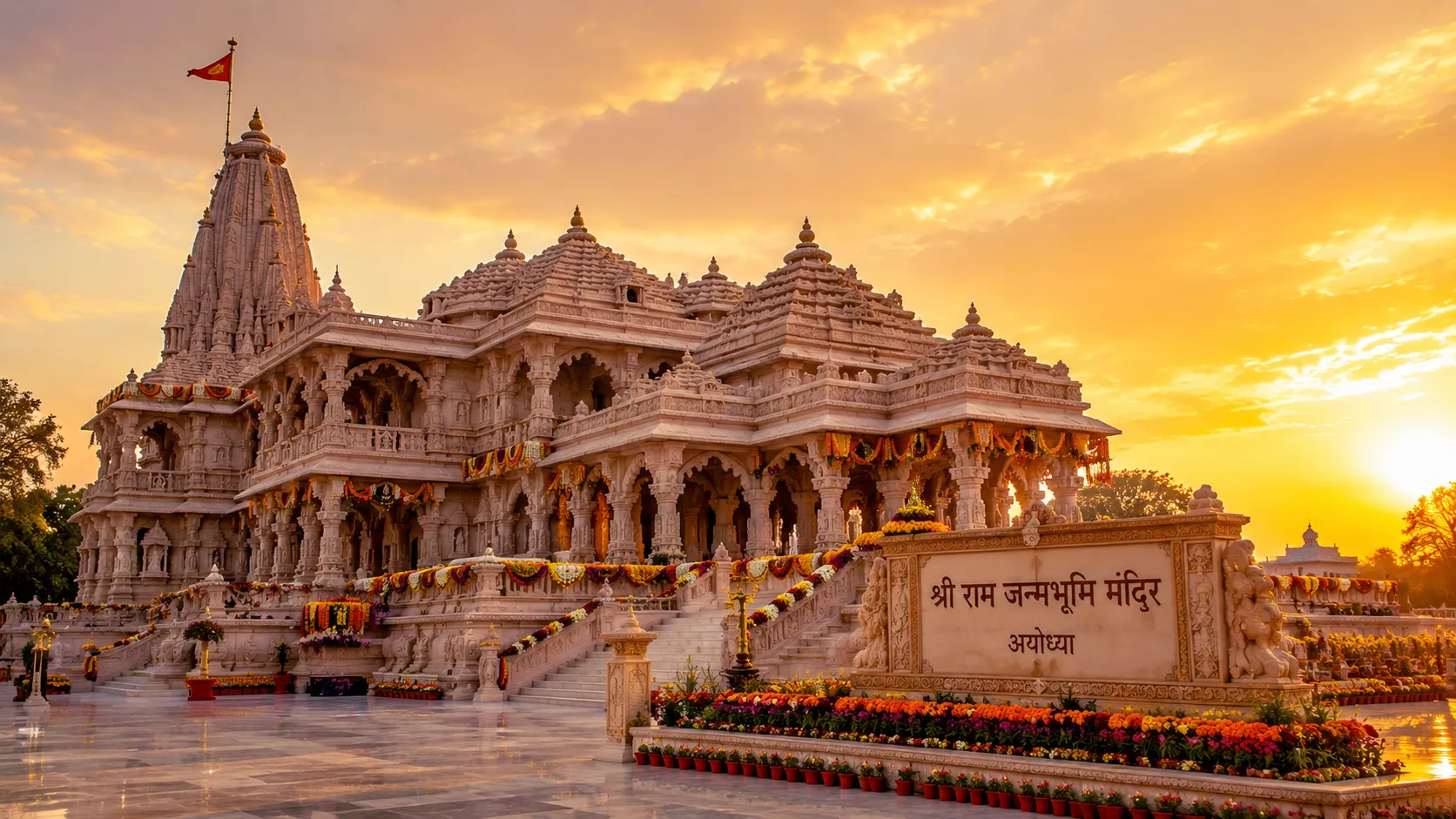
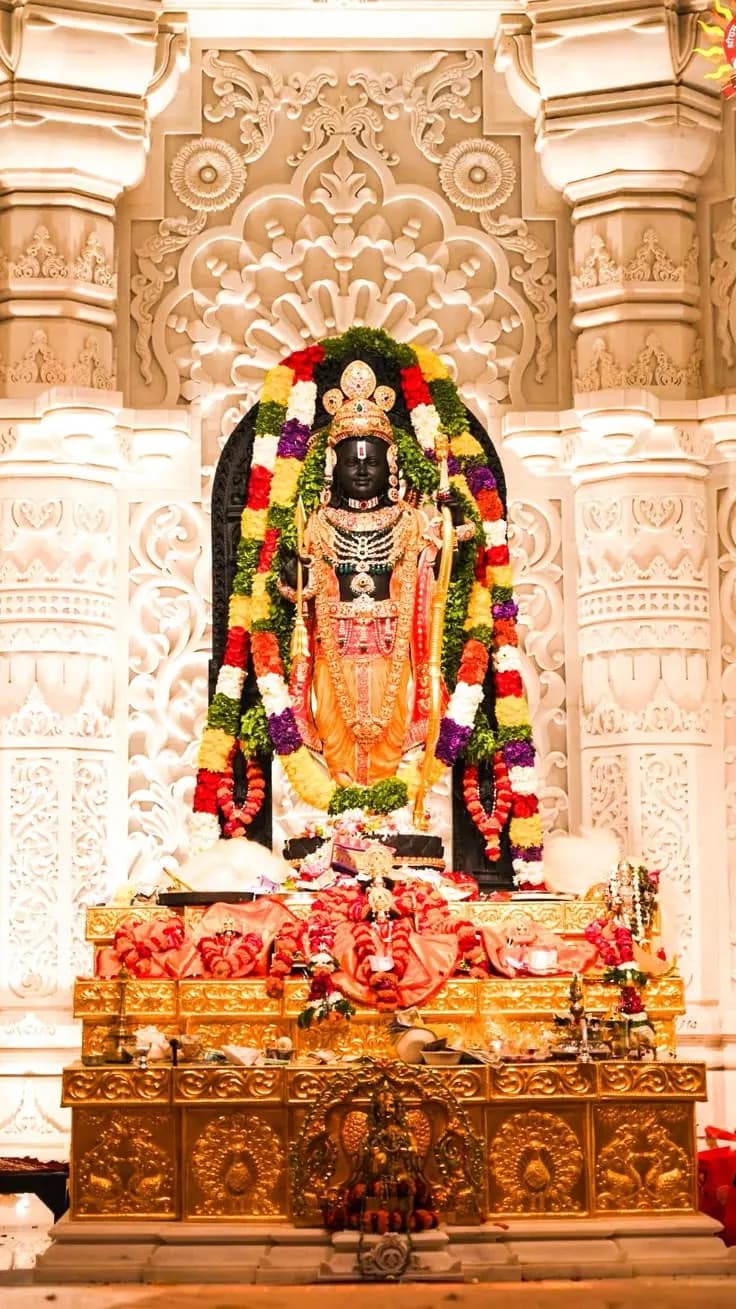
Of all the temples of Ayodhya, this one is cherished for the beauty and antiquity of its deity: the Prachin Shri Kale Ram Temple, the temple of the ancient Black Ram. Here Lord Ram is worshipped in the form of a dark, black-stone idol, and this is no accident but a deep and traditional truth, for Ram, like Krishna, is Shyam, the dark-complexioned Lord; the sage Valmiki himself sings of Ram's dark beauty in the Ramayana. So the black Ram of this temple is Ram as the scriptures see Him, and there is a lovely resonance today, for the new Ram Lalla enshrined in the grand Ram Janmabhoomi Mandir is likewise carved of dark stone, a black Ram, in the same ancient tradition. The temple is truly ancient, said to have been founded by the great King Vikramaditya some two thousand years ago, and it is cared for by the Shri Nageshwarnath Mandir Trust. To behold the serene, dark face of the Kale Ram is a darshan of rare and quiet power.
The idol saved and recovered
The black idol of the Kale Ram temple carries one of the most dramatic and moving stories in all of Ayodhya, a tale of faith preserving the deity through the storms of history. Long ago, in a time of invasion and turmoil, when the sacred images of Ayodhya were in danger of destruction, a devout sage, Shyamanand Saraswati, resolved to save this beloved black idol of Ram; and to keep it from harm, he gave it to the safe-keeping of the sacred river, casting it into the deep waters of the Saryu. There, hidden, it was lost to Ayodhya for long years, some two hundred and twenty of them; until at last, far away in Maharashtra, a devout Brahmin discovered the lost idol, and, knowing it for what it was, carried it reverently home to Ayodhya, to this temple, where it was enshrined once more. So the Black Ram whom devotees behold today is an idol that was hidden in the river to save it, lost for centuries, and lovingly recovered and restored, a testament to the truth that the Lord, and the devotion of His people, endure through every trial.
Ram with all his brothers, and the Gora Ram
The Kale Ram temple is also cherished for a rare and beautiful completeness. For it is said to be the only temple in Ayodhya, and perhaps anywhere, that depicts Lord Ram together with all three of his brothers, Lakshman, Bharat and Shatrughan, and with the great Hanuman and the goddess Sita as well, the whole loving family and household of the Ramayana gathered in one shrine. To take darshan here is thus to behold not Ram alone but the entire divine family together, which gives the temple a special warmth and tenderness. And there is a lovely companion to it, for the Kale Ram temple stands opposite the Gora Ram temple, the temple of the Fair Ram; so here, facing one another, are the Black Ram and the Fair Ram, the dark and the light forms of the one Lord, and pilgrims like to take darshan of both, the two faces of Ram, together.
The setting and the darshan
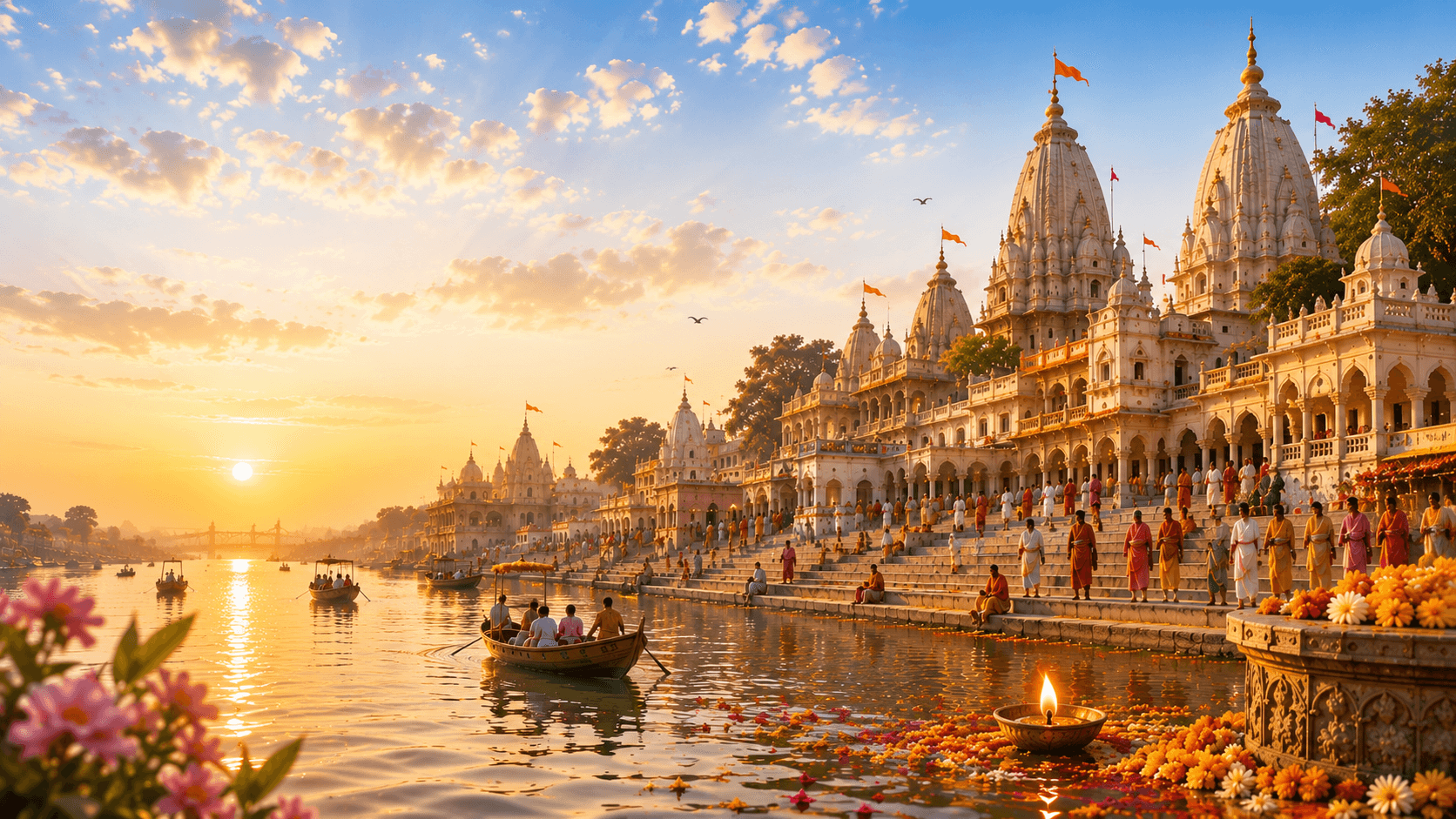
The temple stands near Ram ki Paidi and the Swargdwar, in the old quarter of Theri Bazar, close to the sacred Saryu into whose waters its idol was once given for safe-keeping, a fitting nearness. Cared for by the Shri Nageshwarnath Mandir Trust, the same devoted trust that keeps the ancient Nageshwarnath Shiva temple, it has an air of deep antiquity and quiet reverence, and there is a guesthouse in its premises for pilgrims. Being off the busiest tracks, it is a calm and unhurried darshan, and its riverside position makes it easy to pair with a visit to the ghats and the evening Saryu aarti.
The dark, serene Lord, in my own words
By Rajeev Sharma, guide with Experience My India
I love bringing my guests to the Kale Ram temple, and I always begin by explaining the name: Kale Ram, the Black Ram. People sometimes wonder why Ram is black, and I tell them the beautiful truth, that Ram is Shyam, dark and lovely, as Valmiki himself describes Him; and I point out that the new Ram Lalla in the great temple is also black stone, in the very same tradition. So this ancient black idol is Ram as the scriptures truly see Him. And then I tell them the amazing story, how in dangerous times a sage hid this idol in the Saryu to save it, how it was lost for over two hundred years and found far away in Maharashtra, and brought home. People are moved that the idol they are looking at has such a history of survival.
I show them, too, that here you see Ram with all his brothers and Hanuman and Sita, the whole family together, which you do not find elsewhere, and I take them across to the Gora Ram, the Fair Ram, opposite, so they see the dark and the fair forms of the Lord facing each other. It is an ancient, peaceful, less-crowded temple, kept by the same trust as my beloved Nageshwarnath, and right by Ram ki Paidi, so we often go on to the Saryu aarti after. For anyone who wants to feel the deep, old soul of Ayodhya, away from the crowds, I never let them miss the Black Ram.
In more than forty years of guiding, this is the ancient idol whose story of survival most moves the pilgrims I bring.
Darshan and offerings
- Take darshan of the ancient black idol of Lord Ram, and of the whole family, the brothers, Hanuman and Sita.
- Cross to the Gora Ram temple opposite to see the Fair Ram, the two forms of the Lord together.
- Come for a morning or evening aarti, when the black Ram is worshipped with lamps.
- Dress in traditional, modest attire, and remove footwear before the sanctum.
- Pair it with Ram ki Paidi and the evening Saryu aarti, right nearby.
How to reach Kale Ram Temple
The temple is at Theri Bazar, near Ram ki Paidi and the Swargdwar, by the Saryu, in the old riverside quarter of Ayodhya. It is reached on foot or by e-rickshaw.
| From | Distance | Notes |
|---|---|---|
| Ram ki Paidi and the Saryu ghats | Very near | By the riverfront; pair with the ghats and the Saryu aarti. |
| Nageshwarnath Temple | Nearby | The ancient Shiva temple, kept by the same trust. |
| Ram Janmabhoomi Mandir | A short ride | In the core; by e-rickshaw or auto. |
| Ayodhya Dham Junction (railway) | About 2 km | By e-rickshaw, auto or taxi. |
| Maharishi Valmiki Airport, Ayodhya | About 12 km | The new airport; taxis and autos to the city. |
Its riverside position makes it a natural pairing with Ram ki Paidi and the Saryu aarti.
Best time to visit and how to plan it
| When | Why |
|---|---|
| Around the aartis, morning or evening | The calmest and most beautiful darshan of the black Ram. |
| Late afternoon | For darshan, then the evening Saryu aarti at Ram ki Paidi nearby. |
| Ram Navami | The birth of Ram, when the temple is at its most devotional. |
| With Gora Ram and Nageshwarnath | The Fair Ram opposite, and the ancient Shiva temple nearby. |
- Pair it with Ram ki Paidi, Nageshwarnath and the Saryu aarti in the riverside quarter.
- Allow 20 to 30 minutes for the darshan of the black Ram and the family.
For Ayodhya, or a combined Kashi and Ayodhya pilgrimage, planned end to end, see our tour packages.
Accessibility for elderly and mobility limited visitors
- The temple is in the old riverside quarter, reachable by e-rickshaw, with some steps at the temple.
- It is usually calm and uncrowded, which suits a gentle, restful darshan.
- There is a guesthouse in the premises, useful for a restful stay near the ghats.
- We arrange transport and plan a gentle riverside darshan within your Ayodhya day.
Our guided darshan and Ayodhya tours
We are a Varanasi and Ayodhya based operator, a unit of Experience My India, with more than forty years of guiding pilgrims across Kashi, Ayodhya, and Prayagraj, and we have our own local guide and pandit in Ayodhya; do ask us for the latest information on the Kale Ram temple. Entry and darshan are free, so what we arrange is the visit around it: a guide who tells the story of the black Ram and the idol's survival, the darshan of the family and the Gora Ram, and the riverside quarter with Ram ki Paidi and the Saryu aarti.
| Service | Includes | Price |
|---|---|---|
| Guided riverside darshan | Kale Ram, Gora Ram, Nageshwarnath, Ram ki Paidi and the Saryu aarti, with a guide. | Contact us for pricing |
| Guided Kale Ram darshan | The black Ram, the family, and the temple's story, with a guide. | Contact us for pricing |
| Full Ayodhya darshan day | Kale Ram within a wider Ayodhya pilgrimage, with a guide. | Contact us for pricing |
| Kashi and Ayodhya pilgrimage | Varanasi and Ayodhya combined, with darshan, transfers and a guide. | Contact us for pricing |
Inclusions and exclusions are stated up front, with any taxes and conditions, and no charge appears later that was not named. Darshan is free; our charge is only for guiding and services. See all our tour packages for the full range.
Experience My India is a travel operator, not the temple administration. Darshan is free; our charge is only for our guiding and services. Temple timings and rules are set by the temple and can change.
Nearby sacred sites in Ayodhya
The Kale Ram temple is by the Saryu at Ram ki Paidi, in the old riverside quarter.
| Site | What it is | Internal link |
|---|---|---|
| Ram ki Paidi and the Saryu ghats | The sacred river ghats and the evening Saryu aarti, right nearby. | /temple/ayodhya/saryu-ghat-aarti |
| Nageshwarnath Temple | The ancient Shiva temple, kept by the same trust, close by. | /temple/ayodhya/nageshwarnath-temple |
| Treta Ke Thakur | The other black-idol temple, at Naya Ghat, that opens once a year. | /temple/ayodhya/treta-ke-thakur |
| Shri Ram Janmabhoomi Mandir | The grand temple, with its own black-stone Ram Lalla. | /temple/ayodhya/ram-janmabhoomi-mandir |
| Hanuman Garhi | The guardian temple of Hanuman, in the core. | /temple/ayodhya/hanuman-garhi |
For the Ram Mandir darshan and its free Sugam booking, see our Ram Janmabhoomi Mandir guide.