Essential info at a glance
| Detail | At a glance |
|---|---|
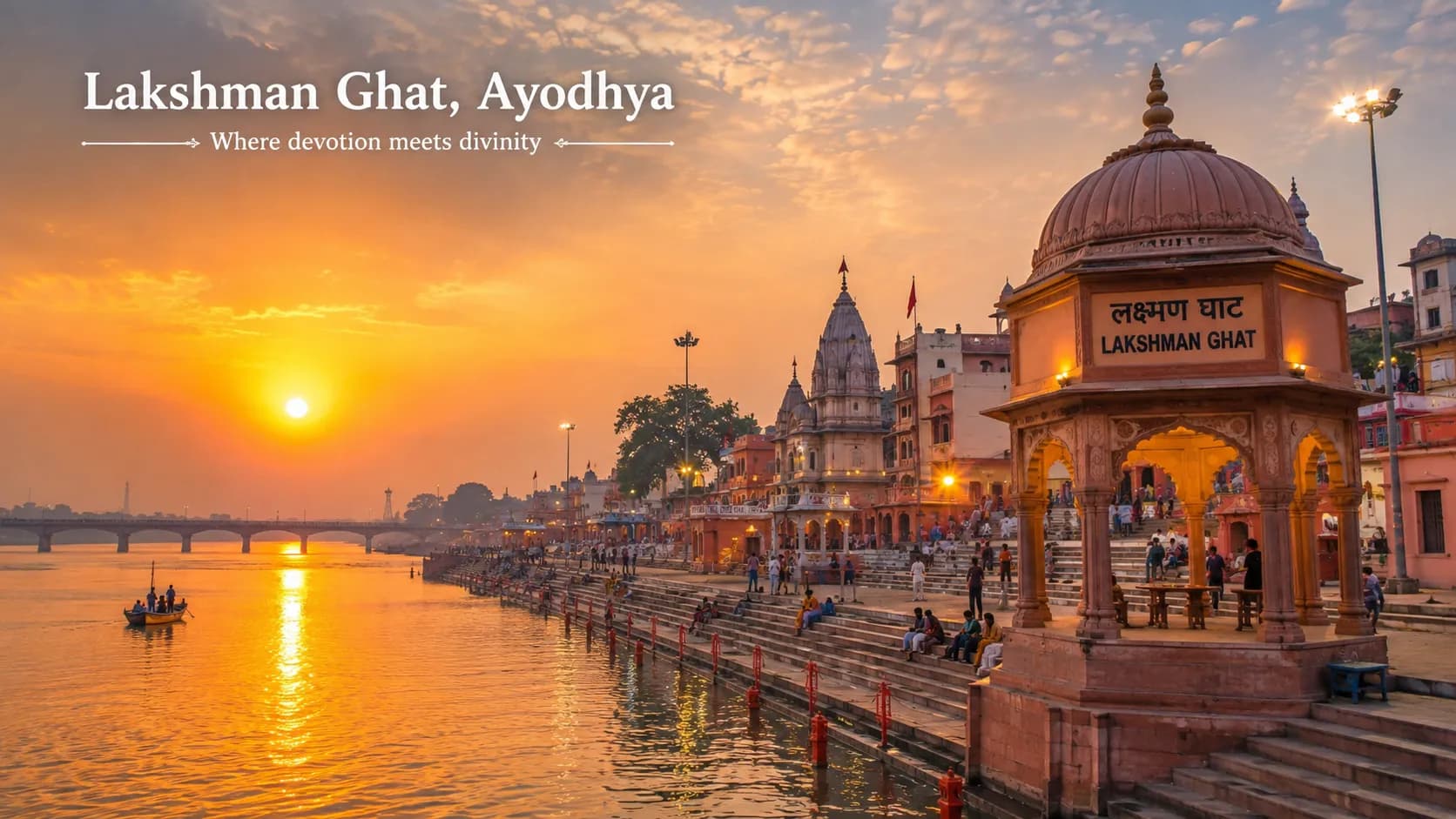
| What it is | A serene, sacred ghat on the Saryu dedicated to Lord Lakshman, Ram's devoted brother. |
| Significance | Revered as the place where Lakshman departed the mortal world into the Saryu. |
| Open hours | Accessible 24 hours daily; an open riverside ghat. |
| Entry fee | Completely free. No ticket or VIP pass needed. |
| Saryu aarti | Held every evening along the main ghats by Naya Ghat, around 7 PM in summer and 6 PM in winter. |
| Also here | A shrine dedicated to Lakshman, and Ramayana carvings. |
| Best time | Early morning or evening, for the peace and the light on the river. |
| Location | Ma Saryu Aarti Sthal Road, Naya Ghat, on the Saryu, Ayodhya. |
Lakshman Ghat timings and the aarti
Lakshman Ghat is an open riverside ghat, accessible around the clock, every day, and completely free, with no ticket or pass of any kind. The grand Saryu aarti is performed every evening along the main ghats by Naya Ghat, close by, around 7:00 PM in the summer months and around 6:00 PM in the winter, following the sunset. But Lakshman Ghat itself is at its most beautiful in the quiet of early morning or the soft light of evening, when its deep peace can best be felt. For the full guide to the Saryu aarti, see our Saryu aarti and Ram ki Paidi page.
| Detail | When | Notes |
|---|---|---|
| Open hours | 24 hours, every day | An open riverside ghat; free. |
| Saryu aarti (nearby, at Ram ki Paidi) | Around 7 PM summer, 6 PM winter | By Naya Ghat; see the full aarti guide. |
| Best times | Early morning and evening | For the peace and the light on the river. |
| Entry fee | Free | No ticket or VIP pass. |
Lakshman Ghat: the place of Lakshman's departure
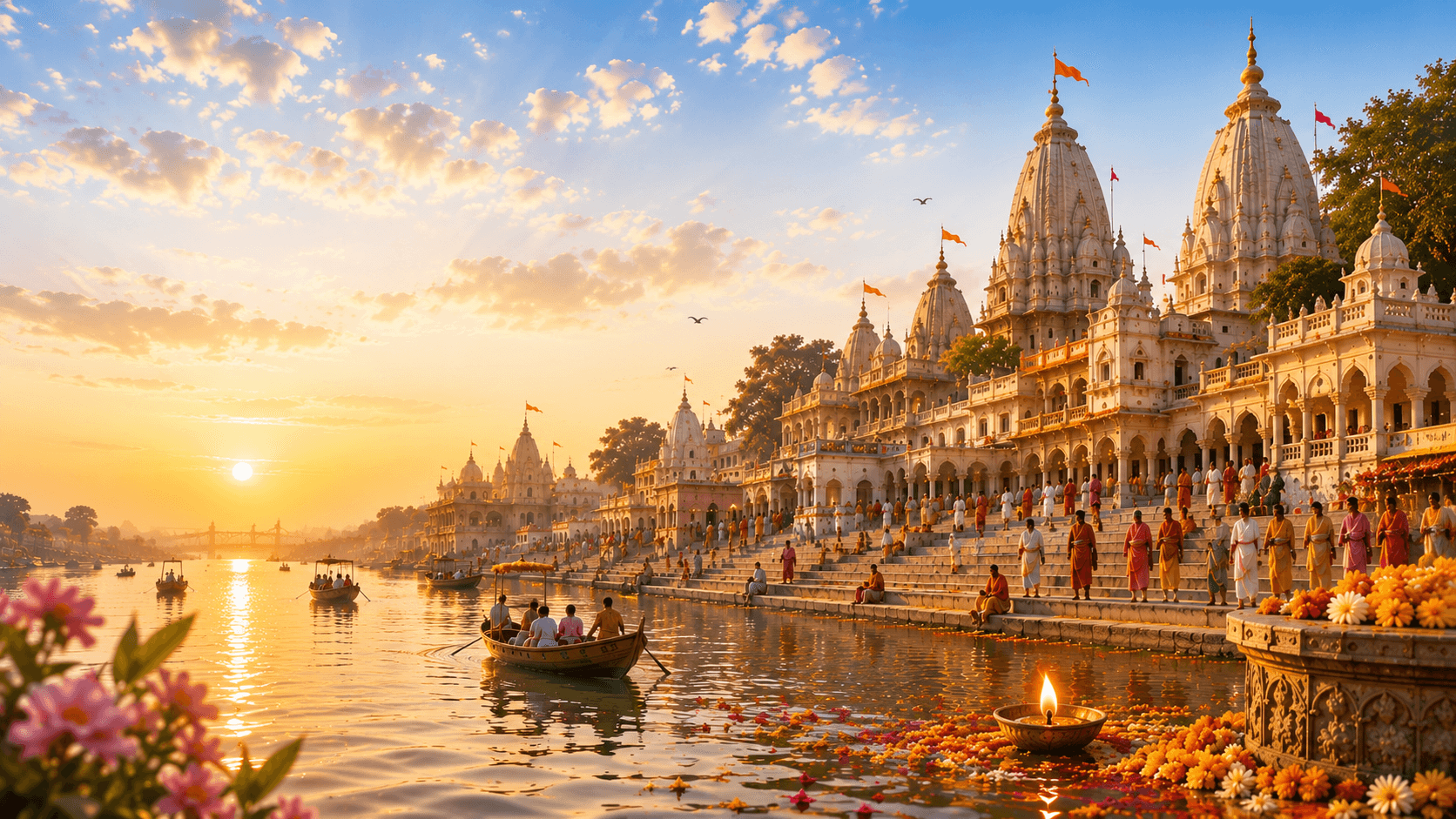
Among the many ghats of the Saryu, Lakshman Ghat holds a place all its own, for it is dedicated to Lord Lakshman, the devoted younger brother of Lord Ram, and revered as the very spot where, tradition tells, Lakshman departed from the mortal world. Here, the local tradition holds, Lakshman willingly surrendered his earthly life and entered the sacred waters of the Saryu, taking his samadhi and returning to the divine, before his beloved brother Ram made his own final departure downstream at Guptar Ghat. A shrine to Lakshman stands by the ghat, and the steps are graced with carvings of scenes from the Ramayana; and the whole place has an air of profound tranquility, a serene and moving spot to sit by the river and remember the great and devoted prince who gave his all.
Lakshman, the ideal brother
To understand this ghat is to understand Lakshman, one of the most beloved figures in all the Ramayana, the very ideal of brotherly love and selfless service. He was the son of King Dashrath and Queen Sumitra, the devoted younger brother of Ram, and, the tradition holds, an incarnation of Sheshnag, the great cosmic serpent upon whom Lord Vishnu himself reclines. When Ram was sent to fourteen years of exile in the forest, Lakshman would not be parted from him, but left his own young wife Urmila and his palace to follow his brother and Sita into the wilderness, and there he served them with a devotion beyond all measure, keeping watch over them, it is said, ever-wakeful, through all the long years, never sleeping that he might guard them. He was Ram's right hand in every trial and every battle, the perfect servant, companion and brother.
And his departure was as noble as his life. The tradition tells that in Ram's last days, Lakshman was set to guard a private meeting of Ram, on the solemn condition that whoever interrupted it must forfeit his life; and when a great and terrible sage came demanding entry and threatening to curse and destroy all of Ayodhya, Lakshman chose to break the vow and interrupt, to save the whole city, knowing it would cost him his life. And so, true to the vow, and to spare his brother the grief of pronouncing the sentence, Lakshman came here to the Saryu and gave up his mortal form into her waters, ascending again to his eternal nature. It is a story of the deepest loyalty and sacrifice, and this ghat is its sacred memorial.
The shrine, the virtues and the holy dip
By the ghat stands the shrine of Lakshman, and to it the devotees come to seek the very virtues he embodied: courage, loyalty, righteousness, and, above all, the love and harmony of brothers and of family. Those who pray here ask for strength of character and for the healing and binding of the bonds of kin; for Lakshman is the patron of the devoted brother, and his ghat a place to pray for one's own family's love. And here, as along all the ghats of the Saryu, the pilgrim may take the sacred holy dip, the Saryu snan, which at this ghat is believed to confer spiritual strength and to clear the obstacles from one's path. It is a serene and beautiful place for a quiet dip, a prayer at the shrine, and a time of reflection by the flowing river.
The brothers' departure: Lakshman Ghat and Guptar Ghat
There is a deep and moving beauty in the two great departure ghats of the Saryu, taken together. Here at Lakshman Ghat, the devoted brother Lakshman gave up his earthly form into the river; and a little downstream, at Guptar Ghat, Lord Ram himself, at the end of his own reign, walked into the same sacred waters in his jal samadhi and returned to his heavenly abode. The two brothers, inseparable through birth, exile, war and reign, departed the world through the one sacred river that had witnessed their whole lives; and to visit the two ghats together, Lakshman's and Ram's, is to trace the very end of the great story of Ram, and to feel the unbreakable bond of the brothers to the last. We love to guide pilgrims to both.
The devoted brother's ghat, in my own words
By Rajeev Sharma, guide with Experience My India
Lakshman Ghat is one of the quieter, more moving spots on the Saryu, and I love to bring my guests here, away from the crowds of the main aarti ghat, to tell them the story of Lakshman. I say to them: this is the place of the most devoted brother in all our stories, the one who left his wife and his palace to follow Ram into the forest and served him, ever-wakeful, for fourteen years. And I tell them the moving story of how he departed here, giving his own life into the Saryu to save all of Ayodhya. People are always deeply touched by it.
I especially love to take my guests to both the departure ghats, Lakshman's here and Ram's at Guptar Ghat downstream, and to tell them that the two brothers, who were never parted in life, both returned to the divine through this one holy river. It moves people very much, that unbreakable bond to the last. And I tell them to pray at the Lakshman shrine for their own families, for the love of brothers and the harmony of home, which is what Lakshman stands for. It is a serene, beautiful, tender place, and I never let a pilgrim who loves the Ramayana miss it.
In more than forty years on the ghats, the story of Lakshman's devotion and departure, told at his own ghat, is among the most moving I share.
What to see and do
- Pay your respects at the shrine of Lord Lakshman by the ghat.
- Sit at the place of his departure into the Saryu, and see the Ramayana carvings on the steps.
- Take the sacred holy dip, believed to confer spiritual strength and clear obstacles.
- Pray for courage, loyalty and the love and harmony of your own family.
- Pair it with Guptar Ghat, the departure ghat of Lord Ram, to trace the brothers' end.
How to reach Lakshman Ghat
Lakshman Ghat is on the Ma Saryu Aarti Sthal Road at Naya Ghat, on the Saryu riverfront, close to the main ghats and the core of the city, easily reached on foot or by e-rickshaw.
| From | Distance | Notes |
|---|---|---|
| Naya Ghat and Ram ki Paidi (the aarti) | Very near, on the riverfront | The main aarti ghat; a short walk. |
| The core temples (Ram Mandir, Hanuman Garhi) | A short ride | By auto or e-rickshaw. |
| Guptar Ghat | Downstream, by the river | Ram's departure ghat; pair the two. |
| Ayodhya Dham Junction (railway) | A few km | By e-rickshaw, auto or taxi. |
| Maharishi Valmiki Airport, Ayodhya | About 12 km | The new airport; taxis and autos to the ghats. |
It sits naturally with the riverfront and with Guptar Ghat.
Best time to visit and how to plan it
| When | Why |
|---|---|
| Early morning or evening | For the deep peace and the beautiful light on the river. |
| Around the evening Saryu aarti | The grand aarti is close by at Ram ki Paidi. |
| Kartik Purnima and Poornima (full moon) | Great days for the holy dip; the ghat is more crowded and festive. |
| With Guptar Ghat | To visit the two departure ghats of the brothers together. |
- Pair it with the Saryu aarti, Guptar Ghat and the riverside sites.
- Allow 20 to 30 minutes for the shrine, the ghat and a quiet time by the river.
For Ayodhya, or a combined Kashi and Ayodhya pilgrimage, planned end to end, see our tour packages.
Accessibility for elderly and mobility limited visitors
- Lakshman Ghat is a riverside ghat with steps; the upper areas are easier, and it is quieter than the main aarti ghat.
- Its calm and small scale suit a gentle, unhurried visit and a restful sit by the river.
- For the holy dip, the steps need care; a helping hand is wise, and we assist elderly pilgrims.
- We arrange transport and plan a gentle riverside visit within your Ayodhya day.
Etiquette at the ghat
- This is a sacred, tranquil spot; keep your voice low and be respectful of those in prayer.
- Dress modestly, especially for the holy dip; changing spots are available at the ghats.
- Do not litter or put plastic in the river; offer only the leaf-boat lamps sold for the purpose.
- Bow at the Lakshman shrine with reverence, and mind the steps near the water.
Our guided riverside experiences and Ayodhya tours
We are a Varanasi and Ayodhya based operator, a unit of Experience My India, with more than forty years on the river ghats of Kashi and Ayodhya. The ghat is free, so what we offer is the story and the planning: a guide who tells the moving story of Lakshman and his departure, a visit to both the brothers' departure ghats, and the whole Saryu riverfront, the aarti, the ghats, the dip, woven into a fuller day of Ayodhya.
| Service | Includes | Price |
|---|---|---|
| Guided Saryu ghats and aarti | Lakshman Ghat, the riverfront and the Saryu aarti, with a guide. | Contact us for pricing |
| The brothers' departure walk | Lakshman Ghat and Guptar Ghat, the departure ghats of Lakshman and Ram, with a guide. | Contact us for pricing |
| Full Ayodhya darshan with aarti | The riverside within a wider Ayodhya visit, with a guide. | Contact us for pricing |
| Kashi and Ayodhya pilgrimage | Varanasi and Ayodhya, with the river ghats and aartis, darshan and transfers. | Contact us for pricing |
Inclusions and exclusions are stated up front, with any taxes and conditions, and no charge appears later that was not named. The ghat, aarti and dip are free; our charge is only for guiding, the boat and services. See all our tour packages for the full range.
Experience My India is a travel operator, not a temple or government body. The ghat, the aarti and the dip are free; our charge is only for our guiding and services. Timings are set by the authorities and can change.
Nearby sacred sites in Ayodhya
Lakshman Ghat is on the Saryu riverfront, among the ghats and sacred sites of Ayodhya.
| Site | What it is | Internal link |
|---|---|---|
| Guptar Ghat | The departure ghat of Lord Ram, downstream; the brothers' departure pair. | /temple/ayodhya/guptar-ghat |
| Saryu Aarti and Ram ki Paidi | The grand Saryu aarti and the sacred riverfront, close by. | /temple/ayodhya/saryu-ghat-aarti |
| Naya Ghat | The main riverfront gateway ghat, adjoining. | /temple/ayodhya/naya-ghat |
| Dashrath Mahal | The palace of King Dashrath, father of Ram and Lakshman. | /temple/ayodhya/dashrath-mahal |
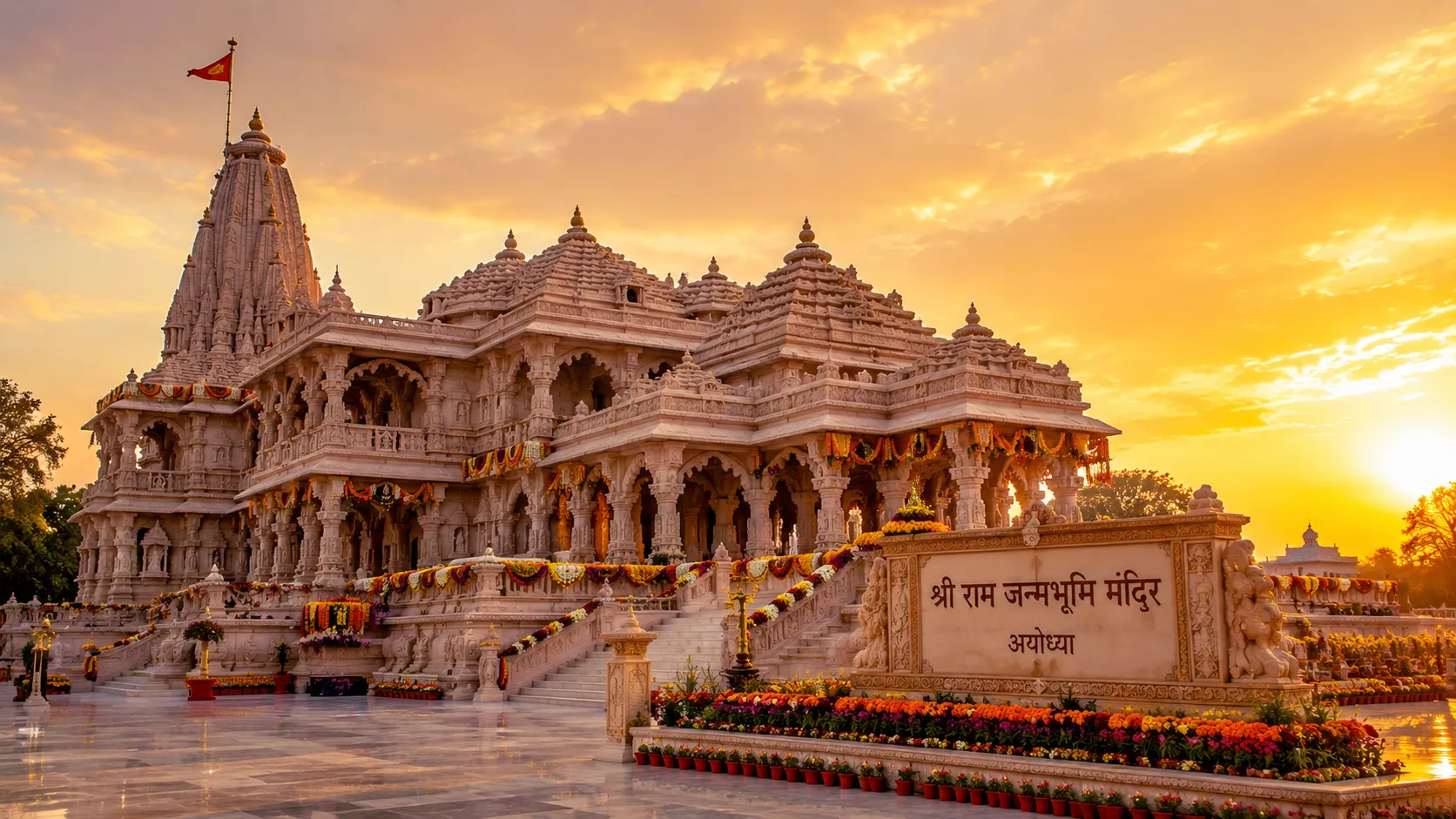
| Shri Ram Janmabhoomi Mandir | The grand temple of Lord Ram, in the core. | /temple/ayodhya/ram-janmabhoomi-mandir |
For the Ram Mandir darshan and its free Sugam booking, see our Ram Janmabhoomi Mandir guide.