.webp&w=2048&q=75)
.webp&w=2048&q=75)
Essential info at a glance
| Detail | At a glance |
|---|---|
| What it is | A riverside Rajput palace with a stone astronomical observatory, the Jantar Mantar of Varanasi, on the ghat beside Dashashwamedh. |
| The palace | Man Mahal, built about 1600 by Raja Man Singh of Amber, in a blend of Rajput and Mughal styles. |
| The observatory | Built on the rooftop in 1737 by Maharaja Sawai Jai Singh II, one of his five Jantar Mantars in India. |
| Ghat timings | Open daily 5:00 AM to 1:30 PM and 4:30 PM to 9:30 PM. |
| Observatory museum | A protected monument and now a digital museum, with its own timings and ticket. |
| Ganga aarti | The grand aarti is next door at Dashashwamedh, around 6:00 to 7:00 PM, and can be viewed from here. |
| Highlights | The naked-eye stone instruments, the carved stone balconies, and the terrace views of the Ganga. |
| Location | Man Mandir Ghat, adjacent to Dashashwamedh, about 500 m from Kashi Vishwanath. |
Man Mandir Ghat timings
The ghat keeps a split day, and it is a quieter, more curious stop than the great devotional sites, prized for its history, its architecture, and its river views. The observatory on the rooftop is a protected monument and now a museum, with its own visiting hours and entry ticket, so it is worth confirming those before you go.
| Detail | Timing | Notes |
|---|---|---|
| Morning session | 5:00 AM to 1:30 PM | The ghat and the associated shrines. |
| Evening session | 4:30 PM to 9:30 PM | Good for the golden light and the evening aarti next door. |
| Observatory museum | Its own hours and ticket | An ASI protected monument, digitalized as a museum. |
| Ganga aarti (at Dashashwamedh) | About 6:00 to 7:00 PM | Starts earlier in winter, around 5:30 PM; viewable from Man Mandir Ghat. |
*The ghat itself is free; the observatory has a separate ticket.
Man Mandir Ghat: a Rajput palace on the Ganga
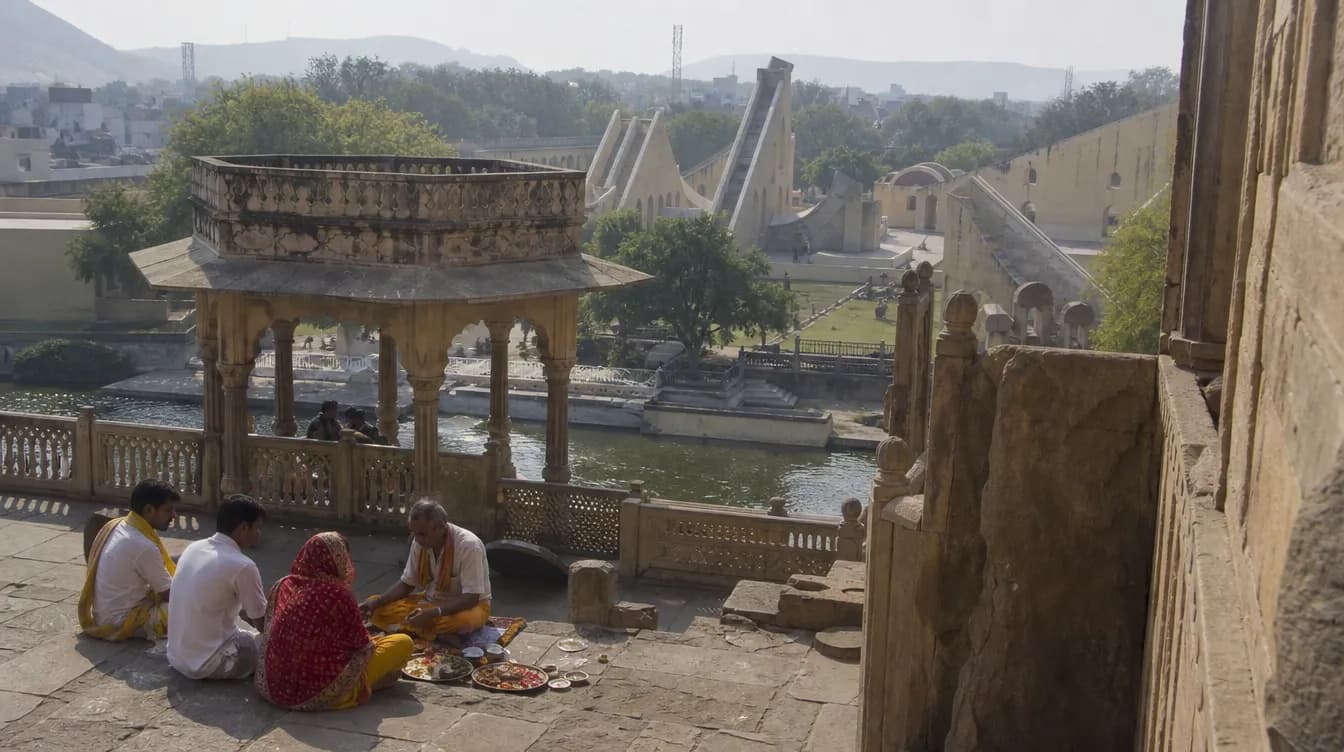
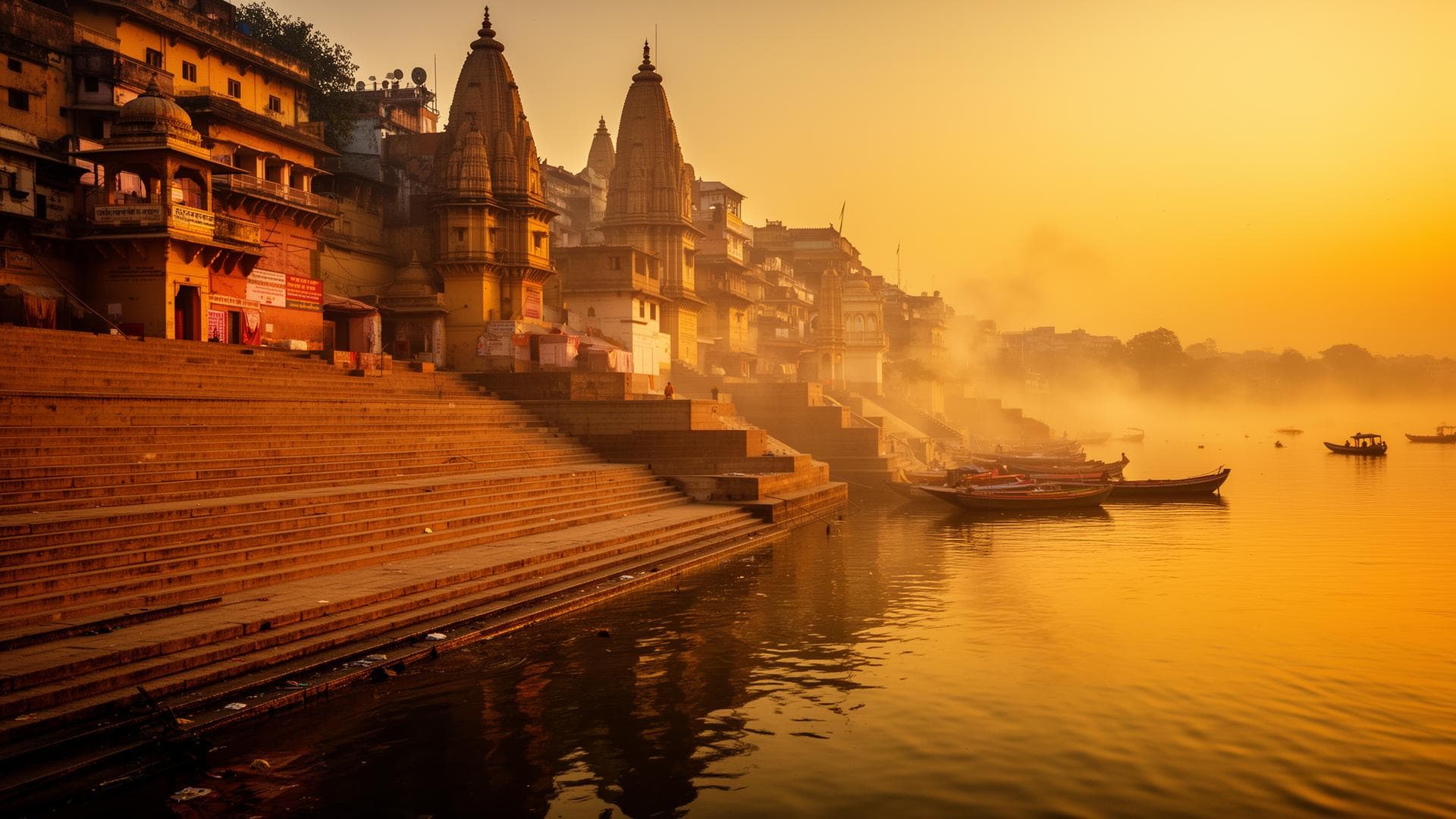
Rising straight from the water beside Dashashwamedh is one of the most handsome buildings on the whole riverfront, the Man Mahal, popularly called Man Mandir. It was built around the year 1600 by Raja Man Singh of Amber, the great Kachhwaha Rajput king and general, and the ghat and the palace take their name from his line. Architecturally it is a beautiful blend of Rajput and Mughal styles, and its glory is its stonework: exquisitely carved stone windows and balconies, the jharokhas, that open out over the river, and painted ceilings within. The eastern face of the palace looks straight out onto the Ganga, and its terraces give one of the loveliest views of the river in all of Varanasi.
For centuries it has stood as a reminder that Kashi drew not only saints and pilgrims but kings and builders, who raised palaces along its sacred shore. Today the carved balcony of Man Mandir is one of the most photographed pieces of architecture on the ghats, a favourite of anyone with an eye for beauty.
The observatory: the Jantar Mantar of Kashi
The true wonder of Man Mandir sits on its roof. In 1737, Maharaja Sawai Jai Singh II of Jaipur, a brilliant astronomer-king, built an observatory here, one of the five great Jantar Mantars he raised across India, at Delhi, Jaipur, Ujjain, Mathura, and here in Varanasi. It is a set of large instruments built of stone and plaster, designed to be used with the naked eye, and with them the astronomers of the age measured time, the altitude and positions of the sun, moon, stars and planets, and even predicted eclipses, all without a single lens. These are among the last great works of what has been beautifully called the astronomical stone age, a fusion of science, architecture and devotion found in few places on earth.
Since 2019 the site has been sensitively brought to life as a museum, with audiovisual and interactive displays, a light show and a three-dimensional show, that explain how these remarkable instruments worked. To climb the steep stair to the rooftop, stand among the great stone yantras, and look out over the Ganga is to feel the reach of India's scientific past in one of its holiest cities.
The instruments of the observatory
The observatory's masonry instruments, the yantras, each had their purpose.
| Instrument | What it did |
|---|---|
| Samrat Yantra | The great sundial, the king of instruments, for measuring time and the position of the heavenly bodies. |
| Chakra Yantra | For measuring the declination and the hour angle of the sun, moon and stars. |
| Digamsa Yantra | For finding the azimuth, the compass bearing, of the heavenly bodies. |
| Nadivalaya Yantra | For telling whether a body lies in the northern or southern hemisphere, and for time. |
| Dakshinottara Bhitti Yantra | The wall instrument, for the altitude of a body as it crosses the meridian. |
Together they made a working, naked-eye observatory that helped prepare the calendars and track the skies, a monument to curiosity as much as to kingship.
One of the finest views of the Ganga aarti
There is a lovely practical reason to know Man Mandir Ghat: it sits right beside Dashashwamedh Ghat, where the grand evening Ganga aarti is performed, and its steps and terraces make one of the best vantage points from which to watch it. From here you can take in the whole spectacle of the lamps and the priests, often with a little more room and a slightly different, elevated angle than the packed heart of Dashashwamedh itself. Come in the late afternoon, enjoy the palace and the river light, and stay for the aarti as evening falls, around 6:00 to 7:00 PM, earlier in winter.
A palace of sky and river, in my own words
By Rajeev Sharma, Varanasi local
Man Mandir is where I take the traveller who loves history and beauty as much as devotion. I show them the carved stone balcony, one of the most beautiful things on the whole riverfront, and I explain that a great Rajput king, Man Singh, built this palace on the Ganga more than four hundred years ago. Then I take them up the steep stair to the roof, to the observatory, and people are always astonished, they do not expect to find a Jantar Mantar here, these huge stone instruments for reading the sky, built by Jai Singh nearly three hundred years ago.
I tell them how the astronomers measured time and the stars with the naked eye, and we look out from the terrace over the whole sweep of the Ganga, which is a view I never tire of. And here is my little secret for guests: I bring them up here in the late afternoon, and we stay for the evening, because Man Mandir is one of the finest places to watch the great aarti at Dashashwamedh next door, a bit above the crowd. History, science, and the aarti, all in one place, is a combination I love to give people.
In more than forty years of guiding, this is the ghat I use to surprise people with the sheer range of what Kashi holds.
What to see and do
- Climb to the rooftop observatory and stand among the great stone instruments, the yantras.
- Admire the carved stone windows and balconies and the painted ceilings of the palace.
- Take in the sweeping view of the Ganga from the terraces, one of the best on the riverfront.
- Explore the museum's displays and light show explaining how the observatory worked.
- Stay for the evening, and watch the grand Ganga aarti at Dashashwamedh from here.
How to reach Man Mandir Ghat
The ghat is right beside Dashashwamedh, in the heart of the central riverfront, about 500 metres from Kashi Vishwanath. You reach it on foot from Godowlia, along the ghats, or by boat.
| From | Distance | Notes |
|---|---|---|
| Dashashwamedh Ghat | Adjacent | Man Mandir is right next to it; do the two together. |
| Godowlia | A short walk | Vehicles drop you here; walk down to the ghat. |
| Kashi Vishwanath | About 500 m | Through the old city lanes. |
| Varanasi Junction (Cantt) | About 4 km | By taxi or auto to Godowlia, then on foot. |
| Airport | About 25 km | Lal Bahadur Shastri International Airport, roughly an hour by road. |
It is easy to combine with Dashashwamedh, the old city and a boat ride. We arrange the visit, the observatory and the timing for the aarti.
Best time to visit and how to plan it
| When | Why |
|---|---|
| Morning | Cool and clear for the observatory, with fine light on the palace and the river. |
| Late afternoon into evening | The golden light on the carved balconies, then the aarti at dusk. |
| Around the Ganga aarti | Stay for the grand aarti at Dashashwamedh next door, viewed from here. |
| Confirm the observatory hours | The museum has its own timings and ticket; check before you go. |
- Pair it with Dashashwamedh Ghat, the old city temples and a boat ride.
- Allow about an hour for the observatory and the palace, longer if you stay for the aarti.
For the ghats and the aarti planned as one evening, see our Varanasi tour packages.
Accessibility for elderly and mobility limited visitors
- A steep staircase leads up to the rooftop observatory, which can be difficult for those with limited mobility.
- The ghat and the palace's lower levels are more accessible; the terraces and instruments are up the stairs.
- Watching the aarti from the ghat's lower steps is an easier alternative to the rooftop.
- We plan the visit and the timing, and advise on what will suit a senior guest.
Practical tips
| Good to know | Detail |
|---|---|
| Confirm the observatory ticket and hours. | It is a protected monument and museum with its own timings and fee, separate from the free ghat. |
| The stairs are steep. | The rooftop observatory is up a steep stair; wear sensible shoes. |
| Come for the view and the aarti. | The terraces are a fine vantage for the Ganga and the Dashashwamedh aarti. |
| Photography. | The carved balconies and the instruments are wonderful to photograph, especially in golden light. |
Nearby sites to combine with your visit
Man Mandir sits in the heart of the central riverfront, so it pairs with the great ghats and temples nearby.
| Site | What it is | Internal link |
|---|---|---|
| Dashashwamedh Ghat | Home of the grand evening Ganga aarti, right next door. | /temple/varanasi/dashashwamedh-ghat |
| Kashi Vishwanath Temple | The Jyotirlinga at the heart of Kashi, about 500 m away. | /temple/varanasi/kashi-vishwanath-temple |
| Assi Ghat | The southern ghat, famous for the sunrise Subah-e-Banaras aarti. | /temple/varanasi/assi-ghat |
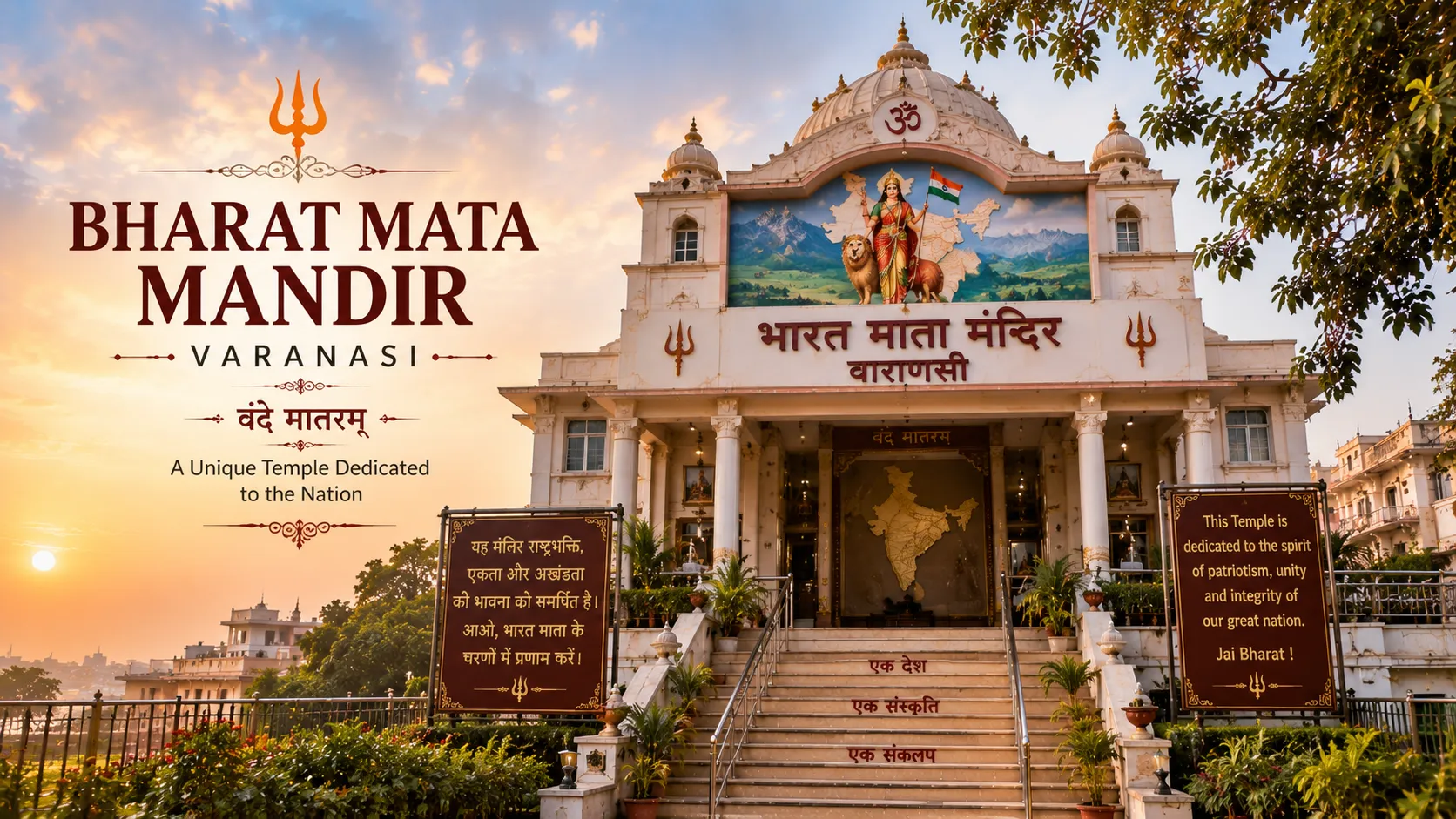
| Bharat Mata Mandir | The unique marble-relief-map temple to Mother India, another heritage stop. | /temple/varanasi/bharat-mata-mandir |
| Panchganga Ghat | The ghat of five rivers and the Kartik lamps, further north. | /temple/varanasi/panchganga-ghat |
For the grand evening aarti and a boat ride, see our Varanasi tour packages.
Our guided heritage and aarti experiences
We are a Varanasi based operator, a unit of Experience My India, with more than forty years of guiding travellers across Kashi, Ayodhya, and Prayagraj. The ghat is free, so what we arrange is the experience around it: a guide who brings the palace and the observatory to life, help with the observatory museum, a boat ride, and the best spot and timing to watch the grand Ganga aarti from here.
| Experience | Includes | Price |
|---|---|---|
| Man Mandir heritage visit | A guide, the palace and the observatory, and the river views. | Contact us for pricing |
| Heritage and evening aarti | Man Mandir and Dashashwamedh, timed for the grand aarti. | Contact us for pricing |
| Ghats and boat ride | Man Mandir with the central ghats and a boat on the Ganga. | Contact us for pricing |
| City heritage tour | Man Mandir with the other heritage sights of Varanasi. | Contact us for pricing |
Inclusions and exclusions are stated up front, with any taxes and conditions, and no charge appears later that was not named. See all our Varanasi tour packages for the full range.
Experience My India is a travel operator, not the monument authority. Our prices are ours; the observatory ticket is charged separately by the ASI. Ghat access is free and public; monument timings can change.