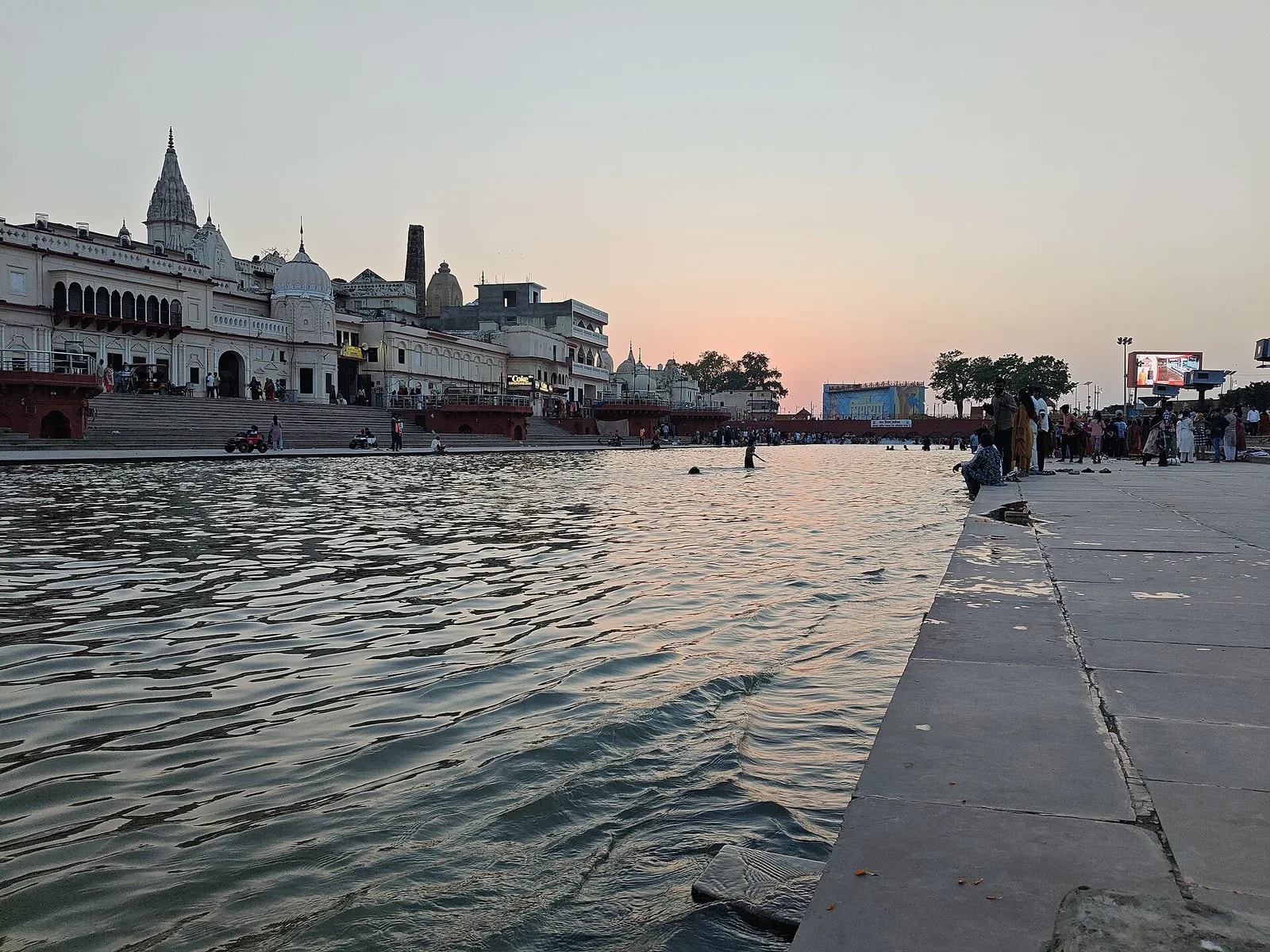
There is a quiet poetry in a pilgrimage that runs from Kanpur to Ayodhya, for it is a journey from the banks of one sacred river to the banks of another. Kanpur stands on the Ganga, the holiest of all India's rivers, and its people live within reach of her ghats and her aartis; Ayodhya stands on the Saryu, the river of Lord Ram, beside which he was born and beside which, tradition says, he left this world. To travel between them is to move from one sacred water to another.
For a Kanpur pilgrim, this gives the Saryu aarti a particular resonance. The people of a Ganga city know the evening aarti well - the lamps, the bells, the river catching the light - and to sit for that same ancient rite on the banks of the Saryu, in the city of Ram, is to find something familiar made newly sacred. Many of our Kanpur travellers say the Saryu aarti moved them more than they expected, precisely because they knew the form of it from home.
The two rivers carry different weights in the tradition, and holding both enriches the pilgrimage. The Ganga is the river of purification, of the whole of Hindu life and death; the Saryu is the river of one beloved life, the river of Ram's Ayodhya. A devotee who prays on both, within a single short journey, touches both the universal and the particular faces of the faith's love of sacred water.
And there is the simple human comfort of it. A Kanpur family far from home on an unfamiliar trip still finds, at the Saryu ghat, the shape of something they have always known, and the darshan of Ayodhya feels less like a distant expedition and more like a visit to a kindred sacred place. The nearness of the two cities makes them feel like parts of one devout landscape.
This kinship of rivers is not merely sentimental; it shapes how a Kanpur pilgrim experiences Ayodhya. Arriving in an unfamiliar city, a traveller often feels a little adrift until something anchors them, and for the people of Kanpur that anchor is the river. The moment they reach the Saryu and see the ghats, the boats, the evening lamps being readied, a Kanpur family recognises the shape of their own devotional life and settles at once. The darshan that follows is entered not as a stranger's visit but as a homecoming to a kindred sacred place, and that ease of heart, more than any convenience of travel, is what the nearness of the two river-cities truly gives. It is a small grace, but pilgrims notice it, and it is part of why a Kanpur family so often returns to Ayodhya rather than treating the darshan as a thing done once; Ayodhya becomes, for them, a place to visit again and again. That, in the end, is what true nearness to a holy city gives a devout family.
Experience My India carries you the short, meaningful way from the Ganga at Kanpur to the Saryu at Ayodhya, and makes the darshan of Ram an easy part of a devout life. WhatsApp +91-7302265809 to make the journey.