General Darshan
Free · No bookingFree, no booking needed. You join the open queue. On an ordinary weekday this moves reasonably; on weekends, holidays and festivals it can mean hours of standing.

Shri Ram Janmabhoomi Mandir
Official portal
100% Free
Darshan & Aarti passes
The complete, honest, step-by-step process for 2026 - the official booking windows, the three Aartis, the Tatkal fallback and the ID rules.
Free
Darshan & Aarti passes
15 days
Advance booking window
6:00 AM
Same-day Tatkal quota
~30
Devotees per Aarti
The three bookable Aartis
Mangala Aarti
Free4:00 AM
Book by ~4:00 PM the previous evening
Shringar Aarti
Free6:00 AM
Book by ~6:00 PM the previous evening
Shayan Aarti
Free9:00 PM
Book by ~9:00 AM the same morning
A local guide's word
Standing before Ram Lalla in the sanctum of the Shri Ram Janmabhoomi Mandir is, for most pilgrims, the darshan of a lifetime. And yet the single question I am asked most often as a local Ayodhya guide is not about the temple at all. It is simply: "How do we actually book it?" There is a lot of confusion online, a lot of fake "VIP ticket" websites, and a lot of worried families who travel all the way to Ayodhya only to find the slots full. This guide fixes that.
I am Rajeev Sharma, and I have walked hundreds of families through the Ram Mandir darshan and the sacred Aartis. Below is the complete, honest, step-by-step process for 2026 - the official booking windows, the three Aartis, the Tatkal fallback, the ID rules, what you can and cannot carry inside, and how we at Ayodhya Varanasi Tours can book and guarantee your Aarti and darshan passes so you never have to gamble on a full slot.
There is an important thing every pilgrim should know before booking: at the Shri Ram Janmabhoomi Mandir, there is no paid, premium ticket that lets a wealthy visitor jump ahead of a poor one. Ram Lalla belongs to every devotee equally. When people search for "Ram Mandir VIP darshan" or "Ram Lalla VIP pass", what they are actually looking for is the special darshan facility the temple trust calls Sugam Darshan - a managed, pre-booked entry that gives you a smoother, calmer and more organised path to the sanctum, without the long general queue. It is still free. It simply uses advance booking and a time-slot system so the crowd is spread evenly through the day rather than piling up at the gate.
Free, no booking needed. You join the open queue. On an ordinary weekday this moves reasonably; on weekends, holidays and festivals it can mean hours of standing.
Free, but pre-booked online through the official portal for a fixed two-hour slot. This is what most out-of-town families and senior citizens should choose - it removes the uncertainty of the open queue.
A separate, limited pass that lets you sit close to the sanctum during one of the temple's daily Aartis. This is the most intimate and most sought-after experience, and the hardest to secure because only about 30 devotees are admitted per Aarti.
So when this guide says "VIP darshan", read it as Sugam Darshan; and when it says "Aarti pass", read it as the VIP Aarti seat. Both are booked on the same website, but through two different sections, and with two different timing rules. Keeping these two apart in your mind is the single most useful thing you can do before you start.

A short history
Before we get into dates and slots, it helps to remember what you are booking. The Shri Ram Janmabhoomi Mandir stands on the spot Hindus have revered for centuries as the birthplace of Lord Rama - Ram Janmabhoomi, the "land of Rama's birth". For generations, devotees prayed for the day they could stand here freely. That day arrived with the Pran Pratishtha, the consecration of Ram Lalla, and Ayodhya has not been the same since.
The temple itself is a marvel of traditional Nagara-style architecture - carved sandstone, towering shikharas, intricately sculpted pillars, and a sanctum where the idol of Ram Lalla, the child form of Lord Rama, is bathed each morning in the first light through a precisely engineered path. This is why the darshan and Aarti system exists at all: not to gatekeep, but to let millions of devotees experience that sacred moment in a calm, dignified and orderly way. The booking process is, in a sense, the temple's way of making sure everyone - the frail grandmother and the young child alike - gets their turn before Ram Lalla. Seen that way, the few minutes you spend booking online are the first small act of devotion in your yatra.
The daily worship of Ram Lalla is marked by Aartis - the ceremonial offering of light, sound and devotion before the deity. For pilgrims, three of these Aartis are open to booking, and attending even one of them is a profoundly moving experience. The conch sounds, the bells ring, the lamps circle the idol, and for a few minutes the whole hall breathes as one. These are the three you can apply for:
4:00 AM
Approx. time
The pre-dawn awakening of Ram Lalla - the first and most serene Aarti of the day, attended by very few.
6:00 AM
Approx. time
The morning adornment, when the deity is dressed and decorated. Deeply auspicious and very popular.
9:00 PM
Approx. time
The night Aarti, when Ram Lalla is put to rest. A calm, emotional close to the day's darshan.
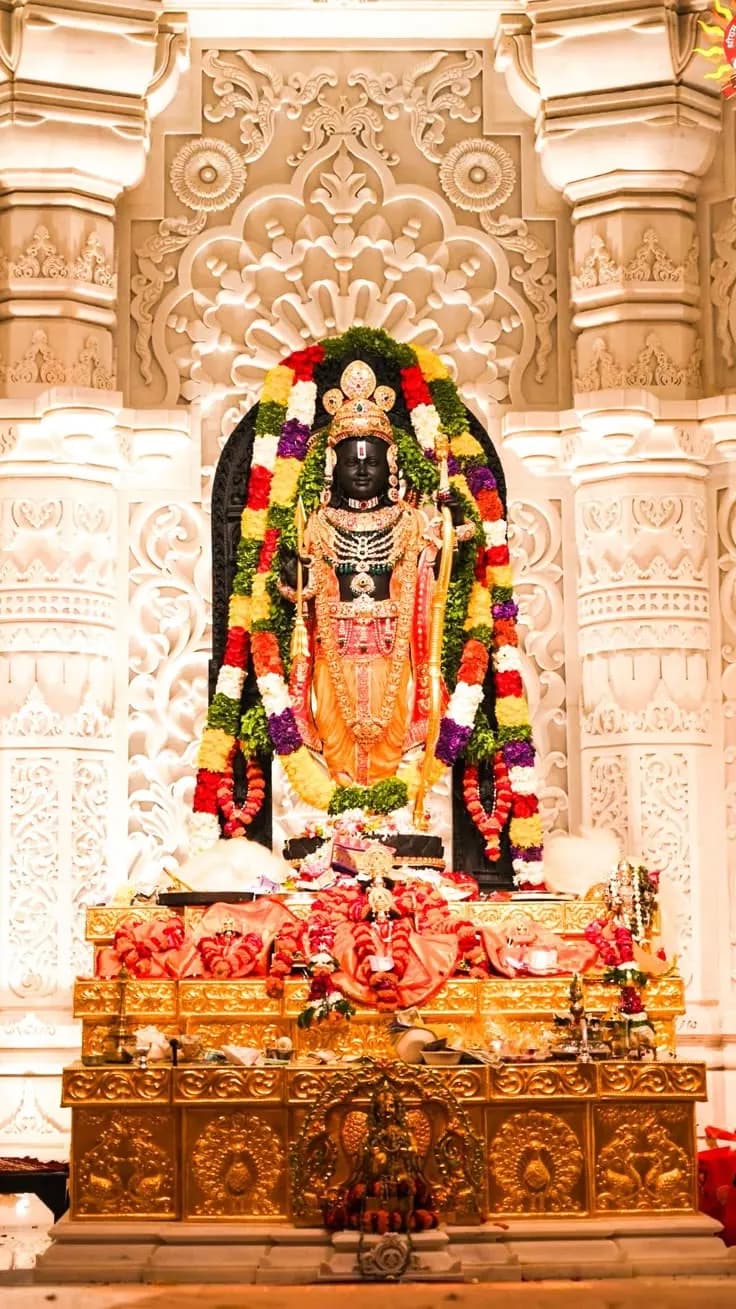
A quick, honest note on timings: the exact clock time of each Aarti can shift slightly with the season and with temple administration decisions, and occasionally with festival schedules. The times above are the dependable 2026 pattern, but you should always confirm the current minute on the official portal when you book. The booking logic, which I explain next, is far more important than memorising the exact minute.
The Mangala Aarti is the day's first meeting with Ram Lalla, performed in the hush before dawn when the world is still asleep - devotees often describe it as the most personal darshan of all, with the lamp-light flickering on the idol's face in the quiet. The Shringar Aarti follows as the deity is lovingly bathed, dressed and adorned with fresh garments, jewellery and flowers; to witness Ram Lalla being readied for the day is to feel the tenderness of a mother dressing her child. And the Shayan Aarti, the last of the day, is the gentlest - the deity is offered rest, the sanctum is quietened, and the devotees who are present often leave with tears in their eyes. Whichever you are able to book, go with an open heart; the Aarti is short in minutes but long in memory.
This is the part that trips up almost everyone, so read it slowly. Ram Mandir uses two separate booking rhythms - one for the darshan slot, and one for each Aarti. Understanding them is the difference between a confirmed pass and a disappointed family.
For your Sugam (special) darshan, the portal lets you book your two-hour slot up to roughly 15 days in advance. My strong advice: book as early as that window opens. Each slot holds about 150 devotees, and for popular dates - weekends, Tuesdays, Saturdays, Ekadashi, and anything near a festival - the good slots fill quickly. When you book, you are choosing a two-hour window during which you must report and enter; you do not get to walk in at any random time.
Missed the 15-day window, or decided to visit Ayodhya at the last minute? There is a Tatkal (immediate) option. A fresh same-day quota is released on the portal at 6:00 AM each morning. Here is the hard truth: these slots disappear in one to two minutes. If you are going the Tatkal route, be logged in and ready before 6:00 AM, with your details already typed, and submit the instant the quota opens. Treat it like booking a Tatkal train ticket - speed decides everything.
Each Aarti follows its own clock. You must book an Aarti pass roughly 12 hours before the Aarti's actual time. In practice that gives each Aarti a fixed booking moment, which I have laid out below so you never have to calculate it under pressure:
Mangala Aarti
You attend at
Around 4:00 AM (next day)
You must book by (about 12 hrs earlier)
Around 4:00 PM the previous evening
Shringar Aarti
You attend at
Around 6:00 AM (next day)
You must book by (about 12 hrs earlier)
Around 6:00 PM the previous evening
Shayan Aarti
You attend at
Around 9:00 PM (same day)
You must book by (about 12 hrs earlier)
Around 9:00 AM the same morning
So if you dream of the pre-dawn Mangala Aarti on, say, the 20th, you need to have secured that pass by about 4:00 PM on the 19th. For the night Shayan Aarti on the 20th, book it by about 9:00 AM on the 20th itself. With only around 30 seats per Aarti, these are genuinely the hardest passes in Ayodhya to get - which is exactly why so many families ask us to lock them in on their behalf.
Guaranteed passes
Tell us your date and the Aarti you want. Our Ayodhya team books it the moment the quota opens and calls you back to confirm.
Rajeev Sharma, local Ayodhya guide
Or WhatsApp 7302265809ॐ Pass enquiry
Request your darshan & Aarti pass
Step by step
Darshan is booked only through the official website: online.srjbtkshetra.org . Do not trust any other site, app or agent claiming to sell a Ram Mandir ticket. Here is the exact flow:
Go to the Shri Ram Janmabhoomi Teerth Kshetra booking site and nowhere else. Bookmark it so you are never fooled by a look-alike.
Enter your mobile number and verify it with the one-time password sent by SMS. Your bookings are tied to this number, so use one you have in hand.
Choose the Sugam Darshan option, then pick your date and an available two-hour slot. Earlier in the window means more choice.
Fill in each person's name, age and gender, and the Aadhaar or Passport number. These details must match the ID you will carry exactly - a mismatch can cost you entry at the gate.
On success you get a digital pass with a QR code. Save it to your phone and, if you can, print it too. That QR is what gets scanned at the entry.
Two things people miss
Step by step
The Aarti pass is booked on the same official portal - online.srjbtkshetra.org - but through the Aarti section, and remember the 12-hour booking rule from above.
The same Shri Ram Janmabhoomi Teerth Kshetra website you use for darshan.
Enter your mobile number and verify with the OTP.
Open the Aarti booking section and choose which Aarti you want - Mangala, Shringar or Shayan - along with the date. Keep the 12-hour booking deadline in mind for that Aarti.
Name, age, gender, and Aadhaar or Passport number for each person. Again, these must match the physical ID exactly.
Save the digital Aarti pass and print a copy if possible. Carry it with your ID.
Because only about 30 devotees are admitted per Aarti, the same Tatkal-style urgency applies: be ready at the booking moment and submit immediately. And yes, the two-captcha step applies here as well.
The temple keeps the rules simple and fair, which is exactly as Ram Lalla's darshan should be. Here is everything that governs who gets in and with what:
There is no official paid ticket for darshan or Aarti. Entry to the Ram Mandir is free for every pilgrim. If anyone asks you to pay the temple for a pass, it is a scam.
Aadhaar card, Voter ID, driving licence or passport are all accepted. The name and number must match what you entered while booking.
Little ones below ten years can enter with their family without a separate booking.
You can usually book for your family together under one mobile number - enter each person's details so every pass carries the correct name and ID.
Arrive 30 to 45 minutes before your slot or Aarti time. Security and the walk to the sanctum take time, and a late arrival can mean a missed slot.
Darshan at the Ram Mandir runs daily from 7:00 AM to 9:00 PM, organised into a series of two-hour slots so the crowd moves in waves rather than one endless line. The temple closes briefly in the middle of the day - from 12:00 PM to 1:00 PM - for Ram Lalla's Bhog (the offering of food). Each slot admits roughly 150 devotees. The representative slot pattern looks like this:
07:00 AM - 09:00 AM
Early morning - calm, cooler, less crowded
09:00 AM - 11:00 AM
Popular morning slot
12:00 PM - 01:00 PM
Temple closed for Bhog (no darshan)
01:00 PM - 03:00 PM
Post-noon slot
03:00 PM - 05:00 PM
Afternoon slot
05:00 PM - 07:00 PM
Evening - beautiful light on the mandir
07:00 PM - 09:00 PM
Night slot - leads into Shayan Aarti
The exact slot grid and the number of slots can be adjusted by the temple administration, especially on festival days, so treat this as the dependable pattern rather than a frozen timetable. Darshan itself remains free for all pilgrims; the trust issues no paid ticket. If you have booked a Sugam slot, your two-hour window is the one printed on your QR pass - report within it.
ॐ On the day
Knowing the flow of the day calms the nerves, so here is roughly how your visit unfolds once you arrive with a booked slot. You reach the temple complex, deposit your phone and belongings, and pass through the security check with only your ID and QR pass. From there, you join the managed path for your slot - a wide, clean corridor that winds toward the sanctum, lined with the temple's beautiful stonework. The pace is steady; volunteers and staff keep the line moving with courtesy.
As you approach the garbhagriha, the chatter falls away on its own. Then, through the ornate frame of the sanctum, you see him - Ram Lalla, serene and luminous. For most pilgrims, this is the moment the whole journey was for. You will have a short while to fold your hands, say your prayer, and take in the darshan before gently moving on so the devotee behind you gets the same grace. If you have an Aarti pass, you are seated closer and stay for the full ceremony - the bells, the conch, the circling lamps. Afterwards, there is prasad, the quiet Saryu breeze, and a lightness that stays with you long after you have left Ayodhya. Travelling with us simply means someone has smoothed every one of these steps in advance.
Security at the Ram Mandir is strict, and for good reason. Knowing the rules before you arrive saves you from the single biggest time-waster at the gate: queueing twice because you had to go back and deposit something. Here is my field-tested checklist.
A practical tip from countless visitsTravel light to the temple. The less you carry, the faster you clear security and the more peaceful your darshan. Many pilgrims keep everything in the car and walk in with only their ID and pass.
There is no rigid uniform, but the Ram Mandir is a living, sacred space, and modest, traditional clothing is both respectful and comfortable. Men in kurta-pyjama or simple shirts and trousers, women in saree or salwar-kameez, fit right in. Avoid shorts, very short skirts and sleeveless tops. Dressing simply also makes the security check smoother.
Ayodhya has transformed into one of India's busiest pilgrimage cities, so timing your visit well changes the entire experience. Here is how I guide families on when to come.
October to March is the comfortable season - pleasant days, cool evenings, and the city at its most beautiful, especially around Deepotsav, when Ayodhya is lit by lakhs of diyas. Summers (April to June) are hot, so if you visit then, choose the early-morning or evening slots. The monsoon brings a green, washed freshness to the Saryu riverfront but occasional rain.
Weekday mornings, particularly Monday to Thursday, early slots. If a peaceful, unhurried darshan matters to you, come on a weekday.
Weekends, Tuesdays and Saturdays (special for Hanuman devotees at nearby Hanuman Garhi), Ekadashi, Purnima, and every major festival.
Ram Navami (the birth of Lord Rama, the single biggest day), Deepotsav around Diwali, and the January window around the Pran Pratishtha anniversary. On these days, advance booking is not optional - it is essential, and even then the city is packed.
If you are travelling from afar and want both a smooth darshan and an Aarti seat, pick a weekday outside festival season and book the moment your 15-day window opens. That combination gives you the best odds by a wide margin.
For dawn Aartis
If your heart is set on the pre-dawn Mangala Aarti (around 4:00 AM) or the Shringar Aarti (around 6:00 AM), where you sleep the night before matters more than you might think. At those hours there is no time for a long commute, so stay close to the temple. Ayodhya now offers everything from simple dharamshalas and guest houses to clean mid-range hotels and a handful of premium properties, with more opening each season. For an early Aarti, I always advise my guests to pick accommodation within a short drive of the Ram Janmabhoomi complex, arrange transport the previous night, and keep ID and passes ready by the door.
For the night Shayan Aarti (around 9:00 PM), you have more flexibility, since you can have your main darshan during the day and simply return in the evening. When we plan a trip, we match your hotel to the exact Aarti you have booked, so you are never rushing across town in the dark or missing a slot because of traffic. It is a small detail that makes a large difference on the day.
Not every pilgrim is a confident smartphone user, and the portal - with its OTP, two captchas and fast-filling slots - can be stressful for elderly devotees or for families booking from abroad. A few things worth knowing:
The temple complex has wheelchair assistance and facilities to make darshan accessible. If you are travelling with an elderly parent, choose a mid-morning Sugam slot, reach early, and ask the on-site volunteers for assistance - they are courteous and helpful.
With under-10s needing no pass, a family booking is straightforward, but keep the group together and reach well before your slot so little ones are not rushed through security.
You can book using your passport number in place of Aadhaar. Booking from a different time zone makes the exact Tatkal and 12-hour Aarti timings harder to catch - this is where local help genuinely pays off.
For any of these travellers, the simplest path is to let someone on the ground in Ayodhya handle the booking and timing, so the family only has to turn up and pray. That is precisely the service I describe next.
There is only one official portal. Anyone selling a paid Ram Mandir pass is not the temple. Book only on online.srjbtkshetra.org, or through a trusted local operator.
A Sugam darshan slot does not include an Aarti seat. They are two separate bookings with two different timing rules. Book both if you want both.
People assume they can book an Aarti the moment they wake up. For the dawn Aartis you must have booked the previous evening.
Your slot is a fixed two-hour window. Arrive 30-45 minutes early; the walk and security eat into your time.
Deposit them first, or waste precious slot time going back.
The booking details must match the physical ID exactly. Double-check spellings and numbers before you confirm.
A darshan of Ram Lalla deserves to sit inside a fuller journey, because Ayodhya has far more to offer than a single temple. A few steps away is Hanuman Garhi, the hilltop shrine of Hanuman that devotees traditionally visit before Ram Lalla - the belief is that Hanuman grants permission to enter Rama's abode. Then there is Kanak Bhavan, the golden palace gifted to Sita, radiant with decorated idols; Dashrath Mahal, the home of Rama's father King Dashrath; Nageshwarnath Temple; and the serene Saryu ghats, where the evening Saryu Aarti mirrors the famous Ganga Aarti of Kashi.
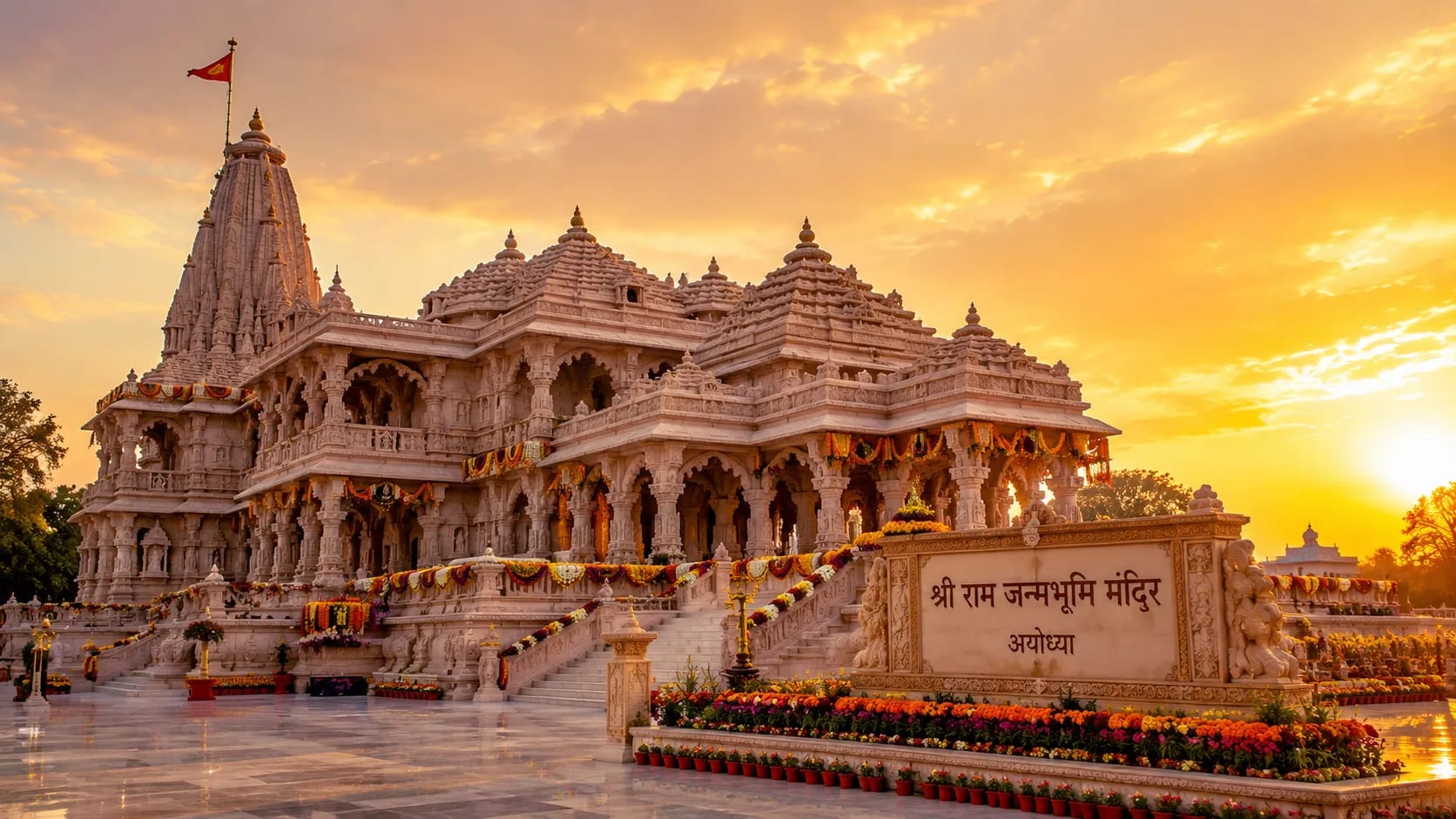
Full temple guide - timings and visit tips

Visit Hanuman first, as tradition asks

The golden palace gifted to Sita

King Dashrath's palace, Ram's childhood home
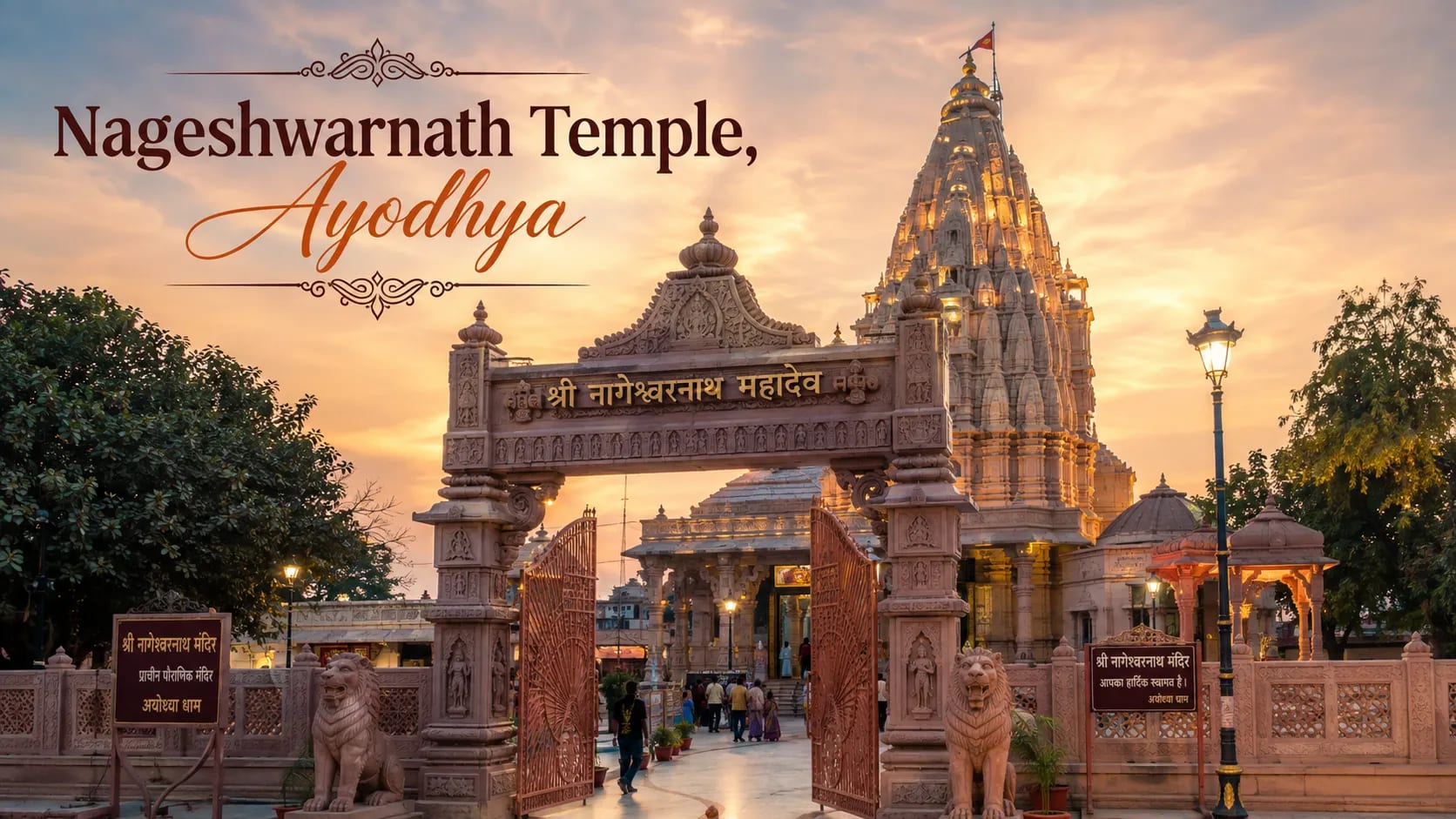
The guardian Shiva of Ayodhya
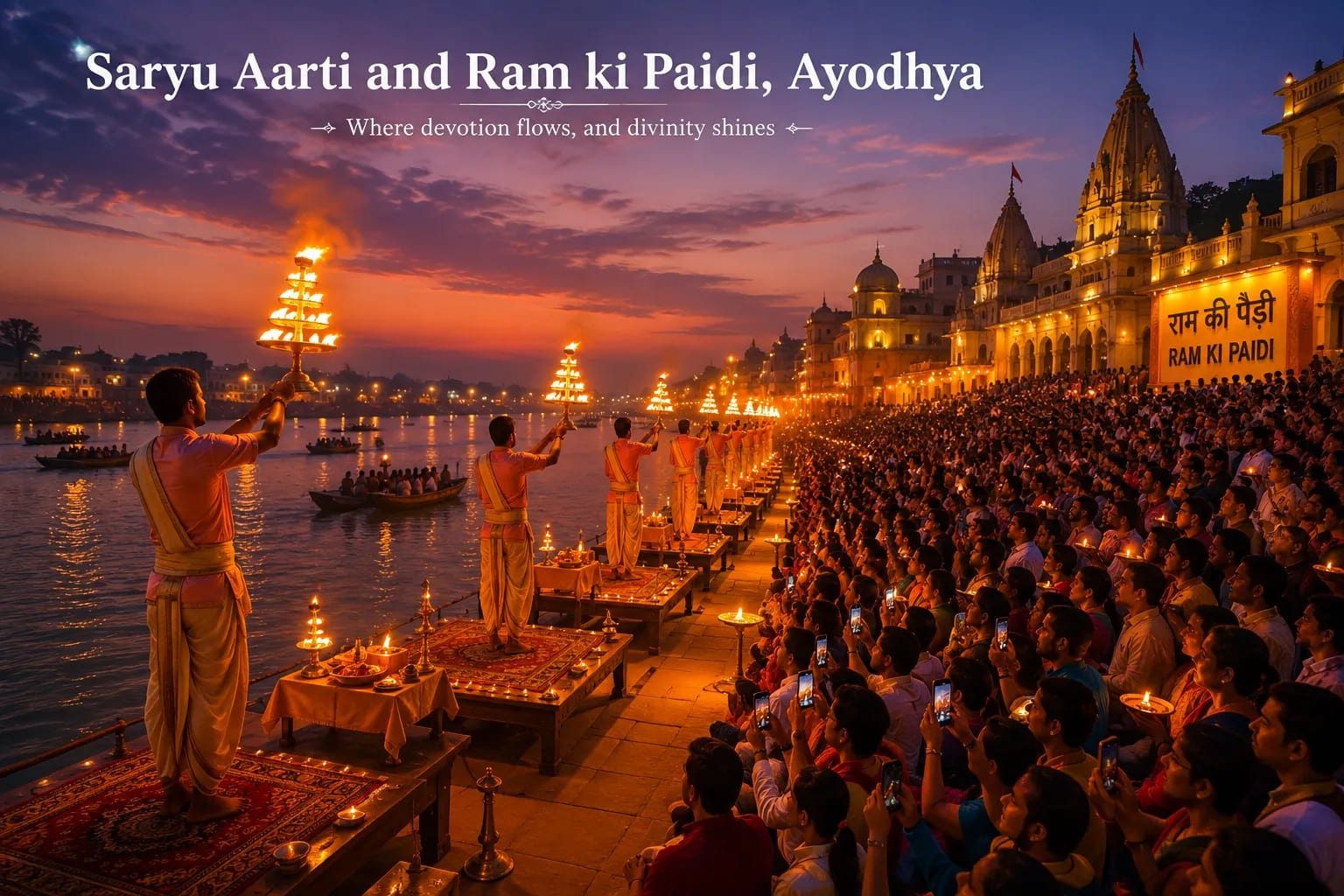
The evening Aarti on the Saryu
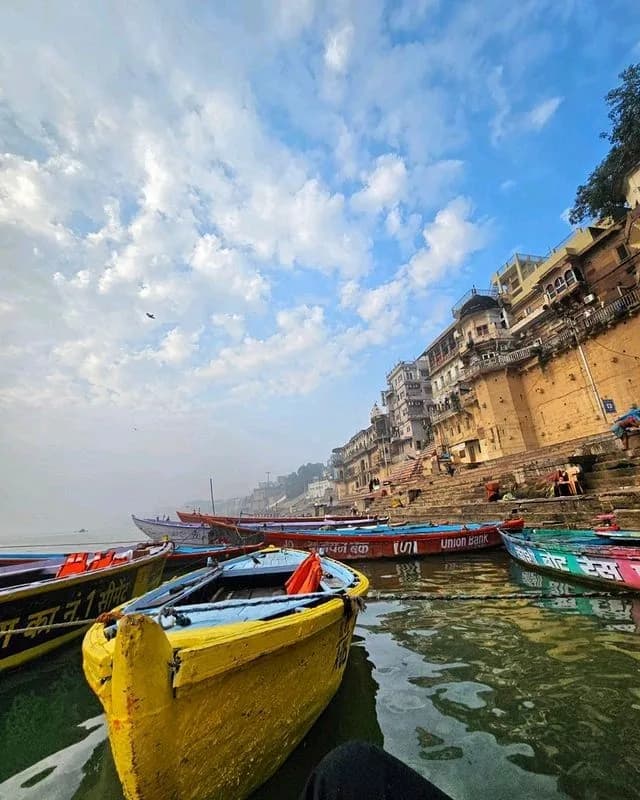
Ayodhya · Prayagraj · Kashi
Many pilgrims naturally extend the yatra from Ayodhya to Varanasi - from the birthplace of Rama to the eternal city of Shiva, where the Kashi Vishwanath darshan and the Ganga Aarti at Dashashwamedh Ghat await, often with a stop at Prayagraj and the holy Triveni Sangam in between. This Ayodhya-Kashi-Prayagraj triangle is the classic North Indian pilgrimage, and it is exactly what our Ayodhya Varanasi Tour Packages are built around - with your Ram Mandir darshan and Aarti arrangements woven in from day one.
Explore the packagesGuaranteed passes
Here is the honest reality. The darshan slot you can usually manage yourself. But the Aarti passes - only about 30 seats, released on a 12-hour clock, gone in a minute or two - are a different game. Every pilgrimage season I watch devotees refresh the portal at 4:00 PM and 6:00 PM, hearts set on the Mangala or Shringar Aarti, only to see "slots full" flash on the screen.
You should not have to leave the Aarti of a lifetime to chance. At Ayodhya Varanasi Tours, we book Aarti and darshan passes for our guests and we stand behind them with a guarantee. We know the timing, we are positioned to book the instant the quota opens, and we take the stress of the OTP, the captchas and the Tatkal clock entirely off your hands. You simply tell us the date and the Aarti you wish to attend, and we secure it.
We will book and guarantee your Ram Mandir Aarti and darshan passes.
Fill the pass enquiry form WhatsApp 7302265809Or explore our Ayodhya Varanasi Tour PackagesMany of our guests pair the Ram Mandir darshan with a full, unhurried Ayodhya experience - Hanuman Garhi, Kanak Bhavan, Dashrath Mahal, the Saryu Aarti at the ghats - and then travel on to Kashi (Varanasi) for the Kashi Vishwanath darshan and the Ganga Aarti. If that is the journey in your heart, our Ayodhya Varanasi Tour Package options are designed exactly for it, with darshan and Aarti arrangements included.
Darshan is completely free for every pilgrim, and so are the Aarti passes. The temple trust issues no paid ticket. There is a free Sugam (special) darshan that you book online for a time slot - that is what people call "VIP darshan" - but it costs nothing. Any website charging money for a Ram Mandir pass is not official.
The only official portal is the Shri Ram Janmabhoomi Teerth Kshetra website, online.srjbtkshetra.org. Both darshan slots and Aarti passes are booked there after logging in with your mobile number and OTP.
You can book your Sugam darshan slot up to about 15 days ahead. If you miss that window, a same-day Tatkal quota is released on the portal at 6:00 AM, though it fills within a minute or two. Aarti passes follow a separate 12-hour rule.
You must book each Aarti about 12 hours before it happens. For Mangala Aarti (around 4:00 AM) book by about 4:00 PM the previous evening; for Shringar Aarti (around 6:00 AM) book by about 6:00 PM the previous evening; and for Shayan Aarti (around 9:00 PM) book by about 9:00 AM the same morning.
Only about 30 devotees are admitted to each Aarti, which is why these passes are so hard to get and disappear quickly. Darshan slots are more generous at roughly 150 devotees per two-hour slot.
A valid government photo ID - Aadhaar card, Voter ID, driving licence or passport. The name and number must match exactly what you entered during booking. Children under 10 do not need a pass.
Darshan runs daily from 7:00 AM to 9:00 PM, in two-hour slots, with the temple closed from 12:00 PM to 1:00 PM for Bhog. Timings can change on festival days, so confirm on the official portal before you travel.
No. Mobile phones are not allowed inside the darshan path and must be deposited at the counter or left outside. Photography inside the sanctum is not permitted. Travel light - ideally just your ID and pass.
Use the Tatkal option: a fresh same-day quota opens on the portal at 6:00 AM. Be logged in and ready with your details pre-typed, and submit the instant it opens, because slots fill in one to two minutes. If that feels risky, let us secure your pass with a guarantee.
Yes. We book and guarantee Ram Mandir Aarti and darshan passes for our guests, handling the timing, the OTP and the captchas so you do not have to gamble on a full slot. Message us on WhatsApp at 7302265809, or explore our Ayodhya Varanasi Tour Packages.
Yes. Many pilgrims have their Sugam darshan during a daytime slot and attend the Shayan (night) Aarti the same evening, which you book by about 9:00 AM that morning. Just remember they are two separate bookings on the portal.
For a same-day darshan, your route is the Tatkal quota that opens at 6:00 AM - it is limited and fills in a minute or two. For a same-day Shayan Aarti, book it by about 9:00 AM. For the dawn Aartis, you must have booked the previous evening, so a true same-day dawn Aarti is not possible.
Once a slot or Aarti is full, the portal will not let you book it, and there is no official waitlist. Your options are to pick another date or time, try the 6:00 AM Tatkal quota, or ask us to secure a guaranteed pass so you do not lose the date you have planned your whole trip around.
The Ram Mandir is not just a temple; it is the fulfilment of a five-centuries-long wait, and your darshan deserves to be peaceful, not stressful. Book early, book only on the official portal, keep your darshan and Aarti bookings clearly separate, carry the right ID, travel light, and reach ahead of time. Do that, and you will stand before Ram Lalla exactly as you imagined - unhurried, unworried, and fully present.
And if you would rather hand the whole thing to someone who does this every day, we are right here in Ayodhya. From a guaranteed Aarti pass to a complete Ayodhya Varanasi Tours pilgrimage across Ayodhya, Kashi and Prayagraj, we will make sure the only thing you have to think about is your prayer.
Jai Shri Ram.
Written by Rajeev Sharma, local Ayodhya pilgrimage guide at Ayodhya Varanasi Tours. For bookings and guaranteed Aarti passes, WhatsApp 7302265809.
Temple exterior and shikhara photographs: Government of India (GODL-India), via Wikimedia Commons.