
3 nights / 4 days
Pilgrimage
₹37,000
Starting From


Senior Citizen Kashi Ayodhya Yatra
Varanasi, Prayagraj & Ayodhya (Elders)|Pilgrimage
One City A Day Pace
Lift-Access Rooms
Daily Family WhatsApp
A complete 40-year guide to Bharat Kund at Nandigram near Ayodhya, where Bharat ruled with Rama's sandals on the throne, explaining the sacred tank, rituals, and day-trip details.
Drop your details and we'll craft a personalized spiritual package.
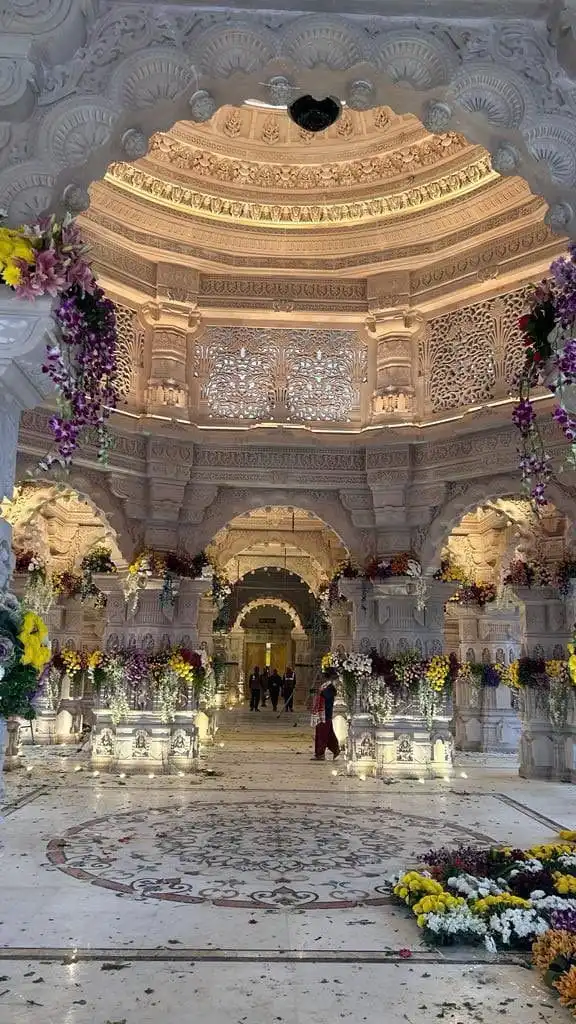
Home to the Ram Janmabhoomi temple, Hanuman Garhi, and Dashrath Mahal. The Saryu aarti at sunset is quieter than Varanasi's,it moves people who expected only the Ram Mandir to remember it most.
Nandigram is the place where, in the Ramayana, Bharat ruled Ayodhya as a regent and renunciate during the fourteen years of Rama's exile. Rather than take the throne, he placed Rama's wooden sandals (paduka) upon it and governed in his brother's name, living simply in penance. Bharat Kund is the sacred tank here, and the site is revered for its devotion and for its shradh and asthi-visarjan (ancestral and immersion) rituals. It lies about 15 to 20 km south of Ayodhya.
When Rama went into exile, Bharat refused to rule in his own right. He met Rama in the forest, received his sandals, and returned to enthrone them at Nandigram, governing as their servant and waiting in penance for Rama's return. It is one of the Ramayana's great images of devotion and renunciation, and the Bharat-Hanuman Milan, the meeting that brought news of Rama's return, is remembered here.
From the ground: Ayodhya celebrates the king who returned; Nandigram honours the brother who waited. I always find people quieter here than at the grand temples. Standing where Bharat ruled with only his brother's sandals on the throne, the meaning of devotion lands without a word from me.
Bharat Kund, the sacred tank, is a place of ritual bathing and worship, and Nandigram is a traditional site for shradh, pind daan and asthi-visarjan, the rites for ancestors and the immersion of ashes. Pilgrims come for these rituals as well as for darshan. If you intend a ritual, arrange it with a local priest in advance.
Entry is free, the site is generally open through the day, and the temples and tank reward an unhurried visit. It sits about 15 to 20 km south of Ayodhya, reachable by car or auto. Pair it with the city circuit as a half-day extension.
Nandigram is a half-day day-trip from Ayodhya, ideal for a relaxed second or third day, or for pilgrims with a ritual to perform. We arrange the transport, the timing and, if needed, a priest for shradh. See the full Ayodhya guide and the itinerary, or explore our packages. Message me, Rajeev, on WhatsApp at +91 7302265809.
Curated itineraries featuring this divine destination.






Grouped for quick scanning
Everything you need to know about Bharat Kund / Nandigram.
Topic 01
8 questions
Bharat Kund is a sacred tank at Nandigram, about 15 to 20 km south of Ayodhya, where by tradition Bharat ruled as a renunciate during Rama's exile, with Rama's sandals on the throne. It is revered for devotion and for shradh and asthi-visarjan rituals. Entry is free.
Nandigram is the place where Bharat governed Ayodhya in Rama's name during his exile, placing Rama's paduka on the throne and living in penance. It lies about 15 to 20 km south of Ayodhya and is home to Bharat Kund.
It is famous as the site of Bharat's tapasya, his selfless rule with Rama's sandals on the throne, one of the Ramayana's great images of devotion. The sacred tank is also a noted site for shradh and ancestral rites.
Bharat was Rama's younger brother, who refused the throne when Rama was exiled. He enthroned Rama's sandals at Nandigram and ruled as their servant, waiting in penance for Rama's return, embodying devotion and renunciation.
Bharat placed Rama's wooden sandals, the paduka, on the throne to rule in his brother's name rather than his own. It symbolises that the kingdom belonged to Rama, and Bharat governed only as his servant.
It is the remembered meeting at Nandigram where Hanuman brought Bharat news of Rama's imminent return from exile. It marks the end of Bharat's long, penitent wait.
Because it honours Bharat's devotion and renunciation, the brother who ruled selflessly with Rama's sandals on the throne. It is the counterpoint to Ayodhya's celebration of Rama's return.
Both, in effect: Bharat Kund is a sacred tank, and the site at Nandigram includes temples and shrines honouring Bharat and the Ramayana. Together they make the pilgrimage place.
Topic 02
6 questions
Yes, Nandigram and Bharat Kund are a traditional site for shradh, pind daan and asthi-visarjan, the rites for ancestors and the immersion of ashes. Arrange the ritual with a local priest in advance.
Asthi-visarjan is the immersion of a departed person's ashes in sacred water. Bharat Kund is one of the traditional places near Ayodhya for this rite, alongside shradh and pind daan.
Yes, ritual bathing takes place at the sacred tank. Stay in the shallow, marked areas, take care on the steps, and follow the guidance of local priests.
Yes, it is a noted site for shradh and pind daan, the rites honouring ancestors, as well as asthi-visarjan. Pilgrims come specifically for these rituals.
Arrange shradh or asthi-visarjan with a local priest in advance, so the rite is done correctly. We can connect you with a priest and handle the timing and transport as part of a day-trip.
No. Beyond shradh and ancestral rites, it is a place of darshan and reflection honouring Bharat's devotion. Many visit simply for the story and the peaceful setting.
Topic 03
7 questions
Entry is free and the site is generally open through the day. Confirm exact hours locally, especially if you plan a ritual, which needs arranging with a priest in advance.
No, entry is free. Rituals such as shradh involve a priest's services, arranged separately. The darshan and the tank are open to all.
The sacred Bharat Kund tank, the temples and shrines honouring Bharat and the Ramayana, and the peaceful setting of his tapasya. It is a place of reflection more than spectacle.
Accessibility is partial, with tank steps and temple thresholds to consider. Tell us your needs and we plan an approach that suits, prioritising the accessible parts of the site.
Yes, with care near the tank steps. It is a calm, reflective site reachable by car, which suits elderly pilgrims, especially those coming for ancestral rites.
Photography around the tank and grounds is generally fine, but be respectful during rituals and at the shrines. Avoid photographing families performing shradh.
Allow a half day including the 15 to 20 km drive each way, more if you perform a ritual. It is an unhurried, reflective stop rather than a quick one.
Topic 04
14 questions
About 15 to 20 km south of Ayodhya, a short drive that makes it a comfortable half-day day-trip. Confirm the exact distance and route locally.
By car or auto for the 15 to 20 km south of Ayodhya. We arrange the transport and timing, and a priest if you are performing a ritual.
Yes, Nandigram is reachable by car and auto, with parking near the site. It is outside the vehicle-restricted inner city.
Yes, it is the classic half-day extension from Ayodhya, ideal for a relaxed second or third day, for those drawn to Bharat's story, or for pilgrims with ancestral rites to perform.
On a second or third day, as a half-day trip, once the core Ayodhya circuit is done. It pairs well with a slower, reflective day rather than the packed first day.
October to March for mild weather, with mornings pleasant for the drive and any rituals. Avoid the April to June heat at the open tank and grounds.
The site sees special observance around Ramayana occasions and ancestral-rite periods such as Pitru Paksha for shradh. Confirm dates locally if you wish to time your visit with them.
It is generally calm and reflective, busier on ritual-significant days and during shradh periods like Pitru Paksha. On an ordinary day it is peaceful.
Options are limited at Nandigram, so plan a meal in Ayodhya or carry water and snacks. It is a reflective day-trip rather than a place of bazaars and eateries.
A guide helps with the story of Bharat's tapasya, the rituals, and arranging a priest if needed, and handles the transport and timing. It deepens a visit that is as much about meaning as sights.
Yes, foreigners are welcome to visit and reflect at this peaceful Ramayana site. Dress modestly, be respectful of families performing rites, and take care near the tank.
Yes, for the moving story of Bharat's devotion and the calm of the site. For pilgrims with ancestral rites, or anyone drawn to the Ramayana's quieter heart, the short trip is well worth it.
The sacred tank, the shrines honouring Bharat's rule with Rama's sandals, and a quiet moment reflecting on his devotion. Let it be unhurried; the meaning is the point.
We add Nandigram and Bharat Kund as a half-day trip on a relaxed second or third day, with transport, timing and a priest for any rituals. See our Ayodhya packages, or message me, Rajeev, on WhatsApp at +91 7302265809.
Topic 05
15 questions
Paduka means wooden sandals or footwear. Bharat placed Ramas paduka on the throne at Nandigram to rule in his brothers name, so the sandals symbolise Ramas rightful sovereignty.
Out of devotion and dharma, Bharat would not take the kingdom that belonged to Rama. He ruled only as Ramas servant, with the paduka on the throne, awaiting his brothers return, an act of selfless renunciation.
Through the fourteen years of Ramas exile, Bharat governed in penance at Nandigram, longing for his brothers return. The Bharat-Hanuman Milan finally brought him the news that Rama was coming back.
Nandigram has shrines and temples honouring Bharat and the Ramayana around the sacred Bharat Kund tank, marking the site of his rule and tapasya. A guide helps you take them in meaningfully.
Ram Ki Paidi is the central Saryu ghat in Ayodhya for the evening aarti, while Bharat Kund is a sacred tank at Nandigram, 15 to 20 km south, tied to Bharats rule and to shradh rituals. They serve different purposes.
It is better as a half-day extension on a second or third day, given the 15 to 20 km drive. Squeezing it into the packed first day rushes both the city circuit and this reflective site.
Pitru Paksha is the fortnight dedicated to honouring ancestors, when shradh and pind daan are performed. Bharat Kund, a traditional shradh site, sees special observance then, so pilgrims with ancestral rites often visit during it.
Gaya is the most famous site for shradh and pind daan in India, while Bharat Kund is a revered local site near Ayodhya for these ancestral rites. For pilgrims already in Ayodhya, it offers a meaningful, convenient option.
Nandigram and Bharat Kund are the principal sites of Bharats rule and tapasya. Within Ayodhya, the Ramayanas reunion of the brothers is also remembered, but Nandigram is the heart of Bharats story.
Yes, it is safe and calm. Take normal care near the tank steps and on the road, and keep children close at the water. It is a reflective, low-key site rather than a crowded one.
Yes, it is a gentle, open site, and Bharats story of devotion is a meaningful one to share with children. Keep them away from the tank edge and the drive in mind for younger ones.
Pilgrims circumambulate and worship at the shrines around Bharat Kund as part of their visit. Ask a local priest or guide about the customary route and observances at the site.
It is one of the Ramayanas great lessons in devotion, duty and renunciation: ruling selflessly in anothers name, putting dharma above power. That is why many find Nandigram quietly profound.
Because while Ayodhya celebrates the king who returned, Nandigram honours the brother who waited, ruling with only Ramas sandals on the throne. Standing there, the meaning of devotion needs no explaining.
If you have a third day or a slower pace, yes, especially if Bharats story moves you or you have ancestral rites to perform. On a tight first visit, the core city circuit comes first, with Nandigram as a worthy return.
Still have a question?
Message Rajeev on WhatsApp