3 nights / 4 days
Pilgrimage
₹37,000
Starting From


Senior Citizen Kashi Ayodhya Yatra
Varanasi, Prayagraj & Ayodhya (Elders)|Pilgrimage
One City A Day Pace
Lift-Access Rooms
Daily Family WhatsApp
A 40-year guide to Treta Ke Thakur, the believed site of Rama's Ashwamedha Yajna, its black-sandstone idols, and the crucial question of which days it opens.
Drop your details and we'll craft a personalized spiritual package.
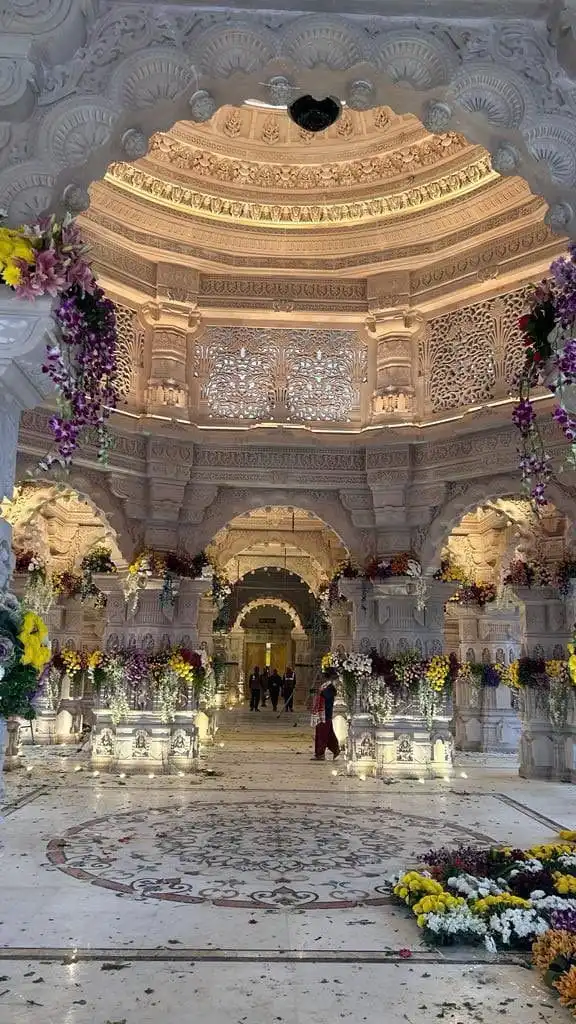
Home to the Ram Janmabhoomi temple, Hanuman Garhi, and Dashrath Mahal. The Saryu aarti at sunset is quieter than Varanasi's,it moves people who expected only the Ram Mandir to remember it most.
Treta Ke Thakur is the temple at the believed site of Lord Rama's Ashwamedha Yajna, near Naya Ghat, about 2 km from Ram Mandir. Its idols are said to be carved from a single black sandstone. The crucial planning point: it traditionally opens mainly on Kartik Ekadashi, though some sources now list daily hours, so confirm opening before you visit.
I am Rajeev Sharma, a Varanasi-born guide of more than forty years. Treta Ke Thakur is special, but it is also the one temple where pilgrims most often arrive to find the doors shut. Let me make sure that does not happen to you.
Treta Ke Thakur stands at the spot where, by tradition, Lord Rama performed the Ashwamedha Yajna, the great horse sacrifice of a righteous king. The temple's idols of the Ram Parivar are said to be carved from a single black sandstone, and are linked in tradition to the original idols of old Ayodhya. The name evokes the Treta Yuga, the age of the Ramayana.
This is the single most important thing to know. Treta Ke Thakur has traditionally opened to the public mainly on Kartik Ekadashi (around November), with limited access at other times, though some sources now list daily hours as Ayodhya's facilities expand. Because access genuinely varies, confirm the current opening before you plan a visit. Do not build a tight itinerary around it without checking.
From the ground: More pilgrims are turned away here than at any other temple in Ayodhya, simply because they assumed it was open. I always check the day before. If it is shut, the nearby Naya Ghat and Ram Ki Paidi more than fill the time, so it is never a wasted trip, only a managed one.
The black-sandstone Ram Parivar idols are the heart of the visit, distinctive in their dark stone and their tradition. When open, the temple draws devotees seeking a quieter, older darshan tied to the Ashwamedha Yajna. It sits near the riverfront, so it combines well with the ghats.
Treta Ke Thakur sits about 2 km from Ram Mandir, near Naya Ghat. It pairs naturally with Ram Ki Paidi and the Saryu aarti and Nageshwarnath Temple nearby. Fit it into the afternoon of the one-day circuit if it is open; see the full Ayodhya guide and the itinerary.
Take an e-rickshaw for the 2 km to the Naya Ghat area. Want us to confirm its opening and time your visit around it? See our Ayodhya packages or message me, Rajeev, on WhatsApp at +91 7302265809.
Curated itineraries featuring this divine destination.






Grouped for quick scanning
Everything you need to know about Treta Ke Thakur.
Topic 01
8 questions
Treta Ke Thakur is a temple in Ayodhya at the believed site of Lord Rama's Ashwamedha Yajna, near Naya Ghat, about 2 km from Ram Mandir. Its idols are said to be carved from a single black sandstone. It traditionally opens mainly on Kartik Ekadashi, so confirm before visiting.
It is famous as the spot where Rama is believed to have performed the Ashwamedha Yajna, the great royal horse sacrifice, and for its distinctive black-sandstone idols of the Ram Parivar. Its limited opening adds to its special, sought-after character.
The Ashwamedha Yajna was a grand ritual performed by a righteous king to assert sovereignty and dharma. Tradition holds that Rama performed it here, which is why the temple marks the site.
The name evokes the Treta Yuga, the age of the Ramayana, and Thakur, a term for the deity or lord. It points to the temple's deep connection to Rama and the events of the epic.
The Ram Parivar idols are said to be carved from a single block of black sandstone, distinctive in their dark stone, and are linked in tradition to the older idols of ancient Ayodhya.
Tradition associates its black-stone idols with the older sacred images of Ayodhya. Accounts vary, so treat this as devotional tradition rather than a settled historical fact.
The Ram Parivar, the family of Rama, in black-sandstone form. The temple honours Rama in connection with the Ashwamedha Yajna he is believed to have performed here.
It marks an ancient tradition tied to the Ashwamedha Yajna, with idols linked to old Ayodhya, though the structure has been maintained and rebuilt over time. Its significance is rooted in the site and the idols.
Topic 02
7 questions
Not reliably. It has traditionally opened mainly on Kartik Ekadashi, around November, though some sources now list daily hours. Access genuinely varies, so confirm the current opening before you plan a visit.
Traditionally on Kartik Ekadashi, a single major day around November, with limited access otherwise. As Ayodhya's facilities expand this may be changing, so verify locally close to your travel date.
Kartik Ekadashi is the day around November when Treta Ke Thakur has traditionally opened to the public, drawing devotees for darshan of its black-sandstone idols. It is the most reliable day to find it open.
Possibly, as some sources now list daily hours, but this is not guaranteed. Because it has long opened mainly on Kartik Ekadashi, always confirm before building your plan around it.
By long tradition its darshan has been reserved largely for Kartik Ekadashi, which preserves its special character. Arrangements may be widening as visitor numbers grow, so check the current status.
Check locally close to your visit, ask your hotel or guide, or have us confirm it for you. Do not assume it is open; this is the temple pilgrims most often find shut.
On Kartik Ekadashi, when it most reliably opens, or any confirmed open day. Visit in the cooler morning or late afternoon, and pair it with the nearby Naya Ghat and the Saryu aarti.
Topic 03
6 questions
The distinctive black-sandstone idols of the Ram Parivar, in a temple tied to Rama's Ashwamedha Yajna. When open, it offers a quieter, older darshan than the main temples.
Darshan is free when the temple is open. The key consideration is not cost but access, since it opens mainly on Kartik Ekadashi by tradition.
Photography rules vary and may be restricted, especially around the idols. Follow on-site signage and the priests' guidance, and be respectful when the temple is open.
Dress modestly and respectfully as at all Ayodhya temples, covering shoulders and knees, with traditional attire ideal. Carry a shawl if you are in Western clothes.
Yes, when open it is a manageable darshan. The main planning challenge is its limited opening rather than physical difficulty. We confirm access and keep the visit relaxed for elders.
On Kartik Ekadashi, its main opening day, it draws devotees and can be busy. On other days the question is usually whether it is open at all rather than how crowded it is.
Topic 04
6 questions
About 2 km, near Naya Ghat. It is a short e-rickshaw ride and fits into the afternoon of the one-day circuit when it is open.
Naya Ghat, Ram Ki Paidi and the Saryu aarti, and Nageshwarnath Temple are all close by. So even if Treta Ke Thakur is shut, the riverfront cluster fills the time well.
Yes. It sits near Ram Ki Paidi and Naya Ghat, so a confirmed-open visit pairs naturally with the sunset Saryu aarti to round out the evening.
Only loosely. Because it opens mainly on Kartik Ekadashi, keep it as an add-on you confirm rather than a fixed anchor. Build the day around the temples that are reliably open.
It is an optional afternoon stop on the one-day circuit when open, near the riverfront. If it is shut, the nearby ghats and Nageshwarnath take its place. See our itinerary.
Then enjoy the nearby Naya Ghat, Ram Ki Paidi and Nageshwarnath, which are all close and reliably open. A confirmed-open Treta Ke Thakur is a bonus, not a make-or-break stop.
Topic 05
24 questions
Take an e-rickshaw for the 2 km from Ram Mandir to the Naya Ghat area. The inner lanes are not car-accessible, so the e-rickshaw is the practical choice.
Not into the inner lanes near the ghat. Take an e-rickshaw for the final stretch, as across the central pilgrimage zone.
The Naya Ghat and central lanes nearby have pure-vegetarian eateries and sweet shops. Choose busy, clean places and bottled water.
Yes, it is safe. On its busy Kartik Ekadashi opening, take normal care of belongings in the crowd. On quiet days, the main issue is simply confirming it is open.
The dark sandstone sets the idols apart and ties them in tradition to ancient Ayodhya and the Ashwamedha Yajna. For devotees, the stone itself carries a sense of antiquity and continuity.
A guide is especially useful here, both to confirm the opening and to explain the Ashwamedha Yajna and the idols. It prevents the common disappointment of arriving to a shut temple.
Yes, when it is open, foreigners are welcome. Dress modestly and follow the temple's customs. As for everyone, the key is confirming access before you go.
Yes, if you can catch it open, especially on Kartik Ekadashi. The black-sandstone idols and the Ashwamedha Yajna tradition make it a distinctive, deeply historic darshan.
Because it is the temple pilgrims most often find shut, having traditionally opened mainly on Kartik Ekadashi. A quick confirmation turns a possible disappointment into a well-timed visit.
We confirm its opening, and on a day it is open we time your visit with the nearby Naya Ghat and Saryu aarti. See our Ayodhya packages, or message me, Rajeev, on WhatsApp at +91 7302265809.
The Treta Yuga is the second of the four ages in Hindu cosmology, the era in which the Ramayana unfolds. Treta Ke Thakur takes its name from this age of Rama, which it commemorates.
It is a grand Vedic horse sacrifice performed by a sovereign king to assert his dharma and authority. Tradition holds Rama performed it, and Treta Ke Thakur marks the believed site in Ayodhya.
It marks where Rama is believed to have performed the Ashwamedha Yajna near the close of his reign, and its idols are tied in tradition to the Ram Parivar of old Ayodhya. It anchors a key royal episode of the epic to a place.
They are said to be carved from a single black sandstone, which gives them their dark hue. The stone itself carries a sense of antiquity for devotees and sets the idols apart from brighter temple images.
Yes, it sits near Naya Ghat on the Saryu riverfront, about 2 km from Ram Mandir, which is why it pairs naturally with the ghats and the evening aarti.
No. Ram Mandir is the grand temple on Ramas birthplace, open daily, while Treta Ke Thakur is a separate riverside temple at the Ashwamedha Yajna site that opens mainly on Kartik Ekadashi.
The nearby Nageshwarnath Temple and the ghats of Ram Ki Paidi and Naya Ghat are reliably open and close by, so a closed Treta Ke Thakur never leaves the afternoon empty.
Yes, the Saryu ghats at Naya Ghat and Ram Ki Paidi are close, where pilgrims take a holy dip. Stay in the shallow marked areas and take care on wet steps.
When open, about 15 to 20 minutes for darshan, longer on Kartik Ekadashi with the crowd. Pair it with the nearby ghats to fill the afternoon.
Parking is set back toward the wider roads, with the inner ghat lanes kept for e-rickshaws and foot traffic. Confirm arrangements locally, especially on the busy Kartik Ekadashi opening.
Yes, when open it is a short, manageable darshan that suits families. Keep children close in the Kartik Ekadashi crowd and near the riverfront.
Around Kartik Ekadashi in November, its main opening, which also falls in the pleasant October to March season. Confirm the opening and the date each year.
For devotees drawn to the Ashwamedha Yajna tradition and the black-stone idols, yes, Kartik Ekadashi is the day to plan for. It is also a special, atmospheric time on the wider Saryu ghats.
When open, worship and aarti take place at the temple, with times varying. The grand evening river aarti, though, is at nearby Ram Ki Paidi, which you can pair with your visit.
Still have a question?
Message Rajeev on WhatsApp